← The Jordan Harbinger Show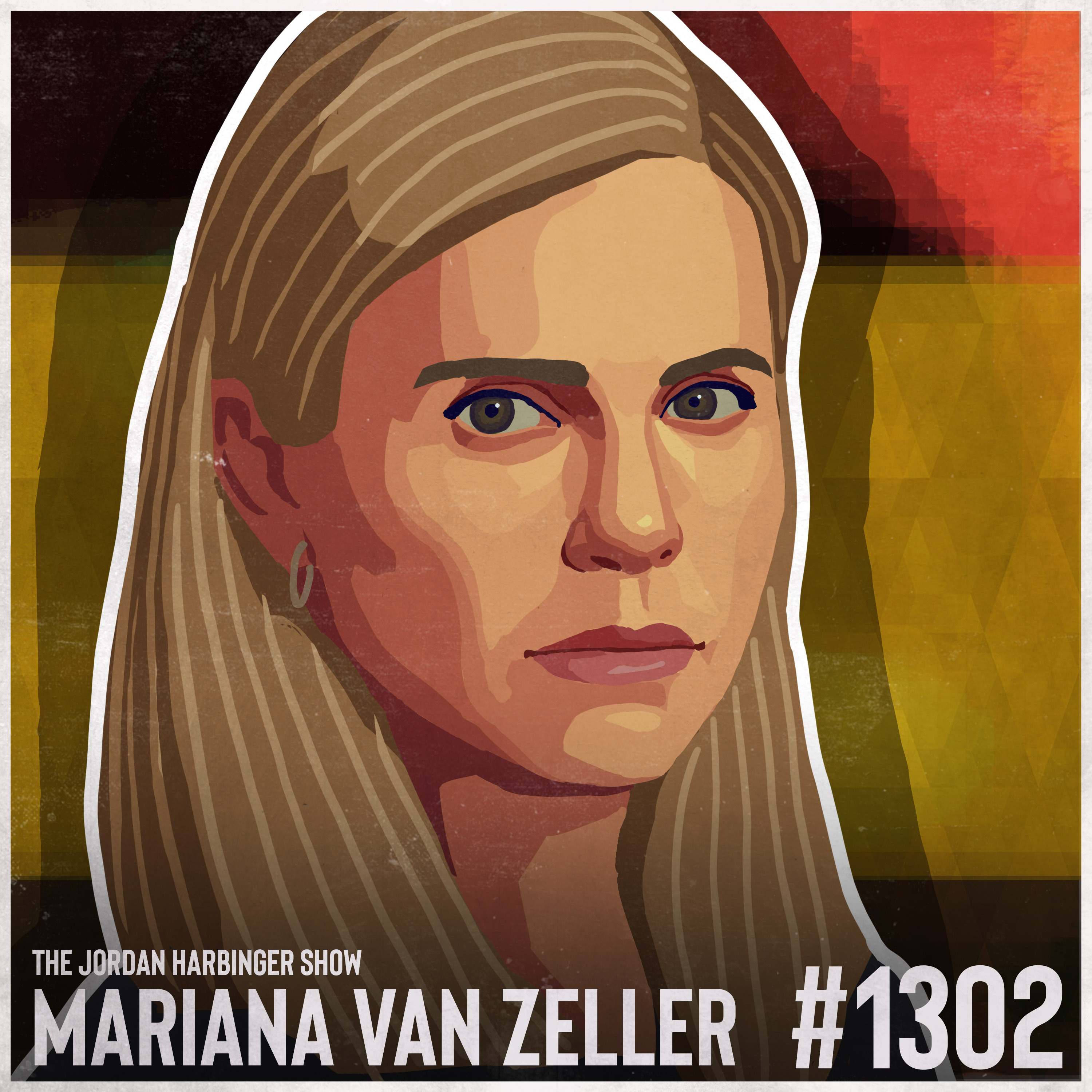
The Jordan Harbinger Show
1302: Mariana van Zeller | The Drug Cartels Running Small-Town America
01:38:30
Loading summary
Transcript366 lines
- [00:00]
A
This episode is sponsored in part by Little Sleepies. If you got kids, you already know the truth. Bedtime can turn onto a full on negotiation. But one thing that's been a reliable win in our house is Little Sleepy's Pajamas. Where fans of Little Sleepies for years before they even sponsored the show. Jen fell hard for the adorable prince, grabbed a couple pairs and then it basically spiraled from there. Now you got a whole drawer full of them. The kids have the cutest matching sets. And yes, we've even gone full family matching pajamas. Kind of fun. Not gonna lie. And the fabric is the real deal. Ridiculously soft, super stretchy. The kids like wearing them, which means fewer complaints when it's time to change. Plus we've had ours for years and I can say with confidence these things hold up. That matters when you're buying kid clothes that get worn constantly and washed. Cause you know lots of stuff gets on those clothes. I'll leave it right there. And they also make a great gift. The prints are adorable, the sizing is easy. Parents are always happy to get something cozy that'll actually get used. If you're expecting or dressing little ones, check out Little Sleepies. You can visit little sleepies.com and use promo code goodnight for 10% off your first order. This episode is brought to you by Progressive Insurance. Do you ever find yourself playing the budgeting game? Well, with the name your price tool from Progressive, you can find options that fit your budget and potentially lower your bills. Try it@progressive.com Progressive Casualty Insurance Company and affiliates Price and coverage match Limited by state law not available in all states. Welcome to the show. I'm Jordan Harbinger. On the Jordan Harbinger show, we decode the stories, secrets and skills of the world's most fascinating people and turn their wisdom into practical advice that you can use to impact your own life and those around you. Our mission is to help you become a better informed, more critical thinker through long form conversations with a variety of amazing folks from spies to CEOs, athletes, authors, thinkers, performers, and even the occasional war correspondent, neuroscientist or investigative journalist. If you're new to the show or you want to tell your friends about the show, and I love it when you do that, I suggest our episode starter packs. These are collections of our favorite episodes on topics like persuasion and negotiation, psychology, geopolitics, disinformation, China, North Korea, crime and cults, and more that'll help new listeners get a taste of everything we do here on the show. Just visit jordanharbinger.com start or search for us in your Spotify app to get started. Today on the show Cartels in small town America. Gangland executions in places with one stoplight and a Dairy Queen. Today's guest is one of those people whose job makes some of us envious and the rest of us grateful for our little cubicles. My friend Mariana Van Zeller is a journalist and the host of Trafficked on National Geographic, a show where she just casually hangs out with cartel members, human traffickers, armed robbers, people who would absolutely murder most of us within five minutes. She's been embedded, if you can call it that, with drug cartels in Mexico for followed human trafficking routes from Vietnam into China, investigated rehab scams that literally kidnapped Native Americans and locked them up in houses and filmed armed heist crews in South Africa who blow up cars like it's Fast and Furious, but without the cgi. Oh, and that's just season five of the show. And somehow through all of that, she's still empathetic, curious, shockingly calm, even when the people she's interviewing are wearing skull masks, carrying automatic rifles, or just casually describing crimes that make your skin crawl. We're going to explore why cartels are operating in small town America, why commercial airlines are actually some of the biggest drug traffickers, how journalists stay alive in places where they routinely get murdered, and why some of the most disturbing crimes happening right now aren't happening in dark alleys, they're happening in strip malls and rehab centers. Also, she hosts the Hidden Third podcast, which you should absolutely be listening to if you like this show, but wish it involved even more international crime and moral ambiguity. This episode gets dark, it gets uncomfortable, and it's one of the most fascinating conversations I've had in a long time. I really like Mariana and I know you will as well. Here we go with Mariana Van Zeller. One thing I found crazy was that the cartels are operating in small town America because, I don't know, when you think drugs, you think New York, LA, San Francisco, Chicago, and yeah, there's small pilly towns, but you don't think drug cartel. You think like, oh, there's a rotten doctor and somebody's trucking the pills over there. You don't think cartels operating in small town America? That's extra scary.
- [04:10]
B
Absolutely. I've been covering the cartel for many years now, and I sort of wanted to do a story about cartel presence in the U.S. and once we started researching it, I realized that actually the story should be about all the things that we don't know about cartel presence in the U.S. including the fact that they're in small town America. So one of our first shoots for that episode was in Georgia. And I don't know if you saw the episode.
- [04:33]
A
I did. I watched all of season five.
- [04:35]
B
You did? Oh, thank you.
- [04:36]
A
Yeah.
- [04:37]
B
And, yeah, it was in Georgia. And we started with a murder investigation of this woman who was tortured and they cut off her fingers and then eventually killed her. And she was killed by the cartel. And it was in the middle of nowhere in Georgia. And then we followed the investigation and yeah. Realized that they're everywhere and particularly like to operate in small town America because
- [04:59]
A
law enforcement has one sheriff for the whole county and what's he gonna do?
- [05:02]
B
Yes, exactly. Less law enforcement, easier to hide the drugs and have their distribution network.
- [05:08]
A
I suppose that's true. Right. Because if you're doing a drug buy at a farmhouse, even if the sheriff is right there at the house. All right, you guys put your hands in the air while I wait three hours for the FBI to show up.
- [05:19]
B
Right. And they're all armed with AK47s and AR15s. Yeah, yeah, exactly.
- [05:23]
A
And they've got their helicopter on standby. And yours Is in Washington D.C. if they understand why you're calling. Who gave you authority? No, no, no. I followed the cartel here. Okay, I suggest you leave.
- [05:33]
B
Yeah. You know what was so interesting about that story is that in order to get access to the cartel in the US we actually had to go down to Mex and gain permission and have them say yes. And so we spent quite some time in Sinaloa and met a lieutenant and all these other people involved. And eventually it was another member of the cartel that had given us access to an operation in Washington State. And there was some sort of arrests and that fell through. And so then it moved to the lieutenant. Basically, when you go down to Mexico, you have to meet several people, particularly if you're trying to get access to something in the United States and hoping that something will happen. So we met all these people and there was all these. But then nothing worked out. And then the last one we met was this lieutenant you could see in the episode. He's like all jittery and it was like one of the craziest scenes meeting him. But we had like 15 minutes with him. And then the marines were coming and they all got nervous and wanted to leave. But the last minute I asked him, can we get access to your operation United States? Because a lot of these groups have people that work for them in the U.S. obviously, the U.S. is the end goals where they're sending their drugs. And so eventually he said, okay, we've got you. And it was all set up. And we were supposed to meet them in Minnesota. And so we traveled to Minnesota. We're like, we're not a huge team, but we are six people and you've got lots of gear. And I'm shooting 10 episodes every year we get there. And then we waited and waited and waited for days, and the guy never showed up. And then finally we get a call and he's like, actually, that was a decoy. And we are in another state that you're not allowed to disclose, but come and meet us here. So then we had to do like a company move to this next place and. And just hope that they'd be there.
- [07:10]
A
You think they were watching you in that place the whole time to see if you were meeting with the cops? Like, they didn't show up.
- [07:15]
B
Sometimes happens when we film in Sinaloa, that happens all the time where they tell us one place and then they don't show up. Or we know that they have eyes on the ground checking us out immediately. Sometimes it's not so much about us journalists is because they don't know even if they trust us. They don't know if we're being followed. Particularly me and the kind of work that I do.
- [07:33]
A
Yeah, if the FBI is following you, you're just leading them to all sorts of criminals or Interpol or something. It's. What does she do? She meets with the people we can't find and they readily meet up with her for some reason. And then film.
- [07:44]
B
What I usually say is that it's not as if law enforcement doesn't know where these people are. It's not as if the whole of Mexican authorities don't know where the Sinalo cartel is. It's more that it's law enforcement. They have to catch them in the act. They have to be evidence. There has to be a case built. And not so much in the case of Sinaloa, but here in the United States at least. I don't think it's in their interest to follow me. But I do get often asked by law enforcement agencies in the US to go and speak at conferences about what I've learned. That's interesting.
- [08:11]
A
That's gotta be an interesting balance, because it would be cool to do that. But on the other hand, when you want to film season six, they're like, so you went and spoke with the FBI four times last year. Why are we trusting you with our Lieutenant In a secret stash house full of drugs.
- [08:23]
B
One of the things I tell always is that we're very, very careful with protecting our sources. So we even bring masks with us. We.
- [08:32]
A
Okay, I wondered about the masks because you're going in and you're filming these guys packing, I don't know, pink cocaine or something like that. And they're wearing like a skull mask. And I'm like, are these guys picking this out? I was like, nah, the crew must pick these out because they're not like, yeah, hold on, we gotta go to Walmart, Mariana, and get some masks. And we want cool ones. They didn't have any in the local targets. You gotta bring em. However, there was one guy who was like a cook in the United States and he had a ski mask on that said yes, Daddy. And I'm like, who bought that?
- [09:00]
B
What was this one?
- [09:01]
A
It was the one about the tranq dope.
- [09:04]
B
The tranq dope.
- [09:04]
A
And there's a guy with a ski mask that says yes, Daddy embroidered on the front.
- [09:09]
B
Okay, so that was his.
- [09:10]
A
That had to.
- [09:11]
B
That was his mask. So a lot of the times we do bring disguises, but a lot of the time, because there are situations in which they say yes, they agree to be filmed, and then we get there and they don't have disguises and then they decide not to do it. So we started bringing our own stuff. We even bring long sleeve T shirts, disguised tattoos and glasses and gloves and all of it. But a lot of times people are prepared and so they know there's a film crew coming and they come up with these amazing. Some of the best masks we've had have been people who have picked their own. We had one guy, season one where we filmed an episode on scams in Jamaica. It was my favorite episode still. I think it was the second episode we filmed for Trafficked. And we get there and we're interviewing all these incredibly super colorful Jamaicans are amazing.
- [09:50]
A
This the one where you were under the bridge and he's like, I was thinking about stealing your camera.
- [09:54]
B
Stealing your shit. Yeah. Victor.
- [09:55]
A
His name was Victor. Yeah, yeah, yeah, I remember that.
- [09:56]
B
He was thinking about stealing your shit. But he'd realized I was nice. You're good people, Marianne. So I'm not gonna steal your shit. So instead I'm gonna tell you about how the game works, which is cams. But one of the guys that we interviewed, this camera was a guy, he showed up with a Trump mask because he wanted to talk about capitalism and how it's all about everybody stealing anyway. So I might as well.
- [10:15]
A
Sensitive topic now. Yeah. Do you think Nat Geo would be like, we don't want a president mask.
- [10:20]
B
Oh, well, they aired it. We filmed in 2019. Yeah. It was his first term. Yeah.
- [10:24]
A
Interesting. Yeah. I would be like, ugh, why'd you have to pick that one? I don't want to deal with this from the CEO.
- [10:29]
B
Yeah, true. But we didn't get in trouble for it, so we are'd it.
- [10:33]
A
How many cartels are there? Do we know?
- [10:35]
B
I think it's estimated it's around 200 cartels right now operating in Mexico. These are just Mexican cartels.
- [10:41]
A
That's way more than I thought, because I would have said, like, five.
- [10:45]
B
I don't know, five big ones. You know the big ones. CJNG and Sinaloa and Jalisco. I mean, Jalisco said Jenji, but there's, like, a lot more, smaller groups. We did a story once, many years ago for Nat Geo, not for Traffic, but before, about Los Tequillheiros, which was a group in Guerrero State that was in charge of the production of heroin at the time there. And Los Tequileros are. They love their tequila.
- [11:09]
A
There's one. They're Los Viagras. You know those guys. And they're called Viagras because their hair sticks straight up with this gel. And I'm thinking, like, you guys, the branding is so bizarre.
- [11:20]
B
Not just of their own organizations, because in many cases they are organizations, but also of the drugs themselves. They realized they started shipping fentanyl to the United States several years ago, and we did a story about fentanyl when it was just starting. So nobody in the US still knew what fentanyl was. But because I had done a story on OxyContin and then heroin, the progression from OxyContin into heroin, all my sources on the ground started telling me, hey, there's this new drug hitting the streets called fentanyl. It's a pharmaceutical drug. But they're starting to exploit the pharmaceutical drug itself to get them high instead of in the medical treatment centers. And. And the cartel suddenly has its hands on this. So we went down to Mexico and interviewed a guy from the Sinaloa cartel. He had a kilo, a brick of heroin, and it was mixed with fentanyl. It was when it was still all heroin mixed with just a little bit of fentanyl, and then it reversed. But he was telling us, hey, this just recently happened where we, the Sinaloa cartel, decided we were gonna get in on this business. And they had hired a Colombian chemist to come there. And they'd paid him, I think 40,000 or $50,000 for the Colombian chemist to teach them how to make fentanyl. And it was the biggest bet. And that's why the Sinalo cartel grew so much. They were the first in the fentanyl game. And initially they were just shipping white powder to the US Hidden in packages and whatnot. But then they realized, wait. Dealers and distributors in the US realized there's a way that we can make ours different from the other. So they started mixing it with pink coloring, dye, or blue, and put it, pressing it into pills with the M30 to make it look real, like it's a pharmaceutical. And they're very smart. That's the thing about these groups is they're all very entrepreneurial.
- [12:54]
A
By the way, that journalist helping you
- [12:56]
B
is brave, Miguel Najel Vega. Yeah, he's one of my very good friends.
- [13:00]
A
First of all, he seems really cool. He's got, like, a suave factor. And he's like, chill. And he's like, yeah, they would kill us if they found this. And I'm like, you're not nervous about that? So he's very good for tv, but also he's really brave because my friend wrote a book about narco journalists, and there's a couple listeners of the show that are anonymous narco journalists, where they post things under a fake name because they. They will get killed doing this in Mexico.
- [13:20]
B
Yeah, that's right.
- [13:21]
A
So it's very interesting. Cause I was like, hey, who's this person who's on my Instagram? And I was like, what do you do? And she's like, well, I cover cartels, but I can't use my name or face or anything because they murder people like that all the time. And this guy's, now I'm just gonna show up on Nat Geo, show my face and everything.
- [13:36]
B
Yeah, he's incredible. One of his best friends was killed by the cartel, actually, in Sinaloa. So this is a guy, Miguel. My friend Miguel and Harvey Ega. He's from Sinaloa. He started as a print reporter. His story is freaking fascinating. He wrote a book called El Fixer, and we optioned the book, My company. As soon as he started writing the book, I was like, I'm optioning your book because his story is phenomenal. But essentially, he became kind of a journalist because he wanted to be a filmmaker, like a Hollywood filmmaker. And he was working on his film, and suddenly he lost all his funding, so it had been shot, but he wasn't Able to pay for the editor to get it together. And he needed to figure out how to finish this. So he had worked as a journalist before and went back to the newspaper, which is one of the biggest newspapers in Sinaloa, and was there when suddenly an American crew calls and says they're coming to do a story about the increase in violence in Mexico. This was several years ago. And he was like, how much do you guys pay? Whoa, I want to be that. And pretended like he had connections to the cartel and was going to give them access, but had zero connections to the cartel. And then starts building connections. His sister in law did the hair for one of the cartel boss's wives. And an old high school friend was now involved in one of the distributions, all this stuff. And he started trying to figure out. And he became the number one person to this day, any international news organization or American that wants to go to the United to Mexico and do a story about the cartel, they will go through Miguel. And he has the access and the know how.
- [15:00]
A
A lot of your interviews are done. There's armed guards around you. Well, you always do a great job of showing. There's always a guy in the corner doing this.
- [15:06]
B
Our camera team is really good at showing the danger.
- [15:08]
A
Yeah, like there's some guy who's like, this is amazing. And he's like filming like this. Cause he doesn't wanna be like, hey man, can you turn to the side when you show your automatic weapon that is fully loaded. And I wonder how do you stay focused when there's guys who are itchy and possibly on drugs and waiting for the marines to start shooting through the windows. And you're thinking like, okay, focus on the guy in front of me because I have 10 minutes or zero minutes. I don't even know.
- [15:33]
B
I think we're all afraid of different things. That is not a situation that makes me nervous or afraid.
- [15:38]
A
You're afraid of running out of time?
- [15:40]
B
Yeah, I'm afraid of not getting that interview, for example.
- [15:42]
A
That's what I would be thinking about.
- [15:43]
B
I'm afraid of big predators like sharks and tigers and shit like that.
- [15:46]
A
You dove with a shark.
- [15:48]
B
I know. And I was scared shitless.
- [15:49]
A
Oh, okay. Because I thought, oh, she's such a calm diver. I would never do that.
- [15:52]
B
Give me a hundred guys with masks and AK47s and I will take them all but one. One shark in the ocean and I'm dead.
- [15:58]
A
Was it you who touched it or was that the other? Yeah, I wouldn't. Yeah, forget it.
- [16:01]
B
I'm not doing That I was super nervous. But then once you were in the water, it's actually less nerve wracking. So I'm usually very focused on the interview. I have this whole thing where a lot of times I bring cigarette. We always have cigarettes in the production. Because a lot of times you have to have meetings before the cameras are even turned on. And you have to get that person comfortable. And a lot of times they don't want to be on camera. Right. So having cigarettes for me, offering people cigarettes or beer or very Portuguese, but it's a way that we're connecting. Right. I'm not above you. I'm not different from you. I show them photos of my son and my family on my phone. I ask them about their families. And it's a way that we're immediately connecting. And I do that even if they say yes. Then we sit across from each other. And even before we turn on the cameras, I'm asking questions that I know are just like, what's your favorite food? Things that we all share in common. And that's my way of humanizing them and of them to understand that I'm there as a human being. And then I never have a list of questions in front of me. So that is number one. And I've worked with directors who like write all these questions that they want me to hit. And I hate that because once I read that list of questions, it makes me think that I have to memorize them. And then I'm distracted during the interview because I'm thinking, okay, I have to go back to the question that is on the list. And I don't want to break eyesight with them because I want them to feel that this is not work for me. That this is actual human curiosity.
- [17:21]
A
Yeah, curiosity. Yeah. I could do that for 15 minutes, maybe even half an hour. I don't think I could do it for two hours. Like, I have a list of things here that otherwise I would forget to cover.
- [17:29]
B
Yeah, sometimes I have some things that I want to hit, but I never look down on questions. Rarely.
- [17:33]
A
Rarely. Yeah, yeah. It's interesting these guys will even meet you in the first place. Why do you think they do that? They're not getting paid. It increases their risk. This guy's like, oh, the marines know you're here, so they know we're here. It's like he could die giving you 15 minutes of masked information that does him no good.
- [17:51]
B
So three main reasons. Number one is ego. People want to boast about what they do. I'll never forget interviewing this guy, he's the best money counterfeiter in the world. He's a guy in Peru, and he makes these $100 bills and $50 bills that look exactly like the real thing. He, like is called the finisher. So he adds the crunch to the bill. The makes it look used. And the smell and the touch. It's exactly as if it's a real bill, but it's not. And this guy was a driver during the day and at night, this is what he does. And his family doesn't even know he does it. And he is the best of the best.
- [18:25]
A
Why be a driver during the day when you're printing $100 bills?
- [18:29]
B
A lot of times it's to actually launder the money. Yeah. And so that his family thinks that he has a real job.
- [18:34]
A
I see. If your family doesn't know.
- [18:36]
B
So I don't think he works like, eight hours as a driver. He works for a few hours. He tells the family that he's a driver. He actually has some stories of driving because he's doing it during the day and he can launder the money, and it's not going to be a big question mark. Where is he getting all this money from? But the money that he was making, counterfeiting, it wasn't for him, actually. He was selling that because if you get caught, none of us wants to end up in prison. So what he would do is that he's making the fake money and he would sell the fake money to the boss that would then distribute it around the world. Anyway, when I started interviewing him, his lies lit up. He's so excited. Oh, my God. Somebody actually wants to know about this thing that I'm amazing at. I'm like the Cristiano Ronaldo of fake bills, and nobody's ever wanted to know.
- [19:15]
A
And behind him, Department of Treasury would love to talk to him as well.
- [19:17]
B
Exactly. Yeah, I know. Should have introduced them. So I think it's ego and wanting to boast about it in terms of the cartel, a lot of times it's boasting, wanting to talk about it. Then it's impunity. In places like Sinaloa, where people just don't really see a downside, there's so much corruption. Even if the police knows where I am, there's no chance that I'll get.
- [19:35]
A
Probably could have done it without masks, and it would have been.
- [19:37]
B
And sometimes we actually have to convince people to do it with masks because they don't want to wear sunglasses or they just want to wear this mask or just Mouth. Cover the mouth. And we're insistent on. This is silly, because if you get in trouble, then we'll get in trouble too. And our whole team gets in trouble, including people like Miguel Enrilvega, who lives in Mexico.
- [19:54]
A
Why would you get in trouble for interviewing them?
- [19:57]
B
Because if they found out because of a story that we did, they're going to say that maybe we ratted them out or we gave information.
- [20:04]
A
You're not getting in legal trouble for it. You're getting in trouble with a cartel,
- [20:07]
B
which is much worse.
- [20:08]
A
Yeah. Way worse.
- [20:10]
B
And so we're very careful with protecting identities. And then let me just tell you the third reason why I think people talk to us. And it's this very human characteristic we all share of wanting to be understood. Right. We all want others to understand why we make mistakes, why we do it, why we are who we are. And that's the opportunity that I give everyone. I tell everyone I approach. Look, I'm not here to judge you. I'm here because I really want to understand why you do what you do, because I think that's ultimately much more interesting. And that doesn't mean condoning what they do, of course.
- [20:38]
A
The only time I've seen you almost maybe show that you were judging someone as that pastor who hated gay people in Kenya. He was such a piece of shit, this guy.
- [20:46]
B
Yep. And it's not my first time interviewing him. Yeah, I interviewed him before.
- [20:50]
A
Yeah, you were, like, right on the edge of. I could tell you wanted to just bite his face off because he's a terrible person.
- [20:55]
B
We actually got into Buick fight. You saw a little bit of it. It got worse. He's sitting down in front of me telling me how the LGBTQ community, everyone is disgusting, and they're eating the poo poo. This is what he says gay do is they eat the poo poo.
- [21:09]
A
I saw that, and I was like, this man is mentally ill and an aggressive piece of crap, and he does it all under the guise of, I'm not religious, but, like, it's really gross and simplistic. He's increasing the harm for these kids who are getting shot or beat up because they're gay in Africa. It's infuriating. It's not an issue that personally affects me, but you can't help but be like, why are you making things worse for people that already have it hard? Why are you doing that?
- [21:33]
B
And I think, actually, it personally affects us all. Right? Because it's. Right now, it's that group. But it could one day be you know, Portuguese people or podcasters. Yeah. And part of that story was actually to show how it's a lot of the legislation being passed here that is influencing what's happening in Africa, so actually impacts all of us. But, yeah, that was a really hard time. I also interviewed an assassin here. We did an episode on Assassins in la. Most of the episode was filmed in South Africa, which has the highest number of assassinations in one of some of the highest numbers in the world. But we started that episode interviewing an assassin in la. And that was a really interesting one
- [22:07]
A
because that's not season five.
- [22:08]
B
That was season four.
- [22:09]
A
Okay, I gotta rewatch that.
- [22:10]
B
Yeah, that was an interesting one.
- [22:11]
A
Yeah. Did you lose your cool during that one? Is that why you bring it up?
- [22:14]
B
Yeah, because the whole point of the show is also to humanize people behind the mask and try to understand why they do what they do. And in that case, as soon as we arrived, we met him downtown at night. I connected with him through another contact that I have here in the us, a guy that I really like that has given me access to a lot of underworlds in the us and so as we're driving to meet the assassin, my contact tells me, hey, by the way, you have to be careful with this guy, because I think he might be bipolar, because he will be happy one moment and then really angry the next. I was like, dude, where are you taking me to? Right? Anyway, we get out of the car, this guy is jittery already, and he's like, okay, so what's up? What do you guys want to ask? And I was like, okay, Hi, my name is Mariana. Here's the crew. I'm introducing everyone. He's like, just heads up. He takes out his gun from his belt and he's like, do you see this here? If the police shows up and says, this is a f Cking setup, you're all dead. And so the whole interview, I'm thinking, fuck, if by chance the police shows up, not because I'm here, but if a police car drives by, he's going to think it's because of us. So I'm trying to make it quick, right? So I'm asking questions, okay, Are you really an assassin? What do you mean? How much do you get paid? All that stuff. And then I wanted to ask. My last question was about trying to humanize him. So he says he kills men, not women or children. And I asked him, do you have children? And what I was trying to get at is that if he was killed, his children would suffer. So Even if you're just killing men, suffering is all around you. And as soon as I asked that, he went jumped to very angry. And he was like, what the. Are you asking me emotional question? I'm not gonna get emotional here. What are you trying to do? I'm not good with this shit. And he wanted to interview, so that
- [23:50]
A
was that dude is damaged. He is.
- [23:53]
B
It was a hard interview. Yes.
- [23:54]
A
Yikes. So if you're feeling uneasy hearing about cartel hit squads operating in towns with fewer cops than Starbucks, good news. Now's a perfect time to hear from our sponsor, who is dramatically less likely to murder you. We'll be right back. This episode is sponsored in part by Dell and amd. I think one of the biggest mistakes companies make is treating cybersecurity like it lives in its own silo, because it really doesn't. It touches everything that keeps a business moving. That's a big reason I like the cybersecurity tapes. It takes all the stuff that can sound overly technical on paper and turns it into stories that make the stakes feel real. You're not listening to abstract theory. You're hearing how a small vulnerability, a bad process, one overlooked decision, can ripple across an entire organization. And for businesses thinking seriously about resilience, that matters. Because cybersecurity isn't just about catching threats. It's about building environments that are secure by design across servers, networking, storage, and data protection. So when pressure hits, your business isn't trying to improvise in the dark. Steve and Max, who are cybersecurity specialists, they also do a great job of stepping back after the story and translating everything into plain English. What happened, what failed, what could have prevented it, and what leaders should be thinking about now. It's a smart listen for anybody who wants to understand how security issues become business issues and why getting ahead of them matters more than ever. Check out the cybersecurity tapes wherever you get your podcasts. This episode is also sponsored by Progressive. You chose to hit play on this podcast today. Smart choice. Progressive loves to help people make smart choices. That's why they offer a tool called Auto Quote Explorer that allows you to compare your Progressive car insurance quote with rates from other companies. So you save time on the research and you can enjoy savings when you choose the best rate for you. Give it a try after this episode@progressive.com Progressive's Casualty Insurance Company and affiliates. Not available in all states or situations. Prices vary based on how you buy. If you're wondering how I managed to book all these amazing people for the show, it is because of my network, the circle of people I know, like, and trust. I'm teaching you how to build the same thing for yourself for free. Over@sixminutenetworking.com you might not be interviewing drug cartel members and human traffickers, but this will still help you with your work. It'll still help you with your social life. It'll still help you get ahead in the job market. If that's where you're at in life. Six minutes a day is all it takes. And many of the guests on the show subscribe and contribute to the course. It is not cheesy. Very down to earth. Come join us. You'll be in smart company where you belong. You can find the course again, all free@sixminutenetworking.com now back to Mariana Van Zeller. Are you ever worried about the safety of your crew? Because I would imagine even though I am married and have kids, I would probably be thinking, if we die here, I'm gonna feel really bad in the afterlife that I got her, him, and him all killed, and they're all younger than me, and they had their whole lives ahead of them. It's my fault we're here getting buried in the desert.
- [26:36]
B
Yeah, it's the biggest thing on my mind constantly. And all our safety, I mean, we go through enormous lengths to make sure that we're minimizing the risk. We have hostile environment training. We consult security companies. We don't travel with security the majority of time because it's just I'm trying to get people to trust me. And if I show up with security, it means that I don't trust them. They trust me. Right. Even no matter how much planning you put in place, it's like Mike Tyson says, plans are great until you get punched in the face. There's always stuff that's gonna go wrong. And so we had that situation in Niger where I got stuck in a coup that was also season four. And we made that part of the story because we were there to do a story about illegal gold mining. And then there was a military coup. We got stuck, and there was an incoming war. We were in one of the most dangerous places on earth with terrorist groups all around us. And the whole time I'm thinking, I'm here. I'm stuck with six other guys. It was all men, but they all have families. All their wives and moms were calling my production company because I'm also the executive producer and owner of the and asking what was happening and how can we get them back to safety. So it was the worst time of my life. I wasn't able to sleep. It was just nerve wracking.
- [27:47]
A
How long were you stuck there?
- [27:48]
B
10 days. 10 worst days of my life.
- [27:50]
A
That is a long time to be stuck in a military coup when you expected to be home a week or two, whatever prior to that. Or we're going to be in and out in 48 hours.
- [28:00]
B
That's the only reason at JU allowed us to go. Because it is one of the most dangerous places on earth. You've got Boko Haram and ISIS and Al Qaeda all operating there. You've got kidnapping squads. And as an American, showing up with no security is not a good idea. So we'd been given the military, the local military or the government gave us military escort that would follow us wherever we went. So we went out into the mines. We drove for eight hours and slept out in the desert, in the open desert so that we could film inside the mines and interview the miners that are illegally mining for gold that is actually funding part of the terrorist groups. So when we came back from sleeping overnight in the desert, we came back to this town called Agadez. And when we arrived, we found out that there had been a coup. And immediately they removed the military security from us. So we were left with no protection in a rundown hotel with again no protection around us and no way out. So the borders were closed, the airspace was closed. And suddenly they started evacuating people from all over the world, but from the capital. And we were a three day drive to the capital and we couldn't even go, cause it's too dangerous. So we were literally trapped in one of the most dangerous corners of the world. And it was scary as shit.
- [29:13]
A
That is awful. That's not fun. No, you're not stuck at a Four Seasons in the capital with a military surrounding it and like, oh, we'll get out of here soon. It's like, no, we're at a Motel 6 equivalent.
- [29:24]
B
It was actually a building that was a rundown sort of house type thing that was built by Muammar Gaddafi when he'd visited in the 80s. And they'd left that building there and turned it into basically a rundown hotel. There was like one drop of water, was the shower and yeah, it was very hot. And we ate couscous morning, night and day.
- [29:42]
A
Yeah. Oh, gosh. I'm not sure what's worse, the couscous or the threat of being kidnapped by isis.
- [29:46]
B
Yeah. But I have to say, beautiful part of the world. So beautiful. The desert and the Landscape so beautiful and incredible people that were essential to figuring out how to get us out of there.
- [29:58]
A
Yeah, how did you get out of there? How did that happen?
- [30:01]
B
So we had a couple of ticking time clocks. One was the incoming war. So other countries in Africa, the African group of nations, that I cannot remember the name right now, but they were threatening to invade Niger and depose the military leaders. And then the Wagner group in Russia were saying that if they did that, they would come in and defend the military coup leaders. And so it was kind of like a proxy war happening in front of our eyes. And so that was one of the ticking time bombs happening. And the other one was I had promised my son it had been his birthday while I was there. And he finished his camp. It's a performing arts camp. And every year my husband and I have a tradition where we go and pick him up, we see the play that he puts up, and it's a very important day for all of us. And I spent so much of my time on the road that I live with the guilt of spending so much time away from him. So this is a day that no matter what happens, we go and see his performance. It's an important day for him and for us. It's my favorite day of the year, quite frankly. I love it. And that was happening. So we were gonna go to Niger, be there for four days, get out and come back to LA and then fly to New York and do the performing arts camp. And then we got stuck. And so I'm seeing the days go by and realizing, shit, I'm not gonna be able to make it. And I'm the worst mother in the world. Plus, I have this incredible team around me whose families are suffering right now,
- [31:17]
A
and we might all die.
- [31:18]
B
We might all be kidnapped and died. So all of that was going through my head. And one of the first days of the coup, I went to the airport because I wanted to see if there was any planes flying in or out, even though I knew the airspace was closed. And I met this amazing guy. He was the manager of the airport. His name was Kader. And I asked Kader, I'm asking, are there planes going in? Do you think there's anything coming out? Nothing. Nothing. Not until we get the permission from the government. It can take months until the airspace opens. You guys are going to be stuck here for a long time. And I'm on the verge of tears at this moment. And I ask him, do you have kids by chance? And he picks up his phone and shows me photos of his kids. He's like, yeah. And I showed him a photo of my son on the phone. I was like. I told him it's his birthday next week. It was too complicated to explain. Like, it's his birthday and I need to be there for his birthday. And it's next Friday, and this was like, Saturday or Sunday, and it's next Friday. And so please, Kater, if you find out if there's any planes coming in or out, please let us know, because I need to get my team out of here and I need to get to my son's birthday anyway. Unlikely that anything will happen. And we start contacting. We have an evacuation company that we work with. We pay a lot of money to get us out in situations like this. We filmed us calling the evacuation company, and they are completely useless. There's a moment where they say, we have no plan. And I'm asking, do you have a plan? We don't have plans. It's ridiculous. You should watch this episode. It's insane.
- [32:35]
A
Why do I pay you $10,000 a month for this insurance? Oh, have you looked at our death and dismemberment policy?
- [32:40]
B
It's crazy. So they failed us. So then it was a team in LA led by executive producers on Traffic, but also my husband is also an executive producer on Traffic who's in la. And they're like, we're gonna have to figure this out because nobody's helping us. So they started contacting different evacuation companies and different groups out there that could possibly do this. And they found a group, amazing people, who had two pilots who were crazy enough to fly with a private jet in the middle of the night. And they told us they're gonna land. They're gonna be there for 20 minutes. You've got 20 minutes to get on the plane. The plane is coming from Ibiza, and It was a G5 plane, if people don't know. It's like the most luxurious of private jets.
- [33:19]
A
DJ Tiesto uses it to get to European gigs.
- [33:22]
B
Dude, it was insane. It was the biggest whiplash of my life. So basically, after a week of eating couscous and no AC and drip of water, and so this is happening. So we're following the plane as it's coming from Ibiza, and the plane's coming here. 20 minutes on the ground, and then it's going to Dubai, and it's going to drop us off in Dubai, and in Dubai, we're going to get our commercial planes to go back home. And that's a long story, but it's Worth it, I promise.
- [33:44]
A
No, so far so good. I'm just imagining the pilot going, let me see the Runway. And they're like, it's that soccer field down there.
- [33:49]
B
It wasn't a big Runway. And they were very brave. Cause it was an active sort of military, potentially at war country. We still have printed out. My partner in traffic, Jeff Plunkett, gave me a map. When I came back, he printed out the map of what the plane radar thing, map looked like at the time. And you can see it says you couldn't fly through Niger. Niger is a pretty big country in the middle of Africa. And it's a red box. And then there's one plane crossing, and it's our plane that's coming. And basically they figured out. So they're coming. We're seeing it coming from Ibiza. We are as nervous as you can imagine as we can be. We arrive at the airport, it was like 5am, the sun was just starting to come up. And we are met by a group of military. They're all there and they don't want us to leave. They start creating problems. They start saying that we don't have the proper documentation, and then back and forth. And Kader, my friend, the manager, the airport is also there. And suddenly Kader takes the reins and starts literally yelling at the military, which is very risky for him, too, and trying to convince them that the papers are in order, that we need to leave. And basically doing us an enormous favor and trying to help us. And eventually they decide, okay, everybody can leave. Except for we had a fixer, the producer, local producer, who was actually from Mali, from the neighboring country, who is with us and helping us. And they said, everybody can leave except for the Malian guy. And that's when I called my husband. And I said, hey, Darren, I'm so sorry. Everybody's going, but I'm staying. I'm sending the team with the gear, everything. But I'm staying with this guy. And I'm in tears. I'm thinking, I get emotional still talking about this. But for me, it was the failure of me as a mother to making this decision. And it was really, really hard thinking, yeah, I'm not gonna be there. Most important day of the year for my son. And again I'm feeling him. And it was. I'm having all these gigantic guilt problems. And yet again, Kadra comes and is yelling at him. And then my husband is on the phone with me and says, hey, I'm looking at the flight report, and I think the pilots are Portuguese. Their names are Portuguese. I was like, what? Okay. So at this point, the plane is landing, and I'm running as fast as I can. As soon as the plane lands, I run to where the plane landed. One of the pilots is coming out of the plane, and I go up to him before the military is able to get close to him. And I tell him, are you Portuguese? And he said, yes. And I said, oh, my God. And I explained everything in Portuguese, what was happening. And I said, they're saying that he doesn't have the right paperwork, but if you are okay, that I think you can convince them to let us into the plane because he didn't have the visa for Dubai. And that was our next stop.
- [36:19]
A
A pilot could just bullshit that one.
- [36:21]
B
Maybe the pilot could say, no, you can't take anyone on your plane if they don't have the visa to go to the next place. But because he's Portuguese, we spoke our language. I think in many ways that helped. And so anyway, fast forward. He starts talking to the military. Kader is helping. Everybody gets on the plane. I'm the last one. I'm running to the plane. Happiest moment of my life. And I hear somebody call Mariana, Mariana. Mariana. And I look back and it's Kaeder. And he turns to me and says, happy birthday to your son.
- [36:47]
A
Oh, that's.
- [36:48]
B
And that's the moment that everything came out of.
- [36:49]
A
Oh, my gosh.
- [36:50]
B
Crying.
- [36:52]
A
Did you kiss the ground in Dubai when you landed? I would imagine you guys must have
- [36:55]
B
kissed the ground in the US When I landed at jfk. Yeah.
- [36:58]
A
I would be like, pilot, tell us the second we are out of missile range from Niger, ground forces are out of this big red.
- [37:04]
B
Oh, yes. The whole team was crying. And the saddest part for us was like. I remember looking out the window and just thinking, it was a terrible 10 days for us. This is the future of a country with incredible promise and amazing people. Everyone from the gold miners, the gold traders, to the people working at our hotel, to Kader, these are all amazing human beings who, every chance they had, were trying to help us. And who are people just like you and I. They're mothers and fathers and who now have their future up because of politics and leadership.
- [37:38]
A
It's interesting. When that coup happened, a lot of people online were like, good. They're getting rid of the colonial French. Obviously, those people don't know anything about these kinds of things. They just believe whatever the sort of Russian, they're overthrowing the imperialist Americans. Look, the military's gonna let people Live free now. And it's like that's not how any junta has ever worked in the history of military.
- [37:56]
B
No. And these countries have enormous promise and potential, but they need investment. And what we were doing until up until that point was that there was actually a lot of investment. The United States invested I think over $100 million in building these military bases. They had two military bases. There no longer was money lost. But the idea behind those military bases was to prevent attacks from terrorist groups that would eventually, possibly what happened in Afghanistan, organize and attack the United States. Security in other countries matters ultimately for security here at home. And that's what was happening there and is not happening anymore, unfortunately.
- [38:32]
A
I was surprised to hear one of your sources said that commercial airlines in the US transport the most drugs. Not like truckers or secret network. It's like, no, that lady who has three bags on Delta plus two of them are clothes and one of them is full of methamphetamine.
- [38:46]
B
And Delta wasn't that interesting that he said this was our interview for Cartel usa. We interviewed a guy called El Gringo, who's an American guy, doesn't speak a word of Spanish yet is one of the biggest distributors for the cartel here in the U.S. fascinating guy. And yeah, he says when I asked him how do you distribute drugs? And I was thinking he was saying I have these like four wheel shrucks. That, that's what I was thinking. He's like, no, Delta Airlines.
- [39:07]
A
Yeah, Delta Airlines. Delta Airlines got a million miles.
- [39:11]
B
Strippers. Strippers and Delta Airlines.
- [39:13]
A
I thought that was interesting. Why strippers?
- [39:15]
B
I think in his women is always better, right? Cause they're less, people suspect them less. And I think strippers because they're more likely to do risky behavior. I'm not sure why flirt their way
- [39:27]
A
out of a situation successfully. I don't know.
- [39:29]
B
Yeah, they know how to charm people, I think. Yeah.
- [39:31]
A
Is it. Don't open that. It's full of adult toys. I don't know. I'm trying to think of what the advantage is there, I think.
- [39:35]
B
Yeah, I think the way they dress too probably throws people. Nothing against strippers.
- [39:40]
A
No, I mean it's a legal way to make money. Except if you're transporting drugs for El Gringo, then you're on the line. How long does it take to plan and shoot each episode of the show?
- [39:50]
B
A long time. Months, sometimes even years. Like the Niger episode. We started pitching it on season two and it took us two and a half, three years to convince Nat Geo that it was safe for us to go To Niger.
- [40:00]
A
So Nat Geo has to sign off on this. I thought maybe you made it and then you just sold them the episodes or something.
- [40:06]
B
No, it's very much a partnership where every story, we pitch them stories at the beginning of each season, and then they say yes to some and no to others. The majority of the stories they say yes to, but there are definitely stories that they're not interested in. And then once we start, before we hit the ground, we have weekly meetings with them and discussing everything. This is who we're interviewing. This is how the story is going to unfold, or this is what we're hoping to get. And even when they're on the ground, we have to send them reports. And then they see, when we get back and we start editing, they see rough cut one, rough cut two, all of the final cut, fine, cut, all of it.
- [40:36]
A
Were they thrilled about your Niger experience after not wanting to do it for three seasons? And they're like, good thing we let you do that. And it cost us 100 grand in rescue fees or whatever.
- [40:45]
B
Yeah. My first thought when I realized there had been a coup was, shit, Nat Geo is going to be so pissed. My thought was like, nat Geo, they're going to get their security people involved and they're going to want to pull us out of the country immediately. And we haven't even finished our story. And then I realized, oh, no, Even if we wanted to get out of the country, we can't.
- [41:03]
A
No. The NatGeo security people were like, we got to get them out of there. Oh, it's impossible. All right, I'm going on vacation then, because there's nothing I can do from here.
- [41:10]
B
They were lovely. They tried. They were also having sleepless nights trying to figure out how to help us.
- [41:15]
A
This is going to be a bad look if they all get murdered.
- [41:17]
B
Yeah, it's not good.
- [41:18]
A
How do we figure this out? Which episode made you feel the most unsafe when filming? Except for, of course, that one.
- [41:24]
B
Yeah, the assassins one in season four. Yeah, that was scary. Some moments, obviously, we're not talking about drugs or scams. It's actual assassins. So there were moments that weren't so comfortable. I've been in situations with the cartel several, where sort of the Marines are and trying to see who can save themselves. You know, free for all, where everybody just tries to get out of there as fast as they can. And when you're with the cartel, there's always a dilemma. What do I do? Do I pretend I'm with them and just follow them, or do we Try to hide if the Marines show up. It's just always complicated. What do you do? What do you decide?
- [42:00]
A
Oh, my gosh. You need, like, a white surrender Nat Geo flag that says, like, yellow in
- [42:05]
B
that case because it's Nat Geo.
- [42:06]
A
Yeah, we're here just interviewing these people.
- [42:08]
B
Yeah, we always carry press passes with us. And in some situations, like in, we also have press things on the side of the trucks that we travel with. And that's always important, too. But that unfortunately matters less and less in the world we live through.
- [42:21]
A
It does, Yeah. I remember back in the day, I used to go out and take photos of things. And then it was like, now you need a bulletproof vest with the press Velcro to take photos of things. And it was like. And you should probably get a helmet and goggles to do this. And then it was like, oh, no, the cops are still gonna shoot you in the head with a rubber bullet anyway because they just don't care. And then I was like, all right, maybe I should get a different job.
- [42:43]
B
Is that how you find yourself here?
- [42:44]
A
That's right, exactly. Is there anything you learned while planning these episodes that almost got you into trouble? Thank God we have a satellite tracker, or thank God you mentioned you have the hostile environment training, but what do you do with that knowledge?
- [42:55]
B
They teach us what to do if somebody gets shot, how to use a tourniquet.
- [42:59]
A
First responders.
- [43:00]
B
Yeah, first responders, but also then real scenarios. They show us videos of situations where there are shootings, but also if you're being followed, what to do to evade surveillance, telecommunications, how to make sure that you're not being listened, how to protect your sources. You learn everything. I remember an interesting funny story about this is for season one, when we first started shooting Traffic. I'd been reporting on black markets for years at that point, but I had just hired a team of camera folks that hadn't. They, in fact, had been working with Anthony Bourdain on his show. And then that.
- [43:32]
A
Different gig.
- [43:33]
B
Yeah, different game. That came to an end, and I reached out and I asked if they wanted to work on my show. I loved, and I loved how it looked. And I had spent a lot of time doing these stories, but doing them with, like, handheld cameras and not the best quality. And with Traffic, we wanted to combine Gonzo journalism or boots on the ground journalism, with beautiful imagery, Nat Geo style. Right. And so we hired these guys. And so it was one of first hostile environment training of this type where we're actually going to hang out with the cartel and the Criminal underworld. And I remember the guy that was teaching us at the time, he's a British military, former military dude, really fun guy. And he turns to us and he says, okay, so now what do we do? If you get kidnapped, ladies, there is a chance you will be raped. And so if this. And then explains what to do in those situations. I look at the guys and they're like, oof. Yes. Oh, my God. God, that's not happening. And then he looks at the guys and he's, gentlemen, it's not an if you are going to get raped. So this is what you have to do.
- [44:35]
A
Oh, my God.
- [44:36]
B
And I see all of their faces like, what?
- [44:38]
A
Yeah.
- [44:39]
B
I don't know if we should be doing this show. And they were brave and they did it. But we still talk about that.
- [44:45]
A
I was filming old Vietnamese ladies cooking pho on the side of a street in Hanoi last season. What the hell did you get me into?
- [44:51]
B
That's right.
- [44:52]
A
Yeah. Geez. Oh, my God.
- [44:54]
B
But they did it and no one got raped.
- [44:55]
A
Yeah. No. So far, season five. Yeah. I thought it was interesting. The Sinaloa cartel is murdering the fentanyl cooks now or recently. Can you explain why that is? Cuz I thought you explained well in the show. But I think people are gonna be confused. There's tons of fentanyl here in the United States. It's coming from the cartel or it was coming from the cartel. Now there's bodies piling up on top of 20,000 fentanyl pills under an overpass. What's going on?
- [45:16]
B
So the American authorities started going really heavy on the Chapo family, right? The Chapitos, as they called the sons of El Chapo, was caught, brought to the United States. And then the Sinalo cartel was run by the Chaplitos. On one side, El Mayo, who's the legendary shadow partner of El Chapo. Everybody knows El Chapo, but nobody knows El Mayo. But he was the equal partner for the Sinaloa cartel and in many ways, sort of more crucial to the operations of the cartel. He was the whole corruption that had the liaison, the partnerships with governments and law enforcement around the world in order to be able to move his drugs at the scale that they did. And once El Chapo was brought to the United States, the government started really going after, particularly the Chapitos, because they were in charge of a lot of the fentanyl production. And I don't know if you remember, there was a thing called the Culiacanazo where the Mexican Marines went and detained, apprehended Ovidio Guzman, who is one of the Chapo's sons.
- [46:10]
A
Oh, was this when they surrounded the barracks?
- [46:12]
B
Yeah, exactly.
- [46:13]
A
Said, we're going to kill all your families if you don't let him go.
- [46:15]
B
So the military detains this dude, the son of El Chapo, and immediately all the different factions of the Sinalo cartel got together and said, no, we're not going to let this happen. So they brought the whole of the Culiacan, which is the capital of Sinaloa, down to its knees and demanded the release of Ovidio Guzman, El Chaposan. They released him. A few years later, they released him because they had to. It was so embarrassing for the government, the Mexican government, and it empowered the American government in this pursuit, too, because what they saying, you guys aren't going to be able to bring them to justice. So we are going to work with you, and we're going to be much more involved in making sure that we're bringing them to justice and stopping the production of fentanyl. And so there started to be more and more pressure because now they're dealing with the American government wanting to come there and take them and arrest them. And so when it started getting heated, they realized, okay, we have to do something about it, because nobody wants to end up in prison. So they asked, let's stop production of fentanyl, because that will get the authorities off our backs, the American authorities off our backs. And they did, and they stopped production for a while. But because if there's not just one or two chemists, it's hundreds or thousands, thousands of chemists, and they all depend on this now for a living. A lot of chemists decided to not abide by the rules, the new rules of the cartel. And they kept making fentanyl. So those were the ones who started being killed. What I heard when we were doing that story, because it made no sense, because I knew that there was still fentanyl coming across, was that they already had large deposits. So they were going to move those deposits of fentanyl to the United States and stop the production in the hopes that would prevent the American government from coming after them.
- [47:55]
A
So, like, oh, we're gonna stop producing it. Great. What we didn't tell them was we have 15 million pills in a warehouse somewhere.
- [48:01]
B
Yeah. And we went to one of those labs where it was still being produced. But then we also went to an underground lab with a guy showing us that he was a chemist, and he did everything in an underground lab under his house, which was insane.
- [48:11]
A
That was insane. No, it was like a drainage tunnel.
- [48:13]
B
It was a drainage tunnel. Yeah. That happened to pass under his house. And then he figured that out. He was like, I have the best lab situation in the world. Nobody's ever gonna claim me. So we went under and he wasn't producing fentanyl anymore because he was visited by two cartel members who basically threatened to kill him if he continued.
- [48:29]
A
Geez, that's crazy to me. We'll get back to human trafficking, cartel violence, and why commercial airlines are apparently the world's most efficient drug mules. But first, a quick word from a company whose business model does not involve cutting anyone's leg tendons. We'll be right back. This episode is also sponsored in part by BetterHelp. March includes international Women's Day. And it's had me thinking about how much women carry that most of us don't fully see. I look at my wife, Jen. She's the architect of fun in our house. Birthday parties, little adventures, special outings that make life feel bright. She's also running the behind the scenes. Operations, schedules, school logistics, all the moving pieces that keep everything from falling apart. There's an invisible mental load that's basically always on. And because she makes it look effortless, it's easy to forget it still has weight. I think a lot of women operate like that. Capable, organized, steady, while quietly carrying more than anyone realizes. Therapy can be a space where you don't have to hold everything together. You can talk through what you're carrying, set boundaries, find some balance. BetterHelp connects you with licensed therapists who follow a strict professional code of conduct. You take a short questionnaire, they match you based on your needs and you can switch anytime. With over 30,000 therapists, 6 million people served, and a 4.9 out of 5 rating from 1.7 million reviews, it's helped a whole lot of people. Your emotional well being matters, find support
- [49:40]
B
and feel lighter in therapy.
- [49:42]
A
Sign up and get 10% off@betterhelp.com Jordan that's betterhelp.com Jordan this episode is also sponsored by Butcherbox. Protein is a big part of our diet. In our house, we track macros, we try to eat intentionally, and when you pay in that much attention to what goes into your body, quality matters. You don't want to do all that work and then just grab whatever random protein has happens to be at the store. That's a big reason Butcherbox makes so much sense for us. They deliver over a hundred premium protein options straight to your door, including 100% grass fed beef, free range organic chicken crate free pork wild caught seafood. They've always got high quality staples on hand. We've always got our freezer stocked with butcherbox bone in skin on. Chicken thighs are a regular for us because they're so easy to roast in the oven. We keep a bag of butcherbox chicken nuggies on hand because our kids love them and ribeyes are one of those simple go to dinners when we want something great without a lot of effort. Every morning we pull out whatever we're making that night. It makes dinner a lot easier. Everything is antibiotic free, no added hormones. Independently verified as an exclusive offer. New listeners can get their choice between organic and ground beef, chicken breast or shrimp in every box for a year plus $20 off when you go to butcherbox.com Jordan that's right, your choice of organic ground beef, chicken breast or shrimp in every box for an entire year plus 20 bucks off your first box. Free shipping always. That's butcherbox.com Jordan don't forget to use our link so they know we sent you. If you like this episode of the show, I invite you to do what other smart and considerate listeners do, which is take a moment support our amazing sponsors. They do make this show possible. It's all searchable and clickable on the website@jordanharbinger.com deals if you can't remember the name of a sponsor, you can't find the code. Email us jordanajordanharbinger.com we are happy to surface codes for you. It really is that important that you support those who support the show. Now back to Mariana Van Zeller. The dope thing is disgusting, by the way. So dope mixed with xylazine, which I think is a veterinary tranquilizer.
- [51:26]
B
Yeah, that's right. An animal tranquilizer.
- [51:28]
A
Yeah. So the whole, I mean, forget just say no to drugs like that whole campaign. Just show that lady's arm from the harm reduction clinic. This looked like someone took hamburger meat, shoved it into a bag of human skin and then soaked it in a sink for three days and then just stabbed like a hundred little holes in it with a needle. It was one of the most disgusting things I've ever seen on tv. And I can imagine it must have smelled terrible because it looked like she just had a rotten arm. It was like zombie.
- [51:54]
B
Yeah. So we were there in a small clinic in Kensington, Pennsylvania, which is ground zero for tranq dope. Tranq dope. What it does is it's fentanyl mixed with the animal tranquilizer. And what it does is that fentanyl gives you a really high. But unlike heroin, the high goes away very fast. So they figured out a new drug that they could mix there, which is a tranquilizer that allows that high to stay high longer, which is ultimately what every user, drug user usually is after. And so they started using it, and they didn't even know there was tranquilizer in it. They just realized, oh, this is a good high. Let's keep using this. Right? But what they didn't know, most people didn't. It's a new sort of medical phenomenon. Nobody has studied this because it's so new, and it's never shown up anywhere because nobody is willingly using horse tranquilizer on themselves, is that it creates these horrible wounds that look like leprosy, essentially. I don't know if you've seen films of, like, leprosy back in the day when it was still big in India. It looks like that. It's like big open wounds with, like, pus coming out. And it's just one of the most disturbing things I've ever seen. In this case, we were in this clinic run by these sort of volunteers, amazing people who are dressing the wounds and unwrapping. And we were seeing them doing this to dozens of people and asking if we could film this woman agreed to be filmed. And we see this amazing guy who is doing again, volunteering his time and opening up this wound. He's not no medical training, but he's learned himself how to do it, and he's treating this woman's arm. And the moment he unwraps the gauze, the smell is everything you can imagine. It's super powerful. But yet this is a human being who's being treated. The worst thing I could do is start talking about how much this smelled right, and what that taught me. And the guy said so well, as somebody who's been covering the drug epidemic for so long, is that we're approaching it all wrong. This is a public health crisis that's happening in America. We essentially have thousands of people on the streets of America nowadays hooked on this drug. You might think that they're there because they want to, and they're doing the drugs because they want to. Nobody wants to be out there like this. Nobody willingly do this. It's a public health crisis. It's like leprosy. It's so many other diseases that we've been able to combat and fight against. And they're here for some reason because we think that they have a choice. We allow it to happen. And the reason also why they're being treated in this, like, roadside clinic instead of going to hospitals. We spoke to a lot of these users, and they were all saying, we go to the hospitals. There's so much stereotyping. And they're immediately. They're stigmatized, and they're treated as junkies, not treated as human beings. And that's what with our episode we try to do is really humanize these people and try to show this other side that they're human beings just like us and need help.
- [54:32]
A
It's a scary path, right? Because I had a friend who had a back injury, so he got oxycontin, and then he got hooked on oxycontin, and then he couldn't get it anymore, so he started doing heroin. But now you can't get heroin, so you do fentanyl. Now you can't get fentanyl. You're doing drank dope. So it's like you end up with a guy who's like a construction worker. This guy was an MMA fighter. But, you know, you get a back injury, and it's like five years later, they're in an alley covered in open sores, and it's, like, disgusting.
- [55:02]
B
Every conversation, every time I bring up the opiate epidemic, somebody has a story like that, and the vast majority of them starts with an injury. I had an ep. I'm not gonna name him, but I had an executive producer on television that worked with me for some time who had seen my coverage on the opiate epidemic and called me one day and says, hey, you have no idea what just happened to me. I went in for, like, a tooth surgery, and they gave me opiates, and I had no idea. Some people have the brain chemistry that makes them horror hooked. You never had an addictive personality or anything. And he was like, I spent two months doing these opiates. Weaning off those opiates was the hardest thing I've ever done in my entire life. And he said I was on the verge of a mental breakdown. Just talking about how this normal person goes and in two months is super hooked. He doesn't know still how he managed to get off the other way. But for a lot of people, they don't. And so that's what I mean when I say it's not a choice. Yeah, it isn't a choice.
- [55:54]
A
I'm curious. You're clearly careful not to touch any of this stuff. If you go to a drug lab, I don't know, what kind of precautions do you take? Because that Stuff is in the air, and it's on the bag and it's on the table, and you put your elbow down. And now you've got, I don't know, Xylazine on your elbow.
- [56:07]
B
As long as you don't put it on your mouth or your eyes or you ingest it. We were in Miami, where they had bags and bags of tranq dope, and they were mixing the fentanyl with the Xylazine. And we used gloves, which is the appropriate thing to do. And they were using gloves, too. But when I was in a lab in Mexico and saw them making fentanyl, this was for season one of fentanyl. That was insane. We went in with, like, HAZMAT suits and, like, big masks and respirators, and we look like those movies about epidemics where the scientists walk in there and they can barely move. That's what we looked like when we were filming. So it's me and my team. My guys are holding their cameras through their masks, and we can barely move with these gigantic suits and these dudes. Two dudes from the Sinaloa cartel that made the chemists for Sinaloa cartel making fentanyl. They had gloves, and they had one of those just Covid masks.
- [56:57]
A
Yeah, it's like a scarf wrapped around his face.
- [56:59]
B
And I was like, aren't you scared? He was like, no. This is actually great because I know the fentanyl is potent. I know I've got it. I know I've made it. He's making it. I know I've got the end product when I start feeling through my skin, because it comes in through the skin. You see the fumes are everywhere. This is why we're using these sort of respirator masks. But I know I start getting. My heart starts beating really fast, and that's when I know I've got the good shit. These people are bananas.
- [57:23]
A
Wow. These guys are crazy. They're insane. One of the saddest episodes, I think, was the Hmong women in Vietnam getting kidnapped, essentially, and sold to Chinese men. Tell us how they get snatched and scammed, because it's really extra disturbing. It's not better if their family sells them. Don't get me wrong, but it's really scary to think you're going shopping and your friend's like, hey, let's go get something to drink. And then your friend sells you to a Chinese guy and you just vanish.
- [57:48]
B
Yeah, it's essentially what's happening there. We heard dozens. We talked to dozens of women who told similar stories. Who were? These are Hmong villages. So it's impoverished communities in the mountains of northern Vietnam. And not a lot of job opportunities, not a lot of education. And a lot of times they would meet people that foreigners or Chinese people or more wealthy Vietnamese people that would come through and they'd start charming them. It's a lot what happens here, actually, with pimps and then say, hey, do you want to go for dinner with me? And then the next thing they know, they're being handcuffed and blindfolded and taken across the border to China and sold to men. And one of the most horrific stories I heard, there was this woman, something similar to her happened. She was kidnapped, sold. She found herself living in a small apartment with a Chinese man and his parents, all living in the same apartment. And this is happening in China, by the way, because of one child policy.
- [58:43]
A
For people who don't know there's not enough women to marry in China because they had a one child policy. You wanted a son, if you could only have one, you aborted or got rid of the girls. And now there's one girl for every,
- [58:53]
B
I don't know, three men or something. Two men or something. It's not as big, but there's a lot of single men. And in China, it's incredibly important culturally, very important to get married. You're seen as a failure if you don't get married and if you don't have children. Your parents will be the biggest sort of sadness of their lives if your kids don't give you grandkids, basically, it's very important culturally in China. So there's enormous pressure on these men and they can't find Chinese women, so they're going and paying people to go find them wives elsewhere. So this case of this Vietnamese woman shows up. She was young. I'm not sure if she was a teenager, but she was young. And she shows up this small, tiny apartment, this guy. They lock her in a room, and the parents live there too, but they lock her in a room. The guy comes in just to have sex with her. She eventually gets pregnant, is forced to give birth to this child. They take away the child from her and let her see the child once in a while, let the child go into the room to be with her. She gives birth to a second child. And then after they want two kids, give them two kids. And then they say, okay, if you want, you can go back to Vietnam. And she says, will I be able to see my kids again? And says, no, you can either go back to Vietnam. And be with your family, or you stay here, live your whole rest of your life locked in a room, but you'll be able to see your kids. So she had to make this decision.
- [60:03]
A
It was terrible.
- [60:03]
B
It was devastating.
- [60:04]
A
You forgot that they sterilized her before she left because they didn't want her to start another family. For what reason? I don't really understand.
- [60:11]
B
Yeah, I didn't even remember that part. There were parts of it that I couldn't.
- [60:14]
A
That was particularly horrifying. If they're gonna let her go back and see the kids only on FaceTime, what's the difference if she has more kids? They just didn't want her to. I don't know. It seemed extra evil.
- [60:24]
B
It's extra evil when I started talking about her kids. And how often does she get to talk to them? Because it's not just that she is not able to live with the kids or ever see them again. It's the fact that she has to live with the guilt of having made that choice. She abandoned her children and that it's her fault.
- [60:42]
A
The whole thing was so disgusting. And I think, was she the one? She was, like, 12 when she got taken there by her friend. They blur together in my mind. But her friend asked her to go hang out or something. And then she woke up in a car. And the other one, she said they brought her to a room. There was a bunch of Vietnamese people in there. Two of them or three of them tried to run away, and they cut their leg tendons so they couldn't run away. This is like a really large organized crime operation that's able to smuggle people across the border.
- [61:09]
B
And that nobody's talking about it because it's not in the interest of either China or Vietnam to expose this. And journalism is very heavily surveilled in those countries. And our whole experience in Vietnam was insane. It was the moment we landed. We knew we were under surveillance. We had a government minder that would follow us everywhere. I had to show him my list of questions. So we pretend, like, wrote fake questions. And he'd give me okay. And then I'd sit down and start interviewing people. And the first person I interviewed, I started asking them the questions I wanted to ask. And these were people that had gotten in trouble for trafficking. They'd done time in prison, and they were out. So they'd agreed to talk to us. So we're asking them questions. But then I start asking the questions that I wanted to ask. And immediately we get stopped from the government minder, who, by the way is also traveling with the police officers. We have a government minder and a police officer checking every single interview and listening, and they are with us. And then our van one day disappears for hours. And it's our production van that we rented. But the government minder and the police decided to. To disappear with our van. So we know that it was either checked and bugged and probably both. That's when we realized, oh, my God, they're not just listening in on our interviews. They're actually listening in on our private conversations in the van. And then there were situations in the hotel where I truly believe my phone was bugged at the hotel because it was a crazy light situation and conversations that I were having that I knew that there was no other way they would know unless they were listening. So the whole situation was bugged. And we started going out in the middle of the night when they weren't watching and trying to figure out ways to do this story.
- [62:41]
A
It's a creepy feeling to have the government spy on you. I went to North Korea, just a tourism ish trip, but I remember going. I went 20, 12, 13, 14, and 15.
- [62:51]
B
I think you went every single year? Yeah, for three, four years.
- [62:54]
A
For four years, yeah. And then it became illegal actually after that to go. So I had to sell the tour company.
- [63:00]
B
Was your tour company you would bring people?
- [63:02]
A
Yeah, I was bringing people. So it was like we had a partner in Beijing that was a British company running in China that would bring people. And they're like 20 years behind. So I was like, you need a website. And they're like, yeah, we have this URL slash North Korea dash trips. And I'm like, how about how to go to north korea.com? and they're like, oh, that's a good idea. And then you would have to, like, email them on a form that was broken half the time, or call China and leave a message. And they would call you back during business hours. And I was like, how about a chatbot in the corner where people ask questions? And then it says, we don't know, we'll email. Email you back. Put your email in. And a squeeze. And newsletters. And they were just like, wow. Yeah. So we were like, wait, we're gonna run this and we'll sell you the leads. And so that was the company. And then I would get all these free trips. So I was like, okay, I'm gonna go. And I talk about it on the show and people go, I wanna go with. So we would go. And then it would fill up another One and another one. I just kept going for free. And it was fun. But I remember being in the hotel, and there's like the hotel phone, and it was on a desk. And when you're at a hotel, there's a wire for the lamp and a wire for the phone. This desk had a hundred wires coming out of the back. And I'm thinking, one of these is for the phone, one of these is for the lamp. What are the other gazillion wires? And then you'd be talking with a friend in there, and the phone light would turn on a little bit and then turn off when you're done.
- [64:18]
B
That's right. That's what was happening in my. But I kept thinking, like, maybe I'm imagining this, because that's what I thought too. How. How technically inept must they be to not figure out how to not make that light go on when they're all,
- [64:29]
A
well, Soviet era wiretapping technology from this North Korea slash China. And I remember things like that. And I remember being in the bathroom and people were like, do you think they're filming us? And I was like, don't be ridiculous. And then I remember taking a really long shower and all the steam went on the mirror except for this circle. Oh, my God. And I was like, why would that be there? And it was like, only if that's a different temperature than the rest of the mirror. And it's. What's a circle? Why would it be right there? And I was like, guys, turn in your shower. Tell me if you have a circle. And they're like, yeah, we have a circle. And it's not in the exact same spot. So it's not like the mirror was made and there's a glass thing there. It was like somebody's circle was a little bit over here and another person's circle was a little bit up here. And I was like, there's something behind the mirror.
- [65:08]
B
Have you watched the Apple Show Silo, by the way, if you watch it, that's exactly where they hid all the cameras, is behind the mirror.
- [65:15]
A
Oh, my gosh. So there's a hidden floor in the hotel where you stay. And we walked through that floor. This is where Otto Warmbier actually walked through that floor. But the kid who got arrested and ended up dying there. So we would walk through that floor and they would catch us there. But I remember going. And we'd just say, oh, we're looking for the bathroom.
- [65:31]
B
Why is it a secret?
- [65:32]
A
It's a secret floor because it's employees only. And they have meeting rooms and there's propaganda posters all over the walls and everything. And he stole one of those posters. That's why he went to jail. But we walked around there and when they would catch us, we would just say, we're looking for the bathroom, and pretend to be really drunk or actually be really drunk, as the case was happened to be. And I remember one time we were walking around and we walked to dead end in the hallway on one of the hallways, and there was a pile of cameras on the floor. And it was like, why do they have a pile of cameras? Where would those go? They obviously go in the rooms or in the public area. And it's. I remember looking at the little circle lens in the camera and going, I wonder how big that is? Exactly. And I wanted to go and touch it and be like, okay. And then go back to my shower and be like, okay. But I didn't have a chance to do that. But I was just thinking, like, they are filming us in the fricking bathroom.
- [66:18]
B
Oh, my God. Yeah, I didn't think about it in the bathroom.
- [66:21]
A
You question your sanity though, right? You're like, I'm being paranoid. Why would they care? And weird things do happen. Like year one, you go in there, you tell them what you do, you run a podcast, and then three years later you have the same guide. And he goes, jordan, how's your podcast going? And you're like, okay, there's no way he remembers. You either have the best memory of anybody I've ever met, or there's a file on me that you read before I get here. And you're like, oh, that's the podcast. Because what the hell? Even though it's North Korea, you've still had 300 people come in per year besides me, so what the heck, Lee? It's unnerving. Yeah. And you start gaslighting yourself. No, that can't be, can it? No, I'm being paranoid. I'm not that important. That he did know that thing. It's just bizarre being watched like that.
- [67:02]
B
Yeah. There was a moment where we all decided we were going to get. So we're in the northern Vietnam, and again, we're being followed and everything we're doing, we're thinking, oh, my God, this is crazy. They know everything, all our moves and everything. And because they do a lot of tailoring in Vietnam, you can get your suits done for like a hundred bucks. You get the most beautiful custom made suit. So my whole team decided we're all gonna get suits made. So we do and then that night, we kind of like, left the hotel without telling our government minder and went to good Vietnamese food, and there we are. And who shows up but the tailor? And he's sitting at a table right next to us, and he's like, this is Vietnam, and this is, like a big town with lots of restaurants and everything. The tailor is also a spy. Tinker Taylor. What's that thing?
- [67:41]
A
Tinker, tailor, Spy. Yeah. And then it's like, no, it's just a coincidence. Is it, though? Or did the government minder go like, hey, they think I'm not following them. You have to go follow them and pretend that you're just seeing them there?
- [67:51]
B
Yeah, we don't know. I mean, it could be a level of paranoia. It could be actually real.
- [67:56]
A
Exactly. Just cause you're. What's that phrase? Just cause you're paranoid doesn't mean they aren't out to get you.
- [68:00]
B
Yeah, yeah.
- [68:01]
A
This might actually be the case. You mentioned in the Vietnam episode that in some of the villages, something like 10% of the people are missing.
- [68:09]
B
Yeah. Some of the smaller villages and some of them trafficking organizations that work there believe that a lot of them were in fact, kidnapped and taken to China. Some of them take jobs in big cities and don't come back. But it's still an enormous number. And you have families all over Vietnam looking for their daughters, having no idea what happened to them.
- [68:28]
A
If you take a job, don't you call your parents and say, by the way, I'm alive?
- [68:31]
B
Yeah, of course.
- [68:32]
A
Yeah, yeah. Maybe they took a job. But then you're not missing. You're just not at home. That's different. They kidnap these people, often off the street. And I think you'd mentioned something like the witnesses, bystanders don't intervene because there's a ritual.
- [68:45]
B
So that's what's so unfortunate about all this, too, is that in the Hmong culture, the way that people get engaged or one of the cultural traditions that they have there is that for a man to ask for a woman's hand to get married, he actually, there's some strange cultural tradition where they go and kidnap them from a public street, take them on the back of their bike or take them in the car wherever, and it's sort of a thing that they do, and then they go and present them to the parents and they get engaged. The problem is that this is also how traffickers are kidnapping women. So they're actually using the cultural tradition as a disguise to actually kidnap women. It's very unfortunate.
- [69:26]
A
I grew up in Detroit, and there's a lot of Hmong there from after the Vietnam War. And it's like one of our ethnic minorities that no one else has ever heard of.
- [69:33]
B
And that's why you're so comfortable saying their name back and forth. I was like, no one knows about the Hmongan yet.
- [69:38]
A
Everyone says Hamong or something. It's wrong. Anyway, so my friend was dating one of these girls, and they ended up getting engaged. And she's like, so here's the thing. You have to kidnap me with your friends.
- [69:49]
B
So you know this too?
- [69:50]
A
Yeah. And I remember being like, how are we doing this? And he's like, yeah, I have to plan a kidnapping. I didn't end up being part of it. It would have been awesome. But because he ended up postponing it and stuff, and I moved. But basically he had to stage a kidnapping where it was like a bunch of buddies and him had to go when her and her friends were hanging out unexpectedly. I mean, it was all planned. And then go and kidnap her and then basically show up with her to the parents and be like, I'm marrying your daughter. And it's pretty cool when it's not actually human trafficking.
- [70:18]
B
And it was really hard, actually, because there's a ton of footage out there on YouTube of real kidnappings and of these traditions. So even for us, like, our archival producer lost their mind trying to figure out what. What's real and what's just a marriage proposal. I'm so happy you mentioned that. Even we're reporting, we make. We fact check, but it's good to have this corroborated. This is actually the case and happens even outside of the country.
- [70:40]
A
It's unusual. And I remember being like, she's messing with you, dude. Don't do that. You're gonna get arrested. And it was like, you have to plan it carefully, because if your neighbors see you yanking a girl out of the house, they're going to call the police and you're gonna get shot or arrested. No, here's the thing, Officer.
- [70:54]
B
I love this woman.
- [70:55]
A
It's a ritual. We've been dating for a while. Oh, yeah? Yeah. Okay. Tell it to the judge. Tell it to the judge. I was so frustrated for you during these Vietnam interviews, though. Hey, do you know anyone who's human trafficking? And they look over to the cop and the government minder and they're like, no, not me.
- [71:09]
B
Meanwhile, I know that he was a human trafficker.
- [71:11]
A
Bro, you just got out of prison for human trafficking. We all know that you're Guilty. You did your time. What's the deal? I don't know. Nothing. Don't worry about it. And it's. Oh, for God's sake, why did we show up and do this?
- [71:21]
B
Yeah. And we had people who agreed to talk to us. The police showed up at their house and told them not to talk to us. It was really hard. And it wasn't really. Until we partnered with that Asian undercover group of journalists. They were amazing. And they were the ones who went into some of these brothels using undercover footage. And they were actually able to get all the stuff that we needed, because until that point, we thought we didn't have a story. And then we met them, and they started doing this incredible work. So this. At least we have footage of this actually happening because nobody wanted to talk to us.
- [71:52]
A
The brothel thing is extra gross. So you think, oh, they're getting married off to guys in China. All right? They're starting a family. It's definitely not ideal. It's definitely still human trafficking. And then you find out, oh, not all of them get married. Some of them just get locked in a storage unit so that they can get raped over and over.
- [72:07]
B
The ones that don't get married, you'd think the worst of the worst is living in the situation, that that woman lived right in the house with the family. Chinese family locked in the room and forced to give birth to kids. But in this case, there's even worse, which are those that don't get married. They're put in brothels because the traffickers have to figure out how to make money out of this commodity. For them, these women are just commodities. And, yeah, being locked in those rooms. And this undercover journalist that does this incredible work where he shows up at this brothel and he says he's like this long corridor, and every single door on both sides are women that are locked and forced to have sex with men. And they're not making any money.
- [72:45]
A
And they're in the dark.
- [72:46]
B
In the dark. And so he goes into one of the rooms. It's complete darkness in there once he gets in. At one point, I think he turns on the light, and they tell him, no, no, no, turn off the light. Cause he wants to see what's happening. It's the madam that runs the brothel that takes him there. As soon as he gets in, she locks the door from the outside. So then he's in there. He says he saw there was three women. And they start whispering to him and saying, okay, what can we do for you? And he's like, nothing. Cause he was just filming undercover. Nothing. I don't want anything from you. And trying to figure out how you can get out of there. And they start saying, look, if you don't have sex with one of us, you have to pick one. Because if you don't have sex with one of us, they're gonna beat us. So you have to pick one. And it's this moment for him where he's trying to figure out what to do and then he just starts knocking on the door and comes up with an excuse that he doesn't like the darkness or something. I can't remember exactly what was his excuse to get out of there, but he got the footage of that whole situation.
- [73:37]
A
If you're listening to this thinking man, I need a shower, a nap and maybe some therapy. Same now. How about a discount on that therapy and or a mattress. We'll be right back. This episode is sponsored in part by Fundera powered by NerdWallet Running a small business is tough. And when it's time to get a loan, it can feel impossible to find a lender you actually trust. A lot of small business owners don't need financing because something is wrong. Sometimes you need help making payroll, covering a late vendor payment, managing cash flow, buying inventory in bulk to improve margins, investing in marketing, or opening a new location. That is normal. The problem is the usual options can be brutal. Big banks often have rigid criteria and if your income is non traditional, you're self employed or you don't have the kind of collateral they want, they'll often just say no. Then you're left doing what a lot of owners do. Going online, trying to sort through the endless offers, many of which feel confusing or sketchy with rates and fine print that can do real damage if you choose wrong. That's why I like Fundera. Powered by NerdWallet. You fill out one quick questionnaire. There's no hard credit check to just explore options. Then they'll help connect you with vetted lenders across different loan types. It saves time, keeps things simple, and gives you a better shot at finding something that actually fits your business.
- [74:41]
B
And here's the best part. For a limited time, when you visit
- [74:44]
A
nerdwallet.com jorphdan and fill out the no obligation form, you'll get VIP treatment and talk with a real person who knows
- [74:51]
B
all the ins and outs of small business lending.
- [74:53]
A
Don't risk your business on unreliable lenders. Go to nerdwallet.comjordan to find funding you deserve. Fundera Inc. And MLS ID number 1240038 this episode is also sponsored by Paca. Every once in a while I come across a piece of clothing that I just love and I end up reaching for it over and over. That's what happened to me with this hoodie from Paka. I originally tried it because I kept hearing about alpaca fiber and I was curious if it actually lived up to the hype. Turns out it definitely does. It's softer than anything I've worn, on par with cashmere, but it's warmer than wool and somehow still breathable. So whether I'm on a plane, out for a walk or just hanging at home, it's comfortable without feeling heavy or bulky. It's also durable and holds up after a wash. It resists odor, which is great if you're traveling or you just don't want to wash stuff constantly. What I also like is that each one is made in Peru. It comes with a handwoven Inca ID from the artisan who made it. Super cool detail that connects you back to how it's actually made. I wear this Paca all the time, so if you've been looking for that one hoodie you can rely on this is definitely it. To grab your pack a hoodie go to pakka apparel.com that's pakka apparel.com that'S P A K A apparel.com this episode is sponsored in part by Little Sleepies. If you got kids, you already know the truth. Bedtime can turn onto a full on negotiation. But one thing that's been a reliable win in our house is Little Sleepies pajamas where fans a little sleepy's for years before they even sponsored the show. Jen fell hard for the adorable prince, grabbed a couple pairs and then it basically spiraled from there. Now you got a whole drawer full of them. The kids have the cutest matching sets and yes, we've even gone full family matching pajamas. Kind of fun. Not gonna lie. And the fabric is the real deal. Ridiculously soft, super stretchy. The kids like wearing them, which means fewer complaints when it's time to change. Plus we've had ours for years and I can say with confidence these things hold up. That matters when you're buying kid clothes that get worn constantly and washed because you know lots of stuff gets on those clothes. I'll leave it right there. And they also make a great gift. The prints are adorable, the sizing is easy. Parents are always happy to get something cozy that'll actually get used. If you're expecting or dressing little ones, check out Little Sleepies you can visit littlesleepies.com and use promo code goodnight for 10% off your first order. This episode is sponsored in part by LinkedIn. Hiring for a small business is one of those things that sounds simple until you actually do it. Because you're not just filling a seat, you're choosing somebody who's going to affect your team, your customers, your culture and your stress level. And when you get it wrong, you feel it immediately. It costs you time, momentum and way more money than people want to admit. That's why LinkedIn Hiring Pro is so useful. It's basically like having a hiring partner built for small teams. Something that helps you hire with confidence without turning hiring into a second job. You can describe what you need in plain language and it helps streamline the whole process. Drafting the job, surfacing the right candidates, shortlisting them, even handling AI powered interviews for the initial screening step. So instead of spending hours buried in applications, you spend more time talking to the people who actually have a real shot at being a great hire. And it's fast. Nearly 60% of hirers find a candidate to interview within a week. So if you want to save time without sacrificing quality and you want to hire Wright the first time, check out LinkedIn hiring pro hire right the first time, post your first job and get $100 off toward your job post@LinkedIn.com harbinger that's LinkedIn.com harbinger Terms and conditions apply. This episode is brought to you by Progressive Insurance. Do you ever find yourself playing the budgeting game? Well, with the name your price tool from Progressive, you can find options that fit your budget and potentially lower your bills. Try it@progressive.com Progressive Casualty Insurance Company and affiliates Price and coverage match limited by state law. Not available in all states. Don't forget about our newsletter. Wee bit wiser. The idea is to give you something specific and practical, something that'll have an immediate impact on your decisions. Your psychology, your relationships. It's a two minute read, comes out every Wednesday. If you haven't signed up yet, I invite you to come check it out. It is a great companion to the show. Jordanharbinger.com News is where you can find it. Now for the rest of my conversation with Mariana Van Zeller. You know, like in my house, watching this in my office, comfortable, a beverage in my hand and I'm just like, oh my God. The only real difference is I just happen to not be born in a village in the mountains of Vietnam. It's like the dice roll the biggest
- [78:50]
B
learning that I've had from all these years covering black markets is that I usually use this line that I read once that I love, which is the wheel of history turns on where and when you were born, determines whether you get crushed or raised by you. And we are the lucky ones. We got the lottery ticket. Right. We were born where we were, we got opportunities that we did, we got access to great education. And so what I wanted traffic to be also is a great conversation starter for all of us. What are we doing with these opportunities that we're given? Because we're not the girl in Vietnam or even some of these traffickers, even some sicarios in Sinaloa where. This is the environment they grew up in. This is all that's offered to them. This is all they know. And I will never forget this interview that I did with a 16, 17 year old kid in Peru who's carrying cocaine on his back. Like kilos and kilos of cocaine. Backbreaking work through the mountains of Peru, seeing some of his friends being killed in front of him by rival groups at this point has seen dozens of people being killed. Extreme violence, really difficult work, really dangerous. And when I asked him, why are you doing this? He says, look, I've always wanted to be a dentist. I've always wanted to go to college. My parents can't afford it, and so this is the only work that I will allow me to go to college. And I say, why college? What do you want to do? He says, I want to be a dentist. And I asked him, why do you want to be a dentist? Because in my little town, all the posters that I see for dentists is posters of people with big smiles. So I want to make people smile. I want to make people make me
- [80:16]
A
cry on my own show. That's so sad.
- [80:18]
B
I know.
- [80:18]
A
So instead he's humping cocaine through the jungle.
- [80:20]
B
Exactly. Hoping that one day he can become a dentist. So that's what I want the show to be. I want people to see many of these traffickers. Again. We do not condone what they do. It's difficult to even empathize. But the majority of the people that I talk to are people just like you and me that don't have the opportunities or the luck that we have.
- [80:37]
A
Yeah, you do a good job of not glamorizing it, but humanizing the people involved, but not making excuses for the people who are doing criminal activity.
- [80:45]
B
And I ask all of them hard questions. It's my job as a journalist. I'm not there to Then have fun with them. Even though I'm trying to connect on a human level and treat people with respect and try to find the humanity out of them. Because by finding the humanity, then you really get the depth of the reporting that you need to understand why things like this happen. But at the same time, I'm also holding them accountable for what they do. So even the cartel, like, you're always told there are questions that you don't ask the cartel. I will always ask those questions of the cartel.
- [81:13]
A
What's a question you don't ask the cartel?
- [81:15]
B
One of the first ones is what cartel they belong to. They don't like being asked that. Bosses and structures or names and things like that. I try to always do my job as a journalist, which is hold people accountable.
- [81:26]
A
Props, by the way, to whoever does the music on the show. Because whoever they are, they find, like, the best Vietnamese rap with an electronic music dance beat behind it. And I'm like, whoever picked that is fire.
- [81:38]
B
I think that was actually our director on that episode. Rob Moraskin is really good with music. Yeah.
- [81:42]
A
I was like, where do you even find something like that? You don't type that into Spotify and find that as a hit.
- [81:47]
B
We also have an amazing music supervisor, Dan Wilcox. He's an amazing supervisor. He also finds really good music.
- [81:53]
A
Yeah, it's pretty cool to have something like that. Someone is just spending hours finding the perfect track or gets really lucky here and there and finds a track, or finds a track and goes, one day I'm gonna use this. And then when they're looking for music, it's, ah, Vietnamese rap from the 90s. I'm doing it.
- [82:10]
B
I love that you notice it. Thank you.
- [82:11]
A
Yeah, it's part of the production thing. And it's like, if I did a TV show, I would do Traffic. It's already taken. But very rarely do I envy someone else's job. Cause I have a pretty cool one too. I talk to smart people, interesting people all day, but trafficked. I'm like, eh, would I trade maybe? I mean, it's a little scary getting stuck in Niger after a coup. I do have little kids. My wife would not be interested in me trading. But I could probably do a couple seasons of traffic.
- [82:34]
B
Yeah, it came to an end. We did five seasons. This was last season. Yeah.
- [82:37]
A
I did not know that. My final question was, what do we expect next season? Okay, screw that. See, I told you not to have ruined it. Yeah. No, now I'm paying the price for that. What's your favorite part of the job? You think or what was your favorite
- [82:48]
B
part of the job? So what comes next? Let me tell you what comes next, because I'm still working in black markets. I have a podcast that I love. Started doing this a few months ago. And I think the way I describe it is, in many ways, Traffikt was sort of the map of these black markets. And the podcast is a little bit like the diary, right? It's where I actually get to sit with people and have intimate conversations. On Traffikt, you'd see, like, these people have incredible, fascinating stories, and yet you'd hear, like, two, three, four minutes of their lives. And here I have a platform where we can talk and I can understand who they are, why they do what they do. And. And these are people with some of the most fascinating lives. Right? People that work and have operated somehow in these black markets. So I've got that, and I'm working on other shows. It's just the privilege of a lifetime. Right. Being able to see things that nobody else sees and connecting with people, you know, becoming friends with victims of human trafficking in Vietnam or with the kid that's carrying cocaine or Jamaican scammer Tweety, though I'll never forget, there's all these people. Again, not condoning what a lot of them do, but creating connections with them and feeling like the privilege of walking in their shoes for a little bit and understanding their lives is amazing. It just expands your mind in a way that I think we all should be exposed to.
- [84:03]
A
I agree.
- [84:03]
B
We did five amazing seasons. We got nominated for 29 Emmys. Last year was the most Emmy nominated unscripted show in the history of the Emmys, which is crazy. And we're gonna be up for a bunch, hopefully. Oh, my God, I'm jinxing it already. We're applying. We're submitting to the Emmys this year for season five, and I'm gonna figure out a way to keep doing what I do elsewhere.
- [84:23]
A
Yeah, I was gonna say, if you can do it on YouTube or. There's so many apps and streaming services now. It's kind of like with podcasting. When I was younger, I wanted to be on the radio, and then I got on satellite radio, and it was like the station manager would go, what if you do this really lame thing that makes your show exactly like everyone else's show, and then we cancel it because it's just everyone else's show, but not right. And it's, no, thanks, I'm gonna do this podcasting thing. And I remember everybody was like, What a loser. Podcasting is for losers. Now all those radio guys are doing podcasts because it makes more money and you don't have to listen to some knucklehead station manager who doesn't understand what you do.
- [84:56]
B
Yeah, that's exactly it. So that's my plan for the future, is that I can figure out how to grow the YouTube channel that I have. I mean, it's a good show and it was very successful, very popular. Ran it for five seasons. A lot of people love it.
- [85:08]
A
I remember when I left satellite radio, the station manager goes, you guys are just on fire. It's really something. We're not going to continue. And I was like, what did I misunderstand about this is fire? Like repeat the last rewind. That's so Hollywood though, right? You are beloved. Anyway, that was our last season. What are you talking about? How does that follow, by the way? South Africa looks so cool and beautiful, but holy crap, that place is the wild west. Your armored car heist thing.
- [85:36]
B
Yeah, that was a crazy story, right? The heist?
- [85:38]
A
Yeah, the heist crews blowing up armored cars and then the. And they're like, oh, how do we keep these people secure? And it's like helicopter chase and escort thing. And I'm like, can't you just have more guards? And they're like, oh, that sounds expensive. We're not doing that.
- [85:51]
B
It's a war game between the security companies and the robbers and the heist gangs. And they're all trying to one up each other and they're all one upping each other constantly. So now you've got like a war on the highways of South Africa. It's insane. In Johannesburg particularly, and Durban. Yeah, it's crazy.
- [86:08]
A
Then this woman's like, oh, our plan since they're shooting these, is to make them bomb proof.
- [86:12]
B
Proof. Uh huh.
- [86:13]
A
It's like, maybe there's another solution.
- [86:16]
B
First it was like make them bulletproof, which they did. And then the heist crews were like, oh yeah, take a look at that.
- [86:22]
A
This rifle that shoots through. Bulletproof.
- [86:24]
B
Yeah. And they started using explosives to open these things up. And now we're gonna make them bomb proof and they're gonna come up with something else. It's a cat and mouse game.
- [86:32]
A
You could not pay me enough to be an armored car driver in South Africa after seeing that episode.
- [86:36]
B
The guy who's been shot multiple times, who thought he was dead, he'd been
- [86:40]
A
robbed like 14 times.
- [86:42]
B
And then there's a video, which is insane, where he's looks like an act of war Essentially he's being shot at from all sides. He's wounded. He thinks he's about to die. He's like trying to radio to call for help. And then he gets back on a truck a couple months later and is back doing that armored truck driving job.
- [87:01]
A
That was the guy who's like, oh, he's gonna kill me. So he's shot the guy through like a hole in the truck.
- [87:06]
B
He was able to shoot the guy shooting at him.
- [87:07]
A
This is like a story from Iraq.
- [87:09]
B
Yeah, or Hollywood.
- [87:11]
A
Yeah, yeah. And he's like an old dude who looks like he should be a mall security guard. Yeah.
- [87:16]
B
So this is the part that made me feel bad, is that this guy, obviously I asked him why is he retiring? Because he can't afford to retire. He's taken bullets for the security company. Just give this guy his full pay and let him retire.
- [87:28]
A
Seriously. And I don't know what wages are like in South Africa, but I'm gonna go ahead and guess he's not making a six figure salary.
- [87:35]
B
No, not at all. These guys are making and they're risking their lives.
- [87:38]
A
I notice you're emotional at times with interviewees, people who've lost children or simply saying insane things like the pastor we talked about before, like gay people should be executed and stuff. How do you decide when to blur the line between like 60 Minutes journalist who shows absolutely no emotion and being more human with the person in front of you?
- [87:57]
B
That line doesn't exist for me because I believe journalism is not just about holding people accountable and it's not about objectivity. I think. I think perhaps one of the most important jobs is connecting people. Creating connections between us, the viewers, the listeners, and people on the other side of the world that we think we have nothing in common with. I think that's one of the most powerful tools in journalism. I also think that in many situations, the work, the job of a journalist is very much like a caretaker. When I'm interviewing the victims and even some of the really sad stories behind some of the traffickers and people involved in these black markets, I am almost their therapist. These are people who've never shared their stories. There's a very important caretaking part of the journalism profession that people usually don't talk with about. That I think is very important. And it's the only way that you can show the complete picture. And I am also a human being. So if I am going to get emotional, I am going to show that I am emotional. And I'm hoping that the viewers and listeners will feel that and will feel what I'm feeling at the time and will care. Ultimately, it's all about making people care about these issues in the world.
- [89:01]
A
Yeah. Would you let your son do trafficked on Nat Geo or would you talk him out of it?
- [89:07]
B
I've never been asked that. I would love for him to be a journalist because I love my job so much. And I think he's 15 years old now. I think that I've led such a fascinating life that I wouldn't want him not to have it. I would be worried. But one of the things that my parents taught me, and I think part of the reason why I am the way I am, is that they were never fearful. They were never helicopter parents. They allowed me to explore the world. If I wanted to go up trees, if I wanted to move to Syria, which I did right after.
- [89:34]
A
Syria.
- [89:34]
B
Yeah. I moved to Syria right after Columbia University. The war in Iraq had just started. I wanted to be close to the action. I wanted to be reporting from the Middle East. At the time, I didn't know anyone in Syria. I didn't know Arabic. That was basically next door to a huge war. And my parents never told me, don't go. They were always supporters and trusted my common sense, sometimes to their detriment.
- [89:56]
A
But, yeah, wow.
- [89:58]
B
But that's the kind of parent I am too, with my son, is I want him to explore the world. I want him to make mistakes. I want him to sometimes feel uncomfortable, get outside his comfort zone. I think that's very important. And I think there's a instinct or not an instinct, but usually parents try to protect their kids to their detriment in a way. Sometimes too much. I'm not saying that, yes, my son go out and hang out with drug traffickers, but do something every day that makes you feel a little uncomfortable because that's the way that you evolve and you become a better human being.
- [90:31]
A
I agree with that. It's easy for us to say, and then it's, mom, I'm gonna go to Venezuela and I'm gonna meet up with these people who are human traffickers that also sell cocaine. And you're like, I come from zero credibility telling you not to do that because it's too dangerous, so have fun.
- [90:46]
B
He's 15 right now, so obviously he wouldn't go now. But later when I went to Syria, I was like, 26 or 27 years old. And when I started doing these sort of stories, yeah, I was around that age. And I think at that point, I had a little bit of experience. I was a little bit more mature. I had conversations with my parents about it, and I think that I would prepare him and tell him everything that I know and hope that he would make good decisions and have the training that he needs to have. Although I didn't have any training when I went to places. That's kind of bullshit.
- [91:15]
A
Yeah, exactly.
- [91:16]
B
But I would try to get.
- [91:17]
A
Hold on, Mommy's coming with you.
- [91:19]
B
Probably I'd be with, like, binoculars.
- [91:21]
A
I won't say anything, I swear. I'll just hang out in the van. No mom. Yeah. Although it would be great to have your mom be your ep if your mom is Mariana Vanzilla, I suppose. Is there any place that's been just impossible to film in so far, but is on the top of your list?
- [91:35]
B
Oh, North Korea would be one of them. I would love to go to North Korea. And Iran. We've had plans to go to Iran. We've been pitching a story on Iran since she's unavoid. So far it hasn't worked out. Out for us.
- [91:45]
A
Now might not be the best time
- [91:46]
B
to go to ebay, although it possibly would be the best plan to go. This is when we want to be there.
- [91:51]
A
Yeah, that's true. Although getting stuck there now.
- [91:54]
B
Yeah, it's just. It's very dangerous and particularly as a journalist and. Yeah, there's all reasons not to go. I was trying to go there with my Portuguese passport. So just to fly under the radar, right?
- [92:04]
A
Yeah, a little bit. Until they realize because you have to apply for a journalism permit to film and they're going to at least Google you. And then. And it doesn't matter what color your passport is at that point. Have you ever had to scrap anything because footage didn't work out or it got lost or your camera got stolen or something?
- [92:21]
B
Not like that. But we had a story we were gonna do once about uranium and nuclear weapons and the trafficking of nuclear weapons and uranium, and we were going to Ukraine. This was way before the war. It was again, I think it was season. Yeah, it was season one of Traffic. So this was 2019. Our producer and director was already on the ground, and they called us and was like, do not come. We have to get out of the country. There's shit happening. And so we never did that story. And that's one that. I'm sad because we were really looking forward to doing that story.
- [92:53]
A
That was before the war. So the shit happening was what, organized crime or something, or you can't even say what it was.
- [92:59]
B
I think it was a mix of paranoia and the government talking to people that we would get in trouble if we did it. And then the people that were gonna take us in give us some of this access, deciding they didn't want to do it. So it was a combination of things.
- [93:12]
A
So what other shows are you working on? Or what other documentaries are you working on?
- [93:15]
B
So I'm working on the hidden third, the podcast. You can catch it on YouTube.
- [93:19]
A
We'll link to it in the show. Pay those bills. Pay those bills.
- [93:22]
B
I need some of your viewers, Jordan. Real listeners. And then I'm also working on a really fun show. I can't tell a lot about it, but it's a really fun show for Nat Geo about scams. I can tell you a little bit about it. It's essentially the idea. It's called Super Scam Me and it's a show I pitch them, which is I've reported on scams extensively. I've been all around the world talking to scam victims, but I've never felt what it's like to be a scam victim myself. So for a limited time period of time, I say yes to every single scam that comes my way. I answer every phone call, reply to every email. I create this Persona that I put out online and I open myself up to romance, dating, romance, scams, crypto, all the scams you can think of. It's an experiment.
- [94:05]
A
So right now you have dudes from Bangladesh messaging you and telling you how beautiful you are or whatever. Just you should invest in their secret crypto platform that's made them 100% return.
- [94:14]
B
You have no idea. I am talking to three Brad Pitts, a couple of Keanu Reeves, I think four George Clooneys. Because celebrity scams are huge right now. I'm romantically involved with a couple of men. I have all these amazing scams happening right now.
- [94:30]
A
It's funny when you are a willing participant and knowing it's a scam.
- [94:33]
B
Yeah.
- [94:33]
A
So we covered those pig butchering scams and scam centers and things. Also you covered in trafficked. And one of the things I was wondering about is what if I just started talking to these people knowing it was a scam? Cause before I used to berate them in Chinese and be like, I'm a Chinese party official. And they'd be like, oh, I'm sorry, we'll take you off of our list. And then when I found out they were being held there captive and they weren't willingly doing it a lot of the time, I started messaging back and being like, hey, are you okay? And they're like, oh, what do you mean? And I'm like, are you in a Cambodian or Burmese scam center and you can't escape? And some of them will reply and go, yes. And is there anything I can do to help you? Thinking they're gonna go, yeah, just deposit crypto. And they're like, can you tell someone that I'm here? And I've had people send me, like, their family's phone number, and they're like, I'm deleting this account, but just please tell me you did that.
- [95:22]
B
Oh, my God. That's so sad.
- [95:23]
A
It was a guy in Dubai told me. He reached out to me. Cause I. Like, he heard the podcast or saw the podcast on YouTube that I did covering this, and he said, I'm trapped in Dubai in the uae, and he drew a map of the scam center, and he called me, and we recorded the calls and everything. And I called a prosecutor in Santa Clara who covers a lot of crypto scams. Aaron West.
- [95:42]
B
Aaron West. I love Aaron. We worked with her for this story. Yeah.
- [95:45]
A
So she said, there's no evidence that this is happening in Dubai. This is a couple years ago. And then about last year, she called me back and she goes, so you're right. There is a huge organized crime connection. There's a Chinese gang working there. We think that the guy you talk to may be a part of this. This thing. So he ended up escaping and, like, deleting all of his media.
- [96:03]
B
Yeah, it's interesting. Yeah. We interviewed a lot of victims from these scam compounds who had just been able to flee the scam compounds and were in Thailand on our story, Scam City. And some of the Indians that had just fled to the scam compounds went through Dubai. They applied for a job in Dubai. They got to Dubai, and they met a woman who lured them for a job in Myanmar. And then they got stuck in these compounds. And these kids were. Were beat and tortured with electric shocks. It was the whole thing.
- [96:26]
A
That's what this guy told me that. And I thought, oh, is this real? Someone's winding me up. But it all got corroborated. I mean, not his particular stories, but it was all like, yeah, they're getting shocked with batons. And then he sent me all of the personnel with all the photos of everybody who worked there. I ended up giving it to the FBI. So I have all these guys from Sierra Leone who work for the security. This is the chief enforcer. This is the guy who beats us. This is the boss here's. A photo of the boss. Here's his nickname in Chinese. I don't know his real name. And so the FBI was like, going through all these files and they're like, oh, yeah, okay, interesting. This totally makes sense.
- [96:57]
B
Did you meet with the FBI?
- [96:58]
A
Yeah, they came to my house. My wife was thrilled about that. She's like, what are you doing? And I'm like, oh, they wanted information. They were interested.
- [97:05]
B
So do you think they were investigating this because no one has done anything?
- [97:08]
A
Well, what they were mostly interested in this same guy said there were scams and they didn't seem to care about that. The FBI agent in Tennessee cared about it because it was his beat or whatever. But what really got their attention was this guy on the recorded call had said they meet with Russians all the time and they have an insider at a US bank and they're gonna do some kind of thing at the US bank and steal all of the money and the personal data. And then the FBI came over, like, that night.
- [97:35]
B
Oh, wow.
- [97:36]
A
Because they were like, we wanna know if there's gonna be a terrorist attack on a bank in the United States. They were really interested in that. So I asked that guy for more information about that. And he told me who the Russians were and how they changed all of the IP address. He just knew who they were. He didn't have their full names or anything, but there's a company that comes in and installs VPNs so that they can change their IP addresses every week. So he gave off all of the vendor information. And I think the FBI was like, I'm speculating here. I think they were thinking, if we can find out who that VPN company is, we can monitor that VPN company and find out which bank it is and what they're going to do. Which is probably a good way to investigate.
- [98:11]
B
I should have talked to you when. Yeah, we filmed two summers ago. But all of this would have been good information for us, even for our story.
- [98:17]
A
Yeah, next time.
- [98:18]
B
Yeah, next time. I need you as my son.
- [98:20]
A
That's right. I would happily join the Van Zeller crew. Thanks for coming in. This has been super fascinating.
- [98:25]
B
Oh, I had such a fun time. Thanks for having me. Jordan.
- [98:29]
A
You're about to hear a preview of the Jordan Harbinger show with Amanda Katarzy, who was raised in a cult and later sex and labor trafficked. The women were trained to be insanely submissive. Like you could never say no to any man. And then the men were trained in a very military way.
- [98:48]
B
These people are well Armed and well trained.
- [98:50]
A
And it's a whole group that thinks
- [98:52]
B
that the world is evil and they
- [98:54]
A
need to repopulate the world with their people to bring the kingdom of God. When you turn 13 in that culture, you're an adult. So to be 13 years old, being courted by men twice my age, three times my age, to see if I would make a good wife, it was just kind of outrageous. So I moved to California to go to school, and I start training mma. And my trafficker was there. He was actually one of my boxing coaches. Then he's like, you know, I like you. And so now we're dating.
- [99:27]
B
So this is my first adult relationship. He's twice my age at this point. And then he. He would always take me up to his cabin on the mountain, which was
- [99:37]
A
really far away from everybody else.
- [99:38]
B
No phone service, isolation.
- [99:41]
A
And it was on a Native American reservation. So whatever they wanted to do to me, they could. Oops. You accidentally got gang raped. That was very common of going to go train. And then all of a sudden, now that you've fought 12 rounds, now you're gonna be raped. A girl ran a red light in tb. So I pull out my phone and I text my trafficker and I say, hey, I almost just died in a car accident. He said, is your face up?
- [100:07]
B
And I'm like, no.
- [100:09]
A
He says, well, you're still then. Something isn't right here. This isn't who I want to be.
- [100:19]
B
This isn't what I want.
- [100:20]
A
And it was like I was coming out of water.
- [100:22]
B
I had this moment of clarity, and.
- [100:24]
A
And I knew something wasn't right.
- [100:26]
B
And I knew this wasn't what I wanted. And I knew I needed to act fast in order to get out of that situation.
- [100:32]
A
Cause I knew I'd get sucked back in. To hear how she escaped her dire situation, check out episode 631 of the Jordan Harbinger Show. If this episode stuck with you, good, it should. Because behind the cartels, the trafficking, the scams, and the violence are systems that don't look like movie villains. They look like paperwork. They look like airline luggage. They look like fake rehab centers set up in a house that would otherwise be an Airbnb. They look like government silence and people who learn to look the other way because it's safer than speaking up. Mariana has seen this world up close. Armed guards, surveillance, intimidation. And moments where everything could have gone sideways fast. And she still keeps going. Because if nobody tells these stories, the silence wins. Check out Mariana's podcast, the Hidden Third. Wherever you're listening now, of course, all things Mariana Van Zeller will be in the show. Notes on the website, advertisers, deals, discount codes, ways to support this show, all@jordanharbinger.com deals. Please consider supporting those who support the show. Don't forget about six minute networking as well over at sixminutenetworking.com, and I'm Jordan Harbinger on both Twitter and Instagram. You can also connect with me on LinkedIn where the sane People are this show is created in association with Podcast One. My team is Jen Harbinger, Jace Sanderson, Robert Fogarty, Tata Sidlowskis, Ian Baird and Gabriel Mizrahi. Remember, we rise by lifting others. The fee for the show is you share it with friends when you find something useful or interesting. In fact, the greatest compliment you can give us is to share the show with those you care about. If you know somebody who's into a little bit of the dark side of stuff, loves the show, trafficked is into kind of this true crimey stuff, definitely share this episode with them. In the meantime, I hope you apply what you hear on the show so you can live what you learn and we'll see you next time.
- [102:19]
B
Wherever you go. Whatever they get into, from chill time to everyday adventures, Protect your dog from parasites with Cordelio Quattro for full safety information, side effects and warnings, visit cordelioquattrolabel.com consult your vet or call 1-888-545-5973. Ask your vet for Cordelio Cuatro and
- [102:42]
A
visit quattrodog.com quick break to put you onto another show you should be listening to. If you enjoyed my interview with Javier Lieva about romance scams back on episode 1195, you'll want to check out his podcast, Pretend. Javier is an investigative journalist who lives in the world of lies, manipulation, and deception. But he's still a nice guy. And on pretend. He doesn't just tell these stories, he gets inside them. He talks directly to scammers, cult leaders, and the people they've conned. He just has a way of getting them to reveal things that'll make you go, wait, okay, you're just gonna admit that? And the cases are bananas. A cyber stalking story where the victims turned out to be the stalkers. A true crime podcaster accused of harassing victims for content? No, it's not him and Javier spending a day with a cult leader? Yes, including an exorcism. That must have been a fun afternoon. Plus, he digs into the real Frank Abagnale from Catch Me if youf Can. Let's just say the movie took some liberties. Pretend has been featured on Netflix's Don't Pick up the Phone, Spotify tagged it as a breakout hit, and it's consistently up there with the top true crime shows. Search Pretend wherever you get your podcasts. You know what they say.
- [103:46]
B
Early Bird gets the ultimate vacation home.
- [103:49]
A
Book early and save over $120 with
- [103:52]
B
VRBO, because early gets you closer to
- [103:55]
A
the action, whether it's waves lapping at
- [103:57]
B
the shore or snoozing in a hammock that overlooks. Well, whatever you want it to, so you can all enjoy the payoff come
- [104:05]
A
summer with Verbo's early booking deals.
- [104:08]
B
Rise and shine average savings $141 select homes only.