
Podcast
The Journal of Clinical Psychiatry Podcast
Hosted by The JCP Podcast · EN
The Journal of Clinical Psychiatry Podcast explores the science, practice, and human side of mental health care. Hosted by Dr. Ben Everett, Senior Scientific Director at Physicians Postgraduate Press, the series brings together leading voices in psychiatry, neuroscience, and behavioral medicine to discuss the evidence shaping clinical care today.
Each episode features thoughtful conversations with JCP authors, academic experts, and frontline clinicians exploring disorders across the mental health continuum, from schizophrenia and mood disorders to anxiety, depression, and sleep-related conditions. By bridging research and real-world practice, the podcast delivers insights that empower psychiatrists, nurse practitioners, physician associates, and primary care clinicians to deliver better care for patients with mental illness.
Insightful. Evidence-based. Human-centered.
14episodes
Episodes
Newest firstAll episodes

Bipolar Disorder in Pregnancy and Postpartum, with Crystal T. Clark, MD, MSc
3w ago01:01:01Tap to summarizeDr. Crystal T. Clark, Associate Professor of Psychiatry at the University of Toronto and Canadian Research Chair in Reproductive Mental Health, joins the podcast to discuss the evidence-based management of bipolar disorder across pregnancy and the postpartum period. Dr. Clark, recently appointed head of the Department of Psychiatry at Women's College Hospital, has built her research career around closing the pharmacokinetic evidence gap for the mood stabilizers and antipsychotics used during pregnancy.For decades, clinical practice around perinatal bipolar disorder was shaped by stigma and a lack of data, leaving many women counseled to discontinue effective treatment or avoid pregnancy altogether. Dr. Clark reviews how physiological changes in pregnancy alter the clearance of lamotrigine, lithium, and atypical antipsychotics, why postpartum tapering requires close monitoring, how the Mood Disorder Questionnaire can help distinguish bipolar from unipolar postpartum depression, and what her research reveals about racial disparities in diagnosis among Black women.🎯 KEY EPISODE HIGHLIGHTS:🚫 THE STIGMA OF DISCOURAGING PREGNANCY [05:30]“No, there's no data. This is all stigma.”Dr. Clark names outright that generations of counseling women with bipolar disorder against having children was never grounded in evidence.🧪 LAMOTRIGINE CLEARANCE CAN JUMP 300% IN PREGNANCY [16:00]“Elimination clearance really increases during pregnancy as much as two hundred to three hundred percent.”This pharmacokinetic shift explains why patients on a stable lamotrigine dose can relapse mid-pregnancy despite full adherence.📊 HIGHER BIPOLAR PREVALENCE AMONG BLACK POSTPARTUM WOMEN [48:30]“When you looked at bipolar disorder, there was a higher prevalence amongst Black women.”This diagnosis-level finding, rare in perinatal mental health research, points to a gap in how bipolar disorder is recognized in Black patients.CHAPTERS:00:00 – Introduction: A Career Built on Closing the Evidence Gap in Perinatal Bipolar Disorder02:30 – The Discontinuation Era and the Stigma of Childbearing with Bipolar Disorder08:30 – Reweighing the Risk-Benefit Calculus: Untreated Illness as Its Own Danger13:30 – From Residency to Research: Uncovering the Pharmacokinetic Evidence Gap18:00 – The Pharmacology of Pregnancy: How Lamotrigine, Lithium, and Antipsychotics Are Metabolized Differently22:00 – From Algorithm to Practice: Applying and Titrating Lamotrigine Across Pregnancy and Postpartum28:30 – Lithium in Pregnancy: Monitoring Levels and Revisiting the Ebstein's Anomaly Risk35:00 – Atypical Antipsychotics: Quetiapine and Risperidone Pharmacokinetics40:00 – Distinguishing Bipolar from Unipolar Postpartum Depression with the MDQ45:30 – Racial Disparities in Perinatal Bipolar Disorder Diagnosis50:00 – Designing a Postpartum Monitoring Plan for High-Risk Patients54:00 – Future Directions: Formalizing the Lamotrigine Algorithm and Black Maternal Mental Health Research57:30 – Closing Reflections: The Path Toward Diagnostic PrecisionLINKS:Full transcript and show notes:https://www.psychiatrist.com/jcp/ep18-bipolar-disorder-pregnancy-postpartum-crystal-t-clark/Journal of Clinical Psychiatryhttps://www.psychiatrist.com/jcp/Publisher of peer-reviewed research discussed in this episode.Dr. Crystal T. Clark – LinkedInhttps://www.linkedin.com/in/crystalclarkmd/Rates of Major Depressive Disorder and Bipolar Disorder in Black and White Postpartum Women (JCP, 2024)https://www.psychiatrist.com/jcp/rates-major-depressive-bipolar-disorder-black-white-postpartum-women/The 2024 study discussed at length in this episode's chapter on racial disparities in perinatal bipolar diagnosis.A Comparison of Symptoms of Bipolar and Unipolar Depression in Postpartum Women (J Affect Disord, 2022)https://pubmed.ncbi.nlm.nih.gov/35041868/The MDQ-based screening study Dr. Clark walks through when discussing how to distinguish bipolar from unipolar postpartum depression.#BipolarDisorder #PerinatalPsychiatry #Psychopharmacology #PostpartumPsychosis #MaternalMentalHealth
Transcribe →
The Art of Deprescribing: A Framework for Ending Medication
Jun 1600:53:36Tap to summarizeIn this episode, Dr. Ben Everett is joined by Dr. Joseph F. Goldberg, clinical professor of psychiatry at the Icahn School of Medicine at Mount Sinai and deputy editor-in-chief of the Journal of Clinical Psychiatry. Dr. Goldberg recently completed his term as president of the American Society of Clinical Psychopharmacology (ASCP), during which he led a 45-member international task force that produced a landmark series of consensus statements on deprescribing psychotropic medications, the principal findings of which were published in JAMA Network Open. The decision to stop a medication is among the most common—yet least formalized—clinical acts in psychiatry. Despite decades of prescribing guidance, the field has lacked systematic frameworks for determining when, why, and how to discontinue treatment. This episode examines the ASCP task force's Delphi methodology, the areas of consensus and expert disagreement, and the practical implications for managing polypharmacy, navigating discontinuation phenomena, counseling pregnant patients, and training the next generation of prescribers. 🎯 KEY EPISODE HIGHLIGHTS: 📋 MEDICINES AS EMPLOYEES: THE PERFORMANCE REVIEW FRAMEWORK [03:30] “I often like to think of medicines like employees on a payroll, and from time to time, it's a good thing to do a performance review of everybody on the payroll and ask what's your job, and are you doing it well, and is your job still there, or is that niche no longer present?” Dr. Goldberg's core framework reframes deprescribing as a structured, periodic clinical evaluation—shifting the default from indefinite continuation to deliberate reassessment. ⚠️ PSEUDOTREATMENT RESISTANCE: THE LAI LITMUS TEST [22:00] “Up to eighty percent of people don't take their medicines as prescribed, and oftentimes that could be quite substantial. It does run the risk of erroneously concluding this drug didn't work for you.” Before deprescribing in schizophrenia, the task force emphasizes ruling out non-adherence—including a strong recommendation to consider long-acting injectable antipsychotics as a diagnostic and therapeutic step. 🧠 THE PSYCHOLOGY OF STOPPING: MEDICATION AS TRANSITIONAL OBJECT [34:30] “To say I'm gonna take away this tangible thing that's meant to alleviate your suffering could mean I think you're doing pretty well and you don't need this anymore. Or it could also mean I'm not sure you're really suffering as much as you think you are.” The decision to deprescribe carries significant psychological weight for patients—and clinicians who overlook this dimension risk undermining therapeutic alliance and triggering distress independent of pharmacology. CHAPTERS: 00:00 – Introduction and Defining Deprescribing 07:00 – Why Now: ASCP's Task Force and the Political Landscape 13:30 – Delphi Methodology: Consensus and Divergence 15:30 – The Lithium Overdose Dilemma: When Stopping Defies a Rule 20:00 – Adherence, Pseudotreatment Resistance, and Schizophrenia 25:30 – Complex Polypharmacy and Medication Performance Reviews 29:30 – Valproate and Women of Reproductive Potential 34:00 – The Psychology of Stopping: Medication Attachment and Placebo 37:30 – Long Half-Life Drugs and Auto-Tapering 40:30 – Discontinuation Phenomena, Brain Zaps, and Hyperbolic Tapering 45:30 – Pregnancy, Special Populations, and Relapse Risk 49:30 – Training Gaps and the Future of Deprescribing Education LINKS: Full transcript and show notes: https://www.psychiatrist.com/jcp/ep17-art-deprescribing-framework-ending-medication-joseph-goldberg/ Journal of Clinical Psychiatry https://www.psychiatrist.com/jcp/ Publisher of peer-reviewed research discussed in this episode. Dr. Joseph Goldberg – LinkedIn https://www.linkedin.com/in/joseph-goldberg-922b5317/ American Society of Clinical Psychopharmacology (ASCP) https://www.ascpp.org/ The organization that convened the 45-member international deprescribing task force discussed in this episode. ASCP Deprescribing Consensus Statement — JAMA Network Open https://jamanetwork.com/journals/jamanetworkopen/fullarticle/2845497 The parent consensus paper on general principles of deprescribing psychotropic medications. #Deprescribing #Psychopharmacology #Polypharmacy #MedicationManagement #ClinicalPsychiatry
Transcribe →
Forty Years at the PTSD Frontier with Barbara O. Rothbaum, PhD
Jun 200:51:18Tap to summarizeEPISODE DESCRIPTIONDr. Barbara O. Rothbaum, PhD, is a tenured professor in the Department of Psychiatry and Behavioral Sciences at Emory University School of Medicine, where she holds the Paul A. Janssen Chair in Neuropsychopharmacology. She is director of the Trauma and Anxiety Recovery Program, director of the Emory Healthcare Veterans Program, and as of 2025, science director of the Emory Center for Psychedelics and Spirituality. With more than 400 scientific papers and multiple books to her name, Dr. Rothbaum is one of the foremost authorities on PTSD treatment in the world. In this episode, she joins host Ben Everett to reflect on four decades at the frontier of PTSD research, from the earliest days of the field's recognition as a disorder to the cutting edge of psychedelic-assisted therapy and virtual reality exposure.PTSD remains one of psychiatry's most consequential and undertreated conditions, affecting a substantial portion of combat veterans, survivors of sexual trauma, and countless others who have never received an accurate diagnosis. In this conversation, Dr. Rothbaum covers the evidence base for first-line trauma-focused therapies — prolonged exposure, cognitive processing therapy, and EMDR — and the intensive outpatient model that has dramatically improved treatment retention. She then turns to the stalled landscape of PTSD pharmacotherapy, her translational research combining MDMA with prolonged exposure, the emerging role of psilocybin and ketamine, and the evolution of virtual reality exposure therapy from her laboratory's 1993 pilot to the Brave Mind system now deployed across more than 50 VA health systems.KEY EPISODE HIGHLIGHTS🧠 PTSD TREATMENT IS ABOUT APPROACHING, NOT AVOIDING [09:00]"There's no way to the other side of the pain except through it."Dr. Rothbaum explains the core mechanism underlying all empirically supported PTSD therapies — and why avoidance is the central obstacle to recovery.💊 SSRIs ARE NOT REALLY THE TREATMENT FOR PTSD [24:30]"I personally will think of them like weak coffee for PTSD. Maybe you can get a little bit of effect, maybe on mood, maybe on thinking."Despite being the only FDA-approved pharmacotherapy for PTSD, SSRIs fall well short of the evidence base for trauma-focused psychotherapy — and combination treatment offers no advantage.🥽 VIRTUAL REALITY EXPOSURE THERAPY GIVES CLINICIANS TOTAL CONTROL [43:30]"If my patient's not ready for turbulence, I can guarantee there won't be turbulence. When they are ready for turbulence, I can guarantee there will be turbulence."From fear of heights to virtual Iraq and Afghanistan combat environments, VR allows therapists to precisely calibrate stimulus intensity — closing the gap between imaginal exposure and real-world treatment.CHAPTERS00:00 - Introduction and Guest Biography03:30 - Career Origins: Starting with Edna Foa05:30 - A Career at the Intersection of Therapy, Technology, and Pharmacology08:00 - First-Line Psychotherapies: PE, CPT, and EMDR13:30 - Comparing the Therapies: Evidence and Patient Fit15:30 - The Emory Healthcare Veterans Program and the IOP Model21:00 - Recognizing PTSD in Primary Care23:30 - Pharmacotherapy: The Limits of SSRIs27:30 - Recent Drug Development Setbacks: MDMA and Brexpiprazole31:00 - Translational MDMA Research and Combining with Prolonged Exposure37:30 - Lessons from Australia's MDMA Approval39:00 - The Broader Psychedelic Landscape: Psilocybin, Ketamine, and Others43:00 - Virtual Reality Exposure Therapy and the Brave Mind System49:30 - Resilience, Hope, and the Future of PTSD TreatmentLINKSFull transcript and show noteshttps://www.psychiatrist.com/jcp/ep16-forty-years-ptsd-frontier-barbara-o-rothbaum/Journal of Clinical Psychiatryhttps://www.psychiatrist.com/jcp/Dr. Barbara O. Rothbaum — LinkedInhttps://www.linkedin.com/in/barbara-rothbaum-9339546 Emory Healthcare Veterans Programhttps://www.emoryhealthcare.org/lp/veterans-ptsdThe intensive outpatient program for post-9/11 veterans discussed throughout this episode.Wounded Warrior Project — Warrior Care Networkhttps://www.woundedwarriorproject.org/programs/warrior-care-networkFunds the four IOP programs, including Emory's, discussed in the episode. No cost to veterans.#PTSD #TraumaTherapy #MDMAAssistedTherapy #VirtualRealityTherapy #Veterans
Transcribe →
Rethinking Postpartum Depression: Biology, Biomarkers, and New Treatments with Jennifer L. Payne, MD
May 1900:44:56Tap to summarizeIn this episode of the JCP Podcast, host Dr. Ben Everett speaks with Dr. Jennifer L. Payne, Professor of Psychiatry and Neurobehavioral Sciences and Vice Chair of Research at the University of Virginia, where she directs the Reproductive Psychiatry Research Program. Dr. Payne holds a joint appointment in obstetrics and gynecology and has spent her career at the intersection of basic neuroscience and clinical care in perinatal psychiatry. She is widely recognized for her work on the biological underpinnings of postpartum depression, including epigenetic biomarkers that prospectively predict risk, and for her clinical and research contributions to the development of GABAergic therapeutics — from brexanolone to zuranolone — that are reshaping how the field understands and treats this condition. Postpartum depression affects roughly one in eight women following childbirth and remains one of the most underdiagnosed and undertreated conditions in medicine. Despite this, care has long defaulted to serotonergic antidepressants developed for major depression rather than agents designed around the biology of the postpartum period. In this episode, Dr. Payne explains why the precipitous drop in neuroactive steroids — particularly allopregnanolone — following delivery may be central to postpartum depression pathophysiology, how the GABA-A receptor is implicated in ways that are distinct from benzodiazepines, what the clinical proof-of-concept established by brexanolone means for the field, and why zuranolone's oral formulation is changing real-world access. Dr. Payne also discusses the epigenetic biomarker test her lab has developed with collaborator Dr. Zachary Kaminsky — work now moving toward FDA review — its ethical implications, and emerging parallels with premenstrual dysphoric disorder. KEY EPISODE HIGHLIGHTS 🔬 PREDICTING POSTPARTUM DEPRESSION BEFORE IT STARTS [12:30] "We can take blood in the third trimester, and we can say whether a woman is at high risk of developing postpartum depression by three months postpartum or at low risk." Dr. Payne describes the epigenetic biomarker test developed with Dr. Zachary Kaminsky — replicated in six independent samples and now advancing toward FDA review — that identifies postpartum depression risk from a third-trimester blood draw, enabling preventive planning before symptoms emerge. 🧠 WHY BREXANOLONE IS NOT JUST A BENZODIAZEPINE [24:15] "The benzodiazepines don't act on those extrasynaptic GABA receptors. So sometimes people have said to me that allopregnanolone and the new FDA-approved treatments for postpartum depression are really just a benzodiazepine, and that's not true." Dr. Payne explains the critical mechanistic distinction between benzodiazepines (synaptic GABA-A binding) and neuroactive steroids (extrasynaptic GABA-A binding), clarifying why this difference matters for setting the brain's overall inhibitory tone — a distinction clinicians should be prepared to address with patients. 💊 ZURANOLONE: FOURTEEN DAYS, SUSTAINED RESPONSE [31:00] "You take [zuranolone] for fourteen days, and you see response rates within three days, which again, is groundbreaking in terms of treating a depressive episode." The shift from a 60-hour inpatient IV infusion to a 14-day oral course has transformed real-world feasibility. Dr. Payne reviews the clinical profile of zuranolone — including rapid onset, sedation considerations, breastfeeding questions, and the practical barriers that still limit access. CHAPTERS 00:00 - Introduction and Guest Overview 02:45 - Scientific Origins: From Alzheimer's Disease to Postpartum Depression 06:30 - Why Postpartum Depression Is a Natural Model for Studying Depression Biology 08:00 - Screening, Underdiagnosis, and the Stigma Gap 09:30 - A Personal Account of Postpartum Depression and Advocacy 12:00 - Epigenetic Biomarkers: Predicting Risk Before Delivery 17:15 - Ethics, Autonomy, and the Case for a Predictive Blood Test 20:45 - Allopregnanolone and the Neuroactive Steroid System 23:30 - GABA-A Receptor Subtypes: Why Neuroactive Steroids Are Not Benzodiazepines 25:30 - DoD-Funded Research: Neuroactive Steroid Shunting and GABA-A Reconfiguration 29:30 - Brexanolone: Clinical Proof of Concept and Why It's No Longer Available 31:30 - Zuranolone: Mechanism, Practical Considerations, and Real-World Access 37:00 - PMDD as a Window into Shared Biology 39:30 - The GABAergic Hypothesis and the Future of Depression Subtypes 41:45 - Improving Screening and Educating OBGYNs 43:30 - Closing Remarks LINKS Full transcript and show notes https://www.psychiatrist.com/jcp/ep15-rethinking-postpartum-depression-biology-biomarkers-jennifer-l-payne/ Journal of Clinical Psychiatry https://www.psychiatrist.com/jcp/ Publisher of peer-reviewed research discussed in this episode. National Pregnancy Registry for Antidepressants: https://womensmentalhealth.org/research/pregnancyregistry/antidepressants/ Biomarkers: DNA methylation biomarkers prospectively predict both antenatal and postpartum depression: https://pubmed.ncbi.nlm.nih.gov/31843207/ Seeing the Future: Epigenetic Biomarkers of Postpartum Depression: https://pmc.ncbi.nlm.nih.gov/articles/PMC3857665/ Biomarker or pathophysiology? The role of DNA methylation in postpartum depression: https://pubmed.ncbi.nlm.nih.gov/24059792/ DOD Work in Segment II: Metabolites of Progesterone in Pregnancy: Associations with Perinatal Anxiety: https://pmc.ncbi.nlm.nih.gov/articles/PMC10530426/ Neuroactive steroid biosynthesis during pregnancy predicts future postpartum depression: a role for the 3α and/or 3β-HSD neurosteroidogenic enzymes? https://pubmed.ncbi.nlm.nih.gov/39885361/ #PostpartumDepression #NeuroactiveSteroidsGABA #PerinataMentalHealth #Zuranolone #EpigeneticBiomarkers
Transcribe →
Catching Cognitive Decline Early with Gary W. Small, MD
May 500:46:41Tap to summarizeDr. Gary W. Small, Director of Behavioral Health Breakthrough Therapies at Hackensack Meridian Health and Professor of Psychiatry and Behavioral Health at the Hackensack Meridian School of Medicine, shares decades of clinical and research insight as he discusses the early detection and treatment of age-related cognitive decline. In this episode, he explores the continuum from normal aging to mild cognitive impairment to dementia, the real-world role of biomarkers, the promise and limits of current pharmacologic options, and the lifestyle interventions—especially aerobic exercise—with the strongest data behind them.For most patients, cognitive decline unfolds gradually rather than suddenly, and the tools we have to detect it have outpaced the clarity of what to do next. Amyloid and tau assays, PET imaging, and APOE genotyping are increasingly available in primary care, but they raise as many questions as they answer, and disclosure can have real psychological consequences. Emerging evidence points to inflammation as a shared mechanism across many forms of decline, with anti-inflammatory drugs, curcumin, Omega-3s, sleep, and exercise all converging on the same target. Dr. Small frames a pragmatic, patient-centered approach: educate, contextualize tests, rule out reversible causes, treat symptomatically and aggressively when appropriate, and above all, move.🧠 PROTECT, DON’T REPAIR [05:10]:“It’s easier to protect a healthy brain rather than try to repair damage once it becomes extensive.”Dr. Small articulates the case for early detection and prevention that has shaped his entire career.🔬 TREAT THE PERSON, NOT THE SCAN [23:40]:“You don’t treat a blood test, you treat a person. The good news with some of these early anti-amyloid drugs—the brain scan looks great. The bad news is, you’re going to forget this conversation.”Dr. Small urges clinicians to resist reflexive, biomarker-driven treatment and instead anchor decisions in symptoms, goals, and risk–benefit conversations.🏃 ONE RECOMMENDATION ABOVE ALL [44:50]:“Physical exercise. There’s no question about it. We have the strongest data on it… Get on the treadmill, or even better, get outside and take a brisk walk or jog.”Asked for a single, universal recommendation for brain health, Dr. Small is unequivocal.CHAPTERS:00:00 - Introducing Dr. Gary W. Small02:20 - From Math to Metaphysics to Medicine03:30 - Finding a Path into Psychiatry04:20 - The Road to Geriatric Psychiatry and the Case for Early Detection06:10 - Defining the Continuum: Normal Aging, MCI, and Dementia09:00 - Interpreting Cognitive Complaints and the Weight of Information12:30 - The Biology of Cognitive Decline and the Role of Inflammation16:00 - What Is Lost When We Wait, and the Curcumin Story20:20 - The PCP’s Role in Early Intervention and Lifestyle Counseling22:10 - Biomarkers and Imaging: From Research Tool to Clinical Reality25:00 - Biomarker vs. Surrogate Marker27:20 - Differential Diagnosis and the Brain as a Rheostat29:30 - Pharmacologic Treatment: Symptomatic vs. Disease-Modifying Drugs32:40 - Lifestyle Modification and the Evidence for Aerobic Exercise35:40 - Train, Don’t Strain: Exercising the Mind Socially37:50 - Knowing When to Refer and Building Specialist Relationships41:00 - Comorbid Conditions and the Whole-Person Approach42:40 - Looking Ahead: The Next 5–10 Years44:20 - The Single Best Recommendation: Physical Exercise45:30 - Closing ThoughtsLinks:Full transcript and show notes: https://www.psychiatrist.com/jcp/ep14-early-detection-cognitive-decline-gary-w-small/Journal of Clinical Psychiatry: https://www.psychiatrist.com/jcp/Dr. Gary W. Small: https://www.hmhn.org/find-a-provider#CognitiveDecline #AlzheimersDisease #GeriatricPsychiatry #BrainHealth
Transcribe →
The Emerging Role of GLP-1s in Psychiatry with Roger S. McIntyre, MD, FRCPC
Apr 2101:05:49Tap to summarizeDr. Roger S. McIntyre, Professor of Psychiatry and Pharmacology at the University of Toronto, shares groundbreaking insights as he discusses the profound connection between metabolism and mental well-being. In this episode, he explores how GLP-1s treat psychiatric illness and common metabolic comorbidities.The historical reliance on serotonin, norepinephrine, and dopamine models has proven incomplete, and many individuals with psychiatric illness continue to struggle with inadequate care. New science suggests a deeper connection between metabolism and brain health which challenges long-held beliefs about disease causes. Emerging research highlights how metabolic disruptions contribute to mental health conditions, and that GLP-1 drugs offer a path forward as they could treat mental health conditions and common metabolic problems. In essence, they have the potential to bring about profound improvements in mental health and overall well-being.⚠️ BEYOND NEUROTRANSMITTERS [07:53]:"For seven decades, we've really been at this altar of serotonin, norepinephrine and dopamine… That paradigm has been remarkably durable… but it's not been fully explanatory. Most people do not benefit adequately from current treatments."Explaining why traditional models are incomplete, Dr. McIntyre shows how new science offers hope.💊 COMBAT MEDICATION SIDE EFFECTS [45:34]:"Clinicians would be certainly on a reasonable evidentiary base of practice if they were prescribing a GLP-1 to target, for example, clozapine-induced weight gain or clozapine-induced diabetes, that would be reasonable."Dr. McIntyre offers a proven strategy for mitigating adverse effects of psychiatric medications.🚀 TRANSFORMING LIFESPANS [01:04:30]:"GLP-1s… have the potential to transform the health span and the lifespan of people living with mental illnesses by targeting on-label considerations today and potentially targeting the underlying pathophysiology of the brain-based disorder tomorrow. So stay tuned."Revealing the future of mental health, Dr. McIntyre presents a vision that offers new hope for long-term well-being.CHAPTERS:00:00 - Why GLP-1 Drugs Are Transforming Mental Health Research03:08 - The Career Shift That Linked Metabolism and Mood Disorders06:45 - Moving Beyond Serotonin to Metabolism13:18 - How GLP-1 Drugs Influence Brain Function and Neuroplasticity23:40 - Can GLP-1 Medications Reach the Brain? What the Evidence Shows32:00 - The Four Key Brain-Protective Effects of GLP-1 Therapies34:54 - How GLP-1 Reduces Cravings, Addiction, and Food Noise42:18 - When Clinicians Should Prescribe GLP-1s in Psychiatry Today53:10 - Safety Risks and Drug Interactions Psychiatrists Must Consider01:00:57 - The Future of Treatments in Psychiatry01:04:27 - Summing Up GLP-1s and Mental HealthLinks:Full transcript and show notes: https://www.psychiatrist.com/jcp/ep13-emerging-role-glp-1s-psychiatry-roger-s-mcintyre/Journal of Clinical Psychiatry: psychiatrist.com/jcp/Dr. Roger S. McIntyre: https://www.linkedin.com/in/roger-mcintyre-976bb167/#GLP1Drugs #AddictionTreatment #DepressionTreatment #MentalIllnessPrevention
Transcribe →
Bridging Research and Reality in Mental Health Care with A. John Rush, MD
Apr 700:47:54Tap to summarizeDr. A. John Rush, renowned for leading the famous STAR*D depression study, addresses a critical challenge in modern psychiatry: while physicians often rely on their clinical intuition to treat complex depression, new data proves this approach has a significant blind spot. Experience alone can miss the full extent of a patient's suffering, leaving crucial progress untracked.Dr. Rush reveals a system to fix this clinical blind spot using the psychology of clinical measurement. He explains how doctors can implement simple assessment tools to gather objective data, leading to more precise treatment adjustments. This straightforward method gives physicians the power to see what is truly working and can significantly boost patient remission rates.🎯 BIGGEST LESSON [12:17]:"By bringing measurement to the bedside, we bring precision and science. The evidence is very clear right now. We make better decisions about what to do with patients."🎯 OTHER KEY TAKEAWAYS:⚠️ THE HIDDEN GAP IN PSYCHIATRIC CARE [8:10]:"We don't know anything about in what order, in what combination, and by what methodology we implement that 'what'."Dr. Rush explains why knowing a treatment can work is only half the battle. This is the crucial gap between research and real-world results that most clinicians overlook.✨ WHY 'PROVEN' TREATMENTS FAIL YOUR PATIENTS [20:45]:"Does this apply to everybody with depression, no matter how they show up? Absolutely not. That's where it really gets very, very interesting because now we're going from efficacy research to effectiveness research."Learn the critical difference between a treatment working in a controlled trial versus in your complex, real-world patient population.⚡ THE LAW OF DIMINISHING RETURNS IN DEPRESSION [34:57]:"The more steps you take, the problem is, the less likely you are to get into remission. So remission rates were like 35% in the first step, 28% in the second step, 15% in the third step, 15% in the fourth step."Dr. Rush reveals the stark data from the STAR*D study. Use this critical insight to set realistic expectations with patients about the challenges of treatment-resistant depression.CHAPTERS:00:00 - Introducing Dr. A. John Rush02:20 - Why Dr. Rush Chose Psychiatry & a Career in Clinical Research05:45 - How Cognitive Therapy Shaped Evidence-Based Psychiatry07:10 - Strategies, Tactics, and the Research Gap10:59 - Using AI & Clinical Data to Guide Treatment Decisions18:39 - Why Clinical Trial Results Don't Match Real-World Patients22:54 - Pragmatic Trials That Reflect Everyday Psychiatric Practice30:48 - The STAR*D Trial: Sequencing Treatments for Depression36:32 - Dose Optimization & Long-Term Depression Recovery39:56 - Building a Learning Healthcare System in Psychiatry43:48 - Dr. Rush’s Advice for Researchers and CliniciansLinks:Full transcript and show notes: https://www.psychiatrist.com/jcp/ep12-bridging-research-reality-mental-health-care-a-john-rushJournal of Clinical Psychiatry: psychiatrist.com/jcp/Dr. A. John Rush: https://www.linkedin.com/in/a-john-rush-8aa46042/American Psychiatric Association (APA) Website: https://www.psychiatry.org/psychiatrists/research/registry#Psychiatry #ClinicalResearch #Depression
Transcribe →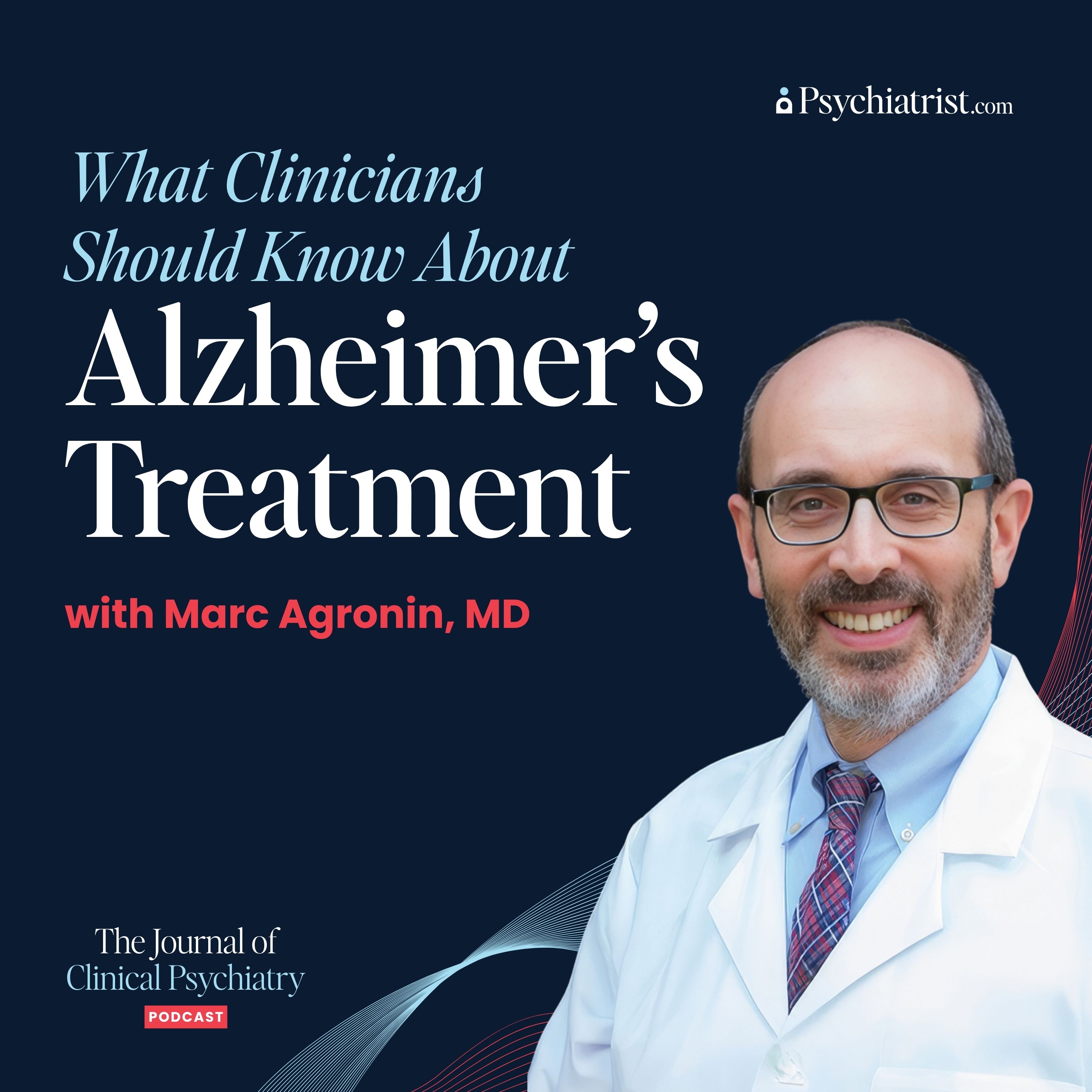
What Clinicians Should Know About Alzheimer’s Treatment with Marc Agronin, MD
Mar 2401:06:39Tap to summarizeFamilies expect cognitive decline as a normal part of getting older. We watch relatives lose their memories and accept the loss. Past medical trials regarding Alzheimer's disease failed 99 percent of the time, early signs of brain changes were missed, and precious years for early screening and treatment were lost.But new science changes this reality. Doctors now use blood tests and brain imaging for accurate diagnosis. They prescribe immunotherapy treatments that clear toxic brain plaques and slow cognitive decline by 30 percent. Dr. Marc Agronin shares his exact methods for geriatric psychiatry and dementia care. Learn how early medical intervention stops memory loss as he reveals his new research.🎯 PRIMARY DISCOVERY[19:51]:"Someone goes from thinking, ‘I have a terminal disease,’ to ‘I have a manageable disease and I am going to continue to live and do things.’ Their whole mindset changes."Dr. Agronin reveals the exact medical advancements that give patients their lives back.🩺 PRACTICE UPGRADE [30:56]:"We have all sorts of vital signs we check by routine. We need to have a cognitive vital sign that we check, and something like a Mini-Mental, Montreal Cognitive Assessment, something like that is practical to be done in primary care."Discover how doctors catch memory loss early with simple annual tests.✨ MEDICAL MILESTONE [46:29]:"We see over the 18 months of the studies that the rate of decline in terms of both cognition and function is on average about 30 percent slower. And then we know that after 18 months, it is a very slow rate of reaccumulation."Hear how new monoclonal antibodies melt away brain plaques and stop memory loss.CHAPTERS:00:00 - Meet Alzheimer’s Research Leader Dr. Marc Agronin01:45 - Why a Career in Geriatric Psychiatry and Dementia Care?06:17 - Why Alzheimer’s Research Is Entering a Breakthrough Era08:07 - Why Alzheimer’s Disease Is Rising Worldwide11:04 - How to Explain Alzheimer’s Diagnosis to Patients and Families16:11 - The Biggest Scientific Breakthroughs in Alzheimer’s Disease24:30 - How New Biomarker Guidelines Are Changing Alzheimer’s Diagnosis29:57 - Why Early Screening for Cognitive Decline Matters36:13 - Brain Health Habits That May Reduce Alzheimer’s Risk42:50 - Current Alzheimer’s Medications and How They Help Cognition45:45 - New Anti-Amyloid Treatments That Slow Alzheimer’s Progression50:01 - Understanding ARIA Side Effects in Alzheimer’s Immunotherapy54:09 - Emerging Alzheimer’s Treatments and Future Research Directions01:02:09 - The Role of Empathy and Person-Centered Dementia CareLinks:Full transcript and show notes: https://www.psychiatrist.com/jcp/ep11-what-clinicians-should-know-about-alzheimers-treatment-marc-agronin/ Journal of Clinical Psychiatry: psychiatrist.com/jcp/Dr. Marc Agronin: https://www.marcagronin.com/Figure referenced at 53:35 comes from Figure 1 in the paper “Alzheimer’s Disease Drug Development Pipeline: 2025.”: https://alz-journals.onlinelibrary.wiley.com/doi/10.1002/trc2.70098#AlzheimersResearch #BrainHealth #GeriatricPsychiatry
Transcribe →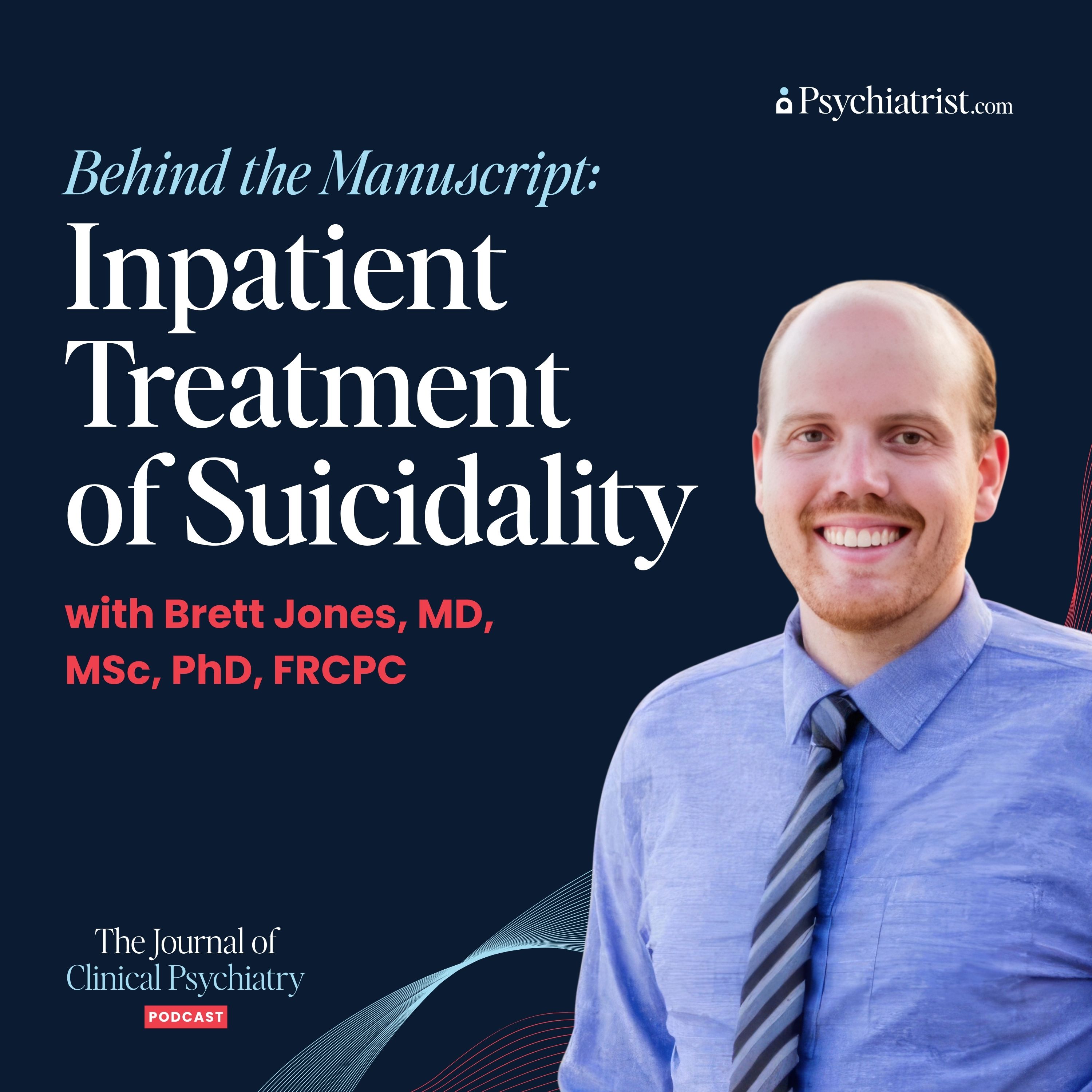
Behind the Manuscript: Inpatient Treatment of Suicidality with Brett Jones, MD, MSc, PhD, FRCPC
Mar 1000:38:39Tap to summarizePsychiatric hospitals admit patients for severe mental illness and high suicide risk every day. While mental health professionals treat acute suicidality during these intense crises, standard depression medications can take weeks to work. Traditional clinical psychiatry often leaves vulnerable patients in danger after hospital discharge. Medical teams need rapid suicide prevention treatments to help stabilize psychiatric inpatients quickly.Learn about potential improvements to inpatient suicide care as Dr. Brett Jones, Medical Head of the Bipolar Disorder Clinic at Toronto’s Center for Addiction and Mental Health, reveals the results of his research review into the best evidence-based medical interventions.🎯 KEY EPISODE HIGHLIGHTS:🛑 RESEARCH BLINDSPOT [10:25]:"I think there are a lot of studies out there. I was reading, I was seeing the evidence, but the consensus as to what would be the most effective treatment and for whom really wasn't there."Hear Dr. Jones explain the massive missing piece in psychiatric care.🧠 CLINICAL BREAKTHROUGH [23:45]:"Some of the chronotherapy was something I actually didn't know about. That certainly is a low cost intervention. So that's quite promising if it turns out to be effective."See how simple sleep treatments change inpatient psychiatry.🛠️ STRATEGIC ACTION [34:50]:"We showed a good effect with a digital version of DBT… So we're going to look at trying to replicate that in a multicenter study."Get the exact details on digital therapy for hospital units.CHAPTERS:00:00 - Honoring Dr. Nolan Williams03:07 - Career Path into Psychiatry and Suicide Research07:59 - Why Inpatient Suicide Treatment Needs Better Evidence12:59 - Key Limitations in Suicide Intervention Research14:57 - Ketamine and Rapid Acting Treatments for Suicidality19:48 - Emerging Treatments Beyond Traditional Depression Care25:47 - Translating Research into Real World Inpatient Practice30:38 - Major Research Gaps and Need for Better Clinical Trials33:04 - Hospitalization as a Critical Window to Prevent Suicide37:41 - Up Next: Dr. Marc AgroninLinks:Full transcript and show notes: https://www.psychiatrist.com/jcp/ep10-inpatient-treatment-suicidality-brett-jones/ Journal of Clinical Psychiatry: psychiatrist.com/jcp/Inpatient Treatment of Suicidality: A Systematic Review of Clinical Trials:https://pubmed.ncbi.nlm.nih.gov/39832343/Dr. Brett Jones: https://www.linkedin.com/in/brett-jones-1b308260/?originalSubdomain=caCenter for Addiction and Mental Health: https://www.camh.caUniversity of Toronto Psychiatry: https://psychiatry.utoronto.ca#AcuteSuicidality #InpatientPsychiatry #ClinicalResearch
Transcribe →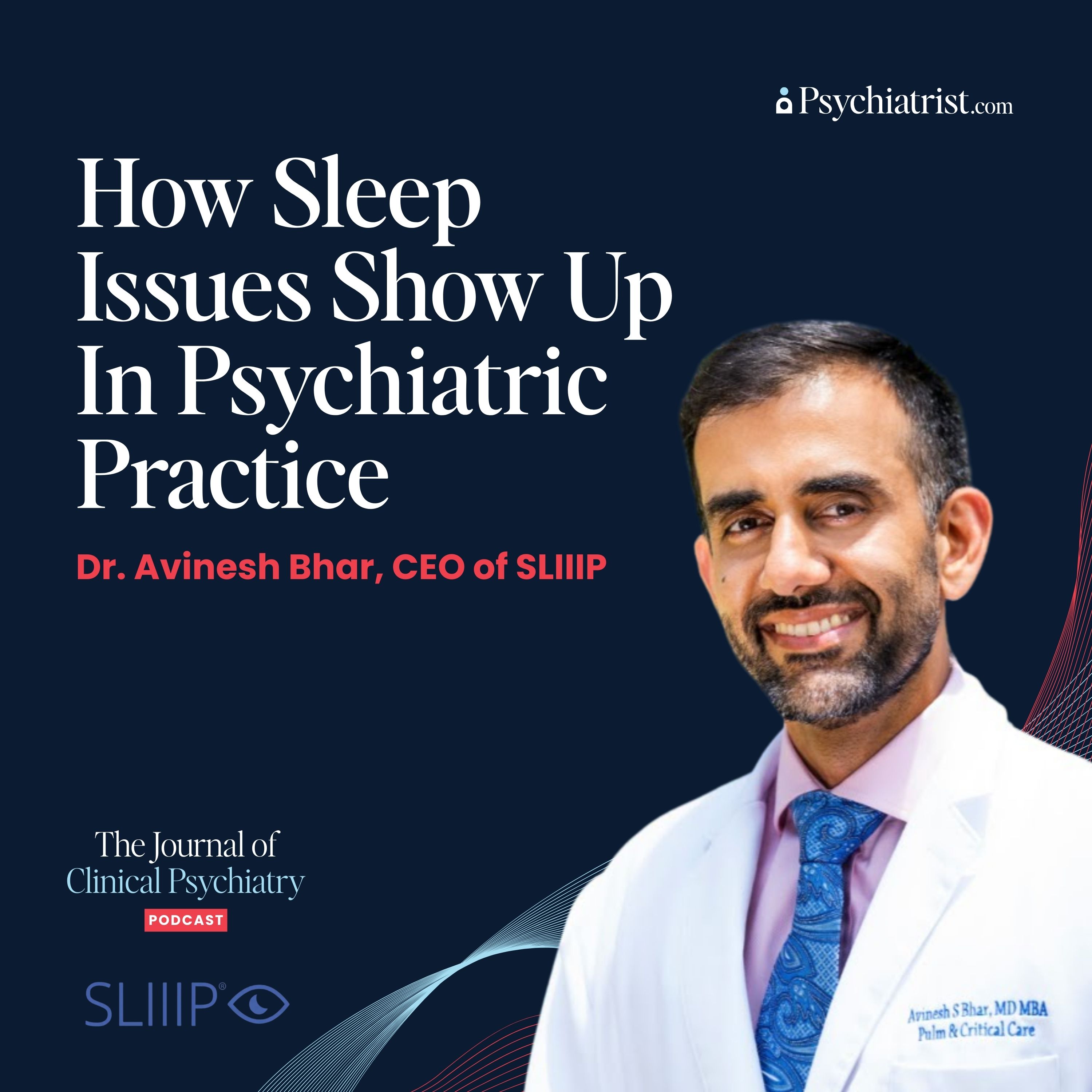
How Sleep Issues Show Up In Psychiatric Practice with Dr. Avinesh Bhar, CEO of SLIIIP
Feb 2401:01:56Tap to summarizeFeeling tired despite a full night's sleep? The problem may not be the hours you get, but the quality of your breathing. According to sleep medicine expert and founding physician of SLIIIP, Dr. Avinesh Bhar, many people dismiss fatigue, snoring, or frequent waking, using caffeine and over-the-counter aids to cope.This masks a deeper problem. Undiagnosed sleep-disordered breathing, like sleep apnea, is a silent driver of serious health issues, from heart disease to mental health conditions. Ignoring the root cause makes other medical treatments less effective, creating a cycle of declining health. 90% of people with mental health conditions also struggle with sleep issues. Getting help is easy at SLIIIP.com. No travel required. Insurance accepted.🎯 KEY EPISODE TAKEAWAYS:⚠️ THE SURVIVAL MODE TRAP [08:49]:"If you don't sleep well, your whole day changes in perspective. You are in survival mode, and you can't be your best self. You can't perform."Are you just surviving instead of thriving? Watch this segment to understand the biological cost of poor sleep and why feeling "just okay" is a major red flag for your health.✨ THE MENTAL HEALTH BREAKTHROUGH [29:24]:"If you're a therapist or psychiatrist managing mental health, you should also make sure the sleep is evaluated…otherwise, your improvements in mental health aren't going to reach the level that actually makes the patient feel like they've actually turned the corner.”Unlock better patient outcomes. See how integrating a sleep evaluation can be the missing piece in treating depression, anxiety, and PTSD effectively.⚡️ THE 2-QUESTION DIAGNOSTIC [59:40]:"'Are you sleeping well? Are you waking up refreshed?' If you have a 'no' to either one of those questions, the patient needs an evaluation."This is the simple, powerful framework you need. Listen to this section to learn the exact questions that tell you if it's time to refer a patient (or yourself) to a sleep specialist and how easy it is via www.sliiip.com. SLIIIP is making advanced sleep care fast & convenient, offering patients same week appointments with board-certified sleep medicine physicians instead of the months‑long wait typical of traditional sleep labs.CHAPTERS:00:00 - Introducing Dr. Avi Bhar03:48 - From ICU to Sleep Medicine and What Clinicians Miss06:52 - What Sleep Does Biologically and Why Quality Beats Hours13:23 - Sleep Myths That Keep You Sick and Tired16:24 - Sleep Hygiene That Works19:54 - When to Suspect a Real Sleep Disorder Beyond Stress23:00 - How Sleep Apnea Drives Heart, Metabolic, and Inflammatory Disease27:51 - Sleep and Psychiatry30:35 - Solving Access With Home Sleep Tests and Step-Based Care39:33 - The Ideal Telemedicine Sleep Care Pathway48:28 - Stop Masking Sleep Problems With OTC Aids and Melatonin52:33 - When to Retest and How Treatment Lowers Long-Term Healthcare Costs1:01:03 - Up Next: Dr. Brett JonesKey Takeaways:"Sleep is a reparative opportunity. It heals and repairs the trauma of the day. It's essential, not optional." "Quality and quantity of sleep matter. Sleeping 7-8 hours is good, but waking refreshed is key." "Sleep disturbances don't just coexist with illnesses; they can drive medical and psychiatric morbidity." "Evaluate sleep in patients with mental health issues. It's both a driver and symptom of psychiatric illness." "Speed and efficiency in sleep evaluation are crucial. It reflects the urgency and importance of the issue."Links:Full transcript and show notes: https://www.psychiatrist.com/jcp/ep9-sleep-issues-psychiatric-practice-avinesh-bhar/Journal of Clinical Psychiatry: psychiatrist.com/jcp/SLIIIP: https://sliiip.com/#SleepApnea #MentalHealth #SleepDisorders
Transcribe →