Loading summary
Transcript62 lines
- [00:05]
Jessica Mendoza
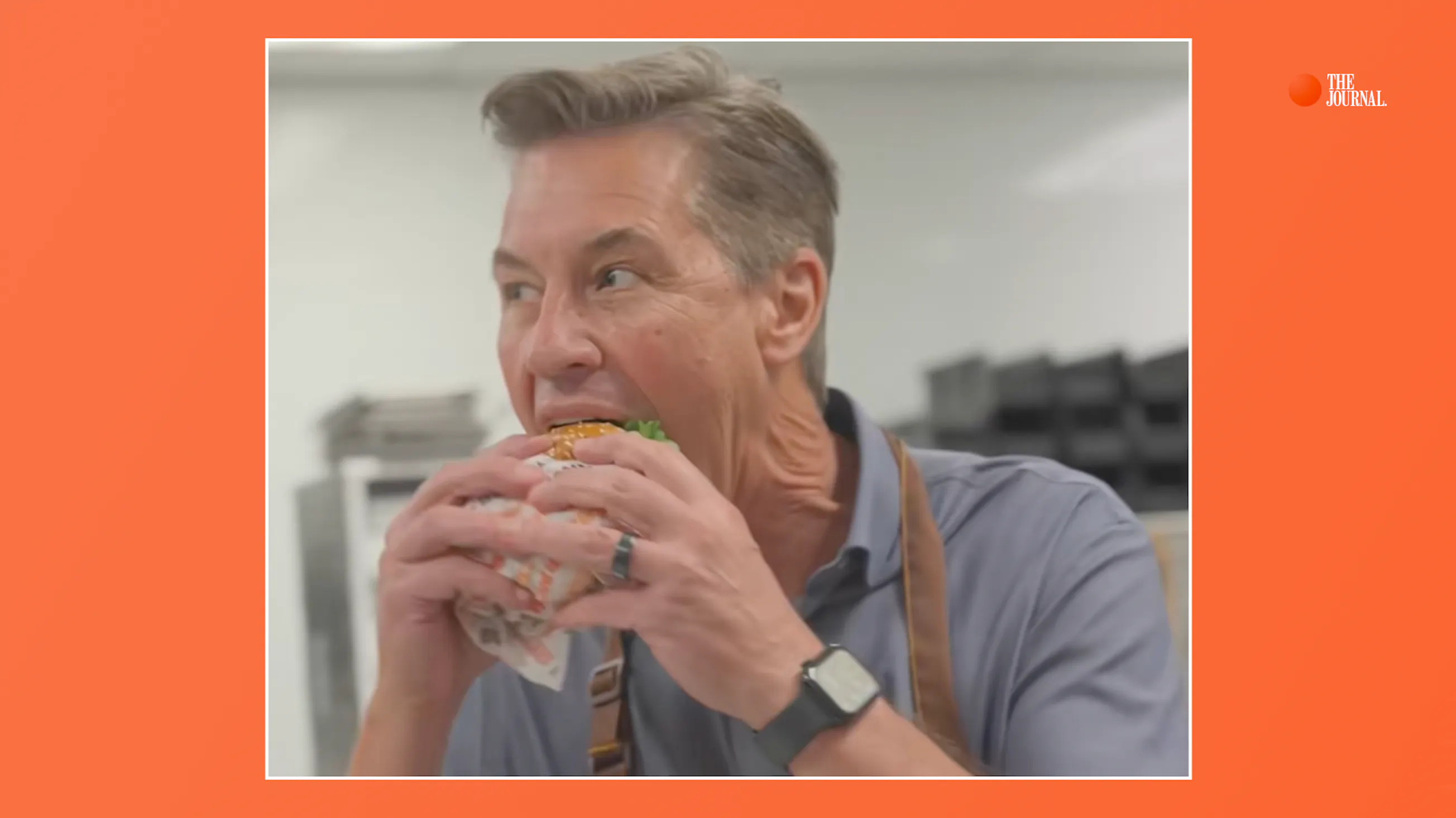
Recently, Burger King posted a clip on social media of one of their executives taking a big bite of their signature Whopper.
- [00:19]
Tom Curtis
Not bad, right? Only one thing missing, a napkin.
- [00:26]
Jessica Mendoza
The clip went viral because the execs seem to really enjoy his burger. Last week, I sat down to talk to him. So glad to have you on. Thank you again for taking the time.
- [00:38]
Tom Curtis
Hi, Jess. Great to be here.
- [00:40]
Jessica Mendoza
Just for the record, could we start by just having you introduce yourself, please?
- [00:43]
Tom Curtis
Okay. I'm Tom Curtis. I'm the president of Burger King in the United States and Canada.
- [00:50]
Jessica Mendoza
Tom joined burger king in 2021, and he knew coming in that there were problems that needed fixing.
- [00:56]
Tom Curtis
I don't think that we're an exceptional brand yet. I don't think that we are the absolute best that we can be. And I think that people catch that and see that every single day. I don't want consumers to think that we're standing up and saying, we're perfect, we're fixed, we get it all right every day. Because it's simply not true.
- [01:18]
Jessica Mendoza
Why aren't you the best? It's usually pretty hard to admit when you're not hitting up to par, right? How are you failing?
- [01:29]
Tom Curtis
I think our restaurants especially were allowed to decline for many, many years. And a restaurant remodel is very expensive. And so every single day, every we're operating at, every single day, one restaurant becomes a beautiful example of what Burger King can be.
- [01:52]
Jessica Mendoza
But with growing competition and rising prices, Tom has been fighting an uphill battle.
- [01:58]
Tom Curtis
Hey, I remember when I was a kid and I would get a crown and my parents would take me to BK after we won the game or after we lost the game, whatever the case may be. But just that once I was at bk, people would say, I remember when. And that kept occurring to me, that, man, we've gotta somehow reignite that love and get people to have a modern love for Burger King and a live relationship with the brand. And it was just a matter of finding something that could unlock that.
- [02:32]
Jessica Mendoza
Welcome to the Journal, our show about money, business and power. I'm Jessica mendoza. It's Friday, April 10th. Coming up on the show, the long road to turning around Burger King.
- [02:56]
SAP Advertiser
This episode is presented by SAP. Your company's ambitions can't be held back by long implementations, surprise costs, or empty AI promises. SAP grow AI cloud ERP gets you live fast, keeps pricing predictable, and delivers built in AI that gets results the first day, not someday. All on a single platform that's easy to manage, industry ready and designed to scale with your business. Bring it with SAP grow AI Cloud ERP for any size business. SAP.com grow K pop demon hunters, saja
- [03:26]
Unidentified McDonald's Fan
Boy's Breakfast Meal and Hunt Trick's meal have just dropped at McDonald's. They're calling this a battle for the fans. What do you say to that, Rumi?
- [03:34]
Jessica Mendoza
It's not a battle. So glad the Saja Boys could take breakfast and give our meal the rest of the day.
- [03:39]
Tom Curtis
It is an honor to share.
- [03:41]
WSJ Announcer
No, it's our honor.
- [03:42]
Tom Curtis
It is our larger honor.
- [03:44]
Jessica Mendoza
No, really, stop.
- [03:46]
Unidentified McDonald's Fan
You can really feel the respect in this battle. Pick a meal to pick a side
- [03:53]
SAP Advertiser
and participate in McDonald's while supplies last.
- [04:00]
Jessica Mendoza
Tom loves fast food, and he's spent his entire career in the industry, mostly Domino's, which he helped make the number one fast food pizza chain in the country. For decades, Burger King held the number two spot among burger chains in the US behind McDonald's. Then in 2021, Wendy's got ahead, pushing Burger King to third. It was around that time that Burger King's parent company, Restaurant Brands International, recruited Tom. What made you jump from pizza to burgers?
- [04:32]
Tom Curtis
I think the experience that I got to live at Domino's, where we were the distant number two on the planet in pizza, and to become the dist instant number one in pizza was a magical journey. And when I looked at Burger King, it seemed to me to be very similar.
- [04:53]
Jessica Mendoza
And so what was the mandate when Burger King recruited you? What did they actually want you to do?
- [04:59]
Tom Curtis
When Burger King originally approached me, they said, hey, we are very good at some things. We're very good at financial analysis and understanding PowerPoint spreadsheets, but we don't have a lot of. Of experience and a lot of people here that have spent their entire lives in restaurants and understand the heartbeat of what makes operations work. And I, you know, I've owned restaurants for 20 years. I've been an operator for every year that I haven't owned restaurants. When I got here, they said, hey, listen, we know how to analyze the business. We've done everything else wrong, so come in and help us do that right or find the right way. And it hasn't been easy, and it hasn't been done by me alone at all. We've been on this journey together, and we've learned together what's going to make this brand great again.
- [05:55]
Jessica Mendoza
There are almost 7,000 Burger King restaurants in the U.S. many of them franchisees. And over the last few years, the average profitability per US Restaurant has fallen. And so when Tom joined, he started by putting together a team that would actually Go visit some of these franchisees in person.
- [06:13]
Tom Curtis
The first early steps that don't really get talked about too much was we fortified the field team. We added more support in the restaurants and we had them visiting restaurants more often. Not cooking up spreadsheets from their homes and sending the spreadsheets to the franchisees with checklists of things to do. A larger field team being in the restaurants, and then with my operations team, we started to eliminate some, some differences in the way that you build products. For example, we had one double burger where you would put burger cheese, burger cheese, and then we had another double burger where you would go burger, burger, cheese, cheese. So like, can we just do it one way? So now we do it one way for all the burgers. Just the simplest things like that to make it easier for restaurants to execute. Probably another one more big move I think we made that was indicative of a lot of things that we were doing was we had a hand breaded chicken that we had launched which had 21 steps. And I don't know if 21. 21 steps. And I don't know if you've heard, but we're actually a burger brand. And so the restaurants were executing poorly on our flagship Whopper because they were so distracted trying to do a complex hand breaded chicken that took 21 steps. And let me tell you, when that chicken sandwich was done correctly, it was spectacular. But the bottom line was we couldn't do that and make the world's best burger.
- [07:48]
Jessica Mendoza
So Tom wanted to simplify the menu. He also wanted to upgrade its restaurants across the country. Originally, Burger King had a goal of modernizing 85% of its restaurants by 2028. But they've had to pull back from that target because of slowing business and rising costs. One of the biggest reasons beef. In an earnings call, Burger King said its U.S. beef prices rose more than 20% in 2025. Those costs are expected to stay high this year. Are you considering raising prices?
- [08:21]
Tom Curtis
So, you know, I saw this in my former life. You know, franchisees and us are very disciplined about prices. When costs go up, it really puts a squeeze on people who are negative growth or haven't been growing. So we just, we have to hold serve here on price. And our franchisees right now we're at a two year low on the amount of inflation that we're seeing in our prices. Not our input costs, but the prices that we're charging consumers. So our franchisees are gaining more and more conviction that we just need to deliver more value for the guests and we're going to be capturing huge market share with what we're doing now. And so I don't think that it's a matter of holding off. I think it's a matter of us continuing to gobble up. Continuing to gobble up share, which I think is happening and will happen. Then you can continue to gain market share.
- [09:17]
Jessica Mendoza
So to be clear, no plans on raising prices for now.
- [09:21]
Tom Curtis
No plans on raising prices.
- [09:24]
Jessica Mendoza
But what Burger King is doing is putting Tom front and center on its social media pages. That's next.
- [09:46]
Chef MeiLynn
As a chef, I know flavor doesn't begin in the kitchen. It begins on the land. And West Home's nature led Australian Wagyu is a story written in the landscape of Northern Australia. Cooking is storytelling. And West Home Wagyu carries a story of Northern Australia itself. Raw, powerful and deeply authentic. It's a testament to the passion and care raised in the rhythm of Northern Australia. I'm chef MeiLynn from Ada Club in Los Angeles and I invite you to visit westhome.com maitland to learn more and taste a story only West Home nature led Australian Wagyu can tell. That's W E S T H o l m e.com m e-I l I n.
- [10:36]
Jessica Mendoza
When Tom went viral for taking that big old bite of a Whopper, it was partly because Burger King posted that clip after McDonald's posted their CEO doing the same thing. People have since compared the two clips side by side and other burger executives hopped on the trend too.
- [10:55]
Tom Curtis
I had seen some posts from some other brands that, you know, that were, you know, being panned, if you will, that were being not received well. But I never really thought, okay, they're going to put my video up against another video. And, you know, that was never the intent of what we did. The one thing that was done that was a little bit intentional was, you know, my video eating a burger was about a two minute video. And then one day they did a cut down of it. And the cut down was just like, just in case you missed it. And I think that was really to reinforce that there was some real genuine love for our burger coming from me. And that was some genuine love.
- [11:42]
Jessica Mendoza
Okay, so just to be clear, this was not, and I'm just gonna say it, this, this video wasn't necessarily a response to the video that McDonald's posted of their CEO taking a bite.
- [11:52]
Tom Curtis
Not only was it, not necessarily, it was not remotely ever built for that reason.
- [12:00]
Jessica Mendoza
Tom says his bite of the Whopper was part of a series of stunts that Burger King's social media team has been cooking up. Another idea was getting Tom to post his phone number online and start asking customers to call in.
- [12:13]
Tom Curtis
Hi, I'm Tom Curtis, president of Burger King, and here's my number. I'd love to hear from as many of you as possible. So give me a call, shoot me a text, or leave me a voicemail.
- [12:25]
Jessica Mendoza
So far, Burger King has gotten 41,000 calls on that phone line, and Tom himself has responded to about 1,500 people.
- [12:34]
Tom Curtis
I want everybody to get a genuine personal connection with somebody who has a big influence on this brand. I got one last week where a customer said, hey, I drive into my town was Meador, Georgia. I'll give away the name of the town, and then when I get off the exit, the first thing I see is the Burger King. But the Burger King sign has been broken for two years, and it makes me feel bad about my town, man. Getting that feedback and then immediately getting on the phone with the field and the franchisee. That thing's being addressed immediately and quickly. And being able to make a difference like that is really important.
- [13:13]
Jessica Mendoza
What were the most common complaints that you did hear? Like, top three, Top three.
- [13:17]
Tom Curtis
Let's see. I would go with fix your fries. And how about the fries?
- [13:23]
Customer
Gotta fix the fries, man. And I don't know if it's the oil y' all are using.
- [13:28]
Tom Curtis
I would say the second one and maybe this one, just as elevated in my mind. But more hospitality and more friendliness are something that people ask for. If we can make quantum leaps in the guest experience. Just a smile. Hello. I'll be right with you. That's all it takes. If you say those things and do those things, you'll make the experience magical. So I think that's one of the biggest opportunities in our business.
- [13:58]
Jessica Mendoza
Well, one of the big changes that you did make as a result of the calls was to change your signature product, the Whopper, which is a recipe that Burger King hadn't changed in, like, 10 years. Is that right?
- [14:09]
Tom Curtis
Absolutely. You cannot change. You cannot go in and make big, sweeping changes to your most iconic burger and probably the most iconic burger in the burger industry without being very, very thoughtful about it. We started looking into Whopper changes two years ago, and we asked the guests what they thought. They thought that. Why are you changing the Whopper? It doesn't need fixing. We love the Whopper. So if you really evaluate the changes to the Whopper, they're very, very nuanced. The build is still the same. The mayonnaise, it's just become a little bit creamier. And that's an improvement, but it's a nuanced improvement. There's a fluffier bun that's got a nice coating in a glaze that helps the sesame seeds stick uniformly to it. And then the ultimate packaging with the half wrap that holds it together and the clamshell box that protects it. Are you one of the people that's been asking me about, why is your whopper smushed?
- [15:10]
Customer
Doggy and mushy? It's that wrapper. The Whoppers are always smushed at the bottom of the bag.
- [15:16]
Tom Curtis
I think we have a solution for you, and I'm so thankful that our guests and our team said, don't go crazy. Don't change it in big ways. Do the little things that show that you respect it in the way that it should be respected.
- [15:33]
Jessica Mendoza
But why do you think it took these calls for you to make what sound like, I mean, pretty basic changes? Especially thinking about the boxes, the packaging. I mean, McDonald's has been using boxes for a while. Wendy's, Jack in the Box. Why did it take sort of you hearing from customers directly through these calls to make a change like this?
- [15:54]
Tom Curtis
Well, listen, I think that kind of the packaging that we have with the half wrap and the clamshell that we put it in is a big input cost for our franchisees. And so, you know, in all restaurant businesses, you're trying to balance the interests of the guests and the interests of the team members and the interests of the franchisees. They need to be able to make money to invest back in their restaurants. But I think understanding that we have absolutely the best burger, but that we weren't respecting it well, and that it was getting smushed, that was the biggest complaint. Hey, your burger's great, but it gets smushed allowed us to understand that if we only made that, if that was one of the few tweaks that we made, that it would elevate the experience so much that it would get the respect that it deserved. Kind of led us to that. Let us get it. Sorry. Led us to that outcome as the. As the ultimate answer for one of the nuanced changes that we made.
- [16:56]
Jessica Mendoza
Did you. Did the franchisees push back on trying to make these changes?
- [17:03]
Tom Curtis
Some did and some didn't. Some did and said, hey, we can't bear this cost right now when frankly, beef is at an all time high. And I think some said we need to honor the Whopper and it's the best product out there, but we insist on wrapping it in paper and it gets smushed in the bottom of the bag. Ultimately, we did a lot of consumer testing and this listening line really brought it home for us. Just sharing all of that feedback with our franchisees gave them the conviction that it was a great move that we should make, and that's what we did.
- [17:41]
Jessica Mendoza
How much ultimately did it cost to make these upgrades? And did you have to raise the Whopper's price as a result?
- [17:47]
Tom Curtis
Well, no, because pricing is managed by the franchisees. It does add about $4,000 in cost to the annual operations into food cost and an average Burger King. And our franchisees locked arms with us and agreed that, listen, we know that the benefits that we'll get by people falling in love with the Whopper again and that people that will come back and try it again for the first time in many, many years or in many years or for the first time will far outweigh that cost. And so far, that is proving to be wildly true.
- [18:26]
Jessica Mendoza
I mean, did you ever think that being a burger executive would involve having to go viral on social media?
- [18:32]
Tom Curtis
I didn't think it would involve going viral. I was coached by my PR team a couple of months ago. Tom, you're a super duper micro, micro influencer. I don't know exactly what qualifies you as such a thing. It's just such a tricky game. You don't know if you're going to come off as genuine. And I think, you know, even when this thing went viral, I always was concerned, like, I hope America doesn't wake up one day and go, hey, you know, we don't like messy eaters or whatever, because this thing can go north or south on you and you just never know. I will say that having had this happen the last month or so, I have been more open and more eager to meet with folks like you and tell our story, because I think the story is good and I think it's genuine and I think it's wholesome. And I think we're doing the right things and we're doing them for the right reasons. So I certainly feel more confident that this is the. These venues are a great place to tell the story of a brand. And I think a brand does come from, you know, and what a brand is doing comes from the leader. And the leader needs to be where the buck stops. We need to take accountability for where we make mistakes and the things that we've done wrong. And we also need to proudly point in the direction that we're going. And if you listen intently to the American public, there's no way you get that wrong.
- [20:04]
Jessica Mendoza
Well, Tom, thank you so much for your time here.
- [20:07]
Tom Curtis
All right, well, thank you. Love talking about this stuff and could do it all day, so appreciate that you guys had me on.
- [20:19]
Jessica Mendoza
That's all for today. Friday, april 10 the journal is a co production of special Spotify and the wall street journal. The show is made by laura benchoff, catherine brewer, pia gidkari, max green, isabella japal, sophie codner, ryan knudsen, matt kwong, colin mcnulty, annie minoff, laura morris, enrique perez de la rosa, sarah platt, allen rodriguez espinosa, heather rogers, pierce singhe, jeevika verma, katherine whelan, tatiana zamis and me, jessica mendoza. Our engineers are griffin tanner, nathan singapak and peter leonard. Our theme music is by so wiley. Additional music this week from peter leonard, bobby lord, nathan singapok, griffin tanner, so wiley and blue dot sessions. Fact checking this week by kate gallagher and mary mathis. Thanks for listening. See you on Monday.
- [21:23]
WSJ Announcer
The Future of Everything is The Wall Street Journal's flagship live event, returning to New York City May 4th through 5th. Be there as CEOs, policymakers and innovators sit down with our journalists to answer the most pressing questions of the day. From finance, tech and economic policy to sports streaming and style, we're bringing together today's most compelling newsmakers for two days of conversations on what's ahead of Listeners of this podcast can access exclusive discounted rates by visiting WSJ.com future that's WSJ.com future.