Loading summary
Transcript47 lines
- [00:06]
Jessica Mendoza
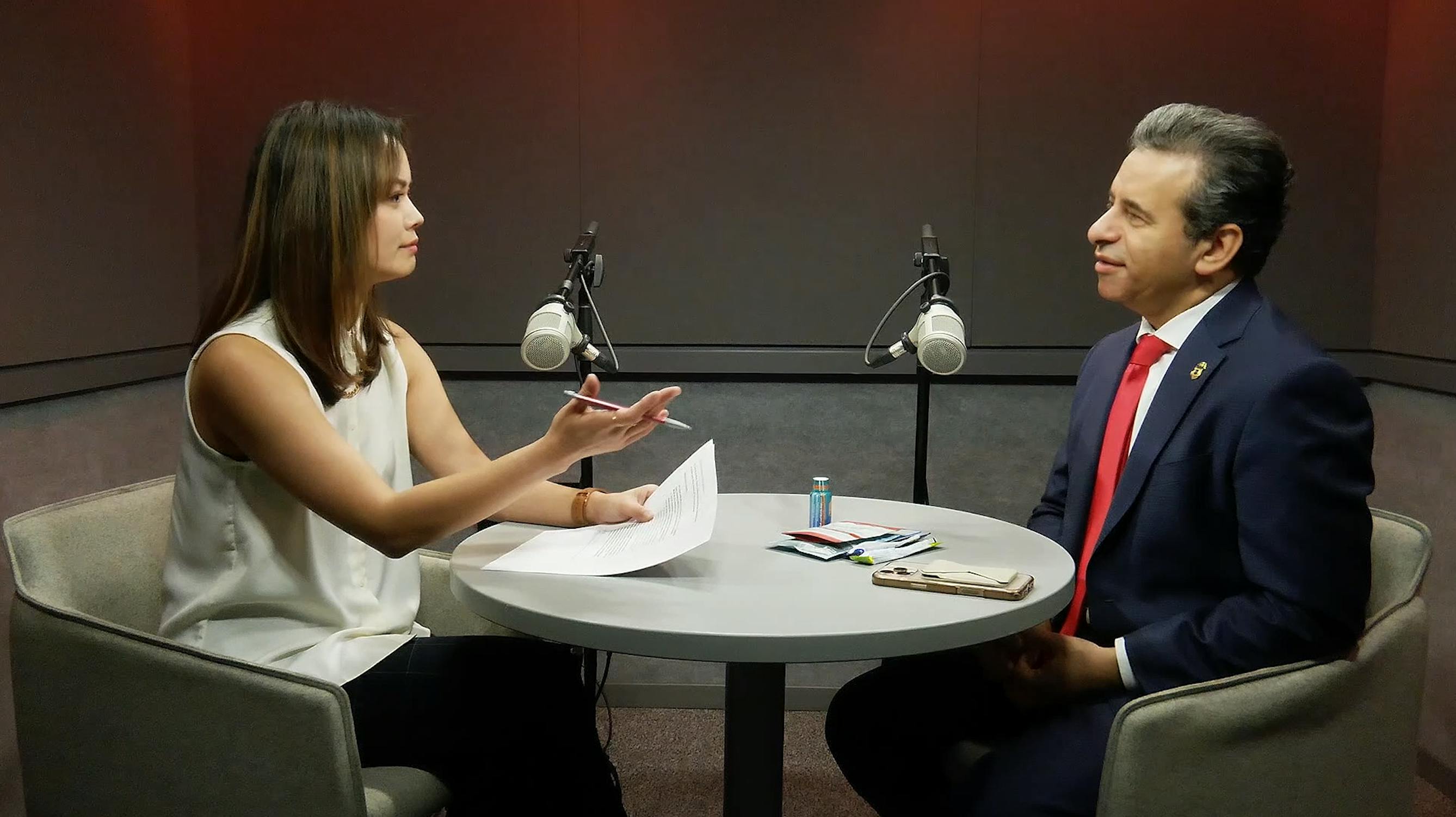
Last week, I sat down with one of the most powerful figures in American healthcare.
- [00:11]
Dr. Marty Makary
Yeah, let's be honest. The FDA has had periods where it's been captured by the industry it's supposed to regulate.
- [00:16]
Jessica Mendoza
Dr. Marty Makary is just four months into the job as the head of the Food and Drug Administration, an agency that regulates one fifth of all consumer spending. And already Makary is shaking up the agency.
- [00:28]
Dr. Marty Makary
We are rewriting the food pyramid. The food guidance has been misinformation.
- [00:32]
Jessica Mendoza
He wants to ban artificial food dyes, cut down drug approval times, and use AI to speed up the work of scientists. Makary is hoping to reshape the FDA in the name of the Maha movement, make America healthy again. And Maha has been highly critical of Big Food and Big Pharma, blaming those industries for the ill health of the country. I wanted to know how Makary was balancing when to work with these big corporate entities and when to push back. Welcome to the Journal, our show about money, business and power. I'm Jessica mendoza. It's Tuesday, August 5th. Coming up on the show, an interview with FDA Commissioner Marty Makary. Thank you. Dr. Marty Makary. Thank you for being here.
- [01:35]
Dr. Marty Makary
Great to be with you, Jess.
- [01:37]
Jessica Mendoza
Well, let's start with why you're in New York. You're on a listening tour meeting with CEOs from pharmaceutical companies. What do you want to hear?
- [01:46]
Dr. Marty Makary
I think we have to listen to the people that are using our interface at the fda. We have to modernize the agency and streamline the process if we're going to achieve our goal of seeing more cures and, and meaningful treatments for the American people. Why does it take 10 years for a drug to come to market? Do we really think if you have the cure for breast cancer, we should tell people just to wait until we get around to these applications that might be sitting on a shelf?
- [02:11]
Jessica Mendoza
And so what are you trying to hear from pharmaceutical companies when it comes to that sort of process review that you're looking at?
- [02:17]
Dr. Marty Makary
So we want to hear where the FDA has engaged in overregulation and stifled innovation. We want to see where we can do things better. We want to figure out how we can modernize with the CEOs that we're going to be meeting with. What I've heard, and this is the fifth of the CEO listening sessions that I've held around the country. And we've got a couple more to go. They want better communication. Sure. They give us very formative ideas on what to change. But if they can have a couple quick calls with our reviewers along the way of drug development and the application process. It can save them up to a year of guesswork. We also heard things that we acted on really quickly. For example, reducing animal testing. We have routine animal testing requirements that are not necessary the majority of the times. We have drugs approved overseas that are used in humans. And we're still telling companies to go back and do animal testing. Things like that can shorten the review time. Use common sense reforms, lower R and D costs, which lowers drug prices for everyday Americans, which is a big goal for this administration. And it stops some of the cruelty.
- [03:24]
Jessica Mendoza
To animals you mentioned. You know, part of this converse, these conversations that you're having is you want to be able to have, you know, CEOs or executives or people from pharma companies just give the FDA a call during the review process. One thing that you've kind of expressed concerns about is the FDA having a cozy relationship with industry. So how is this listening tour and your leadership of the FDA different?
- [03:45]
Dr. Marty Makary
Yeah, let's be honest. The FDA has had periods where it's been captured by the industry it's supposed to regulate. Now we've gotta have a good user friendly process for drug makers to achieve our goal of more cures. And I'm serious about that. We want to see a cure or meaningful treatment during my term for type 1 diabetes, stage 1 and 2 cancers, pediatric blindness, neurodegenerative diseases, and PTSD to help our veterans suffering from ptsd. In order to do that, we have to partner with drug makers, but we have to keep the scientific process impeccably independent. That is our review has to be free of that contamination. That's why one of my first actions as FDA commissioner was to remove pharma and industry members from all FDA scientific expert panels. Wherever statutorily possible, we have to protect that independence.
- [04:37]
Jessica Mendoza
So I also want to talk about the FDA's new system to fast track the drug review process. This is clearly something that you're very passionate about. So in this new system, as I understand it, if the companies pledge to keep prices the same in the US as they do at other high income nations, then their approval could be fast tracked. The FDA has historically not concerned itself with prices and focused only really on safety and efficacy of drugs.
- [05:02]
Dr. Marty Makary
Yeah. So the pilot program you're describing, and to describe it a second, is to use the idle time during a clinical trial to get a lot of the lion's share of the application reviewed so that when the trial reads out, we can make a quick decision. Maybe in Weeks instead of a year is kind of the standard time. If a company has shown that they will equalize the prices to make drugs more affordable, that's something that we will consider to try to support MFN or Most Favored Nation status pricing. We're the biggest purchasers of drugs. We want the best prices. We'll have an independent committee also to adjudicate these vouchers and we're letting companies apply.
- [05:39]
Jessica Mendoza
But doesn't determining which companies are eligible, won't that take time as well?
- [05:44]
Dr. Marty Makary
Yeah, it will take time. Look, we've got to try things, we have to do things new and try new things at the FDA. We can't keep going down this path of a 10 year process to let drugs come to market in this sort of standard fashion that was developed in the 1960s. We've implemented AI for our scientific reviewers. We have it agency wide. After a very successful pilot, I've been in office about four months. A couple weeks in, we had this incredible pilot with AI. The reviewers loved it. They said it did in six minutes. What would normally take them a couple days to do. So after the successful pilot, we launched it agency wide, ahead of schedule, and reviewers are using it every day and love it.
- [06:22]
Jessica Mendoza
Is this Elsa or is this Elsa?
- [06:24]
Dr. Marty Makary
Yes.
- [06:24]
Jessica Mendoza
Okay. But I understand there was some criticism of it early on as well. It wasn't all smooth, is that right?
- [06:29]
Dr. Marty Makary
So because we live in a very partisan time, there's criticism of every single thing we do. ELSA is an amazing tool that is optional for our scientific reviewers. Thousands of our scientific reviewers, the vast majority are using it every day. That tells you how much they love it. Now the criticism was it may not.
- [06:50]
Jessica Mendoza
Be just making mistakes.
- [06:52]
Dr. Marty Makary
Well, if you search something in Google, would it be fair to say that, oh, 1% or 2% of the information is not accurate? No, it's up to the reader to read those articles and the sources and figure out. So ELSA is as good as the questions that you put into Elsa? That's how AI works, I guess.
- [07:08]
Jessica Mendoza
I'm just curious, is the FDA the place to sort of test that out given all these other changes that you're already doing?
- [07:14]
Dr. Marty Makary
Well, first of all, you made a good point. All large language models have that risk of giving use what they call hallucinations. And so it is something that is just like doing a Google search. Should we not use Google, not allow our scientists to use Google because it could give them one inaccurate hit? No, we've got to modernize. The rest of the world is using it. The reviewers know the limitations they know how specific the questions need to be and they love it. And that's the key. Whatever the reviewers find helpful to do their jobs, that's what we want to support.
- [07:48]
Jessica Mendoza
I want to ask about vaccines. In your listening tour, are you hearing concerns from pharma companies about vaccines? For example, you know the FDA's stricter COVID vaccine approval guidelines?
- [07:58]
Dr. Marty Makary
Yeah. So we believe that companies want predictability, markets want predictability, capital markets want predictability from the FDA. We regulate 20% of the US economy. We owe it to them to give them predictability. So that's why when we came into office, we laid out in the New England Journal of Medicine a very clear framework for COVID vaccine regulation that was a risk stratified approach that distinguished high risk from low risk. And when it comes to a young, healthy 12 year old, where a mom is saying, do I really need to get my 12 year old healthy child vaccinated every year in perpetuity for the rest of her life, does she need 60 more Covid boosters in her average lifetime? We're saying this is a reasonable time for us to ask for a clinical trial in that low risk population.
- [08:46]
Jessica Mendoza
So while we're on the subject of vaccines, I do want to talk about measles. The CDC says there's been over 1300 cases as of the end of July, the first pediatric measles death in over 20 years. Vaccination rates are dropping and cases are rising. You know all of this, I know you're not supportive of broad vaccine mandates. You've just sort of talked about that. But as a medical professional and as the head of the fda, would you recommend that all Americans vaccinate their children against measles?
- [09:12]
Dr. Marty Makary
Let me be clear. The best way to prevent measles is through vaccination. Now there is, as you say, a global measles increase. Measles outbreaks worldwide have gone up. And I do worry, and I have worried. I was very clear during the pandemic that the harshness of the absolutism of the COVID vaccine mandate in young, healthy people was gonna create never vaxxers. And I think we're reeling in from an era of distrust. If you look at the study in JAMA, trust in doctors and hospitals went from 71% before COVID to now 40%. That's a giant 31 point drop. So we've gotta show humility, say what we know and don't know, and avoid one of the most dangerous things you can do in public health, and that is to say something with Such absolutism to say you must absolutely do something. We when the reality is it's risk stratified or it's nuanced or we don't really know.
- [10:07]
Jessica Mendoza
Coming up after the break, what does the FDA commissioner want from Big Food? Let's talk about the F in fda. We're talking about the D. So far. So a term that has gotten a lot of attention recently is ultra processed foods. I know that the administration has just asked the public for help in defining the term. What possible definitions do you think might work best?
- [10:45]
Dr. Marty Makary
I think it's good for the public to know that there is processing and processed foods and then there's the ultra processed, addictive, chemical laden food that's stripped of fiber and doesn't even resemble food sometimes. So we're not talking about processed food where you're just cutting a cucumber or canning a product. We're talking about ultra processed. These are foods that are addictive. We don't think, and I don't think that our nation's childhood obesity epidemic is a willpower problem. We have engineered highly addictive foods with vibrant colors that can mess with the developing mind. That's why we took action to ban to remove the nine petroleum based food dyes from the US Food supply. We got tremendous response from the food makers and we saw titanium dioxide banned by one of the biggest food makers. And so we're gonna keep going. We're doing an inventory of all the chemicals banned in Europe and other countries, but allowed in the United States. And we're gonna try to educate the public.
- [11:48]
Jessica Mendoza
If the FDA does draw a hard line around ultra processed foods, what would that mean in practice? Is it warning labels or advertising limits like attacks?
- [11:57]
Dr. Marty Makary
So we want to empower people with information. If people want to go eat, you know, tasty cakes and donuts and ding dongs, you can do it. This is America. But when it comes to where we spend our taxpayer dollars, we want to provide better guidance on what we consider to be healthy. And for the first time ever, talk about ultra processed foods. That's why we're starting this process to get public input to create some definition. Look, it may not be perfect, but we need to start somewhere, right?
- [12:24]
Jessica Mendoza
So you're not really considering putting sort of labels on anything or, you know, looking at advertising. It's really more about here's the information for the public, here's the guidelines for where taxpayer dollars are getting spent, and that's generally the approach that you're taking.
- [12:38]
Dr. Marty Makary
I think we have to consider everything. I think in health in general and public health, there cannot be sacred cows. You can't say, oh well, this would be really effective as a public health strategy, but this lobby group would be upset, therefore we can't touch it. I don't think we should be approaching public health like that. And we're not doing that in this administration.
- [12:59]
Jessica Mendoza
Another question on food, so this is what you were saying is that most of the food that Americans eat is processed, packaged or distributed by large corporations. What do you need from big food corporations to make America healthy again?
- [13:12]
Dr. Marty Makary
So first of all, they are good people and they're doing what we asked them to do as a society 50 to 70 years ago. We told them to address food insecurity and mass starvation and food shortages. And so they stepped up and they focused on mass production and they focused on increasing shelf life, they added chemicals, they did what we told them to do back in the day. But now that we have an epidemic of so many chronic diseases that have surged, when you look at the metric of the health of the population, it's been a 50 year failure. And part of it has been no one has had the courage to talk holistically about food as medicine and the microbiome and what we eat and ultra processed chemicals that are engineered to make food addictive. We have got to start talking about school lunch programs, not just putting every six year old on Ozempic. We've got to talk about sleep quality and how it affects your blood pressure, not just putting people on first after second line antihypertensives. We gotta talk about environmental exposures that cause cancer, not just the chemo to treat it.
- [14:16]
Jessica Mendoza
Dr. Makary brought some props into the studio for our interview. Colorful packets of gummies and flavored tablets labeled Kratom and 7oh. Last week the FDA announced it was taking steps to restrict 7oh a compound derived from the plant Kratom. The FDA is recommending that 7oh be scheduled as a controlled substance, saying it has opioid like properties. I'd love to talk about what we've got here on the table. And I know you made an announcement around kratom and 7oh. Could you just talk a little bit about that? It's. I don't think. I wasn't familiar with it until very recently. So could you just tell us what this is all about?
- [14:52]
Dr. Marty Makary
Yeah, and I wasn't familiar with it until I started going into vape stores in the last several months. So this is called 7oh. It goes by a couple different names. 7, Omega 7 hydroxy, Metrogynine, 7oh acts like an opioid and yet you can walk into some of these vape stores and just buy it. In one study, it is 13 times more potent than opioids. We don't know the magnitude of the problem. We don't know if this is the fourth wave of the opioid epidemic. But let's not get caught flat footed like we did with OxyContin and fentanyl and every other substance.
- [15:30]
Jessica Mendoza
And do you have any statistics around this yet?
- [15:32]
Dr. Marty Makary
I wish we did. This is a sort of a sleeper early. This might be the tip of the iceberg. It's everywhere in America. We know it's addictive and we don't have good stats or research on it. So we are sounding the alarm. The FDA just put out a giant report on our website. I just put it out on X. We are asking the DEA to schedule this as a controlled substance. Right now. It's not. And we have asked the distributors to stop distributing 7 oh. This is addictive stuff and every parent should know about it. It's in some of these drinks. We're not talking about Kratom leaf. Kratom leaf has trace amounts of 7 oh. That's separate and people need to know that's separate. We're Talking about synthetic concentrated 7 oh, which is a byproduct of Kratom. It's a synthetic byproduct. People should know concentrated 7 oh is dangerous and it is an opioid.
- [16:24]
Jessica Mendoza
Is this. I mean, I understand that you're trying to get ahead of what might potentially be a very big problem, but it's isn't yet. And is this what we should be focusing on, given that there is an opioid crisis and there are other substances that do need to be regulated. Not just regulated, but really purged out of our system right now.
- [16:41]
Dr. Marty Makary
Look, I hope what you're saying is true. I hope it isn't yet. But after our announcement this week about seven oh, I got a ton of emails and communications saying my kid died from this stuff. We woke up 18 years after Oxycon was approved and realized nearly a million Americans may have died and we were asleep at the wheel. We're just saying we know this binds to the opioid receptor in a very potent way. We know it's addictive. We know there have been deaths. We know it's sold in every vape shop that's popping up like popcorn in every neighborhood in America. We want to educate people so we can get ahead of it proactively and not Just respond, too little, too late, as with other epidemics.
- [17:23]
Jessica Mendoza
Before I let you go, what does an FDA in the Make America Healthy Again movement look like? A MAHA fda? Is it an overhaul of a broken agency or is it sort of tweaking an agency that's already working?
- [17:37]
Dr. Marty Makary
Well, there's so many aspects of the fda. There's the drug and device approval that I think needs to modernize from the 1960s structure that is still used. I think we have to take food seriously. But I think the most important thing we need to do at the FDA is listen. Listen to parents, listen to doctors, listen to the public, listen to drug developers who are trying to create and invent cures. We want devices that empower people with good information about their health. Be it a glucometer that you can wear to learn what foods raise your insulin level and glycemic index. We have to listen. So that's what I'm doing. I've been in the job four months. We've gotten a lot done. But we want to continue to listen so we can be responsive and modernize towards our goal of more cures for the American people and healthier food for children.
- [18:26]
Jessica Mendoza
Okay, well, Dr. Makary, thank you so much for taking the time.
- [18:28]
Dr. Marty Makary
Great to be with you, Jess.
- [18:31]
Jessica Mendoza
That's all for today. Tuesday, August 5th the Journal is a co production of Spotify and the Wall Street Journal. Special thanks to Liz Esli White. Thanks for listening. See you tomorrow.