Loading summary
Transcript96 lines
- [00:06]
Ryan Knudsen
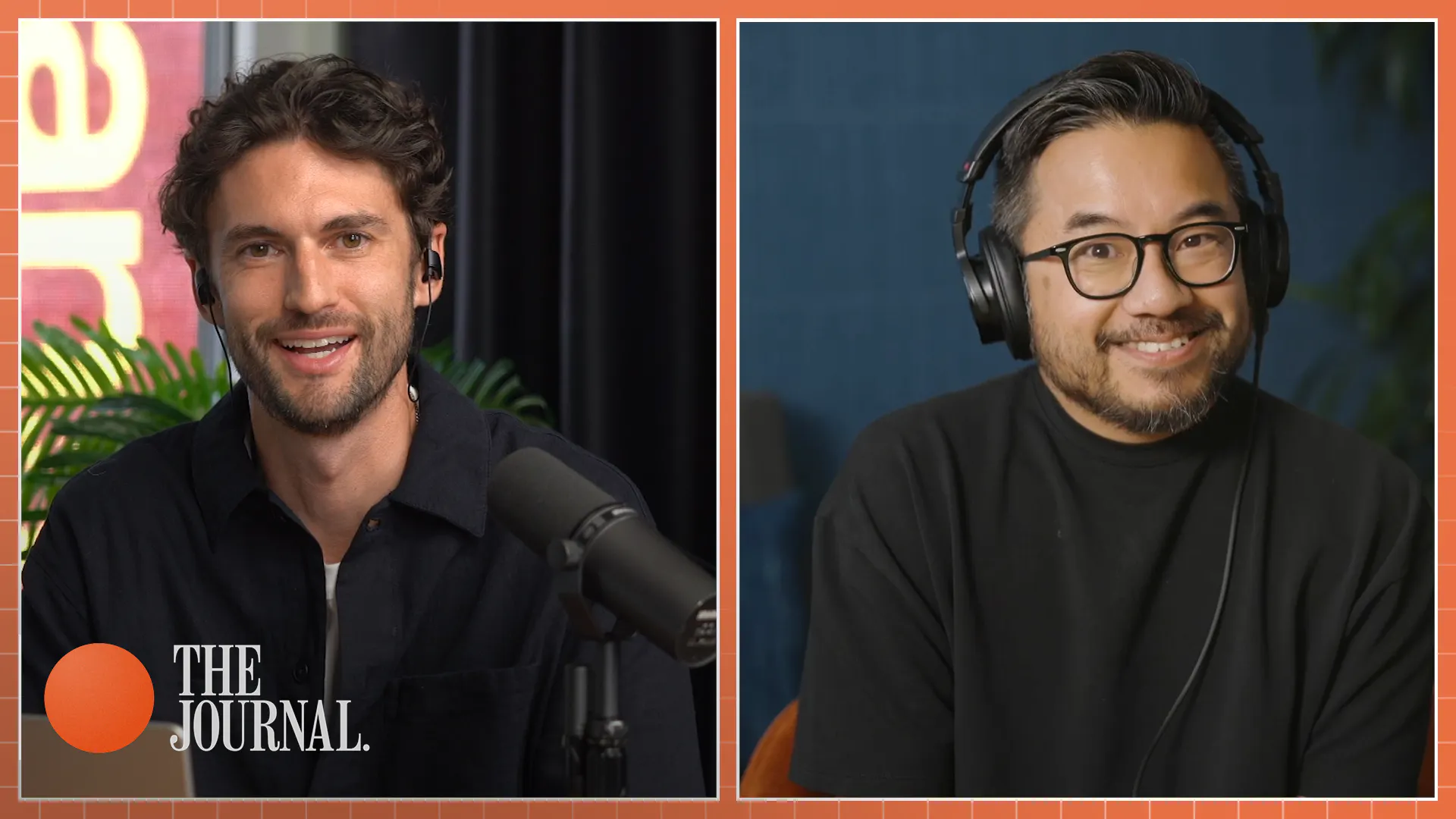
If you want to know how AI is going to change the workplace, one of the best places to look is at startups. And there's probably no one more steeped in the world of startups than this guy.
- [00:16]
Gary Tan
Hi, my name's Gary Tan and I'm the President and CEO at Y Combinator.
- [00:22]
Ryan Knudsen
If you haven't heard of Y Combinator, you've definitely heard of some of the startups it's helped launch. Airbnb, DoorDash, Coinbase. YC, as it's commonly known, is a startup incubator. Gary says it gets about 100,000 applications every year, but only a few startups get accepted. Those that are get up to a half a million dollar investment. Gary prolifically posts about his AI use and he says that AI is changing everything about how companies are being created these days. And it's also changing how he works as a CEO. Last month I got on a call with Gary. He was in San Francisco and I was in a studio overlooking Times Square. If you want to see a video of our conversation, head to Spotify. You use AI agents a lot. You've talked a lot about ways you're putting it into your life. What are you having it do and what do you find that it's most useful at?
- [01:18]
Gary Tan
I mean, I think of it as like self driving rocket for the mind and so interesting. Like back in the day you might have to have a team of 100 or a thousand people to get done something that now only takes like 10 or 15 people. And so, you know, I, I think that incrementally this means that we need to boil the ocean. Like we need to increase the ambition of founders and there are just more things that people should be doing.
- [01:47]
Ryan Knudsen
How long do you think it'll be until AI is as good at your job as you are?
- [01:55]
Gary Tan
It can't prompt yet. So you know, I'm on the lookout for that. I actually stopped drinking in February because I found that even having a single beer would make it much, much harder to think about code and sort of run coding agents. But I would, I would say I'm going to start drinking again when the coding agents don't need me anymore. And I would guess that that's sometime in the next like six to 18 months.
- [02:28]
Ryan Knudsen
Wow, that's soon. Yeah, I mean, are you worried though about your own influence?
- [02:34]
Gary Tan
I think the most important thing at that point will still be the most important thing. It'll be knowing what to build. It'll be like you still need a human, you still need a human who knows other humans. You still need to understand context. You still need to figure out, well, what do people want and why? And then how do I build a thing? You know, the mechanics of it get easier and easier, but knowing what to build and knowing what to want is still a very, very human thing.
- [03:03]
Ryan Knudsen
Welcome to the Journal, our show about money, business and power. I'm Ryan Knudsen. Coming up on the show, a conversation with Gary Tan about AI in startups.
- [03:26]
Sponsor/Ad Voice
This episode of the Journal is brought to you by Harvey, an AI platform designed for legal and professional services. Built and tested by lawyers, Harvey is trusted by more than 60% of the AmLaw100. The platform dramatically reduces time spent on research, drafting and document review without sacrificing quality, all while meeting the highest industry standards for security and compliance. Harvey AI tailored for law. Visit Harvey AI to learn more and request a demo. This episode is brought to you by Claude Cowork. Cowork brings the agentic power of Claude code to your desktop so anyone can use it and have Claude do real work. Point it at a folder or connect tools like Google Drive. Describe what you need and it handles the rest. Organizing files, building spreadsheets, drafting reports from scattered notes, even use it to plan out your week and stay ahead. Hand off the tedious work. Get started at Claude AI TheJournal.
- [04:34]
Ryan Knudsen
So I want to talk mostly about AI today. There are seem to be too extreme views of where AI might take us. On the one hand, there's people that worry about an AI apocalypse, that it might bring about the end of humanity. And there is another end of the spectrum. There are people who think that it could bring about a utopia in the future. Where do you fall on that spectrum?
- [04:57]
Gary Tan
I mean, I think it's going to be different and utopia is probably two like things are going to change and anytime the cheese is moved, they're going to be winners and losers. And then next net net. My hope is that there are more winners than losers because this is just a really, really powerful technology. And from our perspective, you know, we're trying to help people start new businesses. And I deeply believe that doing that right means that you're solving problems for other people. And so in aggregate, like, you know, this kind of technology in particular makes that way way more possible. And so will people lose jobs? Yes. On the flip side though, like with AI, it's like you used to have to hire a lot of people and raise a crazy amount of money and now you're actually able to create businesses for far, far less. And there can be a Lot more of them. So in aggregate, I think humans can solve more problems, and there's a lot more entrepreneurship that can happen. Like, our standard of living will rise and things will just actually be the way they should be. And maybe that is utopian.
- [06:12]
Ryan Knudsen
So, obviously, Y Combinator, you invest in startups, you nurture startups. In what ways are you seeing AI allow people to start startups more quickly?
- [06:24]
Gary Tan
I mean, the most simple version of this is you're able to write, like, one person is able to write a large multiple of what they used to be able to do. So, you know, I run YC today. About 13 years ago, I was a designer in residence and I was building software for YC. And in those days, I was writing about 15 to 20 lines of code a day. And, you know, that's not a lot, but, you know, now with agents, I've been doing something closer to 400 times that. And so you're able to, you know, one person is actually literally able to do the work of 10 to 100 people previously. And so what that means we're sort of seeing dozens of companies in the last few years go from zero to tens of millions of dollars in revenue with, like, less than 20 people having only raised a seed round of like, under 5 or $10 million. So a lot of this is, like, unprecedented. Like, you've never seen people be able to do that before. And this is great. Like, this is all great news for people who want to start companies.
- [07:30]
Ryan Knudsen
It's great for people who want to start companies. Maybe not so great for the people who want to work at those companies, but in what. How much?
- [07:36]
Gary Tan
But those people should start companies.
- [07:37]
Ryan Knudsen
Yeah, how much do you think that that can scale as a business gets bigger and bigger and bigger? At what point does it need to start hiring more people? Or will it ever?
- [07:49]
Gary Tan
I mean, this is where I think this requires a change in mindset. Right. If you just want to maintain things as they are, you just want to, like, sort of let people go. But I think that the world is actually so full of problems that we're entering this other age. And, you know, this might be like a change in the nature of types of companies that can be started.
- [08:15]
Ryan Knudsen
Gary says that the types of companies that Y Combinator had traditionally funded were software companies. But thanks to AI, YC is now working more in hard tech things like nuclear reactors and defense.
- [08:28]
Gary Tan
Yeah, we have a company called Toronol that kills mosquitoes using drones, for instance.
- [08:34]
Ryan Knudsen
Did I see a video of them recently where there's a little tiny drone that can.
- [08:38]
Gary Tan
Oh, yeah.
- [08:38]
Ryan Knudsen
What does it do? I don't know how.
- [08:40]
Gary Tan
It's got computer vision and a bunch
- [08:43]
Ryan Knudsen
of sensors and it's just a mosquito.
- [08:44]
Gary Tan
Oh, it just flies right through them
- [08:46]
Ryan Knudsen
and just kind of cuts them up.
- [08:48]
Gary Tan
Yeah.
- [08:49]
Ryan Knudsen
Huh.
- [08:49]
Gary Tan
And so you can. You have an array of them in your backyard and, you know, you just don't have mosquitoes anymore. And, you know, that would be nice. This is a very concrete version of this. It's like five or ten years ago, this is a company that maybe wouldn't have raised money. Like, it just would have been too expensive.
- [09:05]
Ryan Knudsen
They wants to make a company and they think of us as the mosquitoes. I mean, I'm being glib.
- [09:11]
Gary Tan
Well, then it'd be illegal, right? Then it'd be illegal. So, you know, I'd be the first to say, like, if this is starting to, you know, destroy society or, you know, be deleterious, like, hey, maybe this is something we should slow down. But I just see too many. I see too many places where this is actually so useful and so powerful and so empowering. You know, here's a startup that if the cost of doing it became viable, if it. If you can do it, like, better, faster, cheaper, and then it becomes something that is ubiquitous. Like, you know, I would love to be able to go outside and not be covered in bug bites.
- [09:50]
Ryan Knudsen
Are there certain kinds of companies, people that have startup ideas that you're going to. That you say, we're not going to fund that or work with that, because we think that that idea of yours, while interesting, is maybe too vulnerable to AI.
- [10:04]
Gary Tan
Honestly, everything is so brand new. Like, the rulebook has been thrown out like three or four years ago. You could argue that there were sort of things that, you know, thousands of founders have gone after and tried to do, and you could just safely say, no, that's not going to work. Like, a thousand people have tried that. But right now, you know, I think we're getting into a moment now where it's like, actually all the rules have been rewritten and everything is new again.
- [10:32]
Ryan Knudsen
What about your company, Y Combinator? How much are you relying on AI to make decisions that a human used to make?
- [10:38]
Gary Tan
Every single person at YC now has their own personal AI agent. And, you know, we have a company brain that actually flattens access to all the information so that, you know, it's actually super democratized.
- [10:51]
Ryan Knudsen
Like, has that. Have you run into any problems with that? I mean, sometimes agents can, you know, run amok a little bit and do things that you didn't Intend for them to do.
- [11:00]
Gary Tan
Oh, yeah. I mean, the thing is you can just have watchers on that, right? I mean, there's actually a huge cottage industry now of like, how do you make software that is watched by other AI? And so we funded a company called Clawvisor, for instance, that is sort of a watcher of what your openclaw does. And so if you want to access Gmail or make a draft, it itself is an AI that is watching that
- [11:31]
Ryan Knudsen
AI and saying, hey. And if it starts to stray from its objectives and invalid sends you a
- [11:37]
Gary Tan
message, it's like, hey, looks like it was trying to do this. Is this what you intended or not?
- [11:42]
Ryan Knudsen
Interesting.
- [11:42]
Gary Tan
I mean, you always hear about these stories about, oh, the agent went and deleted my whole hard drive and things like that. I mean, we tend to be very careful about write access. And then when I'm actually sending a text, when I'm sending email, when I'm sending Slack. People often joke these days. It's like, oh, Gary, like, is that you? It's like, yeah, yeah, it's all me. Like if I send you an email, like it's me if I send a.
- [12:05]
Ryan Knudsen
You never let your agent actually press send on any message.
- [12:08]
Gary Tan
That's right. Yeah, I have to. I copy and paste and I send it myself. I feel like that, you know, that's my covenant with people out there.
- [12:16]
Ryan Knudsen
After the break, more with Gary Tan on the less utopian side of AI.
- [12:31]
Sponsor/Ad Voice
Amazon Health AI presents painful thoughts.
- [12:36]
Why did I search the Internet for answers to my cold sore problem? Now I'm stuck down a rabbit hole filled with images of alarmingly graphic source in various stages of ooze. I can clear my search history, but I can never unsee that.
- [12:54]
Don't go down the rabbit hole. Amazon Health AI gets you the right care fast. Healthcare just got less painful.
- [13:01]
AI is moving fast across the enterprise, but without visibility, it's just chaos. Different tools, different models, different teams. Using AI in completely different ServiceNow turns that chaos into control. With the AI control tower, you see all your AI across the business in one place, what it's doing, what it's done and what it's about to do. So you stay in control. To put AI to work for people, visit servicenow.com.
- [13:37]
Ryan Knudsen
So there's a growing backlash to AI in some corners. You know, you're seeing a lot of opposition to data centers. You're seeing even executives of AI companies face threats of physical violence. How do you talk about that issue with your startup founders and what do you make of that?
- [13:59]
Gary Tan
I mean, we certainly have a responsibility to the people when we build these companies, right? Like, are we taking care of people's data? Are we, like, trying to be benevolent? Are we trying to create, like, something that actually solves legitimate problems? And if you do that, that's great. You know, I mean, I think AI is like, AI is the most powerful new technology, obviously, and it can do a lot of great and a lot of good in the world.
- [14:28]
Ryan Knudsen
A lot of people don't think. I mean, a lot of people worry that it won't.
- [14:31]
Gary Tan
Right, though.
- [14:33]
Ryan Knudsen
I mean, how do you bring more people on board and, you know, what do you. How do you try to solve this issue where you're getting people who, you know, are dedicating their lives in some cases to trying to stop the development of this technology?
- [14:46]
Gary Tan
I mean, I wish they would just use the technology themselves, right? Like they're. You know, there's new innovation that is happening, whether it's math, physics. I mean, they're just. I mean, that's powerful and that's pushing forward what humans are actually capable of doing. And what I hope is that that translates into, like, real medical breakthroughs, for instance, like being able to solve cancer, being able to actually make way on clean energy.
- [15:15]
Ryan Knudsen
Do you think it's gonna take a breakthrough like that before more people get excited or take pretty.
- [15:20]
Gary Tan
I mean, it's happening. It will happen. And I think the fear is not totally unfounded. I mean, even the most accelerationist people I know are worried about, you know, can Skynet happen? But, you know, I love movies from the 90s and 2000s as well. But that's not the only world we could possibly.
- [15:39]
Ryan Knudsen
I mean, that's the premise of the Terminator, obviously, is go back in, you know, Terminator 2. Go back in time, try to stop this company from making this technology. Does that keep you up at night at all? I mean, that's a movie.
- [15:55]
Gary Tan
I mean, that's a movie and it's. It's sci fi.
- [15:57]
Ryan Knudsen
Well, sure, that's a movie. But I mean, there are people, you know, you know, someone threw a Molotov cocktail at Sam Altman's house. I mean, like, does that concern you on a personal level?
- [16:07]
Gary Tan
That, like, absolutely. I mean, I think that, you know, both political and. I mean, it's basically another form of political violence. We already have laws that constrain the things that are deleterious in society. I'm not saying that we don't need new laws eventually, but it's so premature. It's so early. And right now, like, we're in the steep part of the curve to scaremonger and scare people away from the super powerful technology is just, it's sad, like instead of, you know, instead of trying to stop it, like use it. And so if we took like even half of the, half of the energy that's going into sort of scaremongering about AI and actually just using it, like let's solve these problems. Like there are just too many out there to solve. And that's the world I want to live in.
- [16:55]
Ryan Knudsen
Gary is very active in local politics in San Francisco and California. One of the things he cares most about when it comes to regulating AI is making sure everyone has access to the best models, which right now are controlled by OpenAI, Anthropic and Google.
- [17:11]
Gary Tan
One of the things that we've been tracking is sort of this fight between big tech and little tech. And this always happens. You could look at an Apple or even a Google and say, well, as time goes on they want to capture more and more revenue so they will actually close their platforms to others. And that's probably the worst thing that can happen to tech and to tech innovation. And so that's probably the number one thing that I'm most focused on. I mean, obviously Y Combinator is unique in that we're sort of like the defining union or guild for early stage startups and the thing that allows them to succeed or kills them ultimately is access to markets, platforms, APIs and ultimately LLMs. And so we really, really care about access to all of those things.
- [18:01]
Ryan Knudsen
Access meaning that you don't want OpenAI or anthropic or any other company to put up some rule that says you can't use our technology for X, Y and z reason or that it should be a certain price.
- [18:11]
Gary Tan
Yeah, users should have choice. And that choice actually happens through lots and lots of small startups all offering better and better things that are in competition with one another. That's how consumers get choice and that's how technology should work. And it certainly isn't how it works yet.
- [18:30]
Ryan Knudsen
So are you saying that you think that the big AI companies now should they have like open source versions of their models? Because now, I mean, the way things are going, it seems like this will entrench the big tech companies at the center of the economy and give them an enormous amount of power if they're suddenly all new businesses are being built off of their LLMs. How do you avoid that future?
- [18:52]
Gary Tan
I mean, ultimately, you know, I think there's a debate happening right now in the halls of power in D.C. about whether or not people should be allowed to have access to Chinese open weight models. And I would argue very much in favor of that. People should have access to that. That is probably the biggest democratizing factor for.
- [19:14]
Ryan Knudsen
Why? Because it gives more competition to American companies or what's the argument?
- [19:18]
Gary Tan
It just gives competition, period. It gives choice. And so I guess there's two things. One is that the LLM itself is turning into a little bit of a commodity. We'll sort of switch to whatever the best one is, and we sort of hope that that remains an American company. And then there's a lot of tension right now around, you know, as we talk right now, like Kimmy just came up with a Chinese model, just came out with. And they're about to release open weights on something that is almost as good as the very best American models.
- [19:50]
Ryan Knudsen
Would you switch to a Chinese model
- [19:54]
Gary Tan
with the right guardrails? I would. Because you can actually look at. You can instrument everything about what goes in and out of those models. And once again, all AI can be safe enough if you watch it, if you put it in the right harness and watch it the right way.
- [20:10]
Ryan Knudsen
Why does it matter then if those are American companies?
- [20:15]
Gary Tan
I think that intelligence is so important that it's really about access. We want American companies, we want American innovators, and we want American defense companies, for instance, to be able to use whatever the absolute best is. And so, you know, when you're ultimately talking about, I mean, you're talking about dominance at the. At the sort of societal level, right? Like, whose companies are the most innovative, whose products are the best, whose military is the best. And I think that over the next course of decades, all of those will ultimately be answered by who has the most intelligent models.
- [20:57]
Ryan Knudsen
For the past few years, the headlines on AI have been all about the inevitability of mass layoffs. It's something we've covered a lot here on the Journal, and we hear about it from listeners a ton. But it turns out that the transition to AI at the corporate level is happening more slowly than expected. And Gary thinks that's a good thing.
- [21:16]
Gary Tan
Society will absorb this. I think there will be transformation in every organization, but it'll happen slower than we might think. And that might be a good thing. Like when you look at a Fortune 500 company and you think, oh, it's gonna take forever, like that's, that's not a bug. It might actually be a societal feature, right? The organizational latency just sort of the inertia of big companies. It may well be the saving grace for society at large.
- [21:44]
Ryan Knudsen
I interviewed somebody recently who compared AI to being a conductor. And he was like, you know, he worked in marketing and he was saying how in marketing, you know, you. You used to just think about, okay, I want to play the drums, and that's, you know, email communications, or I want to work in Strat and that's, you know, playing the flute. And now everybody needs to think of themselves more as conductors because they can use AI to do all that. And I thought that was a really interesting analogy. But it also made me think that, you know, not everybody wants to be a conductor. Some people do just want to, like, wake up, put on their, you know, put on their shoes and go hit the triangle. And so, like, what is that going to do to society if people have to. If in order to succeed, you have to level up in terms of how you even think about what a job is, and a lot of people may not want to do that.
- [22:35]
Gary Tan
I mean, it does. It seems like we need to be more creative about what these jobs entail and look like. And I mean, on the flip side, like, maybe that's where live events come into play. Like, it's possible that we should be throwing a thousand times more parties. I think that what are people going to do with all their time, right? Like, they can actually focus on the arts. I mean, I always think about, Aldous Huxley talked about in the 20th century that why are we doing 40 hour work weeks? Maybe it should be 20. These things become more and more possible as the standard of living can rise.
- [23:15]
Ryan Knudsen
All technological innovations up until this point have not really resulted in less time working though. Why do you think that this one might?
- [23:25]
Gary Tan
I mean, what's funny is I sort of know for a fact that most people who become very AI pilled, myself included, work about two times more.
- [23:32]
Ryan Knudsen
Yeah, I feel like I've heard that from a lot of people. Like, once they, once they realize what they can do, they like, can't stop. They're like, oh my God, I can do this and I can do that. And if I built. And they just like, it starts to envelop their life as they start to do more and more with it. But that's. Obviously you have to have that sort of drive inside yourself, you know.
- [23:49]
Gary Tan
That's right. I mean, it might just end up. You might just end up having people who are like, very, very productive and other people who don't have to be. Right. Like, my hope is that it unleashes a brand new, just a firestorm of entrepreneurship of like, there are so many problems out there that we could solve for one another. And then maybe they don't have to be all billion dollar companies. Like, they might be like actually a really nice bar where you have community. Like, maybe it's a return to third spaces. I mean, there are just so many things that people like and enjoy that going back to yc, right? Is YC going to be run by one person and a whole bunch of AI agents? The reality is, no, never. We want to bring together really smart founders who have been there with the next generation people to do that. And so the people are the point. And if I expand that out into broader society, it's like, we should have better restaurants, we should have better social services, we should have better cities, we should have more housing. Like, what are the things that people actually want? Let's work backwards from that. And more people can go towards that. I mean, we will never truly achieve utopia, but that doesn't mean that we can't try.
- [25:13]
Ryan Knudsen
Well, thanks so much for your time, Gary. I really appreciate it.
- [25:15]
Gary Tan
Thanks so much for having me. Great questions.
- [25:18]
Ryan Knudsen
That's all for today. The Journal is a co production of Spotify and the Wall Street Journal. If you like our show, follow us on Spotify or wherever you get your podcasts. We're out every weekday afternoon. Thanks for listening. See you tomorrow.
- [25:37]
Sponsor/Ad Voice
In the US there's a break in every 26 seconds. But when intruders step near Simplisafe, home security steps up.
- [25:44]
Stop.
- [25:45]
Ryan Knudsen
This is Simplisafe. Police are on the way.
- [25:47]
Sponsor/Ad Voice
Using AI alerts, US based live agents help deter break inside Simplisafe. No long term contracts. Save 60% on a new system with professional monitoring during our 20th anniversary sale
- [25:57]
Gary Tan
at SimpliSafe.com Spotify Outdoor Deterrence requires a
- [26:00]
Sponsor/Ad Voice
Simplisafe active guard outdoor protection plan starting at $49.99 a month. Visit simplisafe.com licenses for alarm license information. Tennessee 212
- [26:09]
Ryan Knudsen
I'm not giving up. I am selling the building.
- [26:14]
Gary Tan
The final season of FX is the Bear. The restaurant is flooded. Everything's either going to be okay.
- [26:23]
Sponsor/Ad Voice
No. Stop. Or not.
- [26:26]
Ryan Knudsen
We are outgunned and we are outmanned. But we have each other.
- [26:31]
Gary Tan
FX's the Bear the final season.
- [26:34]
Ryan Knudsen
All episodes now streaming on Disney plus.