
Podcast
The Kākā by Bernard Hickey
Hosted by Bernard Hickey · EN
102episodes
Episodes
Newest firstAll episodes
The Weekly Hoon: Good climate policy better for economy & affordability; Housing the homeless better than hiding them
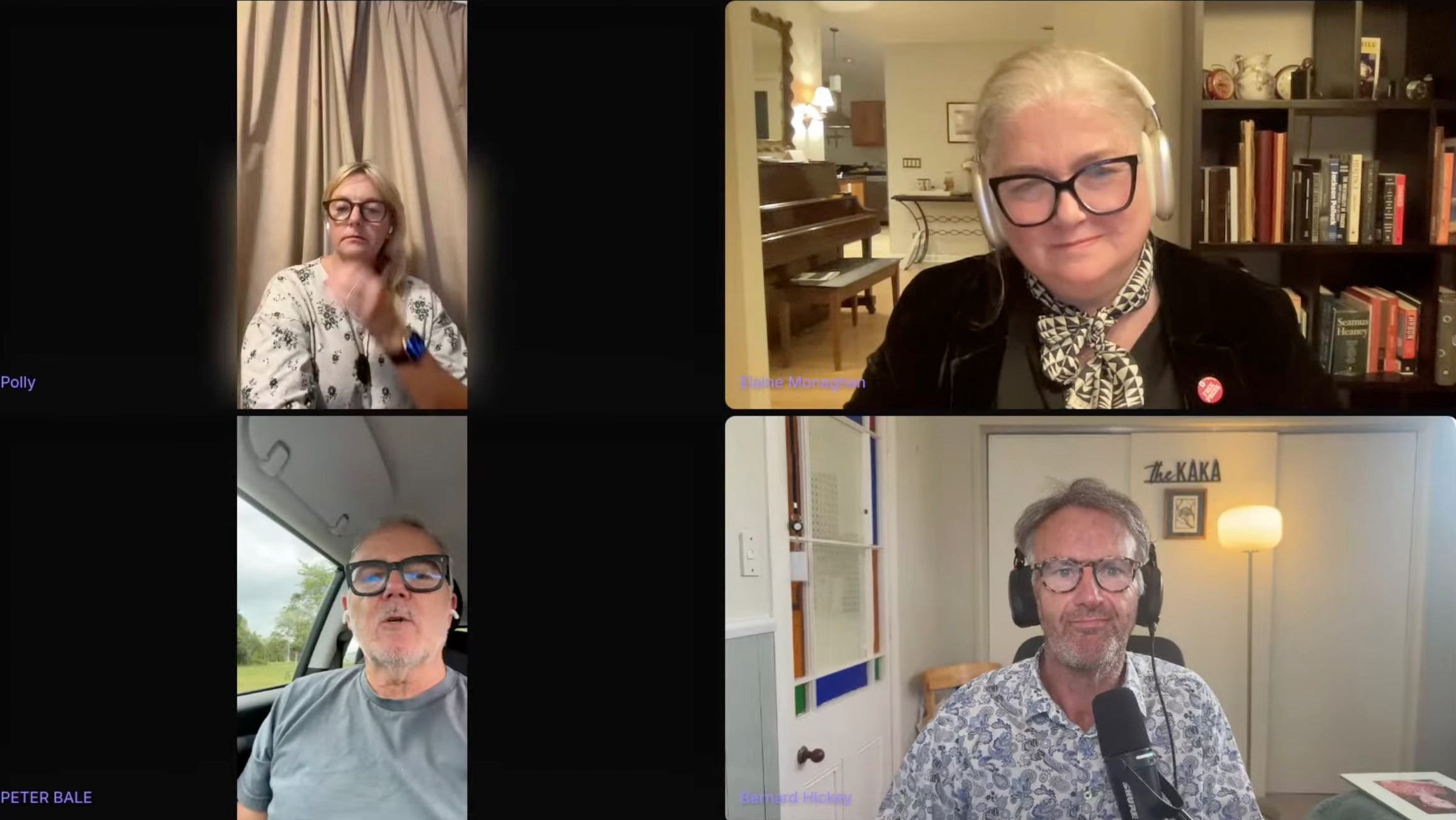
Feb 2600:55:13Tap to summarizeThe podcast above of the weekly ‘Hoon’ webinar for paying subscribers on Thursday night featured co-hosts Bernard Hickey & Peter Bale talking with regular guests Cathrine Dyer and Elaine Monaghan about geopolitics, the economy, climate change and politics here, along with special guest Associate Professor Polly Atatoa Carr from Waikato University’s Te Ngira Institute for Population Research.This week:* Bernard and Peter debated the Clerk of Parliament deciding to stop using X.* Bernard and Cathrine talked about a paper showing climate policy inconsistency depresses economic growth and employment, along with another paper showing the social cost of carbon at over US$1,000/tonne, and a survey for The Post-$ showing voters here want flood protection projects, rather than motorways.* Peter and Elaine talked about covering autocracies in Eastern Europe and Donald Trump’s State of the Union address.* Bernard, Peter and Polly talked about how the Government’s ‘move-on’ orders are likely to affect young homeless people, and why ramping up Housing First by even more would be a better solution. The Hoon’s podcast version above was recorded on Thursday night during a live webinar for over 200 paying subscribers and was produced and edited by Simon Josey. The Hoon won the silver award for best current affairs podcast in last year’s New Zealand Podcast awards. (This is a sampler for all free subscribers and anyone else who stumbles on it. Thanks to the support of paying subscribers here, we’re able to spread my public interest journalism here about housing affordability, climate change and poverty reduction other public venues. Join the community supporting and contributing to this work with your ideas, feedback and comments, and by subscribing in full. Remember, all students and teachers who sign up for the free version with their .ac.nz and .school.nz email accounts are automatically upgraded to the paid version for free. Also, here’s a couple of special offers: $3/month or $30/year for under 30s & $6.50/month or $65/year for over 65s who rent.)Ngā mihi nui.Bernard This is a public episode. If you'd like to discuss this with other subscribers or get access to bonus episodes, visit thekaka.substack.com/subscribe
Transcribe →
A Mini-Hoon with David Skilling on productivity
Feb 2600:28:47Tap to summarizeIndependent economist David Skilling gave a stark public presentation to Treasury officials and others yesterday that painted a brutal picture of New Zealand’s labour productivity and real wage catastrophe since 2010, pointing out our economy remained stuck in a low-investment rut with weakening trade connections.Skilling’s presentation in video form below is a must-watch and should be seen as a landmark moment ‘calling b******t’ on at least three decades of economic reforms focused on squeezing down the size of Government and keeping capital gains tax free at all costs.I spoke with David in a Substack Live this morning, referencing his presentation below.Thank you Ant O'Brien, Michael Sharpe, Steve Glicken, MD, James Wilkes, John Smart, and many others for tuning into my live video with David Skilling! Join me for my next live video in the app. This is a public episode. If you'd like to discuss this with other subscribers or get access to bonus episodes, visit thekaka.substack.com/subscribe
Transcribe →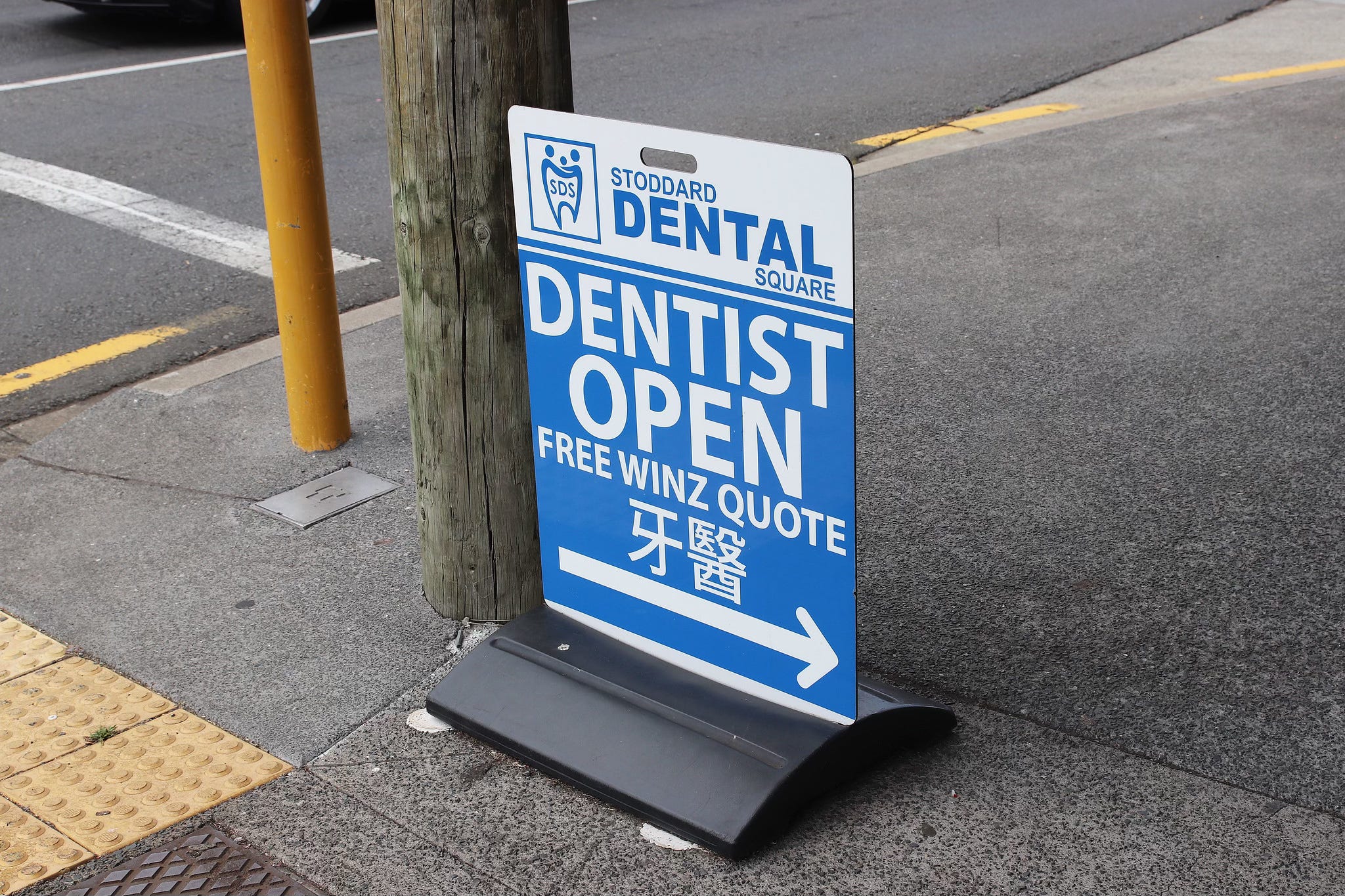
Interview: ‘I didn’t want to smile’
Feb 25, 202500:18:41Tap to summarizeLong story short, I spoke to researcher and campaigner Kayli Taylor in the interview above about her ActionStation Aotearoa report into unmet need in dental care, which details the experiences of ten people unable to afford to go to a dentist, and just how damaging and debilitating it has been in their lives. The full report is available in PDF form below, as is the transcript of our discussion.Taylor points out 44.9% of the wider population have unmet dental care needs, with much higher proportions among Māori, Pacifica, the disabled and 25-34 year olds. She argues for a dental care for all policy, which has been estimated to cost $1.1 billion per year, but deliver wider benefits of $5 billion to $10 billion per year. In my view, the inclusion of dental care from the publicly-provided health system is an immediate opportunity to improve the lives and health of so many, often by making it easier for them to work and be involved in their communities. Politicians and voters looking for ways to invest in health and the wider productivity of Aotearoa should adopt dental care for all.…feeling the confidence to smile is such a fundamental part of existing, of being happy, of feeling confident in yourself… Kayli TaylorThe interviewBernard Hickey (00:23): What was the genesis of this report and how did you go about writing it? 42 pages, you've been busy.Kayli Taylor (00:33): The report emerged as part of the Dental for All campaign housed under ActionStation Aotearoa, which is focusing on building a case for free universal, Te Tiriti-consistent oral health care in New Zealand. The report specifically explores 10 people's lived experiences of not accessing oral health care. There are lots of stats and figures around not accessing oral health care and we wanted to kind of give a story and weight to those experiences and understand people's lived experiences. So the report contains 10 people's stories. I started chatting with people and gathering people who might be interested in speaking as part of the report about July last year and over several interviews with each person and lots of edits to make sure that the stories, which are told in first-person accounts, were reflective and representative of their experiences. We got down to the final report which also has some analysis as part of it and identifies some common themes in the stories and also points to some potential solutions for the problem of dental inaccess in Aotearoa.Bernard Hickey (01:57): Just before we look at some of the details and the experiences, just generally, what's the situation with dental care, and in particular, unmet need on dental care in Aotearoa at the moment?Kayli Taylor (02:12) So almost half of New Zealanders have unmet need around dental care due to cost. So it's 44.9 % for the general population and then that number increases for Māori, Pacifica, disabled communities and also the 25 to 34 age group. So that's nearly half of New Zealanders having unmet need, which I think, as I was going about writing this report and I was talking to like friends and family and sort of random people that I would talk to about my job to, people would share stories with me and some of them would be their stories and some of them would be their loved ones’ stories. This report has just 10 stories, but it hints at wider systemic issues that we have.Bernard Hickey (02:59): You've chosen a title for the report. “I didn't want to smile.” That carries a load, that statement. It says a lot about people's confidence, their ability to be socially active and hints at some of the social and psychological pain, let alone the physical pain. Could you talk to me about where you heard that phrase and what you thought?Kayli Taylor (03:32): I was just looking through the report because I can't remember who specifically said that quote. But there was a sense from the people that I spoke to of the shame that is associated with poor oral health. It's a very visible part of us —when we meet people, when we talk to people, when we apply for jobs, when we just interact in day to day life.Smiling is such a core and fundamental part of us. Feeling the confidence to smile is such a fundamental part of existing, of being happy, of feeling confident in yourself. That quote kind of captured the hardest bits of the story and the kind of meatier, tougher things to work through, but also kind of points to the like overall challenges of the system and people's experiences with it: (The problem) of not being able to access the healthcare you need, especially in a country like Aotearoa, New Zealand that has the money to fund it and chooses not to. That quote captured the thrust of people's experiences around oral healthcare and the shame and stigma associated with not being able to access the healthcare that we all deserve.Bernard Hickey (05:02): I'm keen for our listeners and readers to have a look at all of the 10 stories. I'm not going to go into all of them for this video. Just a couple struck me. Firstly, Anaru, who is a social worker who wanted to get back into work and contribute to the community. Can you tell us about how Anaru faced the issue of dental unmet need?Kayli Taylor (05:46): Anaru went through a lot of different careers before returning to social work in his 40s at the University of Otago, had experiences in working in retail customer facing roles and also in commercial radio, and couldn't afford to access preventative care around maintaining like gum and oral health and struggled with gum disease.The consequences of that gum disease for Anaru was that it meant that he knew that he wouldn't progress in his commercial radio career. That was something that he was really passionate about and really keen to pursue and just couldn't because he knew that in the world of commercial radio, having good teeth really matters.One of my other participants, Ali, described it as like a ticket for success in some ways. So Anaru eventually went back to university in his 40s to study as a social worker at the University of Otago, and while in Dunedin was able to access the Dunedin Dental School, which is run as part of the training for dentists and so it's a little bit more affordable to go.And it was the difference for Anaru about being able to afford it versus not afford it. Anaru talks about it in the report (which you can find online at dentalforall) — the impact that it had on his confidence, on his willingness to participate in society. In the report, he says:‘If the dentist was free, I would have had a better quality of life. I experienced times in my life where I didn't want to smile in public. I would cover my mouth with my hand and I was constantly afraid of being judged. If I had been able to get the work I needed done when I needed it, it would have made a big difference in my life. I would have been able to avoid some of the more serious oral health issues I've faced.’Which to me speaks to the importance of preventative care and also of making that preventative care accessible for everyone in New Zealand to be able to access. It's too expensive at the moment. We know this, but being able to access preventative care increases people's confidence in their quality of life.Bernard Hickey (08:20): The sheer expense of it makes it very difficult. It would never occur to me to go into debt to get dental care, but this is an issue. Could you tell us about Aroha's story?Kayli Taylor (08:31): Aroha shared a story about of going into debt to the Ministry of Social Development in order to pay for some dental treatment to be done. They were able to get the Ministry of Social Development (MSD) to pay for that. But then the way that Aroha repaid the debt, they repaid the dentist, rather than MSD.And so MSD didn't recognize that the debt had been paid off and the dentist must have made more money off of this treatment. And then, Aroha was still in debt to MSD as a result of it, which they described as debt that they will take a lifetime to pay off. It's just not achievable for them to pay off that amount of debt in their life.The idea of going into debt to pay for medical expenses feels like a very American concept, like a consequence of their privatized health system. But it's not. It's an experience that people in Aotearoa, New Zealand are having, which to me is insane, and speaks to the flaws of the privatized model that we have.Bernard Hickey (09:59) So Action Station is a campaigning organisation. What are you campaigning for here?Kayli Taylor (10:05): The Dental for All campaign, which sits inside Action Station Aotearoa, is calling for free, universal, Te Tiriti-consistent oral healthcare, which would mean that everyone in New Zealand could access the oral healthcare that they need and that they deserve to live a life that is joyful and has confidence and allows them to smile.Bernard Hickey (10:31): How would this work? Would be some sort of state funded thing or state run thing. And how is this done elsewhere in the world? Because in New Zealand, we think it's normal that you have to pay for dental care, but it's not always the case elsewhere.Kayli Taylor (10:50): There's lots of different model options. And the dental f...
Transcribe →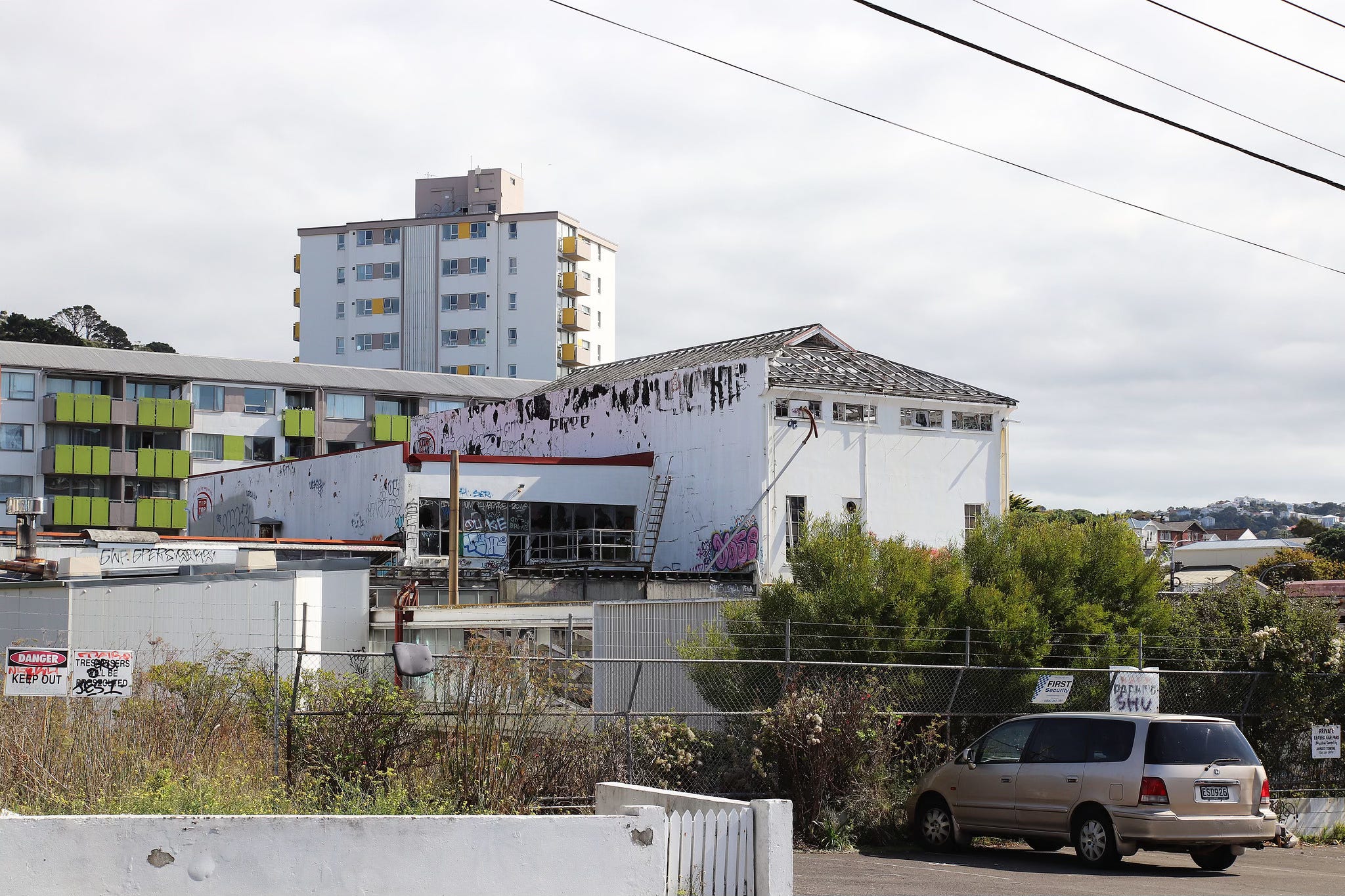
'We can't hold on any longer. We're selling.'
Feb 24, 202500:13:44Tap to summarizeLong stories short, the top six things that stood out to me in our political economy around housing, climate and poverty on Tuesday, February 25:* The slump in housing land prices has gone on for three years and the Reserve Bank last week further lowered its forecast for house prices, meaning prices aren’t expected return to their December 2021 peak until mid-2028 at the earliest;* That near-seven-year-long peak-to-trough-to-peak cycle would be double the 3.5 years that the housing market took after the 2008/09 Global Financial Crisis to recover to its pre-crisis peak, and this time around the market is restrained by LVRs and DTIs;* Until now, owner-occupiers and rental property investors have taken a buy and hold strategy, expecting a rapid(ish) recovery to allow them to recover to peak levels and make gains and sales again;* But seven years is a long time for most people to hold on without the liquidity moments needed to realise capital gains and move on with their lives and businesses, even without pressure from a bank, given 40% of borrowers are actually ahead on their payments and just 1.5% are behind;* Listed retirement village companies are seen as crucial players in mobilising those capital gains and cash between generations, but their investor timeframes and bankers are much less patient and they may blink earlier and more; so,* Ryman Healthcare’s decision announced yesterday to slash its retirement unit building rate from 940 this financial year to a combined 489 in the next two years, and to dump some of its landbank valued at $338 million back onto the market, is a key moment.(There is more detail, analysis and links to documents below the paywall fold and in the video and podcast above for paying subscribers. If we get over 100 likes from paying subscribers we’ll open it up for public reading, listening and sharing.)‘We can’t hold on any longer. We're selling.’When should a willing residential home owner-occupier, landlord or bare land-owner sell? Once the price is back near or above CV? Once prices have recovered to their previous peaks? To the highest bidder? Even if it’s lower than expectations, lower than CV, or (heaven forbid) lower than the purchase price? To whoever bids, even if (hell’s-a-freezing-over) there’s nothing left after clearing the mortgage?It depends, is the trite answer. Often the personal situation of the seller really matters, or the view of the bank if there has been a sustained default on interest payments, or the property is ‘under water’ with a valuation less than that of the mortgage. Forced sales such as mortgagee sales, estate sales or relationship breakdown sales are often the ones where the property gets to ‘clear’ at the true market price. When the market is subdued, often it is only the forced sales that happen, and the rest of the market is in a state of suspended animation. Unlike in countries where banks are aggressive in forcing mortgagee sales, New Zealand banks tend to force sales as a last resort because they can make anyone with an income to pay the interest first. Typically, a seller will put a property on the market and wait for a bid at or near CV to avoid the pain of perceived or actual loss, especially when they’re not under any bank pressure. Right now, there is very little bank pressure for most. There were just 41 mortgagee sales in the December quarter of 2024, down from over 750 per quarter during the GFC.Humans hate losing more than they love winning. When there has been a fall in prices, that often leads to a longer standoff. Buyers who feel they are in control and can afford to wait will also be reluctant to ‘overpay,’ especially if there is any prospect of further falls. No one wants to ‘catch a falling knife.’That moment of recovery when prices are back over the previous peak is often an important one for sellers who aren’t under any pressure to sell. They can then sell, feeling comfortable they didn’t ‘lose’ anything. That means the length of time it takes for prices to recover to their peaks is important. The longer it takes, the longer it takes for volumes to get going again.‘Show me my liquidity moment’That ‘liquidity moment’ of a house sale often kick-starts a whole range of other spending by the seller, and can trigger a ‘chain’ of property sales. That’s why the volume of sales often picks up sharply when prices are rising to new peaks, which in turn generates all sorts of economic and social activity, including grandparents moving into retirement villages and freeing up cash for inheritances or deposits for kids and grandkids.So the moment when retirees move out of their highly-valued suburban standalone homes into retirement village units is a key event in that process of starting the ‘chains’ and restarting the market overall. Obviously, most don’t want to sell for a perceived loss, so watching the sales of retirement units can be a useful leading indicator of a market turning. Most are happy to wait for a year or two, or even the three and half years they waited after the 2008/09 slump, with their lives on hold.But seven years of waiting?By now, house prices ‘should’ have recovered to their peak, if that peak-to-trough-to-peak cycle lasting 3.5 years from early 2008 to late 2011 was to be repeated. But the Reserve Bank’s lowering of house price inflation forecasts at its MPS last week (chart below) means that cycle could now last seven years, with the December 2021 peak not recovered until late 2028.So how long is too long? When does the seller or owner finally capitulate? Three years? Seven years?Ryman’s capitulation is a momentRyman Healthcare is an important player to watch because it is the largest retirement village operator and often the market leader. For much of the last five years it has also been among the top five dwelling unit builders, especially as it has operated an in-house model of development and building, rather than outsourcing to contractors and sub-contractors.Yesterday Ryman Healthcare, under new management and under pressure from shareholders and bankers, pulled the plug on its in-house, fast-growth and long-pipeline approach to building retirement villages. It announced it had ‘paused’ planning new developments and would slash its build pipeline from 940 ing in the current financial year to between 489 and 575 units combined in the next two financial years of 2025/26 and 2026/27 (ie around 250 a year).That was after quarterly sales of new units collapsed from 141 in the December quarter of 2023 to 95 in the June quarter of 2024, and then a projected 55 in the June quarter of 2025.Ryman also announced an equity capital raising of $1 billion to repay debt and said it planned to return $500 million to shareholders over the next three to five years, partly by scaling back its housebuilding and getting residents to invest more, and partly by selling some of its landbank, which it has valued at $338 million. It warned in its presentation for shareholders (page 44) that it may have to slash that book value if it is forced to sell the land at a loss. Here’s how it described that risk (bolding mine):Landbank WIP (Work In Progress): Pursuant to changes made in 1H25, the carrying value of development land will be assessed, which may result in impairment if a decision has been made to sell the property or if the latest feasibility does not support capitalised WIP.Work remains ongoing and is yet to be finalised, both internally and with Ryman’s new auditor, and therefore, the need for any adjustments remains uncertain. Currently, Ryman estimates there is potential for downward adjustments to NTA of up to $300 million in aggregate in respect of the matters listed below:Development land now classified as investment property and held at fair value (previously held at cost) plus capitalised WIP, which is subject to impairment testing relating to development plans.Ryman may consider the sale of land which is currently held for potential future development opportunities. Any decision to hold these properties for resale or the sale of such landbank assets, or any other asset sale if it were to occur, may not be able to take place at or above the value at which the asset is currently recorded in Ryman’s accounts. In that situation, Ryman may record an impairment or loss on sale which could have an adverse impact on Ryman’s financial position and performance in the future. Ryman presentationThis potential for a dumping of development land will be unsettling for those hoping to wait for the recovery, and increases the risk the great standoff continues. ‘We need the housing market to fire up again’The Government is assuming the great standoff ends this year and needs it to end to fire up the economy again.The longer this period of suspended animation in the housing market goes on, the lower the chances of another surge in the economy like those seen from 2002 to 2007 and from 2011 to 2017 as bank lending fired house prices ever higher.This Interest chart shows just how suspended the animation is, with volumes down nearly two thirds from the 2021 peak and well below the 2002 to 2007 boom times.A pick’ n’ mix six of furthe...
Transcribe →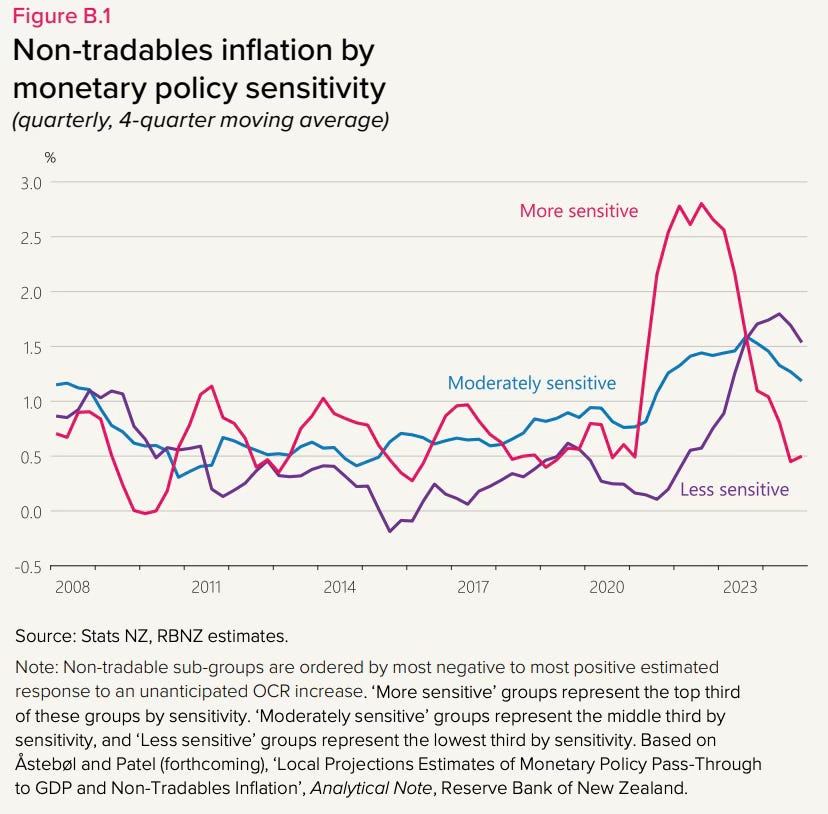
Interview: RBNZ wary of any administered inflation spiral
Feb 24, 202500:24:23Tap to summarizeLong story short, I interviewed Reserve Bank of New Zealand Chief Economist Paul Conway yesterday in the full video above about:* the Monetary Policy Committee’s decision to cut the Official Cash Rate by 50 basis points to 3.75% last week;* the bank’s projection in its Monetary Policy Statement (MPS) for three more 25 basis point cuts over the next six months or so;* its forecasts for modest recovery in economic growth later in the year to start reducing unemployment, now that interest rates are lower and the benefits are flowing through in a lagged fashion to fixed mortgage borrowers rolling onto lower interest rates;* the bank’s study in its MPS (Box B on page 18) of how different types of inflation are tracking, ranging from the most sensitive to OCR changes, through to the least sensitive, including prices administered by councils and the Government such as rates, fees, charges & fines; and,* the risk that this administered inflation, which spiked up through 2024 as other inflation was easing, may turn into a more generalised rates & fees-to-general-prices spiral.Conway said the bank was not seeing any evidence of that yet, but was watching it closely.I also asked him if the bank was concerned that previous under-investment in infrastructure and shifts by both councils and Government to avoid taking on more debt by instead using congestion and water charges to service non-Government debt represented a type of one-off shock where capital costs were being included in consumer price inflation. The Reserve Bank is directed not to consider capital costs or value in its targeting of consumer price inflation, which means, for example, that house prices and interest rates are not included in the Consumer Price Index.Here’s the transcript of our conversation around administered price inflation:Bernard Hickey: 12:30 I'm interested in the administered prices, particularly local government fees and charges, government fees and charges.And I wonder whether some of that inflation we've seen is not what you'd call normal inflation in the prices of goods and services, which the Reserve Bank can focus on, but is actually a type of capital charge as governments catch up on previous under-investment in capital or look to shift the capital cost from government debt to maybe local government debt or private debt. And in effect, you're seeing some inflation and capital costs bleeding into the Consumer Price Inflation Index.Now, the Reserve Bank … doesn't focus on capital costs or capital values. It doesn't respond to a big shift in prices of houses or stocks or anything. So is there a risk here that you're having to respond to a type of inflation which is a one-off shock, a structural shock, and which actually is not really consumer price inflation. It's capital inflation.Paul Conway: 13:45 Yeah, I definitely think that's a thing. Rates is the clearest example of that. I live in Wellington. Rates have gone up significantly, even though house prices have fallen by a quarter.There is a sense of councils catching up across the country and certainly here in Wellington. So rates are catching up just, given depreciation in the capital stock, in our case the pipes and associated infrastructure.I think you sort of hit the nail on the head there when you said one-off. Ideally they are one-off. And if they are one-off, then that's a relative price shift going on for a particular reason.Council sort of fell behind in terms of paying for depreciation and keeping the quality of capital where it needs to be. And we can debate whether or not that's ideal and they should have been sort of more on the button from day one.But from a monetary policy perspective, as long as they do stay as one-off, then that's fine. They sort of have their effect on overall CPI. They pass through. They don't get incorporated into people's wage demands. So we're not getting people sort of overreaching on pay beyond productivity growth.And they don't get incorporated into firms pricing decisions and sort of getting into that sort of price wage spiral. And we're not seeing any evidence of that, you know, thus far. Quite the opposite, really.A year or two years ago when we had a serious inflation problem, inflation was sort of 6-7%, the committee was way less accommodating about those types of charges because in that environment, there's a chance that they do feed into that generalised price and wage pressure with inflation at 2.2%.You know, where a negative output gap is significantly negative. So the productive capacity of the New Zealand economy is significantly above where the level of sort of aggregate demand in the economy is at the moment.So it's not the sort of business environment in which firms will go, ‘my rates bill has gone up, therefore, I'm going to charge people more for my product’. And, off we go into a spiral. The MPC, the Monetary Policy Committee, is increasingly confident that we're not in that sort of world. So those relative price shifts, they can pass through.And that's normal. Of course, we remain very vigilant to the risk that they do bleed into more generalised inflation pressures. So we're not that relaxed.Chapters00:00 Monetary Policy Decisions and Economic Forecasts07:09 Understanding Inflation Dynamics16:02 Challenges in Economic Growth and Investment21:04 Impact of Interest Rates on MortgagesKa kite anoBernard HickeyThis was published to all immediately as part of our public interest journalism mission. This is a public episode. If you'd like to discuss this with other subscribers or get access to bonus episodes, visit thekaka.substack.com/subscribe
Transcribe →
Govt set to hike insurance costs $400/year
Feb 23, 202500:08:52Tap to summarizeLong stories short, the top six things that stood out to me in our political economy around housing, climate and poverty on Monday, February 24:* The Government is considering allowing the EQC to increase its levy tacked on to household insurance bills by around $400 per year or as much as 72%;* Inexorable Government pressure downwards on education spending growth and the exodus of skilled workers overseas has increased this year’s teacher shortages to 1,150;* Napier plans to close its library for two years to avoid borrowing, even though its debt is less than 40% of revenues and costs less than 2% of revenues to service;* Two specialist health reporters, a dedicated Northland reporter and the last dedicated television economics reporter are losing their jobs in the latest media sector cuts;* The AA and truckies are warning a delay in funding new bridges across the new City Rail Link in Auckland is set to create roading chaos for six years; and,* Another example of immigration fraud has emerged, with eight Chinese men paying over $16,000 each for non-existent jobs cleaning up after Cyclone Gabrielle.(There is more detail, analysis and links to documents below the paywall fold and in the video and podcast above for paying subscribers. If we get over 100 likes from paying subscribers we’ll open it up for public reading, listening and sharing.)When the Government delivers a new cost of living shockIt’s not a tax increase and it’s not inflation coming from overseas or uncompetitive supermarkets, banks or insurers.But it is another cost of living shock set to be delivered by a Government that pledged to do whatever it could to reduce the burden of inflation on households.Jenee Tibshraeny reports for NZ Herald-$$$ this morning on the Government considering allowing the former EQC (now renamed the Natural Hazards Commission) to increase the average levy added to household insurance bills by around $400 a year and up to 72% or $948 a year, including GST.Here’s the detail (bolding mine):Treasury is consulting with a small group of stakeholders on whether to increase the Natural Hazards Insurance Levy, previously known as the EQC levy, which is tacked on to home insurance premiums.It is also seeking feedback on increasing the amount of cover the Natural Hazards Commission (NHC) provides for residential buildings from $345,000 to $460,000 (including GST). The most its proposals could cost home owners is $948 a year (including GST), 72% more than the current maximum.Cabinet is expected to decide on a path forward in July, and changes would be implemented from next year. Jenee Tibshraeny for NZ Herald-$$$ ‘Just close the library to save money’In another case of unnecessary austerity hitting key public services, Hawkes Bay Today reported on Saturday Napier City Council is proposing to shut the doors on its library for up to two years to try to keep the proposed rates increase for Napier ratepayers below 7.9%. Napier’s debt is just over 40% of revenue, when it has capacity to borrow up to 175% under its self-appointed debt limits. Its interest costs are less than 2% of revenues, when its self-appointed limit is 10%.When the sinking lid starts hitting frontline servicesThe Ministry of Education is now projecting a shortage of 750 primary teachers and 500 secondary teachers this year, having last year projected a surplus of 1050 primary teachers and 61 secondary teachers, Newsroom’s Laura Walters reported on Friday, pointing to a ‘please explain’ letter from Education Minister Erica Stanford.Further reading: Teacher shortage 'no surprise', head of secondary principals group says RNZHealth, poverty and economics reporters cutThe latest job cuts at 1News and NZ Herald are set to significantly reduce coverage of health, economics and poverty in our poorest region. Health reporting specialists Nicole Bremner from 1News and Nicholas Jones from NZ Herald are leaving in the latest rounds of redundancies and resignations, alongside 1News’ long-time reporter for Northland, Helen Castles, as Shayne Currie reported on Saturday for NZ Herald-$$$. He also reported yesterday that Katie Bradford had resigned to take up a corporate role with Infrastructure NZ.A pick’ n’ mix six of further reading elsewhere* Scoop: ‘Disrespect for science’: Docs reveal how Govt pushed controversial changes to prestigious Marsden Fund NZ Herald-$$$’s Jamie Morton* Deep-dive: Migrant workers’ Kiwi dream shattered. An operation across two continents, dodgy signatures, tens of thousands of dollars paid to an overseas agent and lingering debts ‒ all for a new life in NZ. Yet 100 days later, a group migrant women have lost everything. The Post-$$$’s Hanna McCallum* Research: NZ road lobby's tobacco industry-like tactics exposed in study RNZ’s Maia Ingoe* Scoop: Iwi bid to challenge supermarket duopoly may have run out of steam. British supermarket giant Iceland is understood to be no longer working with Waikato Tainui on a new national rival to Foodstuffs and Woolworths. The Post-$$$’s Tom Pullar-Strecker* Deep-dive: Who says school lunches are good? RNZ’s Phil Pennington* Op-Ed: Who is influencing New Zealand’s most influential? Dr Rod Carr questions the decline of expertise - and the rise of denial and deliberate undermining of facts and evidence. The Post-$$$Videos of the dayWhen smaller is betterLynn and I like watching Never Too Small, a YouTube channel with highlights interesting small apartments all around the world. It’s a guilty pleasure. A bit like watching those real estate shows with big, fancy houses, except we fancy the small ones. Last night we watched one about an apartment in Nightingale Preston, a not-for-profit project in Melbourne. We immediately wanted to migrate.I know a bit about the Nightingale way of doing things. In 2023, I interviewed Liam Wallis for When The Facts Change. He helped design, fund and build the first Nightingale project in Melbourne’s Brunswick. These apartments are designed from the start to be carbon neutral, healthier, and cheaper places to heat.And of course, when we saw the apartment was in Preston, we thought of one of our favourite songs:Chart of the dayBusting some mythsSubstack essentials todayCartoons of the dayTimeline-cleansing nature picKa kite anoBernard This is a public episode. If you'd like to discuss this with other subscribers or get access to bonus...
Transcribe →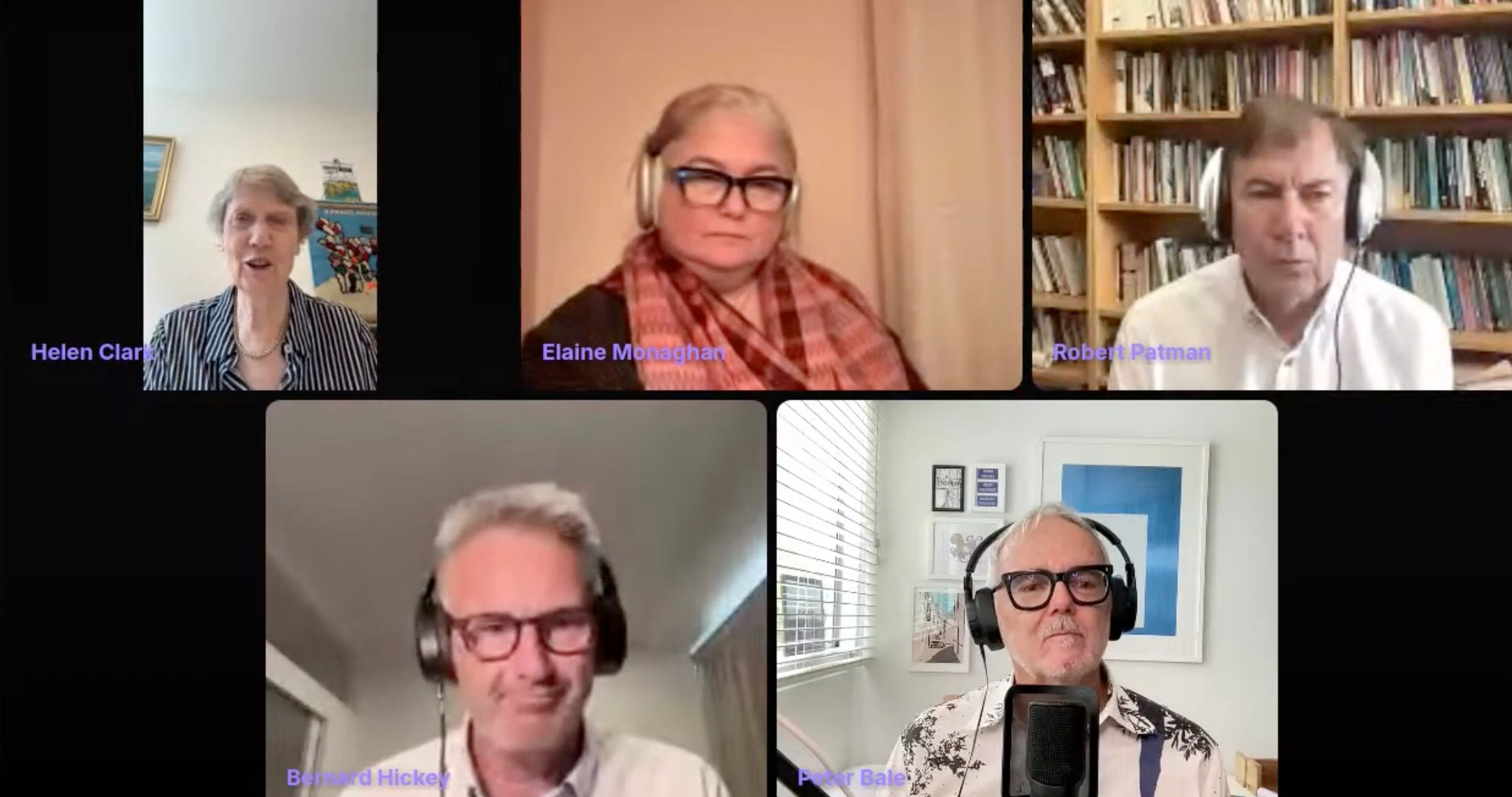
RESEND: The Hoon around the week to Feb 21
Feb 20, 202501:00:57Tap to summarize(My apologies. The version sent earlier this morning had the audio of last week’s podcast attached. It was good, but not that good. I have now updated with this week’s podcast. This is my error and please accept my apologies.)The podcast above of the weekly ‘Hoon’ webinar for paying subscribers on Thursday night features co-hosts Bernard Hickey & Peter Bale talking about the week’s news with regular and special guests, including:* Robert Patman, Helen Clark and Elaine Monaghan on the week in geopolitics, including Donald Trump’s wrecking of the post-WW II politicial landscape; and,* Cathrine Dyer on the week in climate news, including news of polar ice coverage falling to historic lows, NZ First trying to force banks to lend to coal miners, petrol stations and farmers, and Fonterra paying farmers extra to reduce emissions intensity.The Hoon’s podcast version above was recorded on Thursday night during a live webinar for over 200 paying subscribers and was produced and edited by Simon Josey.The link to the video above was added after the email was sent to all subscribers. This Donald Trump post was a subject of the discussion.The Hoon won the silver award for best current affairs podcast in this year’s New Zealand Podcast awards. (This is a sampler for all free subscribers and anyone else who stumbles on it. Thanks to the support of paying subscribers here, we’re able to spread my public interest journalism here about housing affordability, climate change and poverty reduction other public venues. Join the community supporting and contributing to this work with your ideas, feedback and comments, and by subscribing in full.)Ngā mihi nui.Bernard This is a public episode. If you'd like to discuss this with other subscribers or get access to bonus episodes, visit thekaka.substack.com/subscribe
Transcribe →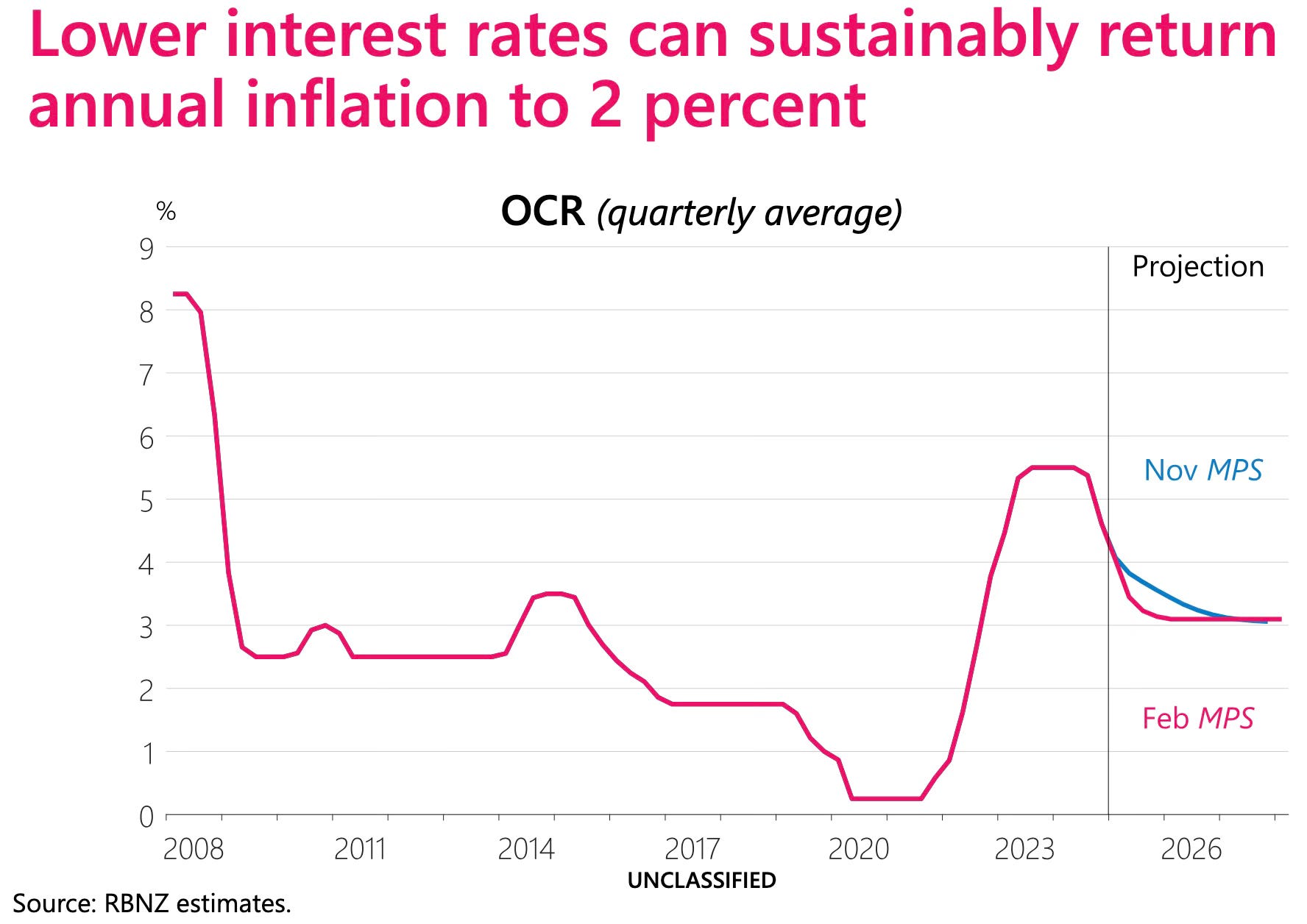
A mini-hoon on the OCR cut & the housing market
Feb 19, 202500:14:38Tap to summarizeLong story short, I spoke to Core Logic Head of Research Nick Goodall & Real Estate Institute of New Zealand (REINZ) CEO Jen Baird for a 15 minute mini-Hoon last night after the Reserve Bank of New Zealand announced it had cut the Official Cash Rate 50 bps to 3.75% and projected another 75 bps of cuts this year. We also spoke in the video and podcast above about the REINZ's January sales data showing another slight fall in house prices with a rise in sales volumes. In essence, we agreed the as-expected rate cut and the RBNZ’s acceleration of three projected rate cuts in yesterday’s projections would improve sentiment in the housing market, but that the RBNZ’s Debt To Income (DTI) multiple limit of seven for rental property investors was starting to kick in and would limit any explosiveness of housing and economic activity. Also, housing market data shows the long standoff between over-optimistic and not-pressured sellers vs cautious and stretched buyers remains, dampening volumes and leading many to list, and then pull their homes off the market.The key things to know from the RBNZ decision, its Monetary Policy Statement (MPS) and its news conference were:* RBNZ Governor Adrian Orr indicated in the news conference there would be three more cuts of 25 basis points each of the three next decisions in April, May and July;* The RBNZ also projected a marginally higher GDP track than in the November MPS, a slightly higher inflation track, a higher unemployment track, lower business investment, lower migration, less contractionary Government spending and taxation and lower house price inflation; * The RBNZ doesn’t expect longer-term fixed mortgage rates to fall much further because the global bond yields these fixed rates are mostly priced from remain elevated because of fears about Donald Trump’s tariffs sparking resurgence of inflation globally;* RBNZ Assistant Governor Karen Silk said: ““I would say the expectation of the longer-term rates coming substantially lower is probably a lot less now. That depends on the funding costs for banks and that’s again being influenced by what’s going on in those global rates.”* She said the lagged effect of borrowers moving off their older higher fixed rates would see the average mortgage rate paid to fall just 50 basis to 5.7% by December from 6.2% now; and,* Orr said the bank’s DTI limits “will act as a good moderation for lending behaviours,” this year as mortgage rates fall.Here’s the key detail, charts & video from the RBNZ decision and news conference in Wellington, which I attended, along with the key detail from the REINZ data yesterday:What happened in the housing market in JanuaryREINZ’s data for January showed a slight rise in volumes, a fall in median prices and a lower House Price Index in January than in December. Here’s more detail:Sellers increased their listings, but often remained wedded to expectations of higher prices reached in 2021 and 2022.Ka kite anoBernard This is a public episode. If you'd like to discuss this with other subscribers or get access to bonus episodes, visit thekaka.substack.com/subscribe
Transcribe →
'Where will your kids raise your grand-kids?'
Feb 18, 202500:09:15Tap to summarizeAfter seeing yet-more-months of political debate and policy decisions to ‘go for growth’ by pulling the same old cheap migration and cheap tourism levers without nearly-enough infrastructure, or any attempt to address the same old lack of globally conventional tax incentives for investment, I thought it would be worth issuing a challenge to the opponents of tax reform in the form of an open letter, which can be read, listened to and shared publicly because I’ve taken the paywall off this one immediately.‘Dear New Zealanders, your victory is pyrrhic’Dear home-owning older voter,You have successfully blocked the taxation of capital gains on leveraged residential land values for nearly 15 years and now both major political parties are so afraid of you doing it again they won’t even talk about changing the core nature of our political economy, which is now a broken, unhealthy, expensive housing market with starved public services and a stagnant real economy tacked on.So now…What.Is.The.Point.What's the point of 'winning' and keeping those capital gains if your kids have to migrate to be able to afford a family, and will raise your grandkids there, rather than here?What’s the point of living in a million dollar asset with maybe a few others rented out or just sitting empty elsewhere if it means you only get to see your grandkids a few times a year?What’s the point of feeling rich and believing everyone can (or should) get on the ladder under your own steam like you did, when we all know we’re way past that point, and your kids know it because they often have to ask for help with house deposits, loan repayments and free rent?What’s the point of pretending that this ‘housing-market-with-bits-tacked-on’ way of running our economy and society works for everyone and can be sustained with economic growth if it means most of the kids you see on the streets are living here in poverty because:* their parents can barely afford the rent you charge them and can’t afford to leave; or,* they’re still living here because their parents are waiting for residency so they can get in to Australia through the back door; or,* they’re living here because their parents prefer to live in a New Zealand-style of poverty, rather than the one they grew up in India, the Philippines or China, without the nice views, the free(ish) healthcare and education systems and the NZ Superannuation for everyone at 65?What’s the point of raking over the same old stale arguments about everyone-being-able-to-get-on-the-ladder-if-only-they-just-tried-a-bit-harder when the economic and social results of the last 30 years have shown it just does not work?Who do you think you are still kidding? Who do you think still believes this situation is sustainable? The economy? We’re now into a third year of a per-capita GDP recession because we:* haven’t invested enough in infrastructure for transport, housing, water, health and education to cope with the last decade’s strong population growth, which we decided we needed to keep the seams from bursting and the wheels of GDP rolling (because we know they’re so rickety they may be hard to start rolling again if they stop);* have decided (again) that starving public infrastructure of investment and staff is the best way to keep public debt and deficits low enough to afford more income tax cuts, which are needed to grow the disposable income so crucial for the banks’ lenders when they make decisions about how much leverage to pump into limited amounts of residential zoned land; and,* have chosen to replace locally-trained expensive workers with migrants with temporary visas, who we don’t need to train, keep healthy, educate or pay well, and we can exploit to lower our costs and avoid investing in our businesses.The rest of us? You’re not even kidding your own kids any more. They are voting with their feet at a rate of 200 a day, mostly to Australia, which does:* invest in infrastructure;* has kept strong unions and protects higher wages with legislation;* grew its productivity and those wages by forcing its workers to save and invest; and* is now encouraging and helping its local state governments to invest.Or just yourselves?Do you still believe it’s working for you and the rest of us in the long run?If you say you do, then ask yourself one question in this pollIf you find yourself answering ‘yes, they left me here’, then you know what to do. So what should those home-owners left behind do?Vote for a party advocating some form of capital gains or wealth tax and some sort of incentive to save and invest in real businesses. Vote for a party that doesn’t believe in magical thinking and doesn’t tell you this current model will work, if only we:* cut taxes more;* cut public debt more by cutting public services via hospitals and schools and transport;* bring in more low-wage migrants to bid up rents and push down wages; and,* keep starving public investment in water, transport and housing networks to keep the debt low and to avoid flooding the unaffordable market for land with new supply.Meanwhile, today’s six things in briefLong stories short, the top six things in Aotearoa’s political economy around housing, climate and poverty on Wednesday, February 19 are:* Today’s must-read is a first-person Op-Ed in the NZ Herald-$$$ from Sarah Elisaia, who qualified as a registered nurse in 2020 and now works in Australia (see more detail below and unpaywalled link here at NZNO.org);* This electricity market Op-ed by Simon Bridges: ‘Unlock energy to unlock growth’ in NZ Herald-$$$ is interesting, given he says the Government should look at structurally separating the generator-retailers;* The details in the scoop below about doctors turning away fat people to avoid putting them on waiting lists is an indicator of what happens when you set targets for numbers or people on waiting lists and time spent waiting;* Tony Alexander’s survey of mortgage brokers published yesterday found that: “A strong net 54% of brokers have reported that banks are becoming more willing to advance funds,” and: “Investors getting ready to jump.”* Chris Hipkins has suggested for the first time he could work with Winston Peters in a coalition, which would rule out a capital gains tax for another decade;* There’s good news from Fonterra, which wants to pay its farmers extra to reduce their climate emissions.(Usually, there is more detail, analysis and links to documents below the paywall fold and in the podcast above for paying subscribers. Normally, if we get over 100 likes from paying subscribers we’ll open it up for public reading, listening and sharing. I’ve taken an executive decision to open this up from start due to the public interest involved.)Today’s must-read: Sarah’s plea from Australia Here’s the detail in Sarah’s Op-Ed mentioned above and published in full here via NZNO.org (bolding mine);After four years of study and 1100 clinical hours of unpaid placements, I began work as a registered nurse in February 2020. I was thrown into the deep end and braved the first year of my career through a global pandemic, serving my community and being labelled a “healthcare hero”.Over the next three years, I saw up close the underfunding, undervaluing and the neglect of patients’ rights imposed by successive governments on the healthcare system.For all the talk of heroes, our pleas for what seemed like bare-minimum resourcing constantly fell on deaf ears. I clocked out of most shifts exhausted, feeling guilt and anxiety for my patients.The extreme budget cuts made by the coalition are the most recent acute flare of this chronic illness in the system.Everything is on the chopping block. In 2022, the Association of Salaried Medical Specialists reported we needed 12,000 extra nurses to keep pace with Australia.Yet at the heart of the present cuts is the claim that New Zealand has 3000 more nurses than it can afford in the budget. When asked if we need those 3000 nurses for the system to function properly, Health Commissioner Lester Levy couldn’t answer.The answer is yes, those nurses and resources are desperately needed and people will die without them.However, the prevailing logic of this Government is that the budget can somehow be detached from the resources needed to keep people alive and healthy. You can’t help but suspect it is setting the system up to fail on purpose.Accompanying me at the strike was my 2-year old niece. I took photos of her carefully wrapping her tiny hands around a “safe staffing now” sign the same size as her.In that moment I was overwhelmed with how each day was a missed opportunity to watch my niece grow and become her own person.I spent each day of my trip home soak...
Transcribe →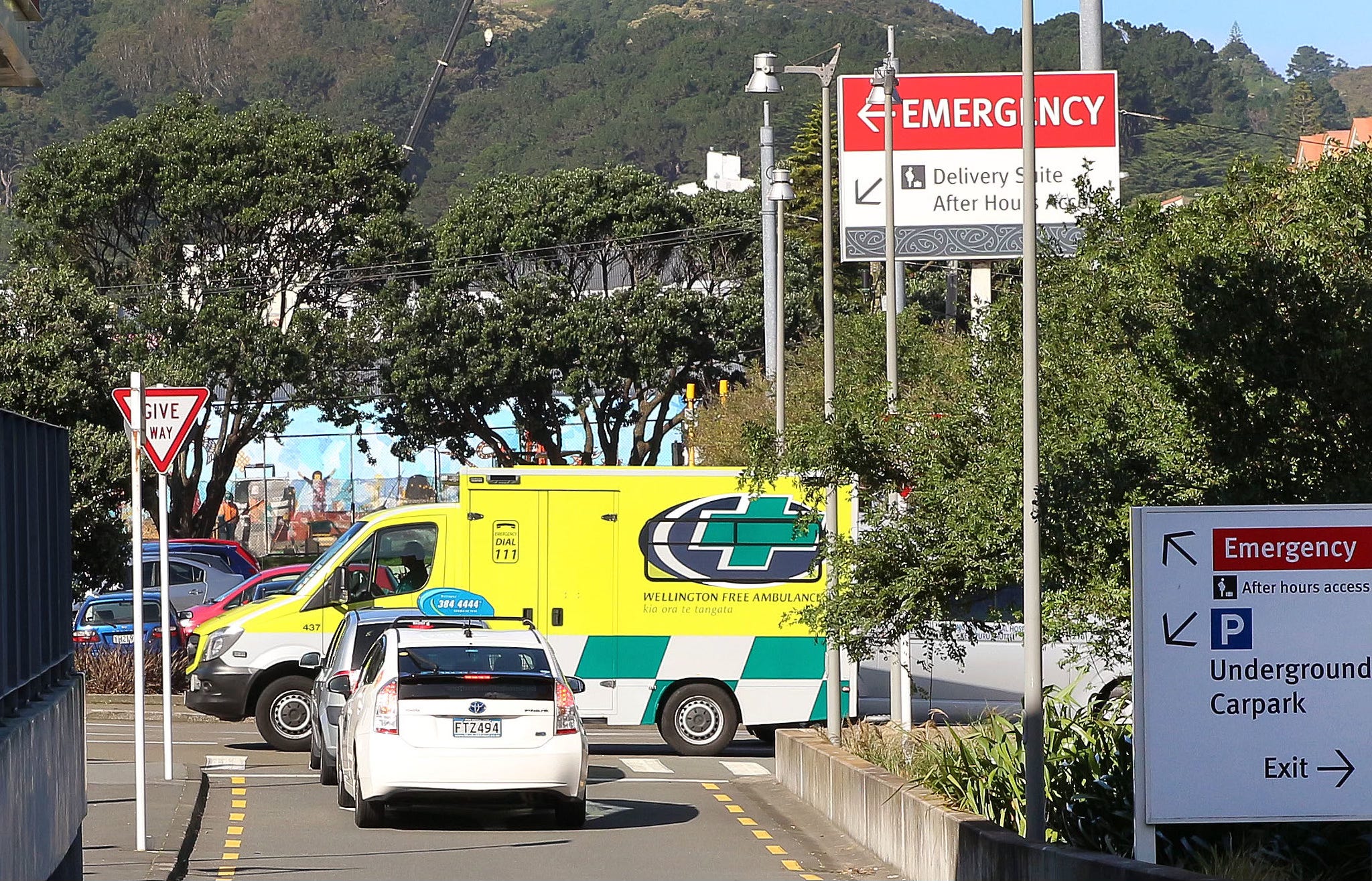
The ambulances at the bottom of our cliffs are full
Feb 17, 202500:05:36Tap to summarizeLong stories short, the top six things in Aotearoa’s political economy around housing, climate and poverty on Tuesday, February 18 are:* A NZ Herald investigation published yesterday into the performance of EDs has found almost a third of a million patients were not seen within the recommended times in the first half of last year;* ED doctor Gary Payinda pointed in his substack post yesterday at international research showing overcrowding and ‘bed blocking’ resulted in the deaths of one in every 83 patients stuck in EDs for more than eight hours, with the risk of death in an ED here rising by 10% if 10% of the emergency beds are taken up by patients unable to move out into hospital wards because of bed shortages;* Yet unnecessary and self-imposed Government funding constraints are limiting the numbers of new hospital beds, and the number nurses and doctors being trained, with news yesterday that 121 nurse practitioners are about to start training without any certainty of being funded;* Stats NZ data yesterday monthly net migration rose in December to a 12-month high of 3,810 from 2,140 in November as foreign arrivals rose for their fourth consecutive month and the rate of emigration by residents and citizens fell slightly for the month, although it remains around 200 per day;* Workers who grew up in Aotearoa (aged 18-30) made up 27,400 (38%) of the 72,000 migrant departures of New Zealand citizens in 2024, while workers (18-44) made up 84,000 (64%) of the 130,900 migrant arrivals of non-New Zealand citizens in 2024.; and,* Westpac NZ has doubled its forecast for net migration from 15,000 this year to 30,000 next year as even more workers on temporary work visas arrive to more-than-replace citizens leaving, and are arriving in a country where the Government is forecasting a 44% reduction in infrastructure spending over the next four years.(Usually, there is more detail, analysis and links to documents below the paywall fold and in the podcast above for paying subscribers. Normally, if we get over 100 likes from paying subscribers we’ll open it up for public reading, listening and sharing. I’ve taken an executive decision to open this up from start due to the public interest involved.)Inviting in more people before building more hospital roomsThe Government’s ‘going for growth’ strategy pivot this year is relying on ramping up cheap tourism revenues from Australia and China, and pulling on the lever to bring more migrant workers on temporary work visas.Westpac is now expecting a doubling of net migration over the next year because of looser Government visa policies. The problem is the 30,000 expected is more than a third above the Stats NZ long-term population growth forecast and will happen as the Government is reducing its infrastructure spending by 44%, on top of a $104 billion deficit already there.That’s evident in the scenes at the bottom of the cliff, as NZ Herald reported yesterday:All of the country’s hospital emergency departments (EDs) are failing to assess patients with “imminently” or “potentially” life-threatening conditions on time – a trend senior doctors say is a “massive problem” which increases the chance of death.More than 300,000 patients with time-critical conditions were not seen within recommended time frames during the first six months of last year, according to official information obtained exclusively by the Herald.•Staff shortages, overcrowding, and hospital bed block contribute to delays, causing poor outcomes for patients and staff burnoutAn analysis of official information obtained exclusively by the Herald has revealed the worst and best EDs when it comes seeing patients on time according to the Australasian Triage Scale – a best-practice standard followed by New Zealand’s EDs.Health investigation: Watch: How does yours rate? The best and worst-performing hospital EDs in NZ revealed NZ Herald’s Michael Morrah and Chris KnoxSubstack essentials elsewhereFurther readingToday’s must read: Please read this enlightening and ultimately hopeful piece from Rebecca Macfie via E-Tangata. It’s a first-person reflection on the power of endowments in Aotearoa.My story is remarkably similar. My great-grandfather was given stolen land, which created the wealth that allowed my grandfather to build his farm on fraudulently-bought rehab land, which gave me privilege and resources to go to University fees-free and then buy a home in 1991 for three times income. We have a responsibility to at least acknowledge the privilege and the endowments, and not to adopt a blame culture against those who haven’t had those endowments (and worse). Rebecca Macfie: ‘What do I know of hardship?’Scoop: Tech agencies 'failed to protect' Ardern from 'violence, misogyny' - HRC RNZ’s Guyon EspinerScoop: The GP who earns less than minimum wage RNZ’s Ruth HillScoop: Nurse practitioner training goes ahead despite funding uncertainty RNZ’s Rachel GrahamResearch: Female-dominated professions struggle to catch up in cumulative earnings RNZFeature: Life in an isolated valley after a flood: 'The damage took my mind off being hungry' Hawkes Bay Today’s Rafaella MeloExplainer: What needs to change to ‘power up’ the NZ economy? Stuff’s Lloyd Burr.Chart of the day: Egg inflation uncagedCartoon of the dayTimeline-cleansing nature pic of the dayKā kite anoBernard This is a public episode. If you'd like to discuss this with other subscribers or get access to bonus episodes, visit thekaka.substack.com/subscribe
Transcribe →