
Podcast
The Kākā by Bernard Hickey
Hosted by Bernard Hickey · EN
103episodes
Episodes
Newest firstAll episodes
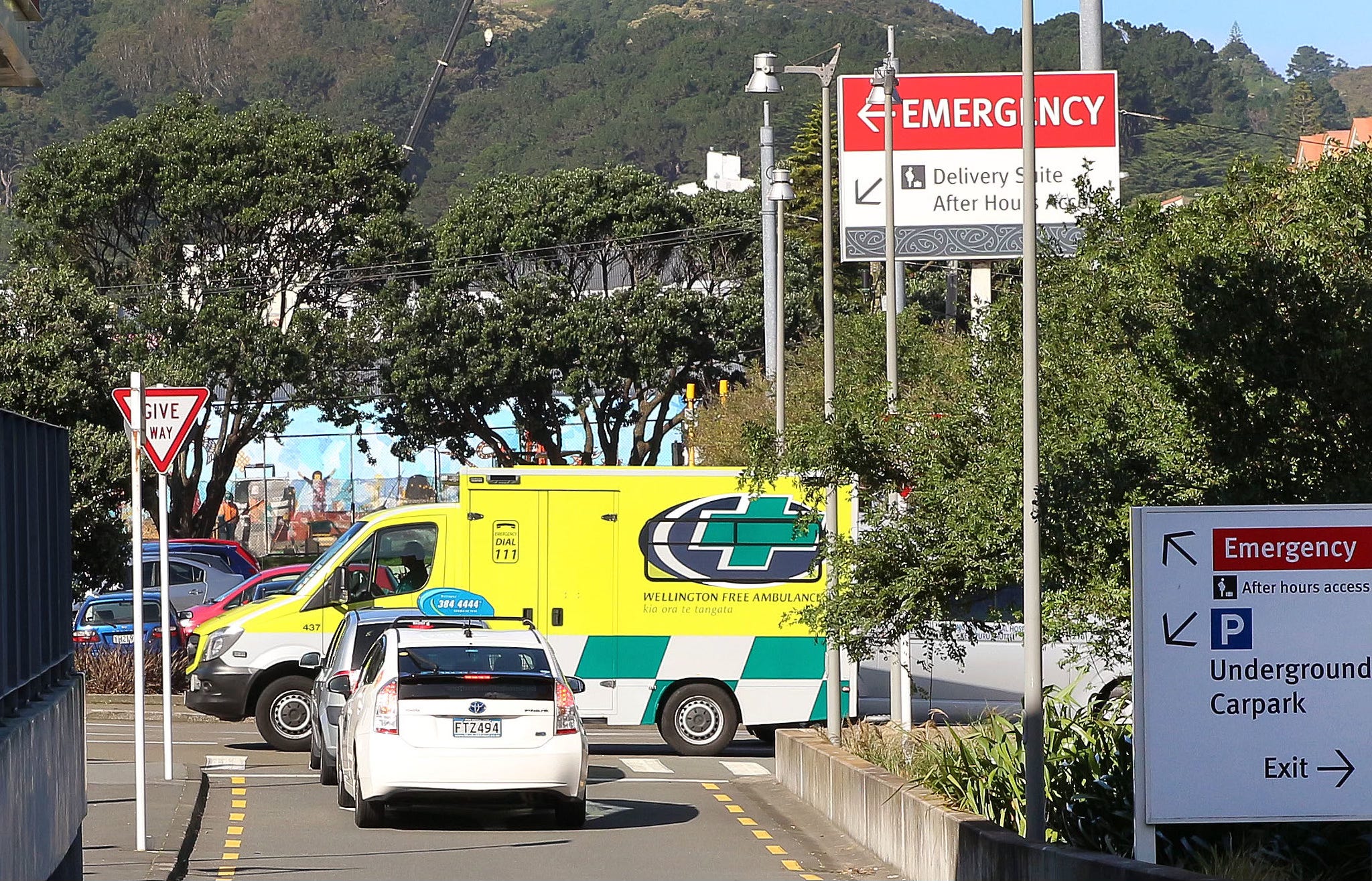
The ambulances at the bottom of our cliffs are full
Feb 17, 202500:05:36Tap to summarizeLong stories short, the top six things in Aotearoa’s political economy around housing, climate and poverty on Tuesday, February 18 are:* A NZ Herald investigation published yesterday into the performance of EDs has found almost a third of a million patients were not seen within the recommended times in the first half of last year;* ED doctor Gary Payinda pointed in his substack post yesterday at international research showing overcrowding and ‘bed blocking’ resulted in the deaths of one in every 83 patients stuck in EDs for more than eight hours, with the risk of death in an ED here rising by 10% if 10% of the emergency beds are taken up by patients unable to move out into hospital wards because of bed shortages;* Yet unnecessary and self-imposed Government funding constraints are limiting the numbers of new hospital beds, and the number nurses and doctors being trained, with news yesterday that 121 nurse practitioners are about to start training without any certainty of being funded;* Stats NZ data yesterday monthly net migration rose in December to a 12-month high of 3,810 from 2,140 in November as foreign arrivals rose for their fourth consecutive month and the rate of emigration by residents and citizens fell slightly for the month, although it remains around 200 per day;* Workers who grew up in Aotearoa (aged 18-30) made up 27,400 (38%) of the 72,000 migrant departures of New Zealand citizens in 2024, while workers (18-44) made up 84,000 (64%) of the 130,900 migrant arrivals of non-New Zealand citizens in 2024.; and,* Westpac NZ has doubled its forecast for net migration from 15,000 this year to 30,000 next year as even more workers on temporary work visas arrive to more-than-replace citizens leaving, and are arriving in a country where the Government is forecasting a 44% reduction in infrastructure spending over the next four years.(Usually, there is more detail, analysis and links to documents below the paywall fold and in the podcast above for paying subscribers. Normally, if we get over 100 likes from paying subscribers we’ll open it up for public reading, listening and sharing. I’ve taken an executive decision to open this up from start due to the public interest involved.)Inviting in more people before building more hospital roomsThe Government’s ‘going for growth’ strategy pivot this year is relying on ramping up cheap tourism revenues from Australia and China, and pulling on the lever to bring more migrant workers on temporary work visas.Westpac is now expecting a doubling of net migration over the next year because of looser Government visa policies. The problem is the 30,000 expected is more than a third above the Stats NZ long-term population growth forecast and will happen as the Government is reducing its infrastructure spending by 44%, on top of a $104 billion deficit already there.That’s evident in the scenes at the bottom of the cliff, as NZ Herald reported yesterday:All of the country’s hospital emergency departments (EDs) are failing to assess patients with “imminently” or “potentially” life-threatening conditions on time – a trend senior doctors say is a “massive problem” which increases the chance of death.More than 300,000 patients with time-critical conditions were not seen within recommended time frames during the first six months of last year, according to official information obtained exclusively by the Herald.•Staff shortages, overcrowding, and hospital bed block contribute to delays, causing poor outcomes for patients and staff burnoutAn analysis of official information obtained exclusively by the Herald has revealed the worst and best EDs when it comes seeing patients on time according to the Australasian Triage Scale – a best-practice standard followed by New Zealand’s EDs.Health investigation: Watch: How does yours rate? The best and worst-performing hospital EDs in NZ revealed NZ Herald’s Michael Morrah and Chris KnoxSubstack essentials elsewhereFurther readingToday’s must read: Please read this enlightening and ultimately hopeful piece from Rebecca Macfie via E-Tangata. It’s a first-person reflection on the power of endowments in Aotearoa.My story is remarkably similar. My great-grandfather was given stolen land, which created the wealth that allowed my grandfather to build his farm on fraudulently-bought rehab land, which gave me privilege and resources to go to University fees-free and then buy a home in 1991 for three times income. We have a responsibility to at least acknowledge the privilege and the endowments, and not to adopt a blame culture against those who haven’t had those endowments (and worse). Rebecca Macfie: ‘What do I know of hardship?’Scoop: Tech agencies 'failed to protect' Ardern from 'violence, misogyny' - HRC RNZ’s Guyon EspinerScoop: The GP who earns less than minimum wage RNZ’s Ruth HillScoop: Nurse practitioner training goes ahead despite funding uncertainty RNZ’s Rachel GrahamResearch: Female-dominated professions struggle to catch up in cumulative earnings RNZFeature: Life in an isolated valley after a flood: 'The damage took my mind off being hungry' Hawkes Bay Today’s Rafaella MeloExplainer: What needs to change to ‘power up’ the NZ economy? Stuff’s Lloyd Burr.Chart of the day: Egg inflation uncagedCartoon of the dayTimeline-cleansing nature pic of the dayKā kite anoBernard This is a public episode. If you'd like to discuss this with other subscribers or get access to bonus episodes, visit thekaka.substack.com/subscribe
Transcribe →
‘The funds for infrastructure projects need to be prioritised and released’
Feb 16, 202500:04:56Tap to summarizeLong stories short, the top six things in Aotearoa’s political economy around housing, climate and poverty on Monday, February 17 are:* Engineering New Zealand CEO Richard Templer said yesterday hundreds of engineers are losing their jobs and leaving the country as work dries up due to stalling infrastructure projects;* Templer pleaded for the Government to free up funds to restart stalled projects, but Infrastructure Minister Chris Bishop simply responded the Government had approved projects, without addressing Templer’s point;* However, our Chart of the Day below shows the coalition Government prioritised debt reduction over infrastructure investment in Budget 2024, forecasting a 45% fall in capital spending over the next four years;* Immigration Minister Erica Stanford said yesterday (see interview of the day below) it was her “personal view" that the foreign buyer ban on homes should be eased for wealthy migrants wanting to invest in New Zealand and that there were ongoing discussions "above my paygrade" with NZ First coalition partner Winston Peters about relaxing the ban;* Universities have been told to prepare for a funding cut because an earlier 4% funding ‘lifeline’ won’t be renewed, The Post-$$$’s Glenn McConnell reported this morning; and,* There’s a report this morning that everyone from church ministers to sex workers are taking advantage of Pasifika workers here to pick fruit. (See more in further reading below)(There is more detail, analysis and links to documents below the paywall fold and in the podcast above for paying subscribers. If we get over 100 likes from paying subscribers we’ll open it up for public reading, listening and sharing.)Engineering NZ calls b******t on the Govt’s projects talkEngineering NZ CEO Richard Templer has called out the Government’s gaslighting about its ‘Going for Growth’ strategy being focused on infrastructure development, when actual decisions on the ground in the last 15 months since the formation of the Government have been to stall, freeze and dump various state-funded building plans with the aim of deficit and debt reduction.Here’s the detail, as reported by Rachel Helyer Donaldson yesterday via RNZ (bolding mine):“The shutdown of education rebuilds, the shutdown of hospital builds and upgrades the slow down on roading, the changes in the Three Waters space has meant that New Zealand engineers and New Zealand constructors, the people who build the roads, waters network and buildings, have all had to look for work elsewhere and that has seen people heading overseas or contracting to work overseas and significant numbers.""We don't have any detailed statistics because obviously some of the firms involved are not going to put them into the public arena, but we do know that hundreds of engineers have lost their jobs as a result of these changes.""If you think about a building project that has stopped, say like Dunedin Hospital, you have structural engineers who are building the design and the structure, geotechnical engineers who are involved in all the foundation work, fire engineers who do all the systems, building service engineers, typically mechanical engineers and electrical engineers who are doing everything inside, [from] lighting to specialised electronics."Then you have all the tradespeople underneath: the builders, the concrete layers, the tilers, the painters, the electricians involved in the wiring. All those trades and all those engineers are suddenly left without work to do."Templer said he knew of "some large infrastructure firms" in Australia who were "rapidly hiring large numbers of New Zealand engineers".Meanwhile, other engineers will be lured to California to help with the rebuild after last month's devastating wildfires."New Zealand engineers are valued very highly in California because California gets earthquakes, just like New Zealand."To avoid a "brain drain", he urged the government to free up funds for delivery and firm up the infrastructure pipeline."New Zealand cannot afford to wait - we need to get major project design and procurement underway as soon as possible. The funds for infrastructure projects need to be prioritised and released.""New Zealand also needs a clear, committed infrastructure pipeline that outlives each political term. Engineers need to know what is happening, and when.""We will keep losing our engineers and will pay the price. An engineering skills crisis is evident - the time to act is now." Engineering NZ’s CEO Richard Templer via RNZChart of the dayInterview of the daySubstack essentials elsewhereThread of the dayFurther readingScoop: Budget leak: Universities told to prepare for funding cutLeaked information from a tertiary sector budget briefing shows a 4% “lifeline” funding boost won’t be renewed. The Post-$$$’s Glenn McConnellScoop: From preachers to prostitutes: Who's exploiting our RSE workforce?. There are claims that everyone from church ministers to sex workers are taking advantage of Pasifika workers here to pick fruit. Stuff‘s Tony WallDeep-dive: Onslow College calls for delivery on decade of ‘broken promises and underinvestment.’ The Wellington secondary school is calling for certainty after another college was given a $100 million funding commitment for the future of its school buildings on Wednesday. The Post-$$$’s Hanna McCallumDeep-dive: 'Grumpy spaces': How a NZ architect is helping arrange the future of housing RNZ’s Serena SolomonDeep-dive: The truth about homelessness: What NZ’s rising numbers reveal NZ Herald’s Chelsea Daniels in a podcastCartoon of the dayTimeline-cleansing nature pic of the dayKā kite anoBernard This is a public episode. If you'd like to discuss this with other subscribers or get access to bonus episodes, visit thekaka.substack.com/subscribe
Transcribe →
Recession & local protests drag National below Labour
Feb 15, 202500:08:13Tap to summarizeLong stories short, the top six things in our political economy around housing, climate and poverty in the week to Sunday, February 16 were:* Leading and lagging indicators showed the economy is struggling to get out of its three-year-long recession in per-capita terms, with some green shoots in manufacturing and trucking being over-shadowed by another fall in retail spending and confirmation of the loss of over 200 jobs at Kinleith.* Poll results published over the last week showed support for the Government’s coalition of parties falling behind the Opposition in early February for the first time since the 2023 election as the lengthening shadows of the recession, high interest rates and still-high domestic inflation compound the pain of ever-tightening budgets in health, housing, transport, education and welfare; * In a week of political distractions, misdirections and grandstanding, PM Christopher Luxon and soon-to-be Deputy PM David Seymour accused each other in public of being ill-advised over Seymour’s writing of a letter to Police in support of constituent Philip Polkinghorne. Meanwhile, Finance Minister Nicola Willis was picked out by Labour as a potential challenger to Luxon. She then announced the Government would help an as-yet-to-be identified third entrant to challenge the supermarket duopoly of Foodstuffs and Woolworths, Luxon criticised banks for restricting lending to service stations.* More local protests against hospital staffing shortages and higher speed limits sprung up in Whakātane, Palmerston North and Nelson, adding to the political pressure on National in its heartland provincial seats.* The Government expanded its ‘going for GDP growth’ policies by loosening rules and lowering thresholds for foreign direct investment, but immigration lawyers and estate agents said it was unlikely to ramp up investment, migration or jobs much because most of the money will simply be lent to the Government in bonds, and migrants still can’t buy their own homes.* The Salvation Army released its annual State of the Nation report showing worsening food poverty and housing shortages meant more than 400,000 people now needed welfare support, the highest level since the 1990s, yet Aotearoa’s major annual economics conference did not discuss housing shortages, rising poverty or taxing capital gains, instead focusing on the state doing more with less and public debt reduction.The Kākā’s Journal of Record for the week to February 16Politics and the economy* Polls from 1News-Verian, Curia-Taxpayers Union and Talbot Mills showed support for the Opposition parties in Parliament overtaking support for the governing coalition parties for the first time since the election, while right track-wrong track measures showed the highest proportion of voters since 2023 thought the country was going in the wrong direction.* Ready-mixed concrete production fell 7.7% in calendar 2024 from 2023 to a five-year low that is 10% below 2019 levels, Stats NZ reported.* Retail spending via electronic cards fell 1.6% in seasonally adjusted terms in January from December, Stats NZ reported.* Food prices rose 1.9% in January from December and were up 2.3% from a year ago, while the stock measure of rents rose 0.1% for the month and was up 3.6% from a year ago, Stats NZ reported.* Manufacturing sector output expanded in January for the first time in 23 months, the BusinessNZ-BNZ Performance of Manufacturing Industries (PMI) survey results for January showed.* Heavy traffic movements rose 4.0% in January from December, while light traffic movements rose 1.0%, ANZ’s Truckometer series from NZTA data showed.Housing, transport & infrastructure* State housing tenants who refuse to work with Kāinga Ora to repay their rent debt now risk eviction under a new policy announced by Associate Housing Minister Tama Potaka. Potaka said Kāinga Ora is currently bringing rent debt down to "realistic" levels for tenants to fully repay.* Overseas investors, business leaders, and construction companies will discuss infrastructure investment opportunities at a summit hosted by the Government as part of its first Quarterly Action Plan for 2025.* Transport Minister Chris Bishop said Cabinet has confirmed Crown funding to NZTA to deliver upgrades to SH76 Brougham Street in Christchurch, including an overbridge expected to be complete within two years.* Government acquisition of Māori land would require joint approval from the Minister for Land Information and the Minister of Māori Development under upcoming changes to the Public Works Act. Land Information Minister Chris Penk said the changes would also see compensation paid out to all separately owned dwellings on the land, rather than as a lump sum.* CoreLogic's latest ‘Pain and Gain’ report found that 91% of properties were resold at a profit in Q4 2024, with $289,500 the median resale profit.* Property listings in January were up 21.2% year-on-year and national stock levels were up 18.9% year-on-year, according to Realestate.co.nz's latest report. The national average asking price of $868,969 was down 1.3% year-on-year.* Minister of Transport Chris Bishop announced that the Government would consult on extending the time between WoF inspections for vintage vehicles and private motorhomes from 6 months to one year.Poverty, health, jobs, incomes, living costs & justice* NZ First introduced a Member's Bill which would repeal Act mandating water fluoridation and instead require local authorities to hold referendums on whether water should be fluoridated.* Workers who earn over $180,00 would be barred from pursuing unjustified dismissal claims under a new Bill announced by Workplace Relations and Safety Minister Brooke van Velden. The ban would apply only to new employment agreements in the first year after the Bill is passed, then extend to cover pre-existing agreements.* Mental Health Minister Matt Doocey announced partial Government funding for a Mental Health Foundation initiative to digitise mental health resources and re-develop its digital platforms.* The Government announced that survivors of torture at the Lake Alice Psychiatric Hospital can choose either an expedited redress payment of $150,000, or an individualised payment determined by former High Court judge Paul Davison.* Victims advocate Ruth Money has been appointed NZ's Chief Victims Advisor, Justice Minister Paul Goldsmith announced.Climate, water, land & sea* Total greenhouse gas emissions fell 0.7% in the September 2024 quarter, Stats NZ reported, but industry and hou...
Transcribe →