← The Leadership Dance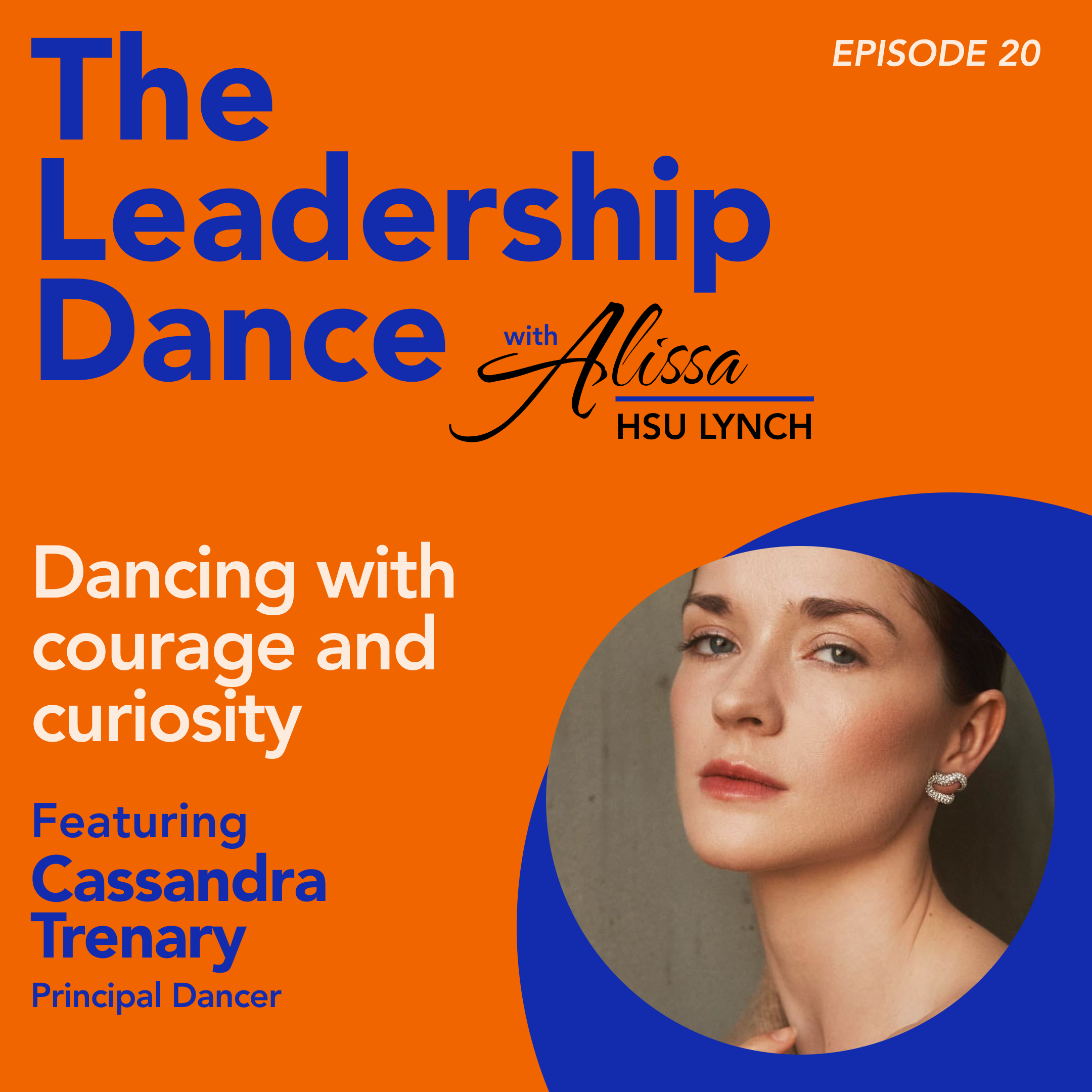
The Leadership Dance
Ep. 20: Dancing with courage and curiosity, with Cassandra Trenary
00:31:28
In this deeply personal and moving episode of The Leadership Dance, Principal Dancer Cassandra Trenary of American Ballet Theatre opens up about the journey behind the curtain—from early dreams in Georgia to becoming one of ABT’s most versatile...
Loading summary
Transcript37 lines
- [00:01]
A
How do you find freedom within the structure of the choreography to make those roles your own?
- [00:07]
B
It's such a combination of looking inward, pulling from personal experience, having an amazing team of people that can help you accomplish what you want to do with something as well. Like coaches, I have an acting teacher. I get my hands on any literature that I can about roles, about ballets. I love to carve out time to just kind of ask questions, to have conversations with my partner about what's being said in each moment, rather than just rehearsing the phrases over and over again physically. What I have also found is I can do all the research in the world, I can have all of these ideas, and then sometimes you do a run through and that's really the only way you can learn who this person is. A lot of dancers have an idea of what they want to do with something, but they forget that they also have to respond, respond to what's happening around them. So it takes a lot of listening as well, allowing there to be space for spontaneity so that your partner can also surprise you. A ballet like Crime and Punishment was so interesting because it was almost feeling a bit like structured improv. There were phrases, there were very clear steps. But Helen was intention first entirely. I found that I learned a lot about myself as a performer within that, that piece. I think if I can just approach researching roles, like I'm going to do a play or a film, then you can go out there with a sense of freedom, like, no matter what, if I'm in that character, nothing can go wrong.
- [01:41]
A
Hi and welcome to the Leadership Dance, where we explore the art of leadership with trailblazers in business and the arts. If you enjoy the show, make sure to share and subscribe wherever you get your podcasts. I'm Alisa sue lynch and I'm honored today to host one of my favorite ballerinas ever, Cassandra Trenari. Cassandra is a principal dancer with American Ballet Theater. Known for her versatility and emotional depth in both classical and contemporary roles. She's danced iconic parts like Juliet, Giselle and Princess Aurora, and most recently created the role of Ras Kolnikoff in Helen Pickett's Crime and Punishment. A Georgia native, she trained at ABT's Jacqueline Kennedy Onassis School and joined the main company in 2011, becoming a principal dancer in 2020. Cassandra has originated roles in works by Alexi Ratmansky, Twyla tharp and Wayne McGregor, and starred in Christopher Wheeldon's Like Water for Chocolate. Beyond ABT, she's performed internationally, produced Independent dance films and recently debuted a photography exhibit capturing backstage life. Cassandra's next chapter will take her to Europe, where she will join the Vienna State Ballet. Her honors include a Princess Grace Award and the final Annenberg Fellowship for dance. Welcome to the podcast, Cassandra.
- [03:08]
B
Thank you, Elisa. That was such a generous intro. I so appreciate it. Thank you.
- [03:13]
A
I want to start by asking, what did you dream of becoming when you were younger? Can you take us back to your earliest memories of dance growing up in Georgia?
- [03:23]
B
Growing up, there was this desire to be a performer first. I think I was always just very energetic, very creative, and I think my folks just kind of put me into everything that they could to just get me to do something. I imagine, you know, I did gymnastics. I did horseback riding. I grew up doing martial arts. My biggest inspiration was the pink Power Ranger on tv. I thought, oh, well, I'm gonna be a Disney Channel star. Like, there are all these little, like, dreams. And focusing in on dance took place around the time of my first summer intensive. I'd say it was in American Ballet Theater Summer intensive in Alabama. My mom put me in a Tappan ballet combo class when I was about 3, and I just fell in love with dance at that time. And my first summer intensive was kind of where ballet came into focus for me. I remember being surrounded by so many young people who were far more advanced than me. At my age, there was a technique and a skill involved that I hadn't quite experienced that I was really drawn to. And I think it was also a moment that I recognized I had the facility and I had a love for it. I was introduced to the idea that it could even be a profession. I was sold. I think, from that chunk of time.
- [04:43]
A
Forward on dance, your rise through the ranks at American Ballet Theater to become principal dancer has been pretty remarkable. Can you tell us what was that journey like for you both emotionally, physically? What did it take to get there?
- [04:57]
B
It was very quick. It's like quite a remarkable story of being at the right place at the right time. So the story goes from that Alabama summer intensive, when one of our current directors of rep, Nancy Rafa, she was the president of the summer intensive at the time, she saw me in Alabama. She said, we have to get this girl a scholarship to get her to New York. So the following summer, I went to New York for six weeks. I did the summer intensive, and they just kept inviting me back. A few years later, I was invited to join the school. At the time, we were not in a place as a family to make that move. So we requested to take a year to prepare. We all moved to New York, the Border Collie, my little brother, my parents. I was in the school from 2009 to January of 2011, and that's kind of where things took off for me. It started with a group of dancers from ABT2ABT's Studio Company being brought into the company. However, Studio Company had a tour in the books, a European tour for about six weeks. So they plucked a few of us from the school to go on that tour with them, and it was so special. So here we were thinking, we just hope to get a job in the near future. And they brought us on this tour. It was very special. Six weeks in Europe, like, we were just pinching ourselves. It was such an amazing adventure and a little taste of what company life maybe would be like. And when I returned from that tour, we were, as planned, gonna finish out the year in the school and see where life takes us. We were all encouraged to audition or potentially get into Studio Company permanently. However, what ended up happening for me was there was a young woman in the main company at the time, my height, who had torn her ACL. And Kevin McKenzie, the artistic director of ABT at the time, had seen me in a rehearsal for Studio Company potentially, and they offered me an apprenticeship. So January I was in the JKO school, and by spring, I was an apprentice with American Ballet Theater. Could not believe it. The promise was, well, you know, you'll do the apprenticeship, and then you will go ahead and join ABT's studio company. And I was like, this is amazing. Yes, done. By the time our season came to a close, they never really circled back on it. My apprenticeship ran out. I got my corps de ballet contract. There was a choreographer saw me in class and wanted to give me a principal role in the fall season in his new ballet. It's kind of this bizarre and wonderful. The stars just aligned and people saw me, and I just kind of continued from there.
- [07:42]
A
Were there times where you questioned whether you belonged and whether you could make it either just as a professional dancer or make it to principal? Like, how did you push through?
- [07:52]
B
You know, When I first joined abt, I sustained a couple of injuries that really slowed me down. It was really painful. I had a stress fracture in my metatarsal, and then recovering from that, discovered I had a bulge in my cervical spine that was pressing on some nerves. The whole left side of my body had stopped functioning, and I was in so much pain. And during that time, I started doing some acting. It was so special, and it was an amazing experience, honestly, and kind of lit that fire in me to consider that as an outlet, but also discovered there were tools there that could help me approach these ballets should I ever return to ballet. And luckily I did. I got healthy. It took probably about a year and some change to feel normal again. But there was something about letting go of the pursuit of, like, I have to be the best at this, and I have to be a soloist, and I have to be a principal. So having this other outlet gave me a sense of value and worth and filled my spirit in such a way that I could then come into ballet with a little bit more ease about myself. And I think that was really important. The moral of the story is, like, every time I felt as though I was losing my way a little bit, I felt like leaning into these other desires and these things that I'm curious about has always allowed me to then be the best at what I do in my ballet life, if that makes sense.
- [09:26]
A
I think it makes a lot of sense, and I've been thinking about that a lot. I think we in our prep call talked a little bit about that tension between structure and freedom. And you talked about how you were drawn to technique when you first really fell in love with ballet. But technique can only get you so far. You know, becoming the best technician doesn't make you the best artist, necessarily. And it sounds like where you draw inspiration to kind of stretch yourself is outside of ballet, is in these other creative pursuits. But I think you bring it back for sure into your dancing because you are really known for your emotion as well as your technical artistry. But you're a very full dancer. You're not just the perfect ballerina. So I think it makes a lot of sense. Everything that you just said.
- [10:14]
B
Thank you so much. That's really meaningful. I appreciate it.
- [10:17]
A
Can you talk about how you prepare for roles? Whether it's Giselle or Crime and Punishment, which are very different roles. How do you find freedom within the structure of the choreography to make those roles your own?
- [10:30]
B
It's such a combination of, like, looking inward, pulling from personal experience, having an amazing team of people that can help you accomplish what you want to do with something as well. Like coaches. I have an acting teacher. I get my hands on any literature that I can about roles, about ballets. I love to carve out time to just kind of ask questions, to have conversations with my partner about what's being said in each moment, rather than just rehearsing the phrases over and over again. Physically, I think that's incredibly important. What's the truth of this moment with the person that I am in this ballet? What time period are we in? What I have also found is I can do all the research in the world, I can have all of these ideas, and then sometimes you do a run through, and that's really the only way you can learn who this person is. A lot of dancers have an idea of what they want to do with something, but they forget that they also have to respond to what's happening around them. So it takes a lot of listening as well, allowing there to be space for spontaneity so that your partner can also surprise you. A ballet like Crime and Punishment was so interesting because it was almost feeling a bit like structured improv. There were phrases, there were very clear steps, but Helen was intention first entirely. So it was almost as though we were approaching the whole thing like a play, really an amazing experience on stage. Actually, I found that I learned a lot about myself as a performer within that. That piece. I think if I can just approach researching roles, like I'm going to do a play or a film, then you can go out there with a sense of freedom, like, no matter what, if I'm in that character, nothing can go wrong.
- [12:27]
A
That amount of preparation and sort of the multidisciplinary approach you take allows you then to really embody those roles. But I'm curious, there's this concept of flow on stage. Are you still thinking a lot or. Or are you able to let go and just let everything converge and come together?
- [12:47]
B
If the preparation has been done the way I'd hoped, I can get in that state of flow. It just feels like you are along for the ride. And it's just moment to moment. There's no thinking about what if for the future, and then there's, you know, there's no past. It's just, yeah, you're in that state of flow. However, there are times where you can't allow yourself the luxury of letting go too much, because perhaps the ballet was just finished like an hour before it's time to get on stage. And so you really have to lock in and you really have to focus. And you can pick your moments to be very methodical, otherwise it can just get a bit sloppy. You know, you still have to remain within a structure. And that's where great directors and choreographers come in. It's a team effort.
- [13:34]
A
So you've also performed in many contemporary works by choreographers, including Twyla tharp, Sir Wayne MacGregor, Melissa Fenley, which is Amazing. Do you approach these works differently than the classical repertoire? And what do you find creatively fulfilling about stepping into such different languages?
- [13:54]
B
Well, working with any contemporary choreographers, you know, they're here with us today. Like, they're in front of me, and they can give me every single little thought and intention that went into the creation of all of the phrases, all of the ballets, and then also give me permission to make it my own. I think often with the classics, we're just left to do our best to find the sources. What was the original intention of the choreographer? What time period were we in? What was happening in the world at that time that it was being created? You know, there's all these kinds of context clues to try to get to the source, but what a gift that, you know, these. These legends are right in front of me. Every choreographer that I've worked with has just unlocked something different within me. It has humbled me, has allowed me to feel like a beginner at dancing again, made me check my ego at the door and just be comfortable in being uncomfortable. I think that there's immense value in that. And someone like Wayne, Melissa, Twyla, they've even created a whole movement vocabulary that's unique to them. So I always leave the room feeling like I've grown immensely.
- [15:13]
A
Do you sense a difference between female and male choreographers?
- [15:17]
B
I mean, inherently, yes, for sure. There's just an unspoken understanding. Not that anybody's made me feel unsafe necessarily, but I just feel safe. I feel safe. I just know that when I speak, I'm heard again. I don't think it's necessarily intentional. I think it's just something woman to woman.
- [15:37]
A
So, Cassandra, you clearly have a passion for fashion, filmmaking, and photography. How do these interests feed your work as a performer? I know you talked about going to more creative spaces and coming back to dance. Can you talk more about that?
- [15:53]
B
Leaning into these other things really just feels free to me. You know, photography has really become such an important outlet in my life. I haven't gotten to a place where I feel like I have to be perfect at those things. So it's a break. It's a little break from that pursuit of perfection. If I can just allow myself to be comfortable with that idea, I can just do it without getting in my own way. That's so freeing, and it's fun, and it allows me to approach these things with a sense of curiosity and play. What we do, yes, is our passion, and it also is a way of expressing ourselves, and it's also our job. So I really need those other outlets to continue to fuel me and inspire me. And so I'm curious to see where they're all going to, like, meet one day. So that's been kind of fun to dream about a little bit.
- [16:50]
A
Well, speaking of dreams, you just had an amazing exhibition embodied at Privy Gallery in New York City, which I was privileged to see. And thank you so much for the personal tour for me and my friends. I'm also thrilled to now own one of your photographs, so I'll be picking that up soon.
- [17:07]
B
Thank you so much for being there and for the support and that was so meaningful. I have been secretly dreaming of sharing my images for quite some time and never really believed that the work was strong enough. Where I felt like, it's so private. It's just for us. I'm not doing it for any other reason other than to just have something to do when I'm off and I feel inspired to do. It's like again, it's another way of expressing myself in a little therapeutic outlet. I think a lot of it had to do with the decision to leave New York and leave ABT suddenly. It lit a fire in me and I thought, well, what's a dream that I haven't accomplished in New York? And that was the first thing that came to mind. And I thought that makes so much sense because it's also a way that I can honor my time with American Ballet Theater and all of the people within it. I was gifted the camera by our former ABT board member, who is just such a generous spirit. He's so lovely. He is a photographer himself as well. And he said, nobody shoots on film anymore. I don't think I want to pick that up ever again. So you're welcome to have it. It's a Nikon Ness from 1959 and I just decided to start playing. I ordered film off of Amazon and did a little YouTube tutorial to get acquainted with the camera. And I think the first season I brought it, I was a soloist at the time. I left it at the Met and just kept it there for a whole season. It was an eight week season at the time, 2018. So I've been photographing everybody for all these years. Took the camera on tours and what was very important to me was that people connected with the work that had no knowledge of our art form.
- [19:04]
A
Cassandra, tell people what is the overall theme of the exhibition.
- [19:09]
B
The show is called Embodied and one wonderful photographer who I ended up meeting and sharing my portfolio with, she was able to sit me down and Share with me what she found compelling about a lot of the images. She said, you know, there are images that a lot of photojournalists can go in and capture. Dancers who are just putting on their makeup, preparing for shows, beautiful images of dancers on stage. But what I'm really connecting with are the images where I can tell that these people a trust you deeply. There's an intimacy there. There's also just this utter exhaustion, like no one is putting on airs, or, you know, you can just tell that they are quite literally just being. There's a sensitivity and an empathy as a result in the images. And I thought, okay, that's interesting. So then I started to write about what it feels like for me to have just been on stage, to have been in such a vulnerable position, to have poured myself into a character for hours, to have gone on an emotional and a physical journey. And then I come off stage and I just feel so utterly confused and like I can't really find myself again. And yet I now am going to have to be met with feedback on my performance. I need to greet people. I need to say hi to family and friends. And sometimes all I want to do is just curl up in a ball and cry or laugh or surround myself with people that know what I just went through and not see anybody else. But what I kept coming back to was the word embodied. Because so much of our duty as dancers is to embody other people's characters, ideas, stories, feelings. How challenging it is to embody ourselves again. With that theme in mind, I poured through everything and picked out, really, the images where you see just before stepping on stage during intermission, backstage and. Or in dressing rooms, and then just as soon as someone has stepped off the stage again backstage or in a dressing room. There are a lot of moments in the quick change booth. The quick change booth, a lot of people don't know. As Juliet, for example, you step off stage, people grab you, they bring you into this tiny, dark room, and they just start changing your hair, changing your costume, and you're just standing there trying to remember who you are, what time period you're in. Stay calm. Breathe. Oh, that hairpin isn't quite going incorrectly. You know, it's like all this, like, with this racing energy, and then you're just thrust back onto stage, and you're like, okay, where am I? What am I doing? Who am I? So these, like, really complex, in between moments that we exist in, constantly trying to sort of put together a series of images that encapsulates that complex existence that we find ourselves in often. So with the help of a wonderful curator, Ivan Shaw, we whittled the show down to 100 images. And I had met the gentleman who owned Privy Gallery, Noah and Lane, through a friend who had done their photo exhibition there about a year ago. He's a photographer who also doesn't have a connection to dance. His name is Tommy or Zoli, and he. He was like, I love your images. I would love to put you in touch with them. So that's when that happened. And that was in February was my first meeting with them. And then for the past. How many months has it been? I've just been pouring myself into crafting this show, and it has been such a gift. So many sleepless nights, so much anxiety. It was so vulnerable to put myself out there in this way. I was running from rehearsal every day to put the show up and to, like, take meetings and to pick up the prints, and it was just like running around. And I remember I had just come from rehearsal, opening night, people were trickling in, and I was in this tiny bathroom trying to put the suit on that I had gotten for the show, and I was shaking. And I thought to myself, I don't think I've ever quite been this nervous to perform. It was just such a new way to expose myself, to share such vulnerable moments and intimate moments. All of my friends and colleagues that were featured in the show and beyond were so supportive. I'm so filled with gratitude that, A, they've let me into their lives in this way and captured these moments, and then, of course, B, that they let me share it with the world.
- [23:39]
A
Thank you so much for talking about it, giving us a glimpse behind it. I love how you talk about those in between moments. It's like this liminal space where you're neither here nor there that really comes through in the photography. And thank you for sharing that. That with us.
- [23:55]
B
Thank you. I'm so happy to hear that.
- [23:57]
A
And is there a way that other people can see the work? Are you going to put some stuff online, hopefully get another show?
- [24:05]
B
Oh, my gosh. The dream is a book. The dream of dreams is to turn it into a book. Otherwise. Yeah, I'll just. I have a photography Instagram account that I share things from time to time.
- [24:19]
A
So you just mentioned a little while ago that you're leaving New York, so you are embarking on an exciting new chapter with Vienna State Ballet, and you get the chance to work with Alessandra Ferri, who was a guest on this podcast as well. What led to Your decision to leave ABT after so many years and what are you excited about?
- [24:37]
B
I think this is an interesting full circle moment for me. Alessandra Ferri. I remember as a student coming to New York for the first time, we were watching a recording of her Romeo and Juliet performance, and something just like broke open in me. I, for the first time, kind of connected to classical ballet in an emotional way. And I felt like I was watching a movie in the choreography and the design and of course, her approach to the role of Juliet. And it just kind of solidified, I think, ballet, but also ABT for me. And from there on, it was just, we must move forward. I've been curious about what life would be like in Europe for quite some time. I'd say even before we came back from COVID potentially, because I was in a season of life where I didn't know if we would come back to work at abt at that time, I had sort of allowed myself to be comfortable with the idea of reaching beyond ABT and experiencing life in another place. And I kept thinking, like, oh, I wonder what that opportunity is going to be. It's always kind of just existed in the back of my mind, and I feel like I was just kind of waiting, waiting for the right moment. Unfortunately, I got injured last season and missed out on some really important performances. And that kind of gave me some time to just rest and sit and reflect on what I want the rest of my career to look like. And now, having entered my 30s, you know, the clock is ticking. I am young, but unfortunately for this profession, realistically, you just don't have as much time as I did when I was 17 joining ABT. I needed to try something new. I just. It just something clicked in me, and it was really difficult to listen to that because I love ABT so much. I love New York so much. I love my community here. But I think there's just a point where I felt in my gut, you've done so much here, and let's just try something new. Unfortunately, there aren't too many performance opportunities with an abt, so if I miss a season, I miss three performances out of maybe I had six performances that whole year. And then I didn't know when that ballet was going to come back. So it's just kind of reckoning with, okay, I've reached this point. This place has shaped me and molded me into the artist that I am. And I love where I'm at, and I love where I'm going, and I love that I'm Curious. And I love that I do things that scare me, and this place has crafted me into that from the time I was 12 years old to now. And I just kind of felt like it will always be here and the time is now to maybe go on an adventure. And Alessandra happened to be in New York performing Wool Forks with us, and I got to be in her cast as her Sally to her Virginia, her Clarissa in Wayne McGregor's wool for. I just enjoyed every second on stage with her, every second in the studio with her. I got to observe her work on Juliet, coach the role after I knew I wasn't going to be able to do it anymore, but I just wanted to be in the space, and I was just hanging on to every word. And I know that she's so invested in bringing life and humanity to the stage. So the first conversation was just, can we have a coffee? I'm feeling stuck. And she was very encouraging in guiding me and saying, you know, anything's possible, basically, like, you can do anything you'd like. And I said, well, I would love to have the opportunity to work with you more. And she said, well, just come by, hang out. Like, come to London, come to Vienna. Like, we can work together on anything you want. The thought of leaving New York, leaving abc, was just, like, out of the question. And the more that I thought about it and the more that I kind of confided in her and other mentors in my life and choreographers and people that I trust who've known me and have seen my journey these past 15 years in ABT collectively said, you know, it sounds like you're ready to try something new. And so I just kind of took that step and I. I just asked, I said, you know, would you ever consider having me? And she said, absolutely, absolutely. But would you be willing to pick up and move? And I was like, I don't know. I'm scared. Oh, man. But, you know, through, like, months and months of. Of just really leaning on a community of people around me who know me well within and out of abt, I felt very held and supported and cared for in making this decision, and also just comfortable with the idea that nothing's forever, but the career does have a timeline, so why not just go for everything? And so that's. That's it. I'm going. And it's scary and it's exciting, and I'm so full of joy and, of course, curiosity, and there's, of course, going to be a lot of grief. I'm going to miss everybody I know that that will exist, too, but I'm trying to just honor all of it. I'm so curious about what this move is going to do, but I feel like it's just going to break open a whole new world for me that I can't even quite understand yet. So I'm looking forward to that.
- [30:15]
A
I love this move for you, Cassandra. It sounds like it's time, you know, it's the right time for you in your life, in your career, and as someone who has lived abroad twice. So first time moved with young kids 9 and 10 at the time to China. So the other side of the world, you're going to love it. It's going to be such an amazing adventure, and you're going to blossom and flourish and discover new things. And I'm just so excited for you. I'm thrilled.
- [30:43]
B
Thank you so much. I really appreciate that.
- [30:46]
A
So, Cassandra, it's been incredibly inspiring to hear about your journey and to get to know you better, and I'd love to actually go see you perform in Vienna. Alessandra kind of threw that out on the podcast. Oh, you should come to Vienna. So maybe I will. I'd love to see you there, please. And I hope it's everything that you've been dreaming of. So thank you so much for joining me on the podcast today.
- [31:09]
B
Thank you so much, Elisa. It's been such a pleasure.
- [31:12]
A
Like follow and Share the Leadership Dance, where we explore how to choreograph the career of your dreams and chat with visionary leaders who are breaking barriers in the arts and business worlds. Until next time, keep dancing.