
Podcast
The Leading Voices in Food
Hosted by Duke World Food Policy Center · EN
The Leading Voices in Food podcast series features real people, scientists, farmers, policy experts and world leaders all working to improve our food system and food policy. You'll learn about issues across the food system spectrum such as food insecurity, obesity, agriculture, access and equity, food safety, food defense, and food policy. Produced by the Duke World Food Policy Center at wfpc.sanford.duke.edu.
34episodes
Episodes
Newest firstAll episodes
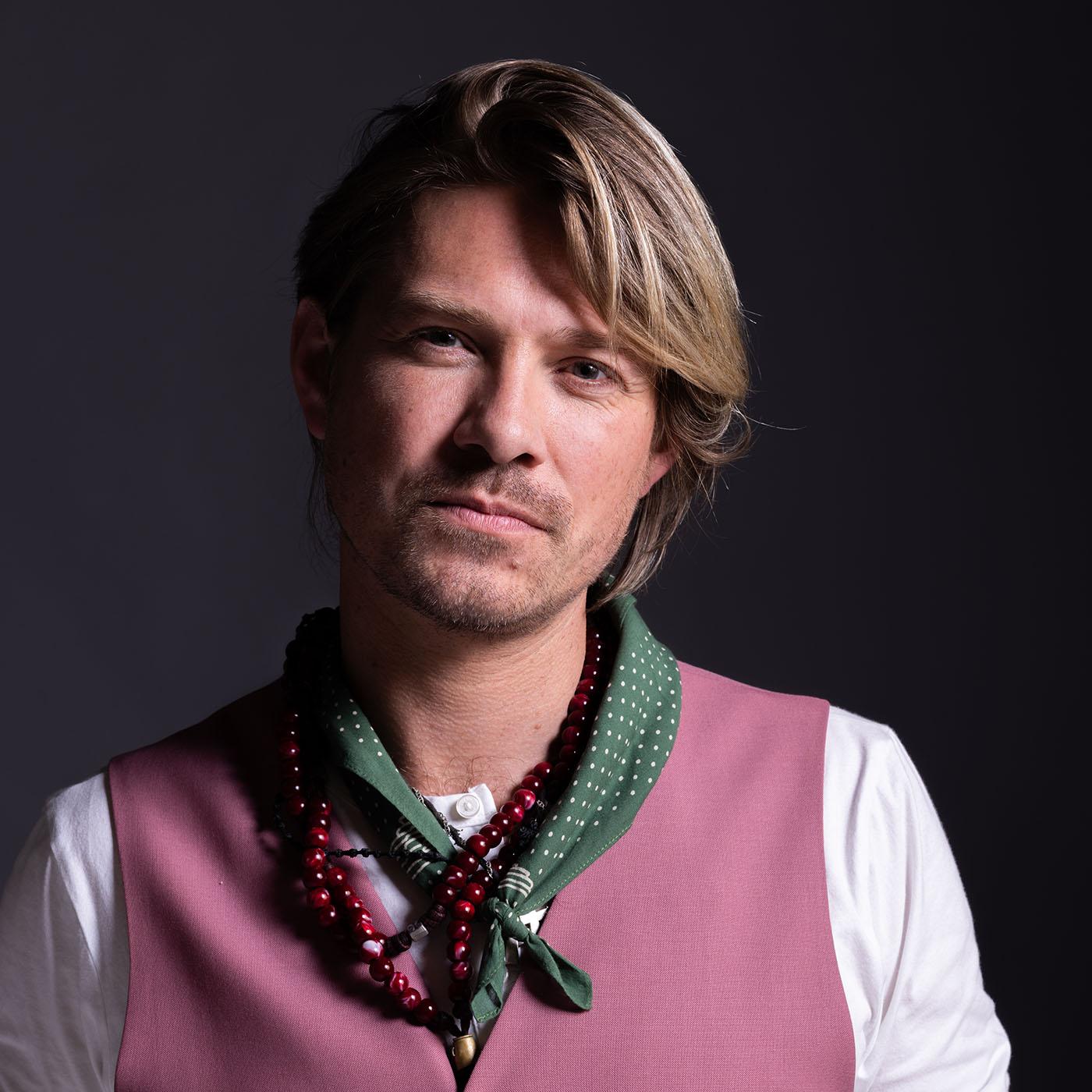
E283: Taylor Hanson's Food On The Move
Sep 2400:32:58Tap to summarizeInterview Summary You know I really like the innovative nature of Food On The Move, and I'm eager for you to tell us more about what it involves. But before we do that, how does a young, highly successful musician turn to battling food insecurity? What led you to create Food On The Move? It took me years to say I even created it. I didn't even use the term founder because I really had this sense of partnership that was a part of how it came to be. But I did found or 'start' Food On The Move because I have just a deep sense of gratitude in my life experience and also maybe a calling? I call it the tap on the shoulder that said there's more for you to do. There's more for me to do. And I didn't really know what that meant. I wanted to invest in Oklahoma and where we're from because as a musician, first you travel, you leave, you go out, you connect with people all over the world. But there's something about building and doing well for your community from the town you're from. And I was inspired by a former US ambassador. A man named Edward Perkins, who was an incredible representative of our country. He worked in some of the most difficult parts of the world representing the US and working with other nations. And his story struck me so deeply because he found ways to partner and transform communities as an ambassador. And I got to know him after his time as an ambassador because he was teaching as a professor at OU (Oklahoma University), in Oklahoma. And I asked him, I said - I want to honor your life. I want to learn from you. If I was to begin to really impact my community, Oklahoma where I'm from and maybe beyond, where would you begin? And he said, I would start with food. That's so interesting. You know, your concept of partnership is so interesting. I'd like to dive into that a little bit deeper in a little bit. But first, tell us about your organization and what it does, how it works, what it tries to accomplish. Yes. So, inspired by Ambassador Perkins' example, we set out to ask the right questions more than have the answers. And in 2014, I just basically cold called everyone in the community that worked in food - from the food bank to the food pantries and said 'help me understand the gaps.' Help me understand where it's hard to accomplish change. And the term food desert began coming up more and more. And food deserts are communities without grocery stores. So, think of it as the canary in the mine. Sort of when a grocery store goes, the neighborhood is declining. Because they're small margin organizations they have a hard time staying afloat and when they go it's hard to bring them back because you need either a company like a big chain or a small business that doesn't have a lot of resources. And oftentimes that decline continues, and it impacts the community. So, with Food On The Move I basically brought together partners to create an access point in food deserts where it's was all in kind. From food trucks that could bring great, tasty food and give people dignity and excitement and energy, to partners that are doing food safety training and teaching people to cook. And places like Oklahoma State University extension where they train people about how to prepare food because they may not know. And so, all these partners came together, and we basically spent five years just learning and serving people in those communities. And focusing on an environment that was not about raising a bunch of money; it was really about who is already in this space that we can garner relationships with and get to know the communities. And now those events continue to be flagships. We call them food and resource festivals. They are a pay-as-you-can. You show up, you get access to fresh produce, you have food trucks, you have wraparound services. You have people that are in the community, in different nonprofits, for-profits, and government organizations that we all collaborate with. And we reach people where they are while serving and getting to know them and learning from them. And through those relationships, through those events - which we still do - what it's brought us to is the innovation and education side, and ultimately transformation. We realized in order to change food deserts, end food deserts, bring grocery stores back, that we had to get to the heart of the food system. Which is we had to be teaching people to grow things again, rebuild the local foundation of farmers being trained, use new, innovative systems like indoor growing and aquaponics, hydroponics. And basically, we had to kind of build the foundation back that's been lost since post World War II in our community, like many places. And that means a food hub to bridge farmers to distributors. That means training those farmers for the future. And it ultimately means building a new model for a grocery store. So, we are at the heart of that now with a project we call Food Home, where we are building a campus that is like a microcosm of the food system. Hopefully could be the end of this year, we'll see. Construction is always tricky. But, for sure by the start of first quarter next year, we'll be opening a 10,000 square foot urban farm, which is a training facility, and producing hundreds of thousands of pounds of food every year, and this is really the launchpad for future farmers. My God, I mean, and one of those things you mentioned would be wonderful to dive into and talk about a lot. Because I mean, each is impressive in its own right. But you bring them together, you're probably doing some of the most extensive, impressive things I know of around the country. Let me ask how you address the fundamental issue that we've actually faced ourselves. So communities often feel set upon by outsiders coming in to help. You know, it could be a philanthropy, it could be universities, it could be somebody, you know, who's just coming in well-meaning, wanting to help. But nonetheless may not know the communities or understand the realities of day-to-day life and things like that. And people from communities have often told us that 'we're in the best position to come up with solutions that will work for the members of our own community.' How did you work through those things? Well, this is always why my story elevator pitch tends to be too long. Because I want to actually talk about that element. It's not super elevator pitchy because what it involves is building relationships and trust and what I first learned from Ambassador Perkins. I'll tell you a small story of his example and it really rocked me. I asked him where would you start if you wanted to change community? Because I'd learned from his story that he had actually done it. He was sent to South Africa at the heart of the Apartheid Movement to with a mission from at the time President Ronald Reagan, to free Nelson Mandela from prison and help dismantle the Apartheid system. This is about as high a mark as anybody could have. And he had no policy. They said you're going to make policy. And what he did was so extraordinary, and I think is the mark of his success. And that's, to answer your question, he said, I recognized that every ambassador had held court. You are one step away from the president of the United States, which means you're always the most powerful person in the room. And other ambassadors, he'd ask them to come to him. But you had this deep divide between Black and white, deep divide between economics. And so, what he did was he told his team when he went to South Africa, he said, put the American flags on the front of the car, roll the windows down and take me to the townships. Take me to the neighborhoods. They need to know I'm here. And he took the time to build real relationships and build trust with communities. Black, white, rich, and poor, you know, old and young. He really did the time. And so that model, though obviously South Africa is a deeply entrenched community that, you know, especially that time. And this is kind of world politics, but I listened to that. And I thought, wow, we have a divide in our own community. And it's true of so many American cities. And where people, they see an area and they say that's not my community. They're going to come to me. And so, Food On The Move is built on we will build a partnership-based foundation which is like a block party where you walk up, and I'm a musician, I'm a DJ. So, we have a DJ playing music, we have food trucks. It smells great. You have smiling faces. You have a feeling that when you go there, you're not there, like, I need help and I'm in a soup kitchen. It's like there's a community party and you get invited and everyone's available to go there because if you want to give, you can go. If you don't have a dollar in your pocket, you go. And everybody leaves with the same treatment. And that foundation, the way we go about building those relationships, that is the heart and soul of how we are getting to the question and then trying to answer: we need more grocery stores, and we need more farmers. Because we heard it from the neighborhood. And I'll wrap up the answer a little bit which is to say we have multiple community farms as well as our own training farms. And we've worked in middle schools to teach young people to grow things with high-end aquaponics. You know, statistically the worse school in the city. But we've seen it just rocket people to engagement and better education and being fired up to come to school. But the community grow beds are the real test because you can't just drop a community grow bed and say, 'Hey, isn't this awesome? Here's your grow bed.' You have to stay engaged with community, but you also have to invite them to be participants. And so, we work with our neighbors. We treat one another as neighbors, and you a...
Transcribe →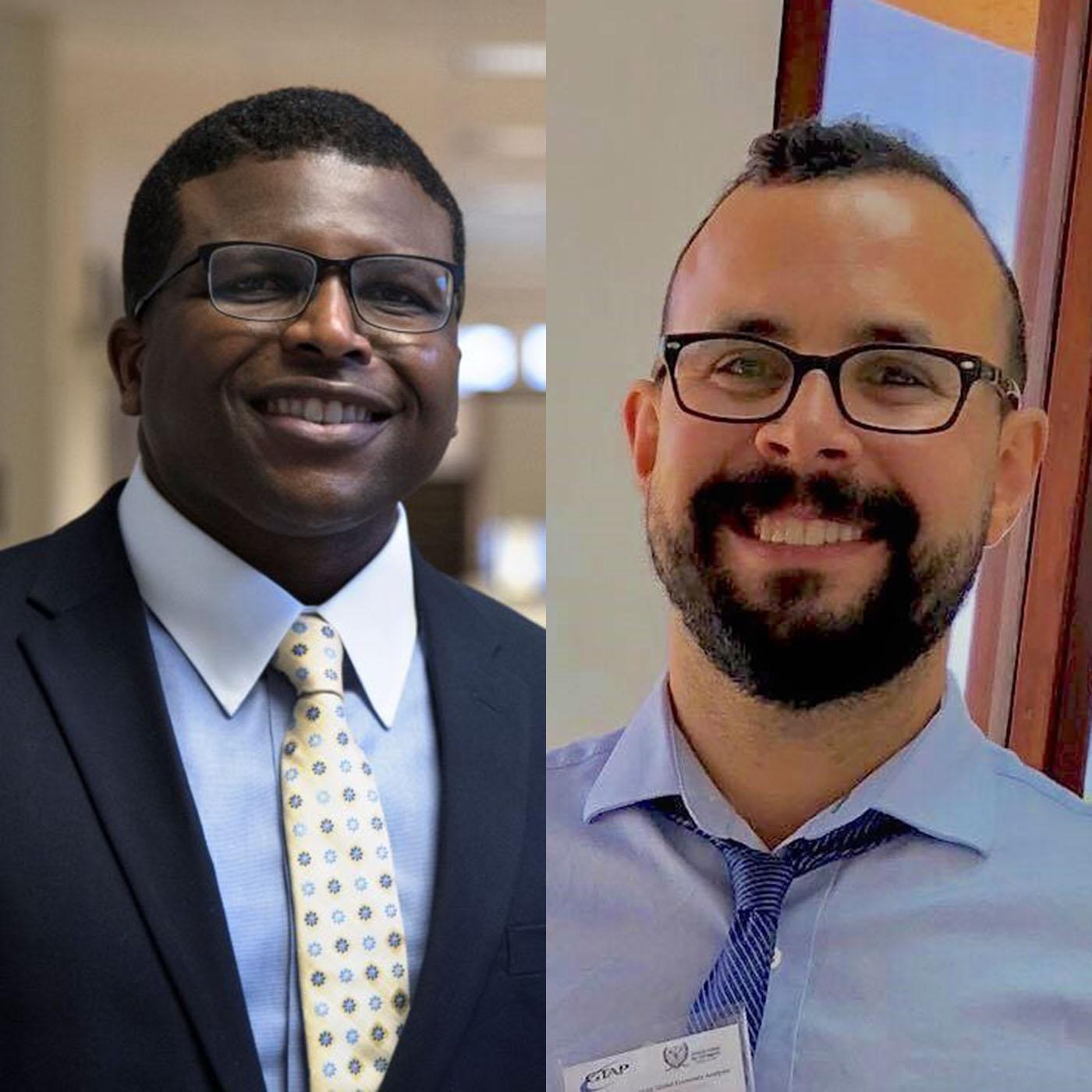
E282: Are healthy, environmentally sustainable diets economically achievable for everyone?
Sep 1900:32:20Tap to summarizeIn today's episode, we're discussing the complex and urgent topic of global food demand. The United Nations Sustainable Development Goals, or SDGs, ask countries to make measurable progress in reducing poverty, achieving zero hunger, and supporting every individual in realizing good health. While also mitigating climate change, sustaining the environment and responsible consumption and production habits. Researchers have recommended sustainable diets - planetary health diets. For example, the Eat Lancet Planetary Health Diet. However, others have criticized some of these diets for not addressing the economic and social impacts of transitioning to such diets. Is it possible to balance changing diets, rising incomes, and economic growth with economic feasibility, environmental impact, and long-term sustainability? Well, that's what our goals are today. Our guests today are Andrew Muhammad of the University of Tennessee Institute of Agriculture, and Emiliano Lopez Barrera from Texas A&M. They are my co-authors on a new paper in the Annual Review of Resource Economics entitled Global Food Demand: overcoming Challenges to Healthy and Sustainable Diets. Interview Summary Andrew let's begin with you. Why is it important to study the economics of dietary habits and food choices in a global context? Well, it's important for several reasons, right? When we think both about food security as well as environmental outcomes and maintaining biodiversity, in keeping both human beings and the planet healthy, we really do need to think about this in a global context. One could see agriculture as a global ecosystem where decisions in one country clearly have impacts on outcomes in others. While at the same time, we need to see food as a means by which we satisfy the demands of a global community. Whether it be through our own domestic production or international trade. And then the last thing I'll say, which is really most important are all the actual things we want to tackle and mitigate and correct, fix or improve. Whether it be the environmental issues, global food security outcomes, individual diets, mitigating obesity issues globally, right? It's pretty clear that most of the things affecting human beings in the environment as it relates to agriculture are global in nature, and there's an economic component that we need to consider when addressing these issues in a global context. Thank you for sharing that. And I am interested to understand what the role of economics in dietary habits is as we explored it in this review paper. In economics, this is a pretty long history, one could say going back centuries, right? This idea of how income growth impacts food spending on a household or individuals, as well as what economic affluence in development does to sort of how diets transition. And so, for example, it's been long established, right, as individuals get richer, a smaller and smaller share of their income is spent on food. So therefore, food dynamics become less important in [a developed, rich country versus a developing country where a large percentage of income is still spent on food. And what does that mean? That means that while I may find price shocks annoying, and while I may find higher grocery prices annoying, in a developing world that clearly has some implications on the nutritional needs and food decisions far more than it would have on me, for example. But the other thing which is something that has been highlighted for quite some time, and that is this transition from basic staples - from rice, grain, corn, cassava, potatoes, etc. - to more complex food products like high protein dense meat products, fish, milk, dairy, and even highly processed products that are deemed unhealthy. But the point is, as we look at the full spectrum of countries from least developed to most developed, you see this transition from basic staples to these protein dense products as well as complex processed products. This is a really important point about what are the trends across countries and over time as incomes change and as global prices affect choices. And I do appreciate what you're saying about those of us in, say a country like the United States, where we may be able to absorb some of the shocks that may happen with food prices, we also recognize that there are folks from lower income households where those kinds of price shocks can be really challenging. That's true. But this is a different story when we're then talking about developing countries and some of the challenges that they face. Thank you for sharing that. I'm also interested in understanding what do economists mean by a nutritious and sustainable food demand, especially in the context of global or cross-country comparisons. What are some of the things that you uncovered in this review? Yes, and I think the main thing, which is particularly interesting, is how early diets transition. How quick countries go from being staple dependent to sort of relying more on protein in consumption and demand. And that happens pretty early and so long before you get to say, countries like the United States with a per capita income of around $50,000 per person, you start seeing transitions quite early, right? Whereas income goes from say less than a $1,000 per person to maybe $5,000 and $10,000, you see these transitions right away. And in fact, you begin to see things level off. And what that means is when we think about, for example, animal protein production, which is in the context of dairy and beef, which is considered relatively more harmful to the environment than say poultry production. What you do find is that in these developing countries, they really do transition right away to meat with just minimal income growth. Whereas at the same time, when you start seeing income growth at the higher end of the spectrum, you don't see that much of a change. Now, something that's also unfortunate, what you find is that with income growth, you do see decrease in consumption of vegetables. A part of that is that some staples are counted as vegetables, but another part of that is that wealth and influence doesn't necessarily lead to improved diets. And that's something that's unfortunate. And what it says is that interventions are possibly needed for these improved diets. But to really get back to your question, this idea when we say sort of a nutritious diet, obviously we're thinking about diets that satisfy the nutritional needs of individuals. While at the same time mitigating unhealthy outcomes. Mitigating obesity, cardiovascular disease, etc. But then coupled with that is this whole notion of sustainable agricultural production. And I think one of the difficult things about both nutritious and abundant food as well as environmental outcomes, is we really are thinking about sort of trade-offs and complementarities. Then I think economics gives us a real keen insight into how these things play out. Andrew, you make me worry that we're locked in. That is as soon as income start to rise, people move to more animal protein-based products. They move away from some fruits and vegetables. And knowing that the environmental consequences of those choices and even the health consequences, my question to you is what kinds of interventions or how do you think about interventions as a way to shape that demand? Is that an appropriate way to think about this? Alright, so there's a few things. One is just sort of provide nutrition education globally. Having countries and their governments sort of understand these outcomes and then making a concerted effort to educate the public. The other thing is what you often do see is incentivized, for example, fish consumption. Incentivizing poultry production. And you do actually see a lot of incentives for poultry and egg consumption. And I think of like the Gates Foundation in that One Egg a Day initiative to help with child stunting and child growth in the developing world. And so, they're clearly protein alternatives to bovine type products. And I have to be clear here. Like I'm only speaking about this in the context of what's being said, in terms of the environment and animal production. But the other thing I think, it's probably even more important, right? Is this idea that we really do need to rethink how we, both in the developing world as well as in the developed world, rethink how we think about nutrition and eating. And that's just not for developing countries. That's for all countries. And obviously there's one last thing I'll highlight. You do have to be sort of concerned about, say something like taxes. Which would be clearly regressive in the developing world, and probably much more harmful to overall consumer welfare. The point is that taxes and subsidies seem to be the policy instruments of choice. Great. Thank you for that. Andrew has just shared with us some of the issues of what happens as incomes rise and the changing patterns of behavior. And that there are some implications for sustainable diets. Emiliano, how can we use the type of data that, Andrew talked about to model food systems in terms of health and nutrition. What can we learn from these models and, what should we do with them? Emiliano – Yes, thank you. Andrew really pointed to like many very important issues, aspects. We see some worrisome trends in the sense that current diets are going in the direction of showing less nutritious. Also, we are looking at a lot of issues in the environmental externalities, embedded resources. A lot of that within the current diet trajectory. Economic models, they have this advantage that they can connect these things together,...
Transcribe →
E265: Exercise vital to quality of health - especially during weight loss
Feb 26, 202500:27:11Tap to summarizeEveryone knows that it's a good idea to be physically active, but behind that basic knowledge lies a fascinating field of research on the role that physical activity plays in health and in weight control, along with answers to questions such as how much exercise I should get, is there a best time of day to do it, is one type of exercise better than others, etc. Few people can rival Dr. John Jakicic in expertise in this arena. John is a professor in the Department of Internal Medicine in the Division of Physical Activity and Weight Management at the University of Kansas Medical Center. His work has led the field for many years. Interview Summary John, I'm not an expert myself on physical activity, but I've been a fan of yours and others in your field for many years. And it just seems to me that it's a vibrant, active, exciting field where almost every day some new finding comes along that confirms the benefits of physical activity or discusses different ways to do it. Can you give us an overview of why being physically active is such a good thing? I think that if we could take the benefits of physical activity from a health perspective and bottle them up into one pill, we would probably have the most powerful pill that was ever invented. And I think that the reason for that, Kelly, is physical activity pretty much touches every system of the body. Every anatomical physiological system of the body in some way is touched by physical activity. And as long as you're not kind of overdoing it, abusing it, the body is adapting to allow you to do that activity. There's a lot of things that we do where we try to counteract certain things with medications and surgeries. But the one way that we can make the physiology of the body adapt and become healthier, the one real way to do that is through physical activity. And I think it touches so many systems that way, that's why I think we keep hearing about all the pure benefits that we can get from this activity. Okay. It sounds like it would be easier to have a discussion on or try to find somewhere physical activity is not beneficial. And it's interesting that the body makes room for physical activity by adjusting to whatever the demands of it are. I'm assuming there's some evolutionary reason for this. That people evolved having to be physically active just to get by in day-to-day life. But is that true? Have we inherited something in that regard? I think we have. And we went from hunter gatherers where you had to take your body and go out and find the food you needed to eat, to we don't have to hunt and gather very much anymore, at least in the US and other developed countries. The most hunting and gathering we do is go to the fast-food restaurant or the grocery store. The body has adapted to that. And I think that's one of the reasons that the body is so resilient. Now you think about it, Kelly, somebody who's had a pretty major coronary event. What's the one thing that gets recommended for them? Become more physically active, start exercising. And the body starts to bring itself back. Not maybe to the way it was before that, but it helps to regenerate the body in ways that other kind of things just don't do it. I think that there's definitely this physiology underpinning that we really need to keep thinking about. Speaking of coronary events, and you probably know this history way better than I do, so correct me if I'm wrong. But I remember hearing about the important historical role that a cardiologist named Paul Dudley White played with Dwight Eisenhower when he was president. And as I understand the story, Eisenhower had a heart attack, and the prevailing wisdom of the day was let you rest for a really long time after a heart attack. Like the heart was worn out and needed to recover and mend itself. But he reversed that, put that on its ear, didn't he? Yes, he did, and I think that kind of laid the groundwork for where we are with cardiac rehabilitation and cardiac treatment along the way. And that was probably the groundbreaking thing that happened where don't be afraid to start moving. And that has now evolved to diabetes, cancer treatment. You start to name all the conditions where it seems like activity is good. Even if you've had these conditions, as you go through your treatment plan. We've focused mainly so far on the physical benefits of physical activity. What about the psychological ones? I think that there's probably so many of those too, Kelly, and this is maybe where you know more than I about some of these types of things. But there's such great data that came out, maybe 20 years ago, where we were seeing studies coming out looking at depressive symptomatology, for example. And some of the stunning findings they were that people, even with known depression, could benefit and actually reduce their depressive symptomatology with at that time aerobic forms of physical activity. I think it's evolved to all types of different forms of physical activity. So, we have these depressive symptoms that can be dealt with, or maybe even prevented. We've seen it with mood and enjoyment, you start to just start going down the list. And I think the most evolving field that we're seeing right now is just in terms of the entire brain. You know, brain functioning, cognition. And we're realizing that the brain itself is an organ and physical activity in some way is actually impacting that as well. So, it's not just the physical, it's the emotional, it's the psychological. It's this overall wellbeing that we like to talk about. You mentioned the work on the brain. Is this effect that you're talking about showing up in studies of risk for dementia and Alzheimer's and things like that? It absolutely is. And I think we're still trying to completely understand the mechanisms by which this is occurring. Is it because activity is having some effect on inflammatory markers? Is it having something to do with blood circulation in the brain? Is it affecting other biomarkers that we hadn't thought about before? But yes, absolutely. It's affecting cognition. It's affecting dementia. It's affecting Alzheimer's. And we're finding that this is a really important thing for older adults. And I think the field is exploding at this point in this space. Let's get back to the physical benefits of exercise and talk about how they occur. One might think that physical activity exerts its influenced by affecting something like a risk factor, which in turn is what's affecting health. So, you're being physically active, it helps regulate your blood pressure and it's the regulation of blood pressure that's producing the overall health benefit. So, it's exercise does X, fill in the blank, and then that creates Y benefit. But is there a direct line between the exercise and the physical health? It doesn't go through risk factors like that. How does that work? Yeah, I think that it somewhat depends upon what the outcome is that you're looking for and what you're trying to move. And it gets a little, I'll say wonky. Because at some point there are intermediaries along the way that are probably impacted. Just for example, we've done studies in the field of obesity with physical activity that found that not only is the activity affecting the risk factors, the blood pressures, the insulin, the glucose. But it's affecting like the cardiac tissue itself. It's affecting the factors that are affecting that cardiac tissue. It's affecting the blood vessels themselves. Now, they're clearly intermediaries, but they're probably not the traditional risk factors we're thinking about. They're probably more signaling mechanisms, mitochondrial factors, these types of things that are more physiologically based as opposed to what we would consider our traditional risk factor base. I think the thing that we've known now for a long time, you go back to some of the Harvard fatigue laboratory studies where they were actually trying to get performance out of individuals. How do you get people to perform at a higher performance? Basically, the equivalent of being an athlete nowadays. And what you find is that, yeah, that's how you get people to perform at a high level. But that's also how you get people healthy in everyday life. We really learned how if you stress the body a little bit, the body adapts and makes it stronger as you go forward. It's good to know that, and it doesn't hurt to get wonky sometimes. That's a very interesting description that you gave. You mentioned weight control. Let's turn our attention to that for a minute. You were the lead author on a consensus statement from the American College of Sports Medicine. A very highly regarded organization, on the role of activity in body weight. Let's talk causation. Most people appreciate the key role of diet in the genesis of weight problems, but less so the role of physical activity. How important is it? I think it's critically important, but I also want to be very cautious about saying that it's more important than diet or energy intake. I don't like to take that stand because I think there's inputs coming from all angles here that are regulating body weight. And I think that we can get ourselves in a little bit of trouble if we say, what's only this, or it's only that, that it's one thing. It's a little bit of everything. And I think that what we're finding a bit in our research and others as well is that there's a variable response depending on the person. We know that if a person becomes active over six months without intentionally trying to change anything on their diet, they're probably going to lose a couple of kil...
Transcribe →
E264: Citizen engagement in post-Brexit UK food and farming policy
Feb 17, 202500:25:47Tap to summarizeToday we're exploring civil society's efforts to shape the food system and land use in the United Kingdom. Our guest today is Sue Pritchard, Chief Executive of the Food, Farming, and Countryside Commission (FFCC). The deeply grassroots work of the commission brings people together to find practical solutions to climate, nature, and health challenges. The goal is to shape fairer and more sustainable food systems and a just transition for rural communities and the countryside. Interview Summary Well, Sue, I am really interested to start off learning a little bit more about you. Can you tell us why are you interested in food and farming and the countryside? So, I'm talking to you from Wales, from my farm in Wales. I live and work on a small, organic, conservation orientated farm that produces native breed cattle and sheep. It's so authentic. I have a duck in my office with me at the moment. So, if any of your listeners hear any odd sounds, I promise you that's her, not me. I come from a family in Wales, which either went down the mines or farmed and had small holdings. My father went down the mines, but we always, as a family longed to get back to our deeply felt roots. And it was about 27 years ago that my parents and I, my family, were able to buy our farm here in Wales, which is, I suppose, the culmination of a dream. And although we were not naive about farming, when you're deeply embedded in the everyday life of the farmer and operating in the farming system (the food and farming system) you learn some different things pretty quickly. And so, for a fair few years, I was working out how to make the farm work economically. But also, how the farm could make a really good contribution to tackling the climate crisis and the nature crisis. How we could sequester more carbon on the farm. How we could build more natural infrastructure on the farm to help nature thrive here again. You will recall, the UK had its own political, should we call it a little, a minor apocalypse back in 2016, when the UK voted to exit the European Union. And, the implications of that vote were pretty, pretty, extraordinary for farming and for food systems and the environment. As a result, civil society, business organizations got together and were able to get some philanthropic funding to set up a commission (Food, Farming, and Countryside Commission) to shape a different future for food and farming and the countryside outside of the European Union. And when that job was advertised, it was my dream job, bringing together, as it did, the future of farming, the future of food systems, and being able to impact and influence policy at a really, really critical time. I want to make sure I understand a little bit more about what's happening. Because of Brexit, that means the UK is no longer part of the common agricultural policy and is now needing to reconstruct its agricultural policy structure. It sounds like the commission was brought in to do some of this work. I would like to understand what in particular challenges are facing the food and agriculture scene in the UK post Brexit. I think that the first thing that we were able to do in the work of the commission was to start talking about food as a system. That was relatively unusual in the UK. One of our leading thinkers, Professor Tim Lang, used to say that the UK's food policy was basically leave it to Tesco, which is one of our big supermarkets. It was essentially left to private markets to determine the kind of food that we had on our plates. It was clear that that strategy was not working anymore. And given the really quite startling system changing implications of that particular vote, we were able to take a different perspective on food systems and start thinking about food as a system. We talked about, as it says on the tin, food and farming and the countryside, but we also talked about food and farming's relationship with climate, with nature, with health and wellbeing, and with equity and justice. In bringing that more, if you like, systemic view into people's consciousnesses, we were able to demonstrate really how central food policy is to UK's economy, health and wellbeing of UK citizens. Perhaps in a way that had not been done with quite the same heft as before. Lots of people have been trying but hadn't quite landed center stage in policy terms. And we were able to show through our work and then our reports, the relationship between food and farming and diet-related ill health. Farming systems and the climate crisis. Farming systems and biodiversity loss and the nature crisis. And also, starting to reveal the inequities, the inequalities embedded in the food system when we start looking not just within our own borders in the UK, but beyond our borders to how the UK trades with the rest of the world. Because countryside is one of the major themes, it's in the title of Food, Farming and Countryside Commission, and I've spent a little time in England and the countryside. And I'm from a rural area and the United States, and I'm interested to understand how you all are thinking about the needs or the challenges, or even the opportunities that the countryside faces in the UK. One of the things that I realized when I started this job back in 2017 was that for many people in London, the countryside is just the gap on the map between the cities. They had very little understanding of the contribution of the rural economy, the importance of the rural economy, particularly the countryside's importance, criticality, even for tackling the climate crisis, tackling the nature crisis. It's there where a lot of the problems occur, but also where a lot of the solutions can be found too. And so, talking about the countryside, not as a kind of poor relation to the rest of the economy, but actually central to a version of the future that was able to be more resilient, more adaptive to whatever kind of scenarios might unfold. That felt like a pretty important thing for us to be doing. And when we were conducting our work in those early days, we did all the usual things that a commission might do. We did a literature review, we held workshops, we held all sorts of kind of formal research processes. But we also set out around the country, around the UK on a bicycle. My researchers set out around the UK on a bicycle. Because we wanted to do something pretty iconic to show the richness, the diversity, the variety, the political salience and the economic salience of the countryside to policy discussions in Westminster. I think one of our successes has been to bring those voices into policy decisions. And to give them much more gravity, I think, in policy considerations that often feel very distant in London. How have they shaped the way you all have done the work at the FFCC? Are they altering or informing the work in different ways? Yes. Absolutely. We work with citizens in a number of different ways. So that first moment, the kind of bicycle tour around the UK was if you like, a symbolic moment of connecting with people in their communities. Going out to where people are, letting them tell us in their terms, what mattered to them, what they cared about, what they were concerned about. But in a really kind of barefoot ethnographic way, I think, being able to hear directly from folk. But we also built long term relationships in three, if you like, sentinel parts of the country: in Devon, in Cambridgeshire, and in Cumbria. Different parts of the UK reflecting different kinds of priorities and different pressures in the countryside. Devon is a grassland community, it's very touristy. Cambridgeshire is one of the bread baskets of the country, but with huge pressures on housing and infrastructure. And Cumbria is the uplands, the high mountainous uplands that people understand as a holiday hotspot. But working in those places in depth over for five years now, we have been able to both test out policy ideas in, in real places, in real time. Our land use framework project is a case in point. In thinking about how we make better decisions about land, we worked with people for whom those decisions are incredibly material. It's about what happens in their communities, what happens around them. We were able to develop policy contributions based on testing different options, different possibilities with people in places. And of course, we were able then to bring forward their ideas, their thoughts, and their really practical activities to the view of government, to the view of policy makers and to businesses. It was a kind of reciprocal relationship, testing out ideas in communities, but also bringing community ideas into government, into policy makers. You know, demonstrating how people are already doing things, already doing really interesting and radical and progressive things, whether or not government is supporting them or not. More recently, we've embarked on a very, very substantial project. It's called the Food Conversation and the Food Conversation is a project that was designed to really test out the answer to the question, so what do people really want from food? I wonder if you have the same experience in the United States, Norbert, but certainly in the UK, we hear over and over and over again, particularly from lobbyists, but often from government, that people don't really care about food. People just want cheap food. They just want convenient food. Nobody wants to be told what to eat. Nobody wants a nanny state. And those kind of toxic narratives, those devices were being used over and over again to limit government's appetite for policy intervention. And after this happened, again ...
Transcribe →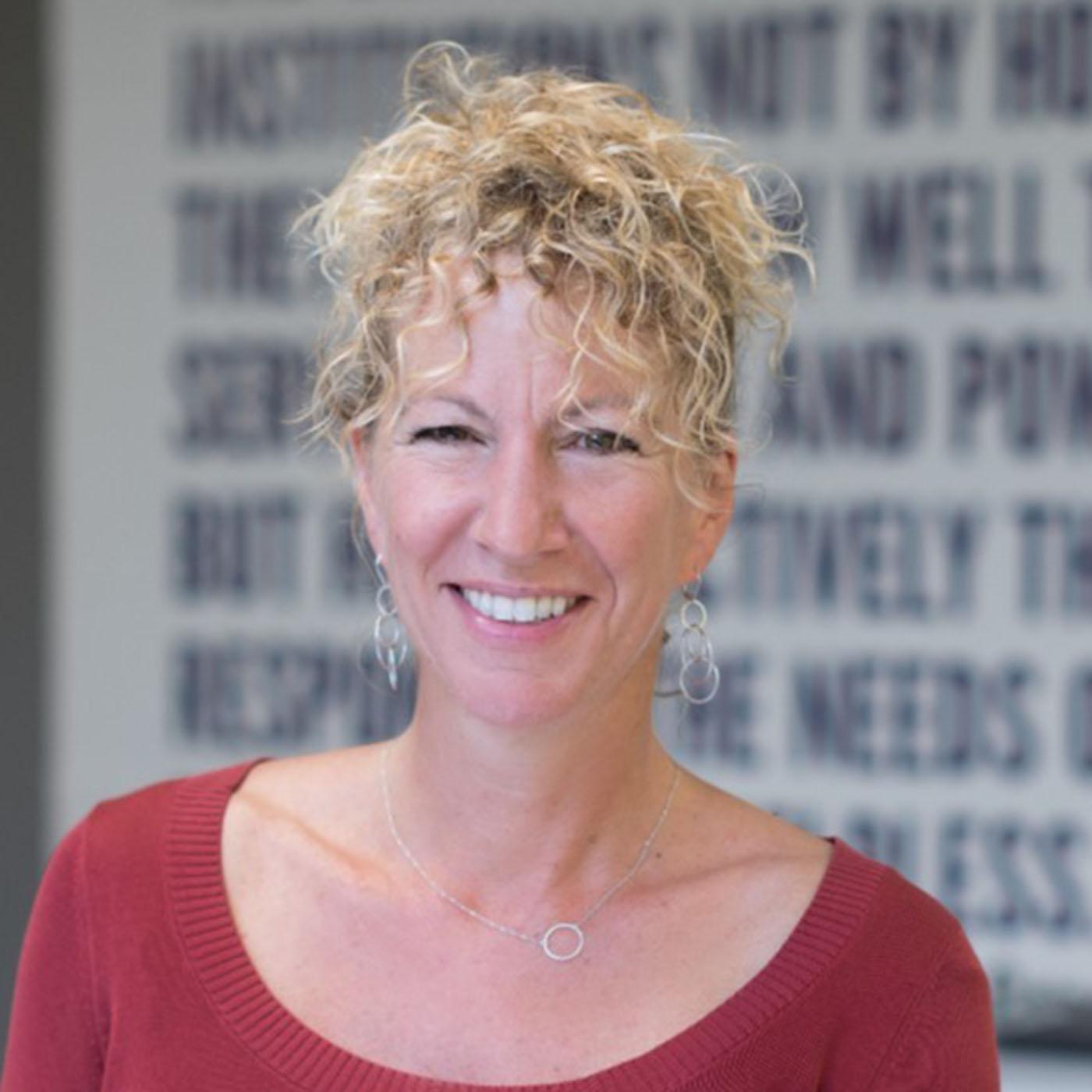
E263: Explore the Daily Table non profit grocery store model
Feb 5, 202500:16:51Tap to summarizeToday, we're going to explore Daily Table, an innovative non profit grocery chain dedicated to providing fresh, convenient, and nutritious food affordable to everyone, even those on the Supplemental Nutrition Assistance Program, or SNAP. In today's economic climate, where rising food prices are impacting households across the country, the concept of a non profit grocery store seems to fill a real need. Our guest today is Daily Table CEO, Sasha Purpura, a software engineer who spent 15 years in the tech industry and product management and development roles. Interview Summary Sasha, it is such a pleasure to connect with you. I'm intrigued to hear more about where Daily Table is today because I too was a Daily Table shopper. So, let's begin just hearing about what Daily Table is and what's the driving mission of the organization. Absolutely, Norbert. Simply what's driving the organization is the belief that everybody deserves access to healthy food. Daily Table is such a simple solution, but so incredibly innovative. It's a grocery store where everybody can afford healthy food. To me, seems like that should be there already. Unfortunately, it isn't. Historically, the way we have addressed hunger in this country is food pantries. And food pantries play a critical role and they're very necessary. However, there's spaces designed for people with low income. To say you're low income, you can't afford food, come here. And we know that 40 percent of the people that qualify for food pantries won't go to a food pantry because of that stigma. And because they want agency. They want the dignity of providing for their families and choosing what they want to eat. So Daily Table creates that shopping experience. People who don't use food pantries, they shop for themselves. And the sad reality is they have not been able to choose healthy food every day. They can't. It is not affordable. If you are lower on the income scale, you cannot afford to put fruits and vegetables on your table every day. Daily Table makes it possible for every person to afford to put fruits and vegetables on their table every day. And we are a normal grocery store. Anybody can come in there. We welcome everyone. It is not set up for people with a low income. It is a shopping experience. It is bright and colorful. It is dignified, enjoyable. Let's go look at all this beautiful produce. Daily Table dedicates a third of its footprint in each store to produce. Think about any grocery store you go into. That is not the case. We are focused on healthy, beautiful, fresh food. So, it's produce. It's proteins. And then finally, we have a commissary kitchen in our Dorchester store. It serves all of our stores, and we make healthy meals. A lot of people working two jobs cannot cook for themselves. Don't have the resources. And unfortunately, in many cases, turn to fast food, which isn't even that affordable these days. We make a chicken meal with a big chicken leg and 2 sides starting at $2.99. We have a large garden salad for $2.99. We have smoothies. We have soups that aren't extremely high in sodium. So, we provide healthy, tasty, prepared meals alongside fresh produce. If you can cook it, it's the ingredients are there. If you can't cook it, we cook it for you. And so Daily Table, our mission and what we do every day, is ensure that healthy food is truly affordable to everybody. This is really a useful way of hearing about what Daily Table is. As someone who used to live in Boston, I would visit the Dorchester store. And I remember all they asked is to tell us what zip code you're from and we would go shopping. We don't even ask that anymore. Oh, you don't even ask that anymore! That is awesome. And, you know, what's great it was easy to take my very young daughter at that time into the store and feel good about what we were getting. And my wife was like, can you believe these prices? In a good way! In a very good way. And so, it was always a positive experience. And it was great to know that there were people in that local community that were in the store. That were part of the staff. And it was a great place to visit. So, I'm glad to be able to connect with you on this. But I got to ask this question, how did a software engineer all of a sudden end up in a nonprofit grocery store? What happened? What drew you to this work? Well, it wasn't all of a sudden, but it was definitely a path. I met my husband when we were working at Nokia. I was in product management at the time. And in 2005, he quit to start an organic farm. A dream he'd always had. Went to it full time, that's how he makes his living. And he'd always had a big garden and just been a food person and I learned through him. I'd work with him on the weekends and getting the farm started and go to farmer's markets with him. And I, I discovered food in a way I'd never really understood it. I fell in love with it. I fell in love with the way that food creates community. I mean, it is the center of community. It's how we show love. It's how we come together over holidays. But to work with my husband creating this really beautiful produce, healthy, and to share that and just, just at a farmer's market, see how people come together that don't know each other. And 'how do you use collard greens? Or what is this vegetable?' It was just life. It was just life and I wanted that. So, I quit in 2009. I worked with him on the farm for a couple of years while I went back to school just to expand my network and nonprofit and other things. And in 2012, I began as an executive director of another hunger relief organization. And what was amazing, what is amazing to me, whether it's at a food pantry or Daily Table or a farmer's market, it is the same experience. It is people coming together around food and sharing. And it is beautiful and it, it creates healthy communities. It's not just nourishing us physically, but that's critical. By the way, healthy food is the cheapest form of healthcare. If we would just invest in that. But it also nourishes a community. It's mental health. It's sitting around the table with your family. It's cooking. It's not being hungry. And so, to go from the one extreme of a local organic farm in a farmer's market that isn't cheap. You know, my husband isn't making money off of it. He's not getting rich, but the food, it takes a lot to grow food. So, to go from that experience and bringing together people who can afford farmer's market prices and seeing that same experience in a food pantry or at Daily Table, it is, it's about food. It's not about money and it should be accessible to all. It is really amazing. I loved the two years on the farm and bringing access to local food to people. And to now do that to folks who otherwise simply couldn't get access to healthy food. It's, it's just an incredible honor to be a part of that. Thank you for sharing that. And thank you for sharing part of your story. I'm interested to go back to Daily Table and understand how is it different than other nonprofit organizations, especially in the food justice space? Help us to appreciate that you gave us a bit of an idea when you were talking about comparing it to food pantries. But I'd like to hear sort of more of your thoughts on that. Well, my thoughts are not so much are how are we different, but how do we fit into the emergency food system? One of the beautiful things... I'm in Cambridge, Massachusetts, Daily Table is at Cambridge and Boston and Salem. And I've worked now for 12 years in this field in Northeastern United States, Massachusetts. And what I've discovered is there is a network of food justice, hunger relief organizations. And we are an incredibly large community of people that care about the same thing and working together. So, we need a lot of different solutions. SNAP, as you mentioned, the supplemental nutrition access program, that is hunger relief, right? That lets people have access to purchasing food. Then there's Daily Table where you can use your SNAP benefits to buy produce. To buy very healthy food at very low prices. Then there's a food pantry for people that perhaps don't even have access to SNAP. They can go to a food pantry and access food, or people can shop at Daily Table and supplement what they're buying a Daily Table at a food pantry. We work with an organization called the Boston Area Gleaners that uses volunteers to rescue food off of farms. And has their own farm now and grows some produce that we sell at Daily Table. We work within a network of different types of food justice organizations that are serving people in different ways and meeting them where they are. We work with Fresh Truck, which is a mobile market that goes into communities with a truck with fresh produce on it, right? So, all of these things are necessary. I would say Daily Table is absolutely critical to serving all of those people who are not comfortable getting free food. The last organization I worked for was called Food for Free, and it was wonderful, and it served hundreds of thousands of people. But there are hundreds of thousands of people that are not going to take food for free and Daily Table assists folks in that way. Yeah. I am really appreciative of the way you've talked about this. And sometimes I get a sense that there is competition in this space. And what you're talking about is, no, we're actually all part of a large network and that we're serving different needs and that we are stronger together. Finding ways of collaborating and giving people option...
Transcribe →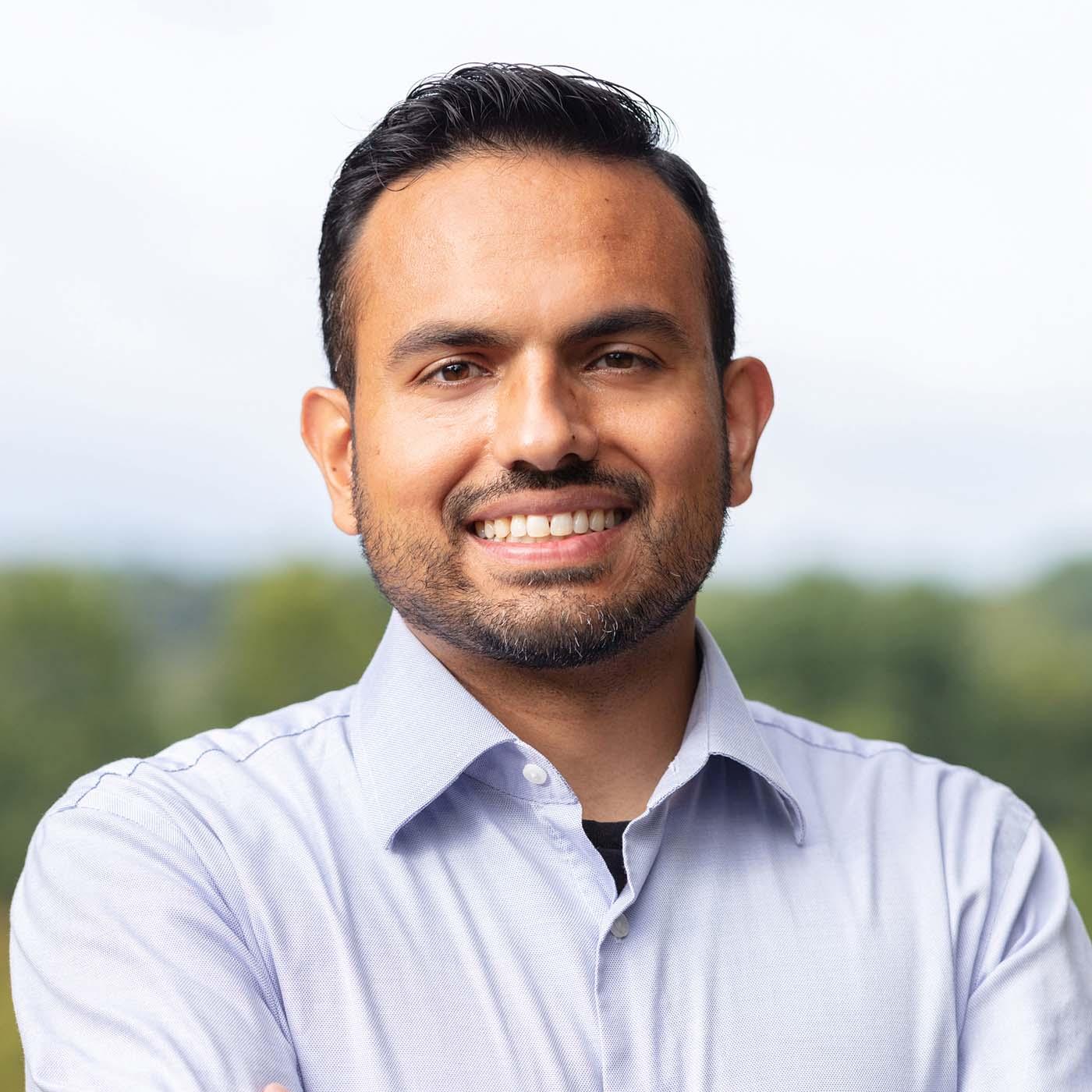
E262: Impact of skimming and shimming fraud on SNAP recipients
Jan 30, 202500:23:04Tap to summarizeOn our podcast, we have often talked about the Supplemental Nutrition Assistance Program, or SNAP. In many of those conversations, we've talked about the benefits and eligibility, and ways to improve the work that SNAP does to help low-income families meet their food needs. In today's podcast, we're going to turn our attention to a particular challenge, and it's the SNAP skimming fraud. To help us understand this and the larger context of SNAP, we have the great pleasure of talking with Salaam Bhatti, who is the director of SNAP at the Food Research and Action Center, or FRAC. Interview Summary So, let's provide a little bit of level setting for our listeners. Can you tell us what role SNAP plays in the lives of individuals who are facing low income or food insecurity? Yeah, Norbert, the problem with being in the richest, most powerful nation in world history is that we are facing a food and hunger crisis. We have the means, we have the resources to solve for it, but we haven't. For the record, the USDA, the United States Department of Agriculture, did a study last year. They do this study every year where they report food security in the country. In 2023, 86.5 percent of U. S. households were food secure. The remaining 13.5 percent, which is 18 million households, were food insecure. And this was an increase from 2022. So, 86.5 percent of food security is barely a B+. To be in the most powerful wealthiest nation in the world and we're barely getting a B+ in this space is unacceptable. And so, we saw some really interesting policies happen during the pandemic. We saw emergency allotments come in for the SNAP program, where all households received the maximum benefit amount for their households. And that, unfortunately, sunset. When that emergency allotment was in place, food insecurity-surprise, surprise-decreased. But not just that, we also saw Medicaid healthcare spending costs decrease as well. Because who would have thought that when people had food security, they didn't need to go to the emergency room because their blood sugar was low. So, we're experiencing a lot of challenges where we've seen the government show its hand that it can end poverty. It can end hunger. It just chooses not to. We know that SNAP is an entitlement program. It's available to anyone who meets the eligibility requirements. But we know that everyone who's eligible doesn't participate in the SNAP program. Can you help us think about how more people can be enrolled who are eligible. And maybe we even need to think more broadly about what is eligibility? What are your thoughts about this? In a given month these days, about 42 million people participate in SNAP. That's a lot of people. I would say that 42 million people are participating in it every day, but unfortunately, SNAP benefits do not last the whole month. By the third week of the month, people's SNAP benefits have been exhausted. Now, taking a step back, in case the listeners don't know how SNAP benefits work, it's a, as you said, a government program. And it comes in the form of an electronic benefits transfer card, an EBT card. It looks like a credit card, looks like a debit card. But really, it's more like a hotel card key, because it doesn't have the security measures, which we can talk about later in the show. It doesn't have the security measures that a credit and a debit card have. It is essentially a glorified hotel key. It's got the magnetic stripe on the back, circa 20 years ago. Maybe 15. I'm dating myself. I don't know how long ago it was we were swiping the cards. But all you gotta do is you swipe the card and you type in your PIN. And then you can use it at the EBT retailer. That is in a nutshell how 40 million people are utilizing SNAP benefits every single month. The program itself is also vital to retailers as well. We've seen that every dollar of SNAP benefits generates about $1.54 in economic activity during an economic downturn. So that means that when somebody is using their SNAP benefits at the grocery store, it's helping that grocery store keep the lights on. You know, employ the cashiers. And we need to employ cashiers, enough of this self-checkout stuff. It helps to pay the truck driver who's transporting the produce to the store. And it ultimately even helps pay the farmer for growing the crop. So, it's a great investment from the federal government into not just our households to help them put food on the table, but really into the whole local economy. And it is immediately used directly by the people and helps so many people. Now so, to your question about how do we enroll more people? Well, luckily we are at a time where the USDA reports that in the fiscal year 2022, 88 percent of eligible individuals were participating in SNAP. And that is the highest participation rate we've seen since they started tracking this in the past 50 years. That's great. But again, it's just a B+ so we can do better. There is room to improve. In the study, it showed that older adults, those who are over 60, they're participating at lower rates with only 55 percent of eligible members in that age category participating. We also have so many military families and veterans who are eligible, but don't participate. This SNAP gap is something that our partners are working throughout the states, throughout the entire country. We're working in partnership with a lot of federal agencies and partners as well. So, how do you ultimately close the SNAP gap? We're seeing a lot of targeted outreach. Seeing a lot of education efforts, but, you know, with 88 percent of eligible people participating, what's going on-on the local level? And unfortunately, Norbert, we've seen that state agencies which administer the SNAP program are unfortunately understaffed and they're underfunded. I used to be a state advocate at the Virginia Poverty Law Center. And when I was, hustling in the halls and lobbying for a million households with low income, I became friends with our social services agency because we had similar goals. We wanted to help households with low income. And we came to learn that the agency that we are relying on to administer the program was never getting their budget met by the legislative assembly. So, what we did was we got into partnership with them to advocate for their budget so that they could retain their staff, and so that the staff could do the job. That is something that we have to do across the states. Support these social service agencies in getting the funding so that they can have the staffing so that they can administer the programs in a timely way. Unfortunately, I don't know if you've seen this but earlier this year, the USDA Secretary Vilsack sent out a letter to like 44 state agencies, including D. C. and Guam. Being very concerned about their timeliness issues because they're supposed to complete the application reviews and determine eligibility within 30 days. And that's for a normal SNAP application. You have seven days for expedited applications. And 44 of these agencies were not meeting the mark. That's bad for, in terms of deadlines, but even worse for the families experiencing the food insecurity. So that is a very layered answer. It's the seven-layer dip answer of how we increase participation. Well, we need more staff to, to help that out. I hear that, and I'm really grateful for how you hit it at this point, and I want to draw a little more attention to it. While you talk about 88 percent participation, it looks different on a state-by-state level. Some states have a higher level of participation, other states don't. Do you think it's really the ability of those state agencies to provide that support, or do you think there are other factors that may be influencing the differential participation rates across states? Yeah, so we saw a big retirement, the great resignation, that happened during the pandemic. There were so many state agency employees, you know, who were, who were doing the job because they were passionate about it. They were also at retirement age. So, we saw quite a resignation happen. Because it was incredibly difficult. It was traumatizing to be involved in this space. And so, they resigned, or they retired, or they moved on to somewhere else. The new workers came in and they learned the programs with the flexibilities that were provided during the pandemic. Now, they have to relearn the program because all those flexibilities are gone. So, we're seeing a lot of administrative burden taking place within these agencies. I have a colleague, Carolyn Barnes, who's worked on this idea of administrative burden and the challenge of what's sometimes referred to as street level bureaucrats. The people who are on the ground who do the administration of these programs and the challenges that they face and the ways they engage folks. I appreciate hearing more about this. And I'm going to ask a potentially controversial question then. What if we took that responsibility out of the hands of state agencies and privatized that? What would that look like? Oh, and people have tried that. Governments have tried that, and it's always resulted in net losses. Not only has it cost the states more, but it has also led to the participants not receiving their benefits, or receiving less than, or receiving an error of more than. So many errors have resulted, which has made the program and administration worse. Which is an interesting question because a lot of people don't know that there are skilled employees at the helm within the agencies that are working on these eligibility determinations. They're known as merit-based staff. And ev...
Transcribe →
E261: Here’s what you don’t know about food safety
Jan 23, 202500:14:16Tap to summarizeFor many years in talks that I gave, I showed a slide with an ingredient list from a food most people know. Just to see if the audience could guess what the food was. based on what it was made of. It was very hard for people to guess. A few people might come close, but very few people would guess. And it was pretty hard because the food contained 56 ingredients. This is in one food. And the ingredient list had chemical names, flavorings, stabilizers, and heaven knows what else. But 56 things in one, just one food in the food supply. Pretty amazing to think what kind of things we're bombarded with in foods we eat in our everyday lives. So, one key question is do we know what all this stuff does to us, either individually or in combination? So, how does ingredient 42 interact with ingredient 17? Even if we happen to know what they do individually, which we may not. And, who's looking out for the health of the population, and who has regulatory control over these things? Today we're joined by the author of a new article on this topic published in the American Journal of Public Health. Jennifer Pomeranz is an attorney and is Associate Professor of Public Health Policy and Management in the School of Global Public Health at New York University. The food, by the way, was a chocolate fudge Pop Tart. Interview Summary So, who has regulatory oversight with these things that are added to foods? The FDA has the authority over all of those packaged foods. So, Pop Tarts, all of that type of packaged foods and the ingredients in there. Can you explain the nature of their authority and the concept of GRAS and what that stands for? Yes. So, there are two main ingredients in our food, but there is also color additives and other things that we didn't get to in our study. But the two main ingredients are called 'food additives' and then 'generally recognized as safe' or GRAS substances. And these are the two ingredients that are in all the processed foods. They're both complex substances, but they're regulated differently. GRAS is assumed to be safe. And food with GRAS substances is presumed to be safe as long as there's a generally agreement among scientists that it's safe, or if it's been in use in food since 1958. Food additives, on the other hand, are presumed to be unsafe. And so, foods that have food additives must have the food additive be approved for the condition of use. So actually, the FDA issues regulations on the food additives. Is it true that the FDA authority covers lots of these chemical type things that get put in foods that we discussed? But also, things that occur naturally in some things like caffeine? Yes. And so, caffeine is considered GRAS or generally recognized as safe. The FDA has a tolerance level for cola-type beverages for caffeine. It actually doesn't enforce that as you see, because we have energy drinks that far exceed that type of level. So, there's different types of GRAS substances. But they can be very complex substances that are actually not so different than food additives. Who decides at the end of the day whether something's safe or not? You imagine this battalion of scientific experts that the FDA has on hand, or consults with, to decide whether something's safe or not. But how does it work? Unfortunately, that's not exactly the case. When it comes to food additives, the industry must petition the FDA and provide evidence showing that it's safe. And the FDA promulgates a regulation saying that it agrees it's safe and it can be used for the things that it set forth in the regulation. For GRAS, there are two mechanisms. One is the industry can notify the FDA that it thinks something's safe. And then it actually goes through a similar transparent process where the FDA will evaluate the evidence submitted. Or, shockingly, the industry can actually decide that it's safe for themselves. And they don't have to notify the FDA. And they can add it to their food without the FDA or the public actually knowing. Now they might disclose this on a website or something, but it's actually not even required to be based on peer reviewed literature, which is actually one of the concerning aspects about this. Concerning is polite language for what one might call shocking. So, in the case of some of these things that go into the food, the industry itself decides whether these things are safe. And in some cases, they have to at least tell the FDA that something they declare as safe is going into the food. But in some cases, they don't even have to do this. Right. So, they only have to if they've determined that it's a food additive. But actually, the industry itself is deciding that it's a food additive versus GRAS. Once it made the decision, it's GRAS, it doesn't even have to notify the FDA that it considers it safe. If they do, they are supposed to rely on their own research saying that it's safe. But actually, there's some alarming parts about that as well. The other outside research that's not my own found that the panels of experts that they employ, 100 percent of the people on those panels have financial conflicts of interest. So, that's already worrisome. They're receiving money from the food industry in some way. Yes. To say that the ingredient is safe. Another scary part is that if they do notify the FDA and they're not happy with how the FDA is reacting to their GRAS notification, they can actually request a cease and desist. The FDA will issue a cease and desist letter, and then they can actually go to market with that ingredient. Pretty amazing. Like loopholes that not only a truck can go through, but a train and everything else. That's really pretty remarkable. So one could say that the risk built into this system is hypothetical, and it works pretty well. But is that true? I mean, are there cases where things have gotten through that probably shouldn't have? Or is it just that we don't know? I think there's a lot of unknowns. The Environmental Working Group does that research and they have identified things that they find to be concerning. A lot of it is that we actually don't know what we don't know, right? So even the FDA doesn't know what it doesn't know. And that is, is part of the concern, that you can't just identify this by looking at the nutrition facts label where they list ingredients. Sometimes they just use terms like spices, flavorings, colorings, chemical preservatives. But that could be masking an ingredient that has never been examined and for which It's unclear that it's actually safe. I know there have been some policy efforts in places such as California to prohibit use of some of these things that have otherwise been considered safe by the FDA, or perhaps just by industry. Is that true that's happening more and more? Yes, actually there has been. Because of the gap in the FDA's oversight, we are seeing states, and it's actually a pretty shocking situation, that California banned four ingredients that the FDA did not. And it's saying that those ingredients are not safe to be in food in California. And given what a huge market California is, the thinking is that the industry will have to change their ingredients across the nation. And frankly, they've already taken those ingredients out of the same foods in Europe, where those ingredients are not allowed. So how much do you trust this self-policing by the industry? To be honest, I'm quite concerned about it. The FDA has the authority to review substances post market, so after they're already in the ingredients. But we see that it can take years or even decades. In the case of, remember, partially hydrogenated oils, which were artificially produced trans-fat. It took decades for them to get that removed from the food supply, despite significant research showing that it had caused health harm. So, even when there is evidence of harm, it takes quite a long time for the FDA to remove it. And in the case of another ingredient recently where California banned it, then the FDA decided to ban it. So, it does worry me that even their post market authority is not being utilized to the extent that it should. Let's think about what a good set of defaults might be and how this might actually play out in practice. If you'd assume these things that go into foods are not safe by default, then the question is what would it take to make sure they're safe before they're allowed in the food supply? And it would take toxicology studies, studies with lab animals perhaps, studies with humans. I don't know exactly how these things are tested, but one can imagine it's not an easy or a quick process. Nor probably an inexpensive one. But somebody would have to do it, and if government can't do it, you can't rely on industry to do it. I wonder if the default might be fewer things in the food supply and whether that might not be a pretty good thing? I love that you said that because that's the conclusion I came to as well. Why do we need all these new ingredients? We already have ultra processed foods, which are by definition contain all these ingredients that we don't really know what they are. And why do we even need new ingredients? I think they could even put a moratorium on new ingredients and say, let's take a, take an analysis of what we've got in the food supply at this point. And to be honest, it would take Congress to act to change FDA's authority to give them more authority to do what you just suggested. And of course, resources, which would be personnel like you descri...
Transcribe →
E260: Food Recovery Network Urges Food Date Labeling Reform
Jan 14, 202500:13:36Tap to summarizeI don't know about you and your household, but in my home, we have a long history of opening the refrigerator and discovering pasta sauce or mayonnaise that we don't remember when it was put in the refrigerator, when we last opened it, and we're confused. We open the container; we smell it; we check out the date label. And if we're confused, we have a mantra: when in doubt, throw it out. But aren't those date labels supposed to help us make good decisions about whether or not a food product is safe? Currently, there is no federal regulation on what those labels should say. Best Buy, Use Buy, Sell Buy, or what have you. However, there is legislation in the Congress called the Food Date Labeling Act to help us address this issue. And today's guest, Regina Harmon, will help us explore this particular issue. She is the executive director of the Food Recovery Network, the largest student led movement fighting food waste and hunger in the United States. Interview Summary First, some of our listeners may not be familiar with the Food Recovery Network. Could you tell us more about the organization and what it hopes to accomplish? Absolutely. Thank you so much. Food Recovery Network was started in 2011 by college students at the University of Maryland who saw a couple of things happening. They saw a lot of food waste on their college campus, and they also saw a lot of people who were experiencing hunger in their communities. And so, they thought, hey, instead of throwing this perfectly good food away, what we could do is package this food up and give it to those in our neighborhood that we know need some help. And that's how Food Recovery Network was started. They started at the University of Maryland, one dining hall, one carload of food. They started calling other friends that went to different colleges and universities across the United States. And over the last decade and some change, we've grown into, as you said, the largest movement of students who are fighting food waste and hunger. We have about 200 college campuses that have food recovery network chapters. We've recovered over 16 million pounds of food through the power of young people. And today we also help other sectors that would like to also do the right thing with their surplus food. We help farms, we help corporate events, large scale events, we help conferences. You name it, wherever there's surplus food, Food Recovery Network can help make sure that food doesn't go into landfill and helps feed those in need. I would love to hear a little bit about who you are able to serve through the Recovered Food. Are you working with food banks? Are you working with the pantries directly? Tell me a little more about that connection. It's a beautiful connection. We have about 400 nonprofits all over the United States. That directly receive the surplus food that we donate. We go to the sites where the food is. So again, in college dining halls, large scale events, you name it, and that food is packaged up safely. And then it's brought to what we call hunger fighting nonprofits. These are nonprofits on the front lines in all of our communities that are in some way feeding our neighbors in need. These are homeless shelters, soup kitchens, food banks. These are domestic violence shelters. These are afterschool programs, churches, anywhere that can also handle the food safely and then distribute it to our neighbors directly. So through that, we've been able to meet so many incredible people, and a lot of times volunteers themselves who work at these incredible locations that again, are just helping those who need support to make their ends meet. Great. This is really important work. Thank you so much for the work that you all are doing. So, how does the Food Recovery Network activate to end food waste and make a positive impact on the environment? There's a lot of things that are happening here. You know, millions of tons of food is wasted every single year. And I know we'll get into the Food Date Limiting Act in just a moment, but every part of our food system, there's food waste. On farm fields, during transportation, at supermarkets, in our own homes. And so, a lot of times, most of the time, the majority of the time, all of the food that is wasted is actually thrown into landfills. You know, we see those images of whole entire tractor trailer trucks of food being dumped into landfill. And that is the problem. The majority of food, much of which is still perfectly good to eat, perfectly good to consume, is being driven into landfill, where it then is covered up, it begins to rot, and this is where the environmental harm starts. The food rots, and it creates additional CO2 into our environment and other greenhouse gases that is really difficult for our environment to reabsorb because it's happening at such an increased rate. And that is directly causing what we now know as global warming. Food all across the United States, all across the globe, is the third largest emitter of CO2 gases. And so that is the environmental issue that Food Recovery Network is addressing. It's directly harming our atmosphere. But then when we take that step back and we think about all the water it took to grow these plants, all the fuel it took to transport the food, all the fertilizer it took to put into the soil. All of those precious resources are also wasted, and we need to reclaim those resources year after year after year for food that ultimately we are going to throw away, have it cause harm by rotting and going into our atmosphere in the form of CO2 gas. So, it is a really disturbing cycle. Our mission is to recover surplus food to feed everyone who is hungry so that precious food isn't going into landfill unnecessarily and causing all of that environmental harm. Yes, this is what I find really critical about the work that you all are doing because of the greenhouse gas emissions from decomposing food and landfills is really problematic, but I'm so grateful for the way you talked about how there are losses, if you will, all along the supply chain from on the farm to the final consumer. I remember even talking to a farmer in Virginia who said, it really breaks his heart to see food wasted. He put a lot of effort, his blood, sweat and tears into that production to see it wasted was just disappointing. And that's going beyond the environmental costs to just thinking about the value of someone's labor. I really appreciate what you all are trying to accomplish. But it sounds like you all are involved in the day-to-day work of preventing it from going into the landfill and trying to get into the hands of people. How is it that you all are involved in policy? I'd love to hear how you all are thinking about date labeling and the law that is in the Congress to try to address this challenge. Thank you so much, Norbert, for that question, because, yes, we are here to feed people through recovering food and donating it and helping our neighbors and being in community with our neighbors. That absolutely must happen. There's 47 million people who are food insecure all across the United States. We all know somebody who is food insecure. We might not know it. But we do. 47 million people. So that act of not wasting our precious food and bringing it back further into community is vital. And then at the same time, Food Recovery Network, we are involved in advocacy to begin to correct a system that allows for this food waste and food loss. At the policy level is where we can really begin to recapture all of this precious food that our incredible farmers across the United States are growing for all of us. So, we got involved with the Food Date Labeling Act several years ago, and it has, you know, come up in our Congress a few different times. And we see this as a beautiful way to help reduce confusion around why food is being wasted in the first place. And in particular at the consumer level - our homes. You know, 80 percent of households at some point, they're going to be confused because of a date label. Again, your story emphasized that so wonderfully because it's something that we've all experienced. About 80 percent of homes are having those same kinds of conversations. The majority of people do believe that date labels are already standardized, and lo and behold, they are not. And so, what we're trying to do, we're lending our voice to support the Food Date Labeling Act, so that we can begin to standardize these date labels. And then prevent millions of tons of food from going to waste in the future every single year unnecessarily. This is the way that I can imagine doing the work that you all are doing, not just on the physical movement of food, but also thinking about the policies that can help support the work that you're doing. It takes sort of that broad spectrum of approaches to really affect this challenge. But I've got to ask, and I hear your passion. I hear your great concern. Can you help us understand why the urgency now? Why, why try to find a permanent solution to food waste today? What's the impetus? You're absolutely right, Norbert. The time is now. We are getting many messages. I will speak from the perspective of our students. So, this is Gen Z, Gen X, Millennials, you know, young people that are on the front lines of this movement to say, we can no longer waste precious food. We were all born [00:10:00] into millions of people being food insecure. That's wrong. And we know that we can do something about that. We have the simple solution of at least redirecting our precious food to help those in need. So that urgency is now. People are hungry right now. And we have our chapte...
Transcribe →
E259: Your state of the science on weight loss drugs
Jan 9, 202500:41:50Tap to summarizeAbout two years ago, we released a podcast with Dr. Thomas Wadden of the University of Pennsylvania describing work on a new generation of medications to treat diabetes and obesity. They were really taking the field by storm. Since then, much more is known since many additional studies have been published and so many people have been using the drugs. So many, in fact, the market value of the Danish company, Novo Nordisk, one of the two major companies selling the drugs, has gone up. It is now greater than the entire budget of the country of Denmark. This single company is responsible for about half of Denmark's economic expansion this year. So, a lot of people are now taking the drugs and this is a great time for an update on the drugs. And we're fortunate to have two of the world's leading experts join us: Dr. Wadden, Professor of Psychology and Psychiatry at the University of Pennsylvania School of Medicine and the inaugural Albert J. Stunkard Professor of Psychiatry at Penn. Joining us as well as Dr. Robert Kushner, a physician and professor of medicine at Northwestern University and a pioneer in testing treatments for obesity. Interview Summary Tom, you and I were colleagues at Penn decades ago. And I got frustrated the treatments for obesity didn't work very well. People tended to regain the weight. And I turned my attention to prevention and policy. But you hung in there and I admired you for that patience and persistence. And Bob, the same for you. You worked on this tenacious problem for many years. But for both of you, your patience has been rewarded with what seems to me to be a seismic shift in the way obesity and diabetes can be treated. Tom, I'll begin with you. Is this as big of a deal as it seems to me? Well, I think it is as big of a deal as it seems to you. These medications have had a huge impact on improving the treatment of type 2 diabetes, but particularly the management of obesity. With older medications, patients lost about 7 percent of their starting weight. If you weighed 200 pounds, you'd lose about 15 pounds. That was also true of our best diet and exercise programs. You would lose about 7 percent on those programs with rigorous effort. But with the new medications, patients are now losing about 15 to 20 percent of their starting body weight at approximately one year. And that's a 30-to-40-pound loss for a person who started at 200 pounds. And with these larger weight losses, we get larger improvements in health in terms of complications of obesity. So, to quote a good friend of mine, Bob Kushner, these medications have been a real game changer. Thanks for putting that in perspective. I mean, we're talking about not just little incremental changes in what treatments can produce, which is what we've seen for years. But just orders of magnitude of change, which is really nice to see. So, Bob what are these medications that we're talking about? What are the names of the drugs and how do they work? Well, Kelly, this transformation of obesity really came about by finding the target that is really highly effective for obesity. It's called the gut brain axis. And when it comes to the gut it's starting off with a naturally occurring gut hormone called GLP 1. I think everyone in the country's heard of GLP 1. It's released after we eat, and it helps the pancreas produce insulin, slows the stomach release of food, and reduces appetite. And that's where the obesity story comes in. So pharmaceutical companies have taken this hormone and synthesized it, something similar to GLP 1. It mimics the action of GLP 1. So, you could actually take it and give it back and have it injected so it augments or highlights this hormonal effect. Now, that same process of mimicking a hormone is used for another gut hormone called GIP that also reduces appetite. These two hormones are the backbone of the currently available medication. There's two on the market. One is called Semaglutide. That's a GLP 1 analog. Trade name is Wegovy. Now, it's also marketed for diabetes. Tom talked about how it is used for diabetes and increases insulin. That trade name is Ozempic. That's also familiar with everyone around the country. The other one that combined GLP 1 and GIP, these two gut hormones, so it's a dual agonist, the trade name for obesity is called Zep Bound, and the same compound for diabetes is called Mounjaro. These are terms that are becoming familiar, I think, to everyone in the country. Tom mentioned some about the, how much weight people lose on these drugs, but what sort of medical changes occur? Just to reiterate what Tom said, I'll say it in another way. For Semaglutide one third of individuals are losing 20 percent of their body weight in these trials. For Tirzepatide, it even outpaces that. And I got a third of individuals losing a quarter of their body weight. These are unheard of weight losses. And with these weight losses and these independent effects from weight, what we're seeing in the trials and in the clinic is that blood pressure goes down, blood sugar goes down, blood fats like triglyceride go down, inflammation in the body goes down, because we marked that with CRP, as well as improvement in quality of life, which we'll probably get to. But really interesting stuff is coming out over the past year or two or so, that it is improving the function of people living with congestive heart failure, a particular form called a preserved ejection fraction. We're seeing improvements in sleep apnea. Think of all the people who are on these CPAP machines every night. We're seeing significant improvements in the symptoms of sleep apnea and the apneic events. And lastly, a SELECT trial came out, that's what it was called, came out last year. Which for the very first time, Kelly, found improvements in cardiovascular disease, like having a heart attack, stroke, or dying of cardiovascular disease in people living with obesity and already have cardiovascular disease. That's called secondary prevention. That, Tom, is the game changer. Bob, I'd like to go back to Tom in a minute but let me ask you one clarifying question about what you just said. That's a remarkable array of biological medical benefits from these drugs. Just incredible. And the question is, are they all attributable to the weight loss or is there something else going on? Like if somebody lost equal amounts of weight by some other means, would these same changes be occurring? Those studies are still going on. It's very good. We're thinking it's a dual effect. It's the profound amount of weight loss, as Tom said. Fifteen to 21 to even 25 percent of average body weight. That is driving a lot of the benefits. But there also appear to be additional effects or weight independent effects that are working outside of that weight. We're seeing improvements in kidney function, improvement in heart disease, blood clotting, inflammation. And those are likely due to the gut hormone effect independent of the weight itself. That still needs to be sorted out. That's called a mitigation analysis where we try to separate out the effects of these drugs. And that work is still underway. Tom, one of the most vexing problems, over the decades that people have been working on treatments for obesity, has been long term results. And I'm curious about how long have people been followed on these drugs now? What are the results? And what was the picture before then? How do what we see now compared to what you saw before? The study that Bob just mentioned, the SELECT trial followed people for four years on Semaglutide. And patients achieve their maximal weight loss at about one year and they lost 10 percent of their weight. And when they were followed up at four years still on treatment, they still maintained a 10 percent weight loss. That 10 percent is smaller than in most of the trials, where it was a 15 percent loss. But Dr. Tim Garvey showed that his patients in a smaller trial lost about 15 percent at one year and while still on medication kept off the full 15 percent. I think part of the reason the weight loss in SELECT were smaller is because the study enrolled a lot of men. Men are losing less weight on this medication than women. But to your question about how these results compare to the results of earlier treatment, well with behavioral treatment, diet, and exercise back in the 70s beyond, people lost this 7 or 8 percent of weight. And then most people on average regain their weight over one to three years. And the same was true of medication. People often stopped these earlier medications after 6 to 12 months, in part because they're frustrated the losses weren't larger. Some people were also worried about the side effects. But the long and short is once you stop taking the medication, people would tend to regain their weight. And some of this weight regain may be attributable to people returning to their prior eating and activity habits. But one of the things we've learned over the past 20 years is that part of the weight regain seems to be attributable to changes in the body's metabolism. And you know that when you lose weight, you're resting metabolic rate, which is the number of calories your body burns at rest to maintain basic bodily functions. Your resting metabolic rate decreases by 10 to 15 percent. But also, your energy expenditure, the calories you burn during exercise decreases. And that may decrease by as much as 20 to 30 percent. So, people are left having to really watch their calories very carefully because of their lower calorie requirements in order to keep off their lost body weight....
Transcribe →
E258: Do 'market driven epidemics' drive your food choices?
Dec 19, 202400:29:10Tap to summarizeFor much of history, the word 'epidemic' applied to infectious diseases. Large numbers of cases of disease caused by organisms such as bacteria and viruses that spread through water, air, or other means, sometimes transmitted from person to person, or back and forth between people and animals. Then came epidemics of chronic diseases such as obesity, diabetes, heart disease - diseases occurring in very large numbers and created not by infectious agents, but by drivers in our day to day lives, such as a bad food environment. A new paper was just published in the PLOS global health literature that I found fascinating. It focuses on another use of the concept of epidemics: market driven epidemics. Let's find out what these are and find out a little bit more about their implications for our health and wellbeing. Our guests today are two of the authors of that paper. Dr. Jonathan Quick is a physician and expert on global health and epidemics. He is an adjunct professor at Duke University's Global Health Institute. Eszter Rimanyi joins us as well. She works on chronic disease and addiction epidemiology at Duke university. Interview Summary Access the PLOS article “Dynamics of combatting market-driven epidemics: Insights from U.S. reduction of cigarette, sugar, and prescription opioid consumption.” So, Jono, let's start with you. Tell us what you mean by market driven epidemics. The pattern is familiar to people. There is a product that that humans like and the business community says we can make a lot of money on this unmet need. And so they do that and they start selling a lot of it. And then people start noticing that this thing that the humans like is killing some of them. And so, the scientists do the public health. And then the business community says these scientists are going to kill the golden goose. They buy up other scientists and try to defend themselves. And then it goes on and on before we really bend the epidemic curves. This pattern of consumer products that have harmful effects, those products are major contributors to the root causes of at least a million deaths a year in the US, and over 20 million deaths worldwide. So, to try to look at this from an epidemic point of view, we first established a case definition. Our definition of market driven epidemic is a significant increase in death, disability and other harmful effects on humans and human health and wellbeing. It's arising from a consumer product whose use has been accelerated by aggressive marketing. Whose harmful effects have been denied or otherwise minimized by producers. And for which effective mitigation is possible but actively opposed by producers. So, we looked at the natural history of this, and we found five phases through which these epidemics pass. There's market development, either inventing a new product, developing a product like prescription opioids, or transforming an existing product like tobacco. Phase two is evidence of harm. First, there's suspicion, astute clinicians, whistleblowers, and then eventually proof of harm. Phase three is corporate resistance. Companies deny harm, seek to discredit accusers, commission counter science, manufacture doubt, mount legal challenges. All the while deaths and social upheaval and economic costs are mounting. And finally, our next phase four is mitigation. We get some regulatory efforts going, and there's a tipping point for the consumption and resulting deaths. And then finally, phase five of this is market adaptation. In a response to decreasing or threatened consumption, companies and consumers typically seek alternatives. Adaptations can be positive or negative. Some are healthier, some are equally or more harmful. Thanks very much for that description. It really helps explain what the concept is all about. You chose three areas of focus. You could have chosen others, but you chose cigarettes, sugar, and prescription opioid use. Why those in particular? We wanted to identify differences in these market driven epidemics in a few product categories. We wanted to look at distinctly different consumer experiences so we could see what worked and what didn't in terms of bending the epidemic curve. We picked nicotine delivery, food, and prescription medicine. And to choose within those categories we established five inclusion criteria. So, number one, the product had to have proven adverse health effects. Number two, there needed to be well documented histories of product development, marketing, mitigation efforts, and so forth. Number three, the product needed to meet the overall case definition. That is, companies knew they were doing harm, continued to do harm, and fought that harm. Number four, there needed to be long term data available for product consumption and associated impact. And number five, most important, we chose products for which mitigation efforts had already resulted in significant sustained reduction in product consumption. Based on these three criteria, cigarettes, sugar, and prescription opioids came out as the ones that we studied. Thanks. I really appreciate that description. And when we get to the punchline in a minute, it's going to be interesting to see whether the behavior of the industry in this natural history that you talked about is similar, given that the substances are so different. We'll get to that in a minute. So Eszter, I'd like to turn to you. What kind of information did you pull together to write this paper? I think I looked at over a thousand different documents. But there were two clear types that I interrogated to pull together all of our background data. The first category was publicly available data, so that could have been a clinical study, epidemiological study, advertisement by the company, CDC or other government reports, mortality data, etc. But then there was also a distinct different type of data that we really looked at and that was really useful for putting together these pictures of the natural history, which was internal documents. In some cases, these could have been leaked by an internal employee, which was the case with the so called 'brown documents' with tobacco. But it also came from sometimes court hearings or as a result of lawsuits that the companies had to release internal data. It was really interesting to compile together the different sides, of the outside look from CDC reports, and then the insider scoop from Purdue Pharma. So, it's a very well rounded, interesting way to find all this data. I admire your effort. It's a big job to do a normal scientific review where you might have 50 papers and you were looking at things that were much harder to obtain and a vast number of things that are really quite different in character. Boy, congratulations for just reading all those things. Tell us what you found. Gosh, so even though there's so many distinct differences between a lot of these epidemics, what we actually found was that there was a lot of narrative similarities. And because of that, we could really create this holistic, but also really well-fitting idea of market driven epidemics. A lot of the corporate strategies were either mirrored, imitated, or in some cases quite literally lifted over because of overlapping ownership between the companies. One of the things that we really wanted to hammer into our article was that producers not only created their product, but they also manufactured doubt. Which means that they created, on purpose, public hesitancy around their product even when they internally knew that it was harmful to health. They wanted the public to be on the fence about what the health impact of their product was. There was a lot of different ways that they achieved that goal. Sometimes it was through showing propaganda films in high schools. Which I still can't believe that happened and then that was legal. But also in different ways, like co-opting science, paying scientists to publish articles in their favor. I know a really famous example of this that has now been public is that two Harvard researchers in cardiovascular disease published saying that sugar was not harmful to health. So, there's a lot of different ways that they achieved it, but the goals overall were very similar by all the companies. You know, you mentioned overlapping ownership. And so, you might have been referring specifically to the ownership of the food companies by the tobacco companies. Correct. Because it happened a while ago, that's not something that was well known. But there's a fascinating history there about how the tobacco industry used its technology to maximize addiction and used that to develop food products and to change the DNA of the food companies in ways that still exist today, even though that ownership ended many years ago. I'm really glad you pointed that out. Yeah, exactly. I think there's this shared idea that there's a turning point for companies. Where they know internally that their product is causing harm. And what really tips them over into becoming market driven epidemics is not actually coming out and saying that there's an issue with their product or not improving it. But you know really digging that information into the dirt and saying no we're going to protect our product and keep giving this out to the public despite the harms. You know, maybe we can come back to this, but the fact that you're finding similarities between these areas suggests that there are contingencies that act on corporate executives that are similar no m...
Transcribe →