Loading summary
Transcript85 lines
- [00:01]
Narrator/Host
This week on the take, we're marking one year since a pair of devastating earthquakes hit Turkey and Syria with a new digital interactive Listen and watch stories of survival, recovery and coping with the grief@al jazeera.com earthquakes Again, that's al jazeera.com earthquakes.
- [00:32]
Zoran Mamdani
I'm freezing your rent. That's the next barrier of New York City. Let's plunge into the details. The name is Mamdani. M A M D A N I. You should learn how to say it. I just want to speak directly to the President. I will be a mayor who is ready to speak at any time to lower the cost of living. They've got all the money in the world. We've got you.
- [00:56]
Political Analyst/Commentator
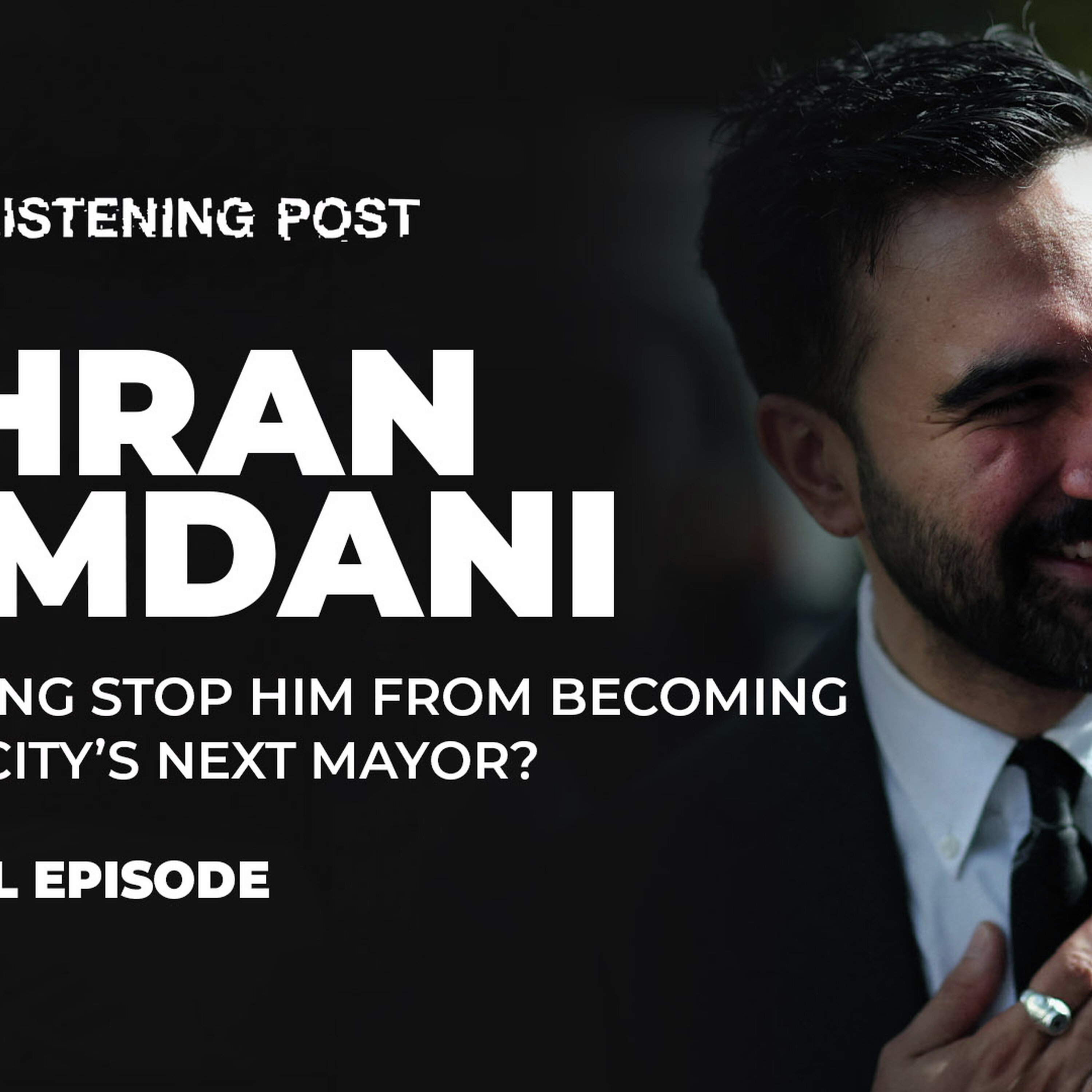
This is not the kind of story a mayoral election, even in a city as prominent as New York that we at the Listening post would typically focus on. However, the rise of Zoran Mamdani, who was expected to win on November 4, has been unusually revealing, unexpectedly informative. Mamdani calls himself a democratic socialist here in a city that is as corporate and as capitalistic as they come.
- [01:23]
Democratic Party Strategist
You are a self described democratic socialist. Do you think that billionaires have a right to exist?
- [01:30]
Political Analyst/Commentator
New York is home to Wall street and the political donor class, the financial power brokers who will spend big to take down a socialist.
- [01:39]
Zoran Mamdani
He is more than just the typical woke Marxist that focus on identity politics dei. He is a full fledged communist and.
- [01:49]
Political Analyst/Commentator
They have plenty of allies on the airwaves. This city is also the media capital of the United States, the place where dominant economic, political and social narratives are formed that tend to protect the status quo. One of the most newsworthy aspects of Zoran Mamdani's candidacy, it turns out, has been his background. He is not just an immigrant, he is a Muslim and he has pulled few punches in his criticism of Israel and its two year old genocide in Gaza. Healing here in a city that has more Jews in it than Jerusalem does. On the eve of the election and with the advanced voting well underway, what happens here in New York could echo far beyond the city itself. Ask any New Yorker. When did they first hear the name Zoran Mamdani? What was the first time this candidate for the mayor's office showed up on their social media feeds?
- [02:54]
Zoran Mamdani
Can you tell me a little bit more about why you didn't vote?
- [02:56]
Political Analyst/Commentator
They will probably take you back to 2024. Shortly after another election, the one that returned Donald Trump to the White House.
- [03:06]
Narrator/Host
Zurmadani first went viral with a video in which he did man on the street interviews in New York. So here were a bunch of voters in a state that's one more typically liberal talking about why they didn't vote for Kamala Harris and why they did vote for Donald Trump. It was a pretty simple concept, but Mamdani's energy and curiosity, I think, really broke through.
- [03:26]
Zoran Mamdani
And that's your hope to see a little bit more of an affordable life?
- [03:29]
Political Analyst/Commentator
Absolutely.
- [03:30]
Narrator/Host
Here they are being interviewed by someone who is brown, who is Muslim, who would be typically perceived to be the subject of negativity and ire from this very population, having a really warm, open exchange of ideas. And I think it opened up the possibility that these are voters that could come back into the Democratic Party fold.
- [03:50]
Democratic Party Strategist
There are more Democrats that need to get outside of the safe spaces, and they need to get comfortable in having long and freewheeling conversations with voters. They need to be accessible and out amongst the public.
- [04:02]
Zoran Mamdani
How's it going, New York City?
- [04:04]
Democratic Party Strategist
And I think we need to have frank conversations with people about where we agree with them and where we disagree. Those candidates who are in the end willing to face a whole bunch of different types of voters, interviews and outlets, are at least better positioned to make their case to the widest number of people.
- [04:25]
Progressive Activist/Supporter
And you have this young 33 year old seemingly who couldn't win the election, but was saying the things that really stirred emotions in New Yorkers and in voters.
- [04:36]
Zoran Mamdani
I'll make buses fast and free so.
- [04:38]
Political Analyst/Commentator
I can just get where I'm going.
- [04:40]
Progressive Activist/Supporter
And I think people started to pay attention and say, well, you know, why? Why can't he win?
- [04:47]
Political Analyst/Commentator
And with the polls consistently showing Mamdani out in front, his chances of winning are looking good.
- [04:53]
Zoran Mamdani
What I don't have in experience, I make up for in integrity. And what you don't have in integrity, you could never make up for in experience.
- [04:58]
Political Analyst/Commentator
He has a double digit lead over his main rival, Andrew Cuomo, the former state governor and longtime Democrat who after Mamdani trounced him in the primary, is running as an independent candidate. Cuomo's name has been stained since 2021, when as governor, he was investigated by the U.S. justice Department for his handling of the COVID 19 pandemic before he was forced to resign following multiple accusations of sexual harassment. Despite that history, Cuomo still has big money backing him, and he enjoys the tacit support of the Democratic Party's centrist establishment, most of which has repeatedly refused to endorse Mamdani. Cuomo's other allies in this race, much of the mainstream media. I'd love to know what your mom says about your run for office, well, as you know, I'm a mama's boy to begin with.
- [05:56]
Media Critic/Political Commentator
Cuomo's various sexual harassment claims, which have been well documented, are well known. They're not considered that controversial. They're kind of barely brought up. They're brought up around the margins. They're not really considered that important. What's controversial is what the media tells you is controversial.
- [06:10]
Narrator/Host
The mainstream media, whether it's right leaning or left leaning, liberal or Republican, are largely funded by the same people. And as a consequence, you get very similar sorts of media products. They're all for US Imperialism, they're all going to be in support of Israel, and they're all going to be broadly opposed to any kind of populist economic policy that prioritizes the interests of poor and working people.
- [06:38]
Political Analyst/Commentator
When you say freeze rents, free bus rides, high taxes on millionaires, free child care, city owned grocery stores, I mean, I've been to city owned grocery stores in Havana, Cuba.
- [06:49]
Zoran Mamdani
You don't want to go to those.
- [06:50]
Narrator/Host
And that's how you get a media that treats Zoram Hamdani talking about free buses and controlling the prices of rent in New York treated as more of a threat than someone like Andrew Cuomo, who had to literally resign as governor of New York over a series of sexual harassment scandals and a scandal over his mismanagement of COVID that resulted in the deaths of a large number of senior New Yorkers.
- [07:21]
Political Analyst/Commentator
The Democratic Party has a habit that goes way back of rejecting leftist candidates like Zoran Mamdani.
- [07:28]
Zoran Mamdani
Zoran Mamdani and other Democratic Socialists should.
- [07:32]
Media Critic/Political Commentator
Create their own party, because I don't.
- [07:34]
Zoran Mamdani
Want that in my party.
- [07:35]
Political Analyst/Commentator
My problem is that he's a socialist and he should be in the Socialist.
- [07:38]
Zoran Mamdani
Party, not in the Democratic Party.
- [07:40]
Political Analyst/Commentator
The party claims to stand for the working class, but keeps sidelining potential leaders whose politics politics resonate with that side of the electorate. Figures like Bernie Sanders and Elizabeth Warren. And it has pressured others, like Alexandria Ocasio Cortez, to adopt some of the party's more mainstream policies. So the platform Zoran Mamdani's running on was never going to go down well with the Democratic Party establishment. On housing, Mamdani is promising to freeze rental prices on all rent subsidized apartments, effective immediately. On transport, he is promising free bus transit for everyone. He says he will provide families with free child care, which currently costs New Yorkers about $25,000 a year per child. And Mamdani is proposing to pay for those things primarily by taxing the rich Raising corporate taxes and by cracking down on things like tax avoidance. Such policies are anathema to Wall street and to most of the Democratic Party's leaders, so called centrist Democrats. But they are clearly landing with voters more concerned with the rising cost of living than they are with a label like socialist. Strategic organizations aligned with the Democrats are equally uncomfortable with what they are seeing in New York, organizations like Third Way. To them, socialism is a dirty word. And campaigns like Mamdani's, funded mostly through small donations from middle class voters rather than billionaire backers, as Third Way puts it, may not align with the broader electorate. The group argues Mamdani would take the party in the wrong direction and it wants him to sever his ties to the Democratic Socialists of America. The to denounce it as a toxic platform. Kate de Gruyter is Third Way's senior director of communications.
- [09:40]
Democratic Party Strategist
Mamdani is one of those new faces that has emerged on the scene. But there's a lot of anxiety and fear that embracing somebody from the farthest left wing of a party, that the right is going to seize on this opportunity to lift him up as the future of the Democratic Party and to use him as a weapon against some of the candidates that we need to win to put a check on Trump. And if he is elected mayor and becomes a nationally recognized leader of this party, he could do real damage to other Democrats, not just in New York state, but across the country. I absolutely believe that Democrats need to offer an alternative to Trump and maga. I don't think that it is necessarily true that the best way that we can do that is by embracing democratic socialism.
- [10:35]
Media Critic/Political Commentator
This idea that somehow self describing as a democratic socialist or self describing as a progressive is somehow politically toxic has no empirical basis. There's this assumption that there's this far left, far right kind of gradient with two poles and the candidate who gets just dead in the center is gonna somehow by definition appeal to more. This ignores factors like authenticity and it ignores a key factor which is something we see more and more coming up in our politics, which is this idea of establishment versus not being part of the establishment.
- [11:03]
Zoran Mamdani
This is an attack on our democracy.
- [11:05]
Media Critic/Political Commentator
And Mamdani represents and has the vibe of an anti establishment candidate.
- [11:12]
Political Analyst/Commentator
Zoran Mamdani is 34. His ethnicity is Indian. His father is an academic, his mother a filmmaker. Mamdani was actually born in Uganda and moved to the US at age seven. But more importantly, in terms of this race, he is a digital native. Momdani used to dabble in rap. His music videos went Viral long before his campaign ads did. Other politicians would kill for the engagement he gets online, like the 6 million views. His video from a Wu Tang Clan concert at Madison Square Garden got the legions of followers spreading the word. And Mondani has a way of connecting with Americans, explaining complex issues through simple things like food, as a way of getting at the crisis of affordability.
- [12:01]
Zoran Mamdani
New York is suffering from a crisis and it's called halalflation. These are the four bills that are sitting in the city council right now which would give these vendors their own permits and make your halal more affordable.
- [12:12]
Political Analyst/Commentator
Social media paved his way to the primary win and also provided an easy path for individual donors, as opposed to billionaires, to fund his campaign. But the mainstream side of it has been a different ball game. New York is home to financial news channels cnbc, Bloomberg and Fox Business that spend far more time looking at the stock market than affordability issues.
- [12:38]
Zoran Mamdani
Now, of course, Madame wants to jack up taxes on successful earners and businesses. Pure insanity.
- [12:44]
Political Analyst/Commentator
Not that all the corporate coverage of Mamdani has been hostile. More and more profile pieces such as those coming out of the New York Times Magazine, Vanity Fair and Time magazine, while challenging some of his positions, have at least provided Momdani with a fair platform. But overall, they remain the exception. Rupert Murdoch's US holdings like the New York Post and Wall Street Journal have hammered Mamdani and the Washington Post, the personal property of mega billionaire Jeff Bezos, warned that a Mamdani win would be bad for New York.
- [13:21]
Progressive Activist/Supporter
In every campaign there is a struggle between what reporters want to talk about and what voters want to hear about. Reporters want sensational headlines. They want attacks back and forth and fights between candidates. They're looking to create the sizzle. Zoran was a communist. He was a socialist. He's anti Semitic.
- [13:42]
Zoran Mamdani
Calling him a communist is not far off base. He's a socialist. He has a long history of anti Semitism. He's a sosist, he's a self avowed socialist.
- [13:49]
Progressive Activist/Supporter
But voters are much less focused on headlines. They're much more focused on what's happening in their daily lives.
- [13:55]
Zoran Mamdani
Housing is a human right.
- [13:57]
Progressive Activist/Supporter
People are so frustrated with the system, with how much it costs to live in our city and our country and how hard it is to get by that they're willing to vote for people who are gonna fight against that system.
- [14:13]
Narrator/Host
The thing is, in the United States you can always rely on both liberal and conservative media to punch left at all times and to lobby. Bad faith attacks that characterize any moderate social democratic kind of policy as something to be feared. And at the same time they ignore all of the very real problems and the deaths and the horrors that happened under our unfettered capitalist. And I think that Zorramadani is very good at neutralizing that fear mongering by talking very concretely about what are very basic social programs.
- [14:46]
Zoran Mamdani
This is a stain on our city to see this many children in our public school system be homeless. And that's why my campaign is going to deliver 200,000 new affordable homes across the five boroughs.
- [14:58]
Narrator/Host
He's very, very good at studying and anticipating the bad faith claims that he's going to be hit with and speaking in very concrete and pretty measured terms about what he actually wants to provide to New York City.
- [15:11]
Political Analyst/Commentator
One storyline persistently used to put Zoran Mamdani on the spot has been his relationship with New York's Jewish voters and his position on Israel, the occupation and the genocide in Gaza. It started long before September, when he vowed to act on the International Criminal Court's indictment of the Israeli prime minister should he ever set foot in New York.
- [15:35]
Zoran Mamdani
And Amaya Mamdani? Would he welcome Prime Minister Netanyahu to New York City as mayor? New York City would arrest Benjamin Netanyahu.
- [15:43]
Political Analyst/Commentator
Back in June, a political organization called Sensible City started spending money on ads implying that Mamdani's position on Gaza represented a threat to Jewish New Yorkers.
- [15:55]
Zoran Mamdani
It's not safe institution walls defaced with symbols to remind us of what can happen only because of who we are.
- [16:02]
Political Analyst/Commentator
Sensible City's biggest donor, Rob Stavis, has strong ties to the pro Israel lobby. As for Cuomo, initially he was careful not to accuse Mamdani of anti Semitism. That changed just before the early voting began. There is no New York without the Jewish community runs based on his cantais Semitic stains, and it escalated in the final week of his campaign and still polling badly. Cuomo dialed it up, invoking 911 and leaning heavily into anti Muslim bigotry.
- [16:40]
Zoran Mamdani
God forbid, another 9 11. Can you imagine Mandami in deceit? I could. He'd be cheering.
- [16:52]
Narrator/Host
Another problem.
- [16:54]
Political Analyst/Commentator
But can you imagine that? Months previously, Mamdani's critics zeroed in on this moment from a podcast he appeared on. Sure, Black does that just make you uncomfortable?
- [17:05]
Zoran Mamdani
Like the phrase globalized intifada?
- [17:07]
Political Analyst/Commentator
From the river to the sea.
- [17:08]
Zoran Mamdani
I'm less comfortable with the idea of banning the use of certain words and that. I think it is more evocative of a Trump style approach.
- [17:18]
Political Analyst/Commentator
Mainstream broadcasters then seized on that, took it a giant step further and repeatedly confronted Mamdani over whether he would condemn a phrase that he had never said. Globalize the intifada, which in Arabic translates to globalize the uprising.
- [17:35]
Zoran Mamdani
Do you condemn that phase? Globalize the intifada, which a lot of people hear as a call to violence against Jews. Quickly, for the people who care about the language and who feels really concerned by that phrase, why not just condemn it?
- [17:47]
Political Analyst/Commentator
A fresh test of mom Donnie's credibility had been devised out of nothing by talking heads, some of whom did not even know what they were talking about.
- [17:58]
Media Critic/Political Commentator
I was also just separately a couple.
- [18:00]
Zoran Mamdani
Things disturbed by the global. Globalized the. What do you say? That just this made me crazy over the weekend.
- [18:11]
Media Critic/Political Commentator
I cannot think of another politician where they're repeatedly told to condemn something that they never said. That is a new standard that they invented almost overnight from Mamdani. Again, 99% of politicians, if they got asked about globalizing Tifada over and over again for months on end, would have just said I condemn it. That's what a weaker politician would have done. He's not condemning it right.
- [18:32]
Zoran Mamdani
That's not language that I use.
- [18:34]
Media Critic/Political Commentator
And this whole globalizing intifada dust up is at its core bad faith. This is a totally one way empathy. Palestinians, Arabs, Yemeni, Syrians, all the different people who Israel bombs all the time, whomever they may be, are not afforded this constant prominence, this pride of place in the empathy Olympics.
- [18:54]
Democratic Party Strategist
I think it is fair and appropriate for all Americans to be investigating and asking candidates for office what they are going to do to keep them safe and to make sure that they have a sense of belonging. There are a lot of Americans who were deeply anxious by the way that Mamdani handled those questions. And I think at a moment when there is rising anti Semitism across the country, that is an important and credible conversation for voters to have.
- [19:28]
Political Analyst/Commentator
What Soran Mamdani is up against, what any critic of Israel has to contend with. Israel in the US political realm is a hybrid of ideological and corporate influencers who often end up intersecting on the airwaves. It starts with aipac, the pro Zionist lobby group that funds so many American politicians and seems to have them on speed dial, the Anti Defamation League. The ADL has a similar relationship with corporate news outlets who always appear to keep a studio seat warm. And for the ADL's leader, Jonathan Greenblatt, who's also out to get Mamdani, why won't he condemn globalizing intifada? Because he believes it. I mean, I think we have to take people at their word, even Media outlets in Israel have occasionally paused their incitement of the genocide in Gaza for long enough to raise the alarm over what is happening in New York, New York. And while Mamdani continues to hold a comfortable lead in the polls, he did finally backpedal over the globalize the intifada thing, albeit to an interviewer on MSNBC who could not even pronounce the phrase.
- [20:58]
Zoran Mamdani
The term globalized the intifata. It's become a flashpoint for Jewish New Yorkers.
- [21:06]
Political Analyst/Commentator
Has your personal views on the phrase.
- [21:09]
Zoran Mamdani
Of global intratada changed since you've been running for mayor? Yes, they have. This is language I would discourage.
- [21:17]
Narrator/Host
It's pretty clear that Zoram Hamdani's corporate opponents thought that hitting him on Israel was going to be a winning ticket. You saw folks like Jonathan Greenblatt of the adl, Bill Ackman and others really putting a lot of money behind the message that Zoran was this scary Muslim brown other. There were ads in which they darkened his skin and lengthened his beard. And they thought that New York, being the largest population of Jewish folks outside of Israel, would turn on him on this point. And it didn't work. And in fact, Iran's commitment to defending the rights of Palestinians and imposing the genocide in Gaza actually galvanized a lot of support behind them. So the question now is, what is the point of moderating? Why backtrack on the issue of Gaza? Does that gain you any new followers? Does that give you any new support? Does it actually assuage the concerns of your antagonists? Or does it just feed into the bad faith attacks without winning you anything in return?
- [22:18]
Political Analyst/Commentator
There are aspects of this mayoral race in, in New York that make it look like a microcosmic version of Donald Trump's election victory last year, in that it spotlights once again the declining importance of the mainstream media in American politics and the ever growing influence of social media, where Zoran Mamdani has been the biggest influencer of them all. And while the affordability issue has been at the core of his campaign, the genocide in Gaza, Mamdani's calling out of the Israelis for inflicting it on Palestinians and of the Trump administration for its complicity in it have been central as well. And that is one of the things that those centrist Democrats fear the most, that Zoran Mamdani is not an outlier, that the apparent success of his campaign reflects the changing tide in American society on that issue, and that he will drag other candidates like him into the fight, that if he wins and the Polls suggest that he will. The Mamdani effect will not just be felt here in New York for people.
- [23:28]
Progressive Activist/Supporter
In power who want to hold on to their power, who don't want to see grassroots movements empower a new generation of leaders, who don't want to see change in the Democratic Party. And they will bear the brunt of the blame for that amongst these young voters. They will then continue to shut out this generation of young progressives who are an important part of the future of the party. I think it will be much more difficult for the party as a whole to be successful in 2026 and beyond. If this fracture continues.
- [24:04]
Democratic Party Strategist
There are going to be some who suggest that we should be running Madani style candidates across the country in order to take back power. I think that that is profoundly dangerous. We need to be very cautious about the conclusions we draw from this campaign about what the path back to power is going to look like for Democrats nationally. Suggesting that the model is to embrace a candidate and an agenda that is further to the left really clangs with the challenge and the stakes of how Democrats stop Trump and MAGA and build a durable coalition that can help us hold power and start to rebuild our country.
- [24:45]
Media Critic/Political Commentator
To a great extent, the attacks on Mamdani, they're less about Mamdani than they are about the 10 Mamdani wannabes behind him because they fear that if you show that you can win as a principled progressive, someone who opposes landlords and real estate interests.
- [25:00]
Zoran Mamdani
We are an existential threat to billionaires who think their money can buy our.
- [25:05]
Media Critic/Political Commentator
Democracy, who supports Palestinian rights.
- [25:08]
Zoran Mamdani
My belief in a universality and international law is also the same set of beliefs that have led me to describe what's happening in Gaza as a genocide.
- [25:15]
Media Critic/Political Commentator
You can win in spite of all the money and interest, in spite of the pressure to support genocide. And that sends a message to people who want to run in Raleigh, North Carolina or Los Angeles, California or San Antonio, Texas. It's controversial to the establishment. They want these avatars for the real estate and weapons lobby. They don't want someone who's a genuine populace, who's genuinely anti war and anti genocide.