Podcast
The Listening Post
Hosted by Al Jazeera · EN
A weekly programme that examines and dissects the world's media, how they operate and the stories they cover.
37episodes
Episodes
Newest firstAll episodes
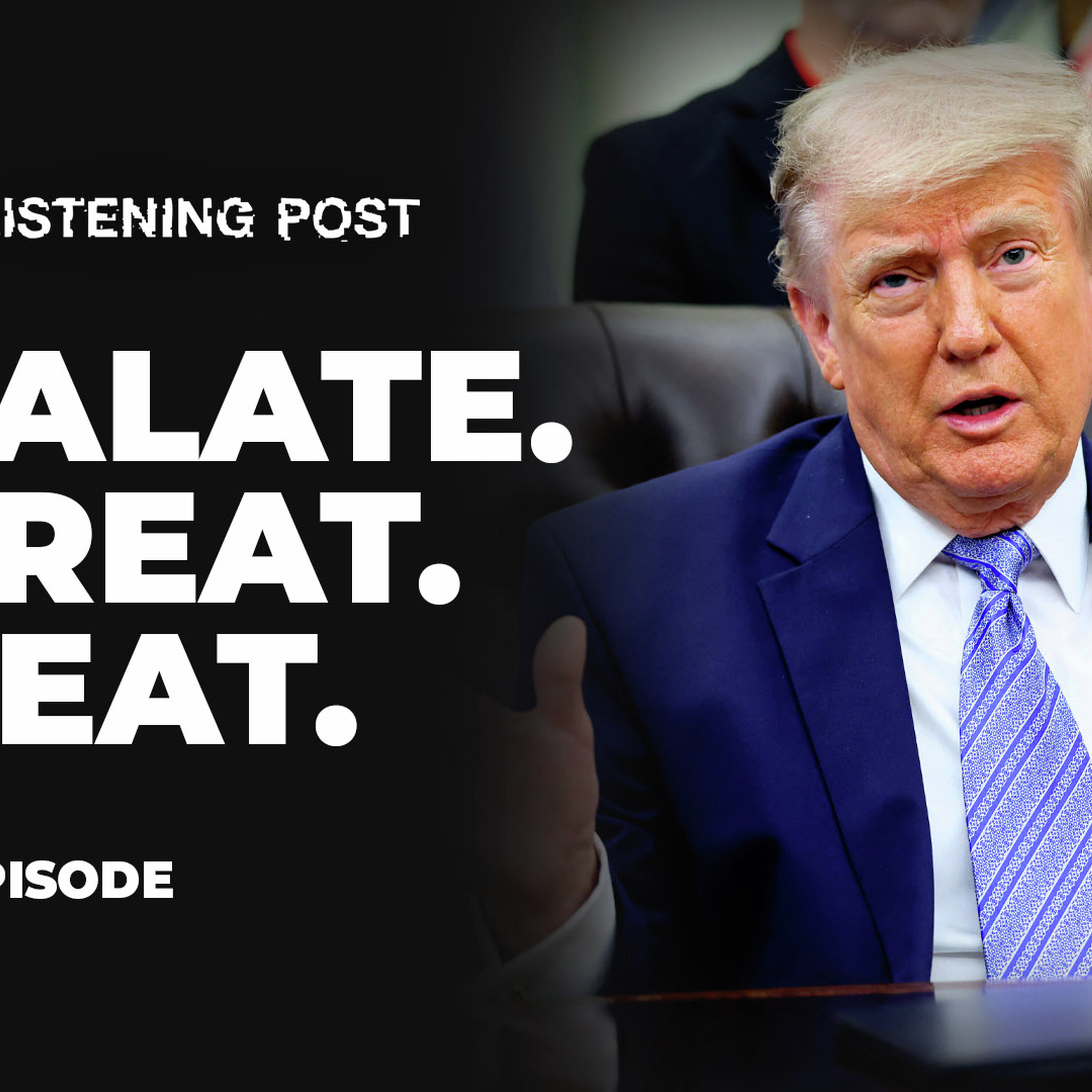
Trump’s war loop: Escalate, retreat, repeat | The Listening Post
May 2500:25:28Summary readyFor decades, much of the United States media adopted Washington’s framing of US conflicts in the Middle East. But the US-Israel war against Iran is defying that trend. US news outlets are increasingly challenging President Donald Trump on his declarations of victory and absence of a clear strategy. Meanwhile, Iran’s military remains operational, Tehran retains control of the Strait of Hormuz and fears are mounting that the disruption to global energy supplies will drag on. Contributors: Mohamad Elmasry - professor of media studies, Doha Institute for Graduate Studies Negar Mortazavi - host, Iran Podcast Maral Karimi - lecturer, Toronto Metropolitan University Sultan Barakat - senior professor in public policy, Hamad Bin Khalifa University On our radar Indian Prime Minister Narendra Modi’s foreign trips are usually tightly choreographed affairs. But his trip to Norway did not go according to plan when a journalist named Helle Lyng asked him an unscripted question. Lyng was later criticised by Indian news outlets for that exchange. Norway’s news media also came under fire after the country’s largest newspaper published an orientalist caricature of Modi. Tariq Nafi has been following the story. The dark side of Kenya’s digital age Kenya is the tech hub of East Africa and has built a thriving digital economy. But alongside that growth has come an expanding surveillance apparatus. After antigovernment protests in 2024, President William Ruto’s administration is accused of intensifying its monitoring of civilians. Critics say the government is trying to quell online dissent before it reaches the streets. Nicholas Muirhead reports on how surveillance tools designed to combat "terrorism" are being turned on Kenya's citizens. Featuring: Victor Ndede - Amnesty International Nanjala Nyabola - author, Digital Democracy Thomas Mukhwana - investigative journalist, Africa Uncensored
Summary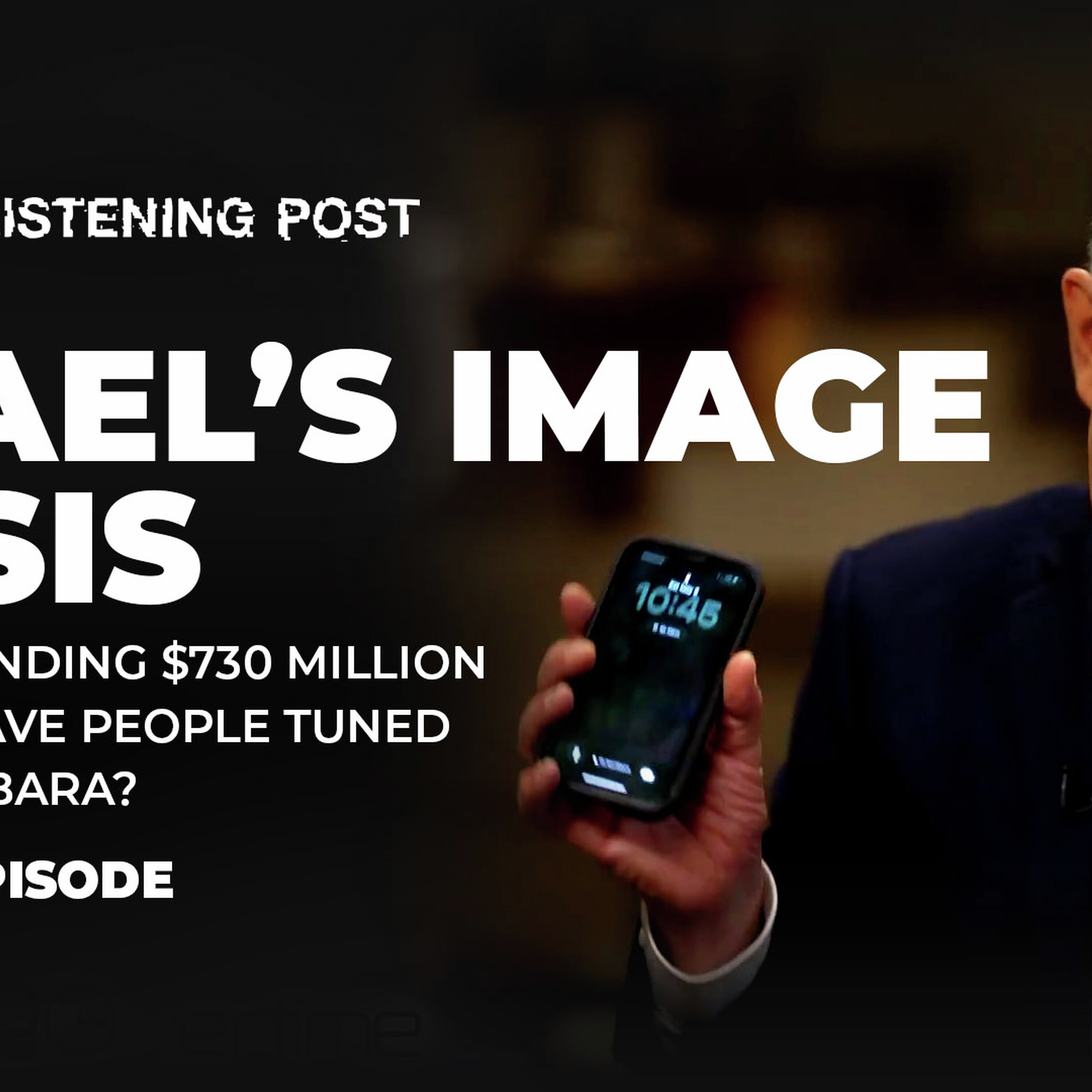
Israel's Image Crisis: Becoming Too Big to Spin?
May 1600:26:18Summary readyAs criticism of Israel mounts over its wars on Gaza, Lebanon and Iran, along with the escalating settler violence in the occupied West Bank, the country is ramping up its PR offensive. From a carefully managed appearance of Benjamin Netanyahu on CBS’s 60 Minutes to a major expansion of Israel’s Hasbara operation, the push includes pouring money into digital campaigns and media messaging. The goal is to reverse the collapse of public support for Israel, especially in the US, but no amount of spin can make audiences unsee what they have watched in real time. Contributors: Miriyam Aouragh - Professor of digital anthropology, University of Westminster Matt Lieb - Host, Bad Hasbara podcast Emily Schrader - Journalist, ILTV News Oren Ziv - Reporter, Local Call On our radar Israeli officials have dismissed a recent New York Times report on sexual violence against Palestinians as “blood libel”. But while the government denounces the allegations, many of the claims in the report have been openly discussed in the Israeli media. Nicholas Muirhead reports. Zaragoza Data Farms The generative AI boom is prompting a global race to build vast, energy-hungry data centres. In Spain’s Aragon region, authorities have welcomed tech giants and the jobs, investment and digital transformation they claim to bring. But behind the glossy narrative lies a different reality - one in which enormous facilities consume natural resources and exploit legal loopholes, often at the expense of the communities that live alongside them. Featuring: Alonso Llorente - Journalist, Arainfo Pablo Jimenez Arandia - Investigative reporter Mar Vaquero - Vice president, Aragon Minister of Economy, Employment & Industry
Summary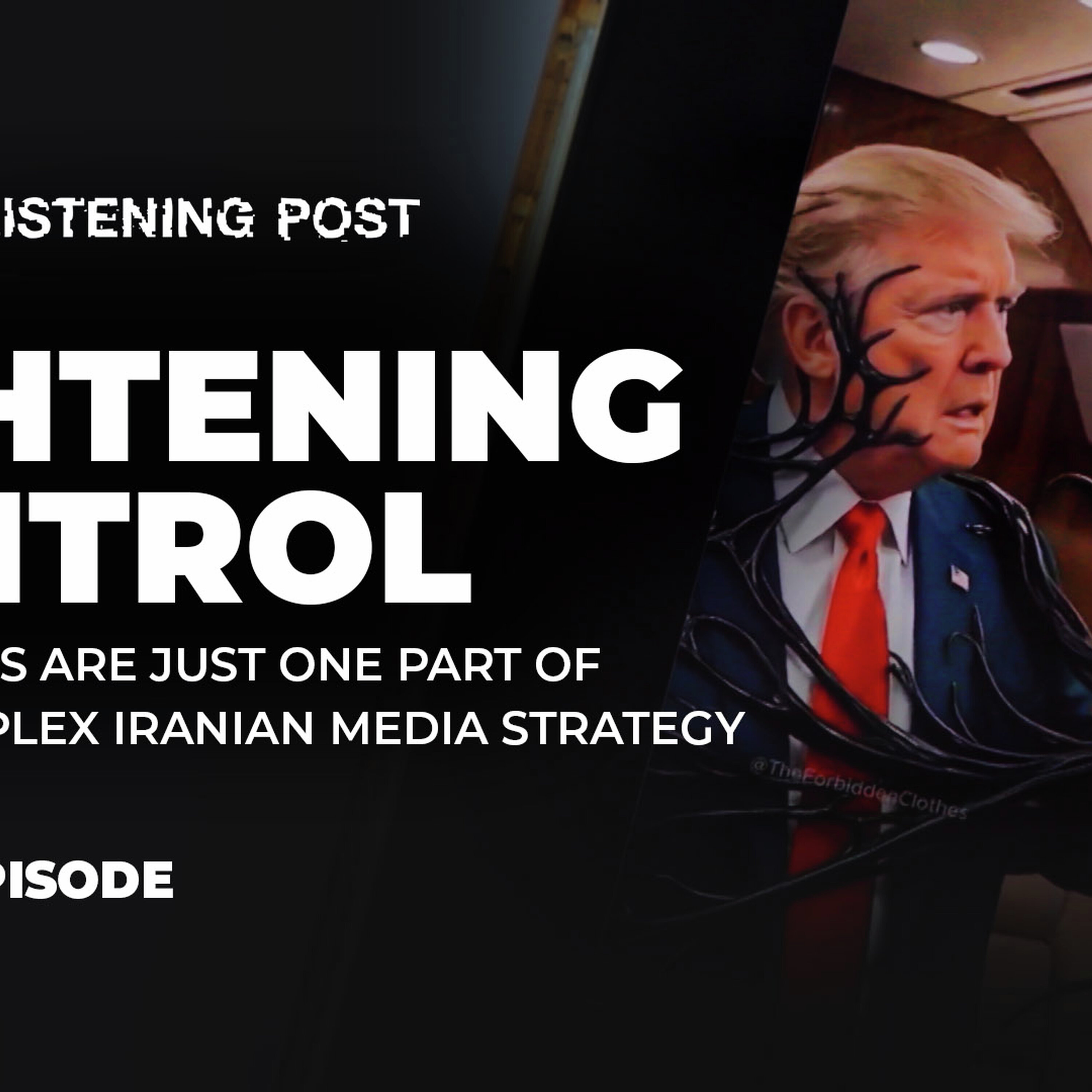
Iran's Infowar: Lego, AI and ever tightening control | The Listening Post
Apr 2500:25:43Summary readyThe information front has been central to the Iranian government’s war effort. For an external audience, there is an innovative online strategy that has consisted of AI Lego, memes and hip hop diss tracks directed at Donald Trump and the MAGA base. But this coexists with more brutal domestic tactics: crackdowns, arrests and internet blackouts. The result has been the Iranian authorities making use of the internet for PR internationally, while simultaneously preventing the Iranian people from openly accessing the net themselves. Contributors: Ali Hashem – Correspondent, Al Jazeera English Mehran Kamrava – Professor of Government, Georgetown University in Qatar Tara Kangarlou – Journalist & Author, The Heartbeat of Iran Maral Karimi – Lecturer, Toronto Metropolitan University On our radar The killing of Lebanese journalist Amal Khalil unfolded in the manner that so many Israeli assassinations of journalists in Gaza have - minute by minute, hour by hour, in a pattern that has become shockingly familiar. There's the surveillance, the strike, the obstruction of rescue and then, the denial - Israel's insistence that it does not target journalists, medics or rescue workers. Meenakshi Ravi reports. Pakistan’s peacemaker moment and the missing stories Pakistan has found itself at the centre of one of the world’s most consequential stories - by hosting talks between the United States and Iran, brokering ceasefires, earning the very public praise of Donald Trump and making headlines around the world. But this PR moment is obscuring a great deal, including an undercover war with Afghanistan and a crushing cost-of-living crisis at home. We speak to Amber Rahim Shamsi about the domestic politics behind Pakistan’s diplomatic moment in the sun. Featuring: Amber Rahim Shamsi – Pakistan Editor, Nukta
Summary
Hormuz: Spin in the Strait | The Listening Post
Apr 1800:25:18Summary readyA fragile ceasefire between the US and Iran holds - but the information war intensifies. At the centre: the Strait of Hormuz, where competing US and Iranian narratives have collided. During any truce, even when the bombs stop falling, the information war goes on. Moments like this test journalism. Because the job is not just to report on the messaging coming from all sides - but to decode and debunk it if necessary. Contributors: Abeer Al Najjar – Professor of Media & Journalism, American University of Sharjah Andrew Arsan – Professor of Arab & Global History, University of Cambridge Alireza Doostdar – Associate Professor of Islamic Studies, University of Chicago Nazila Fathi – Former Tehran Correspondent, New York Times On our radar Israel’s relations with its European allies are fraying, with increasingly sharp rhetoric from both sides playing out across political and media platforms. Meenakshi Ravi reports. The Iranian diaspora in the media: Interview with Narges Bajoghli The Iranian diaspora contains a wide range of often conflicting views. But judging by its representation in mainstream Western media, one might assume the dominant position is support for the war. We speak to Narges Bajoghli about how diaspora voices are weaponised in coverage of Iran. Featuring: Narges Bajoghli – Associate Professor, Johns Hopkins University
Summary
War spirals as information control tightens | The Listening Post
Mar 2100:25:27Summary readyThe war on Iran has entered a much more damaging phase with more assassinations of the leadership in Tehran, the continued blockade of the Strait of Hormuz and major strikes on energy infrastructure across the region. As the war has escalated, pressure on news organisations in the United States, Israel and Iran is increasing. Contributors: Branko Marcetic – Writer, Jacobin Arta Moeini – Institute for Peace and Diplomacy Mouin Rabbani – Co-editor, Jadaliyya Mairav Zonszein – Senior Analyst, International Crisis Group On our radar This week, three more senior Iranian political leaders were killed by Israel. Coverage followed a familiar pattern - awe at the Israeli intelligence operation’s "sophistication", and little scrutiny of the legality of the actions. Meenakshi Ravi reports on how these killings have been reported in Israeli and Western media. War in Lebanon: Interview with Jean Kassir Millions of people in Lebanon are enduring the consequences of the Iran war with little media attention. Israel has now begun ground operations there and is openly boasting it will turn the country into a new Gaza. The cofounder and managing editor of Lebanese news website Megaphone spoke to us about the toll this war is having on his country. Featuring: Jean Kassir – Managing Editor, Megaphone
Summary
“A war in search of a strategy” - Trump-Netanyahu's war with Iran | The Listening Post
Mar 700:25:24Summary readyOne week into the United States and Israel’s war on Iran, and the messaging coming from the White House is consistently chaotic and contradictory. From regime change and nuclear threat to preemptive attack - the Trump administration is struggling to juggle its narrative. And while the mainstream media is working overtime to legitimise the Trump-Netanyahu war at home, Americans remain unconvinced. Contributors: Negar Mortazavi – Host, The Iran Podcast Samira Mohyeddin – Host, On the Line Media Antony Loewenstein – Author, The Palestine Laboratory Borzou Daragahi – Writer, badlands, Substack On our radar Voices within the Iranian diaspora that support the US-Israeli bombing campaign are being given a disproportionate amount of airtime across Western mainstream media. One of the most prominent figures is Reza Pahlavi, the exiled son of Iran’s former shah, who has presented himself as someone who could “lead the transition” to a new government in Tehran. Meenakshi Ravi looks at how the one-sided coverage lends credibility to the war. Reporting under fire in the West Bank With the eyes of the world focused on Gaza and now Iran, far too little attention has been paid to another territory where Israel exercises near-total control: the occupied West Bank. Israel has intensified its policy of fragmenting the territory, carving it up and expanding control over the land. Journalists in the occupied West Bank have seen their movement severely restricted by hundreds of new checkpoints and barriers. And they face the constant threat of soldiers who are more aggressive and settlers who - protected by the army - are more emboldened and violent than ever. One of those journalists is Ameed Shehade, a correspondent for Al Araby TV, whose unflinching reporting frequently places him directly in harm’s way. Featuring: Ameed Shehade – West Bank correspondent, Al Araby TV
Summary
Trump, Iran and geopolitical mind games | The Listening Post
Feb 2700:26:27Summary readyAs Washington escalates threats of military action against Iran, negotiations over Tehran’s nuclear programme continue behind the scenes. But while the Trump administration insists that the standoff is about security, Iran’s state media are pushing a very different narrative: that the crisis is a deliberate distraction from the Epstein scandal that continues to implicate the US president. Contributors: Dina Esfandiary – Middle East Lead, Bloomberg Economics Fereshteh Sadeghi – Iranian journalist Jamal Abdi – President, National Iranian American Council Sina Toossi – Senior Fellow, Centre for International Policy On our radar: Indian Prime Minister Narendra Modi travelled to Israel this past week in a carefully choreographed display of solidarity. While Modi’s trip was celebrated in the Israeli media, criticism by Indian journalists was blocked back home. Leaving the two leaders to sign arms deals that will boost an already significant military partnership. The Rise of Digital Micro-Bolsonaros Nearly two years after Jair Bolsonaro’s fall from power in Brazil, the movement he built is searching for a new figurehead. A rising generation of young, evangelical, and hyper-online politicians is stepping in. They are leveraging a sophisticated, decades-old religious media machine that evolved from radio and television into a powerful force on social media. Brazil’s political right is being reshaped for the digital age. Featuring: Anna Virginia Balloussier – Journalist, Folha de Sao Paulo Caro Evangelista – Executive Director, ISER Magali Cunha – Editor-in-Chief, Berreia Project
Summary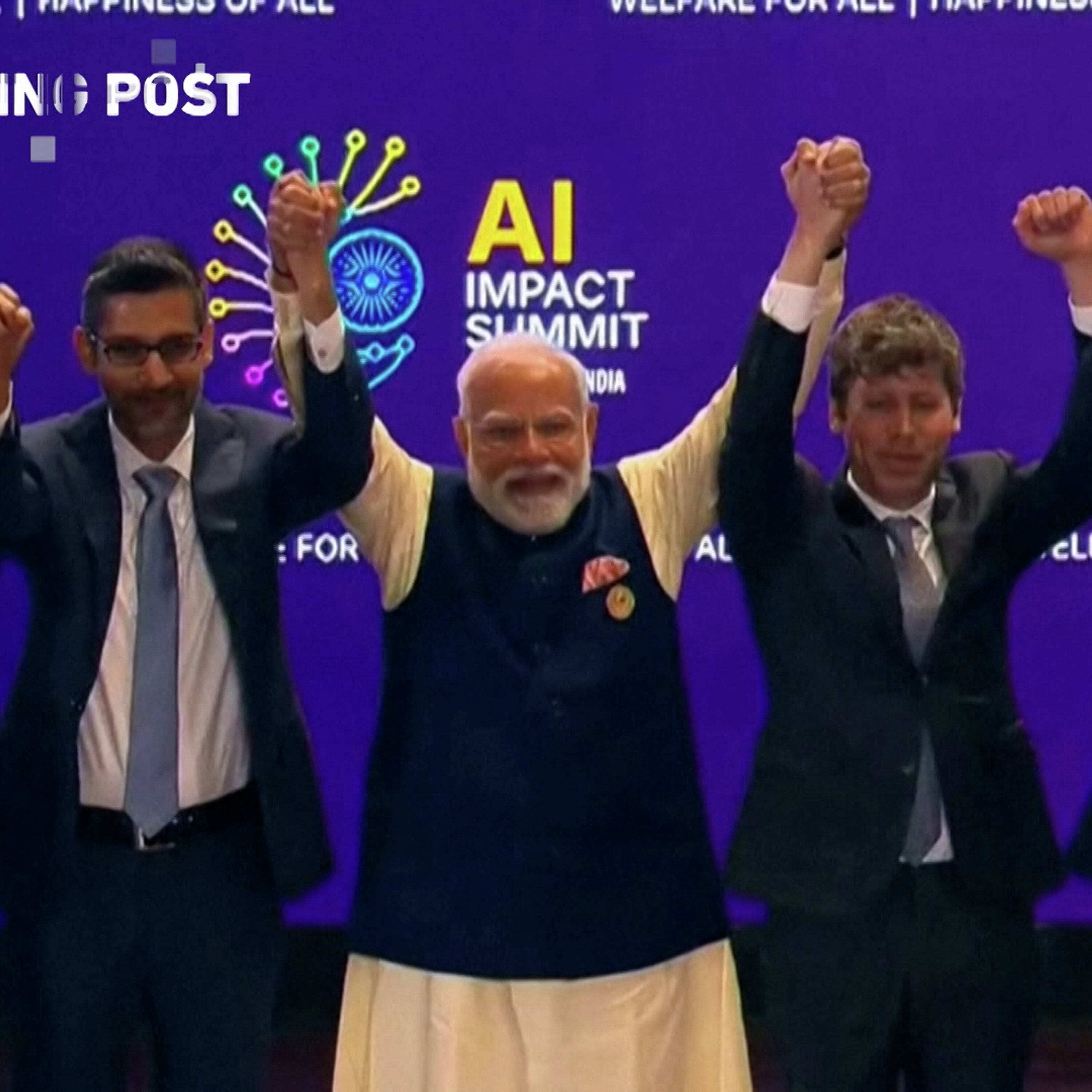
The AI alarm cycle: Lots of talk, little action | The Listening Post
Feb 2200:25:48Summary readyA series of warnings from artificial intelligence (AI) industry insiders shows how the debate around AI drives extreme news cycles, swinging between hype and alarm. The result is media coverage that overlooks the intricacies of this technology and its impact on everyday life. We examine the real risks, what’s being overstated, and what major tech companies stand to gain from all the fearmongering. Contributors: Rumman Chowdhury – Founder, Humane Intelligence Mutale Nkonde – Founder, AI for the People Chris Stokel-Walker – Author of the book How AI Ate the World On our radar Francesca Albanese, the United Nations' special rapporteur for the occupied Palestinian territories, has found herself in the middle of a political firestorm, all because of comments she never actually made. After a manipulated video of Albanese calling Israel the “enemy of humanity” went viral, there were calls for her resignation across Europe. The UN has labelled these allegations part of a wider smear campaign to discredit Albanese and the UN itself. A curated view of Israel for African journalists For decades, the Israeli government and pro-Israel organisations have sponsored trips for politicians, celebrities and journalists, inviting them to visit and, as they put it, tell the “real story” about Israel. In the past, those invitations largely targeted figures from Western countries. But since October 7th, there has been a noticeable shift towards African journalists and social media influencers. The objective is clear: to shape coverage in African media and influence audiences across the continent. The Listening Post’s Nic Muirhead reports on the African journalists taking part in these fully funded, tightly managed visits to Israel. Featuring: Hassen Lorgat – Media critic and activist Makhudu Sefara – Editor, Sunday Times Timnit Gebru – Founder, the Distributed AI Research Institute (DAIR) Njahira Gitahi – Reporter, The Standard
Summary
The Epstein files cover-up: Botched or calculated? | The Listening Post
Feb 1400:25:40Summary readyThe latest tranche of the Epstein files contains more than three million documents - the largest release of its kind. In what appears to be a clumsy attempt at a cover-up by the US Department of Justice, the sloppily redacted names of high-profile perpetrators have failed to conceal the intricate web of global elites spanning politics, royalty, Hollywood and tech. The fallout in Europe has resulted in a string of resignations, but in the US, there has been limited accountability for the politicians named in the files, including Donald Trump. Contributors: Mehdi Hasan - Editor-in-chief and CEO, Zeteo News Chris Hedges - Host, The Chris Hedges Report Nikki McCann Ramirez - Politics reporter at Rolling Stone Danielle Moodie - Host, The Danielle Moodie Show On our radar: It’s been a month since Iranian authorities imposed a total internet blackout during a violent crackdown on antigovernment protesters. Since then, the state has ramped up the targeted repression of journalists and progressive politicians in Iran. The limited information that has managed to make it out of the country, via Elon Musk’s Starlink, is now struggling against what experts say are internet filtering technologies from Chinese companies. Tariq Nafi reports on Iran’s nationwide internet shutdown. How the US military took over American football From choreographed flyovers to flags stretching the length of the field, no other sports league has marketed patriotism as aggressively or successfully as the United States’ National Football League, the NFL. Militarism is embedded in sports and entertainment in the US, but, under the Trump administration, more state institutions are trying to get in on the act. Ryan Kohls reports on the power and the spectacle of the Super Bowl. Featuring: Howard Bryant - Sports journalist and author Kavitha Davidson - Podcast host, Sportly Gregory Daddis - Professor of history, Texas A&M University; retired colonel, US Army
Summary
The anatomy of the Epstein network | The Listening Post
Feb 700:22:03Summary readyThe Epstein files dump has led to days of intense media coverage, revealing how powerful elites around the world engaged in either illegal or morally reprehensible behaviour. But even as journalists sift through millions of documents, one of the most significant stories remains largely missing from the mainstream narrative. Contributor: Murtaza Hussain - National security and foreign affairs reporter, Drop Site News The farce of the ‘ceasefire’ coverage in Gaza More than 500 Palestinians have been killed since a US-brokered "ceasefire" was signed, which begs the question: Should journalists, in contextualising the story, really be calling this a “ceasefire”? As Israel signals it’s preparing to resume full-scale war, we examine how media silence, selective framing and restricted access help keep Gaza off the world’s screens. Featuring: Shaiel Ben-Ephraim - Senior analyst, Atlas Global Strategies Diana Buttu - Palestinian lawyer Muhammad Shehada - Visiting fellow, European Council on Foreign Relations Daniel Levy - President, U.S./Middle East Project
Summary