Loading summary
Transcript58 lines
- [00:01]
Narrator
This week on the Take, we're marking.
- [00:03]
Israeli Media Analyst
One year since a pair of devastating earthquakes hit Turkey and Syria with a new digital interactive listen and watch stories of survival, recovery and coping with the grief@al jazeera.com earthquakes Again, that's al jazeera.com.
- [00:24]
Earthquakes.
- [00:28]
Political Commentator
Benjamin Netanyahu is out to dodge a corruption case against him. Having blamed the Israeli media and judges there for putting him on trial, he is now asking another politician, the country's president, to keep him out of jail. There is a myth still making the rounds in American political circles that Israel's PR problem has more to do with TikTok than the genocide it's inflicted on Gaza. What they were being told on social media was not just one sided, it was pure propaganda. Plus South Korea and a political influencer who the military police had their eyes on, who's still doing his thing.
- [01:14]
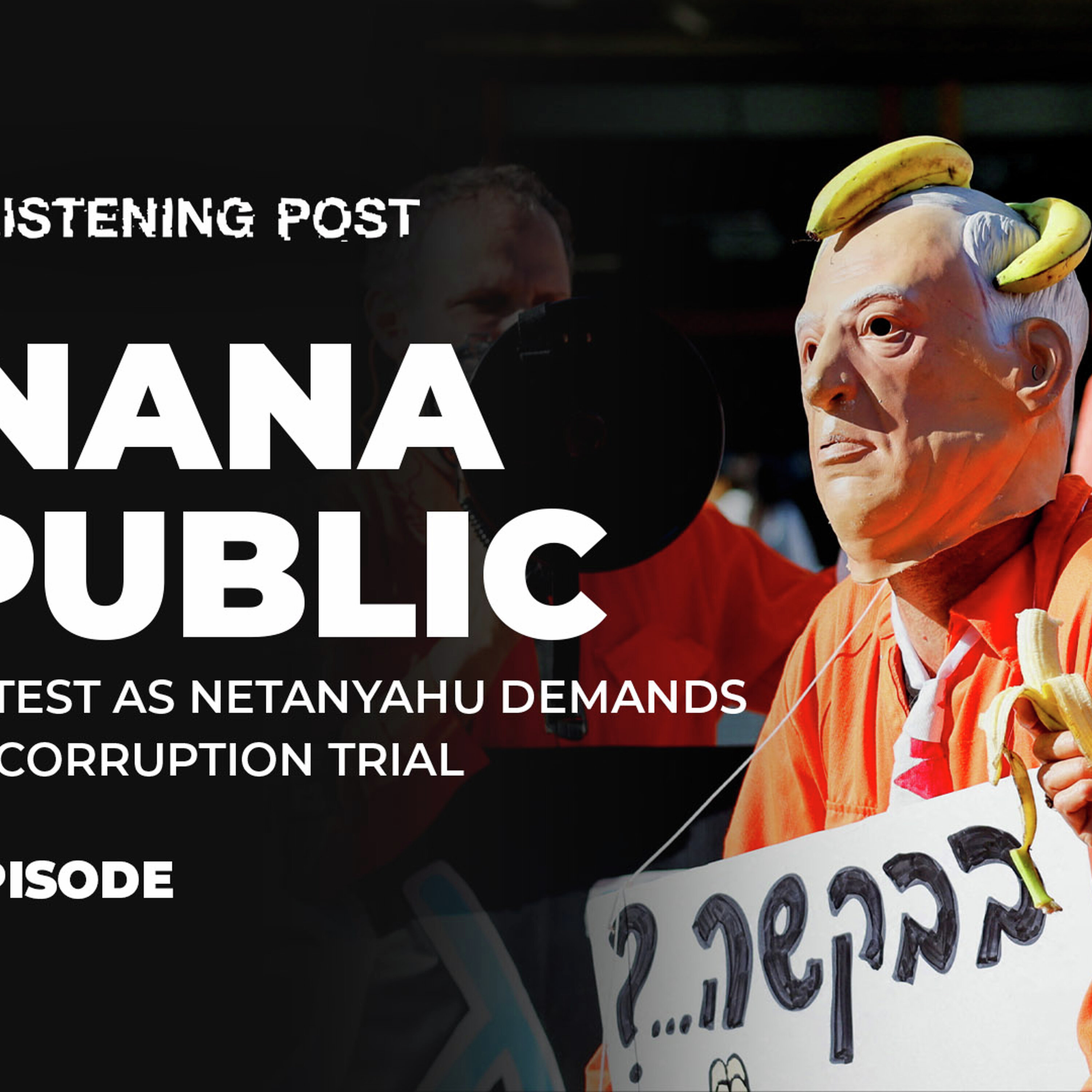
Israeli Prime Minister Benjamin Netanyahu made a move last week that took some real chutzpah. Another way to describe it would be shameless. He has asked President Yitzhak Herzog for a pardon over corruption charges laid against him going back to 2019. That is, after repeatedly telling Israeli journalists that he would do no such thing, insisting that he would clear his name in court. And Netanyahu is asking for a preemptive pardon with no admission of guilt, which, if Herzog grants it, would be unprecedented for an Israeli politician. The prime minister has long described the case against him as a witch hunt led by the media and the judiciary. So if he succeeds in sidestepping the courts, Israeli journalists and judges will wonder what he might have in store for that. Israelis will go to the polls next year and Netanyahu's name will be on the ballot. A pardon would tidy up his political resume domestically. Internationally, however, he still faces war crimes charges at the International Criminal Court, an historic legal case that not nearly enough people in Israel are talking about. Benjamin Netanyahu is saying that now is the time for healing what ails Israel. He's not talking about the genocide in Gaza, the indictment for war crimes he faces at the International Criminal Court, or the descent of Israel, its status as a pariah state. He was referring to the pardon he has requested from Israel's President Yitzhak Herzog for the corruption charges Israeli prosecutors brought against him six years ago, charges that Netanyahu says have created a rift in Israeli society.
- [03:10]
A pardon that time and time again he has said he did not need nor want.
- [03:41]
Is the heaven of a living. The change of tune came last month, the day after Donald Trump called for that party. What's your reaction to that? And would you accept a pardon if it were to be offered to you? Well, look, I'll think about it, but I'm very grateful.
- [03:55]
Political Analyst
You've seen the sequence of this theory. Trump in October, came to the Israeli Knesset. He looked at the president and he.
- [04:03]
South Korea Political Expert
Said, Mr. President, why don't you give him a pardon?
- [04:07]
Political Analyst
And you could see the president kind of chuckling, and you got the sense, wait a minute, is this more serious than just equipment? And then Netanyahu officially asked for a pardon. You see this whole theater and you think, wait, there is a. You know, there is a logic here.
- [04:28]
Political Strategist
For Netanyahu's home base, reality has changed. The American president is with us. The nation needs me. And if the lie is big enough, more people will believe it. You have an American president who is telling us there is peace in the Middle East. If people are willing to buy that, they're certainly willing to buy what Netanyahu is selling around his court case.
- [04:51]
Media Critic
Netanyahu's attempt to frame his pardon request as in a public interest is one of the most staggering cases of hypocrisy I've seen in modern politics. The reason why there's a rift in Israel is because Netanyahu began agitating against the entire legal system, the police and the courts. The Supreme Court insisting everything was a cabal to bring down a patriotic crime instinct. So now he's saying, well, the rift will go away if you let me off the hook.
- [05:18]
Political Commentator
This is the same prime Minister who in 2023, triggered mass protests when he tried to reform Israel's justice system by weakening the Supreme Court and giving more power to the government. Those protests went on for months before the reforms were shelved. Netanyahu has always characterized the corruption cases against him as a witch hunt that he blames on the media and the judiciary. A pardon from President Herzog, whether merited or not, will help him make that case to the Israeli public. And despite Netanyahu's scapegoating of Israeli journalists for the charges that prosecutors laid against him, there are still news outlets that back him on that. But then they've grown accustomed to doing the Prime Minister's bidding.
- [06:07]
Israeli Media Analyst
There is channel 14, which is. Is basically a mouthpiece of Netanyahu, in which his biggest supporters sit and defend him and say that everyone is just out to get him.
- [06:29]
This is a media that has been enlisting itself willfully to the Israeli genocidal attack on Gaza. So to talk about it as independent media is a facade anyway. The Vast majority of Jewish Israelis only care about the facade of democracy, about having a legal system that they feel basically works for them. And this is the internal debate to which Netanyahu is playing.
- [06:52]
Media Critic
The media in Israel faces the same challenge that the media faces in any country where you have a government that seeks to be authoritarian while being elected and a government that lies so consistently. For the media to call out the lies then starts to appear like they're a political player. But if they don't call out the lies, they are enabling the liar to proceed. And oftentimes the public ends up concluding that everyone's a liar. No one's figured out how to deal with this, not in Israel, not in America, not in any other countries that have come under the spell of such a leader.
- [07:29]
Political Commentator
Israeli news outlets should have a particular interest in this case, since some corruption charges against Benjamin Netanyahu pertain directly to the media. The evidence includes a recording of the Prime Minister on a call with Arnon Moses, the editor of the newspaper Yediyat Ahronot, offering to pass legislation that would harm a competing paper, Israel Hayom, in exchange for more favorable coverage from Moses paper. As for the timing of his pardon required, Netanyahu knows that within a year he will have to face an election. Plus he has a so called ceasefire in place. So he needs to strike while the iron the news cycle is still hot. That may be why his justice minister Yariv Levin recently put judicial reform back on the agenda, which means it could soon be open season on the judiciary as well as the fourth estate on.
- [08:29]
Israeli Media Analyst
This matter of judicial overhaul or reform. There has been a lot of resistance from the media, including media that hadn't really criticized Israel's actions in Gaza. And as a response, Netanyahu has really started an attack on the media, which is really from the playbook of the far right. We see that in Trump, we see that with buls an hour, we see that with Orban. All the populist right wing leaders, when they tried to protect themselves, they started attack on the liberal media.
- [08:56]
Political Strategist
Netanyahu sees this move in electoral terms as something of a win win. If the President grants the preemptive pardon, obvious win for Netanyahu. If not, Netanyahu can play a line. It's the old elites, they're all against me. They're against you. My supporters, they're against you. The soldiers who were out there in the field, they're against the country. They're trying to take us in the wrong direction. It's an argument that works well.
- [09:28]
Political Analyst
The President has A problem, because if he does the pardon, without a forming of a certain national consensus on the matter, there won't be an agreement on the matter. He can go and say a bit like Netanyahu was saying, I want to unite the nation, stop the divisive issues. Netanyahu's critics are saying, you've torn it apart. So now you are talking to us about uniting. We know it's about you.
- [09:59]
Political Commentator
As for the Israeli media, fearing for their future freedom, most news outlets surrendered that through their cheerleading of the genocide in Gaza. Israeli political analysts have long theorized that one of the reasons Benjamin Netanyahu prolonged the assault on the strip was to keep himself in power to better shield himself from the legal charges. The media institutions that supposedly hold power to account in Israel not only allowed that to happen, most of them endorsed it, kept calling for Palestinian blood in a country that keeps calling itself a democracy.
- [10:36]
Israeli Media Analyst
The really tragic element of it, and really that puts all of us, all Israeli citizens, to shame, is that in our name, genocide has been conducted for the mere cause of displacing attention from a trial of a politician. And there was so little opposition to it. And the fixation on the debate on whether or not Netanyahu should be pardoned with zero interest about any kind of resolution that would end.
- [11:03]
Genocide, that would end 70 years plus of oppression, is just astounding.
- [11:08]
Political Strategist
What Netanyahu will feel is that having manufactured consent for a genocide through social and media outlets, is he really not capable of manufacturing consent now for a pardon? Because that old liberal Zionist elite actually has no counter narrative. All they are is anti bibby, they're not pro international law, they're not anti genocide. So it may be surprising that if he does get the pardon, how little of an uprising there is in a society that went on the journey to a Gaza genocide with him as their leader.
- [11:53]
Political Commentator
Back to Israel. Hayom, the newspaper founded and bankrolled by the Adelsons, longtime American backers of Benjamin Netanyahu. The paper just hosted a media conference in New York City where one of the guests provided an assessment, a questionable one, on why support for Israel has plunged in the U.S. ryan Coles has been on that story.
- [12:14]
Ryan Coles
If you listen to Hillary Clinton explain it, the reason younger Americans overwhelmingly side with Palestinians over Israel is, is not the scale of destruction in Gaza, the bombing of hospitals, schools and refugee camps. She blames TikTok.
- [12:29]
Political Commentator
That is where they were learning about what happened on October 7, what happened in the, you know, days, weeks and months to follow. That's a serious problem. It's a serious problem for democracy, whether it's Israel or the United States, and it's a serious problem for our young people.
- [12:46]
Ryan Coles
Most of Clinton's speech at the conference zeroed in on social media and how Israel's public image is being shaped and in her view, distorted by what people see online.
- [12:56]
Political Commentator
They did not know history, they had very little context, and what they were being told on social media was not just one sided, it was pure propaganda.
- [13:05]
Ryan Coles
Scroll through TikTok and you'll find footage filmed by Palestinians of bombed out neighborhoods and videos posted by Israeli soldiers and settlers, clips that rarely make it onto mainstream news reports but still reach millions of young viewers. Even Benjamin Netanyahu has declared social media to be the most important weapon in the battle for public opinion and support for Israel.
- [13:27]
Media Critic
We have to fight with the weapons.
- [13:29]
Political Commentator
That apply to the battlefields in which we're engaged, and the most important ones.
- [13:34]
Media Critic
Are on social media.
- [13:36]
Ryan Coles
So it's no coincidence that TikTok is being bought out. Among the reported buyers is the billionaire owner of Oracle, Larry Ellison, a well known backer of Israel. But is TikTok really the threat US elites think it is? Or is it just a mirror and Washington doesn't like the reflection?
- [13:52]
Political Commentator
Thanks, Ryan One year ago this week, on the night of December 3rd, politics in South Korea was in a state of upheaval when the then president declared martial law. There is a new president now who was an opposition leader at the time, Lee Jae Myung. Another figure who has surged in prominence is Kim Okun, an outspoken, controversial voice who leans to the left ideologically and made his name through the media, not the mainstream side. Kim left that space years ago and now heads the country's biggest YouTube based news network, primarily through his political podcast. Kim is part journalist, part activist, part political performer. On the night that martial law was declared, he was the sole media figure the South Korean military tried to arrest and since then he has only grown in influence. The Listening Post's Meenakshi Ravi now on Kim oh Jun and what he and others like him reveal about the world of politics and media in South Korea. Let's begin with that standoff in South Korea which began with the late night.
- [15:02]
Ryan Coles
All media in South Korea are coming.
- [15:06]
Political Analyst
Under the control of more martial law.
- [15:09]
Political Commentator
Are banned under threat of arrest and the media was censored according to martial law.
- [15:16]
Kim Ho Joon
I was on the Internet checking the news, then someone called and said you have to turn on the TV right now. It must have been about a minute after martial law was declared.
- [15:29]
Shortly after that I started getting calls from all over, I was told, they're coming to get you, so run.
- [15:40]
Narrator
The Night of the 3rd, December 2024 was pure chaos in South Korea. Martial law had been imposed swiftly and suddenly, and outside the offices of Kim Ho Jun, armed troops gathered with orders to imprison him. In a list of targets that included leading politicians and high ranking bureaucrats, Kim was the only media person marked for arrest.
- [16:03]
South Korea Political Commentator
Kim Hojun was singled out during the martial law because of his political influence and because he had a lot of progressive followers. So it was as if taking the leader of the progressives to take down resistance. The fact that Kim Ho Jun was considered a threat to Yoon Suk Yeol, the conservative administration, I think that really shows how media Persona is becoming more of a political force in Korea.
- [16:30]
South Korea Political Expert
There are definitely a lot of players who have risen in significance, who have benefited directly from the political polarization that has spiked in South Korea over the past decade or so. And as a result, many YouTubers have come up and their views have also surged. Kim Ho Joon's influence and high profile essentially also made him a target of the UN administration during martial law as they attempted to arrest him. Also, in the aftermath of martial law, he certainly became a pivotal figure in bringing out more information about what happened in those few hours.
- [17:12]
Narrator
Kim Ho Joon is a media maverick. His career of nearly three decades has spanned radio, television, publishing and the online space. He has moved from medium to medium, platform to platform, with the determined agility of a man intent on staying relevant and being heard. During South Korea's decade of back to back conservative governments that started in 2008, Kim's political criticism was sharp, satirical, and unapologetically oppositional.
- [17:47]
Kim rose to prominence as the host of a rush hour radio program in Seoul called News Factory. It aired on the traffic broadcasting system TBS and was the city's top rated show for almost all of its six year run until 2022. Kim's influence, incessant swearing, at times libelous rants and liberal bias eventually had repercussions when the conservatives returned to power under the presidency of Yoon Suk Yeol, the man who would eventually try to impose martial law. Tbs, which relied heavily on public funding, saw its budget slashed and Kim and his program News Factory, were forced off the air. As it turned out, this was a gearshift moment for Kim. He launched his YouTube channel in January 2023 and his audience not only followed him, it multiplied.
- [18:37]
Kim's YouTube channel is called Gyeomson Himdarda. Gyeomseon means modesty or humility. And the name translates roughly to humility is hard. And it fits Kim's Persona perfectly. He is irreverent and unfiltered. His online network now sits in the top ranks of South Korea's media. In his view, it's a necessary corrective in a landscape dominated by conservative players.
- [19:04]
Kim Ho Joon
For a very long time, our media environment has been monopolized by the conservatives, and now they talk about polarization. What polarization? For there to be polarization, there must be two poles. But all this time, there was only one side, one pole dominating the media. So when people say there is a polarization, that actually means balance has been restored. Because the other side has finally appeared and both poles are fighting it out at last.
- [19:33]
South Korea Political Expert
Kim Ho Joon has been one of the most listened to pundits in South Korean politics for quite a few years now. And his style is one that really pushes boundaries and essentially makes big claims, catering more to progressive audiences. And in doing so, quite often, he is willing to really take things to extremes, often focusing more on delivering opinions, not always backing it up with factual evidence, and even occasionally verging on conspiracy theories.
- [20:16]
Narrator
Kim Ho Joon's relationship with conspiracies is something he's given a lot of thought to.
- [20:23]
Kim Ho Joon
Until it is proven, every hypothesis is a conspiracy. But when you are dealing with power, you can't wait until everything is proven before you raise issues because they can conceal or distort facts to their advantage. I'm not at all embarrassed to be called a conspiracy theorist.
- [20:43]
Narrator
Unverified claims, rumors and anonymous tip offs are central to Kim's political output, and his record is mixed. One of the most outrageous conspiracies he pushed was an alleged assassination plot against a conservative politician. It proved to be false. But another claim that a Supreme Court judge was possibly biased against the current president is now at the center of an ongoing audit of that judge's conduct. Amidst the political turmoil in South Korea, Kim has seemingly become a kingmaker for the Liberal Democratic Party. In the space of a year, more than a hundred Democratic members of parliament appeared on his YouTube channel. Kim's political clout has earned him nicknames like political shaman Kim Ho Jun or the President of Chungjong Ro, which is where his studio is located.
- [21:32]
South Korea Political Commentator
So Kim Ho Jun emerged as a progressive spokesperson with the image of rebel who fights against the conservative media. I do think he play a role and an influential role in diversifying the forms of media outside the legacy media with like his online newspapers or podcasts and now YouTube, which kind of shows that Politics can exist outside of the traditional media and can be interactive.
- [22:04]
Kim Ho Joon
You hear people say things like the media should be free from partisanship. They talk about journalism's duty of fairness or its so called ethical standards. To me, that's a 20th century concept of journalistic ethics. For example, take a story like Gaza. The cost of being non partisan, of being neutral is the normalization of Palestinian people being killed, isn't it?
- [22:40]
Neutrality is not the same as fairness.
- [22:46]
Narrator
South Korea's media landscape is peppered with the likes of Kim Ho Joon. He is one of the most influential voices, but he does have competition in the progressive YouTube space. There are Mabel show and Voice of Soul. Amongst right wing influencers are political scientist Koh Sung Kuk and history lecturer turned political activist Jon Han Gil.
- [23:10]
Together with many others, these voices have created a cacophony that they say is a response to a compromised mainstream media. Observers of the country's politics, however, say the YouTube influencers are part of a quote, democratic regression from below.
- [23:26]
South Korea Political Expert
It is quite important for South Korea that credible journalism returns stronger than before. But the question is, where is this robust journalism really going to come from at the moment? Certainly a lot of people have lost their faith in mainstream media who are more focused on maintaining their access to those in power and often indulge in self censorship. At the same time, there are a lot of newer media outlets, news influencers as well, who essentially seem more focused on catering to their bases, delivering opinions rather than facts rather than credible journalism. So people like Kim Ho Joon have fundamentally reshaped the media environment in South Korea. But have they resolved the conundrum of political polarization and the lack of factual information? Not really.
- [24:18]
Political Commentator
And finally, Israel's high tech surveillance systems infiltrate almost every aspect of life in Palestine. The CCTV cameras at checkpoints, the drones watching from above, the monitoring of phones and location data. The people of Gaza know that they are constantly being tracked and the scale of the surveillance keeps growing. Mohammad R. Mahwish, a journalist and writer from Gaza, has documented just how deeply surveillance shapes daily life on the Strip. New York magazine has just published a long read by Watched, Tracked and Life in Gaza under Israel's all encompassing surveillance regime. It is worth taking in. It describes how surveillance has forced Palestinians to adapt, changing how they speak, where they go, what they carry in public, even their behavior inside their own homes. The Israelis are still rolling out new forms of this technology and while they're being tested on Palestinians, there is no reason to believe that that's where this will end. This kind of technology can travel. And one day it may be coming for.