Loading summary
Transcript63 lines
- [00:00]
Narrator/Host
This week on True Crime reports, up to 100,000 children go missing in China every year, a number that links back to the 1970s and the one child policy. This story is about one of those.
- [00:16]
Co-host/Intro Voice
Children and the mother who spent decades searching for him. Hear the full story on True Crime Reports.
- [00:26]
Narrator/Host
Subscribe and listen wherever you get your podcasts. This week on the Take, we're marking.
- [00:34]
Commentator/Analyst
One year since a pair of devastating.
- [00:36]
Narrator/Host
Earthquakes hit Turkey and Syria with a new digital interactive. Listen and watch stories of survival, recovery and coping with the grief@al jazeera.com earthquakes.
- [00:50]
Commentator/Analyst
Again that's al jazeera.com earthquakes.
- [00:59]
Narrator/Host
Six years after his death, one man manages to accomplish what so many others have tried and failed to fractured Donald Trump's MAGA base. He's dead for a long time.
- [01:10]
Journalist/Field Reporter
I don't understand what the interest or.
- [01:12]
Political Analyst/MAGA Insider
What the fascination is.
- [01:14]
Narrator/Host
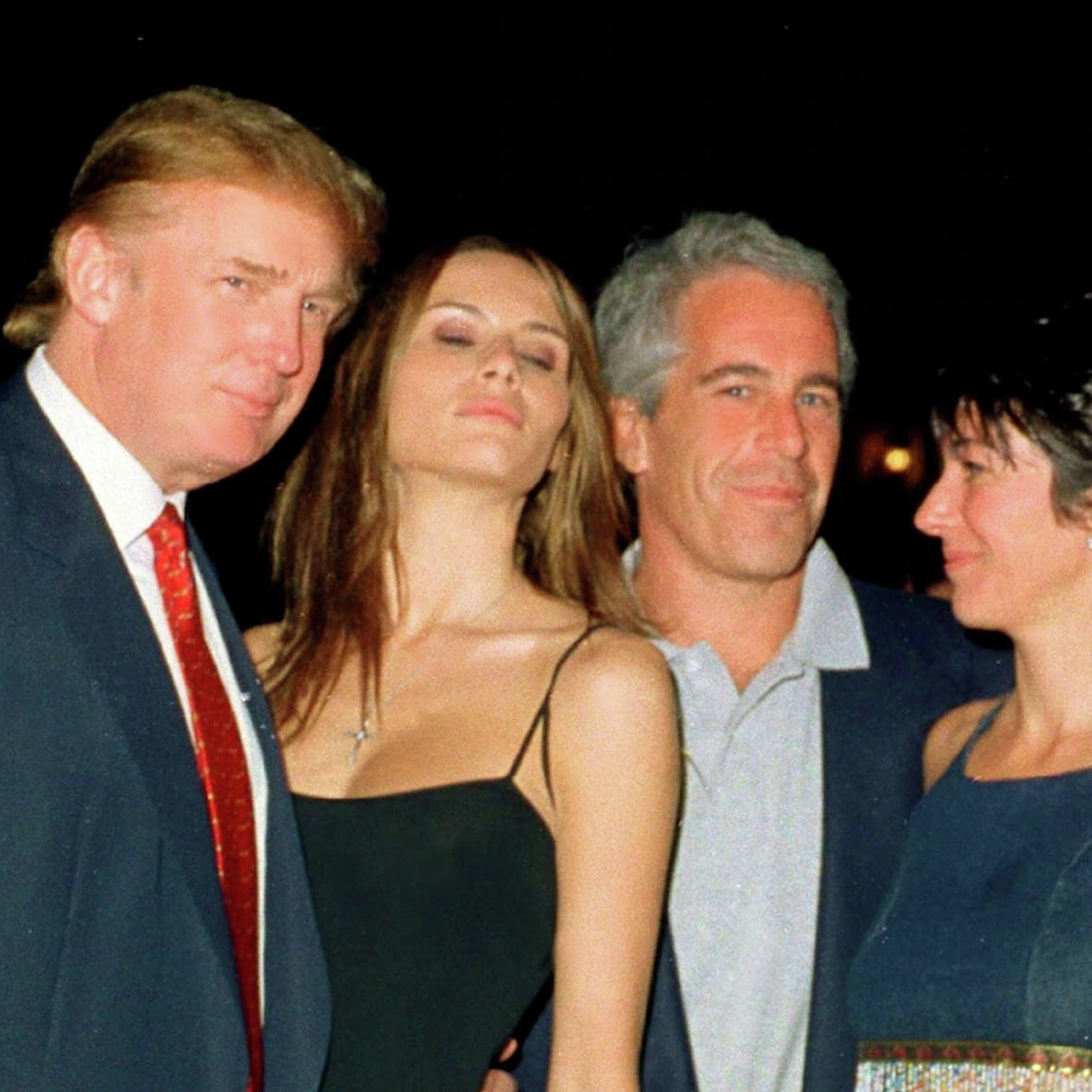
We examine the story of the Epstein files and the unprecedented pressure they have put on the White House. Genocide, the term the New York Times shied away from for so long, finally makes it into an op ed describing Israel's assault on Gaza, plus police violence in Germany against pro Palestinian protesters and how that story is misreported by news outlets across the country. Donald Trump's second term as president has been ridden with chaos and controversy, with most of the criticism coming from outside of his base. The Make America Great Again movement. The saga surrounding the late Jeffrey Epstein, though an old friend of the president, has changed things and this time Trump does not have much of the right wing online media ecosystem on his side. For years, MAGA influencers, especially podcasters, talked up conspiracies attached to Epstein, the financier and convicted sex offender. They rejected the official suicide narrative and blamed the so called deep state controlled by Democrats for killing him. With Trump back in office, they want answers. The release of the evidence in the case, the list of other pedophiles also involved. Trump has deflected questions and complained about the demands to make the files public before finally ordering a limited release of evidence on Friday. It is hard to imagine that Trump would release anything that would implicate himself, which means that his critics will probably keep pushing for more conspiracy theories can come back to bite their creators. And Donald Trump has been getting a taste of that. By repeatedly refusing to allow the FBI to release the Epstein files, evidence about a sexual predator and who was in his circle. Donald Trump created a dilemma for himself and raised questions that are now afflicting his administration.
- [03:25]
Journalist/Field Reporter
Are you still talking about Jeffrey Epstein?
- [03:28]
Narrator/Host
Starting with how when you have traded in conspiracy theories for so long and weaponized them against your political opponents. Do you fight one off that is being used against you?
- [03:41]
Political Commentator
Trump basically rose to prominence by lying about Barack Obama supposedly being born in Kenya. He's reposted QAnon content. His whole political Persona is based on conspiracy theories. For the people who follow him, that creates a rejection of mainstream media narratives in favor of the stuff they cook up themselves. And when they've convinced themselves that they know the secret truth that the media won't tell you, that creates a really strong bond for them.
- [04:04]
Expert on Media and Politics
The fascination with this case is about powerful men receiving cover for incredibly disgusting behavior. And that Jeffrey Epstein wasn't just him. He had friends in high places. Donald Trump. And for maga, it is that Donald Trump said that he was going to deliver on something he's not. But now it feels like he is covering something up. And for a base that is prone to conspiracy, any hint of covering something up spells disaster because they won't let it go. It will become a snowball that will become an avalanche on this regime.
- [04:44]
Narrator/Host
Jeffrey Epstein was an American financier, a serial rapist of min girls based in New York City. He chummed around with the super rich, including Donald Trump, who Epstein once described as his closest friend. In 2019, Epstein was charged with child sex trafficking and jailed. He was found dead in his cell a month later. His death was ruled a suicide, which many Americans simply do not buy. Although Epstein died under the first Trump administration, MAGA Voices Online spent the Biden years alleging that the files relating to the case were being withheld in order to shield prominent Democrats from prosecution. Of course Chuckie Schumer's involved. Of course, Uma Abedin, Hillary Clinton. It's always the same story. These are some very sick people.
- [05:37]
Political Analyst/MAGA Insider
So the MAGA base is waiting for these Epstein files. They believe there is a list. It's been hidden by elite cabals of pro pedophile politicians. Pam Bondi comes in, Trump's hand picked Attorney General. She goes on Fox, where else? And says in February, it's sitting on.
- [05:53]
Narrator/Host
My desk right now to review.
- [05:55]
Political Analyst/MAGA Insider
The Epstein client list is sitting on my desk waiting to be released. You can imagine the anticipation, the hunger, the enthusiasm, the energy. They're finally going to get the list. And then a few months later, Pam Bondi says, there is no list. It was a suicide. Nothing to see here. Move along.
- [06:10]
Commentator/Analyst
It's going to be difficult for Trump to tamp it down without introducing new evidence because it's a meme. It is going to continuously remix and to become almost anything you want it to be. And so you have online folks that are dabbling in this salacious content online and careers that have been built online around this idea that there's this massive cover up by the Democrats, in particular with someone like Dan Bongino.
- [06:46]
Narrator/Host
Dan Bongino embodies the divide among Trump Republicans over the Epstein files. A former policeman and Secret Service agent, Bongino made his name through a political podcast. His penchant for the conspiratorial helped land him a slot on Fox News. Donald Trump pleased the mega crowd when he named Bongino deputy director of the FBI. Then, when the White House insisted again that the Epstein files would remain classified, Bongino reportedly stormed out of his office, leading to speculation that he would quit.
- [07:23]
Political Analyst/MAGA Insider
Dan Bongino is not a politician. Dan Bongino, first and foremost is an Internet personality. He's a MAGA influencer. He knows that once his time is up in government, he has to go back and make more money in MAGA world, and he cannot afford to piss off MAGA world. So Dan Bongino is trying to keep both feet in both camps, right? One foot in each and say, look, I'm loyal to Trump. I'm in government, but I'm also the guy who's your guy. I'm the guy who stands up for truth and is anti the deep state and all these pedophile cabals. So that is Dan Bongino, and let's see how long he can keep a foot in each camp.
- [07:59]
Narrator/Host
Meanwhile, Bongino's former colleagues in the far right media space, podcasters like Ben Shapiro and Charlie Kirk, kept churning out the content on Epstein, along with former Fox News figures Megyn Kelly.
- [08:13]
Commentator/Analyst
You're welcome to the Megyn Kelly show.
- [08:15]
Narrator/Host
And Tucker Carlson, who now offer their provocative takes to online audiences. Even current Fox anchors like Laura Ingram have made their criticism of the handling of the Epstein files crystal clear. How many of you are satisfied with.
- [08:31]
Commentator/Analyst
The results of the Epstein investigation? Clap.
- [08:39]
Narrator/Host
Carlson went further, though, pushing a theory that Jeffrey Epstein, a Jewish American, moonlighted as an operative for Israeli intelligence and used what he had on politicians in Washington to blackmail them into backing a foreign government. Now, no one's allowed to say that that foreign government is Israel because we have been somehow cowed into thinking that that's naughty. There is nothing wrong with saying that. There is nothing hateful about saying that.
- [09:10]
Expert on Media and Politics
Tucker Carlson has made it very clear over the years that everything that he says with regard to Jeffrey Epstein is about creating suspicion around somebody who is Jewish and people have been known to pick up those crumbs that he drops. And at the end of the day, figures like Steve Bannon, Megyn Kelly, Laura Ingraham, Laura Loomer, who also has Donald Trump's ear, are now questioning this administration and their transparency. And these are people that had the ear and trust of maga.
- [09:43]
Political Commentator
What Tucker Carlson may be trying to do there has more to do with the geopolitical situation in the Middle East. He claimed that Epstein worked for Mossad, which instantly leads into the question of why is the US continuing to give money to Israel for their bombardment of Gaza. I think he was trying to feed the audience some sort of resentment about the current war in the Middle east and why we're paying for it. To throw Epstein in there just makes for a convenient villain to make that point.
- [10:08]
Political Analyst/MAGA Insider
Yes, the Tucker Carlson's and Megyn Kelly's are asking questions, but they're also aiming their fire at Bondi, the Attorney General acting as if Bondi is the figure to blame, not the person above who appointed Bondi, who's possibly in those files, the President of the United States. So in that sense, even now, even the so called critics of Trump are actually really holding their fire. And we've seen Donald Trump reach out to major MAGA influencers and say just shut up. And they have done right. Charlie Kirk has come out and said.
- [10:36]
Narrator/Host
Honestly, I'm done talking about Epstein for the time being.
- [10:39]
Political Analyst/MAGA Insider
This was Charlie Kirk who went on and on about Epstein last year, said vote for Trump to get the files out.
- [10:45]
Narrator/Host
Those quieted MAGA voices remain the exception of rather than the rule. With the topic continually eating up news cycles, Donald Trump finally relented on Friday, partially rage posting that he would order the release of some of the testimony in the Epstein case. If Trump really hopes that that will be enough to make the issue go away, he is probably in for a disappointment. Because conspiracy theories, once hatched, are the kinds of news stories that never really die.
- [11:19]
Commentator/Analyst
A lot of the other scandals are about policy and the inextricacies of policy and they don't grab hold on the Internet in the same way as content that is both novel and outrageous. And even if Epstein was alive and had gone to trial, there would still be questions about who else could got away with it. And there will actually never be enough information. That's the most difficult part about online conspiracies is they never stop. There will always be something else to consider.
- [11:59]
Narrator/Host
Since October 2023, as the Israeli military has systematically destroyed pretty much everything that sustains life in Gaza. Western news outlets have refused to call the assault what it is a genocide. This past week, however, saw a notable shift at what many Americans call the US paper of record, the New York Times. Tariq Nafa is here with more.
- [12:23]
Middle East Correspondent
Throughout 21 months of Israel's genocidal campaign in Gaza, that word genocide has been heavily policed by news outlets. The New York Times, for example, told its staff last year that they should restrict the use of the terms genocide and ethnic cleansing and avoid using the phrase occupied territory. Instead, it's gone with Israel. Hamas war this week, as we learnt that Israel had killed an estimated 58,000 people, the Times finally changed course. It published an op ed by Omad Bartov with the headline I'm a Genocide Scholar. I know it when I see it. Bartov is, of course Israeli and a former soldier in the military there. In late 2023, he wrote that there was no proof of genocide. Both of those views were published by the Times. Palestinians have never been given the same kind of platform in the paper's opinion pages. Over in the uk, major broadcasters like the BBC and Sky News have also avoided the term genocide, often interrupting guests.
- [13:26]
Expert on Media and Politics
Who say it and ICJ judges included, that genocidal intent in their ruling.
- [13:32]
Narrator/Host
Legal process has not concluded yet. There is no legal ruling that they.
- [13:35]
Expert on Media and Politics
Are engaged in genocide.
- [13:38]
Middle East Correspondent
But this week we saw one instance of a prominent political podcaster breaking that taboo from former government spin doctor Alistair Campbell. But I think it's impossible now to argue that this is anything other than genocide. The sudden change of tone means those voices are merely catching up with what organizations like the United nations and Amnesty International have been saying for months now, for many viewers watching the media's coverage of Israel's war on Gaza, it will feel like too little, too late.
- [14:07]
Narrator/Host
Thanks, Tarek. Turning to Europe now, where no country has stood as firmly with Israel as Germany has, obsessed with atoning for the Holocaust it inflicted on Jews In World War II, the unrelenting support of German politicians for the Zionist state gets parroted by most of the mainstream media. There, journalists who dare to criticize Israel over its war on Gaza, let alone use language like genocide, are routinely accused of anti Semitism. And pro Palestinian demonstrators take risks. Anytime they take to the streets, they get targeted by police, often violently. Among the international bodies alarmed by all of this, the Council of Europe it recently called on Chancellor Friedrich Merz to protect the right of citizens to assemble peacefully. The Listening Post's Nick Muirhead now from Berlin on Germany's increasingly indefensible crackdown on on pro Palestinian freedom of speech.
- [15:08]
German Correspondent
It's Saturday, June 21, and tens of thousands of Berliners have gathered to protest Israel's genocidal war in Gaza. It's one of the biggest demonstrations the German capital has seen since October 7. The atmosphere is mostly calm, but there's a tension bubbling below the surface. After nearly two years of crackdowns, protesters know it doesn't take much for the police to move in. Wael Iskando is an Egyptian born Berlin based journalist who's been documenting police violence at these protests.
- [15:42]
Journalist/Field Reporter
They're not only violating protesters, but they don't want people to cover it. I was at one of the protests and I was filming a minor being handled very violently by the police. The police told me to get out of the way and I was showing them the press car and then I was slammed against a police car. In another occasion, I was trying to document also some of the abuses of the police and I was violently shoved by police and for no reason. Hey, assault, assault, assault. He hit the press. But the interesting point about that is that a German journalist told me, that's not assault, it's part of the job. Assault is part of the job. You're saying assault of police on journalists.
- [16:25]
Narrator/Host
Is part of the job?
- [16:26]
Journalist/Field Reporter
Who are you? Are you a journalist complaining about.
- [16:29]
Narrator/Host
No, no, no.
- [16:30]
Journalist/Field Reporter
And it just shows you the German mentality that they were accepting that police can do whatever they want. And they're putting most of the blame on protesters.
- [16:40]
German Correspondent
In Germany, freedom of expression is largely protected by the constitution. But when it comes to any story that is evokes memories of the country's Nazi past and the Holocaust, limitations come into play. They are designed to prevent another rise in anti Semitism. These days, though, those restrictions are being used for something else. Shielding Israel from criticism and cracking down on any public expression of solidarity with Palestinians. Case in point, calling for the liberation of Palestine from the Jordan river to the Mediterranean Sea will almost certainly get you arrested here in Berlin. That slogan can put you on a collision force at police.
- [17:24]
Narrator/Host
Why is that?
- [17:25]
Journalist/Field Reporter
What they're trying to argue is that this is a Hamas slogan, which it clearly is not. But because you're not allowed to use slogans from terrorist organizations, then they're attaching this to that. It's actually not banned in courts. There is no Supreme Court ruling on that. So they're misinterpreting both the slogan and the law in order to crack down on the protests.
- [17:46]
Media Critic/Analyst
There is a narrative space where you're not allowed to go as a journalist, certainly not as a demonstrator but if you went out and said like Palestine should be free from the river to the sea, nobody will protect you and the next thing you will have is like cops coming into your house in the middle of the night, which as a matter of fact has been happening.
- [18:02]
Co-host/Intro Voice
It's our trauma, it's the German trauma that is playing here and that is doing injustice to all those people. That is still homogenizing the groups. We are very good at remembrance, but not understanding what is really to be done. Against repeating dehumanization.
- [18:43]
German Correspondent
In Germany, heavy handed policing usually makes headlines. But at pro Palestinian protests there's a different pattern. Instead of questioning police tactics, much of the media fall in line. During the creation of Israel in 1948, around 750 50,000 Palestinians were ethnically cleansed from their lands. They call it the Nakba, the catastrophe. On May 15, protesters turned out en masse to mark the Nakba. The day began peacefully, but tensions would rise and violence would follow. According to a police statement, an officer was severely injured by demonstrators. However, according to a forensics report released last week, that claim was false. Turns out that the officer probably hurt himself after punching protesters repeatedly. There are numerous videos posted on social media that tell a story of police aggression. Officers can be seen escalating the violence, but that's not what German news consumers saw in much of their media. Channels like the publicly funded ZDF painted a very different picture.
- [19:52]
Co-host/Intro Voice
This is a very good example how media shapes the perception of situations. If you haven't had an idea of what was going on, then you would think that this is what happened. First attacking the officer and then you had escalation.
- [20:07]
Media Critic/Analyst
The Zedev report, I think it's a very good example of the general state of the discourse in German media. You have a group of peaceful demonstrators who are gathered to basically commemorate the destruction of Palestine. And what Zedef says is that they're here to commemorate the so called, the Zogenante Nakva. The so called Nakva, I mean. And of course this is an immediate dismissal of the entire history of Palestine. So in that first sentence you need everything you need to know about what's going to come afterwards.
- [20:59]
German Correspondent
The ZDF report is not alone. Last month a cross border investigation backed by the Journalism Fund compared the policing and media coverage of pro Palestinian protests across four European cities, including Berlin, which stood out for all the wrong reasons. Among the tactics being deployed, kidney punches, kettling and indiscriminate use of pepper spraying. The investigation also sampled media coverage of the protests from the publicly owned RBB Network and the daily newspaper Tager Spiegel. It found those outlets relied heavily on police statements with little to no Palestinian voices and used terminology that cast protesters as criminals.
- [21:45]
Media Critic/Analyst
When we actually look at the way that they cover demonstrations, it is completely consistent with the idea that Palestinians not only are not to have a voice. And I really think that this is critical is that Palestinians should be erased. And this is not the product of a political process. This is a product of the media. This is the narrative of that the media is willing to push forth around elements of Palestinian, and I would say even Muslim and Arab identity.
- [22:19]
German Correspondent
As for pro Israeli protests, the investigation showed that the opposite was true. German news outlets framed them as peaceful and justified, with no mention of Israel's war crimes in Gaza, which would come as no surprise to Martin Gack. Gach spent 10 years at Deutsche Van. He says that since October 2023, the network has operated under a culture of fear, censorship and a pro Israeli editorial bias. When he spoke out against this, management sent him, a Jewish man, to an anti Semitism workshop.
- [22:51]
Media Critic/Analyst
You don't need to trust any of my words. You can just go out, look at the work that they have done, and you see with absolute clarity that German media has been doing nothing, quite literally nothing, but repeating talking points coming right out of the Israeli government.
- [23:06]
Commentator/Analyst
But Israel and the US say the blast came from a rocket misfired by the militant Palestinian group Islamic Jihad.
- [23:14]
Narrator/Host
Can you go to Gaza and say these Palestinians are not future terrorists?
- [23:21]
Media Critic/Analyst
What you have at this point is no longer just a problem of bad journalism. I think that what you have here is the most aberrant dereliction of journalistic duties and professional ethics.
- [23:35]
Journalist/Field Reporter
These protests fill a vacuum that is left by the media. And the continuous showing up of people challenges the narrative of media. So they have an interest in defaming protesters. And it matches the ideology of the state. And that's why you don't find any kind of of independent coverage. I think Germany is an oppressive state, dormant, and this is just being activated to control narratives and has emboldened Germany and the police to repress people.
- [24:07]
Narrator/Host
And finally, Israel is still in the habit of bombing its neighbors. In mid June, it attacked Iran. It continues to bomb what it says are Hezbollah strongholds in Lebanon. And this past week, Israeli bombs struck at the heart of of the Syrian capital, Damascus. Now the Israelis claim they are protecting Syrian Druze communities that are locked in a sectarian political battle in the south of Syria, roughly 100 kilometers from where the bombs landed. Those airstrikes hit the ministry of Defense and the presidential compound, and they played out live on the air. Syrians watched as a TV anchor took cover mid broadcast. That moment bore a striking resemblance to what happened just over a month ago in Tehran when Israel bombed Iran's state broadcaster. So do the math. The Israelis are involved in at least three illegal wars, and that does not even include a genocide it is inflicting on Palestinians in Gaza. Not that you will hear it characterized that way on cnn, the BBC or other Western news outlets. They are far more likely to justify the actions of what they often refer to as the Middle East's quote only democracy.