Loading summary
Transcript80 lines
- [00:00]
Podcast Host
This week on True Crime reports. Up to 100,000 children go missing in China every year, a number that links.
- [00:10]
Tech Industry Expert
Back to the 1970s and the one child policy.
- [00:14]
Podcast Host
This story is about one of those children and the mother who spent decades searching for him. Hear the full story on True Crime Reports. Subscribe and listen wherever you get your podcasts.
- [00:32]
Narrator/Reporter
This week on the Take, we're marking.
- [00:34]
Tech Industry Expert
One year since a pair of devastating.
- [00:36]
Narrator/Reporter
Earthquakes hit Turkey and Syria with a new digital interactive. Listen and watch stories of survival, recovery and coping with the grief@al jazeera.com earthquakes again, that's al jazeera.com earthquakes the talk of a Ceasefire in Gaza Is it real or just political theater? If it's the latter, why do news organizations keep falling for it? We get the Hamas perspective on the negotiations, the pitfalls and the patterns. Ukraine, Russia, drone strikes on both sides of the border, and peace talks there that have gone nowhere. Plus the logging off club, young people checking out of social media for their own good. It is a recurring pattern in the ceasefire negotiations, the ones aimed at ending the carnage Israel continues to inflict on Palestinians in Gaza. Proposals surface, hopes rise, then the talks collapse. And the responsibility for that, along with the eyes of international news outlets, all land in the same place on Hamas. Israel agreed. Hamas rejected it is a framing that is so familiar it rarely gets questioned. But behind that characterization lies a deeper imbalance, and it goes beyond military power. It's about the narrative, one that casts the Palestinian side as irrational, obstructive, inherently violent, while somehow portraying Israel, even at its most brutal, its most genocidal, as credible. Reporting the story that way has a suffocating effect on what news consumers are looking for the truth. And it happens over and over again. International news organizations should have it figured out by now. But it's not as though they're being played by Israeli propaganda. It's more like they're playing along. When ceasefire talks fail, as they did in the latest round of negotiations involving Israel, Hamas and the United States, the question that news consumers want answered is a basic one. Why? And there is a journalistic urge to assign blame. Point fingers.
- [03:04]
Mental Health Advocate
Hamas has rejected a US Proposed ceasefire deal for the Middle east conflict.
- [03:13]
Tech Industry Expert
Now it's Hamas that has issues with the plan.
- [03:17]
Narrator/Reporter
When examining the headlines coming out of the international media, the sound bites produced in various news studios, the answer couldn't be simpler.
- [03:27]
Media Analyst
There's multiple articles and headlines that speak of how Hamas failed in the negotiating table, where Hamas's position, and the Palestinian position more broadly is discarded and Israel's position is basically advanced and trying to always blame the victims, blame the Palestinians for their own undoing. This is a trajectory of a policy that has been going on since the outset of the war and continues on all major news media in the west.
- [03:52]
Political Commentator
Specifically, when in fact, by Israel's own admission, by the Israeli media's own admission, it's Israel that has often torpedoed a lot of these processes to obstruct even coming close to something of a ceasefire agreement. Israeli media had themselves disclosed that Netanyahu himself had torpedoed nine different attempts where Hamas were asking for something as basic as handing all hostages over in exchange for just preventing a ground invasion. But it has been very convenient for both the US and Israel to blame the resistance when things have gone wrong, when Israel has tried to torpedo any process of serious talks.
- [04:37]
Narrator/Reporter
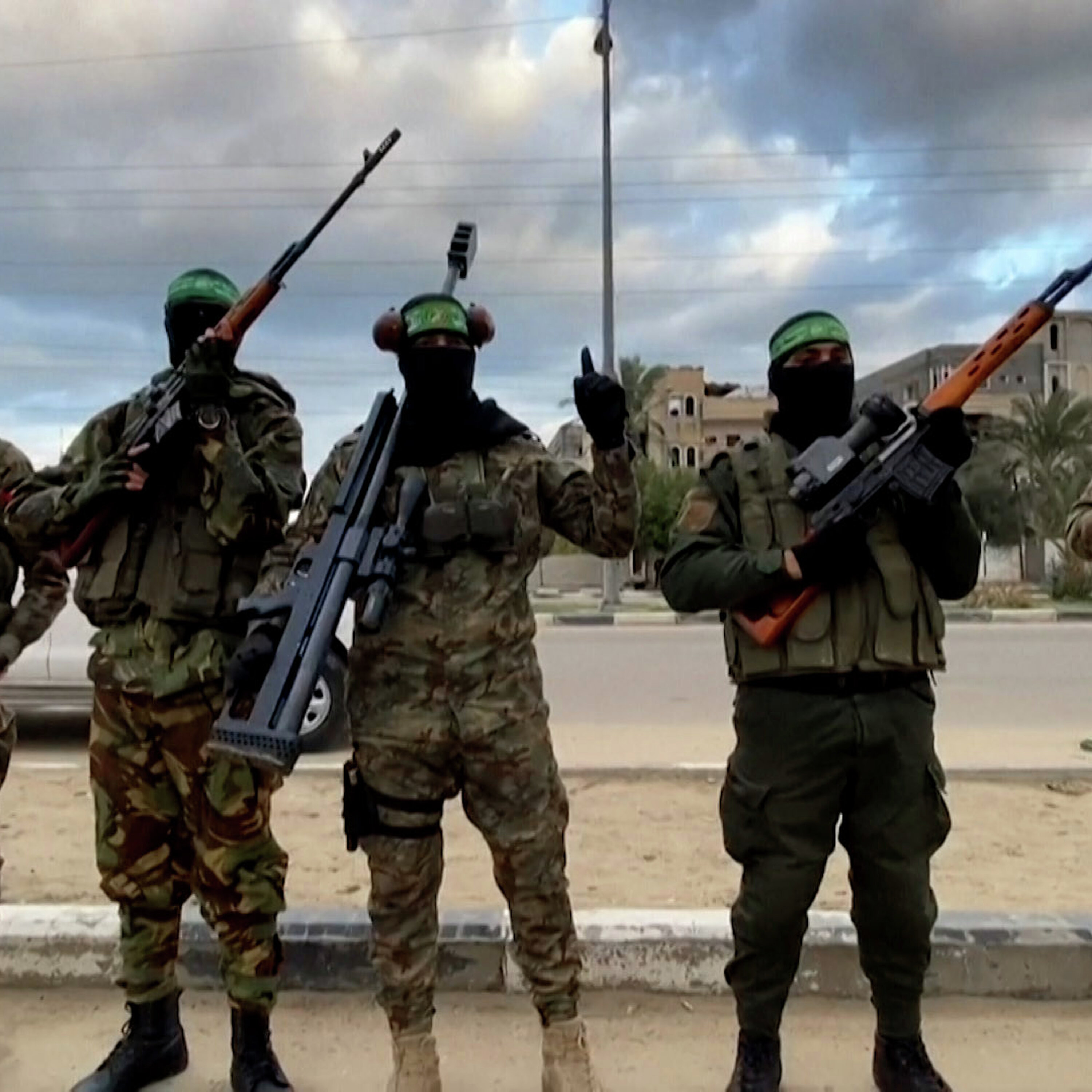
Hamas had image problems internationally long before October 7, 2023. Often framed as a barbaric terrorist organization, the resistance movement reinforced that reputation through the brutality of its attacks on Israeli civilians that day. And Hamas's strategy of capturing those atrocities on video for the world to see that imagery also had an eradicating effect on the context of the larger story in Gaza, decade after decade of Israel's illegal occupation. More monstrous and often misleading labels were then attached to Hamas terms that are seldom applied to Israel and the genocide it is informed inflicting on Gaza war crimes on a scale that dwarfs what hamas did on October 7. It is a moral disparity, a colonial mentality that taints the international news coverage of the ceasefire negotiations, including the most recent talks where the third party at the table was Israel's closest and most important ally, the us.
- [05:48]
Ceasefire Negotiations Expert
In this latest round, I think the finger pointing was mostly on Hamas, largely because of the spokespeople that we heard speaking to it, Steve Witkoff, the main negotiator from the us, who essentially framed it that way, saying Israel agreed to this, Hamas said no and changed the terms. It is true that Hamas said no to the deal because it was a deal that made more on Israel's terms than through a process that would lead to an end of the war.
- [06:16]
Political Commentator
Hamas's demands within these ceasefire agreements are not outside the remnants of international law. The full withdrawal of Israeli forces, allowing for the uninhibited entry of aid into Gaza and a permanent cessation of hostilities. Yet for some reason, Western media insist on presenting these as unreasonable, illegitimate demands. How this narrative has been able to persist as long as it has is completely unfathomable.
- [06:46]
Narrator/Reporter
As a spokesperson for Hamas, Bassem Naim has appeared on multiple media outlets, albeit less often than Israeli spokespeople did. Naim has been privy to the ceasefire negotiations, including the latest round of talks involving the Trump administration and Steve Witkoff. Although Hamas's side of the story is usually given less credence and less airtime than the Israeli version, it is one that news consumers could use considerably more of, especially those who depend on American and international media platforms to understand what is happening in Gaza.
- [07:26]
Hamas Spokesperson
Witkoff certainly contributed to reinforcing this negative portrayal. We spoke to him in the last round of these negotiations and agreed on a plan to end this war. He said our talks were positive and constructive. But when he spoke to the Israeli side, he came back with another proposal, saying it was the only one available. So this is the second time, or even third, that Witkoff agrees with us on something and then makes a U turn. This prejudice towards Hamas and the Palestinians is reflected in the American and international media because his voice carries weight within Gaza.
- [08:05]
Narrator/Reporter
Hamas. Hamas has been out to control the narrative. It has suppressed journalists at times and even abducted some. The movement was voted into office in 2006, and polls taken since the October 7 attacks have persistently shown that only 20 to 30% of the population supports Hamas. Censorship is common, however, during times of war, and Gaza is no exception. So Palestinians expressing dissent and those reporting on it don't have it easy.
- [08:38]
Ceasefire Negotiations Expert
Many people in Gaza are very reluctant to openly speak out against Hamas. Many said that October 7th, whatever anyone thinks about a right to resistance, that Hamas had not prepared the population for it. They had no plan for how the population was going to be impacted. But there's also a lot of muzzling within Gaza by Hamas of journalists critiquing Hamas. For those who are outside, there's an idea that criticizing Hamas is somehow counter to being in solidarity with Palestinians. Many people off the record will be very critical, but are very hesitant to be on the record as criticizing Hamas, at least while the war is still ongoing.
- [09:22]
Media Analyst
There's no free flow of information necessarily. Hamas did crack down on some of the journalists and pressured them sometimes through imprisonment. These oppressions that happen against journalists, which are a problem in their own right, are overblown to actually legitimize the daily violence and massacres that are happening in the Gaza Strip. We should not overblow these violations as a. As a means to completely discredit Hamas or exclude it from the political space.
- [09:49]
Narrator/Reporter
More broadly, Hamas is far from the biggest threat to journalism in the Gaza Strip. Unlike the Israelis, it has not banned the international media from entering the war zone to bear witness, document a genocide. Nor has it targeted journalists the way Israeli forces have, killing more than 200 of them. One would think that the casualty figures alone, the slaughtering of so many, many reporters, would generate more empathy among Western journalists and the news outlets that provide their paychecks. The fact that it doesn't is a story in itself. Another measure of what Palestinians in Gaza are up against.
- [10:36]
Hamas Spokesperson
There is an enormous global media machine that's run by the Americans and the Zionists. They pump out large amounts of media material to lie, distort and fabricate. We keep trying to present our position, but journalists don't really engage. And even if they do, our statements will be at the bottom of their report. The mainstream media is not impartial. On the contrary, it's been directly involved in this war and the negotiations in favor of the Israeli enemy. And since the beginning of the war, the mainstream media have adopted the Israeli narrative even though it was false.
- [11:18]
Media Analyst
Hamas is not underrepresented. Hamas is overrepresented. But as a profane, barbaric actor that is irrational, completely out of the realm of human possibility. This is the dominant representation of Hamas. This goes to tell us that this mainstream Western media is completely complicit in the ongoing genocide in the country Gaza Strip, backing the government's policies in their countries, in the uk, in the us in Canada and other places of complete backing and political cover for Israel as it conducts in the war. Therefore, the media is basically reframing what is happening in negotiations in a way that serves the continuation of American UK European policy of diplomatic cover and of course, of material support for this genocide that is going on in the government strip.
- [12:06]
Narrator/Reporter
Moving further east now, where negotiations to end the war between Russia and Ukraine have also come up short, an audacious Ukrainian drone attack on multiple Russian airfields has revived the specter of a possible nuclear confrontation. Tarek Nafa has been tracking the messaging around this story.
- [12:24]
War Correspondent
As a second round of direct peace talks between Moscow and Kyiv ended this week without a major breakthrough, Ukraine's security service posted and heavily publicized footage of a huge drone attack on its neighbor called Operation Spiderweb. The coordinated drone strikes took place deep inside Russian territory, reportedly damaging or destroying more than 40 military aircraft, including bombers capable of dropping nuclear weapons that provided Ukrainian officials with a shot in the arm for their war narrative. And domestically and globally, news outlets in the country have been running wall to wall coverage of what they called an historic operation.
- [13:07]
Narrator/Reporter
As Bulla provided unicorn spots operates of Hodiattler.
- [13:15]
War Correspondent
The $AI generated video is paying tribute to the head of Ukraine's security services, Vassal Malouk, have since gone viral. He's being hailed as a national hero. Operation Spiderweb has also boosted President Volodymyr Zelensky's image in international news outlets, which had taken a serious beating as his popularity in Ukraine has tanked. Over in Russia, the muted media coverage of the drone attacks tells a story of its own. Initial reporting featured short official statements from regional officials who failed to explain how Ukraine was able to pull off such an extensive attack. Since then, the story has vanished from Russian news broadcasts. President Vladimir Putin hasn't directly addressed the drone strikes, but did accuse Ukraine of terrorist acts. Putin made no mention of Russia's own drone attacks on on Ukraine, the largest of which took place last month, including on civilian areas.
- [14:27]
Narrator/Reporter
Thanks Tarek There is a trend emerging in mobile phone and social media use. It's about logging off, the need to be offline, and it's gaining popularity, particularly among younger millennials and Gen Z. After decades of increased connectivity and screen time, more and more young people now acknowledge how harmful that can be. Social media platforms plead not guilty. They argue they have safety measures built into their systems like content monitoring and screen time limiters. Some governments have even proposed restrictions on young people signing up to social media. However, to combat loneliness, mental health pressures and what seems to be an inability to function IRL in real life, a less top down, more community based movement has sprung up. People who meet, put away their devices and commit to living offline, even if it's just for a bit. The Listening Post's Ryan Coles now on why so many young people are logging onto the logging off club.
- [15:32]
Mental Health Advocate
Gen Z has a problem. Their families know it. Their co workers know it. Most of all, they know it.
- [15:38]
Narrator/Reporter
I'm sorry to have to tell you this, but we think you might have brain rot when you're saying my brain rolls. Brain is cooked. It's cooking the Touch Grass Challenge.
- [15:48]
Social Media Researcher
Go outside and touch some grass like I'm doing right now. Go, go go.
- [15:53]
Narrator/Reporter
Stop doom scrolling. If you have an issue with doom scrolling, listen up.
- [15:57]
Mental Health Advocate
For a generation that was born into an Internet enabled mobile phone connected world, screen addiction is a serious problem. Tackling it has required reintegrating into the society that exists in real life. And that's where the clubs come in.
- [16:13]
Podcast Host
So at Logging Off Club, we host our events around three main themes connection, curiosity and wellness. Those are three things that we lose out in today's digital age. And on social media, we've collaborated with a walking club, a crochet club. And then essentially we just bring people together, ask them to leave their phones in a bucket with us and just get talking to each other and get involved in the activities.
- [16:38]
Social Media Researcher
Usually people feel lighter when they hand out the phone, as if some sort of responsibility or obligation was put away. And I think that comes from that sense of hyperconnectivity. But of course there's other people that have a more difficult time and might experience some anxiety at first. So this is why we provide some gentle guidance. And usually through time they all reach that joy of being offline.
- [17:10]
Tech Industry Expert
We felt like we were living our lives on super speeds, never really taking the time to stand still, reflect and be off of our phones and actually be present with ourselves, but also with the people around us.
- [17:24]
Social Media Researcher
We always say we want to become the third space for people to come relax and also translate it into different ways of enjoying being offline.
- [17:34]
Tech Industry Expert
A third space is an environment in which people meet each other in person. They can be churches, they could be cafes, they could be shopping centres, gyms, swimming pools, libraries is a big one as well. One of the things that younger generations have probably recognized is that these spaces are less accessible. Sometimes they've been shut down, sometimes they don't operate in ways that are necessarily conducive for social interaction. And as a result, the attempt to start third space adjacent groups logging off clubs, running clubs and dinner clubs. But the whole point is that they're trying to kind of create social experiences that older generations may have taken for granted.
- [18:17]
Mental Health Advocate
Around the world, screen time is skyrocketing. Modern urban life is packed full of screens, but the most addictive one fits right in the palm of your hand. The bright display, the notifications, your email, messaging, apps and fitness trackers all in one device. And most alluringly, the possibilities of endless scrolling on social media. Phone addiction affects people of all generations, but it's a particular scourge for Gen Z. It has eroded attention spans, anxiety over body image has spiraled, and loneliness has become something of an epidemic. It's paradoxical because the social media platforms that a majority of experts blame for Gen Z's isolation make big claims of creating social connection.
- [19:01]
Tech Industry Expert
While most other tech companies focus on how people interact with technology, we focus on building technology so people can interact with each other.
- [19:10]
Social Media Researcher
Snapchat was built to enhance relationships between.
- [19:13]
Political Commentator
Friends, family and the world.
- [19:16]
Tech Industry Expert
Without TikTok, without I personally would lose.
- [19:19]
Narrator/Reporter
That sense of community that I found within the app.
- [19:23]
Mental Health Advocate
Increasingly, governments are responding to this crisis. Starting in December this year, Australia will be implementing a ban on social Media for children under the age of 16. Many other countries have similar legislation under consideration.
- [19:38]
Tech Industry Expert
Governments need to recognize that social media addiction and technology addiction is a real phenomena and they should treat it more like a public health issue. They need to also recognize that social media platforms and technology interact with every aspect of our society. They are utilities. And in the same way that governments regulate water, electricity, other types of utilities we use day to day, these types of social technologies should be considered to be regulated in a similar way.
- [20:07]
Social Media Researcher
I definitely understand where the policy of regulating the use of social media comes from. However, it is rather a more sustainable approach where we educate people and provide them with tools to become more aware of what they need the technology for and have alternatives to scrolling by having offline habits, reading a book and experiencing.
- [20:38]
Podcast Host
The benefits of of that legislation, like social media bans is definitely more of a reactive and band aid solution to a bigger systemic problem that we have. I mean, I totally understand why governments and parents might feel like that is the solution to the immediate risk of many of the harms that we face online. But what would actually be impactful is banning addictive algorithms because that is the problem here and that is why so many of us experience these types of harms.
- [21:08]
Mental Health Advocate
While some governments grapple with the impact of phone addiction on young people, older generations, especially those with money, aren't waiting around.
- [21:19]
Narrator/Reporter
Don't you want to take a break?
- [21:22]
Political Commentator
From emails, notifications, noise in the past.
- [21:27]
Mental Health Advocate
Few years a market has opened up for luxury getaways, retreats to green resorts where people can put away their phones and immerse themselves in a wellness routine.
- [21:37]
Narrator/Reporter
At Unplugged, we help busy city folk like you get away from your devices.
- [21:42]
Podcast Host
So that you can recharge.
- [21:43]
Narrator/Reporter
Our off grid cabins are nestled in nature.
- [21:46]
Tech Industry Expert
I think it's important that when we talk about digital detoxing, we recognize that there is a class divide. On one side there are very rich people, CEOs or company executives who can afford to spend thousands and thousands of dollars going on these retreats and outsourcing their digital activity to people so that they can have device free experiences. But on the other side the people who often work for them are zero hour contract workers or gig economy workers for whom being online determines whether they get to eat that night or not.
- [22:14]
Social Media Researcher
I think it's definitely a privilege to be able to log off and be offline, especially because our lives are built around technology. These days if you're working with a laptop or studying online course, you do need to log in every day. You cannot just put the Laptop or phone away and live off grid. And same if you're living away from your loved ones, it is your only way to keep connected to them. So this is why they call it the luxury. Being offline is the new luxury, because most of us, I would say, cannot really afford that.
- [22:55]
Mental Health Advocate
Tech companies can see there's a problem. The lucrative young users they're all chasing want to live at least some part of their lives offline. Everyone has that one annoying app that.
- [23:05]
Social Media Researcher
They'Re most addicted to.
- [23:07]
Mental Health Advocate
You know that one.
- [23:11]
Narrator/Reporter
I hate these notifications.
- [23:13]
Mental Health Advocate
How do you monetize someone's need to get away from you? You say you are part of the.
- [23:19]
Podcast Host
Solution, but great technology should improve life.
- [23:24]
Tech Industry Expert
Not distract from it.
- [23:26]
Narrator/Reporter
We came up with a range of ideas to help people find a balance.
- [23:30]
Ceasefire Negotiations Expert
That'S right for them.
- [23:32]
Tech Industry Expert
I do think that there is this irony in tech companies trying to use technology to solve the problems that they themselves have caused. And so with these apps that are designed to reduce the amount of time that people spend on social media, it doesn't solve the underlying problem. What it says is that there are bad apps and there are good apps, and if you subscribe to the good app, then we can give you a better online experience rather than tackling the underlying problem, which is that a user is spending too much time on their phones and not enough time in their social lives.
- [24:02]
Podcast Host
And it's really interesting to see now that AI is being sold to us as the solution to that very loneliness that has come as a result of.
- [24:10]
Tech Industry Expert
This type of technology we're building, building this meta AI. It's our, we call it personal AI that should, like, get to know you.
- [24:18]
Mental Health Advocate
And like what you think is funny.
- [24:20]
Tech Industry Expert
And like what you ate, right? So that way, you know, it can.
- [24:23]
Mental Health Advocate
Like or you know what your hobbies.
- [24:24]
Tech Industry Expert
Are, so that way it can kind of relate to you.
- [24:26]
Podcast Host
There is this real pushback and awareness among all of us that these are not true and that technology is not the solution.
- [24:37]
Narrator/Reporter
And finally, a revelation from one of Washington's former frontmen. As the State Department spokesperson under the Biden administration, Matthew Miller was the face of its diplomatic messaging operation. Miller made a name for himself, and not in a good way.
- [24:54]
Tech Industry Expert
Good afternoon, everyone.
- [24:56]
Narrator/Reporter
Day after day, he defended the U.S. s support of Israel by either dodging questions about all of the evidence coming out of Gaza or. Or flat out denying that Israel was committing war crimes.
- [25:07]
Tech Industry Expert
We continue to support Israel's right to defend itself when it comes to potential violations of international humanitarian law. We have our ongoing assessments, and they.
- [25:18]
Narrator/Reporter
Have not concluded Recently, Miller went on a podcast produced for the UK broadcaster Sky News, where he admitted, without hesitation or a trace of shame, that he had been lying, that the war crimes were and are real.
- [25:33]
Tech Industry Expert
Do you think what's going on in Gaza now is a genocide? I don't. I don't think it's a genocide, but I think the. I think it is without a doubt true that Israel has committed war crimes. You wouldn't have said that at the podium. Yeah, look, because when you're at the podium, you're not expressing your personal opinion, you're expressing the conclusions of the United States government.
- [25:54]
Narrator/Reporter
This is not the first such mea culpa moment. Politicians, public figures, even news outlets are now repositioning themselves. In most cases, it has more to do with protecting reputations than seeing the light. People complicit in this genocide, pretending they were always against it.