← The Listening Post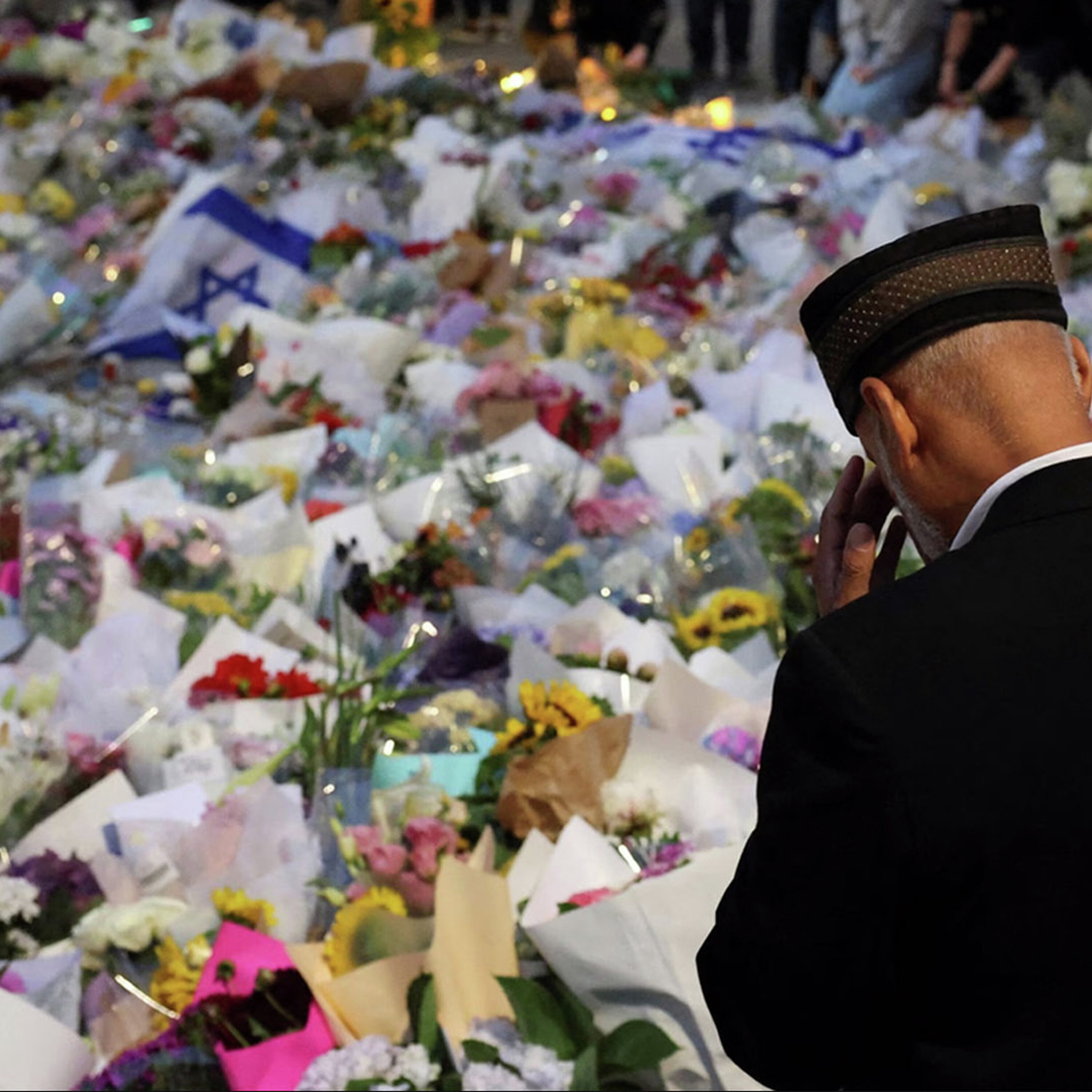
The Listening Post
The spin and misinformation around Bondi was inevitable | The Listening Post
00:25:38
Loading summary
Transcript49 lines
- [00:01]
Narrator/Host
A new phone for Billy, a necklace for Sam, all the while on the lookout for scams. A swipe here and tap there. Better make it go far. Turns out mom didn't know she needs a new car this year.
- [00:12]
Announcer/Advertiser
Stay on top of your credit with the MyFico app. Get your FICO score straight from the people that created it, plus free credit monitoring and a free credit report every month. No credit card required, so make holiday spending one less stress under the mistletoe. Visit myfico.com free or download the MyFico app today. This week on the Take, we're marking one year since a pair of devastating earthquakes hit Turkey and Syria with a new digital interactive listen and watch stories of survival, recovery and coping with the grief@al jazeera.com earthquakes Again, that's al jazeera.com earthquakes.
- [00:58]
Narrator/Host
The aftermath of the massacre at Bondi beach in Australia, the instant blame game coming out of Tel Aviv and the conflation of anti Zionism and anti Semitism that shows no sign of coming to an end. Beijing and the effect its national security law is having on political dissent in Hong Kong, specifically on media mogul Jimmy Lai and music fans in India dancing to the beat of Hindu supremacy. The latest front Israel has turned to in its global information war is Australia. The horrific attacks at Bondi Beach, a suburb of Sydney, the killing of 16 people, most of them Jewish, the wounding of dozens more provoked Benjamin Netanyahu to to place the blame squarely on the Australian prime minister, Anthony Albanese. The rationale behind that argument? Three months ago, Albanese's government officially recognized Palestine as a state, rather than questioning its own conduct, the genocide it is inflicting on Gaza, the Israeli government weaponized the mourning of Australian Jews while continuing to justify its war crimes. And why not, when those talking points get reflexively repeated on Australian and international news outlets? Blaming an atrocity on anyone opposing Israeli occupation and apartheid, stoking anti Arab and anti immigration prejudice in the process, and drawing sharp lines around who presents a threat and who could be a hero. The other device the Israelis use constantly is conflation, one that Jews living outside of Israel are now saying actually puts them and their lives at risk. In the immediate aftermath of the carnage on Bondi beach, the breaking news phase of the coverage, with content ricocheting across social platforms before anyone even knew the identity of the gunman, let alone what motivated them, a controversial term kept coming up. Globalize the intifada. Globalize the intifada.
- [03:11]
Tariq Nafa
We now have seen what globalizing the.
- [03:14]
Narrator/Host
Intifada means do you think protesters who use that phrase should be prosecuted? A slogan, one whose very meaning is in dispute, became the focus. A problematic lens through which to see things.
- [03:29]
Jewish Community Representative
The term globalized intifada is about as contested as from the river to the sea, Palestine will be free. Now, there are multitude ways to interpret those phrases. There's not one definition. You know, it's not like there's a room of three people deciding on what they mean. Now, as someone Jewish, I don't feel, I don't feel threatened by those terms. I mean, can they be used as so called verbal weapons? Of course they can.
- [03:54]
Jewish Community Member
It was this kind of almost battle of civilizations, right? The kind of west defending itself against invasion. And Australia is not unique in that sense.
- [04:06]
Narrator/Host
Culturally, what's going on there? This unfettered immigration might come from certain political parties wanting to remain in control so they have to appease certain parts of the population. Kind of sounds like maybe what's going.
- [04:17]
Kunal Purohit
On here in the United States.
- [04:19]
Jewish Community Member
This kind of rhetoric is meant to do very particular work in politicizing this event, in redirecting the attention to the wrong place. Anti Arab, anti Palestinian rhetoric is not just factually wrong in this case. It's dangerous for us as Jews because it really breeds the very ideology that then fuels these kinds of events.
- [04:41]
New York Times Opinion Columnist (Brett Stevens)
Brett Stevens, a New York Times opinion columnist, wrote a column saying this is what globalizing the intifada looks like. They want to use the fear of Islam as a way for the west enter Israel to be let off the hook, to present what it has done in Gaza as part of the good fight on behalf of the entire world. If this is believed, then the destruction of Gaza and the Palestinians in Gaza and in the west bank will be seen as a good fight. Testifying to Israel's utmost morality.
- [05:18]
Narrator/Host
Not one for subtle messaging. Benjamin Netanyahu blamed Australia's Prime Minister Anthony Albanese for the killings at Bondi, promoting and encouraging anti Semitism, accusing him of somehow poisoning, pouring fuel on the anti Semitism fire by recognizing the right of Palestinians to have their own state. Netanyahu dispatched his Diaspora affairs minister to personally deliver Israeli government talking points which were generally well received.
- [05:48]
Announcer/Advertiser
The government is now looking at gun.
- [05:50]
Narrator/Host
Reforms here, but is that enough? Is that missing the point of what's happened? Look, it's not a bad.
- [06:00]
Jewish Community Representative
The means, it is the ideology. What starts with the Jews never ends with the Jews.
- [06:06]
Narrator/Host
When evaluating media output in Australia, one has to start with Rupert Murdoch's News Corp.
- [06:12]
Announcer/Advertiser
The horror of anti Semitism has been unleashed in Australia.
- [06:16]
Narrator/Host
This is where Murdoch's media empire was born. His portfolio includes Sky News Australia, multiple newspapers both national and local, and the digital site news.com au Conservative pro Israel outlets that oppose Albanese's center left politics and have no apparent issues with the Israeli Prime Minister calling him out the way he did.
- [06:41]
Jewish Community Representative
If there had been an attack in Australia in relation to Russia or Ukraine, if Vladimir Putin started talking about rabid anti Russian sentiment in Australia, I guarantee the media would say, why do we care what Vladimir Putin says? He's a war criminal. And yet when Netanyahu says the Murdoch press here is pushing that narrative hard, that essentially the Australian government had it coming, what did we expect? Australia will recognize the state of Palestine. You recognise Palestine, you're going to get mass terrorism, which is an obscene and absurd thing to suggest.
- [07:15]
New York Times Opinion Columnist (Brett Stevens)
When Netanyahu blamed Albanese for his weakness. Netanyahu didn't do that by accident because it costs him absolutely nothing to meddle in Australian affairs. This isn't like accusing Germany or the United States of encouraging the global intifada. Australia is easy for Israel to accuse because such accusations carry no consequences. And they now left out Australia's fervent support for Israel, including selling weapons and and fighter jet parts and generally having Israel's back at the instigation, by the way, of the nearly 100,000 or 150,000 Jews who live in Australia, who mostly are very energetic supporters of the Israeli cause.
- [07:58]
Australian Muslim Representative
This is an agenda and a narrative that the Zionist movement is seeking or will continue to seek. But people are beginning to see through all of this and they're beginning to understand the propaganda machine of lies disseminated from Israel all the way down. But it's not going to be sustainable because it's becoming very much apparent and clear that this is not the case in reality. And anti Zionism and anti Semitism are two separate things.
- [08:31]
Narrator/Host
One of the challenges in creating a dominant political narrative and perpetuating it is when facts emerge that get in the way. Benjamin Netanyahu got a taste of that when he initially assumed or was mistakenly told that the man who intervened, tackling and disarming one of the gunmen, a hero who took two bullets in the process, was Jewish. A few hours later, we learned that the hero's name was Ahmed Al Ahmed, a Syrian immigrant now recovering in Hospital. A GoFundMe page set up in his name has already raised more than a million dollars US Netanyahu had to change his story and did so on his X account, even though some Australian news outlets were slow to change theirs.
- [09:29]
Australian Muslim Representative
This was the plot twist ultimately that the media and politically speaking, nobody was expecting. And even with that, you saw, unfortunately the reporting was very much filtered to suit a certain narrative. Hero was often used rather than actually just disclose the name Ahmad Al Ahmad, proud, loud and clear. Someone who chose to allow humanity to take precedence in moments of violence, hatred and calamity or crisis. And for us as Australian Muslims, it's been the saving grace for what could have been a lot, a lot worse.
- [10:13]
Jewish Community Member
What is really significant here is not just that Ahmad Al Ahmad is a Muslim, being the hero of the story, disrupting this bad Muslim narrative, but also that he's disrupting the anti immigration narrative. That often is an immediate backlash to these kinds of events.
- [10:33]
Announcer/Advertiser
The harder part is yet to come, with calls inside labor ranks for a deeper cultural reckoning.
- [10:39]
Jewish Community Member
So the fact that a Syrian refugee migrant to Australia is the person who's the hero makes it very difficult to take on an anti immigration rhetoric in the aftermath of this massacre.
- [10:54]
Narrator/Host
Ever since Israel launched its genocide in Gaza, it has waged an information war on its critics around the globe. A primary weapon in its disinformation arsenal has been conflation. It has persistently conflated anti genocide protests in country after country, on campus after campus with anti Semitism. Anti Semitic mobs have taken over leading universal. Any critic of Israel, Zionism or genocide, including diplomats at the UN International Court judges, is subject to the same treatment. As a result, countless voices have been silenced, including by news organizations. But that conflation can cut both ways. It can come at a cost. And Jews in Australia and well beyond are having a to live with that.
- [11:48]
Jewish Community Representative
The conflation that the Israeli government deliberately uses, tying anti Zionism to anti Semitism. It's just an absurd suggestion that as a Jew myself, I'm endangered by how Israel behaves its actions. That conflation is endangering all of us because a lot of people say, well God, is this what Jewish people believe? They believe in starving Palestinian babies in Gaza. Now clearly many of us, Jew, non Jew, fundamentally opposes that. But the conflation is contributing to an atmosphere where it is endangering all of us, Jew and non Jew, and we're not going to stand for it.
- [12:29]
Narrator/Host
In Hong Kong, the conviction this past week of a media tycoon and longtime critic of Beijing is a signal yet another one of the Chinese Communist Party tightening its grip over the territory. Tariq Nafa has been on this story.
- [12:45]
Tariq Nafa
The outspoken and irreverent Hong Kong media mogul Jimmy Lai was convicted this week of conspiring with foreign forces and publishing seditious material. In a judgment more than 850 pages long, the judges said that Lai had a deep resentment and hatred for the Chinese Communist Party and was seeking its downfall. They cited the dozens of op eds he published in his newspaper, Apple Daily, as well as interviews he gave to foreign news outlets like Fox, the BBC and Sky News.
- [13:20]
Narrator/Host
This is important for the world to know that this is a China that not respect law and not to be trusted.
- [13:29]
Tariq Nafa
Apple Daily, once a loud, influential tabloid, has been closed since 2021. Jimmy Lai, who recently turned 78 while in jail, will almost certainly spend the rest of his life in prison inside Hong Kong. The conviction has triggered a reckoning in the media community, albeit a limited one. When the journalists association there expressed regret over the ruling, the government accused it of brainwashing young people and whitewashing a criminal. The soon after the statement vanished from Facebook outside Hong Kong, Jimmy Lai has become a global media symbol, seized on by Western politicians, rights groups and foreign news publications all calling for his release. Beijing has hit back, sending letters to the editorial boards of the Washington Post and Wall Street Journal accusing them of willful distortion in their coverage of the case, abandoning professional ethics and peddling fantasy scripts. Jimmy Lai once called himself a troublemaker, but one with a good conscience. His role in the territory's pro democracy movement and subsequent arrest and conviction is a measure of Hong Kong's transformation under Chinese rule from bastion of free speech to a place where dissent is barely tolerated, if at all.
- [14:53]
Narrator/Host
Thanks, Tarek. In India, the government of Prime Minister Narendra Modi and his party, the bjp, may have lost seats in last year's national election, but through this year they have scored some big wins in elections at the state level. The main ideological messaging remains primarily about Hindutva Hindu nationalism, and those narratives are spread across a range of media platforms, the hundreds of news channels that parrot divisive political storylines. India's film industry, Bollywood, is churning out thinly veiled anti Muslim movies. And then there's Hindutva pop music. Catchy dance tunes sprinkled with lyrics about Hindu supremacy, songs that cheerlead Modi and his political cohorts. And many of the musicians involved are now reaping the celebrity and financial benefits of jumping onto the BJP's bandwagon. The Listening Post's Meenak Shiravi now on the intersection of Hindu nationalism and pop culture and the music that's getting pumped out there.
- [16:04]
Announcer/Advertiser
This is Kanhaiya Mittan, one of India's most popular singers of Hindu music. However, Mittal's music isn't just Hindu. It isn't written purely as a form of prayer or a show of devotion. This is political music. This song is the one that pushed Kanhaiya Mittal into the top echelon of musicians creating what is called Hindutva. Pop anthemic tracks that celebrate the ideas and achievements of the Hindu supremacist right wing in India. This track was Mittal's ode to one of the crowning religious achievements of the Narendra Modi government. The building of a temple in the name of the Hindu God Ram in the city of Ayodhya. The land on which the temple is built has been hotly contested between Hindus and Muslims for decades. A centuries old mosque that had stood there had been demolished in the early 90s by Hindu rioters who said that God Ram had manifested on earth at that very spot. By ensuring the temple was built, Modi and his party, the BJP had secured a huge victory for India's Hindu nationalists. Mittal's track went viral, its popularity helped by the active involvement of the BJP and its infamous Information Technology or IT Cell.
- [17:59]
Kunal Purohit
One of the artists told me that their accounts have been linked with BJPIT Cell. And as soon as these people upload their songs, BJP IIT Cell immediately extract their songs and try to circulate it as much as they can. And one of the BJP heads from Iodi told me that they circulate these songs in five formats. Firstly at 9am, 1pm, then 4, 6 and 9 in the night.
- [18:30]
Kanhaiya Mittal
In 2021, I sang the song saying that those who have brought Lord Ram back to his home in Ayodhya will be brought back into power by us and together we will fly the saffron flag. As soon as I sang this song, it became associated with the political party. I didn't intend for that to happen, but it did. The song became an anthem for the party and people voted for them in droves.
- [18:57]
Announcer/Advertiser
Mittal is an experienced performer. He knows how to put on a good show and to spin a good yarn. His claim that he creates apolitical music is just one of his many stories. There was nothing apolitical when Mittal remade his viral song about the Ram temple into an election track for the BJP in the western state of Maharashtra, the second most populous region in India. When the BJP won the regional elections in Maharashtra, Mittal was invited to perform at the inauguration of the new local government.
- [19:50]
Political Analyst
There has been for some time now a very deliberate push by the BJP to mainstream this kind of music. And on December 5, we saw a very, very glaring example of that. Remember that this official ceremony is a constitutional ceremony where ministers pledge their religions to the Indian constitution. The Indian constitution enshrines the fact that India is a secular republic and that people of all religions are equal in this country. And yet Kaniya Mittal performed a song which essentially presents a Hindu supremacist version of what India should look like.
- [20:27]
Narrator/Host
Cha Chaos.
- [20:29]
Announcer/Advertiser
Kunal Purohit has spent years immersed in the world of Hindutva population H Pop. He's interviewed many of the artists in the industry, like singer Kavi Singh, poet Kamal Agni and YouTuber and publisher Sandeep Dev. He's also spoken with the people who follow and listen to these influencers. It's given him an insight into the potency of the H Pop message.
- [20:53]
Political Analyst
Unlike traditional political messaging and hate speech, which is always carried out by political actors and political leaders, Hindutva pop, you know, says the same thing, but it says it through popular creators who are far removed from the dust and grime of politics. So when a listener is listening to Hindutva pop music, what they are listening to is their favorite artist essentially echoing and reiterating these beliefs that to be a good Hindu means to be someone who should be angry and fearful of the Muslims and the Christians. It basically asks people to essentially stand up to the threat that these religious groups pose against Hindus. The popularity of H Pop is directly proportional to the popularity of the bjp. What this means is that in areas where the BJP are very strong, H Pop has a very, very wide audience. And these areas are primarily to the north in India as well as some parts of central and western India. And these are all largely Hindi dominated belts.
- [22:01]
Kunal Purohit
These H Pop stars, they really come out of Hindi heartland. For example, Kanahya Mittal, Lakshmi Dubey, Sandeep Acharya, Prem Krishna Vanshi. First, they were allowed to sing in BJP official rallies. Second, they were, you know, being circulated all over the BJP pages. And over the years they, they have gotten more stages, they've gotten more eyeballs, they've gotten appreciation from BJP ministers. So obviously they are seeing it as a growth in their career.
- [22:33]
Announcer/Advertiser
H Pop is no longer confined to being played just at Hindu nationalist gatherings or political rallies. There are videos of these songs providing the soundtrack at weddings, college events, even the Cricket World cup when it was hosted in India in 2023. There's another growing trend of festive processions on Hindu holy days becoming increasingly aggressive and threatening, all with the accompaniment of H Pop music.
- [23:01]
Political Analyst
As a part of these rallies, they would often play H pop songs which are extremely provocative, which refer to Muslims in extremely derogatory and dehumanizing terms. And they very deliberately would play these songs right in front of mosques. Often what happens is that these situations end up resulting in violence between the Hindus and the Muslims.
- [23:23]
Kunal Purohit
In the year 2022, I think from April to May, within seven days, India saw violence in more than nine states. And one thing that I saw was in all these instances, the catalyst was the music. People did not have problems with the rallies, but with the music and the words used in it.
- [23:46]
Announcer/Advertiser
On Indian mainstream news channels, where the competition to prove allegiance to those in power can be fierce, Hindutva pop has become a popular addition. Kanaya Mittal was brought on to sing his iconic Ram Temple song to the chief minister of India's most populous state. The minister, One of the BJP's most prominent politicians, was all praise.
- [24:21]
Kanhaiya Mittal
When I sing my devotional songs, I feel the divine power awakening within me and I have the opportunity to radiate its light to the world. None of this is about me or my personal fame. It's important that my faith and culture get global recognition. And if God deems me fit to play a role in spreading the word, then I am sure he will move me in that direction.
- [24:50]
Narrator/Host
And finally, Vanity Fair magazine was given some exceptional access to some top Trump administration officials and the resulting article has called caused quite a stir. The story was written by Chris Whipple, who calls it a portfolio of portraits for an unflinching up close look at power and peril. The accompanying images were taken by Christopher Anderson and they steal the show. They feature Donald Trump's chief of staff Julie Wiles, Vice President JD Vance, Deputy Chief of staff Stephen Miller and Press Secretary Caroline Levitt, among others. Each official is given a nickname. Wiles, dubbed the Enforcer, appears somewhat startled. Being called the heir apparent seems to have left a bad taste in Vance's mouth. Miller, labeled the zealot, looks less fired up than advertised. And being called the mouthpiece probably lands a little close to home for Levitt. Collectively, however, these White House operators appear to be acting out of character. Known for going to war with the media, why would they drop their guard now? The clue might lie in the magazine's title, Vanity Fair.
- [26:09]
Announcer/Advertiser
If you're an H Vac technician and a call comes in, Grainger knows that you need a partner that helps you find the right product fast and hassle free. And you know that when the first problem of the day is a clanking blower motor, there's no need to break a sweat. With Granger's easy to use website and product details, you're confident you'll soon have everything humming right along. Call 1-800-granger clickgranger.com or just stop by Granger for the ones who get it done.