← The Listening Post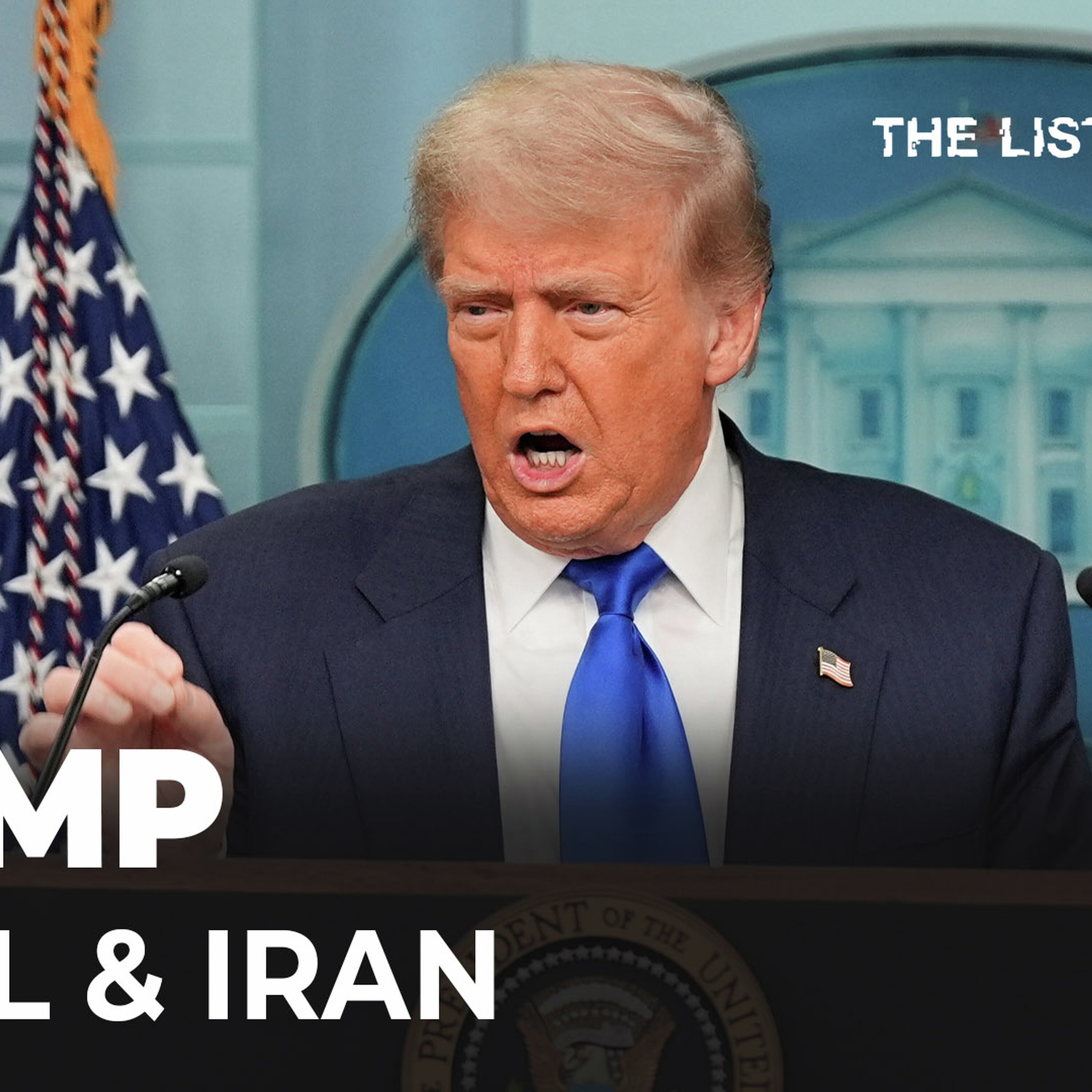
Loading summary
Transcript57 lines
- [00:00]
Podcast Host
This week on True Crime reports, up to 100,000 children go missing in China every year, a number that links back to the 1970s and the one child policy. This story is about one of those children and the mother who spent decades searching for him. Hear the full story on True Crime Reports. Subscribe and listen wherever you get your podcasts. This week on the Take, we're marking one year since a pair of devastating earthquakes hit Turkey and Syria with a new digital interactive. Listen and watch stories of survival, recovery and coping with the grief@al jazeera.com earthquakes Again, that's al jazeera.com earthquakes 12 days.
- [01:00]
Narrator/Reporter
Of war pitting the US Israeli axis against Iran President Trump is painting himself as a statesman.
- [01:07]
Media Analyst
It's like in your DNA and in your blood to cheer against Trump.
- [01:10]
Narrator/Reporter
He and his administration are taking on any media that don't buy that line. The killing fields in Gaza disguised as aid stations. The videos are horrific and dismantling the headlines. Somebody's got to do it and nobody's better at it than us all.
- [01:29]
Media Analyst
Rob.
- [01:36]
Narrator/Reporter
From holding talks with Iran about its nuclear program to bombing its nuclear facilities to then executing a trademark Trumpian 180 degree turn and brokering a ceasefire. From publicly backing Israel to then scolding it on live television with a little profanity thrown in, the American president had another one of those weeks that had political leaders and news organizations struggling to figure out what to make of it all. There is usually a theatrical component to what comes out of the White House these days, starting with a president obsessed with optics. Donald Trump's persistent pivoting has less to do with diplomacy than it does with the narrative, one that he hopes casts him as a peacemaker. Despite all the twists and turns, Israel's actions in Iran have been insufficiently questioned, just like in Gaza. While Western news outlets continue to paint Iran as an irrational existential threat to the Middle east. It is a misleading framing with elements of propaganda to it, which when one compares the nuclear programs in Iran and Israel, simply collapses. Welcome back to MORNING show. Of all the soundbites Donald Trump has provided American journalists with over the years, this one may end up in a category of its own because of what Trump said and the way he said it.
- [03:03]
Trump Supporter/Commentator
We basically have two countries that have been fighting so long and so hard that they don't know what the they're doing.
- [03:10]
Critic/Commentator
Trump was criticizing both Israel and Iran. It's obvious he really doesn't like it when people don't listen to him. That's what I picked up on Trump's frustration. And of course, there was the swear word itself.
- [03:23]
Trump Supporter/Commentator
They don't know what the they're doing.
- [03:25]
Political Analyst
Do you understand that Trump's whole Persona is based on deal making? The book that helped propel him into stardom was the Art of the Deal. On his reality shows, it was all about the theater of deal making.
- [03:37]
Strategist/Commentator
So.
- [03:38]
Political Analyst
So now it's the theater of diplomacy. So it's important to him that he gets credit for what he does, that the media give him credit. That's what really matters to him.
- [03:47]
Critic/Commentator
This is a very weird situation we all find ourselves in, because on the one hand, you have America funding the war, supplying the bombs, and then the president wants to come out of all of this looking like some sort of hero.
- [04:00]
Narrator/Reporter
Make no mistake, however, this is a war. Israel instead, through airstrikes coordinated with the US which then bombed Iranian nuclear facilities just for good measure, Iran's military response was measured, targeting a US Air Force base in Qatar after warning Washington the attack was coming, resulting in no American casualties. Part of Benjamin Netanyahu's strategy in attacking Iran was diversionary to draw attention away from Israel's genocidal assault on Gaza. The horrific scenes of starving Palestinians continually getting mowed down, killed while lining up for food aid. A second element in Israel's thinking is to cripple Iran economically as well as militarily by killing more than a dozen of its top military figures. The goal is to mitigate Iran's influence in the Middle east through regime change. What made President Trump's criticism of Israel's ceasefire violation so extraordinary, though, despite the performative aspect of what he said, was that Trump was still calling out an ally.
- [05:13]
Trump Supporter/Commentator
I'm not happy with Israel. You don't go out in the first hour and just drop everything you have on them. So I'm not happy with them. I'm not happy with Iran either.
- [05:22]
Strategist/Commentator
Certainly, part of it is political theater. He's the master of theatrics to create ambiguity about what he wants to do so that he can have various options as things change. He can go back and say, I told you so. So when there is a chance for the overthrow of the Islamic Republic, he talks about regime change. Or if the situation is different, he can say, I wanted to make Iran great again. It is a combination of political theatrics and strategic ambiguity, which is a very effective way of pursuing policy.
- [06:05]
Middle East Expert
So Trump himself has moved across the scene from possibly wanting to negotiate with Iran to then saying he needs to wipe out their nuclear program to now wanting a ceasefire. Is this a Sign of instability or is it a factor of the way he approaches his governance? I think we see both. In some ways, he did more than any other US President in supporting the Israeli Prime Minister, but at the same time, he also did more in tamping him down.
- [06:43]
Narrator/Reporter
If the US was out to destroy Iran's major nuclear sites, all of which are buried underground and heavily fortified, this appears to be a case of mission unaccomplished. The Americans targeted three sites forgot Natanz and Isfahan, using some of the biggest bombs in existence, GBU 57s bunker busters, which weigh more than 30,000 pounds. President Trump's declaration that those sites had been obliterated was quickly contradicted by US news organizations, even though President Trump did.
- [07:19]
Political Analyst
Describe the strikes on the three sites.
- [07:22]
Narrator/Reporter
As having been, quote, completely and totally obliterated. Really, it's a question of how accurate that is. And Trump did not take it well.
- [07:31]
Trump Supporter/Commentator
CNN is scum.
- [07:33]
Narrator/Reporter
Benjamin Netanyahu has played the Iran nuclear card before, long ago and repeatedly first raising the imminence of the threat to Israel 30 years ago. Another angle that is underplayed in Western reporting. Iran's nuclear program is no secret. Its development has been monitored by the International Atomic Energy Agency, the iaea, which has time and time again concluded the Iranians have no nuclear weapons. The IAEA is a UN body that keeps an eye on all signatory nuclear powers, but has very limited oversight on one of them, Israel. The Israelis have had nuclear weapons for decades but refuse to acknowledge that. And the Americans are happy to tolerate that while treating Iran as some kind of rogue nuclear threat, a danger to the Middle East.
- [08:31]
Middle East Expert
The narrative has been that they have been developing a bomb specifically against Israel. And certainly Iran did develop a bomb program up until 2003, but it was never directed at Israel, it was directed at Iraq. And it came to an end when the coalition forces moved into Iraq for the second Iraq War.
- [08:55]
Strategist/Commentator
Iran and the US have been engaged in a cold war for almost half a century. Every American official, Democrat or Republican, they all think Iran is a principal source of instability and chaos in the region.
- [09:12]
Trump Supporter/Commentator
We're very clear a nuclear armed Iran.
- [09:14]
Strategist/Commentator
Is an existential threat to every. And the same way that the Iranian media portrays America in the most negative way, American media portrays Iran in the most negative way as a threat to stability in the Middle East.
- [09:30]
Media Analyst
Iran has been the largest state sponsor of international terrorism for all of our adult lives since 1979.
- [09:37]
Political Analyst
And this kind of hostility leads us to the point where somebody can go on the BBC and say that the 4Do nuclear facility is only meant to kill Jews.
- [09:46]
Field Reporter
This is a nuclear capability that is.
- [09:48]
Political Analyst
Built specifically and totally for the murder of Jews in Israel. That statement has no basis in reality, but it goes unquestioned. In fact, Iran has behaved in a pretty pragmatic way through this crisis. When America dropped the bunker busters on Fordo, the Iranian retaliation on American bases in Qatar was pretty carefully calibrated. It only sent as many missiles as America sent sent bombs. The intention there was to ensure that the region wasn't set alight. The idea that Iran is the most crazed actor in the Middle east is not the truth.
- [10:26]
Critic/Commentator
Iran is everyone's favorite boogeyman. Even when the United States own intelligence says there is no nuclear bomb being developed, it's dismissed. And America's always had a few designated external threats, and one of them has always been the Islamic Republic of Iran. Listen, Iran didn't do itself any favors by behaving the way it does. However, the American government really needs to take a hard look at itself in the way that it is regurgitating Israel's narrative on Iran. Again, if anyone needs reminding Israel was the aggressor in this, in a story.
- [11:00]
Narrator/Reporter
Rife with misconceptions, here is yet another Although Donald Trump has backed off on the need for regime change in Tehran, both the US And Israeli governments have pushed for it, and Benjamin Netanyahu continues to do so. The past few years have featured periodic episodes of unrest in Iran over social, political and pocketbook issues, caused at least in part by the brutal economic sanctions its people have suffered under for so long. Given that context, Iran there has been plenty of speculation on Western news outlets that the joint military assault could bring down the leaders of the Islamic Republic. Instead, we've seen something else on the streets there signs of national unity.
- [11:49]
Middle East Expert
Another myth has been that the minute that the regime began to be attacked, that the Iranian people would rise up and overthrow the mullahs. We do not necessarily assume that when there's a Black Lives Matter demonstration in the United States that it is in order to overthrow the government and the entire system. But foreign states consider it such a hostile state, they immediately jump to the conclusion that the people want to overthrow it. And in fact, it's a regime that governs over 90 million people and a great number of those people support it.
- [12:29]
Political Analyst
In Iran, there is a clear sense this is not over. All of Trump's talk about making Iran great again and Netanyahu trying to instigate a national uprising using old political slogans like women, life, freedom. There is an understanding that Israel is laying down tracks on which train of a future war with Iran can be run at any time. There is no assurance that this is a permanent peace.
- [12:59]
Narrator/Reporter
At a time when the situation in Gaza is as dark and dire as it's ever been. The amount of media attention this genocide is getting has been falling off despite the fact that there have been developments, including aid stations that have proven to be deadly. Nick Muirhead is here with more.
- [13:17]
Field Reporter
The biggest story, the biggest scandal in Gaza continues to be the operations of the so called Gaza Humanitarian foundation. Over the last two weeks, which coincides with Israel and the US's war on Iran, at least 169 Palestinians trying to get food from GHF distribution points have been killed and Palestinians have documented what that looks like. The sites are exposed. There's no shade from the summer heat. There's no crowd control or guarantee of safe passage, which has led to UN officials calling them death traps. The GHF has kept its funding a secret for the most part, but what we do know is that the US government supports the organization. It has authorised $30 million in funding and according to Reuters, the figure could increase to hundreds of millions of dollars. In a recent press briefing, State Department spokesperson Tammy Bruce said 44 million meals have been distributed by GHF so far.
- [14:12]
Middle East Expert
We are committed to endorsing, helping, promoting.
- [14:18]
Media Analyst
Efforts to make a difference.
- [14:20]
Field Reporter
Meanwhile, doctors in Gaza are sounding the alarm. They running out of baby formula. Some newborns have been given less than 36 hours to live. All of this is happening while aid trucks not affiliated with the GHF sit just a few kilometers away at border crossings, blocked from entering Gaza by the Israelis. The daily killings of starving Palestinians has become so normalized that it barely registers in much of the Western media. And as for the ghf, it continues to operate in the shadows with no accountability and the full backing of Washington.
- [15:01]
Narrator/Reporter
Thanks, Nick. For nearly two years now, the Western media's coverage of Israel's war on Gaza has proven indefensible in headline after headline. Time and time again. Much of that criticism has come from journalists, academics, media watchdogs. But few voices can cut through as effectively as Asl Rad's. Her viral headline Corrections, posted frequently on X have exposed the contradictions and the double standards in mainstream reporting and offered viewers a crash course in how language can shape public perception of war. If you've been watching the Listening Post, you have seen her here before now, with the dust barely settled from Israel's 12 day war with Iran, a conflict that produced a familiar pattern of media coverage. We turn to her again as a historian of the Middle East. Asalrad's analysis of how that war was reported and how it connects to the ongoing genocide in Gaza is essential. And unlike many of the headlines that she takes apart. Informative.
- [16:09]
Media Analyst
I've said it before and I'll say it again. Headlines are very often the only part of a news piece that gets read. That's why I focus on them. People are short on time. Articles can be paywalled. A social media snapshot of a headline is easier to consume than 800 words of detail. So it's important to get headlines right. And in the nearly two years of this genocide in Gaza, there have been so many headlines that have been so wrong. And then Israel started its war with Iran.
- [16:40]
Political Analyst
Moments ago, Israel launched Operation Rising Lion, a targeted military operation to roll back.
- [16:48]
Narrator/Reporter
The Iranian threat to Israel's very survival.
- [16:51]
Media Analyst
Netanyahu had already set the tone for how this story would get reported. And then the floodgates opened on the typical headlines we see whenever Iran is involved. There was an additional element this time because Israel was deeply involved as well. The language used by news outlets has been so revealing. Israel's strikes were characterized exactly as Israel described it. They were called preemptive. Anything by Iran was an escalation rather than a retaliation. When Israel would issue a statement, it was a warning, almost as if it was a public service announcement. But if Iran said something, it was a threat. Then there's the Israeli government versus the Iranian regime. Even though Netanyahu has spent 17 years in office and has shredded due process in Israel, of course there are big problems with the Iranian state. Headlines and news reporting should reflect, reflect that by all means, but don't whitewash what's been happening in a state that is already carrying out a genocide and then started a whole new war. Well, thank God for Bibi Netanyahu. He has cut through the fog and done, frankly, what should have been done as long as 20 years ago. Fundamentally, we have an issue with terminology and framing. When you look at the headlines, the overwhelming impression is that Israel is almost always justified in its actions, or at the very least that we can have a reasonable debate about how justified it is. The US was always part of Israel's war because the US funds and arms Israel. But there was this drumbeat for Trump to actually use some of the most powerful weapons on earth to bomb Iran's nuclear fault facilities.
- [18:35]
Middle East Expert
There is only one bomb that can destroy Fordo. There is only one plane that can carry that bomb. And those Are American weapons and planes.
- [18:44]
Media Analyst
In a New York Times piece? Not even an op ed. This was the headline, Trump's Iran choice. Last chance diplomacy or a bunker busting bomb. Really? Who decided those are his choices? The New York Times used to be called the paper of record, and they're basically saying the President of the United States either has a chance at diplomacy, and by the way, Iran was engaged in talks until Israel attacked it, or if negotiation isn't possible, then the US can just bomb Iran with 30,000 pound bombs. Even presenting the choice like this implies that the two options are as legitimate as each other. But that's not the case. The decision to bomb another country is not the same as talking to them. Then you have other news pieces as well. On TV and online. There are all these complex graphics showing you bomber jets, showing you bombs, and then 3D mockups of Iranian nuclear facilities. And what goes unsaid in all of this is that there needs to be a democratic process here. You need congressional approval. We need to determine, does Iran even really pose an imminent threat? Would this be permissible under international law? But none of this is even part of the discussion tonight.
- [19:57]
Trump Supporter/Commentator
I can report to the world that the strikes were a spectacular military success. Iran's key nuclear enrichment facilities have been completely and totally obliterated. Iran, the bully of the Middle east, must now make peace. If they do not, future attacks will be far greater and a lot easier.
- [20:19]
Media Analyst
So after Trump's big bomb and the big announcement, the op ed started getting churned out. And it's bad enough for news outlets to normalize the use of these massive weapons on a sovereign nation, despite the lack of clear justification, but what we saw was actually worse. There were these congratulatory pieces. Honestly, I don't know how much courage it takes to drop 30,000 pound bombs on another country when you have no one that you're accountable to. There was no process of challenge or discussion by the elected representatives of government. It was simply Trump's call to make this editorial by the Wall Street Journal. The headline implies a kind of heroism. But then there's also the sentence under the headline that really caught my attention. Iran is characterized as an intolerable risk. This is the typical Orientalist trope used for Iran. It is presented on the one hand as a weak and feckless regime where everyone in the country is hoping to be bombed in order to be liberated. But on the other hand, it's an intolerable risk and it's all powerful. It's called the Head of the Snake and Its nuclear program, which has been under IAEA oversight, is seen as a threat, whereas Israel's possession of actual nuclear weapons, which are not subject to any international regulation. That's barely even mentioned. You always hear Iran being called a destabilizing force in the region or in the world. But Israel, which has bombed four countries this year alone, while terrorizing the Palestinian occupied territories, is never called a destabilizing force. The coverage of the Gaza genocide has already been bad. And to add to that, after so many months of killing being live streamed to our phones, there's a fatigue. What happened during the 12 days of Israel's war on Iran was that even less attention was given to Gaza. And people may say that news outlets can only cover so many big stories at a time. But the Iran war was not entirely separate from the Gaza genocide. The culprit that connects them is Israel. Israel is always painted as acting purely in self defense, even when it's on the attack. Palestinians are being killed by the dozens every single day, every single day while trying to get aid. You do see some coverage of this atrocity in the media, but just try comparing that with the sort of reporting we saw of Israelis who were injured or killed in Iran's retaliatory strikes. You're looking live at Tel Aviv, Israel, where at least eight people were killed and dozens were injured in an early morning missile attack from Iran. Those victims get tons of headlines, and I don't begrudge that victims of war should make the news. But the media attention is just not proportional. Proportional. It's not proportional to the number of Iranian civilians that were killed. It's not proportional to the number of Palestinians that have been killed or the manner in which they've been killed by Israel. My headline corrections started as a way of setting the record straight, adding, in a word, putting an attribution or cutting out stuff that's inaccurate. The reactions, especially from journalists, has actually been quite positive. And I think that's speaks to the fact that so often it's the institutions that create these limitations, not individual journalists. Of course, there might be some problematic journalists, but most of the time there are power structures and editorial red lines imposed on how stories are reported. So that's what we're seeing reflected in these headlines. It's an institutional bias, an establishment perspective, and the victor's version of history. As it happens, I'm not the only person correcting this stuff. But it's an indication of how many people want their media to get it right that people refer headlines to me to look at or increasingly they call out the headline writers and say, we can't have this be the record of this moment. You need to correct this.
- [24:19]
Narrator/Reporter
And finally, there was a news story that just came out of New York City that caught our eye since it bucked so some dominant news narratives like the ones we've already examined this week.
- [24:29]
Trump Supporter/Commentator
It always seems impossible until it is done.
- [24:32]
Narrator/Reporter
Zohran Mamdani is now one step closer to becoming the city's first Muslim mayor. Mamdani has roots in India and Africa. His victory in the Democratic primary this past week shocked anyone familiar with the politics of a city that has the largest Jewish population of outside of Israel. An unapologetic supporter of the Palestinian cause, Mamdani has said that should he become mayor, and should Benjamin Netanyahu ever set foot in New York, he would order the police to arrest Netanyahu, who has an ICC warrant out in his name. Mamdani's victory over Andrew Cuomo, the former state governor who was funded by billionaire donors like Michael Bloomberg and Bill Ackman, has had pro Zionists on the US airwaves freaking out.
- [25:21]
Media Analyst
Far more frightening and far more stark.
- [25:24]
Critic/Commentator
Than his progressive policies and plans with.
- [25:26]
Media Analyst
No backup, his lack of experience, etc.
- [25:28]
Critic/Commentator
It's his blatant and rife anti Semitism.
- [25:31]
Middle East Expert
Yes, it's it's horrific to me.
- [25:33]
Narrator/Reporter
Donnie still has the election to win later this year, but in a city dominated by Democrats, that's looking like a formality, particularly after this week's president primary result, which suggests that despite the dominant political and media narratives out there, some voters are still capable of thinking for themselves.