Loading summary
Transcript57 lines
- [00:00]
Host/Anchor
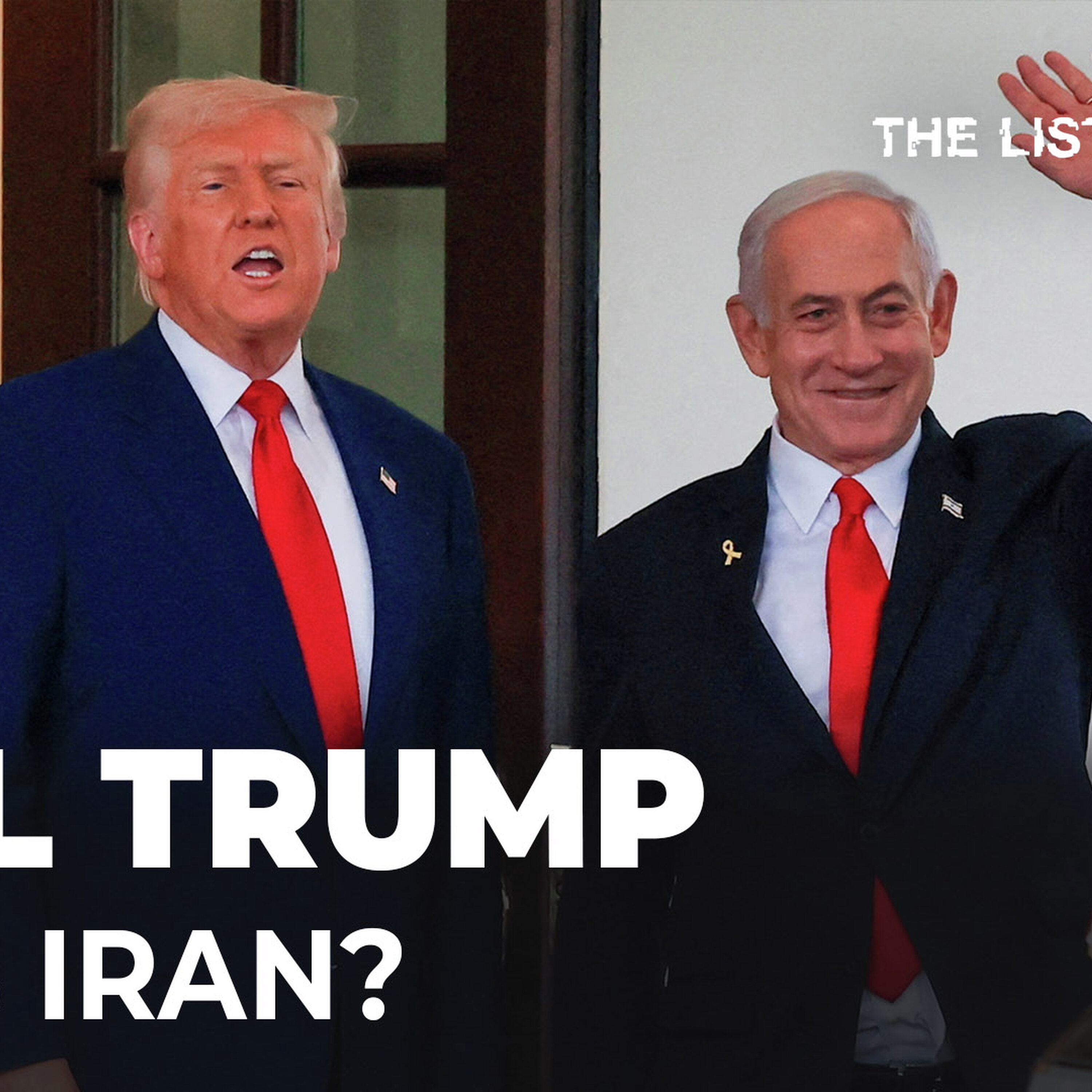
This week on True Crime reports, up to 100,000 children go missing in China every year, a number that links back to the 1970s and the one child policy. This story is about one of those children and the mother who spent decades searching for him. Hear the full story on True Crime Reports. Subscribe and listen wherever you get your podcasts. This week on the Take, we're marking one year since a pair of devastating earthquakes hit Turkey and Syria with a new digital interactive. Listen and watch stories of survival, recovery and coping with the grief@al jazeera.com earthquakes Again, that's al jazeera.com earthquakes Netanyahu's war on Iran has been more than 30 years in the making as Israel and the US push for regime change, controversial figures are being given airtime on Western media. Israeli military censors tighten their grip while anchors in news studios celebrate the war and why haven't journalists learned lessons from their coverage of past wars? This was the war that everyone expected, but no one saw coming, certainly not when negotiations between Washington and Tehran about Iran's nuclear program were ongoing. Israeli Prime Minister Benjamin Netanyahu says the war on Iran was necessary, that Tehran was dangerously close to building a nuclear weapon. He's been saying this for decades. Though intelligence reports from the US and the International Atomic Energy Agency refute Netanyahu's assertions, Western media reporting on whether Iran was building a bomb or not has been cagey when it should have been clear. There has been some pushback, but also an acceptance that Israel, backed by the United States, is out for regime change. After carrying out a genocide in Gaza for nearly two years unimpeded, there's little that really stands in the way of Israel inflicting serious damage on an Iranian leadership that has already been weakened regionally and and domestically. Where this ends, no one can say. But as past wars of aggression have shown, these stories usually don't end well. It took less than a week for what Benjamin Netanyahu claimed were pre emptive strikes against Iran to morph into open calls for regime change.
- [02:38]
Interviewer/Reporter
President Trump has called for Iran's unconditional surrender.
- [02:42]
Host/Anchor
The stunning speed with which Iran and Israel's war ignited was due in November, small part to the more than three decades of relentless scaremongering that Netanyahu has engaged in and all the media attention his gimmicks and hyperbolic statements have received.
- [02:57]
Benjamin Netanyahu
It's not a question of whether you'd like to see a regime change in Iran, but how to achieve it from there. It's only a few Months, possibly a few weeks, before they get enough enriched uranium for the first lams. Khamenei wants nuclear weapons for Iran.
- [03:16]
Media Analyst/Commentator
What is a real solution, in your view?
- [03:18]
Benjamin Netanyahu
The complete dismantling of Iran's ability to make nuclear weapons.
- [03:23]
Middle East Expert/Analyst
There's no figure that has had more influence on the discourse around Iran and its nuclear program than Benjamin Netanyahu. And his use of Iran is designed to constantly divert attention from what is the central issue in the Middle east, and that is the Israeli occupation of Palestinian territories. The question of Palestine always gets relegated because Israel's security has to be the paramount issue. And what is threatening Israel's security? Well, according to Netanyahu, it's Iran.
- [03:50]
Media Analyst/Commentator
With the current situation, what's most remarkable of all is that some media outlets are openly saying that the US differs with the Israeli assessment that Iran was imminently seeking a nuclear weapon, that the.
- [04:01]
Ryan Coles (Reporter)
Intelligence community assessed that Iran was years away, as much as three years away from not only obtaining a nuclear weapon.
- [04:08]
Media Analyst/Commentator
But none of the Western intelligence agencies were talking about an imminent threat. Even the iaea, the UN nuclear watchdog, is saying there is no structured nuclear program.
- [04:16]
Ryan Coles (Reporter)
We could not affirm that there is any systematic effort in Iran at the.
- [04:23]
Host/Anchor
Moment to manufacture a nuclear weapon. Despite the clarity of that intel, there have been countless speculative media reports about how soon an Iranian atomic bomb could be created. Missing from much of the coverage, some key facts. Currently, in the Middle east, there is only one country with a nuclear arsenal. It's Israel. The state is secretive and ambiguous about its nuclear weaponry and unlike Iran, has refused to sign the Non Proliferation Treaty and to open its nuclear facilities to inspection and oversight by the International Atomic Energy Agency, the iaea. For the. For a full week now, Tel Aviv and Tehran have unleashed bombs against each other. Despite their claims, the targeting by both sides has not been confined to nuclear and military installations. Residential buildings have been struck, hospitals have been attacked. In what could be called a signature move, Israel bombed Iran's state broadcaster.
- [05:27]
Interviewer/Reporter
The Israelis say that they are targeting not just military and nuclear facilities, but also regime targets. And so for them, Iran's state television is the propaganda arm of the regime. It's a huge complex that was bombed. So this is a really important way to cause a certain kind of state collapse, because if there is no way of communicating with the population, then a lot more disinformation comes into that atmosphere.
- [05:52]
Middle East Expert/Analyst
The fact that we're seeing Israel bombing a media building while a broadcast is on the air, I guess if you've spent months murdering Palestinian journalists in a genocide, well, then this is nothing. The Israeli argument is that the mouthpiece of the Iranian government is a legitimate target to be bombed. But Israel itself has channels that put out not just propaganda, but actually incite hatred. People on air use genocidal language. Would anybody consider those channels legitimate targets? Of course not. But Israel gets away with it because of the brazen impunity they've normalized.
- [06:32]
Host/Anchor
Netanyahu has been on a media blitz. In the first few days of the war on Iran. His office posted daily video statements from him.
- [06:40]
Benjamin Netanyahu
A tyrannical and radical Iranian regime that wants to build atomic bombs to destroy us.
- [06:46]
Host/Anchor
He gave interviews to US news outlets.
- [06:49]
Ryan Coles (Reporter)
Benjamin Netanyahu, who comes to us from an undisclosed location in Israel. Mr. Prime Minister, thank you for joining us.
- [06:57]
Chris Hedges
So is regime change part of the effort here?
- [07:02]
Benjamin Netanyahu
Could certainly be the result because.
- [07:04]
Host/Anchor
And then there was the nearly 15 minute long slot Netanyahu got on a channel called Iran International. Prime Minister Netanyahu, thank you for your time and welcome.
- [07:13]
Media Analyst/Commentator
Iran International is a London based news channel. It launched a few years ago. There have been many questions about its purpose, its funding. Iran International is the first Persian language channel abroad which gained access to Israeli military bases. It has correspondents inside Israel, Persian speaking Israelis. It has on repeated occasions interviewed Prime Minister Netanyahu.
- [07:35]
Benjamin Netanyahu
This criminal regime, the tyrants of Tehran basically planned two weapons of mass death to exterminate Israel.
- [07:42]
Political Commentator/Analyst
The funding of Iran International is quite murky and it promotes an anti regime view. Its main audience is not just the Iranian diaspora, but also people within Iran who watch it over satellite.
- [07:52]
Benjamin Netanyahu
You know, I talked about the torment, the subjugation of the women in Iran. And I know your great slogan, Zan Zande. I think that that says it all. Well, it does say it all. It's, you know, it's woman life for freedom.
- [08:09]
Political Commentator/Analyst
When Netanyahu invoked that slogan, women, life, freedom, it was just pure cynicism. What he's doing is exploiting a slogan to advance the case for Israel's attack on the country.
- [08:20]
Benjamin Netanyahu
If we can help you achieve your freedom, that is a noble and worthy cause because you're a noble and worthy people.
- [08:28]
Political Commentator/Analyst
Of course, a lot of Iranians want the regime gone. I don't like this regime either. It's brutal and repressive and it's been a disruptive force in the region. Israel has been disruptive too. But the idea that this war is going to serve the interests of the Iranian people, that they will supposedly be liberated as you are literally bombing them, this is absurd.
- [08:46]
Host/Anchor
One figure seeking out the media spotlight amidst the chaos of this war is Reza Pahlavi, the exiled Crown Prince of Iran. His Royal Highness, Reza Pahlavi.
- [08:56]
Interviewer/Reporter
Your Highness, thank you so much for being here today.
- [08:59]
Host/Anchor
The son of the former king or Shah who was overthrown by during the Iranian Revolution of 1979, Pahlavi has lived in exile in the United States for 46 years. He leads an opposition group called the National Council of Iran. And his support base is largely rooted amongst older generations of Iranians in exile. Nevertheless, as Netanyahu and Trump have pushed for regime change, even hinting at the possible assassination of Iran's supreme leader, Ayatollah Khamenei Pahlavi, the so called Crown prince in waiting has been invited onto Western news channels to have his say.
- [09:37]
Interviewer/Reporter
This is the best opportunity for us.
- [09:39]
Ryan Coles (Reporter)
To finally overcome this regime and get rid of it.
- [09:42]
Interviewer/Reporter
It's no surprise that the west is propping up Reza Pahlavi as the one who will fill the power vacuum after a regime change in Iran. Mostly because his father was also brought back into power through through an American and British coup in 1953 and he was seen as being a stooge and a puppet of the Americans and the Brits. So to have his son now sort of be at the forefront of this kind of operation for regime change and state collapse in Iran is not all that surprising. Knowing the history of their family, American.
- [10:22]
Political Commentator/Analyst
TV channels just do an extremely bad job of providing basic facts, context, historical truths. Reza Pahlavi doesn't have much of a base or much political legitimacy at all in Iran. There's a minuscule minority of Iranians that want the restoration of the monarchy or even any kind of government led by Reza Pahlavi. But you know, he's just a very well funded, well dressed, well spoken Iranian man who speaks English very well. And he's telling a lot of Americans and Europeans what they want to hear about an aggressive, ill advised war.
- [10:54]
Host/Anchor
For nearly two years, Israel, backed by the United States, has committed a genocide of Palestinians in Gaza and the West Bank. It has also attacked Lebanon, Yemen and Syria, degrading allies of the Iranian regime there. Israel has celebrated these victories, wasting no time considering the illegality of its tactics and their impact on civilians. However, now engaged in an open against one of the Middle East's oldest and largest nations, the stakes are even higher than before and the implications for regional and global order much more serious.
- [11:30]
Interviewer/Reporter
One thing that is extremely important to understand is not just the rally around the flag effect and that is happening in Iran, but the bigger thing that needs to be understood here is that even those who have hated the Islamic Republic for many, many years are now cursing the Israelis for starting this war. And so it is not that this war is going to bring liberation, very much the opposite. It is now being seen as an incursion upon the sovereignty of the nation.
- [12:01]
Middle East Expert/Analyst
Iran is a formidable state. It's a significant size, it has a significant population, tons of natural resources and a strong sense of itself. What is so ominous about this moment is that regardless of the political and media drumbeat over the years, this war was never inevitable. An alternative did exist. Diplomacy was a real possibility and it was underway. But we find ourselves here. And to be here while there's still a genocide going on in Gaza is a testament to the total impunity with which Israel operates and how that has shattered even, even the veneer of any kind of rules based order.
- [12:43]
Host/Anchor
In Israel. The opening of a new war front has been cheered on in the media. Despite the favorable reporting, though, the military censors are working overtime. Ryan Coles has been watching the story.
- [12:55]
Ryan Coles (Reporter)
In 20 months of Israel's war on Palestinians in Gaza and the west bank, as well as its attacks on other countries in the region, Benjamin Netanyahu has had the backing of the country's mainstream media. With the war now underway against the nation's foremost regional enemy, Iran, news outlets have been in celebration mode. Journalists are framing this as an historic moment, one in which Israel is acting on behalf of Western powers and for the benefit of the world. Israel Bayamima Eli Osayta Avodam Elukh Lechetavura Olam zeh seg Bilti Ragil There is however, another inconvenient side to this story. Images that the authorities are less keen on. Israelis seeing the impact of Iranian bombs on cities like Tel Aviv, Haifa and others. Much of the video and information coming out has been on social media. And in response, Israel's military censor has increased restrictions on publishing anything about Iranian strikes in the country, whether in the media or online. Israelis will have to submit the material to the censor beforehand. Israeli Communications Minister Shlomo Kari then announced on X that he plans to enforce censorship on foreign networks that endanger the security of the state as well. Amongst the foreign networks most reviled in Israel, this one, Al Jazeera. It was banned from operating in Israel in May last year and and just this past week, the Minister of National Security, Itamar Ben Gvir announced that those found watching Al Jazeera in Israel would be targets of, quote, police action.
- [14:38]
Host/Anchor
Thanks, Ryan. The speed of Israel's War on Iran, the dubious justifications, the airtime given to hawkish voices and the volume of speculative coverage comes with an ominous sense of deja vu for anyone who witnessed or has studied the role of Western media in making the case for the United States war on Iraq back in 2003, the parallels between then and now have impossible to miss. Questionable claims of weapons of mass destruction, a target nation long seen as an adversary of the west, and large segments of the media working as foot soldiers for the war effort. How is it that more than 20 years since the Iraq war, this is where we're at. Chris Hedges was with the New York Times in 2003. Mr. Hedges, thank you for your time today. You left the newspaper back in 2005. You now have your own podcast on YouTube. Are you as stunned as so many are by the parallels we're seeing between the run up to the U.S. s war on Iraq in 2003? You know, especially the construction of official narratives and the media's role in amplifying them, and what we're seeing now with Israel's war on Iran?
- [15:42]
Chris Hedges
I'm not stunned because I spent 20 years overseas covering various conflicts, and most of those who call for war use lies and myths and half truths in order to justify it. What I'm stunned at is that we fall for it once again. The parallels are, as you mentioned, quite eerie. A country, Iran, that doesn't pose any threat to us in the United States and now imperils our existence. Its leaders embody pure evil. Freedom and democracy are at stake. If we don't act now, the next smoking gun will be a mushroom cloud and massive bombing will bring regime change and peace and harmony. I mean, that is essentially the playbook that was used for Iraq and Afghanistan and is the same playbook with many of the same voices, of course, that is being used to justify a war in Iran.
- [16:43]
Host/Anchor
You know, you talked about some of the same voices that we heard back then back on air now. You know, they were prominent in the US media 20 years ago. They were pushing for the invasion of Iraq. Now they're agitating for the war with Iran. What does it say about the US Media landscape that these voices get so much play even after the disaster of Iraq?
- [17:02]
Chris Hedges
Yeah, well, it's just another example of the bankruptcy of the US Media, which is these people, of course, were wrong. They were wrong about Iraq, wrong about Afghanistan, wrong about Libya, wrong about Syria. But they are well funded. They migrate from administration to administration. They are, when they're not in power, ensconced in These think tanks, the Project for the New American Century, the American Enterprise Institute, the Foreign Policy Research Initiative, the Atlantic Council, the Brookings Institution, which are largely funded, of course, by the Zionist lobby and the war industry. And so they have these megaphones on the media because of who they represent, not because they actually understand. I mean, most of them are culturally, historically, linguistically illiterate about the countries they're calling the United States to attack. Frankly, don't think they could probably tell the difference between Iran and Iraq. And that, I think, is a window into the vast failure of the press, going all the way back to its cheerleading for the war in Iraq based on false assumptions. But it's had a series of debacles since then, including its horrendous coverage over the genocide in Gaza.
- [18:24]
Host/Anchor
I'd like to play two clips for you. One from CNN back in 2003, the other one from Fox News.
- [18:30]
Chris Hedges
President Bush, and he's not alone on this, seriously doubts that UN Weapons inspectors will ever have a free hand in Iraq, that Saddam Hussein will bow to all the demands and give up all his weapons of mass destruction. And so the president presses on with his call for a regime change in Baghdad, presses on and prepares for war. You're talking about more than 2122 weapons.
- [18:56]
Ryan Coles (Reporter)
That is why people, Israel is saying.
- [18:59]
Chris Hedges
That the world was done a favor by their strike, because this is a danger not only for Israel, but the entire world to include the United States.
- [19:08]
Host/Anchor
Can you talk us through the language used in both those clips? How does the framing sow doubt in the mind of the audience? How does it gloss over the lack of substantiated evidence or intelligence? What is the role of this kind of reporting in building public tolerance or even support for war?
- [19:25]
Chris Hedges
Well, it gives credibility to a fictitious narrative. Let's remember that the intelligence community's annual threat assessment, I'm quoting, quote, iran is not building a nuclear weapon. And Supreme Leader Khamenei has not authorized the nuclear weapons program that he suspended in 2003. That was reiterated, of course, by the International Atomic Energy Agency. Netanyahu has been pushing this false claim that Iran is on the cusp of building a nuclear weapon for three decades. I know because in 1995, I wrote a story quoting senior Israeli officials saying precisely that. So what they do is ignore verifiable fact. They ignore their own intelligence agencies. They ignore international bodies tasked, like the IAEA with carrying out these kinds of investigations. And this again goes back to Iraq because, of course, the CIA assessments, the intelligence assessments, did not show that Iraq had A weapons of mass destruction program. He had chemical weapons that I covered that. So they cooked up their own intelligence. And that's exactly what's happening here. They ignore real intelligence and they peddle these hallucinations. And what's worse is that of course they're given platforms to do it.
- [20:55]
Host/Anchor
Trump has weighed in quite forcefully behind Israel in support of this war on Iran. Now, this is the same president who in his inaugural address, he promised to stop all wars. And he was posting just days ago, as recently as June 15, about peace between Israel and Iran. So what happened to the anti war president?
- [21:13]
Chris Hedges
Well, I think we have to remember that the character of Trump is defined by impulsiveness. He can contradict himself sometimes within the span of the same interview. He doesn't understand foreign affairs, much less anything about the Middle East. I think they've appealed to his vanity, the idea that the United States alone has the capacity to drop these bunker buster bombs. I think given the character of Trump and the fact that he shifts like the sands, I'm not surprised. Obviously, the Israel lobby has gotten to him and you just saw it with his military parade sees American power, and in particular military power as a kind of extension of his own personal power. It does look as if he is going to go ahead and carry out these strikes.
- [22:11]
Host/Anchor
Some of the strongest opposition to this war is coming from inside the MAGA universe. We're talking about people like Tucker Carlson. He's one of the most influential voices in Trump's sphere. Carlson has called the war reckless and unnecessary. Can you please explain not only Carlson's significance, but also his position and how much weight that carries?
- [22:32]
Chris Hedges
It carries a lot of weight within the MAGA base, of course. And he was a major force in helping to create Trump. He has a huge following. And I think that his opposition to the war is deeply damaging to the Trump brand. But I just want to throw in this caveat. Should the United States carry out attacks on the underground nuclear facilities with their so called bunker buster bombs, and should Iran retaliate, as it says it will do, against US Bases and installations in the Middle east, and should, as is probable, US Service members be killed, then everything will change. Then you will have the base baying for blood and waving the flag. And so I watched this change after 9 11. It was instant. People drank deep from that very dark elixir of the nationalism. So while the opinion polls are overwhelmingly against a conflict with Iran, should Iran be attacked and should Iran retaliate against U.S. interests, I suspect that that will change dramatically.
- [23:49]
Host/Anchor
Mr. Hedges, if Iraq was the defining case study in how wars are sold through narrative spin and media complicity. What are the lessons that the media and audiences have failed to learn since then?
- [24:02]
Chris Hedges
I really fault the media more than the audiences because the media gives credibility to people who shouldn't have any credibility at all. The stories or the charges that they're peddling against Iran are not backed up by evidence, by verifiable fact. The audience or the viewers or readers have not been able to separate the cheerleaders from those who actually carry out studies that are grounded in research and verifiable fact. We should be looking at the annual threat assessment. We should be looking at the reports by the International Atomic Energy Agency. These are downplayed or dismissed often by these media platforms. And the ability of these people to saturate the airwave is really a media decision. And it's made any kind of rational discussion about policies towards Iran impossible. And, of course, that's the goal.
- [25:08]
Host/Anchor
Mr. Hedges, thank you so much for your time, and we'll certainly be following your work on YouTube. Thank you very much.