Podcast
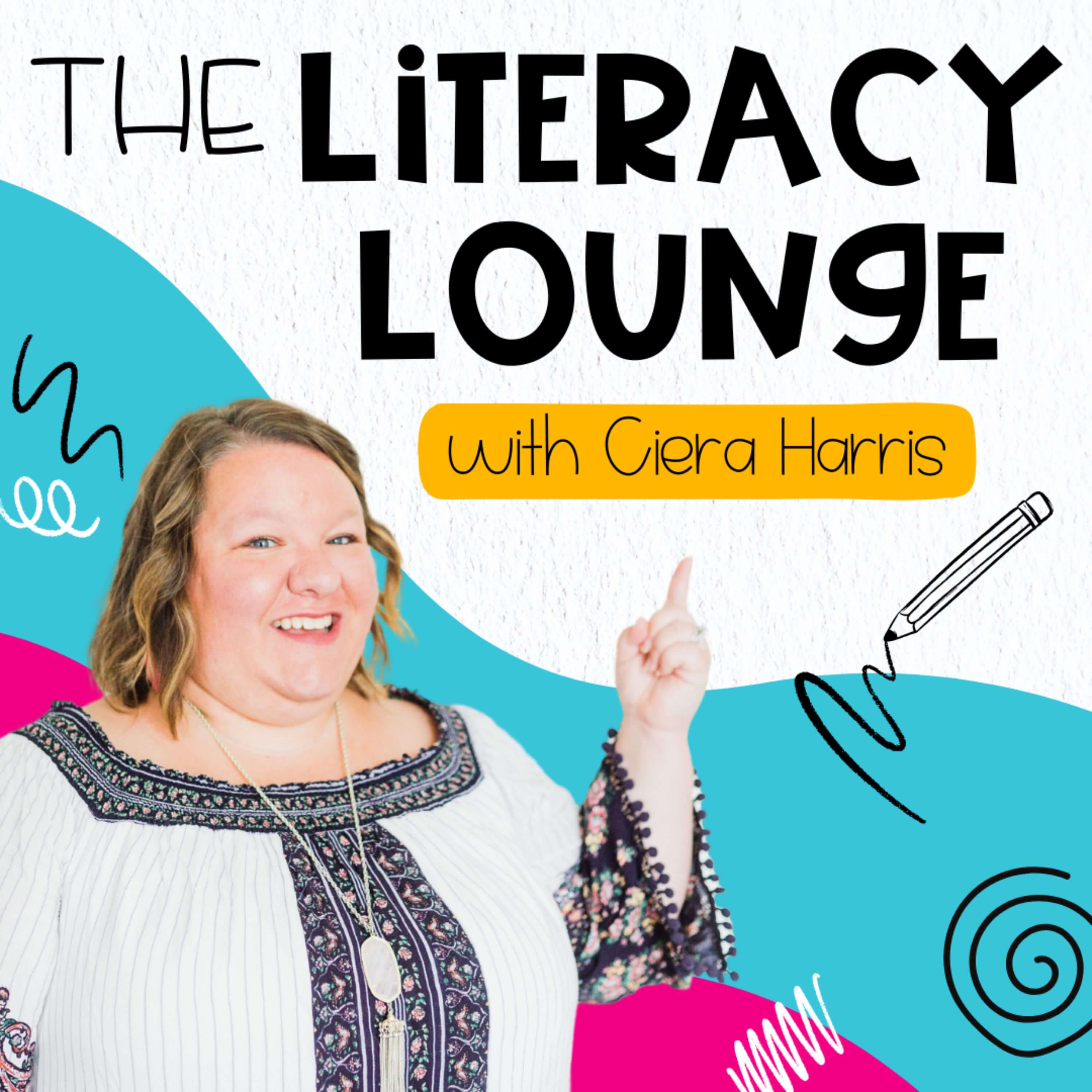
The Literacy Lounge: Uncover the Magic of Reading Through Ciera Harris’ Guide to Building Comprehension
Hosted by Ciera Harris, Literacy Specialist for Elementary Reading Teachers · EN
Welcome to The Literacy Lounge! This is a podcast designed for elementary school teachers and homeschool parents on a mission to master the art of literacy instruction and cultivate a love of reading in students. Join your host, Ciera Harris, as she opens the door to a world of transformative teaching strategies that will make you a literacy champion in your classroom.
Ciera and her guests will dive into topics such as The Science of Reading, the 5 components of reading (phonemic awareness, phonics, fluency, vocabulary, and comprehension), metacognition, close reading, choosing the best mentor texts, data collection, increasing student engagement, and more.
You’ll walk away from each episode with actionable tips and strategies to try in your classroom. Best of all, you’ll discover not just the ‘what’ and ‘why’ but also the ‘how’ of elevating your literacy instruction. Whether you’re a veteran teacher or just starting your teaching journey, this podcast will empower you to achieve the results you’ve dreamed of for you and your students.
For more literacy support, and to connect and collaborate with like-minded teachers, join the free Facebook group, The Literacy Lounge: https://www.facebook.com/groups/cieraharristeaching.
10episodes
Episodes
Newest firstAll episodes
22. Overwhelmed and Undervalued: Mental Health Struggles in Teaching
Feb 19, 202500:24:36Tap to summarizeIf you’re a teacher, you probably know the feeling of juggling too many things all at once, taking care of all the people around you. But how often do you stop to check in with yourself?Today we’re diving into a topic that’s not talked about enough, especially in education. It’s something that impacts each one of us every day—mental health. I’ll share a vulnerable story about my mental health journey, and talk about why taking care of our mental health as teachers is just as important as the lessons we deliver in the classroom.We’ll talk about what the signs of anxiety and depression may look like, as well as practical ways to support your mental well-being when the demands of teaching feel overwhelming. So whether you’re feeling burned out, or you’re curious about how to build healthier habits, this conversation is one that we all need.Episode Highlights:03:28 - Why teachers are prone to mental health struggles, and how that shows up in the classroom07:09 - How mental health struggles lead to burnout in the classroom10:06 - My own journey with mental health and why I left a job I thought I would love16:49 - Practical steps to build healthy habits and prevent burnoutLinks & Resources:The Thinking ReaderFree Close Reading GuidebookThe Literacy Lounge Facebook groupLeave your rating and review on Apple Podcasts!Show Notes: https://cieraharristeaching.com/episode22Mentioned in this episode:The Thinking Reader* is a must-have for teachers looking to bridge the gap between phonics and deep comprehension. Packed with research-backed strategies, this book helps students think critically and truly understand what they read. https://cieraharristeaching.com/the-thinking-reader/
Transcribe →21. Reaching Every Learner: Dr. Chris Reeve's Approach to Special Education
Apr 17, 202400:49:39Tap to summarizeHow can we best support our students with special needs inside the general education classroom when we don’t have a background in special education? Without training in special education, teachers often wonder how they can ensure their students with special needs are receiving the instruction and support they need. Dr. Chris Reeve is joining me today to share some incredible insight on how we can support these students.Dr. Chris Reeve has a doctorate in psychology and is a Board Certified Behavior Analyst-Doctoral. She has a passion for helping special education teachers serve their students in the best ways possible. Join us as we dive into the best ways general education teachers can support their students with special needs, specifically in the literacy block. She shares some invaluable information on how teachers can support these students, how to create a supportive classroom culture, the role of differentiation, the importance of understanding a student’s IEP, and more!Episode Highlights:06:57 - The 3 areas teachers can support students with special needs inside the literacy block10:24 - What role differentiation plays when supporting the diverse needs of students21:27 - The importance of knowing, understanding, and implementing the student’s IEP32:10 - How we can support and find more effective collaboration practices to bring both general education teams and special education teams together to support those students42:33 - What strategies general education teachers can use to assess the progress of students with special needs. Links & Resources:The Comprehensive Autism Planning System: (CAPS) LibraryAutism Classroom Resources Podcast Episode 80. Teaching Implementation Plan: An Easy Road Map for Your Classroom IEPFree Close Reading GuidebookThe Literacy Lounge Facebook groupLeave your rating and review on Apple Podcasts!Grab all the podcast links and resources mentioned in this episode inside the show notes: https://cieraharristeaching.com/episode21Mentioned in this episode:The Thinking Reader* is a must-have for teachers looking to bridge the gap between phonics and deep comprehension. Packed with research-backed strategies, this book helps students think critically and truly understand what they read. https://cieraharristeaching.com/the-thinking-reader/
Transcribe →20. Teacher Burnout Unveiled: A Conversation with Brittany Blackwell
Apr 10, 202400:37:20Tap to summarizeThe demands on teachers seem to grow endlessly. There always seem to be curriculum changes, standardized testing, and all the challenges that have come along with the past few years. Teachers today are facing very high levels of exhaustion, stress, and burnout. So, what can we do to help prevent and manage this stress and burnout? Teacher burnout and sustainability strategist Brittany Blackwell joins us to share all about teacher burnout. She offers invaluable insights and strategies to help educators navigate these turbulent times by getting to the root cause of burnout and offering practical approaches to help teachers refresh their minds, bodies, and souls. In this episode, Brittany is breaking down the primary causes of teacher burnout, the brain science behind stress, coping strategies for educators, and how to recognize the early warning signs of stress and overwhelm.Episode Highlights:06:11 - The primary causes of teacher burnout and how this impacts educators both personally and professionally12:04 - The psychological and physiological mechanisms behind stress20:38 - Effective coping strategies educators can use to help mitigate the effects of stress29:48 - How educators can recognize early warning signs of burnout in themselves and what steps they can take to address it before it becomes just too overwhelming33:29 - What systematic changes are necessary to address and prevent teacher burnout on a broader scaleLinks & Resources:Get Your Next Steps to Burnout Recovery in this quizGrab Your Free Breathwork Guide for EducatorsThe Resilient Teacher PodcastFree Close Reading GuidebookThe Literacy Lounge Facebook groupLeave your rating and review on Apple Podcasts!Grab all the podcast links and resources mentioned in this episode inside the show notes: https://cieraharristeaching.com/episode20Mentioned in this episode:The Thinking Reader* is a must-have for teachers looking to bridge the gap between phonics and deep comprehension. Packed with research-backed strategies, this book helps students think critically and truly understand what they read. https://cieraharristeaching.com/the-thinking-reader/
Transcribe →19. Unveiling 5 Unpopular Opinions About Teaching Reading
Feb 14, 202400:19:07Tap to summarizeThere are some common methods and practices for teaching reading that I don’t agree with. Now, I don’t say this to ruffle feathers but rather to challenge the status quo and make us think deeply about how we approach literacy education and how we can make the biggest impact on our students’ reading journeys.We all want to provide the best reading instruction possible, but I believe that some of the current practices and beliefs take away from doing just that. In this episode, we are diving into 5 controversial opinions about teaching reading. I’m uncovering why I don’t use Lexile levels, how building stamina is unnecessary, why centers are overrated, how over-differentiating can do more harm than good, and why whole-group instruction is necessary. I’d love to hear what you agree or disagree with or answer any questions you may have. Send me a DM on Instagram or email me at Ciera@CieraHarrisTeaching.com to continue the conversation!02:58 - Why Lexile levels are pointless06:34 - The difference between reading stamina and attention10:23 - Why centers are overrated12:45 - How differentiation can be damaging 15:23 - The importance of whole group instructionResources:Episode 13. Unveiling Three Game-Changing Strategies to Transform Your Teaching in 2024Free Close Reading GuidebookThe Literacy Lounge Facebook groupLeave your rating and review on Apple Podcasts!Grab all the podcast links and resources mentioned in this episode inside the show notes: https://cieraharristeaching.com/episode19Mentioned in this episode:The Thinking Reader* is a must-have for teachers looking to bridge the gap between phonics and deep comprehension. Packed with research-backed strategies, this book helps students think critically and truly understand what they read. https://cieraharristeaching.com/the-thinking-reader/
Transcribe →18. How to Help Students Who Hate Reading
Feb 7, 202400:19:55Tap to summarizeWe’ve all come across students who hate reading. These students, for whatever reason it may be, cannot see the power and joy that reading can bring. Thankfully, we are in a position to help these students see just how amazing reading can be. With the right steps and encouragement, we can transform these students into lifelong readers!In this episode, I am sharing practical tips and strategies to encourage reluctant readers and motivate students who hate reading. I am breaking down the importance of building connections, making reading personal, finding books and genres that interest the student, and creating a fun experience for your students.If you enjoyed the insights from this episode, it would mean so much if you would leave a rating and review. Each one helps us grow and reach more teachers and impact more students!03:20 - The importance of building connections and making it personal for students08:01 - How and why teachers need to be book-matching endlessly for their students10:08 - Why we should be a focus on genre knowledge 13:40 - What various formats are considered reading Resources:From Striving to Thriving: How to Grow Confident, Capable Readers by Stephanie Harvey and Annie WardFree Close Reading GuidebookThe Literacy Lounge Facebook groupLeave your rating and review on Apple Podcasts!Grab all the podcast links and resources mentioned in this episode inside the show notes: https://cieraharristeaching.com/episode18Mentioned in this episode:The Thinking Reader* is a must-have for teachers looking to bridge the gap between phonics and deep comprehension. Packed with research-backed strategies, this book helps students think critically and truly understand what they read. https://cieraharristeaching.com/the-thinking-reader/
Transcribe →17. What Middle School ELA Teachers Wish Elementary Educators Knew with Caitlin Mitchell
Jan 24, 202400:55:52Tap to summarizeAs an elementary teacher, I was always worried about whether I was doing a good enough job in preparing my students for the next level. I wanted to be a fly on the wall of their classrooms when they got to middle school to see if they were prepared. That is why I am so excited to have Caitlin Mitchell joining me today to share all about how elementary teachers can help prepare students for middle school ELA.It’s not always easy to know whether or not your students are going into middle school with the knowledge they need to succeed. So what can we do as elementary teachers to ensure our students have a smooth transition from elementary ELA to middle school ELA? In this episode, Caitlin shares some incredible insight into where she sees gaps when students enter middle school, what middle school ELA teachers wish elementary teachers knew, and her advice for elementary teachers.08:46 - The major differences between elementary and middle school ELA16:01 - What middle school ELA teachers find frustrating about incoming middle school students28:48 - Where the biggest gaps are between middle school and elementary school ELA standards35:56 - The 3 things middle school ELA teachers wish elementary school teachers knew45:54 - Caitlin’s best piece of advice for upper elementary teachers who are prepping their students for middle schoolResources:EB Academics websiteTeaching Middle School ELA PodcastFree Close Reading GuidebookThe Literacy Lounge Facebook groupLeave your rating and review on Apple Podcasts!Grab all the podcast links and resources mentioned in this episode inside the show notes: https://cieraharristeaching.com/episode17Mentioned in this episode:The Thinking Reader* is a must-have for teachers looking to bridge the gap between phonics and deep comprehension. Packed with research-backed strategies, this book helps students think critically and truly understand what they read. https://cieraharristeaching.com/the-thinking-reader/
Transcribe →16. Small Steps, Big Impact: Teaching Goal Setting in Elementary Grades
Jan 17, 202400:25:17Tap to summarizeOne of the most powerful things you can do with your students inside the classroom is goal setting. It can help to drive motivation and focus and give your students the extra push they need intrinsically to meet the goals they have set for themselves. I know goal setting with your students can sound daunting, but it doesn’t need to be!Goal setting can be incredibly beneficial to both you and your students. It gives you insight into what your students feel confident in and what they may be less confident in. And for your students, it encourages them to continuously work to improve whatever skill they need to work on in order to reach their goals. And as I mentioned, goal setting doesn’t need to be difficult! In this episode, I am sharing 10 tips to help you get started goal setting in your classroom!Don’t forget to grab your Tic-Tac-Toe board so you can play along during the month of January 2024. All you need to do is get 3 in a row on your game board, and you’ll be entered for a chance to win a $250 shopping spree from my resource shop! Episode Highlights:01:24 - How to play my Tic-Tac-Toe game for a chance to win a $250 shopping spree in my resource shop03:41 - Why goal setting in your classroom is beneficial for you and your students05:40 - Why you should be modeling goal setting and working towards goals every day12:22 - How to help your students set good goals for themselves18:21 - The difference between realistic and unrealistic goals and how to help students set realistic goals19:55 - Why students should be reflecting on their goals regularly in order to reach themResources:Grab your Tic-Tac-Toe game board for a chance to win a $250 TPT shopping spree!Free Close Reading GuidebookThe Literacy Lounge Facebook groupLeave your rating and review on Apple Podcasts!Grab all the podcast links and resources mentioned in this episode inside the show notes: https://cieraharristeaching.com/episode16Mentioned in this episode:The Thinking Reader* is a must-have for teachers looking to bridge the gap between phonics and deep comprehension. Packed with research-backed strategies, this book helps students think critically and truly understand what they read. https://cieraharristeaching.com/the-thinking-reader/
Transcribe →15. The Power of Read Alouds in the Classroom with Sara Soucy From The Colorful Apple
Jan 10, 202400:49:43Tap to summarizeHow amazing is it to witness a student’s eyes beam with excitement when they are completely captivated by a story? The great thing is, by harnessing the power of read alouds, we can get our students excited about reading while also building background knowledge, modeling fluent reading, and so much more!Sara Soucy from The Colorful Apple joins us today to share all about read alouds and how beneficial they are for your students. By incorporating a daily read aloud into your classroom you can unlock a love of books, help students learn new things, and build engagement.Inside this episode, Sara breaks down why read alouds are so important, how they help develop literacy skills in students, and what to consider when selecting a book for read aloud. Plus, she is sharing helpful tips for how to engage students who struggle to sit through a read aloud! Episode Highlights:07:11 - Why read alouds are important 10:45 - The impact read alouds have on student learning and development21:08 - Techniques to enhance literacy through a read alouds26:04 - The importance of considering inclusivity and diversity when selecting books32:51 - How to engage students who struggle to sit through a read aloudResources:FREE Book List for Social Emotional LearningGet your Tic-Tac-Toe game board to play to win a $250 shopping spree inside my TPT storeEpisode 3. Using Mentor Texts to Enhance Your Literacy BlockFree Close Reading GuidebookThe Literacy Lounge Facebook groupLeave your rating and review on Apple Podcasts!Show Notes: https://cieraharristeaching.com/episode15Mentioned in this episode:The Thinking Reader* is a must-have for teachers looking to bridge the gap between phonics and deep comprehension. Packed with research-backed strategies, this book helps students think critically and truly understand what they read. https://cieraharristeaching.com/the-thinking-reader/
Transcribe →14. 5 Podcasts You Need To Be Listening To In 2024
Jan 3, 202400:29:32Tap to summarizeA fresh, new year always brings a spark of possibility and positivity as I look forward to all the things I hope to accomplish in the year. And if you’re feeling anything like me, you are optimistic that 2024 is finally going to be a good year! I am so ready to make 2024 an amazing year! Are you with me?If you’re looking to elevate your teaching and ignite a love of learning in your students in 2024, I have the perfect way to do that. I love a good teacher podcast and think they are a great way to get some professional development while we’re driving, cooking, or even working out. I have found some incredible podcasts for inspired teachers like you, and in this episode, I am giving you a glimpse into these podcasts, why I love them, and which episodes you should check out first!As we head into the new year, be sure you are subscribed to The Literacy Lounge so you don’t miss any of the wonderful topics I have planned for this year, including the four-part test prep series I have coming in February! I can’t wait to make 2024 an amazing year!Episode Highlights:06:02 - Learn about all things literacy and writing on The Literacy Dive with Megan Polk11:21 - Find research-based and teacher-approved strategies to make your teaching more efficient and effective with Heidi and Emily on the Teacher Approved podcast15:34- Hear about ways to relieve the day-to-day stress on Wife Teacher Mommy: The Podcast with Kelsey Sorenson20:34 - Learn how to beat the teacher burnout cycle on The Resilient Teacher Podcast with Brittany Blackwell 22:10 - Continue learning how to elevate your literacy instruction in 2024 with The Literacy LoungeResources:Grab your Tic-Tac-Toe game board for a chance to win a $250 TPT shopping spree!Free Close Reading GuidebookThe Literacy Lounge Facebook groupLeave your rating and review on Apple Podcasts!Grab all the podcast links and resources mentioned in this episode inside the show notes: https://cieraharristeaching.com/episode14Mentioned in this episode:The Thinking Reader* is a must-have for teachers looking to bridge the gap between phonics and deep comprehension. Packed with research-backed strategies, this book helps students think critically and truly understand what they read. https://cieraharristeaching.com/the-thinking-reader/
Transcribe →13. Unveiling Three Game-Changing Strategies to Transform Your Teaching in 2024
Dec 27, 202300:37:07Tap to summarizeWhat if I told you there were simple strategies you could implement in your class that could elevate your instruction and be a total game changer for your students? Believe it or not, there are strategies that don’t require extra materials or extra prep but make a big impact.As we are heading into a new year, it’s a great time to start implementing some strategies that can transform your reading instruction and set your students up for success when implemented with fidelity. In this episode, I am sharing three strategies to elevate your reading instruction, how to implement them, and the benefits of using them.I am so appreciative of you taking the time to listen and support the podcast! I have one Christmas wish this year - If you are listening and finding the podcast helpful, please leave a rating or review wherever you listen to podcasts to help us get the word out to more educators. I truly appreciate you taking the time to help!Episode Highlights:03:25 - How to start implementing modeling in your instruction and the benefits of modeling15:49 - Why activating schema is crucial for reading success and ideas for how to build and activate students’ background knowledge25:06- The importance of focusing on metacognition and why we should be teaching it to our students Resources:Join the Building Comprehension ClubThe Knowledge Gap by Natalie WexlerCheck out my metacognition resourcesFree Close Reading GuidebookThe Literacy Lounge Facebook groupLeave your rating and review on Apple Podcasts!Show Notes: https://cieraharristeaching.com/episode13Mentioned in this episode:The Thinking Reader* is a must-have for teachers looking to bridge the gap between phonics and deep comprehension. Packed with research-backed strategies, this book helps students think critically and truly understand what they read. https://cieraharristeaching.com/the-thinking-reader/
Transcribe →