← The Magnificent Others with Billy Corgan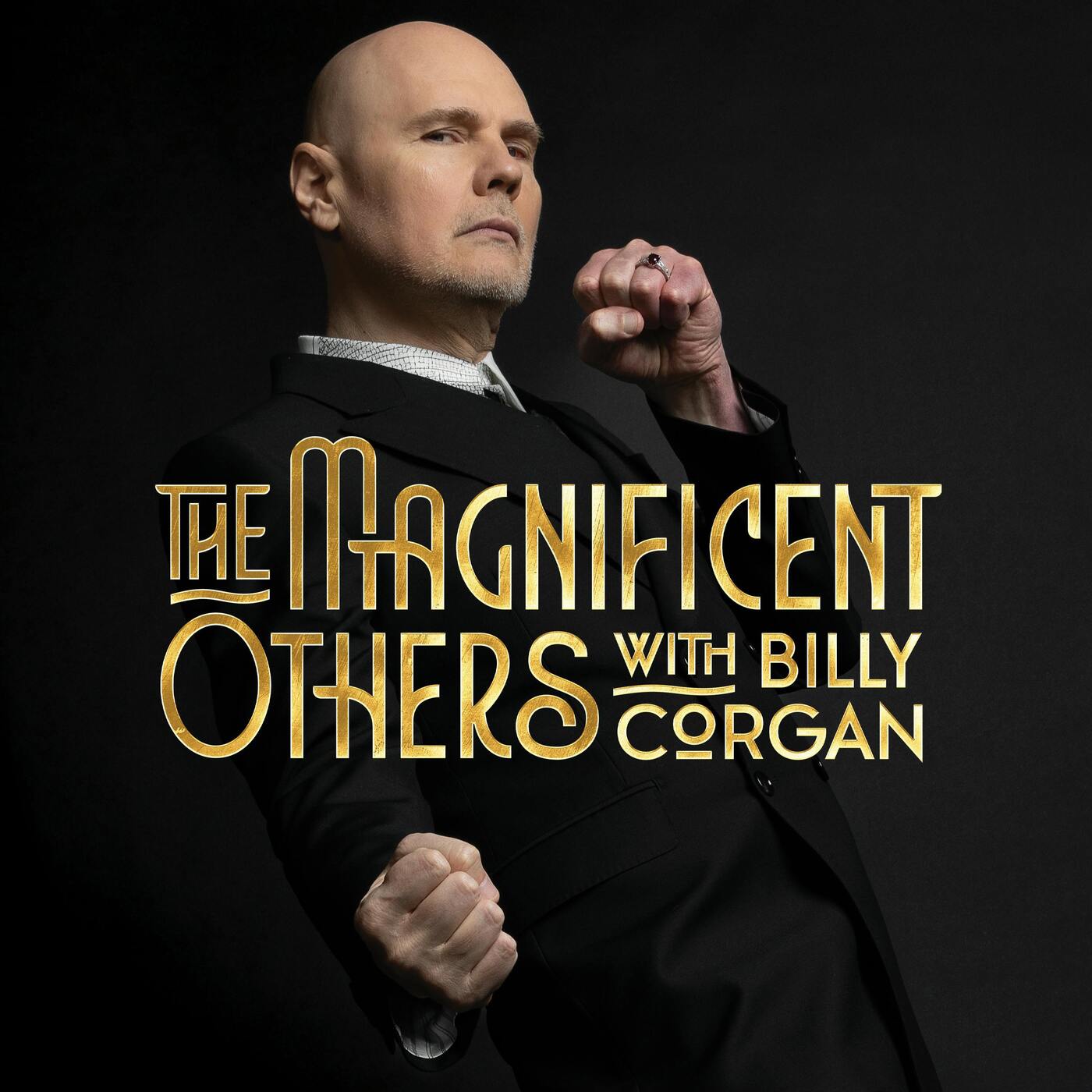
The Magnificent Others with Billy Corgan
Jesse Rutherford from The Neighbourhood | The Magnificent Others with Billy Corgan
01:27:10
Loading summary
Transcript513 lines
- [00:00]
A
The band, which we get into that story just kind of swept me off my feet and it turned into what it did. And even that I kind of fought against up until like 30 minutes ago, you know, like, it becomes something that's almost like nostalgic. Everybody's like, you know, drooling for 2016 right now. And I'm like, that's so funny to me. I know, it's funny to me too.
- [00:21]
B
Don't worry about how it falls apart or falls together.
- [00:25]
A
I want to ask you about that too, if I can.
- [00:27]
B
Yeah, go ahead.
- [00:28]
A
So when you first shaved your head,
- [00:30]
B
are you still chronically online?
- [00:32]
A
Yeah, social media and auto tune are my favorite drug. But
- [00:38]
B
Jesse, welcome. Thank you for being on my show.
- [00:40]
A
Thanks for having me, dude.
- [00:41]
B
So I love to get a snapshot because growing up in Chicago, we have an idealized concept of California life. Of course, we're different generations. But growing up in the 70s like I did, you know, the California dream, whether it was Disneyland or, you know, it seems so idyllic. And obviously a lot of what the music business propagates into, entertainment business, is the idea that California is the American lifestyle. So growing up here, give me the reality of your circumstance.
- [01:17]
A
Yeah. I mean, I think the older I get, the more I see how it just idealistic it, it really was. You know, once you like get out and you experience other places.
- [01:27]
B
Yeah. Middle America is very sobering.
- [01:29]
A
Yeah, well. And every time I fly back, I'm like, I like this place.
- [01:34]
B
Yeah, yeah.
- [01:35]
A
Makes me appreciate it.
- [01:35]
B
We felt the same way when we would fly into Los Angeles.
- [01:38]
A
See, that's what's always been wild to me because I would have like, you know, kids in my neighborhood, their cousin would come visit from wherever and they'd be like, we don't want to leave. And I'd be thinking to myself, wherever I go, I always want to leave and come back here. But now. But now I kind of get it. Yeah.
- [01:54]
B
But also give me.
- [01:54]
A
Sorry.
- [01:55]
B
They also give me the, like the musical environment, the cultural environment so I can get like a snapshot of that show.
- [02:00]
A
I mean, okay, so I grew up in a, like a smaller suburban area about an hour north outside of LA, 45 minutes north of LA, called Newberry Park. And you know, it's a. It's an upper middle class community. Pretty, pretty safe, very safe. A lot of open space, a lot of parks, you know, skateboarding.
- [02:27]
B
Yeah. What's the music scene? What's the sort of mix racially there?
- [02:32]
A
White and Hispanic? I would say mainly. Yeah. Yeah.
- [02:36]
B
Because I hear A lot of kind of soul and influence in your music, which most people maybe wouldn't pick up on.
- [02:42]
A
Oh, it's not coming from there.
- [02:43]
B
Okay. I don't know.
- [02:44]
A
Yeah, yeah, yeah.
- [02:45]
B
I mean, we could get to that, but I'm just. Just trying to understand where the music and the person comes from is right.
- [02:50]
A
Right. Well, yeah, I think my trajectory or my programming is a bit interesting because I was a child actor. So when I was like five, turning six, I became an actor. Someone.
- [03:07]
B
Can you walk me through that process? Because that's mystifying to me.
- [03:10]
A
Yeah, well.
- [03:11]
B
And I've interviewed a lot of famous child actors.
- [03:13]
A
Yeah.
- [03:14]
B
So that's an interesting thing because everybody has a different story. Was it like a stage mom thing or was it something you were interested in?
- [03:20]
A
No, I. I was. I was like, discovered. I went to go see a movie at the mall.
- [03:26]
B
No one was discovering us. See, in Chicago. That's.
- [03:28]
A
See, that's part of that. They were looking. They were preying on us out where I was, you know.
- [03:32]
B
Right. Yeah.
- [03:33]
A
This close to the microwave of Los Angeles.
- [03:36]
B
You walk me through the mall and to me's like, no, I was seeing
- [03:38]
A
a movie and I was. I was. Yeah. About five or six years old. And there's a girl sitting next to me, like a, you know, teenage ish girl. And I was just like, being a little. And just like, you know, talking and just giving her the play by play of the movie. Just whatever.
- [03:56]
B
Yeah. And he had game back then.
- [03:59]
A
I mean, I wasn't even. I was just, you know, if you say so, man, I'll take it. But no, we. We walked out of the movie theater and she went over to her parents and was like, you know, I think this kid could be an actor. Anyway, they come over to my. I was with my dad actually, at the time and pretty much were like, hey, you know, Sandy, our daughter says that Jesse's pretty entertaining kid. And like, I think he has the look like we're. We're managers and we manage our kids. And if you're interested, like, you know, here's our number. And so I took it back home to my mom and she was always very like. Because in that community, like I said, people like, will be at the mall scouting kids and whatever. And like, then the bit is they'll get you to try to pay for something. And then that's when there's a whole
- [04:48]
B
cottage industry where they kind of scam parents into the dream. And of course, if it happens, then they're. They got a piece of the dream. And if it doesn't happen, well, they just make money off them. Right?
- [04:56]
A
That's exactly, exactly. Or you just like, yeah, you waste a bunch of money on, like, head shots and, you know, whatever else to. To try to go to auditions and stuff. But my mom gave him a call, and we met up with them, and they were. They were like, no, no, we'll. We'll pay for all that. We'll get you guys started. And then I went out on my first audition and I booked it. So it was kind of like, all right, this. This might be a thing. And then it turned into a thing.
- [05:19]
B
But at five years old. Yeah, yeah, that's a pretty young age to kind of walk into the. Into the thing. Were you conscious of the pressure or.
- [05:29]
A
No? I mean, I was a little kid doing what I was already doing, but just, like, in front of a camera, you know, entertaining adults, I feel like I was always able to kind of, like, chat with adults and stuff, which I think when you're a little kid and you could communicate on that level, it was always kind of like, well, look at this guy. You know what I mean?
- [05:47]
B
So what's your acting highlight? Is there one?
- [05:50]
A
Probably a movie I did with Angelina Jolie and Edward Burns called Life or something like it.
- [05:55]
B
Yeah, yeah. And is it true you were on Star Trek?
- [05:58]
A
I was.
- [05:59]
B
We actually share a Star Trek connection.
- [06:02]
A
Were you on it?
- [06:03]
B
No, I was not. I was never on Star Trek. But somebody was a Star Trek fan. It was Next Generation times Captain Picard times.
- [06:09]
A
Yeah, that's what I was on.
- [06:10]
B
Oh, really?
- [06:10]
A
Oh, I think. No, no, no. Enterprise.
- [06:12]
B
Enterprise. So somebody was a fan of the band and I. And the second to last Star Trek episode ever, it's called Planet Corgano.
- [06:24]
A
That's tight.
- [06:25]
B
And so there's a guy I know who's a huge Star Trek fan. Like, you know, he's like, known as a Star Trek fan in the world. And I told him I was bragging, like, you know, they named this episode and the Planet after me. And I was. And he goes, oh, that's probably considered the worst Star Trek episode of all time. But we do share this.
- [06:42]
A
You're like, I still got one, though.
- [06:43]
B
It's like, come on. So does being in the entertainment business, you know, let's call it the wide version of it. Does it light anything in you or. Because I once interviewed Mickey Dolenz from the Monkees.
- [06:58]
A
Okay.
- [06:59]
B
And before he was in the Monkees, he was a child actor, and he was actually on a big series, I think, called Circus Boy. And so when he even started with the Monkees, a lot of people were like, oh, it's the guy from Circus Boy. In his mind, acting was something that he did because it helped the family finances. Had real. No particular interest in acting. So I'm asking you a similar sort of thing. Was it something like you thought, oh, this is cool, or how's the family feel about it? It's just interesting to me that you kind of wandered into this public life before you even really knew what you were doing.
- [07:29]
A
Right.
- [07:30]
B
Yeah,
- [07:33]
A
yeah. At a point it turned into that. But my mom was never, like, stereotypical stage mom.
- [07:39]
B
Yeah.
- [07:39]
A
It was more so, like. And I don't blame her for this. It was just so cool that, like, I got to do what I was doing. Nobody in my family had done anything like that. You know, I'm. My mom is a wonderful lady, and I think she was just. First of all, we got to spend a lot of time with each other because she was taken to me to, like, you know, several auditions every day. So she picked me up from school, and we'd drive to LA and be out there all day and, you know, get fast food on the way back and sleep in the car and all that. Wake up the next day and do it again. So I think we. Which eventually that got to be to the part where I was like, damn, like, I want to, like, go hang out with my friends, maybe at some. But sometimes after school or. I mean, of course I had weekends and stuff. I wasn't, like, not trying to frame it. Like, I was, like, this deprived, you know, industry child.
- [08:30]
B
I get it.
- [08:30]
A
If anything, I kind of got to really walk a. I've had a really interesting path where I've kind of, like, been able to see a lot. But I've dodged certain experiences, or not even dodged. They just. Haven't they. My cards didn't fall that way, you know, And I think I'm really grateful for that at this point.
- [08:49]
B
But why Would. What. Explain the gratitude? Because I'm. It's curious to me. Because your life could have taken this other route or.
- [08:57]
A
Yeah, because once I. I'm kind of jumping around here. But once I found music, once I discovered, like, drums and music and the local music scene especially, I was like, oh, I know what I'm going to do now. And if it weren't for the programming that I had from being a child actor, I don't know if I would have believed it as much as I. Yeah, I did.
- [09:20]
B
And maybe getting confirmation at some point gives you some Confidence or something.
- [09:26]
A
Yeah, it's a. It's, it's kind of spiritual in a really.
- [09:29]
B
No, I get it.
- [09:30]
A
Twisted way.
- [09:31]
B
I get it.
- [09:31]
A
But I, I, Yeah, I do feel like in some ways there's like a. You've been selectedness, which I don't mean to sound like holier than that.
- [09:39]
B
Yeah, I've used the word. I've used the word. This is a bit of a Catholic word, but I've used the word anointed. And some people. Sometimes people really get almost offended by it. Sure. But, you know, and I'm not putting this on you, so you give me your version, but there's something about you that separates you. Like when I was a kid, I. People would say, you're too weird or you're too this. So music for me was like. It put all the pieces together where my weirdness was a good thing. My. My different types of thinking was a good thing. But I also always stood out as a personality.
- [10:10]
A
Yeah, it.
- [10:11]
B
It sort of seemed to synergize the good and the bad or something. Right. And of course, years later, when you're successful, it seems kind of obvious. You can kind of make up whatever origin story that you want. But what I think people really don't understand, it's not like I. It's not like I was anointed to, like, play hockey for the, you know, the U.S. olympic team. You know, I was chosen for something that I was really good at, but I also had the passion for it. So you see what I'm saying?
- [10:34]
A
And quite unique, too. Especially like, if we're going to get to the sound of. I think either of our. Yeah, our bands, like, it's not. It's a little bit left of center. It's. It's pretty unique. Do you know what I'm saying? Do you feel that way about.
- [10:50]
B
Yeah, yeah. And I feel the same way listening to your music. So. So going back to this idea of being chosen or anointed, people kind of. They don't understand the real context. It's not like just because somebody taps you on the shoulder. Like you were tapped on the shoulder at five years old. Somebody saw something in you. Let's call it a spark. Right. Something simple. Okay. Well, they weren't wrong. You know what I mean? Well, there's a lot of other people get tapped on the shoulder and they blow it or they don't have the chop or people misread the spark that they have. Maybe they would have been better as a standup comedian than a child actor. Sure. Not Everybody's path lines up. So sometimes it's easy to sort of tell the story that happened as opposed to the one that didn't happen. But if it happens to you. I once had a therapist say, you know, the problem with being delusional is when your delusion is proven correct, no one's ever going to tell you that you're delusion.
- [11:42]
A
What could you tell me?
- [11:42]
B
Right. That's what I'm saying. Yeah. So it's not arrogance. It's kind of a weird thing because if you are sort of thrust into something that you believe in and you do have the conviction of, it's not like it's a. It just magically happens. You don't just roll out of bed and suddenly become the guy that everybody's listening to and you're on TV or something. No.
- [12:00]
A
And a lot of other things support the idea.
- [12:02]
B
That's kind of what I'm trying to say.
- [12:03]
A
Like, I. E. My mom, who, like, really just, like, loves me and, like, supports me and always. And supported me.
- [12:12]
B
Yeah.
- [12:12]
A
You know, in. In any endeavor that. Yeah.
- [12:16]
B
So let's jump into the music pool. So let's do it. You know, these stories get boring for both of us. So you, You. You tell it however you want, but I'm more interested, I guess, in the. In the idea of, like, when does that. Flips. Flip, switch, switch, switch flip. Thank you. Yeah, thank you. When does the switch flip that you're like, ah, okay, this is what I'm gonna do. Like, give me that moment.
- [12:40]
A
Sixth grade. There was a guitar class in middle school that I went to. A couple of my buddies went to it, so I went with them. And the teacher, this amazing woman named Ms. Laura, was like, dude, you're not a guitar player. You're a drummer. And I was like, all right. And then she had a drum kit at her house, which was like, near the school. So, you know, we.
- [13:07]
B
I went.
- [13:07]
A
I went there to. To play, and I'm pretty sure she put on. I can't remember which song it was, but it was a Nirvana song. And within a couple minutes I was. I was playing. I mean, it was just like. It was like the basic, you know, beat, but, like, I did it and it clicked pretty quickly. And like, I'm so lame. I still get, like, giddy thinking about that feeling. Because it was like. Because up at that point, up until that point, I was like middle school. So, like, you know, I went through my. Which we could kind of talk about this a little bit, but, like, I went through my. I'M gonna be a professional wrestler phase. Like we could talk about wrestling too. You know what I mean? So I did that in like 4th, 5th grade when my sister first showed me. Who's your favorite? Jeff Hardy, a friend of mine.
- [13:55]
B
Oh, I work with Jeff. Do you know that?
- [13:57]
A
No, but he's.
- [13:58]
B
Yeah.
- [13:59]
A
Such an inspiration.
- [13:59]
B
Jeff and I were at a company called tna, which is still.
- [14:01]
A
Yeah, for sure.
- [14:02]
B
Yeah, I work with Jeff at tna.
- [14:04]
A
Wonderful. Yeah, he's. I know.
- [14:07]
B
I know the Hardy brothers very well.
- [14:08]
A
They're. They're just wonderful guys.
- [14:10]
B
Jeff is. Jeff's a really interesting person because Jeff is basically. If you don't mind a digress, please.
- [14:16]
A
No, I. I love this.
- [14:17]
B
Jeff is basically an alternative musician in a wrestler's body. His whole mindset is an alt musician. And of course he's had his own music. But his gift, of course, is with wrestling. I mean, he's a. He's a once in a generational wrestler.
- [14:31]
A
It's unbelievable.
- [14:32]
B
Unbelievable. I've seen Jeff do stuff. You go, he's like plastic man. Like, how do you. How do you not die, Jeff? You know, that's a. That was a common quote. And. And I wasn't the only person impressed. The wrestlers would be like, holy, everybody.
- [14:42]
A
I think that's kind of the thing about this guy. And it doesn't. And he makes it look so effortless. And also it just, it just, it feels so natural. It goes so naturally for him. It's like there couldn't be any other.
- [14:54]
B
Well, I mean, they debuted with WWE, I think, when they were 16, so talking about a spark, right? I mean, there they are at 16 in a WWF ring or whatever it was at the time. And Jeff really is that almost like Jeff reminds me of that alternative musician who's so talented. And I'm sure you've met them where you're like, whoa, dude. Like you. You're almost like you're the art or something. Like, they're not trying to be alternative. They just kind of are that guy or girl. Like it's sort of in them that way. They don't have even have a conscious overlay. They're just a different thing.
- [15:27]
A
He can't help himself.
- [15:28]
B
Yeah.
- [15:28]
A
And the team, him and Matt reminds me also of a band because, like, you know, there's the like, annoying lead singer type like me, maybe like you,
- [15:40]
B
and I'm raising my hand and then
- [15:42]
A
the cool, quiet guitar player that's just like, how do you even do that? And just. You know what I mean? Like, even though I would say almost They're. They're opposite in that way where I think Matt, like, especially as years went on, really stepped up to be, like, very vocal and, like, where his head is at.
- [15:59]
B
But Matt is. Matt is more the intellectual, loves the business, knows the business. Jeff is the guy you literally just can put a spotlight on, and it just happens. He's. He's so gifted. It's. It's crazy. And I've watched it and participated in. And one last thing on Jeff before we go back to you. When I got to know Jeff better, he said, I want you to see something. And he showed me a video from, I think, 1994, of him, like, doing, like, crazy dirt bike jumps or skateboarding. It's him doing crazy, but, like, not wrestling. And he had set in 1994. He had set it to my music, and he wanted me see that he was an OG fan.
- [16:42]
A
And that's so cool.
- [16:43]
B
And I was like, oh, that's. What a compliment. Yeah, I really love Jeff and I love Matt too, so it's so cool.
- [16:48]
A
So I would love to meet those guys.
- [16:50]
B
Well, if you ever want to get into wrestling, I own a wrestling company, but we'll talk about that some other time.
- [16:54]
A
I need to bulk up a little bit, but I thought about it.
- [16:57]
B
Well, we get you on the next. We'll turn you to a manager, see?
- [17:00]
A
Oh, that's good.
- [17:01]
B
You as a manager, you'd be pretty good.
- [17:03]
A
Oh, that'd be good. Yeah, I could do. I could get my. My bishop on you just.
- [17:06]
B
You just. You got it. If you want to be a heel, you got to learn to take bumps, though, because nobody wants a heel manager that can't take a bump.
- [17:13]
A
You see, I want to learn how to take a bump regardless. You should in life. I think it would be good for me to learn how to take a bump.
- [17:19]
B
It's very humbling, I will say that. I mean, you've done it. I've taken bumps in the ring. I got concussed in the ring, and I know enough to not want to be in the ring.
- [17:27]
A
Ah, what a bummer.
- [17:30]
B
It's pretty dangerous in there.
- [17:32]
A
No, but I'm just saying, like, because I know you were probably so stoked about it, and then that happened, and you were like, I got.
- [17:37]
B
I got confused. I got confused. At the Hammerstein Ballroom for ECW in 2000 in front of 2,400 people.
- [17:44]
A
Worth it.
- [17:46]
B
Well, last thing on wrestling, because we could talk about wrestling for an hour every time a celebrity, in this case me, shows up in a wrestling ring, usually it's some BS thing happens. They say something mean to the crowd and somebody yells, or if they get bumped, it's usually pretty light. It's usually not violent. So the guy who was hitting me in the segment, whose name is. He was signed Guy Dudley and Louie Dangerously in ecw. Lou. I told Lou, who was my friend, I said, you gotta really clock me because I don't want it to be one of these celebrity things like, ah, you know, they took it easy on him. I said, I really want you to hit me. So he had one of those old brick cell phones. That was the Paul Heyman's old Gimmick from the 80s. So Lou was doing a version of Heyman had a brick phone. And so I'm striking a pose, he comes up behind me and clocks me in the back of the head with the phone. And I was like. It was like, boom. You know, I saw the flash.
- [18:53]
A
So that was what concussed you?
- [18:54]
B
Oh, yeah.
- [18:55]
A
Ooh, that's okay.
- [18:56]
B
See, and then after it happened, the great wrestler Perry Saturn.
- [19:00]
A
Yeah.
- [19:02]
B
Came up and said, you know, you guys did that wrong. But I didn't know there was a right way to do it. And the right way to do it is you're supposed to push the guy before you hit him. So 50% of his energy is moving forward. So when you hit him, it's already. Yeah. You know, the blow is. The force of the blow is transferred through the moving body so it'll look just as violent. But you take about 50% of the physical hit. But I took it standing there still and I rigid because I knew it was coming. Yeah. So I went down like, woo. That was it. And about two hours later, I was in some five star eatery in Manhattan, like, passing out my soup. Like.
- [19:39]
A
So in the moment, you didn't pass out, you were.
- [19:41]
B
No. But do you get. They call it the flash. You get like, almost like a. Like a. Like a light going off. Boom. And the wrestler beneath me, who was also a friend of mine, he said, I knew you were hurt because he said you paused before you fell because you have that moment, you would go like, oh, something's wrong.
- [19:56]
A
Yeah.
- [19:56]
B
And you're like, I'm supposed to fall down. And you fall down.
- [19:59]
A
Yeah.
- [19:59]
B
It wasn't natural. Like, oh, I've been hitting, now I gotta fall down.
- [20:02]
A
Yeah.
- [20:03]
B
So, yeah.
- [20:03]
A
So gnarly, dude.
- [20:04]
B
It was gnarly, but I did it. We wouldn't want to concuss you in the nwa. All right, back to you. So wrestling doesn't pan out you don't become the next.
- [20:14]
A
It was just that point in my
- [20:15]
B
life where it's like, you could have been. You could be. You could have been like a Seth Rollins. Think about that. That could work with your personality, your self assurance.
- [20:27]
A
Honestly, he was probably right past when I stopped watching.
- [20:32]
B
Do you know Seth's work?
- [20:34]
A
I'm trying to picture. I'm like, yeah, I know if I saw his face, I'd be like, oh,
- [20:38]
B
you would definitely recognize Seth. Yeah. But I'm saying in terms of. So let's say for the era that you grew up watching.
- [20:43]
A
Yeah.
- [20:43]
B
Trying to think who would be a compom. I don't know, maybe X Pac. All right.
- [20:51]
A
Bronco Buster. But also a friend.
- [20:54]
B
Great guy. You know, he lives out here somewhere.
- [20:57]
A
What's his name?
- [20:57]
B
Sean. Sean Waltman. Yeah, right. Great, amazing guy.
- [21:00]
A
Badass wrestler.
- [21:02]
B
One of the best ever.
- [21:04]
A
Yeah, he's incredible. But yeah, I was going through these phases. It was wrestling, it was, you know, basketball. And then once I played that drum
- [21:14]
B
beat, that was it. So it's Dave Grohl's fault?
- [21:17]
A
Pretty much.
- [21:18]
B
Have you told Dave Grohl this story?
- [21:20]
A
No, no, I'll do that next.
- [21:25]
B
I was like, when I meet certain people, I like to say, you know, it's your fault. You know what I mean? Like, I beat my heroes. And I'm like, you know, it's your fault that I'm.
- [21:33]
A
Yeah, I mean, he's definitely one of them. Yeah.
- [21:35]
B
Amazing drummer. Yeah, I actually saw Nirvana with the original drummer who was, who was good but not great. But when girl was in the band then it was just like.
- [21:44]
A
So I imagine seeing the first drummer and then seeing him, you're like, yo,
- [21:47]
B
yeah, I saw them on the Bleach tour. Probably play in front of like 100 people. And then I saw them, you know, when they were starting to really peak. And we played with them once even like Boston back.
- [21:59]
A
You mean once in early days.
- [22:01]
B
But then, yeah, I think we, we opened. It was a. It was a bill in Boston. It was a band, great band called Bola Lavolta, who was a Boston band than us, than Nirvana. And that even that gig wasn't even sold out. Was like maybe 800 people in a thousand seat hall. But I saw Nirvana play probably, you know, eight, ten times through the years. And I mean, I mean for a, for a three piece band to have that ferocity, at least when I saw them, they were three pieces, you know, But I saw them like, I saw them at the sort of the zenith of the Smells Like Teen Spirit kind of moment. That was interesting.
- [22:35]
A
I mean, you guys were. Did you come out before them or after them?
- [22:40]
B
Just before Bleach was out, I think 89, 90. And our first record was 91.
- [22:46]
A
Oh, okay, cool.
- [22:47]
B
And then Butch, as soon as he finished our first album, went and did Nevermind. So that's where it gets kind of blurry in there because did they make
- [22:56]
A
things click for you in certain ways?
- [22:59]
B
No.
- [23:00]
A
You were already on your path. It was already.
- [23:02]
B
Yeah, I mean, I definitely. I mean, I have no compunction about saying Kurt was a genius. You know, he was so gifted. He was like a Jeff Hardy. You would look and say, how does this one guy just know how to do all this so naturally? And also it seemed effortless. The rest of us felt like we were trying really hard. Kurt made it seem like he literally just was that guy, you know, of course it's not that simple, but incredibly talented person. And you knew he was talented. And certainly the buzz around them was intoxicating because you felt this kind of like growing kind of. It just got louder and louder and louder. And then when it crested MTV and all that, it was like, like a bomb going on. Boom. It was just suddenly the energy was everywhere.
- [23:50]
A
Yeah.
- [23:51]
B
So we all benefited from it. But musically we were completely different animals and had different points of view, which
- [23:58]
A
also probably felt good because I know, like when I get to comparing myself, which is natural, I also listen and I look and I'm like, why am I com. Why do I even need to. There's no point in doing that. Like, I have such my own little thing. Our band has such our own little thing.
- [24:14]
B
You do? Yeah.
- [24:14]
A
Then what.
- [24:15]
B
What's the I just think compliment I could pay you and I don't mean it to be self serving as you wouldn't be sitting here if I didn't think you were distinctive. I'm not interested.
- [24:23]
A
Magnificent magic. No there.
- [24:24]
B
What do you want from me? Thank you. So that's the whole point is, is. Is to point out what, what, what makes artists different and not common and. And just like the rest of the gang. Sure. So, yeah. So I. I think we can get into some of the politic if you want now or later. But one thing that was distinctive in the Gen X generation is you weren't gonna succeed if you weren't different. There was no. There was no incentive to be like Nirvana or Pearl Jam or in fact, if you did try to do that, and many bands did, and sometimes we would even play with those bands, the audience would just be like, no way. Like, it'd be like, I want one of those and one of those. So the Gen X politic was. You had to distinguish yourself almost. You had to create your own world and your own ecosystem, which. So that was very shocking to the Gen X crowd. At least it was to me. When that seemed to go away in the 2000s and it became more about. People almost sound the same. Same chord changes, same production. That was wild to us from the alt side because it was like, why would you want to sound like each other?
- [25:32]
A
Do you think that's a generational? I mean. I do, but.
- [25:35]
B
Finish your question.
- [25:36]
A
I'm sorry, I meant to say. I maybe said the wrong word. Do you meant. Do you think that's just a part of getting older also? Is that you look at things that are newer and because you have more knowledge, you're able to see all the ways that they're more similar. But when you're younger. Okay, for example, when I was a kid, the Beatles, the Stones, the Beach Boys, Zeppelin. And I know these are kind of. They go into different eras, but a lot of the music that was recorded of a certain era all sounded the same to me. I could not tell you the difference because the quality of it, the sonic actual, the way it was captured, sure. Just sounded the same to me for the longest time. I could not. I didn't know the Beatles had multiple singers for so long. I'm like, these guys all sound the same. And then time goes on and you get to, like, notice the details more and appreciate it. For me, at least appreciate it more and. Because I think it's easy to say that about a lot of genres of music, you know, And I think it's just part of, like, growing up too, and you could see things. At least that's how I've. I found it with myself.
- [26:38]
B
Because if I dig in deeper, I think that.
- [26:40]
A
I think are different.
- [26:41]
B
I think the dangerous thing, if you're in your. I'm in my 50s. I think the dangerous thing is to look at another generation and sort of lump it all together. And you sound like the old guy in his lawn saying, get off my lawn. You know what I mean? Like, you kids don't understand or we had it better. So I think you need to be careful there. I do know. I do. It's a. Let's call it a sense memory. I do know that when I was in my generational time in my 20s, the distinctions between artists were glaring to me, but it's because I was in it every day. I was listening to these artists. So maybe the things that seem common to me or, or not as diverse for let's call it your generation's music, maybe I'm not looking at it the same way I would look at it from the inside out.
- [27:26]
A
Yeah.
- [27:26]
B
And that's why I'm saying you have to be careful. But I do think there is enough evidence. I'm not trying to whinge on my argument, but I do think there's enough evidence to suggest that something happened in the 2000s. It certainly had a lot to do with the Internet. I don't know. You can tell me, because you lived it and I just watched it. But it seemed that even if you devoid yourself of the argument I'm making, let's call it top line pop, which I would not put you in that category because you're onto something different. But I mean, the homogeny there, particularly amongst female singers, top female stars became patently obvious. Same producers, same production, same top lines, same people writing the top lines. That seems to be very tied, whether it's a generational politic or it's just your generation. Generation just happened to line up with the Internet.
- [28:18]
A
Yeah.
- [28:19]
B
Putting an external pressure.
- [28:20]
A
I feel that.
- [28:21]
B
Yeah. So from your perspective. Because my perspective is really not that important. What do you think? Am I misreading that or. Or if there's some strength to the argument what, what put those forces in line to take music and, and. And seem to narrow it maybe is the nicest way to put it.
- [28:41]
A
I mean, I'm just going off top right here, but I almost feel like it weaves through certain generations, like a production style. Hits like, to me Also, like the 80s have kind of been a harder thing for me to get into because so much of it just sonically sounds the same. It's like, you know, they're introducing more digital electronic things. It all just sounds like the same.
- [29:02]
B
You know what? You're making a fantastic. Sorry to interview you. You're making a fantastic point because that's how it felt when the 80s was happening. It was suddenly like everybody's got like big reverb gated drums and DX7 keyboards.
- [29:13]
A
Yes.
- [29:14]
B
And all these bands which I recently interviewed, Kevin Cronin, the lead singer of REO Speedwagon, had massive hits. They were like a road touring blues rock ish band. And they made this transference in the 80s to like keyboards and big melody, you know, ballads. And suddenly all these bands that were very distinctive suddenly congealed into this kind of production style. So I think you're Making a great point there.
- [29:40]
A
Yeah. I think. I think a lot of it has to do with production.
- [29:42]
B
Yeah.
- [29:43]
A
For me, like, and every, you know, five to 10 years, five to seven years, whatever, something gets added or changed or even, like, look at the use of Auto Tune now. It's become so regular that, like, the coolest of the cool kids are making stuff with Auto Tune now unapologetically. Like, it just. It's just how it goes. You know what I mean? Eventually, it becomes something that's almost, like, nostalgic. Everybody's like, you know, drooling for 2016 right now.
- [30:08]
B
And I'm like, that's so funny, too.
- [30:10]
A
I know. It's funny to me, too. It's also kind of like, all right,
- [30:13]
B
you know what's crazy about Auto Tune? Just as a side note, it's my favorite drug. We could talk about that too. But I have two nieces and both sing really well. I'm still trying to convince one to go into music, but it freaked me out because when my one niece, Sophia, was about 14, I heard her singing, and I was like, she was singing as if she had Auto Tune on her voice. She had learned to sing a note, not. It was like.
- [30:41]
A
Yeah, you learned to sing into it. Yeah, yeah, yeah.
- [30:47]
B
So what's your perspective on Auto Tune? I want to. I want to get you on the record on that.
- [30:52]
A
I love it.
- [30:54]
B
I mean, because I saw a live performance where you were using it maybe, as it was obviously an effect. It was cranked, so it wasn't like you were trying to hide because you can sing. That's not the issue.
- [31:03]
A
I mean, I can. But also, you're up against perfection and people recording you on their phones. And, you know, I know what I want to hear. Bottom line, I know what I would want to hear if I was at a show. Okay. And I don't. And I am. I could be pretty pitchy. So I'm really. I would.
- [31:22]
B
Yeah, that surprises me.
- [31:24]
A
So I would much rather just especially with the way it works now. Like, the technology is so good, dude. It's like. It's just freedom. And then I don't have to think about it as much. Like, I'm. I. I really gotta. I gotta put it all. Put it all out when I'm up there. So, like, you know, anything that's gonna be able to, you know, help me to just think about the words and the actual feeling that I'm feeling rather than, here comes that. Nope, better hit the. Nope, better hit the back down here. Like, I would rather. I Would rather just feel that freedom. And also, it's like, you know, when you involve instruments that are tuned perfectly, especially not stringed instruments, if you're having any keyboards or stuff like that or like any. Any track, which for the band stuff, don't really do that. But like, I've done solo stuff and whatnot. And like, you're. You're competing with literal pitch perfect stuff.
- [32:14]
B
So, like, I will back you up on that.
- [32:15]
A
I just want to like, blend in with it and like, be able to.
- [32:18]
B
Because of the amount of tuning that goes on with music in this century. As opposed to the last one.
- [32:22]
A
Yes.
- [32:23]
B
The. The standard for a singer is just exponentially higher because you're singing. You know, it used to be the tuning was kind of a. As long as it's between here and here, and then you'd find a spot where you sounded good in here and here.
- [32:35]
A
I mean, old records aren't even in. In. In key. Right? Like, old stuff.
- [32:38]
B
Oh, no, it's.
- [32:39]
A
You try to tune your guitar to. You're like, oh, I guess this was.
- [32:41]
B
No, even. Even now. Because you can understand. Because I grew up in. In an era before tuning, there was ways to cheat. Um, Even Nirvana cheated for sure. That's some inside baseball.
- [32:52]
A
But.
- [32:53]
B
But, you know, let's. Let's call it was limited cheating.
- [32:58]
A
Probably why they succeeded so much too.
- [33:00]
B
No, but what I'm saying is, is that, you know, because the standards of tuning and pitch correction have so heightened people's sense of. Of perfect tuning. We call. Use the word perfect year word. That when I go back and I hear stuff that I did 30 years ago, sometimes I'm like, wow, I can't believe how out of tune that is. But we were convinced that was.
- [33:21]
A
Yeah.
- [33:21]
B
Because of the standard changing. So I'm with you on that.
- [33:24]
A
Our whole first EP and a lot of the first album, no tune. But it's also like, I sang differently and like going on tour and playing shows all the time and just like developing as an adult, as a person in general, and your taste changes and you figure out what. You know. I grew up also in like the heavy music scene where, like just hucking it and just as loud as I could was like. Also I couldn't hear myself because I'm playing in garages with, you know, or like in these little venues with really loud music playing. So it was, you know, I thought I was nailing it maybe more than I was. Yeah. And then like, you just learn as tour happens. That's interesting for me, if I'm in The studio. I could do anything. That's part of the joy of being in a studio. I could do something. 28 tries if I want. I could put any piece of technology on it. But when you're live, it's like you get one try. That's what's going on there.
- [34:16]
B
And see, I like the anxiety.
- [34:19]
A
Well, me too. I think I do it actually better.
- [34:20]
B
But I'm saying I like the anxiety of being imperfect.
- [34:23]
A
Yeah, yeah, yeah.
- [34:24]
B
I'm not comparing us in that way. I'm just curious, because to me, that's. That is a generational difference. Do you know what I'm saying? I like the anxiety of knowing that there is failure. Does that make sense?
- [34:35]
A
Yes.
- [34:35]
B
It's like staring at the. It's like staring at an oncoming brick wall.
- [34:38]
A
Yes, of course.
- [34:39]
B
Every. Every line.
- [34:40]
A
It's just.
- [34:41]
B
Maybe I'm just adrenalized.
- [34:42]
A
No, it's just part of the game. I definitely feel that way too. And also, I will say. Excuse me. There's something about when I really. When you really love an artist and you watch them blow it live, it almost makes me like them more. So I always think that to myself, too.
- [34:58]
B
The biggest cheers we've ever gotten are when we started a song and had to stop because we were so off.
- [35:04]
A
I mean, I get it. I love that too. Right. If I'm in an audience, I'm like, ooh, look at. They're really doing it. Especially nowadays when so much is bullied.
- [35:13]
B
Yeah.
- [35:14]
A
You need such a slight amount of really doing it that really, I think, brings an audience in.
- [35:18]
B
Okay, I have an old man question for you, so please bear with me. Explain to me, and I'm. This is a genuine question. It's not a joke. What is a mixtape? Because in 2011, you put out this. It's a mixtape. And I know. I've seen other people put out mixtapes and DJs. And what is it? What is a mix? My generation, a mixtape was, you play records for your friends, put on a tape and give it to them. But a mixtape became this other thing for your generation with, like, how to release music. Music and how to associate with other artists. So give me your definition, because I literally don't understand it just, you know,
- [35:50]
A
it's like, terms change as time goes on. I even think it's changed since we've put out our.
- [35:54]
B
Okay, so when you put out one in 2011, what's a mixtape to you?
- [35:59]
A
Well, I mean, I've been pretty heavily influenced by, like, hip hop, and I feel like that Era, especially the middle to, you know, through the. Through the Aughts 2000s mixtape. Like online blog culture was. Was something that I was like, was it a way.
- [36:23]
B
It's just artists get together and kind of share their music.
- [36:25]
A
Well, it's free, first and foremost. It's free.
- [36:27]
B
Okay, good.
- [36:29]
A
So there's.
- [36:30]
B
Is it the way people are using kind of soundcloud now and Bandcamp and stuff? Is that similar mentality?
- [36:35]
A
Yeah, yeah.
- [36:35]
B
I, I think I know to young people watching this, they're gonna think I'm so old, but I literally don't.
- [36:40]
A
No, but it all change. I mean, because even now, it's. It's different. Like I was saying to what we're. People will put out.
- [36:46]
B
Okay. So I don't feel so bad.
- [36:48]
A
No, I mean, people will put out now especially. I think it's just the way. This is the way I contextualize it as an artist to. To. To feel like, okay, I want to put out a bunch of music, but I don't want to call it an album. So we're just going to do this. It's not an EP because it's more music than, you know, seven songs or whatever. It might even be more than what an album would have. Might be like, yeah, 20.
- [37:11]
B
On the mixtape that you put out, there's other people singing.
- [37:14]
A
Yeah, there's all features and stuff. Yeah, well, because again, it was the, the. The. The point of it was to cross genre and like, you know, work with rappers. Like, that's what I wanted to do. Like my. The band was actually a side thing as, as to my solo life that was happening. And my manager who's. Who's here today. You met Kirk. He found me on the Internet on a blog off of a rap mixtape that I made. And that's like that. So that was like, well, I get it. That's what I was going for. And then the band, which we get into that story, just kind of swept me off my feet and it turned into what it did. And even that I kind of fought against up until like 30 minutes ago. You know, like for the longest time,
- [38:01]
B
I was kind of hit pause on this because. Because it does unwind. Because you know, when I'm gonna talk to someone like you, I have cursory knowledge of your life and your music. But then it's like, okay, I gotta really know what I'm talking about. At least pretend to. So see if this tracks for you from an outside point of view. I was like, okay, this is interesting. Over here you have the band which Is, you know, that's obvious, right? And, and then the success is. Is obvious. But then there's solo stuff that sort of predates and post dates, and then the band takes the hiatus. So it's like the normal story that you make in your mind, which now you're telling me is that inaccurate. Is, oh, you know, the band starts, people single him out of the lineup, somebody's in his ear, you can go solo. You know what I mean? The guy sets aside his band. I mean, I was under the same pressures. I still regret.
- [38:51]
A
Did you ever do a solo record?
- [38:52]
B
I have, yeah. I've done three, and there's a fourth one that's unreleased.
- [38:57]
A
Oh, sweet.
- [38:57]
B
Okay. Yeah.
- [38:59]
A
Excuse me.
- [39:00]
B
No, no, it's totally fine. Yeah. If there's anything I've learned and, and someday you'll maybe learn the same thing. It's like assuming that people know what you do or what you've done is. Is fool's gold.
- [39:10]
A
Oh, I had an embarrassing moment the other day with somebody where I, I. They introduced themselves.
- [39:18]
B
No, no, no.
- [39:18]
A
They, they, they said, hello. They introduced themselves and said, you know, I said, oh, I'm Jesse. And they go, I know. Yeah, I'm a fan. And I was like, oh, my God, so cool. And what's your name? And, like, once he said his name, I was like, dude, in my head, I'm like, I totally know who you are. But I just do this thing because I'm actually not used to people knowing who I am or thinking I'm someone else or something like that to where I put up this weird wall that I'm trying to stop doing that too, and just accept the, like, oh, cool. You know who I am. You know what I mean? Like, yeah. Anyway.
- [39:50]
B
Well, no, I mean, I. You know, just to make you laugh, you know, sometimes people say, are you who I think you are? And if I say yes, they'll say some name that's not me and just insert some bald guy's name.
- [40:01]
A
Right?
- [40:02]
B
I mean, Moby Michael Stipe. You know what I mean? Like other famous bald guys in history.
- [40:08]
A
Bald musicians. Yeah.
- [40:09]
B
Yes.
- [40:09]
A
So somehow you're in, like, Stone Cold Steve Austin.
- [40:11]
B
Yeah, well, I take Stone Cold's money.
- [40:15]
A
I want to ask you about that, too, if I can.
- [40:17]
B
Yeah, go ahead.
- [40:18]
A
So when you first shaved your head.
- [40:21]
B
Yeah, yeah.
- [40:21]
A
What. What year is it? And did you ever grow it back out?
- [40:25]
B
I did. I. The first time I shaved my head was about 94. I didn't tell anyone I was doing it. I did it sort of an full Bic Full baldy. Yeah, just like this. Beautiful. And then it did grow back, and it was growing back for about a year. And then eventually I was like, I'm just going to do it.
- [40:42]
A
Such a commitment, man. God, if I could commit to one thing like that, it's.
- [40:46]
B
It's. It's heavy, you know, like, nobody wants to deal with. Let's call it, whatever this. But in my case, which was weird and totally unexpected, people seem more attracted to me, not just physically, but also character wise. Something about this seemed to put things together. You know what I mean?
- [41:08]
A
So, I mean, it works so well on you. I. I think really, I take.
- [41:13]
B
Trust me, I take my hair back in a second. My children, I have a 10, seven and a baby. And my children have this incredible hair, which is mild hair. And I always joke about.
- [41:21]
A
You have curly hair, right?
- [41:22]
B
Yeah. Beautiful ringlet, like, no joke. Women used to stop me on the street and say, how do you get your hair like that? And I'd say, honestly, this is natural. And they would accuse me of lying. Yeah. Because my hair was so unbelievably kind of beautiful in its weird way. My mom had the same hair, so I don't take any credit for the hair and. But I do. I do get wispy for it sometimes. All right, back to you. Okay. So I love the idea that there's this twin thing of the band and you, so without going into everything, because a lot of that stuff's all on the record and I like to try to talk about the stuff that's not on the record. But the band's success is surprising to you? I mean, it was. Right. Basically the. I don't know if it's the first single, but the one song goes kablooey right away. Right. I mean, it's massive. So are you like, whoa, this is crazy. I thought was just kind of cool thing and. And. But are you suddenly. Maybe the question I'm asking is, are you suddenly like, this is great, but I still want to do this other thing. And the band isn't necessarily everything I want to do musically. Like, walk me through that tension.
- [42:28]
A
Yeah. I was just kind of being a maximalist and doing as. As. As much as possible, you know, and just. I think. I think I was under the impression for a long time, like, it was always a. Oh, wait, wait till they see what I do next.
- [42:47]
B
Sure.
- [42:47]
A
Kind of mentality.
- [42:48]
B
I totally understand, you know. So did you feel hemmed in by sort of not. It's maybe not the right way because it sounds negative and it doesn't mean negative. It's like, sometimes something will happen with the ban, and suddenly people want more of that. And you're like, but I want. Still want to do all this other stuff too, 100%. And then you're navigating a band's politic and then your own thing.
- [43:10]
A
And, I mean, being, you know, considered rock or alternative at all. At the beginning, I was like, no, we make pop music. It's not. This is. That's. That's why I do.
- [43:22]
B
That was, well, rock rock and also have their own politics, which maybe you're not a fan of. I'm. I'm a huge detractor, which I think
- [43:30]
A
helped me succeed in it because I was always like, I don't care.
- [43:33]
B
You didn't care.
- [43:33]
A
I don't care about.
- [43:34]
B
That is the right mentality. I came to that, but it took me a while.
- [43:37]
A
Yeah. Like, I didn't. That's not what I was really interested in. Like, I didn't think anybody around me were, like, I was not. I don't want to be a dick, but I just wasn't interested. I. Yeah, it wasn't very cool or anything. Especially in the era that I came up in. There was nothing that I was.
- [43:51]
B
So just to walk you back through some early 90s politics, because you might find it interesting. So there were bands that registered on the Richter scale of, like, great, you're indie, and you represent our values. And there were other alternative bands that didn't work within those values and they were mocked and castigated out of the Cool Kids club. So that is always there. And honestly, your approach is the best approach, which is just completely ignore them because they ultimately don't have any power.
- [44:22]
A
No. And I went back and forth with that because there's.
- [44:25]
B
Can you walk me through that?
- [44:26]
A
Well, because then there's the acceptance of, bro, you're a dude in a band. This is a band.
- [44:31]
B
Like, you're.
- [44:31]
A
You're in a band. You just have to accept it. And like, sorry, you're not gonna. You're not gonna force someone to believe some other thing. Like, look at yourself. Like, this is what's happening here. So then there. There it came. I think years of comparison and jealousy and stuff like that, and just seeing other. Other bands and.
- [44:50]
B
And. And what would. What. Without naming names, because you don't have to. What. What, for you, is an idealized state of you in the band? Are you solo or both or. And what are those ideal. What do those idealized states sound like? Is that too weird a Question.
- [45:04]
A
Sonically.
- [45:05]
B
Yeah, sure.
- [45:07]
A
Well, I mean, I would say where we're at right now, for sure.
- [45:11]
B
As somebody who's listened to your music, I think your band is in the perfect state right now.
- [45:17]
A
Thank you. I think I could say thank you to that.
- [45:19]
B
Right? Yeah. It's a compliment.
- [45:21]
A
Yeah, yeah, it feels that way. It feels like I finally get it and I finally want to be.
- [45:27]
B
It comes across that way musically cool. Like, it registers as, like. Oh, okay, right. It's all lined up. Whatever. You know, without knowing. I mean, I'm obviously asking you now, but. Yeah, without knowing the inner politic, even your own inner journey, it feels like there's a sort of a relaxed, comfortable balance of forces.
- [45:46]
A
Yeah. Yeah. I definitely feel like.
- [45:48]
B
You mind if we take a musical kind of left turn, right turn. I think what I find interesting about you, because I tend to break down, for lack of a better way to put. I tend to break down people's game. Like, what is the game they're playing? Like a basketball game.
- [46:03]
A
Yeah, of course.
- [46:04]
B
Like, oh, you're good. Rebounder or. You know what I mean? Like singer to singer. Songwriter. Songwriter or something like that. And the first thing that really struck me when I was doing deeper Dive on your music is the. The amount of rhythm in your vocal, which is very unusual for people that are generally framed up as an alternative guy. Sure. There's a lot. And I can see the hip hop part of that. So the fact that you seem to have found, like, the right balance of the rhythmic approach musically and then the band sort of sonic, that is really, like, at a beautiful spot right now. Do you see.
- [46:35]
A
Do you feel that that's such a cool evaluate or way to. Way to. Way to hear it. So, yeah, I definitely.
- [46:42]
B
It doesn't feel like one thing is betraying the other because sometimes there can be that where. And maybe it just took time to sort of like a. Like a. Like a soup. It's just taking time to find the exact right balance of those forces. Because when I listen to your solo stuff, it's way more, like you said, more in the pop.
- [47:00]
A
Yeah.
- [47:01]
B
R B. I don't know. That's my generation for sure.
- [47:03]
A
I would definitely say.
- [47:04]
B
Okay.
- [47:04]
A
It's like my part of my. My. My programming is like growing up before, I'm. I'm. I'm getting into hip hop and getting into, you know, like, hardcore and like, heavier stuff or whatever. It's. It's like Justin Timberlake and NSYNC was like. And like Brittany, like all the Max Martin stuff and all that. Like, I, I was, that's what I loved. Like, I just.
- [47:23]
B
Have you worked with those line at top pop writers?
- [47:26]
A
Some. Yeah, Yeah. I haven't worked with Max, but I've, I've, I've, I've made some cool songs with some, with some, some big players.
- [47:34]
B
Do you like that process?
- [47:37]
A
Yeah, it's fun. I, I, you know, I really do like it all.
- [47:40]
B
Yeah.
- [47:41]
A
But the band is where I shine. The band is like, I could. I just, like, have such a love for it now and like a more honestly, a love for myself, which has taken me a while to find because I was just trying to search for that and trying to experiment to find that.
- [47:58]
B
So from your perspective, what is it about this moment where you feel that balance? Like, I just gave you, like, my musical hot take, but what is your version of it? Like, what is it about this moment? Like, have you reached a level of peace? Have you said, this is the best movie? You know, sometimes I tend to think of, like, being in a band. It's like being in a movie and an album is like, now we're on Spider Man 4.
- [48:20]
A
Yeah.
- [48:21]
B
You know, like, what are you, what do you want people to believe in? Like, for you. I know this is my languaging, but, like, how do you view that? Why is it balancing out for you now?
- [48:31]
A
Well, taking time, taking time away. Because we took like five years off, which is kind of wild because we're still, all things considered, a young enough band.
- [48:47]
B
Yeah.
- [48:48]
A
To take five years off. You know, we were.
- [48:51]
B
Which is a lifetime in entertainment world.
- [48:53]
A
It is. And getting back into the swing of it has really shown me that. And I, and it's been amazing. But, yeah, I think the time away. What is it? Distance makes the heart grow fonder has made me appreciate it more. And I'm not gonna lie, like, the success that we've seen in the time away, seemingly, when, you know, I'll speak for myself, when I decided to do nothing and so much happened, and I just come from a place where I'm such a trier and such a, like, you know, hungry, like, gonna do everything to make sure. And, and that got exhausting and wasn't paying off to the, to the, to the level that I thought it would pay off, which is a whole other twisted thing that I get. It probably shouldn't expect anything like that, but because of my routing, I was always kind of like, yeah, I mean, I'm, I'm supposed to be this whatever. And when it didn't happen the way I thought it would happen, it was still happening. It was still totally happening. Just like amongst other things in my life, you know, I. I just needed to like stop it and the time away watching the songs flourish that, you know, were not singles, you know, that are several years old. Like we. Maybe it's just a thing that happens now, but I've like, it almost seems like now I'm okay with the, with the weight like that. How can anybody get to your. To your record right away? How can everybody get to your record right away? There's way too much stuff to get to. There's way too much old stuff for people to get back to. Like, I. E. Me being a little kid being like, oh, all this 70s music, 60 music sounds the same. And then I get older, I start listening. I'm like, God, no, this is really, you know, there's so much to get to. I just can't blame anybody. And we're lucky enough to have had the success that we've already had. Now we get to go on a sold out arena tour, which we've never done. So it just feels like it's new again. And it's like the coolest feeling ever to feel like. Yeah, because, you know, it gets old. Like it just. Or it just gets like anything, it just gets usual. And I needed to like get away from it and to appreciate what my usual actually gets to be and how to set it, you know, to where this point forward, I could, I could sustain it more. I could sustain myself more and understand it more and love it and appreciate it for what it is. The old song songs, the newer ones were writing, you know, I get it.
- [51:28]
B
Yeah. This is slightly different, but tangentially connected. What to you is the modern star, because the calculus by which we used to in the music business denote stardom is so different now. In the old days it was pretty simple. Were you on the magazine cover, Were you appearing on David Letterman's TV show or something of equivalent value? How many records did you sell? How many tickets did you sell? But as you know, and it's particular to this, your generation was the first generation to face this. You can be a huge Internet band and you can't sell more than a thousand tickets in any major American city. And then you have these other artists and there's many of them now where they're arena bands, they actually don't have that many fans, but they're able to compress that fan base into success.
- [52:19]
A
So yeah, the data never lines up and. And it's always. It's all out of balance. But this May be a boring way to win. Excuse me. Way to answer this question. But it's almost like. Like the technology of our telescope got improved.
- [52:37]
B
Yeah.
- [52:37]
A
And now we could see more stars in the sky. And just because it might not. You might not be able to see them just looking up with the. The naked eye. If you take out your telescope. And now we all have these telescopes, so it's kind of unlimited stars, like, depending on where you're looking and what lens you're looking through. Because there's. There's a corner for everybody. There's a. There's a. You know, there's a sky for. For every star.
- [53:01]
B
Do you. Do you find yourself looking for external definition of where you place in that firmament, or do you look towards the past? Like, how do you calculate your own success? And I don't mean even material ways, because I think, again, there's so many different ways to calculate success in this interesting time. I mean, what gives you confidence or assurance or some sense of, like, yeah, what I set out to do, I
- [53:29]
A
did well, when I think of Jeff Hardy, when I think of Allen Iverson. But I mean, honestly, being on this show is the name of this show alone is kind of a good example. It's like, this is who I wanted to be.
- [53:44]
B
Yeah.
- [53:45]
A
You know, I might have seen Justin Timberlake on the way and. And been like, that's. That's it. And there's a piece of me that has that. That, you know, it's part of my inspiration.
- [53:57]
B
Yeah.
- [53:58]
A
That, like, full, bright, unapologetic, but star. Right. But I also, like, am who I am, and I like that part of myself. I like my. I like my story. I like that.
- [54:10]
B
Yeah.
- [54:11]
A
You know, and we live era where if you're not screaming your story, then nobody hears it. But that's also why I'm grateful for, like, a moment like this where you want to sit down with me and you want to. You want to ask me about it. Yeah. And that really means a lot to me. And. Because there is still that. That. That little kid that grew up in that generation that looks at that. That type of idealistic star. Yeah.
- [54:32]
B
And well, in the reverse, we've had to struggle with. Because we grew up in a different metric. Like when I remember doing an interview once and the guy said something about, well, you stopped selling records. And I go, well, yeah, everybody did. Yeah, but the guy, the journalist was still saying, well, in 1995, you sold 6 million records. And I was like, but Beyonce doesn't even sell.
- [54:59]
A
Yeah, that's how it worked, bro.
- [55:00]
B
Yeah, but it's. But they're still, in this logic. So invariably, consciously, unconsciously, you sort of grew up in a different system of. It'd be like. If you grew up using your basketball analogy, it'd be like, well, it doesn't mean anything to score 25 points like AI used to do every night.
- [55:18]
A
Yes.
- [55:18]
B
Right. It'd be like, no, that doesn't matter anymore. We measure how effective you are when you're on the court and whether your team is plus or minus and da, da, da, da, da. So whether you score point, like, and you've seen it in baseball now. The home run has become everything in baseball. I don't know if you're a baseball fan.
- [55:35]
A
Not necessarily.
- [55:36]
B
Okay. But somebody grew up in Bay in a different time with baseball. The home run was. Yeah, it was a home run, but it was like. It's become the. The paramount design of every major league hitter now is to hit a home run.
- [55:48]
A
Oh. It's like when the first dude did a backflip on a dirt bike. It's like, good luck competing without doing that. You just can't do it.
- [55:53]
B
Okay. That's what I'm saying.
- [55:54]
A
Steph has changed the game with three pointers. You know what I mean? It's just. Things change that way. Or even another example. What you're doing right now, I think is so cool that you are. You've committed to doing this.
- [56:07]
B
I feel like I've been committed, but. Yeah, yeah, yeah, I'm sure.
- [56:11]
A
But.
- [56:11]
B
But.
- [56:12]
A
Or, like, when, you know, you see, like, a comedian that maybe, you know, maybe their standup isn't their strongest suit, but their podcast is bomb, and their banter is just like. And that's. That's all just my. Yeah, yeah, stupid dickhead opinion, but you know what I'm saying? Like, I. Well, that was. I'm fascinated with that, and I think I've. I think I've been finding. I still don't feel like, you know, I still feel like I'm finding myself. Or rather, you're finding me.
- [56:39]
B
Sure.
- [56:40]
A
You know, well, in the generation I
- [56:42]
B
grew up in, you wouldn't have done the podcast because people would automatically assume you have nothing to say musically anymore.
- [56:48]
A
Right.
- [56:48]
B
So you've had to, like, become a TV host or something.
- [56:50]
A
Right. And now you're like, no, I think I would be good at this, and I want to do it. And it only. There's nothing to feel any sort of shame about.
- [56:59]
B
Yeah. I just think we're into a different generational construct in terms of like, not. It's not as simple as be who you are, but maybe lean into the things that you're good on and don't worry about how it falls. Falls apart or falls together. Like when you said you almost had to step away from your programming of, like, I got to keep going. I got to keep going. And things came together almost organically because you were able to step away. Similar logic. Right. It's just, like, don't get too in the weeds about whether or not a podcast is good or bad for your other pursuits. I took a lot of crap when I got into wrestling because people were like, why are you into wrestling? You're killing. I would literally see comments where people say, I can't listen to his music anymore now that he's into wrestling. And I would think, like, what is me having this other life and this other thing that has almost nothing to do with music? How does that kill your buzz?
- [57:50]
A
I think it's hard for us as consumers when someone tries to change lanes. You know, I mean, I'm guilty of it, too. Like. Like, we all have it.
- [58:02]
B
There's no shade on it. I mean, I do it, too. I mean, I make stupid assumptions about people, and later I have to kind of check my. My. I don't know. My assumption.
- [58:11]
A
Well, I believe from watching your show that this is an exercise in. In you actively doing that, because I know you're an opinionated guy, and I feel like to take it on this way, and rather than to be like, this dork, you're like, what is it about this dork? And you're looking into it, and I think it's really nice and really inclusive. Thank you.
- [58:32]
B
Yeah. I'll tell you one thing that I don't think I've ever talked about. Maybe I have. But in short. But it's a 90s thing. But when we first got successful and we got out of, let's call it the stupid Chicago politic, I made this really dumb assumption, which is once we were into, let's call it the bigger politicians, the New York, London, Tokyo politic, that everyone would be nicer. And it was the exact opposite. Everyone was meaner. So I never found that greater musical community until much later in life, now that everybody's a little older and a little friendlier, so I can get together with my peers, and we can laugh about how we used to try to cut each other's throats on the charts. So my idealistic Piscean concept is that we're in the same. We're on the same team, even if we don't know each other. And it's incumbent upon us, particularly for, let's say, on the rock side of the equation, to work together to bring rock and organically heartful music back to the kids. However that works, because I think it makes the world a better place. Pop is fine. I mean, I grew up with Michael Jackson and Prince and all that stuff. There's nothing wrong with pop. I love pop too. But when pop becomes the dominant sort of social force, like if you're not this and you don't check these boxes, somehow you're lesser than. Or if you're not selling out a stadium or something, that's a. I think that's a really weird message to send to a kid. It puts a really weird pressure on them as a musician. And so what ends up happening is you get this cleaving of alt musicians feel they have to be so integral and so authentic and so different. You know, they basically. There's like every part of them has to somehow represent something different. Their hair color, everything.
- [60:19]
A
Yeah.
- [60:20]
B
And then the pop thing, it becomes so about perfection. Almost like an impossible. Yes, almost like AI level of perfection. So you basically don't have a musical middle class. Yeah, but the musical middle class is where most people live.
- [60:33]
A
Yeah.
- [60:34]
B
They have jobs, kids, lives, aging parents or whatever. They just have to figure it out. So when the two things become either so idiosyncratically navel gazing, to use an old term, straight out of the Melody Maker back in the day to, you know, Queen this and, you know, God that and all that, it's like if you're just a kid growing up in a trailer somewhere, who do you lean into?
- [60:57]
A
Yeah, yeah, yeah. And if it, and if it's not, I just think accessibility is, is, is things are more accessible now. That's why I said earlier, like, there's a corner for everything. And if you have the Internet, you can find, you can find a spot.
- [61:14]
B
But I'm not arguing with them, just giving you a slightly different angle on that. Yes, but, but we are, we're all aware of the systems of reward. Does it make sense how I'm saying it? So at different times in your life, you, I. Other people are rewarded, like, good job, you, you, you, you got the right message, you know, and the business swoops in. You know, I mean, this is fine, it's capitalism, but for a lot of people it sends the wrong message. If the, if the things being reinforced are ultimately they're so disparate from their lives that they don't they can't relate.
- [61:46]
A
But don't you just think that that's. That's just the type of person, like, I feel like that's always been there. Maybe it's louder than it was.
- [61:55]
B
I'm not saying it wasn't. I'm saying is across the arc of. Let's call it an aspirational figure, like an Aretha Franklin.
- [62:02]
A
Sure.
- [62:03]
B
One of the greatest singers ever grew up in the church. Crossed over from gospel to pop. Made some of the most music ever. Not even just soul music, just important music. Okay. That's an aspirational journey. Barbra Streisand, you know, a once in a generation singer goes on to be an actor and a director. That's a different aspirational story. But in between those types of polls of, like talented people taking you on a particular journey, there's a lot of people just make really good music. They don't. They don't have a funny haircut. They don't need to have a sort of weird social media message. So that's what I mean about the musical middle class. And alternative music historically, up until recent times, had some general representation of it. It's like they used to say about the Ramones or the Velvet Underground. More people started bands than they sold records because they were so inspiring. Like, oh, I can be that guy or that girl too.
- [62:56]
A
Well, that's why it's kind of cool to see the hardcore scene. Kind of like a hardcore music in general having more of a moment or heavy music in general having more of a moment. You know what I mean? Right now? Yeah, yeah.
- [63:06]
B
Or, you know, kids not wanting to use auto tune or, you know, purposely having out of tune and out of time songs. Take me down this rabbit hole before we kind of wind it up here, Chip.
- [63:18]
A
Chrome.
- [63:18]
B
And the monochromes. I found this.
- [63:20]
A
Monochromes.
- [63:20]
B
Yeah. Sorry, excuse me.
- [63:21]
A
No, you're good, you're good.
- [63:22]
B
See, I knew I was going to mess up something, but explain this to me, because as a casual observer, I was like, okay, this is an interesting curiosity. And I went and listened to the music and I thought, okay, this is. I'm not sure where to place this, but I kind of get the point. So walk me through that. Because I'm obsessed with avatars. That's the word I use.
- [63:43]
A
Sweet.
- [63:43]
B
Yeah. Working behind a character or a mask.
- [63:46]
A
Yeah. I mean, okay. So Chip was. It was kind of a response and a reaction a little bit. I was pretty depressed at that point. And yeah, we kind of, you know, that's what I was Saying about things, getting why I'm. First of all, why I'm so grateful that things have turned out the way that they have so far. And the time that we took away from the band has kind of lifted up so many songs and our music and our band in a way that is just, like, beyond me, you know, Nothing to do with. We were off grid, fully off grid. So it's only the music that I. I could blame it on and brought in a whole new generation of people. It's just the coolest thing. But at that time, it felt really stagnant, you know, we come out the gate with what now is one of the biggest songs ever. What has turned into that? With Sweater Weather. So we come out the gate like that, have the whole first year doing all this stuff, you know. You know, you're getting courted by everybody. You're playing late night, you're playing the festivals, you're doing all this stuff for the first time.
- [64:56]
B
Everybody's your friend.
- [64:57]
A
Oh, it's just like, what a rush, right? What a dream come true inside of the label all the. And then, you know, oh, wait till they hear this next one. They hear it, they don't quite think the same. And then. Okay, well. But, okay. But we get. Okay, we do the third record.
- [65:13]
B
Yeah.
- [65:14]
A
Just things just felt like. Not like they were failures, but like there wasn't upward motion or it was very, very, very gradual. Like, very, very, very slight, which, while I was experiencing it in the moment.
- [65:28]
B
And tell me if you felt this too, when that. When that happens, whatever. Let's call it gradual. It feels like like everything's going like. It doesn't feel like gradual growth. It almost feels like somebody's dimming the lights or something. 100, okay.
- [65:40]
A
And you're like, hold on. You know what I mean? You're like. Like, did you see people around?
- [65:45]
B
Do you see people around you start to lose confidence, too?
- [65:49]
A
Honestly, no. I think it was more me.
- [65:51]
B
Maybe you had better management than I did.
- [65:53]
A
Yeah, no, everybody was pretty. And the guys in my band especially were just like, you know, I think it was always enough and exciting for them. And I just was programmed the way that I was to be like, no, no, but this isn't it. Like, we're supposed to be at this. I get it. It's ridiculous. But also, that's just a product of being, like, a person on the Internet, too. And so chronically online and, you know,
- [66:15]
B
are you still chronically online?
- [66:16]
A
I would say so, yeah. Yeah, yeah, yeah. Social media and auto tune are my favorite Drugs. But. Okay, so basically it was. It was. We're. We were about to finish our contract with Columbia and we actually asked to be let go and they didn't let us go. And some.
- [66:37]
B
Some sign of value.
- [66:38]
A
I mean, yeah, I knew we had enough value, but, like, still, it was just kind of.
- [66:43]
B
Whatever, I get it.
- [66:43]
A
So I kind of was in the mindset of, like, I gotta switch it up. Like, we gotta do. I got. I. I'm going crazy. Like, we gotta do. We gotta do something else. This isn't. This isn't working. Like, this isn't the way it's been going. Isn't getting enough of a pop. Like, I'm not getting enough of a reaction here. So, like. And I'm just a firm believer in, like, you have to get people to look in order to get them to listen, especially in this day and age. And, you know, I was just being chronically online and seeing all the. The other artists and band guys that I was getting tagged in pictures next to that I just felt like I couldn't really relate to. And, you know, you get pigeonholed into a thing and then you're just like, but I'm not that thing.
- [67:32]
B
What was the. What was the pigeonholed?
- [67:34]
A
Oh, just like, you know, like all guys of this. Of this era, you know, and no Shade. I mean, some great. Some great artists, really, but just like, not how I really viewed myself. And I just wanted to do something different really bad. And then of course, there's Bowie and Kiss and these references that I'm seeing.
- [67:52]
B
I actually. My next question was about Bowie, so if you want to jump into that tangent.
- [67:56]
A
Yeah, I mean, naturally was going to get there, but yeah, I kind of was. Just like, I had the idea for the character. Like, I had the name. I didn't have the look, but I had like, the name and this. I was kind of working on a project with some other friends that maybe was going to be that. And then I wrote this song and we. We worked on the studio and finished it together called Middle of Somewhere. It was the first one that kicked off that era. It's the last song on the album. And it just. It was different. It really was the first time I'd ever picked up a guitar and been like, I want to play the guitar on this song. And like, on stage, I want to be a guy with a guitar, not like just frontman. It was like it. And we were. And I was playing in standard tuning. All of our other stuff is in D standard. So it just felt like something a Little bit different. And I was really proud of the song, and the boys really loved it, and we were all really proud of it, and it felt like something we'd never done before. And I was just like, we were going to shoot a video for it. I had a friend coming over to shoot a video. We had rented a house in Coldwater Canyon. My buddy was coming the next day to shoot a video after we had finished the song. And. Or maybe it was. It was a couple days later. So I went to Hollywood Boulevard the next day, got the spandex suit, like, you know, went get some. Got my makeup, whatever it was, and just kind of like, walked into the house the next day and just showed up. Chip just walked through the door, and everybody was kind of like, oh, what? But, like, we know each other so well that, like, I don't think I could do anything to surprise them at this point. They were just like, yo, crazy. Pretty tight. All right, cool. And. And. And I think a lot of my thinking also is just like, if this is, like, if. If people hate this or if this ex. If this implo. If this explodes, the whole thing, then I don't care. I'm just. I. I was just kind of at that place where I was just like, I needed. I needed that. I needed a high. I needed something that I needed to take that risk, especially with something that felt pretty solid. I mean, our. Our situation was solid. It wasn't as exciting as I wanted it to be, as. As exciting as I wanted to be, but it was con. It was. You know, I wasn't appreciating for how consistent it was, I guess, but I had to disrupt it and do something. And at first it really didn't go over well with, like, the audience. But then about a year of doing it and making some videos and taking it on tour, it really turned. And, you know, there's a. There's a demographic of our audience that. That is oftentimes seem to sometimes be people that I directly seem to relate to the most that. That have come up to me and friends of mine also, it felt like the first time that our peers or it felt like maybe the first time we had peers where other, you know, artists in our. You know, because when you have a big hit and you're making pretty poppy music, it's a pretty young audience. And especially for us, at first. And again, my goal was pop, but we didn't quite make it there. We were like, yeah, you know, and then we got stuck, in my opinion, in this alt thing, because we didn't get to go all the way. Which pretty grateful that we didn't at this point, but. So I was kind of just like, I just needed to do something. I needed. I, I. And yeah, it was like a kind of a cultural, social response, everything that was going on as well. I just felt like I didn't really. I wanted to. I think I, I just wanted to touch, to play with identity a little bit more. And with, and with, and with.
- [71:44]
B
Were you conscious of Bowie's. The obvious example. Were you conscious where people had played with identity before?
- [71:50]
A
Yeah, absolutely. Yeah, Yeah. I mean, just to touch on Bowie for, for a moment. He was someone that was always mentioned to me while I was growing up, like, because I've constantly changed. Like, I've always changed my hair, my outfits. It's femme, it's masculine. I do this genre of music. I do this. I just do whatever the f. Ck. I just have always done that. And I, I had, I had people tell me in the past, like, oh, it's kind of like a Bowie vibe. And I never really knew his music because I probably grouped it in with all the other old. That I didn't really care about. And, and then it was interviews that really got me in. And I watched probably his, like, Dick Cabot interviews. Yeah.
- [72:36]
B
And coked out of his mind.
- [72:38]
A
Well, that one. I think there's a later one where he's maybe not as much, but through all the eras. I mean, like, you know, even like into the 80s and 90s.
- [72:45]
B
And, you know, he was definitely a sage visionary. He could see what was coming before most people for sure.
- [72:52]
A
And, like, I think I relate to that. I don't, you know, and once I tapped in and once I, like, listened to the man talk and he gave me kind of the same feeling that maybe someone like, like Jeff had given me at a point in time where it's like, oh, okay. So I could like, you could be like that. You could be a man and you could. And you could be like that, you know, and this, this, this like kind of fluidity with, on every level. Yeah.
- [73:23]
B
Musically, sexually.
- [73:24]
A
Yeah.
- [73:25]
B
The gender. Yeah.
- [73:26]
A
It just, it just, it just like hit me, you know, or when I heard, you know, like, listen, like Tupac interviews. Like, there's sometimes there's people that come along that are just like, wow, you are just like, you make, you make this life so much easier for me. And then, and then, and then, and then usually I get to the music. So it was kind of the man first with Bowie, the person first. And then getting into the music. And then, of course, Ziggy is just like, yeah, it's just the coolest thing anybody's ever done. I mean, yeah, yeah.
- [73:58]
B
It's interesting you bring up Tupac because, you know, he was a theater kid. Bowie was a mime. And I think both of those things informed the way they saw how to present themselves in public. And maybe that your. Your acting background sort of registers on maybe a different level than somebody who hadn't done acting right. Because, you know, acting in rock and roll is kind of a dirty word, you know what I mean? Because people want to believe the performance they're seeing is in that moment and is an organic representation of the thing that's happening between artists and audience. The minute you explain to people that there is some form of acting going on, they get. Especially an alternative. They get kind of like, whoa, what does that mean? Was the album that I liked that wasn't really you. Do you know what I mean? It becomes, on some level, it's almost a betrayal of why they believe in you, but that's their relationship to you, not the artist's relationship to themselves.
- [74:53]
A
And I understand that because, again, I'm a fan and a consumer of things, too, so I know how it feels to feel like you've been duped or something.
- [75:01]
B
Yeah. Was it. So, obviously, it's sort of a fun laugh lark. Hey, we're just going to try something different. That people didn't accuse you of being disingenuous or. Or did you find that
- [75:13]
A
with Chip?
- [75:13]
B
Yeah.
- [75:15]
A
Wait, ask one more time.
- [75:19]
B
Sometimes when you present a different mask in public, people will do the math and start to accuse you of being inauthentic, either in the present or in the past.
- [75:28]
A
No, it wasn't even that. It never really felt quite that. It just kind of felt like. Which is part of why I did it, too, I think. I think there was like. There's a certain. There's a certain type, you know, type of fan or. Or viewer that's like, why would you do this to yourself? Like, you look weird and scary and whatever else. Like. Like, I want your.
- [75:54]
B
Have you seen my goth phase? You know what?
- [75:55]
A
You know what I mean? It's just like. It's not always about that. And also, I didn't really feel. I felt like that was more my angle than, like, looks maxing, for the most part. You know what I mean?
- [76:06]
B
Like, I don't know what looks maxing is. I hear the term, so you have to inform me what that means.
- [76:11]
A
Well, I'm just like, you Know, I, I, I'm, I have eyes too. I see, I see what I look like. I see where my advantages are, but I could also see where there's other people where really, you gotta look at that face, you gotta look at that body, whatever it is. You know what I mean? Like, sometimes that's. And I just didn't feel like that was the main thing. And I kind of wanted to rid myself of that, of even thinking that too. I just wanted to go into a more artistic expression rather than like a sexy, you know, and sometimes I feel the other way. You know what I mean? Like, sometimes you want to feel a bit sexier. But at that point, I was just kind of like. And also, Chip was sexy. Chip.
- [76:48]
B
Chip made me.
- [76:50]
A
I've had some friends actually say to me before, like, actually, that was the most you thing. Like, that is. And I refer to Chip as my silver lining. Because it kind of felt like that. It kind of felt like this guy was just so worn down, and rather than putting something on, Chip almost felt like that what was underneath. And, and you know what I mean? Like, the thing that was, it really did, like, in a lot of ways, save me. And I don't mean, like, you know, like from like a, you know, dying in like a. I get it. You know what I'm saying? But just on like an artistic, creative level. Like, I really needed that. And. Yeah.
- [77:30]
B
Okay, last question. Is it too soon to assess or evaluate your generation's success and or failures?
- [77:41]
A
My whole generation, sure. Is it too soon?
- [77:44]
B
Yeah,
- [77:53]
A
Yeah, maybe.
- [77:55]
B
Maybe it's full transparency. I'm married to a millennial. Okay. So I live it every day. Okay, but good and bad, or good and not as good.
- [78:03]
A
What do you think, though?
- [78:05]
B
No, I think, I think your first record came out, what, 2012? 1312. Okay, so we're 14 years. I mean, that's about the right amount of time to like, say, okay, was that valuable? Not valuable. You know what I mean? That's kind of when it started for me in my. So that seems about right. But that's why I'm asking you if you think that's fair.
- [78:26]
A
My head just goes to technology. And because we're still in the streaming era, unless something until I don't know what it'll be. But, but people also didn't know what it would be once CDs came. It was like, sure, look it, they're smaller than the last one. And this, they can't get better than this. And then we've went away from the physical, you know, world at all. And we're getting more into the, you know, are less into the physical world, I guess.
- [78:50]
B
Or, or so is your, is your argument that time is less important now?
- [78:55]
A
No, I'm just saying, like, like, you know, we got in like right at the beginning of the streaming era and we're still in that.
- [79:04]
B
Well, I think what I've said to my wife is your generation is the first generation that only knew technology.
- [79:10]
A
Yeah.
- [79:10]
B
The generations before had, you know, they, they, they existed through the transition into technology. But your generation was like technology from the, from the go.
- [79:20]
A
Yeah, pretty much.
- [79:20]
B
Yeah. So in that way, you guys are kind of like astronauts. You're like the first test case. How is this going to work? How is this going to impact? Self identity, gender, fashion, music? So I think that's why it's interesting to start evaluating it from the perspective of like, okay, if you're going to, if you're going to paint a kid red from the first day that they're born, what effect is that being painted red from the first day they're born going to have? Yeah, if their first artistic output starts around here.
- [79:49]
A
Yeah.
- [79:49]
B
You know, mid 2000s, I think is what generally people would call it. Okay. Now we're far enough out to say okay, you know, I mean, it's going to be a. You're people are never going to start. Stop evaluating your generation. I mean, I'm 30 years into Gen X and people are still talking about the good and the bad. And every year it changes. Some bands rise, some bands fall, Some artists are held up as heroes that were not even close to heroes in the time. And other people who were huge in the time are completely forgotten. So it becomes this kind of football game, cultural football game evaluation. So that's why I was asking is, do you think it's appropriate to start now?
- [80:26]
A
Yeah, I don't think it's inappropriate. Yeah.
- [80:28]
B
Okay, so give me your, Give me your hot take on your generation. You can take it any way you want.
- [80:39]
A
So, so that's too weird a question to evaluate the success. What is it now? The. Of my generation? All right, this is great.
- [80:47]
B
All right, give me your, Give me your hot take on your generation. Has your generation succeeded in its goal? Is it. Has it been innovative? Has it been. Has it been a failure? As I'll give you a perfect example, when I was on sort of, let's call it the 14, 15 year mark of my generation and I started being asked those questions, I said the Gen X was a failure.
- [81:07]
A
I mean, I wouldn't be surprised If a lot of people say that about their respective generation, because it kind of informs the one after that, and you look at the damage.
- [81:15]
B
But I'm not trying to project on you.
- [81:17]
A
I mean, I feel that for sure. I definitely think so. If my generation is very responsible for the delusion that. That we're all stuck in now. And the, the, the. The.
- [81:28]
B
Are you including us? All of us? Right.
- [81:31]
A
What do you mean?
- [81:31]
B
I'm saying it's not just the. If you.
- [81:34]
A
The generations of the past, too, and.
- [81:35]
B
Yeah, exactly. I mean, yeah, sometimes I feel trapped in sort of millennial stuff.
- [81:41]
A
Oh. I just feel. I don't even feel trapped in it, but I just. I do feel a bit responsible for this era of, like, the truth is what you want it to be.
- [81:52]
B
Sure.
- [81:52]
A
But I also do believe that. And I have a hard time. How do I say this? It's very numb. Feels very numbing. It feels very like. Like I can't. I have trouble. I don't even know. I don't want to, like, even argue about anything or, like, have much of an opinion on anything because it doesn't really feel like it really matters, unfortunately. And I don't believe in answers. And I think, you know, just. It's kind of a wonderful thing too, you know, like, even, you know, looking at something, like, with TikTok, it's like. And I've said this so many times, so. Yeah, but it's okay.
- [82:43]
B
You can. You can repeat answers here.
- [82:45]
A
Yeah. I haven't said it to you, so. But it just feels like the secret's out. We're all artists. And. And it. And it used to not be that way, even if it's not necessarily true. But there's a way to do it or to fake it or to. To. To get yourself out there and become, you know, an artist and creator.
- [83:02]
B
We're aligned in that. Because the. The thing I do say in a positive frame of mind is that this technological shift has allowed more people to participate in the conversation than ever before. Correct. So however they're participating, I think that's a good thing. Overall. I think, as you pointed out before, the hard thing as an artist is it's hard to ascertain sometimes what value is because the old systems have eroded. The new systems don't really stick. They seem to change by the day. I mean, you know, remember there was that one year where influencers were being paid millions of dollars to hold up soda cans, and that's all kind of gone away because advertisers realized that influencers didn't have as much influence as, as they might have thought. So if I'm trying to make any point, it's, you know, it's looking at the, at the, at the good and the not as good. And the good side of the equation, which, you know, you're astutely pointing out, is that there are more people contributing to the artistic conversation than ever before. What's mystifying to someone like me, who grew up in a different generation is there's so much information and no one can seem to make up their mind that it's like the thing I'm supposed to care about today is not the thing I'm supposed to care about tomorrow.
- [84:14]
A
Oh. And if I care about this thing, it inherently means that I don't care about this thing.
- [84:18]
B
Yes, yes. And I, I, but I, but I think that.
- [84:20]
A
Which I don't think is true.
- [84:21]
B
But, but that's, that's, that's part of what we had to get past in the past, which is like one person, in order for one person to win, another person has to lose. I don't think we live in that economy anymore. Yeah, but I definitely grew up in a time, let's call it, you know, a harsher time, for many reasons, a
- [84:38]
A
bit more binary, even if you want to put it that way, That's a
- [84:41]
B
perfect way to put it. Good and bad, winners and losers.
- [84:45]
A
Yeah.
- [84:45]
B
And so, like, for example, when I was pointing out to you about alternative culture in the early 90s, the reason certain artists were held up and, and sort of pushed to the top of Rock Mountain was that they would say, well, these are the, these are the artists that extol the values that we, the writer class, wants. And, but in order to push them up, they had to push other people down.
- [85:07]
A
Yeah.
- [85:07]
B
So you have this bullying culture in the journalistic class where one artist could do no wrong and the other artist could only do wrong. Do you know what I mean?
- [85:15]
A
Yeah.
- [85:16]
B
So sometimes when I've talked about the bullying that went on in the 90s from the journalistic class towards the artists that they didn't agree with, I'm obviously one of them. Sometimes I'll tell people to go back and read those articles and they cannot believe the language in it.
- [85:31]
A
Yeah. Pretty harsh.
- [85:32]
B
Well, it's, it's, it's beyond harsh. It's, it's a need to assassinate one to extol the other. So if, if the equanimity of maybe more people participating in it, it's more of an ebb and flow. If that sort of is Less ultimately harsh. That's probably a good thing. But it's harder sometimes to delineate the ley lines of who's winning and who's losing because there's. There's really no referees anymore. Not that I even agreed with the referees, but at least there was this sort of clear, if you were on the losing side, you at least knew you were losing.
- [86:03]
A
Sure. Yeah. Yeah. Well, and I just think everything, It's. It's all so loud. And the things that are really the loudest, like, you know, and we're all competing on the same field now. Like, you know, we're competing with politicians and models and, you know, your aunts influence. It's all the same thing. We're all the same. Which in one way is like, no, but in other ways, like, yeah, but that's kind of the issue is that people still don't want to, like, agree on. On that. Which, you know, it's easy to understand that too. If something's alien to you, it's scary, and it feels like last thing then.
- [86:38]
B
Do people. Do people still want stars right now? And we're taping this in 2026. Do people want stars?
- [86:45]
A
I think so.
- [86:46]
B
Why?
- [86:48]
A
Hope?
- [86:49]
B
Okay.
- [86:50]
A
Distraction. Same same old reasons as I. As I always, I think, see, maybe
- [86:56]
B
it's one of those. The more things change, the more they stay the same.
- [86:59]
A
Yeah. History repeats itself. Geez Louise.
- [87:03]
B
Awesome pleasure. Great talking.
- [87:04]
A
Thanks for having me, dude.