← The Magnificent Others with Billy Corgan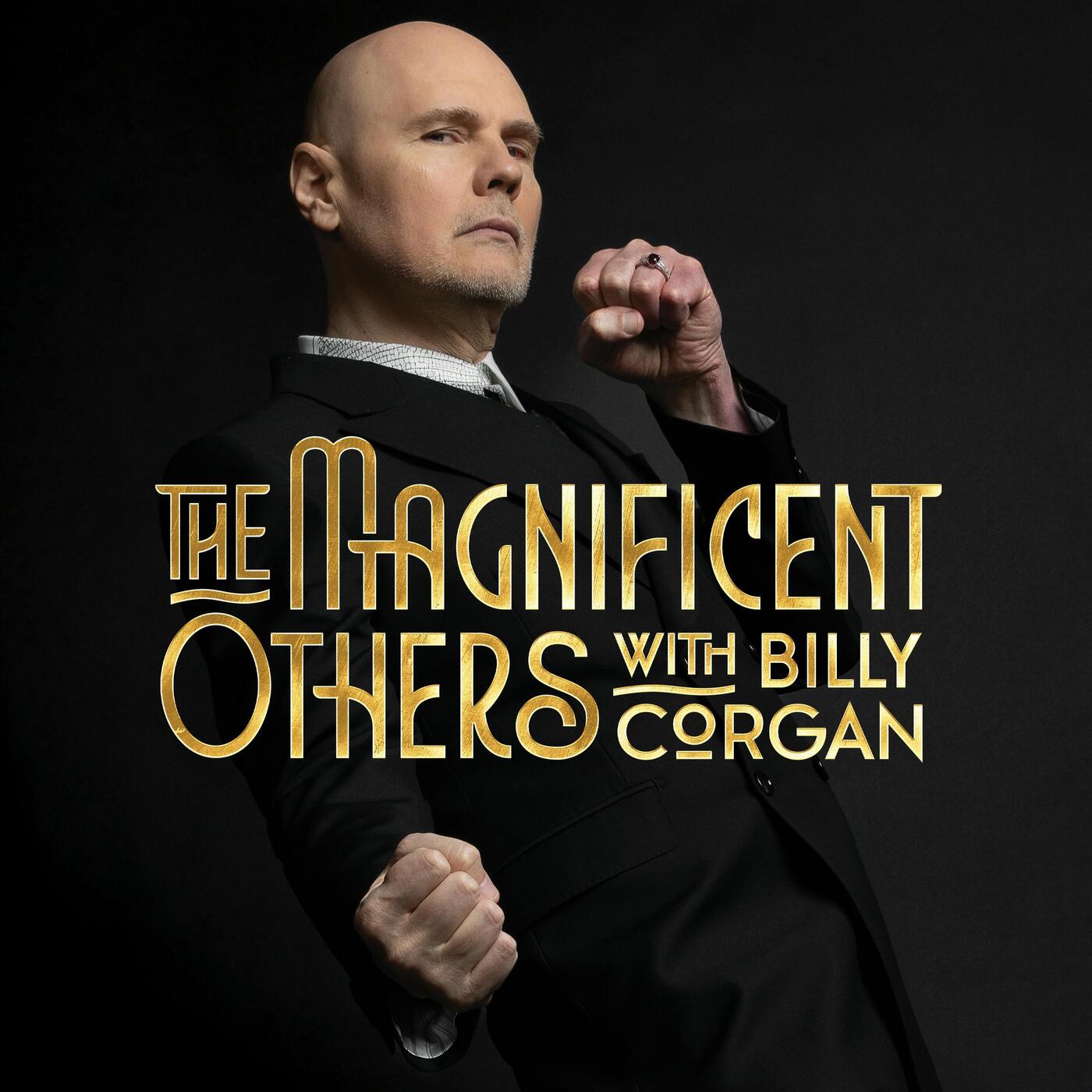
The Magnificent Others with Billy Corgan
Nancy Wilson of Heart | The Magnificent Others with Billy Corgan
01:37:02
Loading summary
Transcript775 lines
- [00:00]
A
Nobody knows where they're going at the beginning of their life like that. I feel like, way too lucky.
- [00:07]
B
You were really accepted by a rock audience wholeheartedly.
- [00:12]
A
When the sisters sing together, there's this thing that happened.
- [00:16]
B
There's something magical about when siblings can put their voices together. It's a God given kind of spookiness.
- [00:22]
A
It is kind of spooky.
- [00:24]
B
Yeah. It's like beauty, charisma, sass, fire.
- [00:30]
A
Yeah.
- [00:30]
B
A voice. And not just a voice. A voice that means something to people.
- [00:35]
A
It sounds great on the radio. And you just want to roll down your window, you know, and chew gum or something.
- [00:45]
B
Nancy, thank you for being here.
- [00:46]
A
I'm happy to be here.
- [00:50]
B
It's such a big story, so I'm going to start in a very obvious spot. I'll try to avoid all the obvious. But it seems such a watershed moment when the Beatles start appearing at Ed Sullivan. How many musicians they inspired to say, I want to do that completely. And you and your sister kind of.
- [01:09]
A
Had that moment that was the same lightning bolt that hit the planet, you know, hit us as well as musicians.
- [01:17]
B
Yeah.
- [01:18]
A
And we were like. We became the zombies for guitars.
- [01:23]
B
Were you already playing or was that.
- [01:25]
A
Well, musical family.
- [01:26]
B
Yeah.
- [01:27]
A
So kind of the von Trapps in a lot of ways. We were all singing together in the car and ukuleles and pianos and harmony.
- [01:37]
B
So you're already in a musical mindset. And then you see that and you think, okay, that sort of organizes where I want to do that.
- [01:43]
A
Completely organized, you know. Yeah. Focused in our attentions on the rest of our lives, what we wanted to do. We're so lucky that way.
- [01:55]
B
What was it about the guitar for you that, you know, because, you know, guitar players are a particular breed.
- [02:00]
A
Yeah. They're weird.
- [02:01]
B
Yeah. Thank you. It's a kind of a nerdish thing that goes on.
- [02:04]
A
A guitar pick on you.
- [02:05]
B
What's that?
- [02:06]
A
Do you have a guitar pick on you?
- [02:08]
B
I think I do, actually.
- [02:09]
A
All trade. Yeah.
- [02:10]
B
Okay.
- [02:11]
A
Yeah. A steely for a puri.
- [02:12]
B
Yeah.
- [02:13]
A
It's kind of like trading.
- [02:14]
B
What was it about the guitar that spoke to you?
- [02:17]
A
Well, it's. I have a musical facility, I guess, as a. I'm just a musical person born into it with parents, you know, that taught us harmony singing and piano lessons and flute and clarinet and so when the Beatles showed up, it was like, must have guitar. And I just took to it, you know, I just. I just. It absorbed me.
- [02:48]
B
It.
- [02:48]
A
It still does.
- [02:50]
B
Yeah.
- [02:51]
A
But when I was 9, it was like, I must. This is. My purpose, is to Be to learn how to play every Beatles song.
- [03:01]
B
Wow.
- [03:03]
A
And every hit song that was on the top 40 radio station. You know, the terrestrial radio station. And, you know, I learned how to read music a couple times, but it never. I need. Never needed it really. I just. Use your ears. When you have good ears, you have good ears.
- [03:21]
B
Yeah.
- [03:22]
A
So you can imitate what you hear and approximate what you want to hear.
- [03:27]
B
Yeah.
- [03:28]
A
But the guitar was. I got the worst guitar of all time was the first $1 30 rental from the bandstand music store down the street. And it was a Lyle.
- [03:43]
B
I was gonna say. You remember the brand? Yeah, a Lyle.
- [03:45]
A
It was like a 3 quarter size plywood guitar with like a dowel neck, you know?
- [03:52]
B
Yeah, yeah.
- [03:52]
A
And the strings were about that far off the. The fretboard.
- [03:57]
B
Yeah.
- [03:58]
A
So it was like the. It was life without F. You know, you cannot.
- [04:02]
B
You can't play F. There's a guitar player joke. I know exactly what you mean.
- [04:07]
A
No bar chords allowed.
- [04:08]
B
I didn't play any F's for like the first 10 years of my life. It was like. This is too hard, right? Y.
- [04:13]
A
Is it true? Truly is. But. But Ann got a good guitar from our grandma because we were all interested in being like. Not like the Beatles. We wanted to be the actual Beatles. You know, have a band. Be like the guys. Not be the guys.
- [04:31]
B
Yeah, yeah.
- [04:32]
A
Not like the guys or the girlfriends of the guys, but be them.
- [04:35]
B
Yeah.
- [04:36]
A
And her guitar was playable, so I would sneak off with her guitar. Yeah. And she'd get really pissed off at me. You took my guitar.
- [04:46]
B
Give it back.
- [04:48]
A
Yeah. So. Yeah, it's.
- [04:50]
B
It's. It's striking that you were so young and. And both you kind of arrived at this.
- [04:54]
A
She had this facility for. Vocal facility. Like God given or from the Great Spirit.
- [05:03]
B
It is kind of frightening how.
- [05:04]
A
From the great. It came from above, you know, but.
- [05:07]
B
It is kind of frightening as somebody who sings and you sing that.
- [05:10]
A
It's.
- [05:11]
B
It sounds so easy for her. I know she hits like crazy notes and it's just like.
- [05:16]
A
She's just like pyrotechnically.
- [05:18]
B
Yeah.
- [05:19]
A
Effortless.
- [05:20]
B
And even if you listen to your first record, which we'll get to in a second, but it's, it's. She's already there. It's not like you're. You don't hear somebody in development.
- [05:29]
A
No, no. It's just. Sorry, but you hear. Well, I'm an expert on the topic.
- [05:35]
B
Yes, please.
- [05:35]
A
But during. During the course of our little. Our little run here for 50 years, one time you can Hear the Elton John influence and her accent of singing on like Dream, she'd go like, you know, she'd had like that little country slang kind of vocal accent.
- [05:56]
B
Yeah, right. And I get that.
- [05:59]
A
And then of, of course, Robert Plant was massive influence, you know, on. But not pretty slick. Not, you know, the females of the time. They were more R B or psychedelia. Pretty slick.
- [06:15]
B
But like all great artists, it sounds like her no matter what it is. Yeah.
- [06:21]
A
And she. We'd have. My parents would be having a party downstairs and it's like, come on down and girls, come on down and entertain the. You know, entertain the party.
- [06:33]
B
Oh, okay.
- [06:33]
A
So they go, ed, do your Ethel Merman imitation, you know, and she'd sing Hawaiian wedding song. Like.
- [06:41]
B
Yeah, like with the big.
- [06:43]
A
Like there's no business, like show business. That was the Ethel Merman sound.
- [06:48]
B
Yeah.
- [06:48]
A
That as a little kid, she was like able to belt, you know, and just entertain.
- [06:54]
B
Well, Judy Garland had the same thing, you know, I think Judy Garland started on stage when she was four.
- [06:59]
A
Yeah.
- [06:59]
B
And I think by the time she was six, she was appearing on, you know, big old school, 2,000 seat theater.
- [07:06]
A
Born in a trunk.
- [07:08]
B
She. She had that big voice, Right.
- [07:10]
A
She just had that projecting, you know, but the. But all of the kind of emotional muscle behind it too, you know?
- [07:21]
B
Yeah.
- [07:21]
A
Because Anne was kind of the ugly duckling, you know, the little fat chick with the braces. And so I think a lot of her pain was part of the muscle that she put behind her vocalizing to prove the point, you know, that she was kind of lovable. And she proved it. She totally proved it.
- [07:45]
B
Okay, so correct me if I'm wrong, because, you know, you have to do your research. But the band Viewpoint. Yes, you were in Viewpoint at some point.
- [07:54]
A
We were called the Viewpoints.
- [07:57]
B
Okay, The Viewpoints.
- [07:58]
A
Yeah, the. Because we were a little collective of four.
- [08:03]
B
All female, Right.
- [08:04]
A
All four girls. I was in junior high and they were in high school and we were doing Bob Dylan protest music, right? So like four little white chicks from suburbia called the Viewpoints, you know.
- [08:19]
B
Oh, yeah. Okay.
- [08:20]
A
It's a very.
- [08:21]
B
What a name now. I know, I get it.
- [08:23]
A
Such rebels, you know, with our skirts and our jackets that match the Beatles uniforms, actually, because our mom would us those uniforms to match the Beatles outfits. So, yeah, we were our little folk quartet called the Viewpoints, singing about Vietnam and stuff like that. From middle class. Lower middle class suburbia.
- [08:48]
B
So this would be like late 60s.
- [08:50]
A
Yeah, yeah. Right after the Beatles.
- [08:52]
B
Wow.
- [08:52]
A
Yeah, right before the big summer of.
- [08:57]
B
Love and I saw some indication where you also would play solo too. Solo Acoustic? Is that. Is that.
- [09:03]
A
Yeah. I knew I was always going to be in Anne's band because of bands like the Viewpoints and the Little Rapunzel. We had a band once for a while and then we were. But she's being four years older than me, she got into bands that had drums and amps and stuff first, and she was able to play at places that served alcohol first.
- [09:27]
B
I see.
- [09:28]
A
So I had to hang back for a couple of years and decided, even though I knew I was going to join her band, obviously I went to university first to kind of declare my independence as an individual from being her little shadow for all those years. And so I'm real happy I did that because I read all about, you know, Dostoevsky and, and I got into Goethe and Nietzsche and all that stuff. All that college girl stuff. Wouldn't you love Todd Rundgren, stuff like that?
- [10:03]
B
Okay.
- [10:04]
A
You know, every college girl must love Todd Rundgren.
- [10:07]
B
Yes, Right. A wizard and a true star is Todd Rungren.
- [10:11]
A
Right, right.
- [10:14]
B
I think that's interesting though. So you, you had a sense of destiny with your sister. Run. What was your relationship like then? I mean, because, you know, the focus always is on the, the relationship within the context of the band.
- [10:27]
A
Right.
- [10:28]
B
Because that's where the most people go. Yeah, but, but what was your. Like if there wasn't a band, if there wasn't music, what was your relationship like then?
- [10:38]
A
That's an interesting question I've never been asked, you know, but because my own self definition has been Ann's sidekick ever since I was born, basically. We have a third sister who's eight years older than me, and so I'm the youngest, but she, Ann always was kind of like the, the. The initiator. She instigated, like before we even had rock bands or the Beatles came along, she was like, well, let's make a play in the garage and you know, like, charge, charge for Kool Aid and have the neighbors come over and have a little comedy show. And we did. Our dad had a reel to real Sony 2 track and we'd make little comedy records. And I still have those things for the documentary that's coming up. But you know, it's really fun, clever stuff that young people are capable of when given the right tools. We had guitars and we had humor. We had. We had a solid family life.
- [11:43]
B
Yeah.
- [11:44]
A
With musical people, you know, that we. Family that we came out of. And I think, I mean, even when I got real angsty and the port, the hormone poisoning started to kick in. You know, when you're like 16 and 17, you know, and you get, you know, it was like, oh God, my family's too happy. Like I'm not cool enough because my family is tight and together. Cause we're military and so we stick together like a troop and pull the wagons in a circle of a little love circle in our family because we had to move and move and move and move and be the newcomers everywhere and have our little musical tribe. And so I'd be like really embarrassed that my parents were not divorced. Stuff like I don't have anything to remember. Not enough trauma, not enough trauma to like whine about, you know, so, so we had a really solid family. Yeah. For, for like being little productions and the joy of our parents, like helping us out, making costumes and. Yeah, all that stuff.
- [12:57]
B
I was going to ask you because you have these experiences of living in Taiwan and I think Panama or.
- [13:02]
A
Yeah, Panama.
- [13:03]
B
It's not everyone's experience to kind of live internationally very young.
- [13:08]
A
Yeah, well, I was born into. I came after Panama, but they lived in the Carolinas and Taiwan when I was really a kid.
- [13:21]
B
Do you have any memory of those times?
- [13:23]
A
A lot of home movies that jog your memory, I think.
- [13:27]
B
Sure. Yeah.
- [13:27]
A
And I think I do remember a few things. Yeah. Pretty well actually. A lot of sense memory. And the water buffalo and you know, the, there was a walled in safe compound where the military families were living, where there was shooting outside the walls and stuff like that. And you know, there was a hired staff inside of our compound to help us cook and the nanny and. But you know, it was, there was typhoid and there was all kinds of, you know, all kinds of tropical sudden downpours and just a really rich sense of memory of being a little kid in all that humidity and turmoil and stuff.
- [14:25]
B
Color and color and sound.
- [14:28]
A
Yeah, I know.
- [14:29]
B
So your father was a marine?
- [14:31]
A
Yeah, he retired as a, as a major.
- [14:35]
B
And your grandfather Brigadier General and then.
- [14:38]
A
His dad retired as a four star brigadier general.
- [14:42]
B
That's crazy.
- [14:43]
A
John Bushrod Wilson Sr.
- [14:45]
B
Isn't there a military base named after your grandfather?
- [14:49]
A
I don't know.
- [14:49]
B
I read that somewhere.
- [14:51]
A
Really?
- [14:51]
B
Yeah.
- [14:52]
A
Well, if, if AI says it, then I'm going to believe.
- [14:55]
B
I don't know. I mean, some things, I read stuff all the time. That's not correct. I thought that's an interesting detail. They said it could be. It was connected to 29 bunch palms out there by Joshua Treeler.
- [15:10]
A
There is. You're right. We got A little flag memento that they gave us out there. That's why. And, yeah, when my dad actually passed on the color guard, came out to the house and did the salute and all of that in the proper way. But, yeah, my granddad, my uncle, my dad. A lot of military. A lot of Marines in the family, and from my mom's side, the World War I military, a lot of fighters, a lot of warriors in my family.
- [15:53]
B
So is there any. As you're moving into music in this intense countercultural time, kind of like what we have now? Yeah.
- [16:00]
A
Okay.
- [16:00]
B
You're coming from a traditional military background, and yet you're. You're also in step with your generation. You're singing protest songs. Was there any. Was there any consternation on your. In your parents part that you're gonna misrepresent something, or was that it? Was that at play at all?
- [16:18]
A
Well, you know, it was really amazing what. How my parents evolved through the late 60s, where Vietnam got more like a dirty war. My dad had just retired and an English teacher because he had a sense of higher learning and poetry that he wanted to pursue after all the horror that he'd seen in World War II. And so he became kind of a peaceful. He was enjoying his peacetime that he fought for.
- [16:52]
B
Right, I see.
- [16:53]
A
And then fell in love with the magic man who was a draft evader.
- [17:00]
B
This is. This is Michael.
- [17:01]
A
Michael Fisher.
- [17:02]
B
Thank you. Yes.
- [17:04]
A
The brother of the guitar player that, you know, that I unwisely walked into a relationship with.
- [17:12]
B
But anyway, never date a guitar player.
- [17:15]
A
Never date a guitar or a drummer or a bassist.
- [17:18]
B
You definitely don't want to date a drummer.
- [17:19]
A
Don't date a drummer. No. Yeah. But do not lie down with drummers. Yes. As they say. So my dad was enlightened enough at the time and disagreed enough about the Vietnam War, how that was being handled and not. They called it a military action instead of a war.
- [17:41]
B
Was that something he talked openly about?
- [17:42]
A
Yeah. Yeah. And he stopped recruiting for the Marines because of Vietnam.
- [17:48]
B
Wow.
- [17:49]
A
And he then became an English teacher instead. And so when Anne moved up to Vancouver from Seattle, where we lived, you know, hitchhiking with a backpack and a guitar, basically in the day when you could trust an unknown driver, maybe he was okay with it. He said, you know, you tell that young man that I. I wouldn't fight that dirty. Worried or, oh, I see. You know, so he agreed with, you know, being a. Basically, he was a conscientious objector about the way that war was being handled. War.
- [18:37]
B
Yeah.
- [18:37]
A
Yeah.
- [18:38]
B
So it's a little unclear. There was a band, Hocus Pocus, or it was White Hart, so she's kind.
- [18:45]
A
Of after the Viewpoints in Rapunzel. Then Ann launched into garages that had drums and amps and stuff before I could go play those clubs with her.
- [18:57]
B
Yeah.
- [18:58]
A
So she had a boy and his dog. She had Daybreak. She had the one you just said.
- [19:07]
B
There was Hocus Pocus, Hocus Pocus, White.
- [19:09]
A
Hart and White Hart, which then became Heart. About the same minute that I joined Heart.
- [19:16]
B
Okay, I gotta stop here. This is to me, one of the funniest stories of your life. So they weren't sure about you joining, so they made you learn the yes song the Clap, which you got to be a yes fan to know what that is. But like I went and read that, I thought, this is so crazy, you know?
- [19:31]
A
You know that song?
- [19:32]
B
Of course. Yeah. This is kind of Steve Howe's kind of show offy.
- [19:36]
A
It's a real show off acoustic ep.
- [19:39]
B
I actually saw Steve how play the Clap with Asia in 1981.
- [19:44]
A
You did?
- [19:44]
B
Yes. Yeah.
- [19:45]
A
Wow.
- [19:46]
B
Of course the crowd went crazy, you know. Of course they did explain the Clap.
- [19:50]
A
Well, you know, I could still play most of the Clap, but this is.
- [19:54]
B
Why I reach for a guitar.
- [19:55]
A
Yeah. Like here.
- [19:56]
B
Here you go.
- [19:57]
A
Well, I need a little practice, a little warm up first. But.
- [20:00]
B
But that's. I could never reply. Sorry. But I could never replay that. That's a pretty impressive thing to sort of show up and play.
- [20:08]
A
Thanks. Well, you know, I already was really proficient because like guys like Paul Simon, you know, all that great finger style.
- [20:20]
B
Yeah. You learned all those.
- [20:21]
A
I learned all that stuff right off the bat. Because that was country.
- [20:24]
B
Country blues too. Or just more the folky.
- [20:27]
A
All of the above.
- [20:28]
B
Wow.
- [20:28]
A
All country music, you know, pretty much everything except jazz, I guess.
- [20:33]
B
Yeah.
- [20:34]
A
Because jazz is more like a reading music type of playing.
- [20:37]
B
But did you see them kind of. Okay, jump over this wall. Let's see if you can jump.
- [20:43]
A
Yeah.
- [20:43]
B
Was it? Was, was it, was it. Was it because you were the sister? Is it because you were female or all of the above or. Or they just like you. What was the.
- [20:51]
A
I think it was because I was the little sister and the nepotistic aspect of, you know, just because she's your sister doesn't mean she's good enough to go play cabarets in Vancouver with us. The number one cabaret band in Vancouver called. They just changed our name to Hart.
- [21:11]
B
They were good musicians. I will.
- [21:12]
A
They were really good.
- [21:14]
B
I mean, they, they, they come off. There's a Serious vibe to their. To their thing.
- [21:18]
A
We were. They were seriously good club band. Really good.
- [21:22]
B
But back then you had to be. My father was a club musician too. You probably don't know, really.
- [21:25]
A
Yeah.
- [21:26]
B
So I grew up in that world where it's like you had to be able to play.
- [21:29]
A
And you played a lot. Long sets. You played like almost an hour a break, almost another hour, another break, almost another hour a break. And then the last short set.
- [21:41]
B
Yeah, my dad used to take five.
- [21:43]
A
And then kick every five drunk people.
- [21:44]
B
Five 45 minute sets is what he would do.
- [21:46]
A
Yeah, five 45 minute sets.
- [21:48]
B
That's what I so imagine.
- [21:49]
A
But that was my initiation.
- [21:51]
B
The upside is when these bands, like your band, broke into the world, they know how to play, they know how to speak to an audience.
- [21:57]
A
Right. It's the experience of the live experience that I think a lot of people are missing out now. I mean, one of the reasons in our social media infused world right now is people don't have that experience that record companies used to help people, you know, develop their artists and make their. I'll pay for rent. If you go on the road and learn your craft, you know, we'll subsidize you to go learn the live craft of playing live music and sounding as cool as your recording sounded. Yeah, that kind of stuff.
- [22:37]
B
Yeah.
- [22:38]
A
That's why I have a management company now helping young artists do that, but.
- [22:43]
B
Oh, okay, that's interesting. Do you want to talk about that at all?
- [22:46]
A
Well, I will. I mean, happily.
- [22:48]
B
I don't mind derailing it for a second.
- [22:50]
A
Okay. Let me be derailed. Yeah, please let me derail myself. I have a little company called Road Case Productions, Road Case Management. And we've got a graphic artist named Sketchy Goat. She's from Texas, but she does a lot of the Seattle musicians like Jerry Cantrell and. Okay, she does Weird Al and she does Nancy Wilson and she does. Yeah, she's done a heart T shirt for us. And you obviously worked with Sketchy Goat.
- [23:25]
B
Did I?
- [23:26]
A
You did.
- [23:27]
B
I don't remember that.
- [23:28]
A
She made you some. I think it was really cool posters and stuff. But she works with you.
- [23:32]
B
Okay.
- [23:33]
A
I don't know this, but anyway, now she has management and.
- [23:36]
B
Oh, okay.
- [23:36]
A
Yeah, so that's part of that. And then. But for the music side, right now I have Deloitte lz, who's got an album, Rite of Passage, that's amazing. Digital twang, very country, very Americana with digital interference sort of stuff. And another developing girl who's an amazing singer songwriter too, Madison Xoxo.
- [24:06]
B
Okay.
- [24:07]
A
And I'm getting her, trying to help get her out on the road and get her album out soon. But Deloitte LZ just got signed with Concord Records.
- [24:17]
B
Oh, wow.
- [24:19]
A
Touring now too.
- [24:20]
B
Wow.
- [24:20]
A
So.
- [24:20]
B
So are you taking more of a development position?
- [24:23]
A
Helping and helping develop young, talented singer songwriters.
- [24:28]
B
Wow. Okay.
- [24:29]
A
And a graphic artist.
- [24:30]
B
I didn't know that. That's cool.
- [24:31]
A
Yeah. So I got to derail myself and do, you know, shameless promotion. But.
- [24:36]
B
But it kind of. It dovetails into. Because this is the point in your life where it's like, here comes the management, the record label, you know, this.
- [24:44]
A
That moment back to like the great spirit of art. You know what I mean? Like, that's been my.
- [24:51]
B
Well, we. We both know that, you know, record companies don't do A and R anymore. There's no.
- [24:56]
A
Right.
- [24:56]
B
That's no talent development. I mean, you ended at it. But I'm talking about the actual reality. They. They don't even have a department. There's nobody.
- [25:03]
A
They just do artist relation department. Yeah.
- [25:05]
B
A and R. It's strictly. You have to figure out how to get yourself over on social media. If you get enough numbers, they might sign you.
- [25:11]
A
Yeah. And rate where. You know, radio is not helping. I mean, programming.
- [25:17]
B
Well, TikTok probably right now is probably the greatest driver for young people to find music.
- [25:22]
A
Exactly.
- [25:23]
B
But Jimmy Chamberlain from the Pumpkins was telling me recently that they did a study and found that there's actually not a ton of conversion from people liking stuff on TikTok to actually going and listening to it on a streaming platform.
- [25:34]
A
Right. Yeah.
- [25:36]
B
So. So they'll.
- [25:36]
A
When I go through my Instagram, I'll buy albums.
- [25:40]
B
Me too.
- [25:40]
A
That I hear about.
- [25:41]
B
But isn't it interesting that if TikTok is the greatest sort of marketing tool for young artists, reach people.
- [25:46]
A
Yeah.
- [25:47]
B
There isn't necessarily conversion to get those people to go listen to those people on streaming services. They'll listen to them on TikTok.
- [25:53]
A
Yeah. So they'll just watch what they like on TikTok some more.
- [25:56]
B
It become. Yeah, yeah.
- [25:57]
A
Instead of like, go, I want to see them live, or I want to go.
- [26:01]
B
I don't remember this artist's name, but I. I heard this thing the other day where an artist will put up a 30 second clip of a song. He'll only record 30 seconds of a song, and if people like it and he gets enough traction, he'll go and record the song.
- [26:15]
A
Wow.
- [26:16]
B
Yeah. That blew my mind.
- [26:17]
A
Attention Span Theater.
- [26:19]
B
I don't know that, but that blew my mind because it's unfathomable to me, at least in the world we grew up in, that you would. You would ask the audience to tell you who to be. Of course, the artist would say, well, I'm being. I'm being who I want. No, you're. You're asking the audience to tell you which version of yourself to be.
- [26:34]
A
That's right. That's what. That.
- [26:35]
B
That's kind of weird because, like, here's a.
- [26:39]
A
Here's a color swatch. What color do you want this room to me to paint your room, you know? Yeah, yeah, it's wild. It's really wild. I've never heard that.
- [26:48]
B
Yeah. Mike Flicker, Mushroom Records, kind of Take me through that.
- [26:52]
A
Yeah.
- [26:53]
B
Okay, so wait, I saw this and tell me if this is true. So were they in the paint business or something? Right, Somebody was in the paint business. And they had a little label and a studio.
- [27:01]
A
They had a little studio down by the river.
- [27:06]
B
Down by the river, yeah.
- [27:08]
A
Oh, it is one. But down by the river in Vancouver that a paint company family had as kind of like a vanity side project thing. Like, oh, we could make a. I don't know, we could, you know, record some local artists and make singles and stamp out some, you know, vinyls and see what happens. And so they were making Mike Flicker at the time with Howard Lease were little production team there making Switched On Bach records and stuff like that. So electronic musical, instrumental, stuff like that. Switched on Beatles, you know, which was a big rage at the minute.
- [27:55]
B
At the minute. I have all those records, so I know exactly what you have.
- [27:57]
A
You have them on vinyl.
- [27:58]
B
I love all that stuff. All the vinyl stuff I did. No, I just. I don't know. There's that moment where because of the success of Wendy Carlos, there's all those weird.
- [28:07]
A
Like you have Edgar Versailles.
- [28:10]
B
I don't know who that is.
- [28:11]
A
The Electronique. Strange.
- [28:13]
B
Are you talking about electron? Is it Varese or Reese?
- [28:16]
A
Yes.
- [28:16]
B
Okay. I don't know how to say the name, but yeah, I don't. Wasn't Zappa obsessed with him?
- [28:21]
A
Yes, I think so. Yeah. Yeah.
- [28:23]
B
He would. He would write like two symphonies and have two orchestras play them at the same time and.
- [28:28]
A
Yes, yeah, yeah. And all the experimental electronic stuff.
- [28:32]
B
Yeah. But I love the conversion of classical to electronica.
- [28:36]
A
Me too.
- [28:36]
B
And even like synthesizer Beatle records where like, they take like, Eleanor Rigby and do like.
- [28:43]
A
Exactly. That's what Mike Flicker and Howard Leafs were.
- [28:46]
B
Okay, so they were doing all that.
- [28:46]
A
That's what they were doing.
- [28:47]
B
Yeah. And here come. Here come you last Here comes, you.
- [28:51]
A
Know, Heart now called Heart, into the club scene there at, you know, at the. What was it called, the Aquarius Room or something at the. I forget the name. Big. Big. The big showplace cabaret that had the small room downstairs and the room over there and the big showroom upstairs where all of the review type bands and all, you know, all the African American review with horn part bands would come out.
- [29:20]
B
Okay.
- [29:21]
A
Big. Big, you know, touring bands.
- [29:24]
B
Yeah.
- [29:25]
A
And Hart got gigs at Oil Can Harry's is what it was called. And. And so one of my first gigs was playing at Oil Can Harry's with Hart. And I'd only been in coffee shops, like one little acoustic chick, you know, with like doing, you know, I don't know, Jethro Toll and, you know, that stuff.
- [29:48]
B
What Jethro Toll song were you playing?
- [29:51]
A
I did Locomotive Bread.
- [29:52]
B
Okay.
- [29:53]
A
I love that song.
- [29:54]
B
It's a good song.
- [29:54]
A
It's a really good song. I didn't do Aqualung, though. It's a little graphic for me. But anyway, so it was the Trial by Fire and. And Mike Flicker happened to come and see Hart play at Oil Can Harry's.
- [30:12]
B
And that was it.
- [30:13]
A
And heard Anne's voice and that was it.
- [30:15]
B
Yeah.
- [30:16]
A
And I was joining soon thereafter after I did my stint in university, you know, just for my own, you know, edification. And so when I joined, he was like, I think just the Anne, the Ann version of this band is better than the two chick version of this band. And so let's have some opinions about how they sound together. And so my addition into the band was really heavily scrutinized and I had to kind of put the bass on a little bit.
- [30:53]
B
That's so crazy to me.
- [30:54]
A
I'm good enough for this.
- [30:56]
B
And you would have been how old at the time? Like 19 or something? 19, yeah. That's crazy to me.
- [31:00]
A
But I was good, you know, and I could pull a. Ann used to call it, like, do the cow show, like at a. Like at a county fair. Like the cow that could dance, you know, like. So I'd play Angie by Paul Simon, you know, like some really complicated.
- [31:20]
B
Oh, I see. You know, prove your.
- [31:22]
A
Prove my guitar prowess.
- [31:24]
B
But is it.
- [31:25]
A
And harmony singing and stuff.
- [31:27]
B
But I mean, to me that's just so crazy that you would want a sibling out of a group, especially when you talk about singing.
- [31:32]
A
Oh, I know. Well, I had to just prove it real hard.
- [31:35]
B
Yeah. But did Ann stick up for you or what was her position? Is she kind of in the.
- [31:41]
A
She really stuck up for Me, you know, which once in a while she will do. And not as often as I would like. But she said, no, I'm not going to do this without my sister. Which was amazing. It was amazing. And so I was in hell or high water and it all came.
- [32:04]
B
I went back and listened to the. To the early records because I think it helps sometimes because you as a fan, you think you know what the records sound like or because of the hits. But I actually went back and listened.
- [32:14]
A
To what you mean.
- [32:14]
B
But then when you go back and you listen, I go, I didn't remember some of this folky stuff you guys were doing. There was like also like a. More Prague elements in there.
- [32:22]
A
There were some Prague moments and there was almost like a. A, you know, Carpenter's song.
- [32:30]
B
I'm so glad you said that because I didn't know if you would because.
- [32:33]
A
What was it called? Love Me like music.
- [32:36]
B
Yeah. Because there is a kind of a Carpenter's esque quality to your sister's voice. And I actually heard it listening to that record, the first, especially the first one. And I thought, wow, they're weird. They're like. There's like part Carpenter, part Led Zeppelin. It's kind of a weird.
- [32:49]
A
And a little bit of Elton John when she goes Waddle I Dunn and wow, you know, she got the Elton John accent for a second. A little Karen Carpenter over here, a lot of Robert Plant everywhere else. Yeah, but. But she really. But still sounds like herself because that's what great singers.
- [33:08]
B
It's crazy.
- [33:09]
A
You can always, you know, identify as a voice.
- [33:14]
B
As soon as she opens her mouth.
- [33:15]
A
It's like, like a Chris Cole. There it is. And your voice too.
- [33:18]
B
Oh, God bless you.
- [33:19]
A
It's very identifiable as you. Your sound, which is really cool.
- [33:25]
B
Yeah, it's a weird. It's a weird. Speaking personally, I. It's a weird thing because I wanted to sing like other people, you know what I mean? I just didn't have the ability.
- [33:34]
A
I always. I've never been a born singer, so I'm really put here for guitar playing mainly, I guess. But I love singing and I love harmony singing. And so, you know, lead singing is a challenge, but I enjoy the effort that it takes to do it.
- [33:52]
B
But just take us into the kind of like did you guys sit around and talk about this is what we want to sound like or did it just kind of happen through work? Was there an intellectual overlay on that? Was just the musical output. It's a weird to me as a music fan and again, I'm a Fan, so. But it's a weird stew of influences. And I even found this weird clip of you guys. It must have been right around the first album. But you're playing. I don't want to say it's cable access, but it kind of feels like a local TV show that was in Spokane, Washington. Okay. Right. And at some point you even say, you know, we're from around here. And you opened with some kind of weird Prague intro with synthesizers. And Anne's playing the flute. I remember she kind of remembered like she's playing like Jethro Toll flute solo song. I was like, wow, this is really out there.
- [34:37]
A
Exactly. Exactly as you described it. It is every like influential element that we're put together in the rich protein stew called Heart, you know, start. And that we had a reel to reel tape recorder that we would push play at the beginning of all of our cabaret shows, at that show that you saw from Spokane, the university there. And it was like a public access thing and it was called Mainstage. And it was an edited together little introduction. The sound of a rocket launch, a countdown to a rocket launch. And then the band starts.
- [35:24]
B
Yeah.
- [35:25]
A
So with. Then the flute part comes in and it's this big long. You know, like in the 70s, in the middle to late 70s, there was such an epic thing going on with Zeppelin and songs that in Rush and songs that would go on all these departures.
- [35:43]
B
Chicago we had. Styx was doing stuff like that sticks.
- [35:46]
A
That of course, you know, it would be the epic, you know, Boston, you.
- [35:50]
B
Know, these kind of.
- [35:51]
A
Boston would go off of departures, the baroque departures and the long solo over here and then back to the other part. And so songs could go for. Well, Mr. All wind was one of those songs that Hart did, which is still my favorite song. Maybe. But.
- [36:05]
B
But I have to go listen to that.
- [36:07]
A
It's like seven minutes, you know, but it's a big journey that you go through and. But it was the times where you would, you know, you just. You're really just kind of tributing everybody that you love.
- [36:26]
B
Yeah.
- [36:26]
A
When you're trying to write new stuff.
- [36:28]
B
Yeah.
- [36:28]
A
And I think you just nailed it. You just said it sounds a little bit like Jethro Tull. It sounds a little bit like over here, the accent over here, the Zeppelin ish thing there. But. It was not constructed that way on.
- [36:49]
B
That's what I was asking. Yeah.
- [36:50]
A
Just kind of the thought construct on. It was pretty much off the cuff and on the spot as it happened.
- [36:58]
B
So I know you said you kind of had A fight for your spot. But like, what? In the early stage. Because I think this has a lot to do with what follows. Like, what was the balance of power in the group? Like, who's making the decisions? Was it a democracy? Like, how did that work?
- [37:14]
A
That's a tough question because it's always been. There's always been a balancing act between. We want it to feel like a family, a democracy with everyone's vote, and it just sort of never worked very well that way, to be quite honest with you.
- [37:37]
B
I'm laughing because I've lived this movie.
- [37:39]
A
You've seen that movie too. I've seen that movie too. But we still kept. Always still now, even now. Do try to keep the democratic vibe in the band, though. Ann and I equally are partners, half and half partners of the corporation called Hart, you know.
- [38:05]
B
But I always think it's interesting to look at these things because we have the luxury of hindsight, of seeing all the success. Right. But in the beginning, you know, you know, you're. You're just basically a club band.
- [38:17]
A
Yeah.
- [38:18]
B
You know, touring. It looks so. It looks so obvious in hindsight. Right. But. But at the time, you know, there's insecurity, there's. I've got to get my guitar solo in.
- [38:27]
A
And there's egos. Yeah.
- [38:28]
B
Oh, please.
- [38:29]
A
Like, turn me up louder.
- [38:31]
B
You know. You know, remember when you'd mix on an analog board, everyone would just keep just pushing themselves up to make sure they were going to get hurt.
- [38:40]
A
We totally. I've seen that movie.
- [38:42]
B
Yeah.
- [38:43]
A
A few times over.
- [38:44]
B
So we don't have to get too into. Because it's a. It's a. It's a somewhat explored history in your life. But you're on this label, Mushroom from the Paint people.
- [38:53]
A
Yes.
- [38:53]
B
And then the record comes out and it, it, you know, like, it happened in 75. Right. But in those days, records didn't sort of like. Like Light on Fire necessarily right away. It took time.
- [39:04]
A
Yeah. We, we. We region by region. It. It sort of spread out and we got in a. In a rent a car with an agent guy and went to radio stations, me and Ann, and schmoozed the program director with our cute tops on, you know, and kind of fluffed up and.
- [39:26]
B
Did you. Sorry. Because. Because I. I was going to get there, but I. I'm gonna ask because two things. One is, you know, are you having to sort of deal with. Because in my mind, and this is my memory from the time, because I was listening then, it. You always came across as a credible band that you're being attractive and female wasn't necessarily a negative, but. But the band was a band because it was a good music band.
- [39:53]
A
Yes.
- [39:54]
B
So on one hand you're over here like you're dealing with this kind of, you know, I mean, it's still sexist, but I mean, it was probably 10 times worse back then. But so you're dealing with like, how do we present ourselves as credible, but we have to get attention. And the other hand is the band, the guys in the band, are they. Are they almost trying to prove something because they're fronted by two women? Is. Does that make sense, that question?
- [40:17]
A
That's a great question. It's very relevant and it's very. A tricky eggshell walk to do emotionally when you're friends. And in my case, I was with one of the. I was with the guitar player unwisely in the band then. And so. And the other guys in the band, you know, we knew their wives and their girlfriends, but we would see them with the groupies and not tell the wives or the girlfriends about the code of the road. So there was a brother sisterhood where, you know, what's, you know, what happens in the band stays in the band. And we honored. We respected their privacy on those issues and didn't tell the wives about the girls.
- [41:03]
B
But then the wife is mad at you.
- [41:04]
A
The wife gets mad for not, you know. And so there was all kinds of drama that you can only imagine. Half of that was always going on. Not to mention the fact that the attention just naturally would fall on me and Anne together as a focal focus point. So the, the album cover, where it wasn't democratic with the whole band on the front cover, where the guys were on the back cover of Baby Lestrange and just me and Anne, the big black and white close up of me and Anne on the front cover really pissed them off.
- [41:41]
B
Yeah.
- [41:42]
A
And it was the back of our heads with their hair and their pictures were inserted on top of the back of our. In our hair.
- [41:50]
B
So it's like.
- [41:51]
A
So we're just the out of focus guys in the background. In your hair.
- [41:55]
B
Yeah.
- [41:56]
A
And so that we always had to deal with.
- [41:59]
B
I'm going to ask you something to opine on because it's something, I think that it's something that most people, if they don't play in bands, especially successful bands, wouldn't understand. But I'm curious for your take on it. I found that in a weird kind of way, the public chooses your journey. Once you figure out who you are and what you are, the Public kind of chooses your journey, like in hindsight, because you. Let's call it Heart 1.0. Very credible band. Really good band. I mean, great drummer, great guitar parts. I mean, very credible band. Truly. Like I say that without reservation. That's a great band.
- [42:38]
A
Right.
- [42:39]
B
Alice Cooper's original band. Great band.
- [42:41]
A
Right.
- [42:41]
B
Like all those guys. Great band. But at the end of the day, in hindsight, we can see that in the case of the Sisters, it was ultimately going to be about you two.
- [42:51]
A
Right?
- [42:52]
B
Right. It's not a slight against the band. It's just the public chooses the story that they want, and it became about you. That's what I remember. It was about you two.
- [43:02]
A
That's right.
- [43:03]
B
It doesn't mean I didn't like the band. I just saw it was about you in my mind. Maybe it was the album covers, who knows? But it was the same thing with Alice Cooper. Right. You know, at some point, it's like it was about the band. They were a great band. But at some point, it becomes about Alice Cooper, and 50 years later, literally, we're still talking about you and your sister.
- [43:22]
A
That's true.
- [43:23]
B
And the public knows your names. And it's no disrespect that they don't necessarily know their names. I might know their names because I'm a nerd. But what I'm saying is. But the reason I'm asking you this. And this is where I'm asking for your.
- [43:35]
A
Another great question.
- [43:36]
B
Thank you. But the reason I'm asking for your insight, because it's a particular spot that people like us occasionally find ourselves in, where the band is, or your fellow members, they're mad at you for what the public is interested in, and you're in this weird position where you're like, I kind of get it. But at the same point, I'm not the one choosing this narrative. The public is choosing this narrative.
- [43:59]
A
Well, yeah, it's an interesting. Well, again, it's a walking on eggshells type of democratic internal struggle that you can have with people you love, that you play good music with, that you feel tight with. And you.
- [44:18]
B
Well, they're like. They really are.
- [44:19]
A
A family is really a family. And it's your camaraderie and it's your little, you know, platoon that survive together. But what the public perception wants to focus on is something as simple as you at the center of it, or me and my sister at the center of heart. You have to kind of relinquish the idea of complete democracy in many ways, because you are the songwriter you wrote the lyrics, right?
- [44:55]
B
Yeah.
- [44:56]
A
You wrote those songs. That was your soul coming through that speaker that put your own melancholy into the world, you know, and that's what. Me and Anne were the songwriters. And we. We brought the guys in their jams, cool jams, and made them songwriters with us. But they never wrote the words either, you know what I mean? Or the melodies, or the melodies in words and. Or the actual expressiveness that carries the message into the world where it touches people. And the guy and his proposes to the lady. He proposes at the prom when he's hearing Dog and Butterfly, for instance. And so that moment is caught in the music, into the great collective consciousness of where music actually sifted people's souls.
- [46:01]
B
Yeah.
- [46:02]
A
And that's me and my sister. So every band member. First we had the. The made the mistake of being their girlfriends. And then there was a lot of different lineups after that, you know, after the first lineup.
- [46:18]
B
Yeah.
- [46:19]
A
But this lineup today, for instance, is. Is the best lineup ever. A lot of these Nashville cats and some Seattle guys are in it and they get it. And, you know, they're. They're more like studio guys. They're like having the blast of the river, the most fun on big stages now.
- [46:39]
B
Yeah.
- [46:40]
A
So there's this beautiful freshness in democracy that's totally different from any other lineup that ever happened. But still the focus remains on at the center. When people say, you know, oh, when you sing together, you know, when the sisters sing together, there's this thing that happens and we can't avoid that or try to pretend it's just a democracy.
- [47:04]
B
You know, if you think about it, because you and your sister singing together. The Beach Boys.
- [47:10]
A
Yeah.
- [47:10]
B
Everly Brothers, Bee Gees, Blood harmony. That's what I was after. Yeah. There's something magical about when siblings can put their voices together. It's a God given kind of spookiness.
- [47:22]
A
It is kind of spooky.
- [47:23]
B
Yeah.
- [47:24]
A
Yeah. Because people go. When I talk on the phone, people say, God, you sound exactly like your sister when you speak. And I go, I just wish I sounded like her when I sang too, because, you know, she had that. She has that one gift. But I guess my gift is the counterpart, you know, it's the accompaniment to the gift.
- [47:44]
B
Yeah, but that's the magic, right?
- [47:46]
A
Yeah. That makes magic happen.
- [47:48]
B
Yeah, for sure. I found myself in going back, listening to all the records, trying to pick your harmony out because, you know, you tend to focus on the lead singer harmony. But I was trying to pick out what you were doing.
- [47:57]
A
Oh, that's so good.
- [47:58]
B
Yeah.
- [47:59]
A
Yeah, I love that. Weird harmonies.
- [48:01]
B
Oh, yeah. Almost Gaelic. A lot of Gaelic harmonies.
- [48:05]
A
A lot of Gaelic. Yeah, a lot more of that stuff, for sure.
- [48:07]
B
So you're catching traction. You're opening for Led Zeppelin. I mean, stuff is happening. But you get in this. This squabble with Mushroom Records because you guys want to get the hell out of there. They're just this little label.
- [48:21]
A
Well, our album called Magazine that we were planning to do, they just threw.
- [48:28]
B
The tapes out, basically. Right.
- [48:29]
A
They got some lives. They just decided to release it before it was ready, against our will.
- [48:36]
B
And people wonder why record companies get a bad reputation.
- [48:40]
A
So they put a live version of I Got the Music In Me.
- [48:44]
B
What a weird one that is a CD song.
- [48:46]
A
And. And Mother Earth Blues, I guess it was. And I played blues harp solo. And it was. We didn't want to release those songs. Those were club songs. We wanted to be doing a concept album, and it was going to be a gatefold, and it was going to be like a fashion magazine with stories and pictures and glam and, you know, stories we would write. And we had a bunch of the songs written already, but it wasn't finished. Yeah, but they just wanted to push that out there and get the, you know. Yeah, they were just being crass, you know, suits. And so we took them to court. There was a Mike Fish Flicker was the key man clause where we got out of it. But the compromise was that we had to release it. Finish the album officially. Yeah, officially. Release it with the existing cover and the artwork that existed. But finish recording. Leave the track list, but finish recording anything new in two weeks only and then release it. So the first copy had the stamp on it that was like the first batch of them before there was a disclaimer. Anyway, it's a really boring one, but I think it's.
- [50:10]
B
It's kind of similar, what I'm saying. It's like even that situation, you're in a cool situation, they give you a little record deal, you do it takes off, and then they're trying to drag you by the ankles and say, no, you got to stay in this small situation. Even Sam Phillips knew he had to sell Elvis's contract to rca. I mean, yeah, you guys were ready to take off. And even that weird record, which really wasn't a true record, that thing sold too.
- [50:33]
A
Yeah, it happened to Bruce Springsteen, you.
- [50:35]
B
Know, but you end up. Was it Epic you went to?
- [50:38]
A
Right then we went over to Epic.
- [50:40]
B
Yeah.
- [50:40]
A
A subsidiary.
- [50:41]
B
Okay. Now. But now. Now, okay. Major label. Here you go. Yeah, Was the, was the. Was okay? Because I know how those people think. You walk in those. Okay, but when you walk in those meetings, are they. Are they suddenly they're going to make it all about you and your sister? Like what, what's the stress of that moment?
- [50:57]
A
Well, the stress of that moment is kind of like we'd been a touring company so much. We'd been touring non stop for 200 shows in that first.
- [51:09]
B
And opening for everybody. Right?
- [51:10]
A
Opening for everybody.
- [51:11]
B
Super Tramp.
- [51:12]
A
Right.
- [51:13]
B
Turner Overdrive, Stewart. I'm sure there was a bunch that aren't even listed.
- [51:18]
A
A whole bunch of boogie bands from the south and all of them and every festival known to man with everybody in there. And you know, and we were so there was a pressurized situation to get another album finished and written and finished and recorded pretty quickly after. We just needed a break from touring for like a two year, two album. I think it was a contract where you've got to churn them out, you know, crank em out on a timeline. And so our writing, our songwriting got a little more stressy and so it was. Was harder to get the flow, the energy without feeling like, okay, Mr. Man in the Suit, I'm gonna write you a hit song on your timeline as you require them. And so we felt really a lot of. We just felt stuck about it. And so we were in a hurry and we weren't being as we were being kind of bitchy with our songwriting and we were biting the hand that feeds basically a little bit there. Oh, how punk of us to. You know. And so we had a couple of turkeys along the way. It didn't really work out until the MTV 80s and the, you know, the stable of LA songwriter hit.
- [52:46]
B
I can only speak for Chicago because they played all that stuff. So yeah, let's call it heart 1.0. I mean that stuff was on Chicago radio constantly. So I grew up hearing all that.
- [52:55]
A
Stuff and there were some good songs, very good songs.
- [52:58]
B
But I'm saying it's like I say it occasionally on this podcast that it's hard for people to understand in the modern age that rock back then was very regional. So a band might be huge in Cleveland and Chicago and Akron, Ohio, but that would be it. Yeah, they couldn't get arrested in la and there, there were bands that were huge in LA that couldn't get arrested in Chicago.
- [53:21]
A
Right.
- [53:21]
B
And that's why there's so much touring went on because you had to kind of build your relationships and build your audience.
- [53:26]
A
You'd work with the radio guys to play the album, to play your song. Before you got Town, before you would play the.
- [53:32]
B
So you were huge in Chicago.
- [53:33]
A
That's all I knew.
- [53:35]
B
Chicago guys, Chicago was big, big market.
- [53:37]
A
We always had a great relationship with Chicago and Detroit.
- [53:41]
B
Yeah.
- [53:41]
A
Midwest.
- [53:42]
B
I, I mean my memory. And I was, you know, I was. This would have been like I'm whatever 10 years old. But my memory is that, that for whatever reason, it kind of shocks me because again, there's a lot of acoustic stuff on the records.
- [53:55]
A
Right.
- [53:56]
B
You were really accepted by a rock audience wholeheartedly. And I think it's the way you were positioned on those stations. There were two stations in Chicago, WLUP and wmet. But they played. Even though they played like Zeppelin and Sabbath. They would play the Cars and Hart.
- [54:13]
A
Right, right, exactly.
- [54:15]
B
So they told their audience we were crossover. Yes. You belonged in this tradition of rock.
- [54:21]
A
That told the audience where to place us in their category.
- [54:25]
B
Yes.
- [54:26]
A
Which compartment we belonged in.
- [54:28]
B
But in the Chicago market you were as a credible rock band.
- [54:32]
A
Yeah.
- [54:32]
B
It was less about being good looking or whatever. I don't know how it worked everywhere else, but in Chicago it always was presented as. This is a great band.
- [54:40]
A
Yeah.
- [54:41]
B
No, you know.
- [54:42]
A
Yeah, it's. It's a rock. It's a real rock show. I mean they're still. Even to this day there's not a lot of girls in rock bands. Like heavy rock bands. Hearts of Heavy Rock band. Yeah. We do a lot of romantic ballads and moments and you know, know Led Zeppelin, Rain Song or Going to California or whatever. Because that's really satisfying stuff to play. But we also, we. We put the hammer down as well. So.
- [55:11]
B
Yeah.
- [55:12]
A
And it makes us different, I think from a whole bunch of other bands. Especially having women in it. So I guess so I think that helped us stay in that category. Cause it was actual rock.
- [55:26]
B
It's not so much to make a social point as much as it is that you were in. In a. In a place where there really wasn't a business for women fronting rock bands. I mean, yes, there were women that fronted rock bands, but you kind of built a different type of business that didn't exist before you.
- [55:40]
A
I, I think that's right. I think that's what radio was really, especially in the Midwest. Starting out was even the most helpful for us.
- [55:49]
B
Yes.
- [55:49]
A
With. Because of those radio stations that put. Helped put us in that demographic, you know.
- [55:55]
B
Yeah.
- [55:55]
A
Along with other.
- [55:56]
B
I mean, I have very strong memories.
- [55:58]
A
Rock bands.
- [55:59]
B
Yeah. But I mean, I have such strong memories of having you marketed amongst these greats you know, it was very interesting.
- [56:07]
A
Really cool, though. I mean, I have so much gratitude around that. Gratitude that, you know, we didn't just intentionally break some glass ceiling for women, but we were just there being competent to begin with.
- [56:26]
B
That's kind of my point. You didn't market it as, hey, we're two hot chicks fronting a band. It's like, no, we're a credible band. This is what we do. We have our own musical style. And I think that's part of why it resonated with the Chicago rock crowd or the Midwest rock crowd, because it wasn't about anything other than we play great music.
- [56:45]
A
Right. We were just coming through the door of being good musicians first. And the image making stuff that started up with MTV was after that, so.
- [56:56]
B
Well, we'll get there. That's a whole nother.
- [56:58]
A
There's a whole. Yeah, there's a story to tell, but.
- [57:00]
B
We'Ll get to that story. This is my little note, but I'm gonna just tell you what I wrote because I think it makes me laugh. We're actually born one day apart on March 17th. You're March 16th.
- [57:10]
A
Oh, you're St. Patrick's Day.
- [57:12]
B
Yes.
- [57:12]
A
Oh, my goodness.
- [57:13]
B
But it makes me laugh because I'm also in a band with the Gem. I'm also in a band with a Gemini. So it's like when I think of you in a band with the Gemini sister and you as a Pisces, I just. This makes me laugh. Oh, well, because you're talking about two twin signs, right.
- [57:26]
A
Anne is June 19, the day after Paul McCartney's birthday.
- [57:31]
B
There you go.
- [57:32]
A
And she's a double Gemini. So she's at least four people. The twins.
- [57:39]
B
Which one do you get along with?
- [57:41]
A
A couple of them.
- [57:42]
B
A couple?
- [57:42]
A
Yeah, a couple.
- [57:43]
B
I always say with Geminis, it's like.
- [57:45]
A
The main two twins.
- [57:46]
B
I always say with Geminis, there's the person out front that sort of does about 95% of the work. And then occasionally the other one shows up and you're like, who are you? You.
- [57:54]
A
Exactly.
- [57:54]
B
There's this other person in there. I don't really know you, but. Hi. You're here. Yeah.
- [57:59]
A
You're like, where were you? You know, like. Yeah, exactly.
- [58:06]
B
You can take this however you want. I. But I. I did see where you. You. You were talking about the. You know, the. The beautiful cocaine heydays of the 70s. And you. You talked. And your sister talked about. I think she was talking more about alcohol, but you were talking about cocaine. And it's not really a Question. It's just to illustrate that.
- [58:24]
A
You mean the 80s.
- [58:26]
B
Well, but were you partying in the 70s or is it.
- [58:29]
A
Well, the mind expanded part was the 70s after the late 60s. That was the mind opening times and the human potential.
- [58:37]
B
Are we talking pot mushrooms?
- [58:39]
A
Pot mushrooms and psychedelia, you know, lsd.
- [58:43]
B
Okay, right.
- [58:44]
A
And so I saw God a few times in the late 60s for sure, with the right music on and the right setting and the right dosage, you know, and all the things that you never would ever, ever folks ever do again today. But because it's. There's no, you know, there's no control over anything anymore. But then in. When cocaine started taking over with MTV in the 80s.
- [59:12]
B
Okay, so that's an 80s, that's an 80s thing. Okay, so we're at the 80s.
- [59:16]
A
So it's. Then it's the ego 80s, sure.
- [59:20]
B
What year in your mind, you know, does. Does the. Let's call it the original blueprint of the band stop working as effectively and then you're kind of put in this position. I know you switched record labels, but you're put in this position now where it's outside writers and.
- [59:35]
A
Yeah, well, the first, like 1975 in the back in the year of our Lord, 1975, until about five years later when it was turning into 1980.
- [59:48]
B
So somewhere there you start to feel.
- [59:49]
A
The five year lifespan of Heart was pretty much over.
- [59:52]
B
Okay.
- [59:53]
A
Like they say, every rock band has a five year lifespan.
- [59:58]
B
I go seven, but it's very seven. Yeah, I think seven's the magic number there for me.
- [60:02]
A
I remember with five it was like, you too. It was like everybody. It was cool for about five or seven years and then not. And then you have to kind of prove it all over again.
- [60:11]
B
You gotta be cool again. Yeah.
- [60:12]
A
Gotta get cool somehow again. And am I cool yet?
- [60:15]
B
You know, but what's the year they sit you down and say, by the way, you've got to come at this stage.
- [60:21]
A
That's about 1970, I mean 84, 3 4. Because we'd done the Private Audition album of the early 80s, which was a turkey. Had some good songs, but it was a turkey. So then we had no. We ran out of our contract and management and everything and record label and everything kind of dropped off. So to get back in the game around 80, mid-80s, we resigned. We took on outside songwriters. We put on the, you know, the corsets and did the videos.
- [61:01]
B
Big hair.
- [61:01]
A
The big hair and you know. And got some really great songs out of that. Yeah, for sure. I mean, that we still love to do. Yeah, but the red, the artifice part of it, just living behind the imaging, making part of it was really not our natural state of being.
- [61:20]
B
It strikes me as odd.
- [61:21]
A
It's just like little, little barefoot flower children from Seattle, basically, and tomboys, you know, so.
- [61:29]
B
Because it strikes me as odd because again, I was listening. Let's call Heart 1.0. So. So when this other heart shows up, it's like, well, it's not that it's bad, it's just not the heart that.
- [61:40]
A
I know in Africa you put on the African clothes. You know, it kind of felt like when in Rome you put on the toga. You know, like the whole culture had moved.
- [61:49]
B
But did you. Internally, it's a, it's kind of a. Please, I don't want to cut you off.
- [61:56]
A
One word I was trying to come up with. It was, it was a, it was. When you try, when you go. It was a costume part.
- [62:04]
B
Okay. But internally and because you're siblings, I think it seems to be more intense in my mind. But you tell me. No, but I'm saying is you're sitting there, this is my fantasy scenario. And you take it from here. You're sitting there and like, okay, they want us to do this. They're putting pressure on this, and we can take this lane or we can keep doing what we're doing. What is the cause to me, knowing how, how important music is to you and your sister and your family and that you had won by being an integral artist. It's a weird thing to sort of flip the switch down the road, you know, some eight to 10 years later and be like, okay, now we're going to become more of a commercial entity and sort of subsume ourselves in this greater force. And the thing that really jumped out at me as a fellow songwriter is five hits on the big record, the, the Heart. I think it's just self titled Heart.
- [63:00]
A
Yeah.
- [63:01]
B
So five songs, five singles on the record. You guys, you and your sister didn't write one, one of those songs.
- [63:07]
A
That's right.
- [63:08]
B
Did that, did that do something to you or you were cool with.
- [63:13]
A
Did something to us as songwriters, we had like artistic integrity. Our precious artistic integrity was really poked at by that, you know. Yeah, because. And you know, because we'd been such a hard working touring company, such a touring act, you know, we, we'd been, we just didn't have. We felt like we'd been kind of shoved into a conveyor belt, kind of commercially a conveyor belt of hit making machinery where we didn't have time to really search our own souls and. And get our next better songs written yet because we were so busy churning out the hits that other people had written. And the money was bigger than ever, and it was bigger than the first big success we ever had.
- [64:11]
B
Yeah. I mean, when it hit, you guys were massive.
- [64:13]
A
It was massive in the 80s and. Sorry. Fiddling with the sound, man.
- [64:20]
B
Like, you'll come out here with a.
- [64:22]
A
Stick if you don't touch your. Don't touch your top. But it was kind of like a real devil's bargain. I mean, in.
- [64:32]
B
But did you feel. Did you feel that at the time?
- [64:34]
A
Totally, yeah. I mean, I think Ann in particular, I guess the perfect. One of the more perfect examples is the song All I want to do is make love to you, a mutt language song that was our biggest ever massive smash global hit around the world. And it's a great song. It sounds really cool. It's a really great track. And I love the track. The. You know, the hook is there, like, the production just kicks. It sounds great on the radio. And you just want to roll down your window, you know, and chew gum or something, you know, when you hear that on a summer day, you know, and. But Ann had to sing the lyrics right. And her own artistic integrity was pushed to its limit where she had to tell this story song that felt more like a country western story song.
- [65:33]
B
Sure.
- [65:33]
A
About this rainy night where some. Some. We changed the gender on the song.
- [65:40]
B
Yeah.
- [65:41]
A
And they banned us in Ireland consequently, which was kind of. We were kind of proud of that, actually. But so it just wasn't a fit, you know.
- [65:51]
B
Yeah.
- [65:52]
A
The commercialism, the corporateness of it all was just on our bag.
- [65:58]
B
I don't mean this as a joke or a pun, but the phrase comes to mind is like, did it break your heart? I mean, it.
- [66:04]
A
It did, though. It was kind of heartbreaking. It was kind of soul bending.
- [66:14]
B
Yeah.
- [66:14]
A
Because you just, you know, like, inside, you're just kind of like, I'm smiling and I'm really happy for the great success. But living behind the image, the look and the stilettos and the hair and the hairspray and the. And trying to make it look like an MTV video on live stages, then I see, was even harder.
- [66:39]
B
Yeah.
- [66:39]
A
And the acoustic guitar was so outman during that time. It was like, no, nobody wants to hear that folky now. Yeah. So I wasn't really kind of encouraged or. Or kind of even in some ways, allowed to put anything acoustic on a lot of those songs unless it was Just like, oh, just the little spice that you leave way up in the top, top, way over there in the upper register that you don't even hear. And so when I had the kind of fluke first number one single, these Dreams that I sang myself, I didn't have a guitar in my hands to sing it with.
- [67:22]
B
I see.
- [67:22]
A
So I was like, what am I supposed to do with my hands?
- [67:25]
B
It is weird when you're used to playing guitar on stage and suddenly you got to stand there.
- [67:28]
A
I had no idea what to do. And so, like, Like, I was trying to be like Joni Mitchell, you know, like, she has the coolest expression, you know, when she was up and not playing guitar, you know. And my mom came to one of our shows. She goes, so when you sang these dreams, you look like you're doing a hula. I'm like, oh, yeah, I, I, I should at least hold the guitar. So then I just learned it on the mandolin. And then we've done different ways of me being able to play it while I sing it anyway. But the 80s was not a perfect fit. But there were the songs, some of those great songs, like Alone in particular and these Dreams, but Alone sounds to me like it could have been one of those French Cafe, World War I in black and white, you know, kind of a crooner, or like a woman singing about her soldier, you know, in the war.
- [68:29]
B
Did you, you. Compromise may not be the right word, but let's just say call it. It's, it's. It's a form of compromise. You're in this situation, but did you see it at the time as, as just survival? Was it, Was it like, look, this is kind of what we gotta do to stay in the game.
- [68:47]
A
Yeah. Yeah. I think we honestly, we felt like we have to put. We have to wear these clothes and we need to make these videos, and we have to take the suggestion of the record company and try out these songs. And we would go. We listened to stacks of demo songs by all these hit songwriters, and some were the ones that obviously were a fit, were a great fit. But when we went into rehearsals and tried to learn all these songs, like, song after song after song, it was like, like, it felt like we were giving up our territory as artists because it was someone else's style.
- [69:36]
B
Yeah.
- [69:37]
A
That they were like, what color do you want to paint this room? You know, the 32nd. Like, listening to demos is like, the 32nd. Well, what character would you like me to become?
- [69:49]
B
I see. Yeah.
- [69:49]
A
And especially for Ann, singing the words like, you Know when she, she. She started having this big reaction towards a lot of these songs. Feeling like a victim. Like these are songs written like, why do you lie? You know, even what About Love has got a lot more of a punchy kind of I'm angry at you thing.
- [70:17]
B
Yeah.
- [70:17]
A
But. But like he left me, now what do I do? You know, the victim songs were just not her way of expressing rock music.
- [70:29]
B
It hurts to hear you tell it. I don't know. I mean, you know what I mean? It's not my. Not my, not my story.
- [70:35]
A
She's not a whiny singer. So she's just not. Get behind the girly, girly stuff. Yeah.
- [70:43]
B
Because to the Gen X generation, you know, that grew up hearing those earlier songs, it was so. The empowering is a weird word. Cause it's very coded in this world. But it was like, this is our music and this is who we are and this is what we do. And your sister has a very unique stage charisma, you know?
- [71:07]
A
Yeah.
- [71:08]
B
You know, kind of like almost like a darker Stevie Nicks or something. You know what I mean?
- [71:12]
A
Like more like she's quite the storyteller.
- [71:14]
B
Yes. And. And.
- [71:16]
A
But she means it and phoning it in is never what she's.
- [71:19]
B
Okay, so that's what I'm saying. So suddenly you put a person who's used to singing their own lyrics songs they believe in stories from their own life. You know, some of your biggest 1.0 hits are, you know, they're based on things that actually happened. Yeah. And suddenly you're in this weird spot where you're like, what happened to the band? What happened to the story?
- [71:37]
A
Right.
- [71:38]
B
I don't want to. I don't want to connect this, but. But you tell me if there's any connection because much was made in this era about your sister's parents. It was a huge. I can't imagine it was very comfortable for her.
- [71:50]
A
No, that was painful stuff. Definitely. And in the ego, sort of cocaine ego driven, image driven 80s, that was way less mind expanded from where we came from. And the corporateness was kicking in all levels, on every level. And so they would put her stretch the frame in the video. And it was really obvious they were trying to make her look skinnier. And a lot of the live reviews of our live shows would really, really trash on Ann. You know, just trash talk about her weight. And so we just never even looked at reviews anymore. We. It was just really rough time for her emotionally to just be this amazing singer. Like I would go around and try to Stick up for her and go, so is Aretha Franklin too fat? You know, it doesn't matter if it's Aretha Franklin, you know?
- [72:55]
B
Well, now it seems even sillier because you see. You see, with body positivity movement, there's. Some of the biggest artists in the world are. People have a little bit of size in them, and it doesn't diminish them in the eyes of the audience. In many ways, the audience says, you're a real person who's not trying to be somebody you're not.
- [73:11]
A
You know, when Adele first made a big splash, you know, she wouldn't lost weight and looked great, but, I mean, people loved her for her talent. And it was a great lesson in the culture for that reason, when Adele made a huge hit out of her talent because her. The sound of her voice was so relatable and so emotional and Rome and so, you know.
- [73:36]
B
But was there any connection there between this circumstance you found yourself in with having success but feeling somewhat disassociated with it and her own. And her own issues was like, did that connect or they just ran on two separate tracks?
- [73:51]
A
Well, there's where you have to learn your compartmentalizing skills, you know, in your life.
- [73:58]
B
Yeah.
- [73:59]
A
Because these things are running over these. All this painful kind of is over here.
- [74:03]
B
I see.
- [74:04]
A
And then. But still there's this compartment where it's really fun to be in Rock Band and really fun to be on a big rock stage, and. But my feet hurt because I don't like wearing these shoes, you know, And. And then there's this other compartment where, you know, you've got your family and you've got a beach house because of all the success that all this other. These other compartments have provided you with. So it's, you know, I think it's just kind of dangerous to compartmentalize your life too much.
- [74:34]
B
Yeah.
- [74:34]
A
But it's also a skill that it's a survival mechanism at the same time.
- [74:40]
B
Yeah. This is more of a personality artistic question than a life question. I hope that makes sense. But, you know, you were in a marriage with somebody who's a very famous writer, director. You met when he was doing Fast Times at Ridgemont High somewhere around there. Cameron Crowe we're talking about. So it strikes me that you have these two very strong personalities in your life. You know what I mean? That seems to come out.
- [75:12]
A
I'm a collaborator. I love collaborating. And with Anne, I love collaborating with Ann and our friend sue from when I was 12, we met, wrote a bunch of heart songs with Me and Anne Sue Ennis and then with Cameron, you know, I'd been with guys in the band, which was really a bad idea. And so here's this really cool, kind of nerdy, smart writer type guy, you know, who could. Really. Had a real grasp of words and wrote for Rolling Stone magazine.
- [75:53]
B
But also a sense sergeant. But he has a great sense of cultural zeitgeist stuff, which is.
- [75:58]
A
Yeah.
- [75:58]
B
Which is rare.
- [75:59]
A
The. The cultural zeitgeist about music, but culture, too. And the whole culture.
- [76:05]
B
Yeah.
- [76:05]
A
And how the culture feels and how to feel.
- [76:09]
B
That's a rare talent, you know, That's.
- [76:11]
A
A huge talent to see where the cultures. What the culture's feeling or about to feel.
- [76:16]
B
Yeah.
- [76:17]
A
And hear. Want to hear.
- [76:19]
B
Yeah.
- [76:19]
A
You know, what they hear, what they want to hear. And so that's a rare gift, too. So I love collaborating with really gifted, talented.
- [76:30]
B
Because the obvious question, I think, is most people want to make things about themselves.
- [76:39]
A
Yeah.
- [76:40]
B
You know what I mean? But in your life, you haven't necessarily made it about you. You've always worked in a more like a collective frame.
- [76:47]
A
That is true with me. Me. But I. I like being a leader and I like being decisive, like executive decisions to make. I do that, you know, I'm okay to jump at that and just. Okay, everybody shut up. Here's what it's going to be, you know, because too many cooks in the kitchen. I can't do that either.
- [77:14]
B
So let's put. Let's put a little smiley face on this. The 80s talk. So, like many in the Gen X generation, when you showed up on Alison Shane's song the Rooster, it was kind of a really interesting thing. Not only was it a beautiful song and it's a classic, and it's such a beautiful song that Jerry wrote about his father's experiences. I love Jerry. I think Jerry's one of the great writers of all time.
- [77:40]
A
My brother.
- [77:40]
B
I'm always at the.
- [77:42]
A
Me too.
- [77:42]
B
At the altar of Jerry, you know?
- [77:43]
A
Me too. I am, too.
- [77:44]
B
I'm not one to hand out a lot of praise in that. In that regard, but Jerry, he's a great writer. Unbelievable.
- [77:49]
A
Great player.
- [77:50]
B
Please.
- [77:51]
A
And singer. Yeah.
- [77:52]
B
Yes. So. But the. The other, I think. And I'm sure it wasn't intentional. It was kind of like, for someone like me, it was kind of like, oh, yeah, they're cool. It was like a. It was like a moment to remember.
- [78:07]
A
Well. Well, that's, you know, in the 90s.
- [78:09]
B
Then it was 93, 94.
- [78:12]
A
We've arrived at the 90s.
- [78:13]
B
Yes, yes.
- [78:14]
A
And thank God we're out of the 80s now. And that's what it felt like. Coming back to Seattle then.
- [78:20]
B
Yeah.
- [78:21]
A
And I got to meet you around that time at some club. Yeah, we were upstairs, like, crammed into some smoky club, and I was like, hey, it's you. And you're like, hey, it's you. 1.
- [78:34]
B
You know, I talked to you about the heartless seven inch Buddha. That's what I remember.
- [78:37]
A
That's what it was. Oh, doing again. That's what it was. I remember that really well. And I was like, oh, man. Oh, my God. I love his music. And, you know, I was mutually impressed with you. But we came home and guys like Jerry, we came back out of the LA 80s kind of to back to Seattle to take a break. Break and start a band called the Love Mongers. That was just a side.
- [79:05]
B
Just for fun. Yeah.
- [79:06]
A
No managers, no record companies. Just go play and sing in clubs. Whatever covers we wanted to do or whatever we wanted to do. But when Andrew woods died from Mother Love Bone, right around the same time, my friend Kelly Curtis, who's still my.
- [79:26]
B
Best friend, was and is still Pearl Jam's manager.
- [79:30]
A
Still Pearl. Yeah. Was still, I think, still doing Pearl Jam. Said, you gotta come and meet the community at this house where we're gonna have like a wake for Andrew Woods. Bring the dogs. And so we loaded up the dogs, me and Cameron, and we went to, I think it was. Was Andrew Wood's house in Seattle. Big, big, huge old kind of a band house. And his. His wife or girl was grieving there and all the dogs were running around and everybody was getting crying and laughing and loving the dogs together. And that's where I met Jerry and Mike Vanez and, you know, Lane and.
- [80:22]
B
Great people, all those guys.
- [80:23]
A
The Screaming Trees guys.
- [80:25]
B
Great, great guys.
- [80:25]
A
Great band. Great guys. You know, the whole scene really came out for that.
- [80:32]
B
Did it?
- [80:33]
A
That was a big part.
- [80:33]
B
Is it too obvious to say you were kind of like, oh, this. This is what I remember, you know, not.
- [80:41]
A
Not from being in.
- [80:42]
B
No, no. But it's like this is the music I remember, like people together.
- [80:48]
A
Oh, yeah, yeah.
- [80:49]
B
That's what I'm saying.
- [80:49]
A
It's like.
- [80:50]
B
It's like. It's like, oh, this is back.
- [80:52]
A
This is. Well, I'm back where it feels like a music community. Yeah.
- [80:56]
B
So there's so the unintended consequence, I think, of you guys being on the.
- [81:00]
A
It was the perfect blessing inside of a huger curse, you know, was the blessing of coming together at a wake for a really great Local guy. And I'd seen Mother Laphone at the. I think it was the off ramp or something.
- [81:19]
B
Yeah. And he would have probably been fairly. Fairly successful.
- [81:25]
A
Yeah. And he. He chugged on a big pitcher of beer and spit it out in the crowd. And I spit beer all over me because I was up in the crowd and I was like, yeah, you know, I've been anointed. You know. And then he died. And so we all met there. And Jerry was kind of the first sweet soul to kind of make me feel like, oh, God, they don't hate us. After the 80s, after the.
- [81:53]
B
No, you were beloved by that generation.
- [81:56]
A
Which we didn't understand that. We just thought they think we're sellouts because of all of the corporateness that they were all.
- [82:05]
B
That's what I mean about a reminder. It was kind of like, here's a community to hear your voices in that context, especially being in the generation.
- [82:14]
A
It was like that was the moment where it kind of, you know, we kind of melded into the 90s.
- [82:20]
B
But I think it might sound trite to say, but it sort of reminded me that you were one of us or we were one of you.
- [82:26]
A
That's what it felt like. Exactly.
- [82:27]
B
Like you'd kind of come home back to music.
- [82:30]
A
Yeah. And, you know, real guitars and real drums, real garages that sound.
- [82:36]
B
No, but it's in the name. It's heart. Right. You know, I know.
- [82:40]
A
Still always trying to live up to the name.
- [82:42]
B
Well, that's a. That's a tough. That's a tough.
- [82:45]
A
It's hard to live up to the last time.
- [82:48]
B
So I think that's a nice bow on that story. Right. Because we know after that, it kind of. It. It balances itself out.
- [82:56]
A
When Jerry Kadrill came up to me in one in the corner with a guitar and sat at Anne's house at a party and said, how do you play the beginning of Mr. Hall Wind? I'm like, okay, this is good. This is a good thing. I've got a family. I got a family now.
- [83:16]
B
That's beautiful.
- [83:17]
A
Back with my family.
- [83:21]
B
I saw you interviewed by Dan Rather, and he asked you some interesting questions. But there's that moment in it's mid-90s where you meet with your sister and you say, look, I got a kind of put this thing on pause. I gotta have to try to have a family. And.
- [83:40]
A
Right.
- [83:41]
B
That's gotta be a tough, tough moment.
- [83:44]
A
Yeah. That was really a tough moment. She didn't understand what I was, what I want, why I wanted to step away and Try to start my family. She didn't get it. And she. She never did. I don't think she never got it.
- [84:03]
B
With what if it's too personal? Just you can skip past it. But what. What. What didn't she get? Like, which part of that didn't she get?
- [84:12]
A
Well, I think nurture. Like I'm a nurturing person just by nature. Nurturing, nature person. And she's more of. She defines herself more by the actual job.
- [84:27]
B
I see.
- [84:28]
A
And the work of it.
- [84:30]
B
Yeah, that's how I am, so that makes sense to me.
- [84:32]
A
Yeah.
- [84:33]
B
Yeah.
- [84:34]
A
Well, you're Pisces, though.
- [84:35]
B
But I'm a weird.
- [84:37]
A
But you're a weird Pisces.
- [84:38]
B
I'm a weird Pisces. Yeah.
- [84:39]
A
No, I get that, though.
- [84:40]
B
But I get the idea of being defined by your work.
- [84:43]
A
Just defined by the work. But I think in Anne's case, just personally, she really feels alone and lonely and not okay without it. So she leans. She's not okay with it. So she has to have the stage to be okay. To get the love back from an audience is how she's gonna be okay. And, you know, I've done a lot of therapy over the last few years, and it's really helped me figure out stuff like that. But I think in Ann's case, you know, know, she relies her own definition of who she is. She has to have an audience and she has to be on a stage. And that's the only way she feels like she really gets love in her life as much as I love her. And I always will love to be on stages with her and be. Or any room with her.
- [85:49]
B
Let me take a guess and see if this resonates with you. Again, if it's too personal, you can skip past it. Um, I think for people who are the best at what they do, I think it's very confusing for them when either through life or health, limitations or circumstance, they don't have access to the thing that sort of, you know, connects with the thing that they do.
- [86:17]
A
Right.
- [86:17]
B
On one hand, it's a gift because like I said, your sister's the type of person, she just opens her mouth and it. It works. Yeah, it's crazy, right? I watched a bunch of old live clips of you, and there it is. I mean, it's. It's not like. It's not studio trickery. It's like. No, it is there.
- [86:33]
A
It's just all.
- [86:33]
B
And you've heard it more than anybody else in the whole world.
- [86:36]
A
True.
- [86:38]
B
But. But there's that. There's that Thing where I think for people who are extremely gifted, they don't totally understand the nature of the gift. And the closest thing they can get to understanding the nature the gift is when it's an act. Action.
- [86:51]
A
Yeah.
- [86:52]
B
Because. Because when it's not an action. And again, I'm asking your opinion, I'm just giving mine.
- [86:57]
A
Right.
- [86:58]
B
When it's not an action, it's sort of confusing because that. That is the thing that defines everything. It's the Promethean fire without the Promethean fire. It's kind of like, well, who am I?
- [87:10]
A
You couldn't say it better than that. I mean, I couldn't say it better than that. Your spot, you're exactly on the crux of it all with her. Her need to be fulfilled in her life by doing the work.
- [87:25]
B
Yes.
- [87:25]
A
And when I needed to take for myself, needed to step away from that, she took it as punishment or something.
- [87:34]
B
And never got over jealousy or. What's the punishment? Is it.
- [87:38]
A
I think, well, punishing her by not being there to support. Continue to support. Support. You know, the beautiful habit of we have in heart that supports her. Well, being her sense of purpose and being at all. You know, her life. Her life that. Her fulfillment. But I think punishment. I mean, I was just trying to just like, this is a sabbatical. I'll be right back. Nothing is changing. I'm just going over here.
- [88:14]
B
Yeah.
- [88:14]
A
There's a pause, then we're back. You know, and. But sort of a jealousy too, because she doesn't have the. She didn't want to naturally do that for her own. She wasn't as interested in having kids as I was. She didn't have a husband either at the time. So I think she wanted to have everything I wanted, but not without losing the job at the same time, you know, so just kind of an impossible scenario for her. Her to grasp or for us to balance with each other over. But then we've sort of pushed through some really rough stuff and got back where the safety of the two of us, regardless of. It's like being in the eye of a hurricane when we're together. Because there's always all the trips, the power trips that swirl around. There's cows flying by, you know, there's tractors, management, all that bull. All that stuff that can go so wrong for so long will and has been going wrong for a long time and. But then we get up on a stage together and there's this bubble and there's this safe zone and there's magic there. And it's just Bigger than. It's. You know, it's like the songs themselves are larger than life.
- [89:44]
B
Yeah.
- [89:46]
A
It's what the songs inform us all. You know, like the songs. We love your songs. You know, that people hold in their souls that help them through their lives. That it's the. It's the healing power of music. Right. You know, I'm preaching to the choir here. I know, but it's. It's what good music can do.
- [90:10]
B
But what strikes me when you're talking is it's that you're sisters.
- [90:15]
A
Right. It's blood hearted at the end of the day.
- [90:18]
B
It's the bond.
- [90:19]
A
It's the bond of family.
- [90:20]
B
Yeah.
- [90:21]
A
Yeah, you're right.
- [90:21]
B
That's the beauty in the end of the day.
- [90:24]
A
Yeah. Hopefully the day is not ending anytime soon.
- [90:28]
B
I just want to say thank you for sharing all that. It's really beautiful.
- [90:31]
A
Oh, no problem.
- [90:32]
B
The one thing I want to say about this sort of the Promethean gift gift. It's more an off told story when somebody has the Promethean gift and they throw it away.
- [90:42]
A
Yeah.
- [90:42]
B
The other side of that story is the person who wants to continue to use that Promethean gift, their life is defined by the use of that gift. And again through circumstance or health or life, we just. Whatever life happens, they're not able to apply it in the same way. That's a less told story. But in many ways it's. It. There is an honorable aspect to it because it's like I've been given something and I want to use it.
- [91:08]
A
That's right. And. And being kept from using it, you know, can be just like being wounded.
- [91:17]
B
That's kind of what I'm trying to say.
- [91:18]
A
Yeah.
- [91:19]
B
Because I've. Because I've been lucky enough to play with really incredibly people that are talented. Talented in a way that I find sort of shocking. And that's why I even use the word with your. Like your sister. There's a shocking talent there. It's like, how does that work?
- [91:34]
A
Very well said.
- [91:36]
B
Because it's more than just winning a genetic lottery.
- [91:39]
A
Yeah.
- [91:39]
B
You got the right set of pipes.
- [91:41]
A
Yeah.
- [91:41]
B
You know, like it's all there. Like whatever. If you want to make a star in a test tube, there it is. It's like beauty, charisma, sass, fire. A voice. Not just a voice. A voice that means something to people. And you were part of that. That beautiful organization of that.
- [92:01]
A
No, I know. I get to accompany that fire. You know, I'm part of the fire.
- [92:05]
B
Absolutely.
- [92:06]
A
I make part. I make. Well, I think I fuel the fire.
- [92:09]
B
This is a bit therapy. But I mean, I think what she was saying. What she was saying in her own. Now we're talking Pisces talk. I think what she was saying to you in her moment was I need you. You.
- [92:20]
A
Right.
- [92:20]
B
Which is really, if you think about. It's ultimately an endorsement.
- [92:23]
A
Well, it was an endorsement, but it's like, you know, don't leave me.
- [92:27]
B
Sure.
- [92:28]
A
Like she felt abandoned.
- [92:29]
B
Yeah.
- [92:30]
A
Because I needed to do something with my life that wasn't the two of us doing it together.
- [92:35]
B
Yeah.
- [92:35]
A
And I get that. I come to.
- [92:37]
B
You must be a really good supporter because she probably didn't know how much she needed you until she was gonna lose you.
- [92:43]
A
Yeah, well. Well, I never wanted to make her feel left either.
- [92:49]
B
Well, you proved that over time.
- [92:51]
A
Yes, she did. And, you know, and we've still got probably a victory lap to do or two or maybe more than that, but, you know, as long as we both can do this together. It's like I said, it's just. Just this. It's a space unto itself. It's the family place, it's the blood harmony. It's the. Because, like your own DNA is also their DNA. You know, so it's a cellular.
- [93:26]
B
But that's. That's why I brought up.
- [93:28]
A
Yeah.
- [93:28]
B
Everlis and Bee Gees. There's something there. Kinks. There's something there that's so deep that I think the public doesn't understand how intense it must be.
- [93:40]
A
It's kind of intense.
- [93:41]
B
That's what I'm saying. There's a. There's a level of intensity that I don't feel. I understand. But I've talked to enough of the people or the families along the way, mostly privately, to get a sense of what does. What did that really feel like?
- [93:53]
A
Yeah.
- [93:53]
B
I mean, look at the Everly Brothers. Probably the greatest harmony singers ever. The who the Beatles idolize the. I mean, the ability for them to harmonize. Phil and die on.
- [94:03]
A
Yeah.
- [94:03]
B
And there was such an intense attraction and repulsion between the two guys over 50 something years.
- [94:10]
A
Yeah.
- [94:10]
B
And. And I saw them play once and of course, you know, you hear the legend of the stories and. And I was watching them and they were so good.
- [94:18]
A
Yeah.
- [94:19]
B
At one point. Because you'll appreciate this because you sing harmony. They were so good. I thought, I'm just gonna. Every time they hit a bum note, I'm just gonna make a note of it. Because they're not hitting any bum notes. And over a 90 minute show, they hit four bum notes in all those.
- [94:33]
A
Harmonies a tiny bit sharp, tiny bit flat over here.
- [94:35]
B
Four out of 90 minutes. And this is when they're like in their 50s, you know what I mean?
- [94:40]
A
And no pre record.
- [94:41]
B
No, this is just two. Two guys at one point they did a thing we would like to sing. You know, we grew up with their parents singing on radio shows. We like to sing some songs about old Kentucky and stuff like that. And they did a little portion of the show where they did like 10 minutes and they had that weird mic where they would, you know, it was like a mic with a U so they were both could look at each other when they sang. Sang. So they did about seven or eight minutes of just acoustic, just the two of them. I mean it was insane. But when you think of the alchemical dynamic of being from the same parent, from the same genetic, you know, helix.
- [95:13]
A
Like singing, singing harmony with your sister.
- [95:18]
B
And to choose a life together.
- [95:20]
A
Yeah. And like when I like when you know someone that way well on a DNA level like that and you sing harmony together and I'm singing, for instance on a song like Dog and Butterfly. I could just look at. Watch her sing it and know what to do, what not to do and exactly on the spot do it the same. Just on the spot because of the way they're breathing, just you know how they're singing that particular time. And it's just, just. That's pretty cool thing that I feel lucky. Another thing I'm super grateful to have in my life is, you know, that blood harmony and having seen the Beatles on Ed Sullivan show like every other rock person ever did and just follow that course all the way, all the way through and have that same course that I'm on today day from then from when I was nine. That's like insane. Like that doesn't. Nobody knows where they're going at the beginning of their life like that. I feel like way too lucky. Like my parents should have been divorced, you know, we should have been poor, you know, should have never picked up a guitar.
- [96:40]
B
You don't want the trauma.
- [96:41]
A
I should have had all the pain.
- [96:42]
B
You don't want the trauma.
- [96:43]
A
I had plenty of trauma, believe me.
- [96:45]
B
Well, you don't want that trauma. Maybe that's.
- [96:47]
A
But that particular other trauma I never got, never was forced to have have or I was lucky enough to not have.
- [96:54]
B
Thank you so much. Lovely talking to you.
- [96:56]
A
You.