← The Magnificent Others with Billy Corgan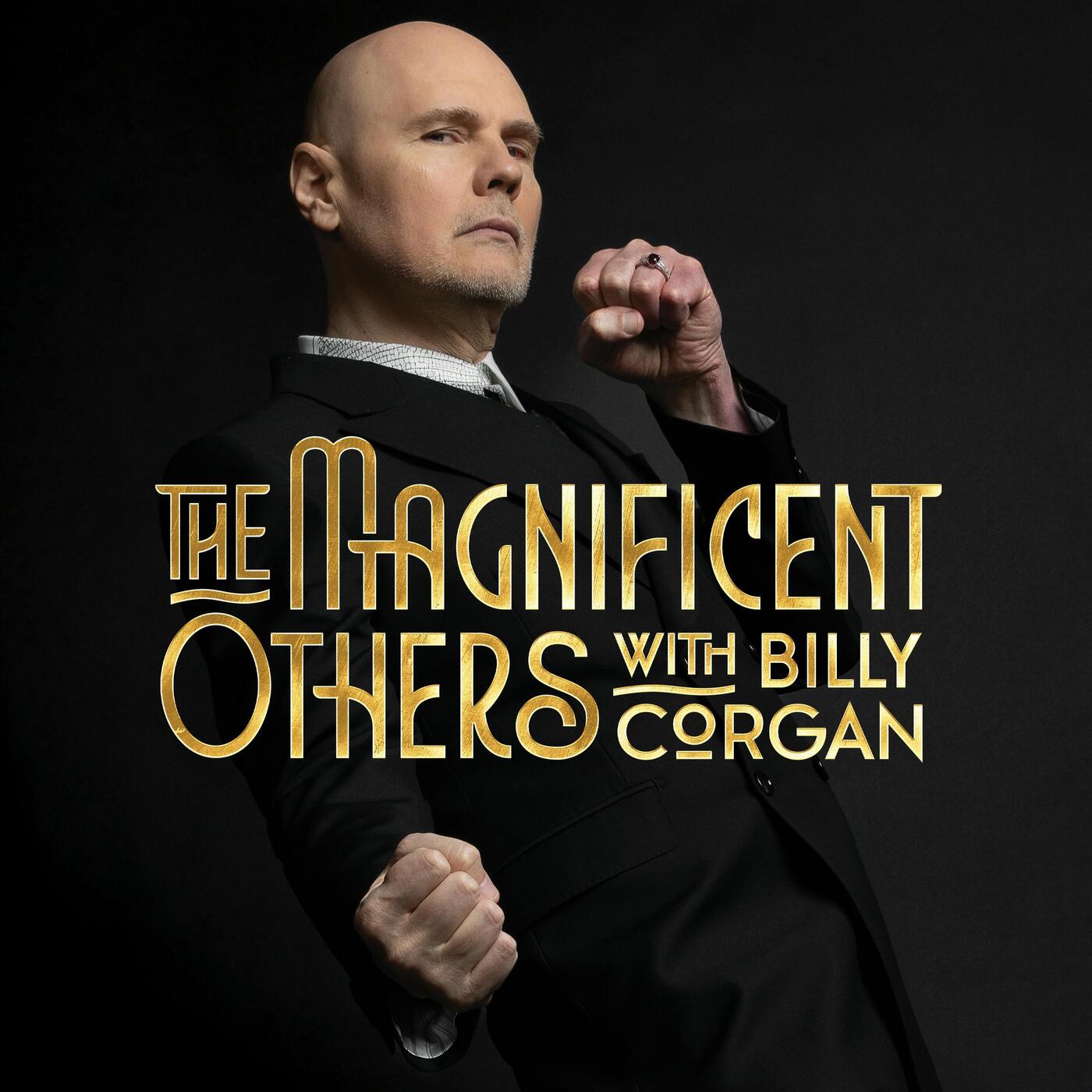
The Magnificent Others with Billy Corgan
Paul Anka | The Magnificent Others with Billy Corgan
01:15:18
Loading summary
Transcript379 lines
- [00:00]
Commercial Narrator
At Ross, you'll find everything your kids need to be the best version of themselves. When they go back to school this fall, it isn't just the first day of school for them. It's their debut of who they've become since last school year. When they walk back through those school doors, they're a different kid than the one who walked out months ago. Summer sun, summer freedom, Summer. Ups and downs shape them. From fashion to school supplies to dorm room decor, Ross has it all in their new style and bigger size. Find your Nearest Ross@rossstores.com
- [00:32]
Sponsor Announcer
this episode is brought to you by Progressive Insurance. Do you ever think about switching insurance companies to see if you could save some cash? Progressive makes it easy to see if you could save when you bundle your home and auto policies. Try it@progressive.com Progressive Casualty Insurance Company and affiliates. Potential savings will vary. Not available in all states from taco night in Tulum to sushi in Tokyo. Make every bite rewarding with gold from Amex. Wherever you dine, four times membership rewards points at restaurants worldwide are piling up. Learn more@american express.com Explore Gold Terms and points cap apply.
- [01:08]
Paul Anka
It wasn't about just getting up there and singing. You had to entertain people.
- [01:17]
Podcast Host
These incredible lyrics, these incredible songs. I mean, the absolute height of American songwriting.
- [01:22]
Paul Anka
I sat in my basement, people laughed at me. I was spending my time just writing.
- [01:28]
Podcast Host
You know where I think it's interesting with you is you actually bridged these two worlds.
- [01:33]
Paul Anka
We, as these young teenagers, we shifted the culture.
- [01:37]
Podcast Host
Here you are a teen idol playing basically, you know, the beginning of rock and roll.
- [01:43]
Paul Anka
You know, I was an international creature.
- [01:45]
Podcast Host
Did your parents know what you were up to?
- [01:48]
Commercial Narrator
Yeah.
- [01:51]
Podcast Host
Paul Anka. I feel I should call you Mr. Anka. Paul Anka. Thank you for being on my podcast.
- [01:56]
Paul Anka
I'll call you Bill and you're gonna call me Paul.
- [01:59]
Podcast Host
You know, grown men like yourself, they have a hard time calling me Billy, so I'm actually William now, but they still want to call me Bill, so I don't know what that's.
- [02:07]
Paul Anka
What would you like me to call you?
- [02:08]
Podcast Host
William?
- [02:09]
Paul Anka
I'm going to call you William. What's your middle name?
- [02:11]
Podcast Host
Patrick.
- [02:12]
Paul Anka
Patrick.
- [02:13]
Podcast Host
I was born on St. Patrick's Day.
- [02:14]
Paul Anka
So lucky you, huh?
- [02:15]
Podcast Host
William. Patrick.
- [02:16]
Paul Anka
All right, William. Good to meet you.
- [02:18]
Podcast Host
Thank you, sir. Do you remember where you were August 24, 1956?
- [02:25]
Paul Anka
American Bandstand.
- [02:26]
Podcast Host
No. You were singing the song I Confess.
- [02:30]
Paul Anka
Oh, blah. Wild the Beast Fontaine. You're digging holes here now, huh? Yeah. So, well, that, you know, I came out to LA to visit an uncle. And I started in Canada as a writer. You know, I wrote short stories and won awards in school. And then I went and worked as a cub reporter at a local newspaper and got thrown out of shorthand, Took music. So that was my first, first taste. And then I came out to Los Angeles, and I used to be absolutely enamored with the whole black culture of music. And I listened to it all the time.
- [03:07]
Podcast Host
Who were some of your favorites at that time?
- [03:08]
Paul Anka
I go back to the Satins, the Moonglows, all of that. Chuck Berry, Fats Domino, all of them. And I'd leave my uncle's house on Sunset and go down to Wallach's Music City. Wallach's was the music store, probably the biggest in the West Coast. And you'd go in and they had these little booths, and you'd go in and you'd take your vinyl and you go in and listen to records all day.
- [03:31]
Podcast Host
Okay?
- [03:32]
Paul Anka
And there was one record I loved. It was the number one record in the country. It was called Stranded in the Jungle by the Cadets. Now, I know you know your music, but I don't know that you remember that.
- [03:41]
Podcast Host
I don't know that one.
- [03:41]
Paul Anka
Okay. So Stranded in the Jungle was huge. And in the interim, I was reading a book. When I had to go back to Canada, I had this book for a book report that I had to write out, do a whole essay on. And it was called Prester John. And the premise was a town in Africa called Blau Wilde Bisfontein. And I was fascinated by this little village. Bla wilde Bisfontein and one day I got up and I had Bla Wild, the Bistefontein Bla wilde the Bistefontein where love is so splendor and no one could surrender I'm going. I just wrote my first song. Right now. It's in my head. I'm in Los Angeles, I'm reading the book report, and I'm in Wallach's, and I'm listening to this record, and I read on the label, Modern Records, rpm, Culver City. And it was a chip shot from where my uncle was. And I had the song finished. I said, you know what? I'm gonna go to this record company.
- [04:38]
Podcast Host
Had you ever written a song before?
- [04:40]
Paul Anka
No.
- [04:40]
Podcast Host
Okay.
- [04:42]
Paul Anka
So I take the song. I think I hitchhiked out there. I'm like, 14, 15, and it's a little. It's like this building here. Little one story, little garage front, nothing to it. And I walk in and there's Two guys and a female, and it was the Behari brothers and their sisters. And they owned this little record company. You know, back then there were a few indies, but not a lot. Yeah, say, hey, guys. They said, well, you're delivering something. I said, no, no, I got a song I want to sing to you. Guy looked at me. So what do you mean you got a song?
- [05:16]
Podcast Host
Had you sung before?
- [05:18]
Paul Anka
Never. To a record company?
- [05:19]
Podcast Host
No.
- [05:20]
Paul Anka
Oh, in school I was in the choir. I sang in school plays, you know, I had a voice.
- [05:24]
Podcast Host
Okay.
- [05:25]
Paul Anka
So I sang them the song. I guess they had nothing to do and they had no other artists. They said, can you come back in two weeks? We're going to record you. Right. And they gave me another song for the flip side called I Confess.
- [05:40]
Podcast Host
Right.
- [05:41]
Paul Anka
And I came back, I'd learned the song. I walk in a garage and there's four guys standing there and like a rhythm section. And the four guys were the cadets who had the number one record in the country, who were gonna sing with me. I mean, that's for openers, right? I'm going, what? Anyway, we finished the date. I do I Confess. Blois Wild, the Bisfontein. It came out. I was a failure at 14.
- [06:07]
Podcast Host
Number one.
- [06:08]
Paul Anka
Number one in my head, that's where it was. I go back to Canada, my relatives bought it. Nothing happened but it my first taste of being in a studio and getting close to that dream, which happened the following year when I went to New York.
- [06:25]
Podcast Host
So this is live recording, live vocal, no overdubs.
- [06:30]
Paul Anka
William. I try to tell all the young people I work with today and they don't get it. You have no idea what it was like if you didn't have decent pitch and the tone. You walked in a studio, you rehearsed for an hour, and maybe you got it in three, four, five takes. And when you were done, if you didn't like something, they took a razor blade and a piece of tape and they would cut the tape on a piece of metal and put it back on and tape it with Scotch tape. That was it. And you sang till you got it. And that's how it happened when I wound up in New York.
- [07:10]
Podcast Host
Yeah. Cause I listened, I confessed this morning and I was like, wow, your voice hadn't even broken yet.
- [07:16]
Paul Anka
You know, when you go back to the 50s, everybody had to have that high pitched sound. It even evolved into today. A lot of us, you, a lot of the guys post the 50s, it's what they were about, searching for who they were as a person or an artist. And everybody had to sing up the octave. They're always maximizing. So you heard all this. Everyone had a high voice. The only guys that didn't indigenous to that group were Sinatras, Sammy and Dean. They're talking voices where they're singing voices. But somehow it evolved into that. Anyone that wanted to sing, even into the 70s and 80s, you had to have that screaming on the edge voice. Well, Barry Gibb and well, Barry, they took it to another level. You know, it was like I marveled as a kid just to have all that happen and then to be around all of these young artists. You know, I like to say I, I, but it isn't I, I, I'm meaningless, it's we.
- [08:20]
Commercial Narrator
We.
- [08:20]
Paul Anka
If you think of your community of artists as we, you know, we as these young teenagers, we shifted the culture. We were aware of it, but we weren't accepted within it. But we. Everybody had to have a certain ingredients. And part of it was that high falsetto sound. I'll never forget, I went to London. I used to spend a lot of time over there. And I was part of that whole British thing before they started stealing everything from us, which we'll get to in a second. And I got on a plane, I'm flying back with Mick Jagger. They were just starting to bust out. And I'm on a plane with this guy I knew. He was. I'm talking to him and I was familiar with his records. He's going, well, you know, when we make our records, it's kind of only if he's giving me this noble sounding post, you know, some noble guy. I'm saying, here's a guy that sings Black, Wants to be Black, all of those groups over there. And you know, I knew the Beatles and I was part of that whole scene with them. They all took what we did. I mean, they were all looking at Muddy Waters. They all are great guitar players. They. They were copping every lick from every. Every great guitar.
- [09:37]
Podcast Host
In a way, they did it not better than we did it, but they'd made it popular.
- [09:41]
Paul Anka
Yeah, well, they made it popular for them, but they were copying us. You know, they all love Chuck Berry. Now, Chuck wasn't a great guitar player as you. He was grew great. But it was a combination of what he played and his songs. But they emulated him because when I went to England, none of them were on the charts. It was me and it was Presley. They weren't even on the charts. So we started to really get into what we're about. Copped it, made it their Own. And I'll never forget, you had Clapton. You had Paige, Clapton, Page and Beck. Right?
- [10:13]
Podcast Host
Those were the cats, the three.
- [10:14]
Paul Anka
The three biggies. Yeah, they were it. And I'm in England, I'm living there. And then the word was out that there was this guy that was going to open at this little club in London. Guitar player. And everybody showed up, they went, they saw this guy and then they went home. Wanted to cut their wrists. Yeah, Hendrix. Hendrick Hendrix. Every time you talk to them after they discovered Hendrix, they were like God had arisen, right? And when you. The sad part of it. Hendrix had a three year period. Yeah, how sad. But he was the guy. When you listen to him, the editing, the economizing of the notes, these guys, Paige, Beck and Clapton, you know, Clapton got very popish, but he's still a great guitar player. Always was. It was Hendrix that they looked up to.
- [11:02]
Podcast Host
Yeah, and an American from Seattle.
- [11:05]
Paul Anka
Seattle.
- [11:06]
Podcast Host
Who'd played on what they call the Chitlin Circuit with, you know, Little Richard and the Isleys.
- [11:11]
Paul Anka
Well, I traveled with. I traveled with Little Richard, I traveled with James Brown. I traveled with all the guys that all these young new artists there are copying. You know, Michael took a little. Bruno's taken a little. It's from Jackie Wilson, it's from James. Those guys, they were the core and the pillars. What we see today, even as it evolves.
- [11:33]
Podcast Host
At that time, I mean, at that time, did you have a sense that these men, like in particular the ones you mentioned, that they would go on to be legends? Did you have a sense of that at the time or was it just exciting and everybody's kind of in the moment.
- [11:48]
Paul Anka
We were all in the moment. We had nothing to look up to. You know, all of us only could look up to these cool guys in Vegas. I see Rat Pack, Vegas Mafia. Yeah, that was it. But we were all just working and happy to be doing it. It was we again, we were a collective little band of artists just finding our way. None of us were sophisticated. None of us came from wealthy families. We were given whatever. And I don't get sit there and go get into. I was given a gift. And whatever we were, whatever you got from that universe. And you can identify. You're a writer. You're a great writer. I almost did a couple of your songs on Rock Swings.
- [12:31]
Podcast Host
Oh my God, I wish you.
- [12:32]
Paul Anka
I couldn't break the Code Tonight, Tonight and Butterfly. I just couldn't.
- [12:39]
Podcast Host
And I went, next time you gotta call me.
- [12:40]
Paul Anka
I went through 200 songs, right. Anyway, back to the Point. We were these guys that were in such a minority.
- [12:49]
Podcast Host
Yeah. It's true.
- [12:50]
Paul Anka
What was going on and always looked at was, can we have another hit record.
- [12:54]
Podcast Host
Yeah.
- [12:55]
Paul Anka
To sustain it.
- [12:56]
Podcast Host
It was very hand to mouth.
- [12:57]
Paul Anka
Oh, we're already 200 bucks a week. Yeah. You know, we were traveling on a bus together.
- [13:01]
Podcast Host
Yeah.
- [13:02]
Paul Anka
The big dilemma was getting our hair right. Took us an hour to get our hair right.
- [13:05]
Podcast Host
You had great hair.
- [13:06]
Paul Anka
You had great hair back then. Not now, but back then. You know, we'd spend more time getting ready and we'd all do one or two songs.
- [13:15]
Podcast Host
Yeah.
- [13:15]
Paul Anka
Chuck and Fats would close the show. Or Screamin Jay Hawkins, and that was it. You didn't have any vision or sense of where it was going.
- [13:25]
Podcast Host
Of the artist that you toured with back then who was like your favorite.
- [13:29]
Paul Anka
Looking back now, look, I admired guys like Chuck Berry, Fats Domino, Jackie Wilson. I looked at what they were doing, but I looked at the. Because they were writers. Because when I started and the people I listened to that my parents played at home, they were pop singers, Perry Como, you know, that whole group, they weren't writers. Yeah. The guys that were writers were the ones that I admired. Because I realized kind of early in my career, the only gravitas that I may have in the future is if I do what I feel I do best. And that was a writer. I had this squeaky little voice. Nobody wanted to help me, so I just started writing. But I admired the guys that wrote because I figured out there'd be no business, no record companies, no managers, no agents, nothing if the writer wasn't in first place. The writer was what's important for all of us. Look. Look what you did. You were writing all that stuff. You could never do what you did if you weren't the writer. When I sat with the Beatles in Europe when I first met them, all they talked about with me is, oh, we want to write like you're doing, and publish and blah, blah, blah. And, you know, they were a cover band when I saw them. But the writer and I respected everybody that wrote.
- [14:56]
Podcast Host
Yeah.
- [14:57]
Paul Anka
Always did.
- [14:58]
Podcast Host
You're really touching my heart because there was this moment in my life where I was living with my father. My father was a musician. And I was kind of in this, like, sort of like the basement, you know? And I was trying to learn a song.
- [15:12]
Paul Anka
Yeah.
- [15:12]
Podcast Host
And I'm not good at learning other people's songs. I don't know why. I just don't have a good ear for it.
- [15:16]
Paul Anka
Yeah.
- [15:17]
Podcast Host
And my daddy came down, he said, what are you doing. I said, I'm trying to figure this song out. And he occasionally would come help me learn something. And he said, don't bother. And I was like, but I got a gig. I gotta kind of learn this song. He said, if you ever want to really be successful in the music business, write your own songs.
- [15:34]
Paul Anka
He was right. I was in my basement and my dad bought me an old piano. And he knew I could sing, but he ultimately knew I wanted to write. And I sat in my basement, people laughed at me. I was spending my time just writing, you know, writing what I felt new. I mean, is there anything more stupid than I'm so young and you're so old. This might. I mean, today, as I'm so old old, and you're so young. But back then, I was just writing what I felt. I'm sitting in church looking at this girl who wouldn't pay attention to me. And that was it, man. It was just the writer became so important in my life, and then I slowly evolved. It gets you to nature or nurture. When you get on the topic of nurture and nature, what was it? Did you get it from your parents? Because it's a great discussion to think of. Where did that come from? What influenced you to build you into the character and what you've got?
- [16:30]
Podcast Host
Yeah. Well, the thing that all writers share is at some point, we're alone in a room with a blank piece of paper.
- [16:37]
Paul Anka
That's correct.
- [16:38]
Podcast Host
There's no chord, there's no melody, there's no lyric. And somehow we've got to figure this little universe out.
- [16:45]
Paul Anka
That's correct. And voice.
- [16:46]
Podcast Host
Yeah.
- [16:47]
Paul Anka
Whatever that is, saying it's getting better. That's it. I mean, you know, it gets you to a point early for me, where good was the enemy of great. I always lived by that. You know, you've got. So think about it this way, William. There's millions of people out there today that want to sing and can. Back when I started, probably more great
- [17:09]
Podcast Host
singers now than ever. If you just want to go on voice. Yeah.
- [17:12]
Paul Anka
I always said there's got to be somebody better than me. But when you think about. I've got a theory. It's called the wow theory.
- [17:20]
Podcast Host
Okay.
- [17:21]
Paul Anka
Guy wants to build a luxury, building a resort. Guy wants to do what you do. Wants to do what I do. And we sit and you're gracious and I'm giving and I try to teach them. You know, you sit and you talk and you know instinctively they're not ever going to be or get to where. However this universe has given us, they'll never get there. Because ultimately, if you don't get to whatever your finished product is or that building that you want to build, that group, can't you get to the point where you hear something and go, wow? When you can get to the wow in life, whether it's developing something and there's few people that can do it, you can't teach it. You can't teach it. William.
- [18:08]
Podcast Host
Well, it's a form of madness if you really look at it on paper. Bad analogy. But like a therapist once told me, you know, he said everyone that sits in the chair, meaning the therapist, you know, patient share. He said, they're all delusional, and you're delusional, too. The only difference is your delusion came true.
- [18:24]
Paul Anka
Yeah. And the only difference is they're wearing a white coat.
- [18:28]
Podcast Host
Yeah. God bless.
- [18:29]
Paul Anka
Yeah.
- [18:31]
Podcast Host
Talk a little bit if you could, because I love these personalities in our. In our shared world. And Don Costa. Oh, man, can you talk about Don Costa bit? Because Don Costa basically changes your life.
- [18:45]
Paul Anka
He was the guy I only got myself in the door. He brought me in, put me into bed. You know, those are the unsung heroes for all of us. And I've always said it. The Don Costas, the Nelson Riddles, the Quincy Jones people that I knew, that I admired, because when they looked at, unlike you and I, at a blank piece of paper, they're looking at a score sheet like this, and they're gonna put every note from every aspect of an orchest. You. And I can't do that. I would sit with him, with his guitar and his piano, and I would just go, I'm just a. Ooh, ooh. And you take. I could never do what the Don Costas of the world do or the Nelson Riddles. I introduced him to Sinatra, and he worked with me in Sinatra for years. But here was one of the guys of the many who absolutely studied the art of arranging and knew what to do with somebody like a green kid like me that walked in banging at a piano, pouring his heart out, and that was it. He was responsible for making me who I am. Nelson Riddle was responsible for putting Sinatra in the framework. And I learned at an early age that you've got to put the best around you, whether it's Panama Francis, Milt Hinton. You know, back when I started, electric guitars were, huh. There was no electric bass. You know, when I started, it was a whole new thing. It was stand up. But the Costas of the world knew how to take those artists and Frame them up with those arrangements. They were the true geniuses. The two geniuses are those arrangers.
- [20:32]
Podcast Host
Yeah. So Don Costa is the one who sort of saw Diana and sort of made that all happen. Right.
- [20:39]
Paul Anka
I sat there singing licks, you know, put your lip. My original title was put your licks. Legs on my shoulder. Messing around with lyrics. But with shoulder. I'd go, put your hand on my shoulder. He would write, listen. He was the guy responsible, you know, because that's what it was back then. You had to have an arranger. The great. You look at even how it evolved out of that. The guys like Michael Amardian. I don't know if that.
- [21:10]
Podcast Host
Oh, yeah, of course I knew who that is.
- [21:12]
Paul Anka
Yeah. There's like guys like Michael, the Randy Kerbers, all those great keyboard players. When you listen, listen to Steely Dan.
- [21:19]
Podcast Host
Yeah.
- [21:20]
Paul Anka
You know, one of my favorite groups. You know, great musicians, flawless albums. We all know what it is. But you look at those guys that contributed. Yeah, the unsung heroes.
- [21:30]
Podcast Host
Yeah.
- [21:31]
Paul Anka
Michael, you know, Jeff Picaro, all those guys were musicians for me in the studio. And I knew that if I never surrounded myself with guys that were better than I was, you're dead.
- [21:43]
Sponsor Announcer
You're listening to this podcast, so I know you've got a curious mind. Here's a helpful fact you might not know. Drivers who switch and save with Progressive save over $900 on average. Pop over to progressive.com, answer some questions and you'll get a quick quote with discounts that are easy to come by. In fact, 99% of their auto customers earn at least one discount. Visit progressive.com and see if you can enjoy a little cash back. Progressive Casualty Insurance Company and affiliates. National average 12 month savings of $946 by new customers surveyed who saved with Progressive between June 2024 and May 2020. Potential savings will vary.
- [22:21]
Podcast Host
Well, you. You have such an interesting thing because was it you that sort of had the vision that you could cross over into the kind of the Sinatra, you know, the. The crooner world? Because most guys who sort of got the teen idol thing, they kind of went the one way, which. Let's call it the Elvis lane. Here's your audience. It's about mass popularity. Who was the. Was it you or your manager? Who was the person that said no? You have this other. Because of all the artists that had popularity in the times that you did, you were the only one who really was able to reach back into this other world, which certainly wasn't fading, but it's on it's like sort of last decade, you know, before disco took over. Whatever. Right.
- [23:10]
Paul Anka
Well.
- [23:10]
Sponsor Announcer
Well,
- [23:13]
Paul Anka
when it hit and I had the taste of it, I didn't want it to leave. And I said, well, I can't have hits all the time.
- [23:22]
Podcast Host
Can you stop for a second? So you were aware that you had to build other base of popularity not born on hits. Where did that come from? Just street smarts, whatever.
- [23:33]
Paul Anka
It was the tenacity. I had to leave Canada and was hungry for it. I was just. I would sponge everything up because I knew I wanted this in my life. But I knew that even though I'm crawling along this journey of success trying to achieve some wisdom to deal with it and not be an. That it couldn't last. Because I saw it all around me. And the only reason I kept saying, I've got to keep writing. Because I felt it would be the tool that would allow me to last. Thus Buddy Holly that I wrote for. I mean, all the things I started giving away. But I knew that, when's the voice going to change? And I had this kid's voice, you know, and everybody was copying. Everybody felt they had to sing to their margin, you know. And I said, but when it changes, really, where do I want to be knowing I can have the hits? And back to our little milieu of guys. Frankie Avalon, Bobby Darin. We all knew each other. It was a small community. The essence of it was New York. A little bit of Nashville. Philly. No, Chicago. And a touch of.
- [24:45]
Podcast Host
Yeah, we had nobody.
- [24:46]
Paul Anka
You had Chess records. That was it, right?
- [24:47]
Podcast Host
Yeah, but we were blues. But we had no pop guys. Came out of Chicago.
- [24:52]
Paul Anka
Nothing.
- [24:52]
Podcast Host
Late 50s, early 60s.
- [24:54]
Paul Anka
So back to the question. All I saw were these cool guys, the coolest guys I'd ever seen. And Bobby. And I'd say, look at those guys in Vegas. They're drinking and smoking and the chicks and they're dressed and they're cool. And I'm going, I want to be like them. We didn't see anything past that, obviously.
- [25:15]
Podcast Host
Was it because the world you came from, you know what I'm saying? Was there something about the world that you came from?
- [25:21]
Paul Anka
No. No.
- [25:22]
Podcast Host
Okay.
- [25:22]
Paul Anka
It was a world I walked into, okay? I was a kid with jeans, a T shirt and a dream and a bunch of songs, right? But when I started working for the Boys. I hate the word Mafia, but I started working for the Boys. And I knew that in Chicago and New York and Vegas, these guys ran the record business. They ran the nightclubs, they ran the dis. And I'm Working for them. And no one was shy to say, that's who you're working for. Just keep your nose clean. And I'm running around going, yes, sir, no, sir, I'm shaking hands at 16 with whoever. But I wind up in Vegas. I was the first guy there. I was 1958 with Sophie Tucker. Elvis had tried it.
- [26:04]
Podcast Host
Sophie Tucker. Now there's a name you don't hear
- [26:06]
Paul Anka
every day and you won't.
- [26:08]
Podcast Host
God bless Sophie.
- [26:09]
Paul Anka
God bless Sophie, as the Beatles called her America's favorite group.
- [26:15]
Podcast Host
Amazing.
- [26:16]
Paul Anka
When they told me that, I laughed, but she was a wonderful woman. Anyway, I'm among these guys and, you know, not unlike today. And it's kind of stupid in a way. Today we all had stylists, but they weren't stylists. You know, we all had to wear shirt and ties. The British guy, shirt and tie, shirt and tie, shirt and tie. True.
- [26:36]
Podcast Host
Even early Stones, what are they wearing?
- [26:38]
Paul Anka
Shirt and ties today? You don't get an artist out of a room for eight hours when they're glamming and just so nothing. It's the same bull. More lights, frankly. So back then we looked at these guys, we started working for them and it was the shirts, the ties, and sponging up a kind of intelligence that was the template of how you deal with life. Because they were smart. They were Jews and Italians, old bookmakers, Mafia guys from each city. But. But there's something about their intelligence and their integrity that you were attracted to, and that's what it was. I said, I want to be like them because that was the maturity factor that I felt would help me last in an industry where all my friends, they were one hit wonders. And Bobby and I would talk about it and we evolved.
- [27:33]
Podcast Host
Okay. Yeah, because there's this. I found that documentary of you, like about 62. It's, it's. It's. You're playing an amusement park.
- [27:43]
Paul Anka
Lonely boy. Lonely boy with the horse that jumped off and wouldn't jump half the time.
- [27:47]
Podcast Host
But such a cool. Yeah, almost like French New Wave. It was cinema, you know, you in the dressing room, you with like the. The guy running the Copa.
- [27:57]
Paul Anka
That's it. That guy, he ran it for the boys. Yeah, Julie Podel with the ring. Yeah, but, you know, you give him
- [28:04]
Podcast Host
a pic, you give him a gift of a picture of yourself and then
- [28:07]
Paul Anka
the camera and said, kiss him again. It was classic moment, you know, for those guys. But, you know, it just shows you the kind of the power of celebrity which we all in. Even those guys soften up. Whether it Was with Putin, or is they love celebrity. You know, that mask comes off. But back then, I was working at a place in Atlantic City. What you're referring to where the diving horse would jump at nine. I'd go on after the horse. Then a movie would go on. And we did that five times a day. And I made about, I don't know, $13,000.
- [28:42]
Podcast Host
So the horse opened for you?
- [28:43]
Paul Anka
The horse opened for me. I followed a horse. So if I didn't jump, I had to get dressed real quick.
- [28:50]
Podcast Host
Oh, that's what that scene is. There's a scene in the movie where you're having to get dressed really fast.
- [28:55]
Paul Anka
Yeah, the horse wouldn't jump.
- [28:56]
Podcast Host
Oh, the horse. Oh, okay. I guess the. You know, the.
- [29:03]
Commercial Narrator
The.
- [29:03]
Podcast Host
The most comparable current example would be somebody like Justin Bieber. I mean, you were basically in that jet stream.
- [29:10]
Paul Anka
Yeah.
- [29:10]
Podcast Host
At that age, that young age. I'm not asking for, like, you know, stories of excess, but how did you manage that level of idolatry? Because there's scenes even in that documentary. It's about 20 minutes long. It's on YouTube if people want to watch it. But, like, where you're, like. You're literally talking to, like, 40 young girls, and they're crying and, you know, shaking in front of you. I mean, that's got to go to your head. Or maybe it didn't.
- [29:39]
Paul Anka
You know, when Justin hit, it was all over Canada. The paper, they have a picture of me and a picture because we both lived there. So there was a comparison of, you know, people. They like to compartment. Compartmentalize. In society today, nobody can live on their own. It's always a comparison. So when it hit for me, I was a young kid with this dream. I didn't have any great looks. I didn't have any height. I was an athlete. But it stopped because I stopped growing. So I found something that really turned my life upside down. So when you're in the middle of all of that action. And I had a good upbringing. I had a great father, I had a great mother who was an ally of mine who, you know, I lost at 18. And that was the toughest part of my life. But, you know, they were always around me to keep me as level as one could, keeping that in mind. And somehow, even though I looked at it with amazement and I enjoyed it, I wouldn't let it go to my head. You know, I just. I really felt that I was always in fear of losing it. And if you had any way of being not grateful for what you're giving or Misbehaving, you would lose it. So to answer your question, it was challenging many times. All of a sudden had a lot of money, and I all of a sudden went out and bought custom shirts and nice suits, everything I didn't have. But I never let the other go to my head. The only way that. That I really bought into it was I was really very active sexually. I said, you know what? The money, the fame, I want what I couldn't have as a kid. And I was nailing everything that I could. You know what? And, you know, I was an international creature. I was in Japan in 57. I was all over the world. So all of a sudden, this door opened of these flavors, and I went, who do I give the money back to? And that's the one, the one overdose of all.
- [31:55]
Podcast Host
Did your parents know what you were up to?
- [31:58]
Paul Anka
Yeah, I used to bring them home.
- [32:02]
Podcast Host
Oh, my goodness. I was poking around your catalog, and I found something that I enjoyed. So I wanted to ask you and take it however you want. You did this album, songs I Wish I'd written correct. And I. I was looking at some of the choices. Did you. Did you. Personally, I got the feeling you chose the songs you wanted to sing.
- [32:24]
Paul Anka
Yes.
- [32:24]
Podcast Host
So I love that you picked Can't Stop Loving youg, which Don Gibson had, a great writer. End of the World Skeeter Davis had hit with. I don't know if she wrote that, but.
- [32:34]
Paul Anka
No, she didn't.
- [32:35]
Podcast Host
Maybe Chet Atkins wrote that.
- [32:36]
Paul Anka
No, Chet didn't write that either.
- [32:39]
Podcast Host
Can't Get Used To Loving youg. Andy Williams. Great song. Yeah, I thought it was cool. I got something from you in looking at the songs you were attracted to at that point.
- [32:48]
Paul Anka
Yeah. Well, again, because of that background and where I came from, I just realized I'm just a little part of all of this. You know what I mean? It's great to sit and.
- [33:01]
Podcast Host
Do you know how rare that is to think like that at that age?
- [33:05]
Paul Anka
Well, okay. But the point was, maybe it was because I was always the youngest kid and I was writing these silly little songs like when I met the Beatles, you know, off point, pivot. Even though they were into the fact that I wrote, I don't know, that they idolized what I did. I sing in these little teeny songs. Big orchestra, that wasn't their thing. Right. But I realized early that, you know, I'm just a small part and thought that for years of all of this, you know, you could sit down and people kiss your. And you have your. Your lyrics are me, but you And I know there's other guys doing it, but we're all part of this.
- [33:50]
Podcast Host
Okay.
- [33:51]
Paul Anka
So when I sat down and said, I want to do an album of songs I wish I'd written, I admired all those other. Yes. You know, the one regret I had William, I started taking piano, and I had Mrs. Reese, who was my teacher. This is like 13, 14, just like you with your guitar, you know? And my dad was sending me to Juilliard. This is before I hit. I was going to Juilliard in New York because I was doing this. I was singing in school, and I was getting it. What gets in the way. I'm so young and you're so old. You know, four chords. If you had four chords and knew how to use them, a guitar, a piano, you could write hit songs. Yeah, that was it. And I'm banging away. I never got to Juilliard, and I never learned how to really be the musician I wanted to be. Knowing that I was so proud of a guy where my uncle lived, and he was a Canadian, Oscar Peterson.
- [34:46]
Podcast Host
Oh, okay.
- [34:46]
Paul Anka
You want to talk about great kids?
- [34:47]
Podcast Host
Did you know Oscar?
- [34:48]
Paul Anka
Met him once.
- [34:49]
Podcast Host
Oh, what? Incredible.
- [34:51]
Paul Anka
Was there anybody you could talk about them? All right. And we know all the.
- [34:55]
Podcast Host
Probably the greatest.
- [34:57]
Paul Anka
Yeah. And my parents would say, oscar Peterson. And we're so proud of him. And that was always in my head. But I. I knew at some point I could never be any of that. And. And I also learned that when I started working with great arrangers because they were so schooled and knew all of it and could play all of it, they couldn't write hit songs.
- [35:20]
Podcast Host
Yeah. There's something about not knowing what you're doing that is a certain advantage.
- [35:26]
Paul Anka
Yeah, for sure.
- [35:27]
Podcast Host
Yeah. Because I can't read music either. It's like everything's up here. Yeah.
- [35:31]
Paul Anka
Yeah. Well, I was the same. But I did learn to read music.
- [35:34]
Podcast Host
Okay.
- [35:34]
Paul Anka
You know, I learned to read from leeches and all that. I found it was important that I did. But other than that, I just wrote songs. You know, I could write songs, but I would never be Oscar Peterson.
- [35:45]
Podcast Host
I was stunned by the fact that. I think, if I'm. Correct me if the date's wrong, 1963. You purchased your publishing back.
- [35:53]
Paul Anka
I purchased everything back.
- [35:54]
Podcast Host
That is. And you would have been how old in 63?
- [35:57]
Paul Anka
You would have been 21, 22, 23.
- [36:01]
Podcast Host
To have the prescience to think these songs are valuable. And I'm gonna.
- [36:07]
Paul Anka
Well, I also realized that you gotta learn the business. You got to know the business.
- [36:14]
Podcast Host
Did somebody wise. You up to the business, like, kid, this is how it really runs type of thing.
- [36:22]
Paul Anka
When I started, there was two guys in Washington called the Fell Brothers, Izzy and Irving. And they had drugstores, but in the drugstores, they racked the top 40. Record these vinyls, and they would see what was selling. Then they formed this little company and started booking whoever was on the top 20. They'd reach out and they'd hire all of us, 200 bucks a week and throw us on a bus, and they'd take us all around this great country.
- [36:56]
Podcast Host
Was there a name to it? Cavalcade of Stars.
- [36:58]
Paul Anka
Yeah, Cavalcade of Stars, Right. That was it. All of us kids were together, shifting the culture, but loving what we were doing. But I realized it was a business. When I went back to Canada, I wrote my second hit, which was you're My Destiny for my Mother. And it became a hit. And the Felts called and said, we want to take you on tour. I said, okay. My dad said, no, you're going to finish school. And I said, no, I got to go do this. And I said to Irvingfeld, I said, you know, you're a smart guy. You paid me 200 bucks the last time, and I'm worth more than I was a very. Not that I was in because of the lack of help that I had. When pop music was in this infancy stage, I had to fend for myself.
- [37:45]
Podcast Host
Yeah.
- [37:46]
Paul Anka
So I would say, I'm worth more than that. I said, if you become my partner, I'll come and work for you. And I talked him into being my partner. Wow. I moved to Washington, and I was brought up in a Yiddish home for three, four years. And this guy was my partner, and he was smart, and he taught me a lot of business acumen. And I would sponge it off of him. And I attribute him. And I'm still friendly with his son, Kenny Felt, who was my roommate then, who now runs the circus and all that enterprise out of Sarasota. So I learned a lot from him. To where, as I would evolve, I'd say, hey, Irvine, you know, I'm traveling all over the world with my music, and, you know, my records aren't in these hardware stores, and they're not in these stores, and these people aren't distributing. But I see RCA Victor. Everywhere I go, I see RCA Victor, washing machines, Toasters records. I said, I want to be with them because I knew that abc Paramount that I was with stopped believing because the voice was changing. I was cranking. You know, you lived rock and roll back Then those of us that rode all the time, I was paid $100 a month. And you had to crank out three or four albums a year, every year. They felt I was running dry. They didn't know what the future was. I was disenchanted. I said, I have 250,000, 300,000 in the bank. I want to buy everything back. They don't believe in me. And nobody had the vision of where this was going. William. I gave him 3, 300,000, and I bought the publishing, the masters, which in
- [39:26]
Podcast Host
today's money would be.
- [39:28]
Paul Anka
It's millions of dollars.
- [39:29]
Podcast Host
3,5 million.
- [39:30]
Paul Anka
So I own all my masters and I own all my publishing.
- [39:34]
Podcast Host
That's crazy.
- [39:35]
Paul Anka
And then when. When I ran into Ray Charles and his manager, because I loved Ray Charles,
- [39:39]
Podcast Host
he was on abc, Paramount, too, right?
- [39:40]
Paul Anka
He came to ABC par.
- [39:41]
Podcast Host
Oh, okay.
- [39:42]
Paul Anka
Oh, no, no, no.
- [39:46]
Podcast Host
You know the story.
- [39:47]
Paul Anka
I don't. No. He came over and I loved. To me, to this day, there's nobody like Ray Charles. Yeah, okay. And I said, own your masters. Own your masters. And he made a deal with him to get his master. No one had done it back then. Yeah.
- [40:02]
Podcast Host
Wow. You've told this story many times about My Way and Frank, so it's certainly a fascinating story for people don't know. You wrote the lyrics to My Way, you purchased the rights to the song.
- [40:17]
Paul Anka
Yes.
- [40:17]
Podcast Host
It was just this kind of. Of song in France. Right?
- [40:20]
Paul Anka
Yeah.
- [40:20]
Podcast Host
So I. I thought to try to come at it slightly differently. Certainly in his time, in, in, in. In your youth, Frank was a titanic figure on the American cultural scene.
- [40:33]
Paul Anka
He was it.
- [40:34]
Podcast Host
I mean, that was it. Movie star, you name it. So start here. Does it surprise you that Frank still, to this day, is still a top artist? Does that surprise you?
- [40:51]
Paul Anka
It doesn't surprise me. I think you can never underestimate the consumer. They ultimately are going to seek out what's good. Sinatra, as you stated, he was it. And when Presley came along, he became the potential it, but certainly not in the genre of Sinatra. Sinatra did not like Presley. He didn't like, I don't think what I was doing. He embraced me because I was making money for the boys who. He was making money for the boys. So they mentored me, looked after him. But I heard all this stuff. I was around all this stuff. You know, I was the young kid in a steam room with Sammy Davis, Dean Martin, Frank Sinatra on a slab of marble, nude. And I'm this young kid, but listening, and. And I'm having trouble with eye contact. But, you know, he never liked Any of that stuff. Yeah, he was the guy. He continued to be the guy. Only till he started buying into the fact and had his own record company that things were changing. Did he start getting a sense for pop music, the modern music.
- [42:07]
Podcast Host
Right.
- [42:08]
Paul Anka
And started doing it.
- [42:09]
Podcast Host
Yeah.
- [42:10]
Paul Anka
But up until then he was the guy and an important guy. He's important today because he's one of these caissons in this industry that really was the basis of everything that we're doing today, in a sense. Okay. And you can't ever take away any of the greats in any field, from Shakespeare on to writers to be. When you are the absolute best and top, you evolve and you evolve because art has no time. And Frank Sinatra today. But there are some young people that don't know who he is or Johnny Carson or Paul Anka. You know, he and Elvis to me were the two important towers. When Elvis was around, he just. They both owned a room and they were Both given that it factor, you know, if Elvis were a 5 foot 4 overweight guy singing with that black voice, we wouldn't be talking about him. I hate to put it that way, but when you think of how the United States and its culture, it's emanated all over the world as to the importance of aesthetics, how you look and what you are. You know, I saw it in countries that I go to, from Israel to Asia, and they say, why are they sending this stuff over? We don't believe in looking great. But those two guys had the totality and the content of what it takes to be everything.
- [43:51]
Podcast Host
Yeah.
- [43:51]
Paul Anka
And Elvis worked his off. This was a shy guy. I would sit with him like this. Hey, Paulie, how you doing, man? Yeah, Paul, you know, one day I'm going to do that my way. I love that. My way. Elvis, you don't want to do my way. It's not your kind of mean a lot. He was a shy guy that probably couldn't live with the enormity of the success and the pressure every day. But what an amazing force to watch and be around it and sit there and watch show after show, as I did, and to discuss with, with him, you know, what we learned, he and I, it wasn't about just getting up there and singing. You had to entertain people. And to this day, whether it's subliminal or not, you've got to entertain people.
- [44:49]
Podcast Host
Yeah.
- [44:49]
Paul Anka
They don't want to sit up there and just watch you.
- [44:51]
Podcast Host
Yeah.
- [44:52]
Paul Anka
You know, it's a case in point. I love Dylan. We get it. You know, some nights Bob gets Up they couldn't give it. You look at the. And people walk out. What the. If you don't entertain people, you're dead. But back to Sinatra. The force will get bigger. Young people will learn exactly what true quality is. You know, at a time when there's no auto tune think about the difference. I don't know who the doing the singing today. Do you?
- [45:23]
Podcast Host
Not really, no.
- [45:24]
Paul Anka
I don't know. Can you imagine back then if you said to Sinatra were going to give you an autotune you would have thrown a chair at you. You walked in a studio after rehearsing as I stated earlier and you kept singing and that band kept playing till you got perfect.
- [45:40]
Podcast Host
Yeah.
- [45:41]
Paul Anka
That was it. And he was the guy. He made it tough for anybody to ever stand in front of a band again. He all came second, but he was the guy we emulated.
- [45:51]
Podcast Host
Yeah.
- [45:55]
Paul Anka
Now let me just add.
- [45:56]
Podcast Host
No please. Yeah.
- [45:57]
Paul Anka
The shortchanged guy was Sammy Davis. To Frank and Dean and to all of us, he was the most talented.
- [46:04]
Podcast Host
Wow.
- [46:04]
Paul Anka
Sammy Davis Jr. To this day. And they've taken from him. I'd sit and watch him from a young kid. He was a. I was as close to him as I was Sinatra. That was the most talented guy. He was a musician, played drums, he played diss. He didn't play, he sang great. He was the guy that I hope today somehow they put him back in the forefront. And Dean was an underrated singer.
- [46:32]
Podcast Host
But let's talk about Sammy for a second because my manager Bruce Eskovitz told me this story where I guess at some point Sammy was preparing to do some kind of book or something. So they have all these tapes of Sammy telling his true story. Not, you know, the uncensored, the unvarnished where he talks about what he really went through and. And my manager said they cannot get anybody to. To do. To do Sammy's story. That's insane to me.
- [47:02]
Paul Anka
Well, he had Yes I can which was the book. I've heard the roamings about that everything is timing.
- [47:11]
Podcast Host
Okay.
- [47:12]
Paul Anka
And I will say to you that ultimately they will do the Sammy show.
- [47:17]
Podcast Host
I hope so.
- [47:18]
Paul Anka
Without debt, without question. And the one song that I do, you know, people say what's your favorite moment? Favorite song, you know, songs like your kids. But the one song that I get off on every night is singing with Sammy Davis him on the screen for a song that I wrote for him that when he recorded and I was at the studio that night, that was as important to me as my way with Sinatra.
- [47:45]
Podcast Host
Wow.
- [47:46]
Paul Anka
And you will hear and see something On Sammy in these coming years.
- [47:51]
Podcast Host
I hope so.
- [47:52]
Paul Anka
If this alien door that's all thrown at us today doesn't open and we start to just. You know, I'm a big reader and I believe it's all out there, you know, And I don't question the fact that there is no God, but I need some proof. But things are going to change in the next four years where all of us are going to have to get into a new mental state.
- [48:15]
Podcast Host
One thing I was going to say on Mr. Sinatra, like a lot of people of my generation, we would hear the stories about Frank because growing up in the 70s, Frank was on TV. You were on TV a lot, so you were always presented as great stars. But, you know, you were something that our parents or our grandparents would say, oh, this guy. So you almost like inherit the vibe on an artist, but you don't have a personal relationship. I didn't have a personal relationship with Mr. Sinatra other than he was, oh, my God, Frank Sinatra. You could tell by everybody's body language, Frank. The way Frank moved the whole thing. So, like a lot of people in my generation, we would hear this. This what people would say about Frank was like, he hates rock and roll or he doesn't like rock and roll. And. And. But of course, I saw at some point where he, you know, he did. He did something by the Beatles. But as only Frank went something in the way she moves.
- [49:16]
Paul Anka
He do Frank. He do Frank and stuff before that.
- [49:19]
Podcast Host
Sure. But I have to say, as somebody who came later in life to the great American songbook. The Harry Warrens, the. The Gershwins, Sammy Khan's, these incredible songs.
- [49:33]
Paul Anka
Yeah.
- [49:36]
Podcast Host
Johnny Mercer. Right.
- [49:38]
Paul Anka
Hoagie Carmichael. A whole bunch.
- [49:40]
Podcast Host
If you. If you. And I say this to people who are rock fans, I mean, I've made my life in rock and roll. Until you really understand the great American songbook, what Sinatra said makes total sense. How are we going from some of these incredible charts that Nelson Riddle wrote? Got the World on a String? These incredible lyrics, these incredible songs. I mean, the absolute height of American songwriting. So, of course, to that guy who was the great interpreter of that song, or a garland, you look at rock and roll and go, what?
- [50:20]
Paul Anka
Can't invest in it.
- [50:22]
Podcast Host
How could I possibly even understand what is this? So I get it now. Where as a kid I was like, oh, that's just old people talk. Right. Where I think it's interesting with you is you actually bridged these two worlds. I mean, you had one foot in the Rat Pack world, and then here you are a Teen idol playing basically the beginning of rock and roll. I mean, that's. No, I can't think of anybody else that's in the both worlds, can you?
- [50:51]
Paul Anka
Okay. No, I'm just one individual that continued to get lucky, that applied himself with hard work.
- [50:57]
Podcast Host
You must have a lot of luck. I want to know what course you're betting on.
- [51:02]
Paul Anka
Well, it's football and hockey, A little NBA, you know, I don't know that I'm.
- [51:08]
Podcast Host
Who bets on hockey? You bet on hockey?
- [51:09]
Paul Anka
Oh, I love hockey. I was growing up on hockey. I played hockey. I helped bring the Ottawa Senators.
- [51:13]
Podcast Host
That's right. You're Canadian.
- [51:15]
Paul Anka
I'm a Canadian.
- [51:15]
Podcast Host
You can't help it.
- [51:16]
Paul Anka
Yeah. Never forget my Canadian blood. I played it as a kid. I wanted to keep going, but as I said earlier.
- [51:21]
Podcast Host
Okay, here's a little connection we can make sure within a few days. I'm actually singing at one of the Wirtz family's weddings.
- [51:28]
Paul Anka
Chicago. Yeah.
- [51:30]
Podcast Host
Wirtz, of course, owned the Blackhawks. So, yeah, it was my little connection there with Canada.
- [51:35]
Paul Anka
It was all hockey. We did it all. It was only Canadian.
- [51:39]
Podcast Host
Well, that's all you guys have.
- [51:40]
Paul Anka
That's all we had. And moose jerky. But, you know, then it's evolved into what it is. But, you know, look, when you're an individual who has work ethic, you know, work ethic is so important, and you find something you love doing, and I can only speak as a humble individual. There's nothing great about what I did. You know, you think I'm the only success story in the world. There's so much of it out there. I just didn't want to lose this passion that I had. And I don't overdo passion. It's something that you do well, that you continue on doing the evolution, and you can't. You know, Darren made the transition with me. You know, he and I would talk about it, and Darren was more musical than Sinatra.
- [52:26]
Podcast Host
Darren was a musician, dynamic performer, dynamic singer.
- [52:30]
Paul Anka
Absolutely. And he evolved with me. And, you know, he's with him four months before.
- [52:34]
Podcast Host
But you had. But you had hits in rock. That's the interesting thing.
- [52:37]
Paul Anka
Well, because that's. Listen, there were times I'd sit and say, I'm getting rid of this tuxedo. And I know if I get up there, I can do what they're doing. And I say to myself, no, don't do it. You know, Bobby tried it. He did it with the jeans and the Dylan thing. And I'd say, bobby, I don't know if it's really, you got. I just stayed with what I knew and wanted to continue. And what kept the chain going from the rock where I started was being the writer. You know, to wind up up in the 80s and 90s with the last three Michael Jackson hits. I sit there and go, I gotta be kidding. I'm singing these songs I wrote with this kid that was talented.
- [53:15]
Podcast Host
Yeah.
- [53:15]
Paul Anka
You know, when I.
- [53:16]
Podcast Host
And.
- [53:16]
Paul Anka
And I was so fortunate. I wrote with great writers. Burt Baccarat was my buddy all my life and loved his work and nobody could ever emulate him.
- [53:24]
Podcast Host
Yeah.
- [53:24]
Paul Anka
He was him and Al David, never forget the lyricist. Right. And I was around a guy like Bert and continued to say, keep writing, Keep writing. And that was the core of my longevity.
- [53:37]
Podcast Host
Wow.
- [53:37]
Paul Anka
Whether it was that she's a lady with Jones, but to work. To work with the Michael McDonalds and Kenny Loggins and to wind up working with Michael, you know, that was a huge leap because his family would bring him to see me at Caesar's Palace. And those of us in the music business, we don't have crystal balls. But you had a sense of this kid was gonna bust out.
- [54:00]
Podcast Host
Yeah.
- [54:01]
Paul Anka
And he was working with me as Thriller was just coming out. I had three tracks with him on my duets album on Sony. We were both on Sony. And the timing of it. We were just gonna finish it. Thriller takes off. And he took the tapes out of the studio. I don't wanna say he stole them, but he stole them.
- [54:22]
Podcast Host
That's how I said
- [54:24]
Paul Anka
I laugh about it because I think it's funny.
- [54:27]
Podcast Host
Yeah.
- [54:27]
Paul Anka
And, you know, I didn't want to litigate because I don't believe in that.
- [54:30]
Podcast Host
Did you forget about the songs? And when they came out, you were like, oh, there they are.
- [54:34]
Paul Anka
I was aware of them, but I couldn't do anything with them.
- [54:36]
Podcast Host
Right.
- [54:37]
Paul Anka
There were little outings with them. The point was when he passed and they found them.
- [54:43]
Podcast Host
Yeah.
- [54:45]
Paul Anka
And they were building the this Is it tour.
- [54:47]
Podcast Host
Yeah.
- [54:48]
Paul Anka
And they found this Is it in the drawer. Because he took the tapes, re recorded them. And through the lawyers, I got them back not knowing. And they found everything. So they found this song with my original title was I never heard a single word about you. And that was the title. Harvey Levin, who's on top of everything. I love those guys. He called up and said, there's a song coming out called this is It Michael Jackson. And somehow someone said, you wrote it? I said, I wrote some songs, but this is it. Doesn't ring a bell.
- [55:27]
Podcast Host
Yeah.
- [55:27]
Paul Anka
How can I hear it? He sent it to me what they did was whoever were around him at the time, his music group, they took the very first word, this is it, and they changed the song and changed the title. There they were a week before release, a week before the tour, and they were in a bind. I went, aha. So we're on the phone with lawyers. I said, look, ain't gonna hold you up. I just want half of everything. Same I did with Johnny Carson with the Johnny Carson theme. And that was it. The Michael Jackson story. But to work with him, you know, when you listen to a lot of the tracks on some of those albums, they're not amazing tracks. Talented guys putting them together. But don't ever think that Michael's contribution, he made sounds. When I would work with him, I'm at the piano. I never worked with anybody like that. And he was doing. He was a bass user, whatever. I knew the kid was so talented, and I had to work from that. So the collaborations, which I loved with working with people, because there's people more talented than me, and I want to see what everybody brings to the table. But he was the experience of all the people I've written with and working with. Bacharach, my very dear buddy, right down to the end.
- [57:00]
Podcast Host
Yeah. I got a nice compliment recently. I was work. I wrote some songs with Paul Williams.
- [57:07]
Paul Anka
Wonderful writer. You know, the only thing I have over Paul Williams is I'm taller. But he's so talented.
- [57:16]
Podcast Host
Very talented. But he paid me a great compliment. And this is somebody I know that you worked with. After we wrote this second song together, he turned to me and says, I like working with you. You work fast. He goes, you remind me of Roger. Roger Nichols.
- [57:31]
Paul Anka
Yeah. Roger was really fast.
- [57:34]
Podcast Host
Yeah. And I took that as such a great compliment.
- [57:36]
Paul Anka
Yeah. I had the same experience with Richard Marks. Another talented guy, Chicago boy.
- [57:42]
Podcast Host
I don't know Richard. This is so funny.
- [57:44]
Paul Anka
We've never crossed paths and so talented. I mean, around him in the beginning, when no one believed, you know, David Foster said, you'll never make it, which broke his heart. And I nurtured him and spent time with him.
- [57:55]
Podcast Host
Okay. I didn't know that.
- [57:56]
Paul Anka
And we wrote songs, like a ton of songs. And I called record, did whatever. I loved helping new talent, you know, I just. Because I remember how it was tough for me, but yeah. Another talented guy was Richard Max. But we were knocking it off. He said, God, you write fast.
- [58:10]
Podcast Host
I enjoyed these recent albums that you. There was the anchor sessions, Inspirations of Life and Love, which came out this year.
- [58:15]
Paul Anka
Yeah,
- [58:18]
Podcast Host
I. Because I woke up this morning at 4:00am listening to you sing. At 15 years old or whatever, I was struck by you.
- [58:26]
Paul Anka
Painful. How can you get up at 4 in the morning listening to that kid?
- [58:30]
Podcast Host
Well, I did, but I sort of loved that. Through it all, you became the crooner that you grew up in the shadow of these great crooners. I mean, just Dean Martin alone is a crooner. I mean, Elvis is the secret. Dean Martin is the secret influence on Elvis. If you really listen to Elvis sing ballads, he's doing Dean.
- [58:55]
Paul Anka
Well, Dean emulated the Mills Brothers. He loved the Mills Brothers.
- [58:59]
Podcast Host
You ever see that clip where he's got the Mills Brothers on his show with him?
- [59:01]
Paul Anka
Yes, he loved the Mill Brothers.
- [59:05]
Podcast Host
The Mills Brothers were unbelievable.
- [59:07]
Paul Anka
Elvis was driven. When we talked, it was that black experience for him. Little Richard. It was all of the spiritual stuff. All of those. That's. He would only talk about that.
- [59:21]
Podcast Host
Yeah.
- [59:21]
Paul Anka
You know, the only time I felt he got a little tested maybe was Tom Jones and Engelbert Humperdinck, which were a huge force when they hit.
- [59:29]
Podcast Host
Yeah. Yeah.
- [59:29]
Paul Anka
But they were doing him. Yeah, they were doing Elvis. But, you know, to sit with him, it was always that he had that amazing black voice and that white body.
- [59:39]
Podcast Host
Yeah.
- [59:39]
Paul Anka
And he put his soul into it. And you know, back to what I said before, you know, sitting and talking to you, and then when I listen to your music when I was putting rock swings, there's two different people there.
- [59:52]
Podcast Host
Yeah.
- [59:53]
Paul Anka
You know, you've got that guy with that voice, those great lyrics, and yet you're like a Wikipedia, you know. And when I sat with Elvis, this was this shy guy that we would talk about limited issue type things, but certainly about his career who, you know, wouldn't just go to dinner with me or when we ran into him in Vail, Colorado, he'd only go out at night on snowmobiles with lights. Wouldn't go out in the day. But you knew that his whole thing was that whole black experience, that he grew up around that gospel world.
- [60:30]
Podcast Host
Yeah. It's powerful.
- [60:31]
Paul Anka
Real. And he was powerful.
- [60:33]
Podcast Host
Yeah. When Lisa Marie passed, his daughter. I was friends with Lisa and I sang at the funeral. Funeral. But what I really remember about that day of the funeral was, was the vocal group, I think it was the Jordanas got up and, you know, when the young man who leads the group. Well, he's not young, but I mean, he was a young man when his father was leading the group. He was like the high tenor gentleman. And he spoke so deeply and passionately about what Elvis had done for his family, how Elvis really loved to sing gospel and would call them and want him to come over and sing gospel. And I really understood the depth of Elvis's love of gospel by this man's eulogy.
- [61:26]
Paul Anka
Yeah.
- [61:27]
Podcast Host
He said, you don't understand how powerful the spiritual song was to Elvis.
- [61:32]
Paul Anka
That's right.
- [61:33]
Podcast Host
There'd be no Elvis without this. This connection to his. This, the spiritual root and to see the emotion in the man's voice and body. And he broke down crying. That's the part about our, our biz. Everybody likes to talk about hits and it's those rooted experiences, the passion, you know, that, that, that deeper sense of the song, I guess maybe the journey of the song.
- [61:56]
Paul Anka
Yeah, yeah.
- [61:57]
Podcast Host
Okay.
- [61:58]
Paul Anka
He was very giving, you know, it was very giving.
- [62:02]
Commercial Narrator
When it's time to scale your business, it's time for Shopify. Get everything you need to grow the way you want. Like all the way. Stack more sales with the best converting checkout on the planet. Track your cha chings from every channel right in one spot. And turn real time reporting into big time opportunities. Take your business to a whole new level. Switch to Shopify. Start your free trial today.
- [62:33]
Podcast Host
Couple more things. Take your time.
- [62:34]
Paul Anka
I'm having fun.
- [62:35]
Podcast Host
Thank you.
- [62:36]
Paul Anka
You can edit what you want.
- [62:37]
Podcast Host
Oh, no, we don't edit anything.
- [62:38]
Paul Anka
I'm here already. Just go take it off.
- [62:41]
Podcast Host
We just have to bleep your F bombs, really.
- [62:43]
Paul Anka
You don't bleep my F bombs.
- [62:45]
Podcast Host
We do bleep. Couple things, I think. I'm 59 years old and I've been very blessed to have success for many years in the rock business. But I have such respect back now for the. For the great singers of the American song. I know we've touched on it before. Do you. Do you miss that, that, that world? Do you miss that world at all? I know you're like, you know, like you sang that on your recent records, that it was a very good year.
- [63:13]
Paul Anka
You know, I changed all that. I took. That's life changed them. Yeah, yeah.
- [63:18]
Podcast Host
But I'm saying, do you miss that world with those types of singers?
- [63:22]
Paul Anka
No.
- [63:23]
Podcast Host
Okay, tell me why.
- [63:24]
Paul Anka
I'm not wired that way. I don't miss. I have no rear view mirror. I don't believe in it. I think it's wonderful to draw from. I look at it as part of the totality of what I've been through, but there's no way that I would return to it. Okay, can I be articulate in terms of the differences of Vegas then and five little hotels and an airport not bigger Than this. And these great guys that I worked for and were just running the world of show business. Sure. But do I want to go back to that? No. Why would you want to go back to in life, to anything that you experienced other than drawing the great memory and the moments of it that fuel what you're living today, the importance of life. And I try to stress this to my kids, to anyone I can speak with, understand the importance of the moment that you are living in. The necessity of respecting the asset of time. You are wasting time to ever want to go back to anything. Your time is your best asset. You know nothing about tomorrow. But no, there's no way I would want to go back. I live for now. There's no flag in the mountain for me yet. I got the Broadway show I want to do. I got projects I'm doing. I want to live in the moment. I've got still something to give. I still write, I still do. I'm out touring. I just left Mexico City, you know, to go out there at my age and play 10,000 people in a stadium. I'm sorry, that'll humble you. Because I'm up there almost laughing, and because of TikTok, I got young kids running with albums. I'm going, this is ridiculous. I mean, you know, I'm humbled by it and I'm gracious with it, but you need to live in the moment to understand you still have something to give. I'm not going to dwell on ageism because I don't believe in it. I think everybody has just got to live that moment. Stay healthy and forget yesterday. Just learn from it and cherish the memories. I got great memories of Sinatra, Sammy and Dean and everything I did with them. But no, I don't want to go back. I'm having too much fun now. I'm fortunate that. And I'm probably not the only one. You know, when you peel the onion off at a ball, there's smart guys out there and women that are learning to live their lives. And yesterday is yesterday.
- [65:58]
Podcast Host
Okay.
- [65:58]
Paul Anka
Yeah.
- [66:00]
Podcast Host
You know, the number one topic in the entertainment business is AI. So I usually just toss it up as a ticket where you want to take it.
- [66:11]
Paul Anka
Okay, I'll drop just a name because I love him. Warren Buffett called me a few years ago, okay? He's one of the smartest guys, the most humble, and I love him. He said, paulie, Bill Gates is here. And he gave me this machine. It's a gp. Gp, whatever the hell that thing is. Four or five years, he said, and I said to the machine, give me four versions of my way. And it did it in one minute. I said, wow, Warren, that's unbelievable. That's the first time I heard of it. Right? Yeah. Okay. Of course, there's a lot of intrepidation, a lot of fear with AI I'm not afraid of it. It's moving quicker than you can imagine. I'm an avid reader. I'm never the smart person in the room. So the crowd I'm around, it is indeed has been changing everything. It will change everything. We will have to adapt to it. There will still be that human element. When you really look at it, you know, the guys that are going to flourish, a plumber is going to become very important now, because a plumber and what he does ki and a robot cannot replace. So till that, that field, that level playing field occurs when we realize that, you know, I go to Asia a lot. They got robots walking around everywhere. You check into a hotel. China has thousands. I mean, it's all on the landscape. It's indeed coming big business that runs the world with government. Let's be aware, folks, they run the world. And as bright as we all think we are, there's a backroom dialogue and plan in place as to what's going to be implemented. And AI will take us to an absolute new level in society. Companies and government must take care of the people. And they'll come up with a formula because their upside will be so huge at how much they'll make that they'll go to a guy that is not blessed with some huge career windfall that's making 89 a year. And you say you're going to work two, three days a week and we're going to give you the rest of the money and blah, blah, blah. And they will set forth a format that will exist because what will he do with that money? He'll go out and spend it again. So it's here. Okay? Where am I concerned? You and I, as writers, we know what's going on, right? We know what was the last big country hit number one. AI let's sit and wait and collectively. So that's not ever I, I, I, we as a writing community and artists, will sit down and at the right time, go to whomever and say, here's what you have to implement to make it fair.
- [69:01]
Podcast Host
I see.
- [69:01]
Paul Anka
So that this functions properly, you accept it. Because if you read history enough, this great country, this breadbasket of us, Canada, South America against Europe, which is a waning society, and the power of Asia, we've always balanced things out. That's how great this country is. When you look at its assets, it will balance out when people speak up collectively. When you look at the great revolts, the young people of today, look how they revolted with Coca Cola, put out this new Diet Coke years ago, Millions gone. So what I'm saying is it will level off.
- [69:46]
Podcast Host
Yes.
- [69:47]
Paul Anka
I'm concerned as to the applications in our field. I want what's coming to you, I want what's coming to everybody else. There should be enough in there for all of us to say, listen, we got screwed for years anyway. Do you think artists and writers have always had the fair share? It's always been corporate, it's always been record company. It's always been these agents. But never lose the fact, as I said earlier, without us as writers, humbly, there ain't none of them. They need to take care of my fellow artists and writers, even with A.I. now, I don't use A.I. when I record. I don't know what you do. One day, for some reason, if I want to separate a file and come up with, okay, I get the usage, but I'm not afraid of it. Okay. I'm more afraid of mankind and politicians and the wealth, the pockets of wealth. That minority group of people that are making the changes I see that are not helping the common man.
- [70:47]
Podcast Host
Yeah, yeah. I think one interesting wrinkle in all this, because there's lots to consider, will be the ability to go back and take older recordings and kind of spruce them up.
- [71:00]
Paul Anka
Yes, they're doing it. They're doing it with Michael Jackson right now.
- [71:04]
Podcast Host
But I'm talking about even to your catalog.
- [71:06]
Paul Anka
Okay, Sit down. Have a meeting with me. What do you want to do? There's no question they're doing it now.
- [71:13]
Podcast Host
Yeah.
- [71:14]
Paul Anka
What I'm saying is you got to control the who and the they.
- [71:17]
Podcast Host
I see. Yeah.
- [71:18]
Paul Anka
And great. Show me. I get it, I see it, I want it. But just make sure that everyone is properly taken care of for those intellectual rights. It's only fair. I want a bunch of hucksters running around taking advantage of.
- [71:33]
Podcast Host
Okay, last thing, any words of wisdom? You've lived an incredible life, so it's almost hard to sum up in an hour and a half, but.
- [71:41]
Paul Anka
Oh, words.
- [71:44]
Podcast Host
How about this? Words to live by. I love what you said about being in the present. I mean, I got that because I'm a person who sometimes can over dwell, even being romantic about other times.
- [71:56]
Paul Anka
I think the important thing to achieve, if you stay smart and you're not acting from emotion all the time. And you have kindness and understand that karma has everybody's address, which I believe in, is be kind to yourself and your health. You know, I taught my daughters years ago. They're all vegans. I take them to restaurants when they were teenagers. They'd go in the kitchen and make sure there was no meat near their plate. I eat healthy, okay? You must be healthy to maximize anything that you're looking to excel in in life or how you live. So the real key issue in wisdom for me is learn how to eat properly and know that half that crap that you've been putting in your body ain't good. Then you will function as a human being with the intelligence that you may have or whatever you have as to make the right decisions, not emotionally and to be kind. Be kind to people and you'll be fined. And be careful of how you open your big mouth politically and who you pick a fight with, because it is not the right time for that. Yeah, there was a day and age, no matter what your political persuasion was years ago, you could sit at a dinner table. The example. Let me give you an example. I was the first to go to the communist country. I was getting on a plane in Europe, in Switzerland, and they had these dogs and these militia guys with guns. And they brought this guy on the plane. Big, formidable guy, no hair, well dressed, and sits across from me. And I find out he's the prime minister of Poland. I'm on the plane, I'm learning every day. I'm curious, and I find out he's a pilot. And he starts talking to me. Yes. He said, would you ever come to my country? I got guards around me, dog. I would say, no. They said, yes, I'd love to come to your country. Right? And I'm aware of communism because prior to that, years ago, we had, like, bomb tests in school. We knew about communism. So fade out, Fade in. I get a phone call from the State Department. Mr. Anker, did you meet the president? Poland, yeah. You promise you'd go to his country? I said, yeah. He said, was $15,000 in the bank of America and we'd like you to go and represent the country. I said, what? I get my band together, we go to Poland. I'm in a communist country now. There I am where there's no lights, there's one bathroom on every floor. I'm in an environment that I only heard of. And I'm playing to people that are so gracious and so giving. I can't believe it. Right? I go from there. Because of my success in Poland, I get to go to Czechoslovakia and I'm given this woman, Natalie, who's a card carrying communist. Now, in those communist countries, they weren't all communists. The people were not communists. And she would show me her card. There was only maybe 700,000 Communists in Czechoslovakia. And we would sit every night, her and I, after the concert and talk about the difference in a country she hated, the US and one that I was very dogmatic about as to how her people were the communist life against the America. And we'd go through this every night, nicely but firm. And it was an experience for me to really say, there's a world out here.
- [76:13]
Podcast Host
Right.
- [76:15]
Paul Anka
Okay. The point of all this, I'm telling you what a great country the US Was and what we're like and how we're raised. I leave Czechoslovakia, the Russians, who had a real stronghold on Czechoslovakia, as they did Poland, they invade Czechoslovakia. If you remember, they went in with tanks and took over Prague.
- [76:39]
Podcast Host
Yeah.
- [76:42]
Paul Anka
And that was a huge upheaval for the Czech people. I get a letter from this woman, Natalie Razhovie. Dear Mr. Anka, as you can see, the current event, blah, blah, blah, blah, on the Western. And now I listen. I go back to all our conversations. You were so right. She said I had to smuggle my daughter, whom you met, to Belgium to put her through school. And I have no money. Can you help me?
- [77:15]
Podcast Host
Wow.
- [77:17]
Paul Anka
And I put the kid through school. I sent her a check. I said, this is from the United States of America.
- [77:23]
Podcast Host
Wow.
- [77:25]
Paul Anka
Politics.
- [77:26]
Podcast Host
Love it. Thank you, sir.
- [77:28]
Paul Anka
Thank you.