← The Marketing Architects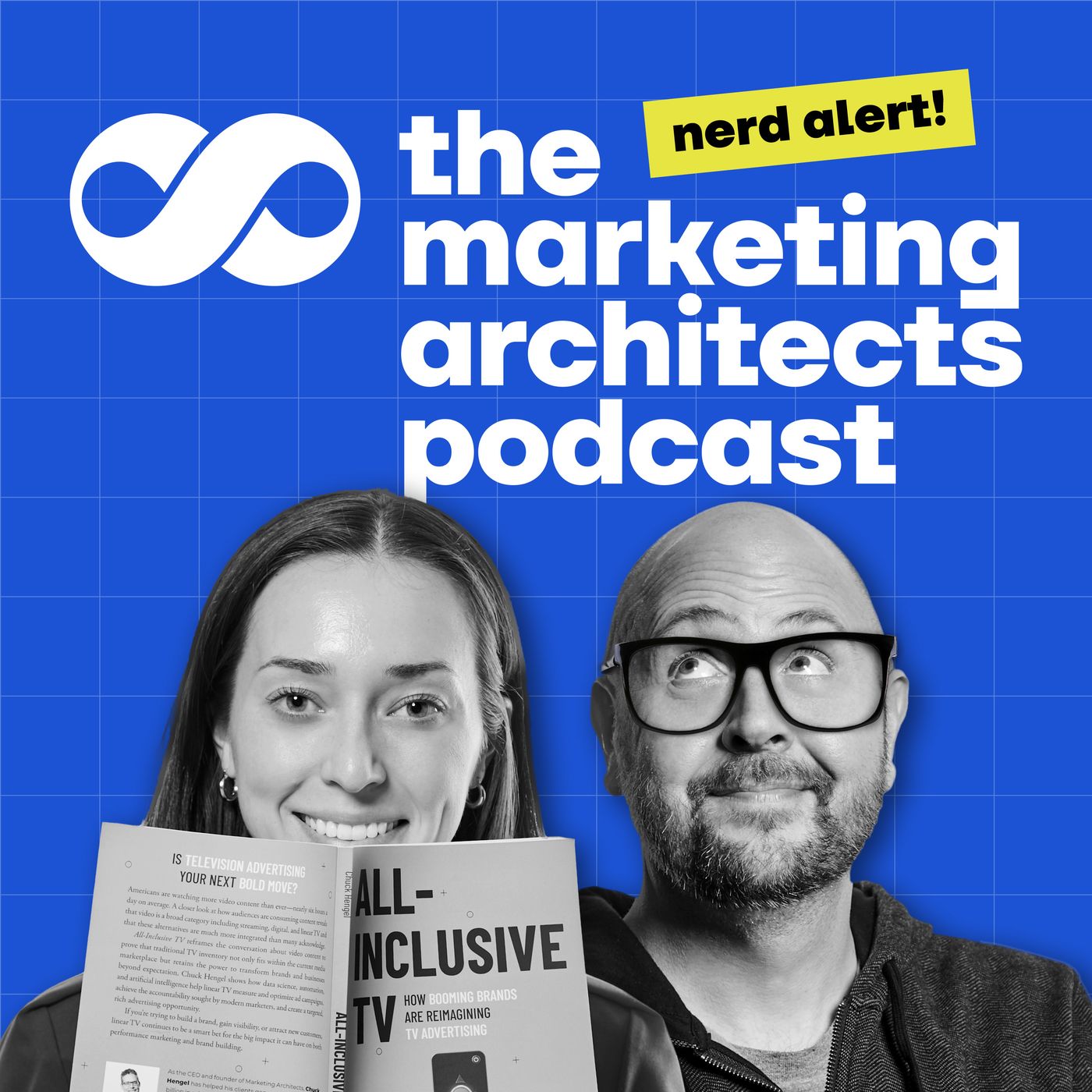
The Marketing Architects
Nerd Alert: How Brands Grow: The Book That Changed Marketing
00:15:47
Welcome to Nerd Alert, a series of special episodes bridging the gap between marketing academia and practitioners. We’re breaking down highly involved, complex research into plain language and takeaways any marketer can use. In this episode, Elena...
Loading summary
Transcript42 lines
- [00:00]
A
Nerd Alert. Learning is important, right?
- [00:02]
B
Yes, exactly. What a bunch of nerds.
- [00:05]
A
Nerd alerts.
- [00:06]
B
Marketing Architects.
- [00:08]
A
Hello and welcome to the Marketing Architects, a research first podcast dedicated to answering your toughest marketing questions. I'm Rob DeMars, Chief Product Architect at Misfits and Machines, and I'm joined by my co host, Alaina Jasper, chief marketing officer here at Marketing Architects. How we doing, Alaina?
- [00:28]
B
Hey, Rob. I'm good. How are you?
- [00:30]
A
Oh, better than average today. We're back with your weekly nerd alert. For 99 episodes, Elena has bravely waded through academic marketing research and translated it into simple, understandable language for me and all of you. But this is the 100th episode, so we are going to go full on Freaky Friday, we are switching roles today. I'm in the driver's seat and Elena is riding shotgun. Elena, are you ready to nerd out?
- [01:05]
B
I am, Rob, but I feel like I made a cardinal sin of your role, which is I didn't come up with a funny. A funny like how nerdy I am line to open us with, and I feel like I need one.
- [01:17]
A
Oh, man, I'm kind of feeling like you do too. How about if you were any more ready to nerd out, your name would be Snoop Rob.
- [01:25]
B
Oh, my gosh, that's perfect.
- [01:27]
A
All right, there we go.
- [01:28]
B
That's it. Let's do this.
- [01:30]
A
All right. Today we are talking about a book that shouldn't shock you that has probably shaped marketing effectiveness more than any other in the last 15 years. How brands Grow by Byron Sharp. The reason this book has had such a long tale is, is that it's built on observed buying behavior, not stated preferences. Not a single brand story, not a one off case study. Sharp and the Ehrenberg Bass Institute, which, by the way, before I knew Alaina, I thought Ehrenberg Bass was something you caught off a dock. So thank you, Elena. We are drawing upon their decades of data research across categories and countries, looking for patterns that reliably show up in real markets. And the patterns are, for a lot of marketers, quite uncomfy. Wouldn't you say, Elena? I would say absolutely. The central idea is that brands don't grow primarily by increasing loyalty. They grow by increasing penetration, getting more people to buy the brand, even if only occasionally. From that, you get several implications. Light buyers matter more than most strategies assume. The loyalty gap between big and small brands is smaller than people think. Growth is strongly tied to mental and physical availability. Differentiation is often overstated. Distinctiveness tends to be the practical advantage. Alaina when you first encountered how brands grow, what hit you the hardest?
- [03:10]
B
Yeah, I love how brands grow. Not surprising in hosting this podcast. It's really the inspiration for the whole show, I would say. And, yeah, the book, I just love it. I guess I'm a nerd. I loved school. I know some people say the book can be a little bit dry at times, but I really liked it. I also like certainty and marketing. Sometimes it's a little too wild for me, so I like to have some sort of principles, and there's so many that stand out. But I think the biggest one for me, when I think about reading the book for the first time, was, like you said, all of the research around loyalty and the misconceptions marketers have about it. One of my favorite findings from the book is that brands like to think, all right, I have this set of heavy buyers who buy me all the time. They're super loyal. Like, they're loyal to me. I know they are, because look at how much they buy. But usually heavy buyers of your brand are also heavy buyers of your competition. So there's very few, like, exclusive, I'm only buying this. This brand. I'm only your customer, which I think is just a big misconception. But loyalty in general, and that is sort of an offshoot of loyalty, I think hit me the hardest the first time I read.
- [04:16]
A
Still is something that I think challenges everyone today because we've just all been brought up saying, loyalty is king. Let's dive into this book. And I will say that for all of you out there who haven't heard of this book and are not as big of a nerd as Elena. It is available on audio, I was happy to find out, and it's quite good as an audiobook. So you have all different flavors to choose from. All right, let's dive in. Let's start with the law of double jeopardy. In most categories, small brands are hit twice. They have fewer buyers, and their buyers are slightly less loyal. Big brands have more buyers and slightly higher loyalty. But the key is, is the size of those differences. Loyalty differences are usually modest. Penetration is the main driver. So if you're trying to grow, the math points you towards increasing the number of buyers, not trying to dramatically change repeat rates among the people already buying you. Elena, why do you think loyalty gets so much attention when penetration is really doing most of the work?
- [05:29]
B
Yeah, I think it's a mix of what we've been taught, which is we talked about that earlier, just that, how important loyalty is. And we're not Saying it's not important. If you have a bad product in a completely leaky bucket, you're not going to succeed. But I also think it's how we like to think of ourselves. Like I like to think of myself as brand loyal or committed to certain brands. It's kind of an uncomfortable feeling of, no, I'm actually it doesn't really matter that much. You'll buy what's available. So I think it's a mix of just how marketers have been taught our own personal beliefs. And then a lot of these platforms that we buy from, they pressure you towards more narrow and narrow targeting, a lot of retargeting things that are in their best interest, very high frequency. So I think there's also a mix of the platform's influence as well that pushes us towards that false belief about it.
- [06:16]
A
Absolutely. Let's keep this party going. Let's move on to the part that can clash with modern marketing insights. Light bulb buyers drive growth. Dun, dun dun. Most brands have a small group of heavy buyers and it's tempting to treat that group as the strategy. But across categories, light buyers, people who buy once or twice a year, are numerous and collectively they account for a large share of the volume, which means if your plan is designed primarily for heavy buyers, you're likely limiting scale. Elena, does that challenge the way marketers typically think about audience strategy?
- [06:58]
B
I think that totally changes how you look at your channel mix how you target. If you're primarily invested in channels that have very tight targeting and you're going after just one specific Persona, this is my customer. I need to reach them in whatever way possible, no matter how expensive. This book would prove that wrong, that there are a lot of people that only buy your brand once, twice a year and you need to be in front of them. And I think that also challenges the idea that you can perfectly predict when to put an ad in front of someone. It's very, very hard to do like that. It starts to make the case for always on advertising, for broad reach, all those things that we love so much.
- [07:34]
A
It's amazing. Don't they point out something about Coca Cola in the book and how basically what is the stat?
- [07:40]
B
There's a crazy stat about how most Coca Cola buyers only buy one Coke a year, which I would think I would fall into that category. I feel like I probably have one Coca Cola a year. But yeah, just the scale of that is. Is crazy.
- [07:52]
A
I have one Coca Cola before 7am all right, moving on. In the book, Sharp simplifies brand growth into two Levers. Physical availability, which means can I buy you easily? And mental availability, do I think of you easily? You don't have to be loved by, but you have to be remembered. This matters because many buying decisions are low involvement. People don't want to do research. They want an option they recognize and can access quickly. Alayna, what's a category where you're mostly operating on habit and availability rather than deep preference?
- [08:32]
B
Yeah, this was fun to think about and I would challenge people to name categories where they're not operating this way. I was just thinking about walking through the grocery store every weekend and if they don't have the brand of shredded cheese I typically buy, it's not like I'm walking out of there without shredded cheese. I very easily just select the next brand or the one that's next to it. Or even shopping for clothes. Not super brand loyal. I'm typically just looking for what catches my eye. When I search for something, what comes up. I would challenge people like, how much are you really loyal to one brand? Or just think about what would happen if it wasn't available. It's not like you're going to drop out of the whole category. So I think it. It's almost daily that I'm operating more out of habit than a deep preference for a certain brand.
- [09:15]
A
The real question is what kind of shredded cheese are you first reaching for?
- [09:18]
B
Honestly, I was when you said that I don't know. It's a blue bag. I don't even. I don't even know the brand. That's how I'm unbrand loyal.
- [09:26]
A
I am a distinctive brand asset. The blue is in your brain.
- [09:29]
B
Yes. Whatever that is.
- [09:30]
A
All right, all right. Here's another common friction point from how brands grow. Differentiation. All right. Sharpe's argument isn't never differentiate. It's that meaningful differentiation is rarer than marketing theories imply and that chasing it can lead brands to constantly reinvent themselves in ways that don't build memory. Instead, the practical goal becomes distinctiveness. Recognizable, consistent assets that help buyers notice you and identify you quickly. Like in Elena's case, the blue for her shredded cheese choice. All right. Logos, colors, shapes, characters, taglines, sonic cues. The things that make your brand easy to pick out without effort. Elena, do you think marketers struggle with the shift from be different to be recognizable?
- [10:27]
B
Yes, I think that distinctiveness versus differentiation is a really interesting debate. And when you go through a traditional sort of marketing career journey, I would say there's definitely more of an emphasis on find your brand's unique differentiators. Focus on those. And I'm more in the camp of it's not either or. I think it can be both. I think both are important to business growth. But I think there's a much greater opportunity with distinctiveness. And just there's so many. If you look at just advertising in general, the ads on digital, the ads on tv, there's such a lack of distinctive assets. So if I were to give any marketing advice, actually, I think distinctive assets are such low hanging fruit. Just how do you, what distinctive assets do you have? How do they compare to the rest of your category? How can they show up in your advertising? Because we know that, like we were saying, when I'm making this, buying the decision, I don't even know the name of this cheese. And now I'm obsessed. I'm going to go in my fridge and look at what this. But I know it's blue. I know it's always blue. So if I went to the store, if they change their brand colors, I probably wouldn't pick up that cheese. You know, it's a signal to me that I'm going to, I remember that I'm going to buy it. So yeah, just super, super important. But a very interesting debate over does differentiation matter at all? Fun to get into for sure.
- [11:41]
A
I think the thing is so interesting too is you. It's not like there's some magic trick that someone has to perform to identify distinctive assets. It's actually just a practical exercise to go through and look at your category, look at how your assets compare to your category and think what would stand out in, in this sea of sameness. So it's a pretty practical thing. All right, so what should marketers do with this? Well, here are four takeaways that map directly decisions teams can make every day. Number one, prioritize reach as a growth lever. If growth comes from penetration, you need more buyers. That usually requires broad reach, not just efficient targeting. Two, treat distinctive assets as strategic infrastructure. Pick assets that are ownable and repeatable and use them consistently. Recognition is built through repetition. Say that three times fast. Number three, be cautious about over investing in loyalty as the main plan. Loyalty programs can help, but they're not usually the growth engine. If you have to choose. Penetration work tends to outperform loyalty work. Number four, make the brand easy to remember and easy to buy. Increase mental availability through consistent brand cues. Increase physical availability by reducing friction and improving access across channels. All right, are you ready for our first and probably only ever reading of the Elena GPT?
- [13:26]
B
I'm ready. I have high standards for this Elena GPT.
- [13:29]
A
All right, Growing a brand isn't about creating die hard fans who tattoo your logo on their arm. It's about becoming one of the easy, obvious choices for a lot more people. Brands grow the way cities grow. Not by convincing the same residents to become more loyal, but by attracting new, new ones and making it easy for them to move in. Most customers aren't passionately devoted. They're occasional visitors. The job of marketing isn't to deepen emotional obsession. It's to increase the odds. And when someone is ready to buy, your brand is easy to remember, easy to find, and easy to choose. Gosh, your GPT is smarter than the ones you do. For me, mine usually involve, like, a fairy tale and you know something. So obviously this GPT knows your brain and not mine. Okay, Elena, what do you think overall?
- [14:26]
B
Yeah, I think it's a perfect piece of research for our hundredth episode. I can't believe it's been 100. I don't know if we are smarter after 100 episodes.
- [14:37]
A
Can't believe it's 100. And thanks for listening to us for 100 episodes. And thank God you're getting your job back in our next episode, because.
- [14:48]
B
Not so easy, is it? Hosting the nerd alerts. I don't like responding either. I want to go back to our original.
- [14:55]
A
All right, well, we're. Whatever they do in the Freaky Friday movie to revert back to each other. We will revert back to each other next episode.
- [15:03]
B
That's it for this episode of the Marketing Architects. We'd like to thank Taylor de Los Reyes for producing the show. You can connect with us on LinkedIn. And if you like the podcast, please leave us a review. Now go forth and build great marketing.
- [15:18]
A
My brain starts to wander when I read. You know, like, it's just a. And then I just start making shit up.
- [15:26]
B
I know. I saw that a couple times. You just, like, replace the word like. But not in a way that made a ton of sense. But it's okay.
- [15:33]
A
But I fixed it, didn't I?
- [15:35]
B
Yes.
- [15:35]
A
Or. Or is there. If there's any I have to tailor. If there's anything I have to redo, I apologize in advance for the editing.
- [15:43]
B
Marketing Architects.