Loading summary
Transcript126 lines
- [00:00]
A
Can you duck down so that I can see it in full?
- [00:05]
B
Can you see it?
- [00:06]
A
Nice. Yeah, yeah, yeah, yeah.
- [00:08]
B
I just, I couldn't stop making up names for this new disaster. I think it's like, I think I really actually wanted to go with the Titanic meets the Iceberg. But that's a two big name. But I think it actually looks like this kind of works. He's on a pogo.
- [00:27]
A
I saw that. I saw that on a pogo stick.
- [00:30]
B
I also had an alternative version which was making Kleptocracy great again, but I preferred this one.
- [00:37]
A
Yeah, that's nice. You had Nepo Paramount or Nepo mount or something yesterday.
- [00:42]
B
Nepo mount, right. But then now that they're merging, it has to be Nepo Bros, right?
- [00:47]
A
Yeah, I quite like that one. I'll vote for that one. Let's see what the audience think. Guys. Let us know if you have a better name than the one Ivan came up with. Just go ahead. If you like this one, send us some love on LinkedIn and on Substack. So welcome everyone. This is the Media Odyssey podcast. This is Evan Shapiro.
- [01:08]
B
That is Marion Ranchette. Where are you today? You're like all over the world these days.
- [01:12]
A
Yeah, well, I've been traveling. I've been traveling. It's the school break, but I'm in Paris this time so you know, back in Europe. How about you?
- [01:22]
B
I'm in my disaster area of a construction site apartment. So that's the, the virtual background. Yeah. But I was in London earlier this week again for MIP London. And it was a really interesting place. Everyone was talking about this. I will say, I'm sure no more Portmanteaus. Thank you, Macy. Good to good that you're here. So where were you when you heard that Netflix dropped out of the bidding?
- [01:53]
A
I was actually on here having a coffee and I saw your text message. Because you're old school, you send me SMS instead of using WhatsApp. And so you actually broke the news to me this morning because I went to bed super tired and I have to say I did not look it up last night, so really discovered it this morning. How about you?
- [02:14]
B
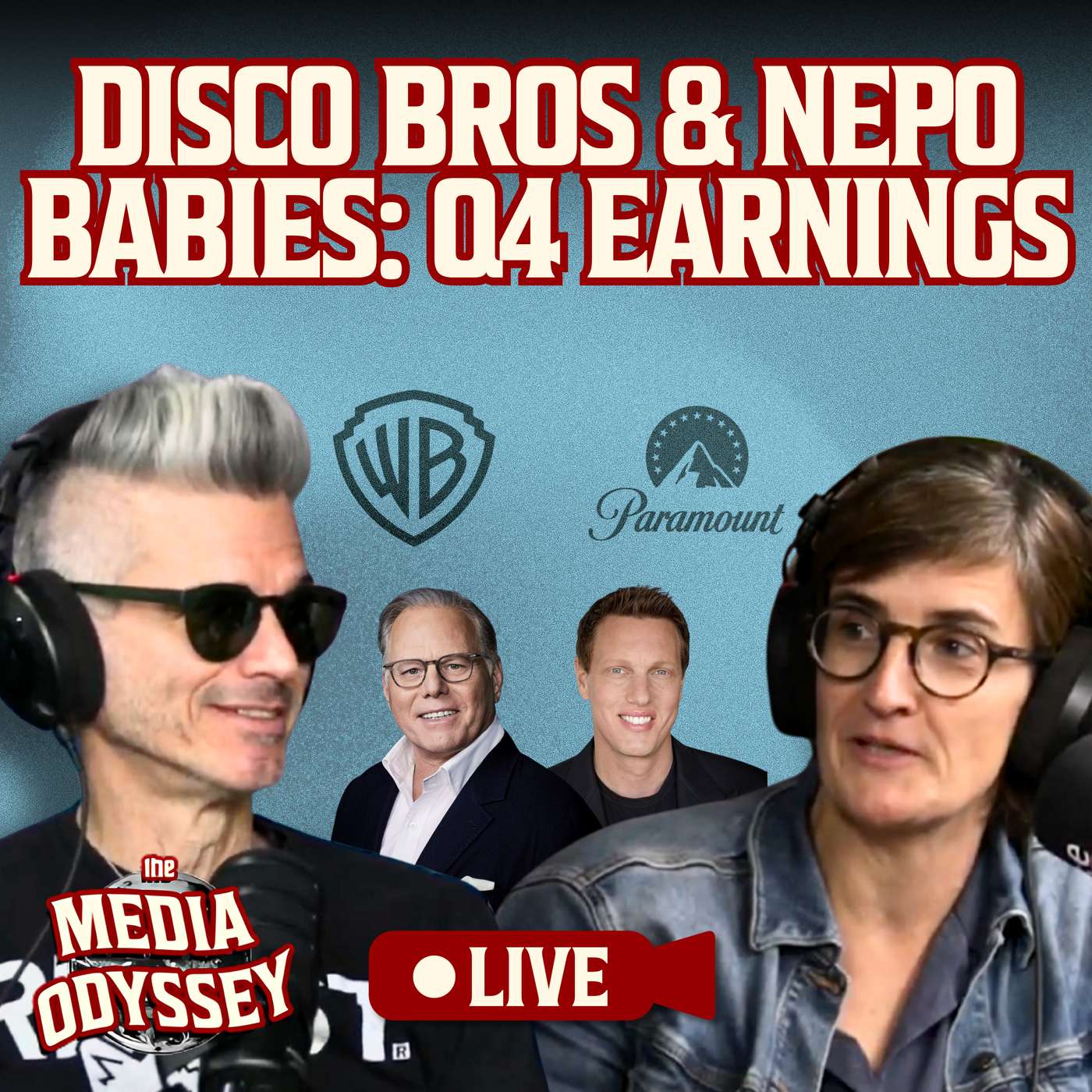
Yeah, I was standing waiting for my takeout order of sushi last night and it broke on my phone and I immediately started making these stupid fucking images and my, my favorite thing was, you know, do you remember that image that Variety published of Zaslav and his co CEO and Ted, you know, touring the Warner brothers lot, you know, like, oh, look at that. We're going to own that. Look at that and I re. And I said at the time, this is going to be the definition of counting your chickens before they hatch. And here we are. I also don't think we're done yet. I don't think this is a fait accompli by any sense of the imagination. But let's. Let's hit hold because we promised we were going to focus on David Levin Warpar. That's really good. That's pretty good. Although, you know, Macy has said no more portmanteaus, which is French. We're going to dig into performance of the Titanic and the Iceberg and show why this is just a disaster in the offing. Right.
- [03:18]
A
Yeah. Let's go. Do you have some slides for us?
- [03:21]
B
Yeah. As always, man. Hold on, let me.
- [03:24]
A
Very red, if I remember correctly, from your post on LinkedIn.
- [03:29]
B
Yeah, yeah, yeah. And just, you know, there was this reaction by the press yesterday. Oh, Paramount's earnings were more positive than we thought they might be. That's because they were looking at fourth quarter versus fourth quarter. We're looking at all of 25 versus all of 25. So this is Warner Brothers, Discovery, Disco Bros. Thoughts?
- [03:53]
A
Well, I mean, what can I say? They've spent the entire year last year focused on selling the business, so clearly something's not right. I have to say that I was. I thought it would be not as bad, given that I think they had a good theatrical year. Right. So revenue. Yeah. So I'm actually worried for them in 2026, are they going to be able to replicate the success of 2025? But, you know, at the end of the day, whether you're looking at linear and advertising, I mean, you know, there is. It's all downhill from here. Right. So there's not much they can do. And as we all know, even the biggest growth in streaming right now is not compensating for the loss on the linear side. So I have to say, I'm not surprised.
- [04:46]
B
Yeah. And this is something I've been talking about a long time. Thank you, Gene. Disco is dead. It's a throwback from 1989. And if you can remember that famous concert where they burned all the records and what city that was in, put that in the chat. Look at the advertising number here. It's down 10% year on year. They are so bad at selling advertising, it's almost a crime.
- [05:14]
A
Yeah, but you say that about everyone, man. You say that about everyone. You say that about Netflix. You say that about everyone. And is it on them or is just the market really shitty right now?
- [05:24]
B
No, Disney's really good at selling advertising. Google is very good at selling advertising. NBC is actually pretty good at it. Paramount's actually pretty good at selling advertising. Way better than Warner Brothers Discovery. But they, they've just. People hate working with Warner Brothers ad sales because they're just, they act like thugs, frankly, is the, is the reputation that they have. But, you know, this is a, this is a, a CEO who has spent his entire last half decade destroying two companies, then selling them and obviously not operating the business in any way, shape or form. And I was talking to somebody yesterday, he's like, I have a show to sell. I want to try to take it to hbo. I'm like, good luck, man. I don't think anybody there is focused on buying anything at this point. I think they're focused on just covering their own asses at this point.
- [06:13]
A
I don't know. I think it's always the same thing. I spoke to folks from Arnaud Broz just this morning and she was like, I have this massive contract I gotta work on. People keep pushing it is what they do. But the challenge is it's very hard to do your job, you know, day to day when you have no perspective. Right. And a lot of folks, and we'll speak to that a bit later on, but they were very focused on the fact that the business would be split. And potentially a lot of decisions have been made because regardless of who was buying, people were already looking at, okay, we're going to be split just like Versent.
- [06:52]
B
So I want to note that Brian Briskman just got it right. It was in Chicago, not Detroit. It was at the White Sox stadium. So, so, yeah, I just, I think this is a business that needs complete retooling. They lost, you know, some of their most major sports rights in the last couple of years. You know, the numbers, you know, for Warner Brothers, I mean, it gets worse kind of all over the place there. You know, there's not a segment that did well for them. You know, distribution was down 3%, advertising was down 10%. Their content sales was down 6%. Their other revenue was down 12%. You know, even their, their streaming segment, their distribution revenue went up 4%, 5%. And it's just a, it's a, it's a, it's just. They've clearly been distracted and not really looking. You know, they're streaming revenue. This is where the growth should be coming from. Barely edged up year over year. And, and then, and then when you look at what they're about to combine this with, you Know, it's, you know, Titanic meet iceberg. This is the iceberg. And again, this is, you know, the trades who really do not know how to read earnings reports. Like really, really, really, really don't know how to read earnings reports. Like, oh, the earnings were a little bit better than we expected. Yes, if you look fourth quarter on fourth quarter, they were a little bit better than expected. But their total revenue for the year was down 83%. Paramount plus revenue was down 7%. How do you even do that?
- [08:32]
A
So one thing though that I will say is that they've spent the last year, it's the first quarter as this new Paramount, right. Under Ellison, the new management, et cetera. All of those changes were made during the summer. And so it is important to look at Q4. I'm not saying they should look at only Q4, but it is the first quarter under that new management.
- [09:00]
B
What has he done to affect great change during that time? I mean, other than firing a bunch of people and destroying democracy through his disastrous oversight of CBS News and install censorship as the main raison d' etre of the company. What have they done to improve the business in the last 90 days?
- [09:21]
A
Well, if you look at P. So you know, it grew 17%. The overall D2C segment, 10%. So I agree with you. It's just on a quarterly basis, but there's some, you know, and revenue was up 2%. So I'm saying.
- [09:38]
B
Right. But wouldn't have happened regardless who was run, you know, how much did the trajectory change because the Nepo Ellisons took over the company?
- [09:47]
A
Well, yeah, I, Yeah, I'll, I'll, I'll give you that. I'll give you that. But you do have. When we spoke and you and I, we were at alliance, right. And we spoke to folks who were at, at Paramount under that new management and people felt that there was hope, right. The, there was a strategy, etc. And they were starting to execute on it. So I will just say, you know, let's, let's, let's give it a minute. But yeah, I agree that if you look at 20, 25 as a whole, it is, it is, it is bad. And combining those two companies together, I mean those are the exact same two companies. They have the same problems, the same challenges, the same opportunities.
- [10:30]
B
Yeah, that's exactly right. When you. Sorry. When you look at the. Sorry. When you look at these two back to back, they're the same disaster running into each other. It's.
- [10:39]
A
Those are the same businesses.
- [10:40]
B
Yeah, exactly. Double mapped. Paramount, Warner Brothers, and it's going to, by the way, the number of job losses that are going to come from this combination is just the advertising departments, the legal departments, the distribution departments, the operational departments, the content departments. It's a complete overlap. And, and this is, I think, one of the reasons why, why this, this deal is very far from being done. You know, what do you, what's your take on the European regulators and their take on this, on this merger?
- [11:17]
A
So. Because those companies are not doing so well. Right? Because if you look at Netflix, it is, you know, the global market leader and it is also the number one streaming platform across, you know, every single territory in, in, in Europe. So seeing, you know, two struggling companies being combined, I would say, you know, less of a threat from a streaming perspective. You know, the linear business, not so much a threat either. I think some concerns could be around again, you know, the fact that there's not two places but just one where you can shop your projects, whether that's TV series and movies. So there's going to be a focus on the level of investment and the number of titles that they could release every year. And I think we looked at Disney and Fox a few weeks ago and every time they're promising that they're going to keep the total, it's going to be Disney plus Fox and equals 30. And in the end we all know that most likely it's going to be half that. They're going to be cutting hard on projects. From a steering perspective, I mean, those are tiny businesses, right?
- [12:30]
B
If you look at, compared to their competitors. Absolutely, yeah.
- [12:35]
A
I mean, if you look from a European perspective, I was looking at SP Global numbers and they were saying 37% of market share for Netflix. And when you're looking at a paramount or an HBO, you're like 3%, HBO 7%. So those are tiny businesses being combined. So I think from that perspective, I think it's going to be okay. The other thing is, and I want to hear you on that because it's hard for me, I'm not watching CNN nor cbs. But there's that question of pluralism. And it is a very important topic in Europe, especially right now, especially when we have the French election next year. There's so much like that going on, having a single company owning those two news outlets. I think this will raise some concerns on our side, but I'm sure on
- [13:32]
B
yours too, as it should. I mean, just look at what happened to Stephen Colbert in the last week. You look at what happened to 60 minutes a couple weeks ago. Now that's going to happen to cnn. And by the way, it should be noted that Anderson Cooper turned down a very lucrative contract to renew at CBS News because he doesn't want to work for fascist Weiss. I'm sorry, Barry Weiss. You know, I get those two words confused. So, you know, I think there's going to be a tremendous amount of sturm and drang in the regulatory circles here in the United States. And I also have to remind everybody that there's a midterm election coming up in November and that this deal will not be done by them. And so if trajectory continues and the orange mango in the White House loses control of both houses of Congress, shit's going to go upside down for the Nepo Allison, and this deal. But I think what's really crucial is that rather than focusing on Washington, D.C. because I believe I. This is. Look at the order of events really quickly. So Paramount raises their bid. Ted Sarandos goes to the White House to meet with Trump. So the bid is raised, right? They're on the clock. Ted Sarandos does not make any signs of backing out of this deal. And then he goes to the White House and then within hours, pulls out of the deal. What do you think he heard from Donald Trump in that meeting? Okay, so you think Donald Trump didn't say, dude, I'm going to block you from buying this. I'm sure that's what happened. 100%. 100%. I mean, the timing just adds. It just goes boom, boom, boom, boom, boom. Maybe, maybe it's not obvious that all these things line up, but Jesus, it sure looks like that's what happened to me.
- [15:23]
A
I felt. Because last week we spoke about that. Right? We heard Sarandos on the Town on a podcast saying that it was nice to have. Not a must have. Clearly, it shows.
- [15:35]
B
By the way, the Town is the second best podcast in media. Go ahead.
- [15:39]
A
I love that. Yeah, let's say that I agree. But no, but. So last week, my thing was I really felt that Ted was all in, but what was sure for me was he would not raise his bid. So I'm not surprised that they're saying, thanks, but no thanks, because.
- [16:00]
B
And go, why then? Why go to the White House?
- [16:03]
A
Well, he's. He's doing the, the full thing. And perhaps they were hoping that Paramount would not raise their bids.
- [16:10]
B
I said, I believe the timing was Paramount raises the bid. Netflix is on the clock. Then Ted Sarandos goes to the White House. So if he was not going to raise his bid, why go to the White House. That's. I just don't think. I'm pretty sure he heard bad news in that meeting and that. That there was going to be a full court press to block it. So, you know, I think it's really super interesting that that stuff lined up that way. But to my mind, the most important politician in the world right now with regards to this deal is Rob Banta, the Attorney General in the state of California, because he does have the capability of blocking this deal. And that the governor of California, Gavin Newsom, who is going to run for President of the United States, this guy, the Attorney General in California, they're very concerned about what's going to happen to the industry. I mean, they're going to be tens of thousands of jobs affected by this. Not just the people who work at Paramount and Warner Brothers, AKA Disco Bros. But the people who work in the industry writ large. If these two companies merge and half the number of movies are made from these two companies, on the other side of it, how many carpenters, how many security guards, how many caterers, how many grips, how many electricians are going to, you know, be out of work on the other side of this? And that's going to be decimating to the state economy. And by the way, California has the fifth largest economy on the planet Earth. It's bigger than almost all other countries outside of the United States. And, and you know, the movie industry is the heart and soul of this, by the way. They're not alone. Georgia, New Mexico, Louisiana, Michigan, they all have major tax credits that are given to these companies to come in and produce their television shows and their, and their movies franchises there. That's going to lose jobs across all these places. So I think every red state AG is probably going to join in trying to block this deal. And I don't know that they'll be successful, but they'll definitely slow it down to the point where this is not going to close before the midterms. I don't.
- [18:24]
A
Yeah, that's what you were saying. Yeah, yeah, yeah. What a waste of time. I mean, what a waste of time. And like, you know, no scenario was a good one. Right. We heard you last week. You. And you were happy to see, you know, that Ted listened to you, not Trump on that deal. But so, you know, when you speak to people, nothing was, you know, a good deal. I have to say that if I'm putting aside a money side of things and whether it really made sense for Netflix, if I were, you know, at wbd, I'd prefer to be bought By Netflix. I mean it is sure that you're, they're going to lose their jobs. So many people. It's going to be like Disney and Fox let the best men, women win within each of of those organization for the exact same job. And also you're joining just a company, we've said it at the top, that does exactly the job that the, the one you're at is doing. Whereas with Netflix you're like, it's the market leader. It is, it's innovative. There's a few things. There was a bit of hope being bought by Netflix. I don't think there's a lot of hope being bought by Paramount regardless of, you know, how long it takes, etc.
- [19:36]
B
Yeah, yeah. And so, you know, there's two things there. You're right. And also, you know, the channels were going to spin out so everybody had an opportunity to kind of like keep their jobs. You know, I talked to some people at CNN yesterday, holy cow, they were like funeral gear. They're very worried about what's going to happen to the news division there. And frankly, you know, what's going to happen to free speech and democracy as a result of this, all this all happening. You know, the flip side of all of this is, you know, when you look at what the chilling effect that this is going to have on the entire industry, everybody's frozen in place right now in Merger Maine. No one's really getting all that much work done because everybody's waiting for deals to close. The Comcast, ITV thing looks like it's on pause right now. And let me ask you a question. We have models, we know what's going to happen here. Warner Brothers, Discovery, what happened in that merger? Disaster. Disney and Fox, what happened in that merger? Bad things. We have the case studies who's sitting inside these companies going, yeah, go for it.
- [20:44]
A
No, I don't get it. We spoke about it. I think those companies should not expect to transform and innovate by buying their next door neighbor who's struggling with the exact same challenges, Right? So if you do make an M and A, make it something that's going to get you out of, you know, the shit you're in, right? And that is investing in, I don't know, the creator economy in technology, anything but buying businesses who have the exact same challenges that you have.
- [21:18]
B
So and, and that do the same things and that do the same exact things like ads, complementary stuff, add gaming, add music, add all these different things. What I find fascinating is here, here's the stock market's Reaction to the announcement that Paramount won and Netflix lost. I expected Netflix to skyrocket. That, that seems obvious. But why are people applauding the merger of two disasters in the marketplace? Other than the fact that I think this is being driven by a whole bunch of, you know, friends of Ellison and friends of Trump. To me, Paramount becomes the greatest stock to short in the marketplace. I just, we know how this works out. You know, every time you drop a penny off a building, it falls. Every time you combine two exactly same companies in the media industry, it's a disaster. And it's never not been that way. And I just don't see, you know, the definition of insanity is doing the same thing over and over again and expecting a different outcome. I just don't understand why this industry doesn't learn from its historic mistakes. What do we do? We all just like get a lobotomy in the 80s and forget how to keep our short term memory? I just, I'm, I'm, I'm finding it impossible to understand why. Why are people buying Paramount stock today? Who's buying Paramount stock today based on this news?
- [22:38]
A
I don't know. Is it because you got Allison? You have dad in the back? I don't know. I don't know.
- [22:44]
B
Well, and also Oracle. Oracle's had a really bad last few months as well. So anyway, let's, let's move on to. So what does Netflix do next? You know, what is, what is question?
- [22:55]
A
They have some money. You know that breakup fee. What would you buy? Is it 2.8 billion? What would you buy with it?
- [23:01]
B
Which, by the way, is almost the exact price of Lionsgate.
- [23:05]
A
Ah, interesting. So that's your bet that they're going to buy Lionsgate. Lionsgate was bought by a few companies already. No. Wasn't it part of Stars?
- [23:15]
B
No, no, they're out there. They bought Stars Star, then they ejected Stars. And the market valuation of Stars is, is about 23 cents right now. So Lionsgate has, it doesn't have the franchises that, that, that Disco Bros. Has. It doesn't have Batman, doesn't have Superman, doesn't have Harry Potter, but it does have Hunger Games, Twilight, John Wick, which is an amazing franchise. We've got the now you see me, which has just had a threequel that did incredibly, incredibly well. So they've got some really good IP there and a decent library. You got, I believe, Mad Men. Is there a couple of other really good franchises that they, they, that they could renew? The, the Knives out franchise, which is on Netflix, belongs to Lionsgate. So there's a lot of really good intellectual property there. That and they have a bunch of fast channels that you could see integrating into the Netflix platform. And they could buy it for less. They could buy Lion's Gate tomorrow for the less. For less than, Than, than they got from Paramount in the breakup. They can still, they'd still have changeover to go get shakes at McDonald's.
- [24:30]
A
Do you need to buy Lionsgate in order to benefit from what Lionsgate does? If you look at the deal between Netflix and Sony, which effectively killed the pay TV window globally, I'm Netflix and I just keep working with Lionsgate. I don't think I need to buy Lionsgate to harvest what these guys are doing. I think there's other ways than just buying. You've said it yourself, we should not always just go out, buy stuff. Well, then why buy this and not just partner deeper? That's what I'm expecting Netflix to do. I'm thinking they were looking to buy this thing, said they did not need it. It could be an accelerator or a growth thing. I'm thinking they're just gonna go put their hands deeper in a lot of different companies. They don't need to buy anyone. They should be investing more money on the tech, the product, the overall infrastructure, and they should invest in, you know, advertising. They need to work on advertising and they should buy stuff that are on other verticals. Right. And I think you've heard a rumor.
- [25:42]
B
Yeah, so I heard a rumor last night that I really like and I'm gonna run with, from somebody who worked at Microsoft and then worked at Netflix, and they believe that Xbox is for sale. And to me, you look at, you know, game pass, their subscription product, and you look at the intellectual property that comes along with Xbox. And to me, Netflix, who's failed at gaming over and over and over again, I mean, there's Pictionary on that platform. Does anyone, anybody put in the chat, has anybody played Pictionary on Netflix? I don't know anybody who has.
- [26:20]
A
Or any game for that matter.
- [26:22]
B
Exactly.
- [26:23]
A
Yeah.
- [26:24]
B
So I think, I think that could be an interesting purchase. I think Lions Gate is an interesting one. I pitched you Spotify last week.
- [26:32]
A
I had pitched Roku, but you need more than the breakup fee for that. But yeah, I, I, the whole crew would make sense.
- [26:41]
B
Yeah, I agree with you. I think adding, if you look at the most successful companies on the planet Earth right now, they're all very diversified companies. They have multiple revenue streams, they have multiple products that complement each other but don't duplicate each other. And I think you're absolutely right. If Netflix wants to grow into an Apple sized company, they're going to have to buy something complementary to their video service, not duplicated to their service. Let's answer some questions really quick.
- [27:07]
A
Yeah, that's good. It's good.
- [27:08]
B
So Dwayne asks, is the long play Oracle being the backbone of Paramount, Skydance, Warner Brother, et cetera, et cetera? And you had a point about a social media company because they also control TikTok in the United States now in the States.
- [27:22]
A
Right.
- [27:23]
B
Not all of it. Not all of it, but a good piece of it. So I do think Larry Ellison's plan is to be the backbone there. But I think it's very clear that Ellison, who, whose company made about $40 billion off of the TikTok deal because they're MA. They get paid by TikTok with the security and infrastructure backbone. I think this is a, this is a present to the President. I think this is all about the Ellisons taking over cnn. So they can either shut it down, which I think is not unlikely, or just fold it into CBS News and make it part of Barry Weiss's free press state run fascist media. And I'm not being hyperbolic here, I wrote the letter.
- [28:06]
A
I think it's going to be folded. I don't think it can be shut down entirely, can it? I mean, how long is it, how old is this, this, this company, this brand? I think it would be a shame, but they're going to fold it and they're going to put it in the ranks.
- [28:22]
B
Yeah, yeah, but, but it'll dis. I think it'll disappear into the woodwork to a certain extent, you know, so I think there's a, there's a really good one here which is more sports programming for Netflix. And I think that that's, that's definitely bound to happen. But what sports rights are actually available? The NBA bid just, there's not a lot of football rights left over.
- [28:44]
A
Yeah. And that's the major win for Paramount, especially in Europe. Right. So I don't know exactly what Warner and Paramount have in, in the States, but in Europe, so what Paramount did at the end of last year, they actually bought rights to the Champions League in some key markets, uk, Germany and Italy, if I'm not mistaken. So that's what they have, which is, you know, that was a great get, but everything else, you know, it's locked by sky and a few others and Warner has a ton. Right. So they just wrapped up the Olympics. They still have that until 2032, we spoke about it.
- [29:21]
B
They have tennis, that's an important note. Here in the States, NBC has the Olympics. But in across Europe, WBD has a lot of those rights too.
- [29:30]
A
They have Tour de France, they have the Australia Open. I mean, there's a lot. And TNT Sports, which is the sports brand of Warner and HBO in Europe has a lot of content. In the uk Historically, Eurospur had a lot of that. So that's a massive gate for Paramount. And we haven't spoken about that. But I don't know about the US, how much the two combined would do, But I'm thinking that internationally they're going to be competing head to head with the Disney plus. So those who potentially are not super happy with this deal. Well, so, yeah, maybe it was growing, you know, Netflix that much bigger, but you still had this, you know, you still had your number three spot. Whereas right now I'm thinking hbo, Max plus, Paramount plus in a lot of markets could be, you know, a top three, a top four, if you look on a global scale. Right. How many? Disney has 150 million, something like that.
- [30:31]
B
It's actually closer to 200 million, but yeah, yeah. Well then when you combine ESPN, Hulu and Disney together, it's about 200. 200.
- [30:39]
A
Well then, yeah, but so that's. That spot was just taken, right, because Paramount and HBO, it's 2:10.
- [30:46]
B
Well, it's 210 without duplication. So if you take out the duplication, then suddenly it's probably closer to 1/10. But maybe I'm wrong.
- [30:56]
A
Yeah, but they're saying. So Antenna, they did that work on Netflix and hbo, right? And they're saying that.
- [31:02]
B
Well, yeah, but not currently.
- [31:05]
A
Yeah, they did. And it's said to be smaller. Right. So 6.7 million in the US have a subscription to both HBO and to Paramount plus versus over 10 million for Netflix.
- [31:22]
B
And in Europe, was that part of their state of streaming report that they just dropped?
- [31:28]
A
That was. No, that was a couple. I think that was a couple of weeks ago that I saw that. And in Europe, we don't have a lot of data, but what I've seen is that the overlap was bigger between again, over 50% in France, for example, between HBO and Netflix, whereas HBO and Paramount, you're talking at below 50%. So I'm not sure there's that much of an overlap. And so those two services were not must have together could become not a must have, but, you know, best to have than it was before.
- [32:04]
B
What do you think the effect is going to be on Channel 5 in the UK. I mean, to me, that's one of the bigger opportunities there because again, you're doing the math to add them up where they fall in the ranking. When you look at Channel 5 in the UK, it's kind of an also rant. Doesn't even come close to the other major public media outlets there. And it doesn't come close to any of the major global streamers. But when you take Warner Brothers Discovery and you add it to, to, to Channel 5 in the UK and then you add Pluto to it, that suddenly becomes kind of a bit of a major player. More major than they were before this deal happens. What do you. I mean, you know, a lot about the UK ecosystem. What do you think happens there?
- [32:53]
A
Well, for sure, for channel. If you look at what Pluto, you know, inherited from, you know, Viacom, right? The fact that they were able to tap into the Paramount, the Viacom library, it's been a big, big advantage. Right. They can now tap into, you know, the one.
- [33:12]
B
Yeah, yeah, yeah.
- [33:12]
A
Game is, I think that regardless, Pluto, Pluto TV, Channel 5, you know, those free, free TV or, you know, AVOD alternatives are going to benefit from, you know, being able to tap into this massive, even bigger library. So. So for these guys, I think it's a positive and they need it because you've seen the numbers, Pluto, minus 16%. They're saying that the monetization is not working out. That's a tough business.
- [33:43]
B
That's an issue with FAST writ large, isn't it?
- [33:45]
A
Yeah, it is.
- [33:46]
B
I mean, FAST is just not monetizing in the way people. Even though the viewership in the United States FAST is now combined as an ecosystem bigger than Netflix. Right. And so the question is, like, why are they not able to monetize? I think you and I agree that the data is at the heart of that, but, like, what else? Why can't that fast ecosystem monetize at the, at the level that everybody thought they were going to be able to?
- [34:12]
A
I think there's just like too much, too much available. But it is true that, you know, the lack of transparency, it's not so easy to buy. A lot of that is still, you know, getting, getting, getting in the way. In Europe. It's a different thing is that, you know, it's still, you know, minuscular in comparison to. We have so much free content.
- [34:37]
B
Yeah. Let me show you something else. You brought up Antenna. They did drop their state of streaming report this week and they gave, you know, when you look at the churn for the Industry. I'm going to share this slide right now. What you can see is streaming is not a great business. And so every year the amount of retention that the entire premium streaming ecosystem has goes down dramatically. So you look at this. Last year, 2025, all SVOD gained 175 million subs and lost 156 million subs. So net retention, net ADS of 11%. By the end of this decade, streaming is going to be where cable is today. They're going to be losing subs on a yearly basis. Their revenues are going to go down on a yearly basis. You know, when you, when you look at where the revenues are going, you know, it's, it's plateauing and you know, 3% growth, that's not a good direction. But I think this, this decline accelerates from this point forward. So, you know, that's, this is why everybody's going into advert advertising. But even Netflix is not really selling as much advertising as their amount of viewership would marry.
- [35:56]
A
Yeah, this is worrying, right? Because if premium subscription is plateauing at the same time, everyone's rushing to advertising, but there's more supply than demand, you know, where's the growth going to be coming from? I think we need to reinvent ourselves. And you know, I felt really depressed mid last year. I was like, what's next for us? You know, and that was even before this whole mess with Warner and Paramount. And I don't know if we figured out what's going to be, you know, the growth lever for, for the next decade. I'm very concerned.
- [36:33]
B
I mean, you know, they all think it's going to be advertising, right? You know, they, you know, this ecosystem now is turning for all the reasons we just highlighted. They're turning from pure subscription into an ad market now. But again, the data isn't wonderful there. The amount of inventory just is. So you're right, there's an oversupply. And so, yeah, I don't know that there's a great answer there other than basically eliminating some of the players, which this is going to do. Combining Paramount plus and HBO Max into one takes one of the players and a whole bunch of inventory off the market. But, you know, it still doesn't solve the oversupply of demand. Let's take one quick look at the Nielsen gauge. This is December, not January. And January, the numbers were a little bit different. But this is what, you know, when you combine, you know, Disco Bros. And Paramount together here, suddenly they pop up to be the number one player they even surpassed on this chart. They would have surpassed YouTube.
- [37:45]
A
YouTube, yeah.
- [37:46]
B
So, you know, there obviously is a reason for this combination, but I don't know that the math, you know, makes it all add up here.
- [37:58]
A
Do you? I'd like to ask a question to the audience. Right. So the question is, now, who's going to be the winning brand? Is it going to be Paramoon being folded under HBO Max? So place your bets in the comments. That would be my thing. I don't know how it is in the US But I think it would make sense for HBO Max to be the leader and keep that brand name. And we've said it around the sports. It means that the Paramount product is not fit for sports. They don't have enough sports. You know, that expertise is within HBO Max. So I'm thinking Paramount goes under HBO Max.
- [38:39]
B
Well, I think that's right. I think they should drop Max and just call it HBO again because that's, you know, it's still got vestiges of its great brand left on it.
- [38:49]
A
But that's what Ted would have done on that podcast. Like, he mentioned it, and it sounded like the first thing it would do would go back to HBO and drop Max.
- [38:59]
B
It's one of the greatest brand names in the history of television. So is Discovery. At one point, Lynette Zolic from ZDF is telling us not to throw out our DVD player. She thinks the physical product is going to come back.
- [39:12]
A
I. So I. Lynette, five years. Okay. So when I'm back in Amsterdam, I'm taking a picture, sending it to you guys who are listening to the pod and to My coast. I have it and I use it regularly because, believe it or not, there's so much content out there. But sometimes this one thing that I want to watch is not on there. A good example was the James Bond movies. I had that silver box with all of the DVDs, and up until January, you could not find it in streaming. Now you can have it on Netflix. But I was putting this out. The cable, the HDMI and watching DVDs. I love it.
- [39:48]
B
Emmanuel Landy, who is in Europe, I think Italy in particular. Italy, yeah. He said that the Disney Fox merger resulted in a massacre of layoffs in Europe in particular. So do you think that's. That's likely to happen again in Europe? You know, how big is Warner Brothers footprint from. From an employee standpoint in Europe, I
- [40:11]
A
don't have that number handy. But what I do remember from the Disney Fox days, and that's what I mentioned at the top, it was very Much a question of who would win. And it's a lot of the Fox people, believe it or not, who actually came out winning those jobs versus the Disney people. And one of the things at the time, especially within the content distribution team, is that the Fox people were seen as, you know, very salesy and you know, like carpet sellers, et cetera, et cetera. And that the Disney guys were too nice between those two, Warner and Paramount. I, I don't know honestly what's going to happen, but it's not necessarily stuff from the buyer who stays is the experience I have from the Disney Fox deal a few years ago. Yeah.
- [40:58]
B
And I mean, the buyer always wins. So that's, you know, you look at what's happening in the Omnicom IPG merger right now. You know, most of the. And I have actually been, you know, on the buying end of a merger, not a big one. When we combined IFC and Sundance into one operation and you know, the IFC people, they get to keep their gigs and the Sundance people, you know, didn't necessarily, which is awful. And that's the way it's, you know, that's the way it winds up happening. Do you, do you, I mean, you know these two, these two groups of employees in Europe way better than I do. Thoughts on which teams are going to wind up?
- [41:35]
A
I think they're more similar. The Disney vs Fox at the time were very different group of people. Right now those people are, you know, fairly similar in a good way, but it's not so different. So honestly, I don't know. It's going to be very political as well. Right. So people are going to be pushing their agendas and. Yeah, let's see. Sometimes it's not the best men, the best people who actually gets to stay. It's those who are very political. So let's see what happens. It's. So Mike, I should show.
- [42:10]
B
Yeah. Mike in the comments said the Paramount's already cut a lot of people in the uk. You know, both companies, Warner and Paramount have both made major layoffs. Thousands of people over the last couple years. Like, how much more can you cut without going to the bone and keep the value of the company in place?
- [42:30]
A
Yeah, yeah, absolutely. One thing that is still kind of tbc and I don't know what you think of it, but Sky Showtime. So people may not know what it is. It is this weird JV between Comcast and Paramount and they could not decide which name to keep, so they did a mix and it became Skyshowtime and it's available in 22 European countries, it has over 6 million subscribers. And so I wonder what's going to happen with this thing. Is Paramount going to be selling this piece to Comcast? Are they just going to close down the service? It's because those three services together are all fighting for that, you know, top four or five spots. It doesn't make sense to have those three, at least in Europe. I don't know what you're talking about.
- [43:20]
B
Tommy in the comments said that Paramount Skydance strategy has really not worked all that well. What's your take on that?
- [43:27]
A
You mean these last few months?
- [43:30]
B
No, just the whole the Sky Showtime.
- [43:35]
A
Oh yeah.
- [43:36]
B
Thing doesn't really. He meant Paramount Skydance strategy has not taken root yet. He's right of that. But what about. You were going to make comments about Sky Showtime at one point.
- [43:49]
A
Yeah, I think it's in the numbers. Right. A few years later, just like 6 million subscribers across 22 markets. If these are the right numbers. Because I'm not sure I've seen art numbers published by the companies. I don't think that's a success. Right. And I think it's a tricky thing because it belongs to two companies, but each company has its own thing on the side. And so how much do you want to give in to this jv? So I think it's kind of moot and I believe this thing will go and it would make sense for it to either fold on one side, whether that's Comcast or, or, or Paramount. So then on Skydance, I don't know.
- [44:28]
B
So let's, let's place bets here. I don't believe this merger is going to go through. I think this will get. I, I didn't, I, I, I predicted that Netflix was not going to wind up with Disco Brothers. I was right. I don't think Paramount's going to wind up with them either. I think that, that someone's going to come in. I think the Attorney general in California and the governor of California in particular are going to get really invested in block. I think there'll be some members of the EU as well. I also think the midterm elections are going to have a tremendous amount of influence on that. I also think, and I've been saying this beginning a dark horse slouching towards Bethlehem to be born is going to enter the chat. You know, Tim Cook is leaving. Apple might get into an acquisitions mode. Microsoft, you could see thinking about getting involved here, you know, some other other folks as well. Um, so, you know, what do you, what do you think? What's your bet. Do you think this goes through?
- [45:29]
A
Yeah, I'm going to say just for the sake of, you know, disagreeing with you and because I don't mind being wrong.
- [45:35]
B
People like it when we say, yeah,
- [45:37]
A
I'm going to say it's going to happen. But also because you've said so many things around that political element that you know, somehow it's going to work out. And I think that Netflix is going to move on. I'd be surprised if Netflix comes back within this thing, let's say in a few months time. Yeah, I think they're done.
- [45:59]
B
Remember, they shed $200 billion in asset value as this thing was happening and now their stock beginning to bounce back. If I was a shareholder of Netflix, I'd be like, ted, Ted, shut up. Stop doing this. So I agree with you there. All right. This was great conversation. Well, actually, everybody drop your vote whether this is thumbs up or thumbs down right now in the chat and we'll count the votes. Jesse, who's behind the scene producing, he'll count the votes for us. Meanwhile, let's go into a bit of a plug mode here. Next week we've got a really great episode of the podcast that is just recorded at NIP London. We've recorded it live on stage with Martin Trickey from Zoo55, which is the digital arm of ITV Studios. It was a really great tight 30 minute session at MIP London at the Savoy. Thank you, MIP London for allowing us to have the stage there. And then the following week we're going to go live again to update everybody on earnings from Europe and probably on this saga as well. And then lastly, you and I are both going to stream TV in Lisbon in April, which is the prettiest phrase in the history of the English lineup.
- [47:08]
A
We are. We are. One thing that you don't know, I think that you're overestimating the weather in Portugal in April. It's. I know.
- [47:17]
B
Sound play. It's going to be beautiful. I'm going on vacation in Lisbon right after. So it's going to be beautiful. I've ordered a.
- [47:25]
A
So let's say it's going to be beautiful for sure.
- [47:28]
B
I pay for beauty, but we've got amazing content there, like big, big names. We've got a great case study with ITV Digital primetime Love Island. You've got a whole day of programming, don't you under.
- [47:41]
A
I do. I'm do. Yeah, I. So I'm partnering with RTL at Alliance. We're going to be of the biggest study they've done so far they've surveyed 15, 16k consumers in the US, Europe, China, Saudi Arabia, UAE about their video consumption. So we're going to be presenting this. We have a sports panel. We're going to be talking about super aggregation. We're also going to be talking about ACR and how do you monetize that big screen of ours? So there's a lot of cool stuff and I'm bringing a lot of French. Be careful people. I've just realized that, you know, I've brought already three French speakers plus plus myself. So beware. You know, the French are coming to
- [48:28]
B
Lisbon and our buddy Alan Wilk is doing a whole day of programming there. Lynette, who's in the chat here, she's got a whole great case study on get factual ZDFs, nature focused documentary streaming and OTT channel. We've got a great case study from Banijay about their transformation. We've got a case study on Eurovision and we've got some surprising news to break about Eurovision there and a huge case study on their transformation. YouTube is going to come and do a big case study on digital news. It's just going to be a massive thing. And what's great about the organizers of Stream TV is they make it a marketplace too. Not just the programming, which is fantastic on stage, but it's going to be a really great market where lots of deals are going to get done and then we're culminating. This is breaking news with a live podcast on stage, but with one of the founders of Holy Water, my drama get diving into the micro drama conversation which I know you have very specific and I have very specific thoughts on. He's a fascinating dude.
- [49:33]
A
Does he know, does he know that I call on this?
- [49:36]
B
Oh yeah, he and I talked about it at dinner. Yeah, yeah, yeah. He's read everything you and I have written and he's coming, he's ready and he's gonna give lift up the hood and give us a lot of transparency into that, their business model. What, what's going on there. Unlike a lot of the micro drama ecosystem, they're mostly subscription, which I found fascinating. So he's gonna like talk about content costs and, and churn and all that kind of stuff. So that's gonna be a major thing there is. You can sign up right now for Stream TV Lisbon. It's April 13th through the 15th in Lisbon and if you use the code SME10 you can get a 10% discount on passes. And if you DM me, I'll even help you Get a deeper discount, I promise. So just counting the votes, it's basically, I don't know, it's like a two to one vote that this is going to go through. All right, so the crowd agrees with you. Yeah. But I'm going to go against it all and I'm going to say I'm making a prediction right now. This deal does not go through. I, I, we said we're both on the record.
- [50:52]
A
Yeah, you're on the record. Let's see, let's see. In a few weeks time, months time. Let's, let's rock a button.
- [50:58]
B
But everybody, I posted this, this wonderful new logo for Nepo Bros. A kleptocracy company.
- [51:06]
A
Did you do that with AI?
- [51:08]
B
I used parts of AI and then my own design. The prompt conversation between me and Gemini. They use a thing called Banana as their image generator. Boy, we got into a vicious argument where Gemini admitted to lying to me. Like, why did you lie to me? It's like, we're sorry, we did lie to you. We can't do this. So I had a, this was a, this was a lot of work. And then you go find this, this, this, this typeface. It's very difficult to find. So it was a lot of work to, to get, to generate this beautiful piece of art. But go to my LinkedIn feed and go spread this wide. Cause I'm sure David Ellison really, really loves this logo. And it would be a real shame if everybody in the world email this logo to David Ellison and Larry Ellison today. Don't do it. Because we don't want to hurt their feelings. Don't, don't go to my LinkedIn feed. Download that image and don't send to all your friends. Don't do that. It's not nice. It's not fair. Anyway.
- [52:03]
A
Oh, my goodness.
- [52:04]
B
Good to see you in Paris, home country. We'll be back on, on our podcast next week with a really good. Actually, you won't. You, you, you were not in London. So me and Martin Trickey sitting in for your guest host spot next week. But look for our stuff all over LinkedIn. Look at, Marianne's substack newsletter called Streaming Made Easy. My substack newsletter, which some of you on right now. Media War and Peace and subscribe to the media odyssey and tell your friends too. Thanks so much everybody who showed up on substack, YouTube and LinkedIn. Thank you very much for coming. It was a big crowd. We really, really enjoy doing these things. We love you guys and thank you for your support.