Loading summary
Transcript108 lines
- [00:00]
A
Welcome back to the Media Odyssey Podcast. That is Marian Ren Shepp and that is Evan Sparrow. And this week we've got a really interesting episode of the podcast. We're going to be talking about public media, public service media in particular. And we've got a great guest from Frontline and gbh, one of the PBS affiliates, one of the public Broadcasting services affiliates here in the United States. But it's a good way to kind of frame up a conversation around public media writ large around the world. We've got some interesting, interesting things happening in public media right now, including what's happened recently at the BBC and a bunch of other public broadcasters in the uk. Marianne, like when you saw the news come down about what's happening with the BBC and the conflict they're having with the American President, what ran through your mind? What were you thinking?
- [01:06]
B
So I was like, such a shame because when you look at what happened, and so it's this program called Panorama, right? Which I think is a good equivalent to Frontline we'll be talking about. And I was like, guys, you know, no mistakes, there cannot be any mistakes, right? We need these guys more than ever, right? And I've been, you know, talking about how essential. And you've done that too, right, in terms of making sure that there's diversity on screen and pluralism and that, you know, we're seeing a non bias read into what's going on today and then this happens, right? I, I, I don't want that.
- [01:45]
A
This is. So they, they edited a, a piece of footage which seemed to indicate that the President of the United states, currently during January 6 protests four or five years ago, might have instructed people to march on the Capitol. And if you are aware of that event, which the entire world is, it was very clear what he wanted to happen, but he did not use those words in that order. And Panorama edited it to make it look like a direct call to action as opposed to what it actually was, which is he kind of intuited it, but did not say go March now. So, you know, I agree with what you're saying. Like you have to, your stuff can't stink, you know what I mean? In order for you to be held as the paragon of information and your territory, the public media really does have to be beyond reproach from a bias standpoint or from a journalistic integrity standpoint. But did this merit a billion dollar lawsuit? Did this merit both the head of BBC and the head of BBC News being, you know, forced to resign? I'm not so sure but it also shows you kind of the precarious position that public media now finds itself in, which is, you know, they're constantly under attack from folks who would rather the public media didn't exist.
- [03:13]
B
We have the same thing happening in France, actually. They were challenged by the arcom, which is ofcom, so it's the regulator on a few things. But you can see that, you know, all of the different parties, again, left and extreme right wing, is going after who actually went after Sinews, which is the first. It's the French Fox, essentially, when it comes to news now by a long mile, which is really problematic. And these guys are really just speaking nonsense and are exactly in the same lane as Fox News. And so she took a stab. Whew, God forbid. Then she was attacked herself.
- [03:53]
A
Who's she?
- [03:54]
B
Delphine Arnott. She's the CEO of France Television. And so this all hell is breaking loose now and at the same time, and I think that matters, right? They're not allowed to make any mistake. Having said that, they are under constant funding pressure, right? That money is not coming from. Some of their money is coming from advertising, from vat, from the license fee. It really depends market by market. But they're all struggling and they're all supposed to do just as great or even more with less money, right? And I think that's, that's, that's the tricky part. That's where, yes, no mistakes should have been made. Let's take a close look, right, and, and make the necessary changes because it's tough to tell people you should be perfect, but please do that with a dollar in your pockets. I'm exaggerating. They have more money than, yes, but less and less money.
- [04:44]
A
And there is always a campaign afoot to take away money. But so there's this kind of multi pronged paradox of public media in Europe in particular. On one hand, they're incredibly well funded, by relative comparison around the rest of the world by the government or the public, depending on which country that you're talking about. On the second hand, they're also complet underappreciated, as you said, by all sides, because, you know, when you work for no one, everybody has a problem with you, right? To a certain extent. And I don't imagine, or I can't imagine, you know, waking up and just having the BBC or France Television be the constant, you know, news presence in your life. Because we don't have that here, we don't have that version here. However, there's a ton of research out there in the world that shows that the health of a public service media ecosystem is directly correlated to the health of the democracy in which it serves. And when you look at Europe, whose democracies they've been strained, but they're holding on, right, to date, there isn't necessarily a Donald Trump running a lot of those or most of those countries here in the US We've never had a truly publicly funded public service broadcaster. The government has given some money over the years to PBS and npr, but it's a fraction of their overall budget and it's a tiny percentage per capita compared to other countries. The US puts around 10% per capita into public media, or historically has, compared to Germany or the UK or France. 10% per capita. Right. And recently the sitting government and his minions have taken back the $1.1 billion they had granted public media here in the U.S. pBS and NPR. That money has been taken away, it's been rescinded. The Corporation for Public Broadcasting now no longer exists in the United States because these factions of the political environment who have always wanted to get rid of the fourth estate, have succeeded in taking back all of the money from public broadcasting here in the US So wherever public broadc thing exists, I feel, and you've heard me say this, and we've, I think agree on this, it's incumbent upon public broadcasters to embrace the audiences out there in whatever format they can, so that they can enlist support from the majority of the people that they're looking to serve. And too often these public broadcasters have avoided broadcasting on social media, have avoided using YouTube, have avoided using these more populist forms of media distribution. And therefore there is a rising level of distrust between the public and the media that's trying to serve them.
- [07:45]
B
I don't know if they've really avoided, because if you look at the BBC in particular, and last week we spoke about Francis Television on YouTube, these guys, because they have a public service mission, they have a must be available kind of mission. Right. So they are supposed to be everywhere. It's one of the reasons why Ofcom is telling the BBC in the latest report, you need to be. You need to be on YouTube. Exactly.
- [08:13]
A
And they're telling YouTube that they need to treat BBC the same way that the television operations do as well, with kind of priority.
- [08:22]
B
Exactly. And so I don't think they've avoided it. I think they haven't cracked it. Right. So because again, you're looking at BBC News, what they're doing on Instagram, on
- [08:33]
A
TikTok, they're getting Better. They're absolutely.
- [08:35]
B
Everyone's getting better, so they come to
- [08:37]
A
it late and they don't, you know, the nightly news from the BBC is not available in full on social video near the time that it's available on television. And I think that's one of the reasons why misinformation tends to succeed and true information tends to pale by comparison. Because the Internet fans the flames of whatever it's given.
- [08:58]
B
Yeah, absolutely. I think they are worried about surrendering control, losing that context, the cannibalization, again,
- [09:09]
A
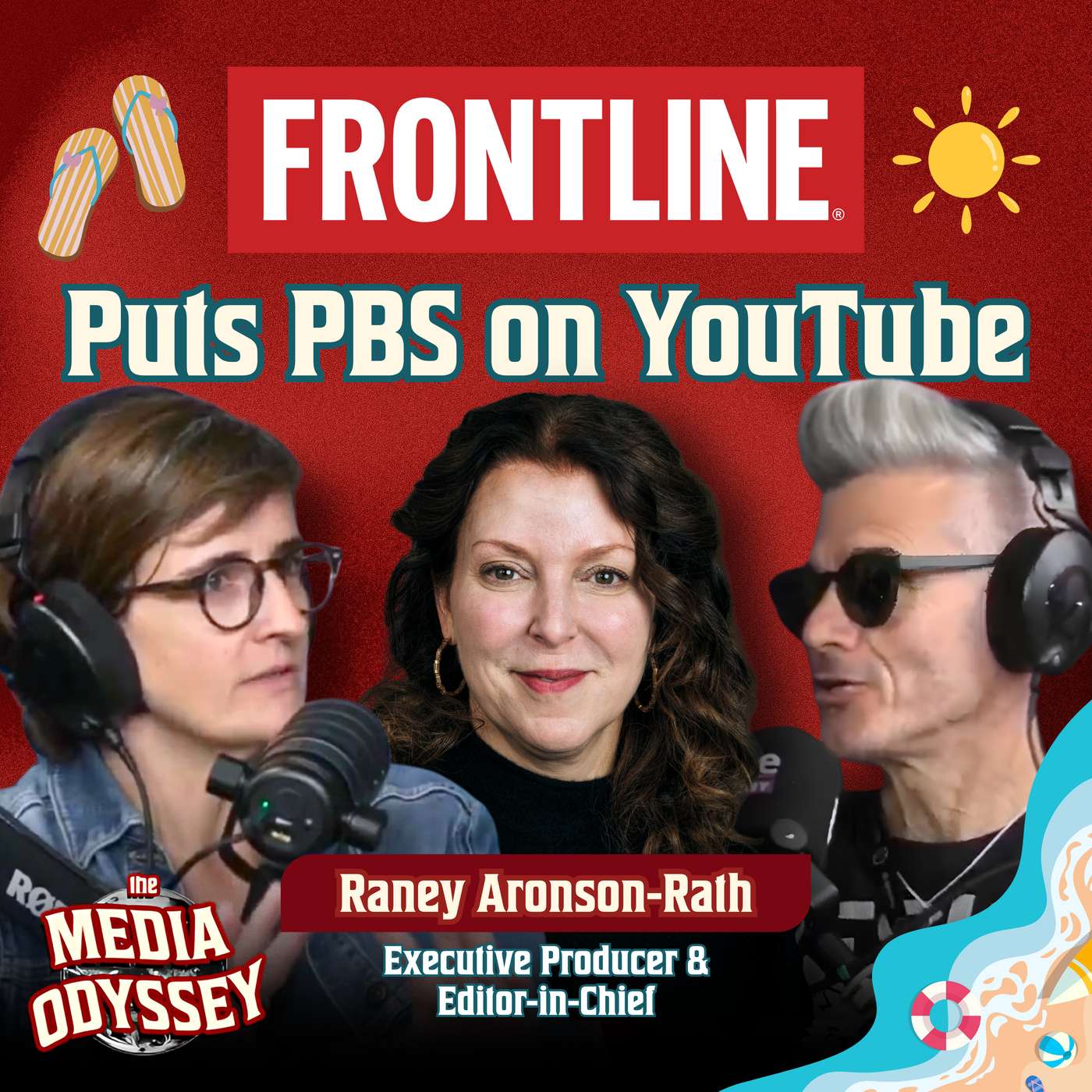
a lot of things that aren't necessarily the case when they. Yeah, I get that. But. So that's a great segue because we, as our guest, we have somebody who has really been the most innovative mind that I can find in public broadcasting in the US with regards to social video and audience building off of traditional television platforms. Raini Aronson, who is the executive producer of Frontline, one of the most important documentary series in the world, certainly in American history, and the editor in chief of all documentaries for gbh, which is one of the larger and most important affiliates of public broadcasting here in the United States, is joining us. Rainy, thanks for coming on the pod.
- [09:48]
C
Of course. I could just listen to both of you talking. I don't need to talk. You guys are great.
- [09:53]
A
We need you to share with us.
- [09:56]
C
We need your experience.
- [09:57]
B
You know, we're on the outside looking in. We need someone to, you know, tell it. Tell the story from the inside. How do you know, Hevan? Tell me.
- [10:06]
C
Oh, Evan has just been the person who shows up and talks to all of us at PBS about new platforms. And so he was one of the first people to talk to the whole station system about YouTube and streaming and. Yeah, so that's how we know each other. And I just know your work as well. I listen to your podcast. It's great.
- [10:25]
A
Yeah. And Rainy, well, thank you for saying those nice things. But in truth, when you look at the history of public, and frankly, the news media in the United States, your work on Frontline and in particularly bringing the show to digital audiences, has been groundbreaking. And it's a case study I continue to point to. When people tell me that YouTube is not TV, I say, well, when someone watches Frontline on YouTube, is that not television?
- [10:53]
C
Right, Right.
- [10:54]
A
So let's start with. Frontline is again, one of the most storied documentary series in the history of television. 50 years now.
- [11:01]
C
40.
- [11:02]
A
40 years, yeah.
- [11:03]
C
Good. You're 10 years off, but that's good. That's good.
- [11:05]
A
We're going into 41st year Academy Award winning, Emmy award winning, Peabody award, winning. Some of the most important documentaries of all time have come out of that series. A number of years ago you went to PBS and said, we want to start experimenting with YouTube as distribution for this show. How did that come about? What was your reasoning behind it?
- [11:27]
C
Well, I mean, it starts with the fact that I have a couple of secret weapons. They're called my kids. And one of the things is I, instead of just rejecting my kids media habits, I really studied them and I had young teens at the time and now they're, they're mid to late teens. And I started to notice something really interesting with my son's watch habits. He would basically watch hours of Minecraft videos as a young teen with somebody talking in the corner, right? Like we all know about this now, but I started to notice this and then he, his name is Arjun, he's 19 now. He started to actually aggressively push me to think about YouTube for Frontline. And I remember thinking to myself, well, that's like a crazy idea, right? Like Frontline is such a, at the time too, YouTube was like, it was a lot less formal, right?
- [12:18]
A
What year was this?
- [12:19]
C
So this is, this is now nine years ago. He started really talking to me about it. But it was really about then that we thought YouTube would be more of a promotional or shorts platform, right? And it wasn't until I really started to watch Arjun and how he would just beg me to watch hours and hours that I started to think this like light bulb moment. The other thing that he showed me was how conversations were happening. And that's when I thought, okay, wait a minute, this is more than just like a lean back experience for a film. This is actually community building. And that is the essence of public media, right? Public media is supposed to be in places where the public is talking. So it wasn't hard for me to imagine Frontline being on those platforms. And so then I started a conversation with pbs. Luckily we have, you know, Ira Rubenstein, Paula Kerger, Jonathan Barzilay, we've all been talking a lot about innovative media for years at this point. You know, stepping back a moment. I had spent a year at mit, for example, looking at interactive media before I became the executive producer of Frontline. And I was passionate about new forms of storytelling to reach younger people. And Paula was totally into that. She actually was my recommender for that. So there was this like excitement around new forms and new platforms at the time, right? And so I approached them after we had experimented a lot and said to them, like, could we pilot. I love the word pilot. It's like if you want to do anything non threatening.
- [13:51]
B
Pilot.
- [13:52]
A
Yeah, right.
- [13:52]
C
So I said, In 2020, I showed them the data about how young YouTube is compared to our audience on television and how. And I want both, by the way. I'm like maniacal about our audience. I want multiple generations, right? But I really, really could show them that I wasn't reaching the 20s or 30s somethings. I just wasn't with Frontline on television. It wasn't happening. And so we, we had a great conversation with them about like, what would it be like if we just took and a frontline in 2020 and just tried it out? And so that's when we started to really see people on our channel go crazy for Frontline. The other thing we did, which is really heartening to me as a person, I've been leading Frontline for a decade, right. Remember, there's three decades that came before me and I care deeply about our archive and our history. So I was able to also ask PBS could I unlock the archive for YouTube? So we started to publish every week. And that's where you saw those, like, huge numbers. The first few years is that we were able to publish a new Frontline and then an archive Frontline. And we built this incredible following of people on YouTube who are younger, obviously, but they're also super thoughtful. Sometimes we'll have like 3,000 to 8,000 comments on our films and you would be surprised at the level of discourse. It's intelligent, it's mostly respectful, not always. And it's really just, just amazing to see the community come alive around our work.
- [15:26]
B
So you were saying that going on YouTube allow you to address a whole new, you know, audience you did not have previously. Whenever you're releasing a new piece of content, a new documentary, what are you seeing, you know, on PBS versus YouTube?
- [15:43]
C
Okay, so I want to just talk about this because it's really not apples to apples. I've been trying to like talk to PBS and we're all trying to figure out, how do you like measure YouTube to a broadcast? Because YouTube is just pure streaming, right? And a broadcast is a single moment. So to be clear, Frontline broadcast, super important. Still, if you look at our broadcast, like for any given film, we're still reaching an average of like 1.4 million viewers on TV across the week.
- [16:14]
A
And that's, that's, that's live plus seven days.
- [16:17]
C
Plus seven days. Exactly. That's the plus seven. Right. So that is like a healthy number if you think about it, right? And then if you look at the corollary, which is like, okay, in that seven days, right? YouTube on average, right? Would be like 330,000. That's the average. So you're 1.4 times.
- [16:36]
A
That's in that first week, right?
- [16:38]
C
In that first week. But what's incredible about YouTube and streaming in general, and why I believe, like, we're built for the streaming landscape. Like, I love our broadcast, but I also love streaming because the thing about a Frontline film is you might not be in the mood to watch like two hours online, like Mariupol or, you know, Andreevka, right? But you might get to it a week later. And what we find is this incredible uptick over uptick over time, right? So in that first week, the broadcast is looking like the king, right? It's like, go broadcast. But then as the weeks go on, you just see this accrual that is nothing short of amazing to us. Like, some of our films, I just like, have to say this, you know, some of our big hits, like Amazon Empire have reached like 42 million views. The Crown Prince of Saudi Arabia, another, like, favorite is 27 million views. Like, the average watch time is about 30 minutes. So we're talking about high watch time over time. So what I had to do at Frontline, and it was hard, but it was righteous work, was to shift our mindset. It's not a broadcast only mindset anymore. And really work the muscle of thinking in the longer term about your work, coming up with ideas that have longevity to them. Right? It's like really shifting. And what we did was we and I have an incredible team at Frontline. Gotta give them a shout out. They're amazing. If they were on today, they would be like smiling and sharing everything with me too. We basically worked as working groups across the series. We created working groups. And YouTube was at the center of all of what we did during those first years to really shift to broadcast plus streaming. And so that was our publicity efforts, that was our audience efforts, that was our editorial effort. Everybody had to get in the game on streaming. And I was convinced because I also had like Arjun in my ear. He's like. He kept saying really big things to me, like, if you don't get into streaming, mom, you're gonna die. You know, like, he was really passionate about it. You know, he's like, at the time, you know, 14, 15, like, he would even come into some of my editorial meetings. Cause it was during COVID too, by the way. He would just pop in like, gu, get A grip, you gotta know, you know, YouTube and streaming is where it's at. And so I think for us, you know, it was really shifting to having a different perspective. And so the broadcast is still very important to me personally. It means that we're still reaching, you know, 1.4 million views across the country. Sometimes we're in people's living rooms, you know, people who don't watch YouTube. We have really interesting data on who we reach with the broadcast that I cherish, frankly. I think that's, like, really special still. So I like all audiences. I'm like, I'm into them all. But it's been pretty great to see the streaming landscape shift.
- [19:30]
A
I think that's some. Some of the misperception when people hear me talk about YouTube as a next level or the next generation of broadcast. It is not an either or problem.
- [19:39]
C
100% of it.
- [19:41]
A
Yeah, it is a yes. And. And your audience on television isn't just valuable from a viewership standpoint. They're some of your best donors as well.
- [19:50]
C
Well, actually, one of the things that. That is also true, but one of the things that I want to really say out loud about public media, because it's the area I feel super passionate about and why I've actually dedicated my whole career to this, is that people don't have to make a choice.
- [20:06]
A
Right?
- [20:06]
C
Right. It's like you're making a choice. Wall Street Journal, New York Times, Washington Post. Right. You're making, like, an actual choice, if you even have the money to do that, and a lot of people don't. So you can find us in front of all paywalls. Right. For Frontline and all current affairs and news for PBS. That's the NewsHour, that's Washington Week, that's Firing Line, and that's Frontline. Right. We are, like, right there for you. And what you see on television is we're in living rooms. A lot of times, we can see that it's not the profile you would expect. These are people who can't maybe or don't choose to afford cable or all the sort of Apple TV and all the devices that we use, maybe. Right. I don't even know if you both do. I hope I assume you do, because you know a lot about media. Right. It's your job. But I think that's the other thing to remember. This is an economically diverse and actually politically diverse audience on television. We have that data. It shows us that we meet people, we reach people across the partisan divide on television.
- [21:11]
A
Do you have a. Do you Have a sense of how that differs on YouTube both by economic resources.
- [21:17]
C
Can you talk to YouTube and try to get that data? But this is what we know, Evan.
- [21:22]
A
I'll try, I'll try.
- [21:23]
C
I want to know. But what we do, what we can see is the frontline audience on YouTube follows a variety of different sources of news. So it's not like what you would say, mainstream news versus liberal or progressive versus conservative. Our audience actually follows a ton of different sources for news and information on YouTube. And that's all we can really tell right now. But demographically, you know, demographically we know that substantially younger.
- [21:52]
A
Younger, but I would imagine probably a couple of generations younger than your television audience.
- [21:57]
C
Yes, it's exactly breaks down about that. But you would also know this because of who you guys are, that a lot of people who are older are also on YouTube. However, we are reaching people in their 20s, 30s and 40s much more on YouTube than our broadcast. But we love our broadcast because they're like 50s and 60s and up. God bless them too. Right? Like, well, that's how you reach 100% of the ecosystem. Interestingly, the one generation that we were still missing on our YouTube channel with the long form docs are people 18 to 24. And because, you know, I mention my kids a lot, I care deeply about their, their sort of like what their news ecosystem is. And their generation's ecosystem is shorts. Right. So we did have to launch a new series called for the Record. I talked to you about this, Evan. I passionately want to actually flood the zone with good information that are shorts and those are doing really, really well for us now. And that's not just YouTube, that's across all social. So you talked about social video earlier. Very important to pay attention to that, treat it like an editorial effort as opposed to promotional and have people of the generation that might watch it give you feedback at the very least. Right. Like, it's really important to not have your documentary filmmakers trying to do the minute long films because it's just a different vernacular. Right. One person might say one thing and another would say another. But it's really just important to know that younger people do have a sensibility that works for that. Generally speaking,
- [23:34]
B
if we can double click on the fact that. So you seem very passionate about public service media and I think, you know, the fact that you're saying broadcast is, you know, super important, yet you have the ability through YouTube and others to actually super serve both, you know, existing fans and find new ones. What does a release strategy look like?
- [23:57]
C
Our release strategy since 2020 is so exciting. This is why I'm passionate, because we were able to work with PBS on an actual simultaneous US broadcast YouTube streaming strategy. In fact, we were able to also show that if we released on YouTube earlier, a few hours earlier, like 7pm versus 10, you would get a bigger audience on YouTube and streaming in general. So we actually do share our streaming version earlier than our broadcast, which is at 10. So. Right. We just released 2000 meters to Andrivka at the same time as the broadcast. Right. And then that gives access for a film like that that has a big reputation and people want to watch it. We're now seeing massive views just within the last three or four or five days. Right. Most films start quieter. Right. Again, it's not a broadcast mindset. Nobody on YouTube is like, oh, wait, it's 10pm at night and I need to watch Frontline necessarily. Right. They. They like us and they come back to us, but they find us when they want to watch us. So, but. But big films like 2000 meters Andrivka, that already had a huge amount of buzz for younger people. Young people love documentaries. One of the top search terms that surfaces our work is documentary. And that's really great, right? Because, you know, that's what we make. Back to my point, I really do think that we were built for this era, right? We were built for find us when you can watch us and spend that really authentic time and not have to.
- [25:34]
A
I mean, if you think about how most people have come to some of their most favorite documentaries, once in a while it gets reviewed and then you watch it by appointment or you see it in a theater, which is now rarer than ever. And I want to talk to you about that in a second. But most people kind of happen upon it through search, as you said. And very often the prompt for that search is documentaries or great documentaries. And so it's very refreshing to hear you say we were built for this moment in time with a franchise that is 40 years old. It. You are. And you use this reinventing the whole mindset or rebooting the entire mindset around this incredibly storied franchise in a way that not necessarily other folks in other traditional media companies are doing. And you. You talked about the inspiration for that. But.
- [26:23]
C
But, Evan, it was existential to me. One of the things that I think was very interesting was like studying how there used to be this assumption that, you know, a PBS kid would. To a PBS adult, you'd kind of lose them for like 20 years. My own Watch habits for myself as a working mother. Like, I was the first person in my friend group to have a TiVo that tells you who I am. A TiVo. I had a first generation TiVo people. That was me.
- [26:52]
A
So did I. So did I.
- [26:53]
C
Right.
- [26:54]
A
I think Marianne did as well.
- [26:55]
C
Yeah. I don't know if you did Marianne, but, like, we. I was a very busy person. Right. And like, I was multitasking at all times. And so I think for me, a lot of my endeavors have to do with just who I am. Right. And so leadership, actually, I've been thinking about this a lot with leadership. Leadership actually is about the person leading the franchise or storied legacy brand. And I want to just actually also give a shout out that. You know, our founder, David Fanning, he was huge into digital. One of the first reasons I joined I left the networks was because of his excitement that, you know, we could publish everywhere. Like, he used to see this thing that was like, completely out of the box. And of course, this is David Fanning. So he was out of the box. But he would say, like, if I could take a Frontline and put it on every signpost around the world, that's what I would do. It was an expansionist idea of what Frontline should be. And I, you know, as a young person making films for the series, which is what I was in the first part of my life, I was a filmmaker. I just love that idea of just you could reach everyone. And YouTube is that platform for us as well as the broadcast. Right. So our reach globally, like, I'm a really, like, globally oriented person. That's where my career started. I started in Taiwan as actually as a newspaper reporter. So my mindset is a global mindset. Right. And so the fact that we can now reach people across the globe on YouTube, 3,33% of our audience is global. And that's with a lot of our rights locked up in other deals. So if you think about it, there's an appetite for this type of work across the globe. And that's where I'm daily inspired. Like, every day I'm inspired because I'm like, wow, I just got a film treatment out of Burma. And I'm like, burma, we could do that, you know, and we could reach millions.
- [28:50]
A
Well, and your stories are telling global stories very often. Drika being a good one. Yeah, as well. But a lot of your films have a global perspective to that. And so reaching a global audience and to your point, putting verifiable journalistic standards into the ecosystem on the regular is a good idea.
- [29:10]
C
You know, I mean, I think we should all work towards that and do our best, right? I think it's a good idea. Like, and people complain a lot about the media ecosystem. And I'm like, what are we doing about it? And that's something that I would always say about everything. What are we doing about this problem? Right? Like, we got it. We actually have to think aggressively about how can we be everywhere that we can possibly be with our work so that people are educated, so people are more thoughtful, so people can just settle down and learn something.
- [29:41]
A
And the. And that's the only agenda. It seems that to go back to a point Marianne was making before you joined the podcast, which is you have to have an unbiased approach to how your content is being assembled and distributed. In your case, the bias comes from, basically, the story. We're looking at a character, we're looking at a narrative. We're looking at a director and a filmmaker who has a point of view. But there isn't one large agenda behind Frontline other than telling important stories to the world.
- [30:12]
C
Right? I mean, we're deeply curious people, right? We're just deeply curious about everything and everyone and their perspectives. I think that we're an editorial organization. We're journalists first and foremost, so we do make documentaries. But we also try to report against ourselves and have, you know, like I say, like, you could always make a mistake. Everybody can make a mistake. But if you did look under the hood of Frontline, you'd see a lot of people trying not to. You'd see a lot of people really working to not make a mistake. That doesn't mean we're perfect. I really want to be careful there. Nobody's perfect in this world, right? So, but that said that we try really hard, try to report against our biases. We try to think about the other perspectives that come along with the work that we do and ask people in power for their opinion. And if they decide to not sit down with us, we look at the public record and we see what they have to say about it. That's a method for Frontline that has been tried and true. And it's not my idea. This is the legacy of Frontline, too.
- [31:15]
B
So, Rainy, you've just announced Frontline features. Do you want to tell us more about that? Because you're on TV, you're in streaming, you're on YouTube, you're on social. Why do movies? Why do movies? Yeah.
- [31:27]
C
Well, because, like, again, I love being everywhere all at once. Everywhere all at once. That's like a title that I can't steal. But I love that you can't. I just can't.
- [31:36]
A
Academy Award winning film.
- [31:38]
C
I love that. But for us, you know, one of the things that I really, I saw this first actually with a film called Abacus with Steve James. Just a beautiful film. So I was sitting in theaters watching it, but really where it took off for me was with. For Sama was another Oscar nominated film that we did. And there was a theater moment that's just like something you'll never forget, which is this is about a mother who had her child and fell in love in a war zone in Syria. And it's very personal film. And her husband was a doctor and the hospitals were under siege. Right. And so we were in Toronto in a film festival just like watching the film with an audience and as a film team we stepped out because we've seen the film like 300 times. And I watched somebody leave the theater crying and I'm like, oh no. First thought I'm like a broadcaster. Oh no, we lost a viewer. But like, no, they go to the bathroom and they come out and then they, they see Hamza, the doctor. They see him physically because he's standing next to me because the filmmakers are there with me and he literally runs and hugs Hamza and I'm like. And he's like, you're alive, you're alive. Like, right. Because he hadn't gotten to the end of the film yet. And I thought to myself, like, okay, another light bulb moment. There is a magic to being in person together too, you know, and like we should do that as often as we can. We should try to be in the same room. We should try to be together. Right. And so we had great success with Forsama. It was Oscar nominated. But beyond that, it just seemed to this, that that experience of a mother and me watching that and her love story and the kid and how we were then able to interlace all of the politics was just like. Was something that I love. And so we did it with 20 days in Mariupol. We also did it with a film called A Thousand Cuts which I learned a lot about the Maria Reza film. We distributed that by the way. That's a great story about YouTube which we can talk about. We distributed that in the Philippines because. Because no broadcasters would buy it there. So I like purchased those rights from Ramona and I self distribute it on YouTube in the Philippines. So there's a lot of ways that I've been thinking about how people and countries need to see the films about themselves, but also, what about being in person? And so that's really inspiration behind Frontline Features. We were fortunate enough to win the Oscar with 20 days in Mariupol. And again, I was observing along the way how people resonate with these big films, you know, in person. It's almost, like, therapeutic for people.
- [34:18]
A
And it's become increasingly hard for documentary films in particular, to get screens in theaters. And so this as an operation, as an offshoot of what you're doing, seems like an important attempt, at least. Do you feel that you're gonna get the purchase? You feel like you're gonna get the screen time that you need to get these films?
- [34:37]
C
I do. I really do. Cause to your point, the document is suffering right now. The thing about these films is they will have a theater presence, a festival presence, but then they will also go on YouTube, and they'll also be on PBS and all PBS's platforms. Right. So if you take 2,000 meters to Andrivka, that's a very typical process. If we're lucky, you get into Sundance. Right? We were lucky, fortunate. Then we spent a year with that film in public, and it went to the Film Forum. Very meaningful for me. I really love the Film Forum. I love any theater. Right. But, like, to premiere at the Film Forum is a dream of mine. And so we premiered there, and then it's been in theaters and in festivals, and then it just went on television and onto all of our platforms last week. So it's done really well for us across the board. And for us, you know, right now, Ukraine is again in the headlines. So for people to be able to. To walk into a film wherever they are, you know, and maybe it's in person in New York City, or maybe it's in Kentucky in person, but. But, you know, they can also watch it on YouTube. And I think that's the P7 and Marianne, that's. That is challenged right now for filmmakers is distribution. You can have a festival film, not then be distributed on a big platform or by a big television producer like myself.
- [36:00]
A
Most festival films don't get distribution.
- [36:02]
C
Yeah, I don't have that data, but I think you're right now. I really do think you're right.
- [36:06]
A
So Sunday, in 2025, Sundance had 15,000 films submit. 150 got in, and 40 got distribution.
- [36:16]
C
Wow. Yeah, I think I read that. I read that. Yeah, I did read that. And I was thinking, like, one thing that, for me, is again, back to my ethos on, like, okay, that's a bad situation. For documentary films. So, like, can we be part of a solution? Right? I don't think we're the solution. We're never gonna be able to do.
- [36:35]
A
No, but your funds are some of the only funds that are constantly supplying filmmakers the resources to make it. And now you're not just making it. And I think this is the great part of this story, is you're not just making the films and throwing them on for broadcast television. You're making sure they get every opportunity to meet the audience wherever they are, which is really crucial.
- [36:55]
C
That's the other thing is, like, if you think about distribution in a totally different way, people are also watching our phones on their mobile phones, right? A lot.
- [37:05]
B
A lot.
- [37:05]
C
And we see like, the uptick. People are watching our long form two hour films on there because our screens are so good right now. Right. So people are just like, I do it too. I was like, oh, my God, five years ago, I. I thought that was like a sin. And now I'm like, finding myself, like, at night, you know, when I have insomnia.
- [37:24]
A
You listen to legacy filmmakers complain about that. Yes, they compl. They literally say out loud, I'm upset that people are watching this film on a phone is the end of that sentence. But they start with, I'm upset that people are watching this film.
- [37:39]
C
Right. Like, I don't feel that way at all. I have gotten over it, Evan. Like, I really feel like if somebody is taking the time to watch something as serious as 2000 meters to Andrika,
- [37:51]
A
who gives a where they're watching?
- [37:52]
C
I mean, watch it on your phone. Great. As long as you see pbs. You got to see PBS and Frontline because PBS funds Frontline. Right. This is the other thing. And funders and individuals like you and all of that. But the core funding comes from pbs. So I'm also just like, super dedicated to PBS and their strategy around news and public affairs being accessible to everyone. This is their strategy. And I just, like, I lean right into that. Right. But it is just really great that they allow for us to be in front of all paywalls. Meaning you can just take your mobile phone and click and there you are. You could be on our website. Our website, Interestingly, we stream all of our films. We just relaunched it as a watch first website. It does so well.
- [38:41]
B
Yeah. I saw you got a newsletter. You have podcasts. It's. It's very.
- [38:47]
C
I love a podcast.
- [38:48]
B
Yeah. Very strong.
- [38:50]
A
Yeah. It's a hub and spoke model.
- [38:52]
C
Yes. Yes.
- [38:53]
B
Let's do something about international. So you've mentioned that what, 33% of your audience was outside of the States, that you were receiving, you know, well, scripts or, you know, from. From international. This move with front, frontline features, could it be a way of, you know, having a more local, you know, approach? Because what I'm thinking when I look at festivals, there's so many. I'm thinking in Europe, there's so many. And it is bringing the best of global and local players. You have an opportunity there to get your film seen by local audiences, but by the ecosystem as well. Well, who in turn could pick up, you know, titles from your lineup for distribution, you know, within a given market. Is that what you've had in mind too?
- [39:43]
C
I, I love. I, Yes. I would work towards a. A model that I think is very good, which is co producing across the world. I already do it actually with UK broadcasters, I do it it with ARTE and I do it with ZDF and places like that that I'm, I'm very. We do a lot of co productions. It's like you don't know that the side conversation is happening around the world, which is how can we work together in factual documentaries to actually fun together. That to me is a very inspiring part of my life. Right. It's just as opposed to acquiring films after acquisitions are tough for us. Right. So it's like the mindset has shifted yet again. Right. And it takes a lot of flexibility for your brain, I to be honest with you, because you're like, okay. All of a sudden there's like a whole new business model for how we could think about doing really good, important work. But then the distribution model, that is challenging for films because if you think about it, right, and this is true for A Thousand Cuts, which was about President Duterte in the Philippines, no local broadcasters would air that. If you think about our Maduro film, A Dangerous Assignment out of Venezuela, same thing, no broadcaster. So we're. We' self distributing in these countries. So we're doing that on YouTube. Just to be clear, that's a really important part of my strategy. Is it? Yes, is about distribution and dollars, but it's also about healthier democracies. Right. It's like, hey, can we help out by just showing people in the countries what we're finding? Usually we're working with local people as well. To your point, we're working with local filmmakers typically about their countries. Sometimes they're in exile. Honestly, the team, the team in Venezuela, they. They're all in exile, but they were able to get out the real, the real work Right. So we're interested in real authentic work coming from these countries. I mean, I would love to do more. I'd love if like I had like 20 more films around the world. It would only be a good thing in my, in my mind.
- [41:50]
A
But that's the sense of urgency here for documentary filmmakers and public broadcasters and people who invest their time and resources and energies into this type of journalism.
- [42:01]
C
Yes.
- [42:02]
A
This type of documentary storytelling is. You have to embrace these other forms of distribution because it's the only way you're going to get your stuff in front of the people who most need to see it. And if you don't, the void will be filled by those who may not have the same level of standards that you do.
- [42:18]
C
Right. I think sometimes it's like you have to. You have to live it to know it. Like, with a Thousand Cuts is a great example. Like, we were just so the interest international distributor was frustrated that they couldn't get a deal in the Philippines. And it's like 1am I can't sleep. And I'm like, wait a minute, this is years ago. Why don't we just do it? But it's such an obvious idea. It's not even a brilliant idea. It's just that I had that idea. And so I said to them, hey, I'll give you $10,000 for the rights to the Philippines. And they were like, sure. And we self distributed. And then the Philippines is now one of our biggest audiences for YouTube. That's the other, like, positive.
- [43:01]
A
You invented an audience.
- [43:02]
C
But I didn't think about it like that, Evan. I wasn't making a business deal. I was thinking about it earnestly. Like, there is a part of me that is so earnest about just having people in the Philippines and that one situation. And Ramona Diaz felt that way too. Like, and Maria Reza definitely felt that way that we wanted the people in the Philippines to see this film. We didn't want it to just be. Be, you know, a Sundance film. That was a bespoke film for us. And so that's why I think what we do is so inspiring, actually. It's like we're trying really hard to stay earnest about what our priority should be, which is educating people about what's really happening.
- [43:45]
A
So let's zoom back out here. And this has been a fascinating conversation and we should continue it another time. But as we, as we wrap up the episode, what do you think? And I'm going to turn this into our question of the week. What do you think this case study teaches? Public broadcasting about how to ensure its future.
- [44:09]
C
Yeah. I mean, I love the idea of just thinking multi generationally. Right. Just thinking expansively about our role in public media. And I think most GMs and people feel this way. We need to have an expansionist idea. We also need to think about how are we funded. Right. So it can't be an either or. Right. So for news and public affairs, we should be in front of the paywall, but then we also have to come up with sustainability models, Evan, to pay for the work that we do do. Right. And so I think it's a multifaceted strategy and respecting that and being okay with that. It's not one fit, size fits all. It truly is trying to think about our longevity, which means that some of our work might be behind a paywall. Right. It might be a broadcast to PBS app to Amazon and other parts of our work. The public service work, like the news, should be everywhere for everyone. Right. And I believe it should also be global. This is my perspective, is a global perspective as well. With the work that we do. We're one globe, right. And we all need to understand each other and talk to each other. And I think you and Marian do a wonderful job.
- [45:18]
A
And at that, thank you so much.
- [45:21]
B
We'll take that. In comparison to you, I have to say, this is very, very humbling.
- [45:27]
A
We feel chill. Compared to her, she's like, you're amazing
- [45:32]
B
and what I love. And I think this is one thing that I love with public service media as a whole. But you know, every single person that I meet, you can really feel that passion, that mission. You guys are very brave because honestly, and especially this last year in the States, I don't think it's been easy on you guys to navigate those changes. It's not in Europe right now. And you're still optimistic and eager to inform and tell those stories. I mean, that's inspiring, amazing.
- [46:05]
C
I mean, what's our choice, though? Honestly? I do think the world needs factual information. Right. And I will always believe that. And so for me, that's really like my religion. Right. It's. It's like this is what we're doing and we need to do this and we should do this. And this is what we should all be doing. We should all be just positive force for good.
- [46:25]
A
Yeah. Let's take this moment then, with the last minutes of this podcast to make a plea. If you've ever watched anything on PBS or if you believe in the existence of public service broadcasting, now is the perfect time to give money to PBS and npr, which are really facing headwinds from the traditional supporters in the government. But also, this is a difficult time for media writ large. So if you believe in the type of factual content and narrative storytelling that Frontline and GBH put out there, please, gbh, pbs, npr, please give money right now.
- [47:04]
C
Evan, thank you for that. Thank you, Marianne, so much. You guys are great. I appreciate it. And sure, anyone who wants to help us out right now, we really appreciate, appreciate.
- [47:13]
A
Thank you so much for being here. Thank you for sharing this story with us. And truthfully, as, as an admirer of public media, but also a Frontline in particular, thank you so much for all your work, Evan.
- [47:25]
C
Thank you. Thanks, Marion as well.
- [47:26]
A
Well, that was an amazing conversation and I think really it is the perfect case study on how to future proof public service media. I don't know how you feel about that 100%.
- [47:37]
B
I, I have to say, I was okay. So she sold me with the passion and the excitement and she, and she's so positive. That's a good, good change because I have to say, we're in a business where people are either right now very transactional, very, you know, negative, you know, challenge, et cetera. Honestly, it looks like she's on top of the world, doing the easiest job in the world when it's not. So I, I mean, I love, I really love her for that.
- [48:11]
A
Yeah, it's amazing. Her positivity, but also just her inventive energy, the way that she's down to try almost anything. The test and learn concept really lives within Raney and her team there in a way that is very unusual for public media and frankly for commercial media at this point, to say the least. But anyway, another great episode. Thank you all for watching or listening. Listening. We'll see you next time on the Media Odyssey.