Loading summary
Transcript43 lines
- [00:16]
A
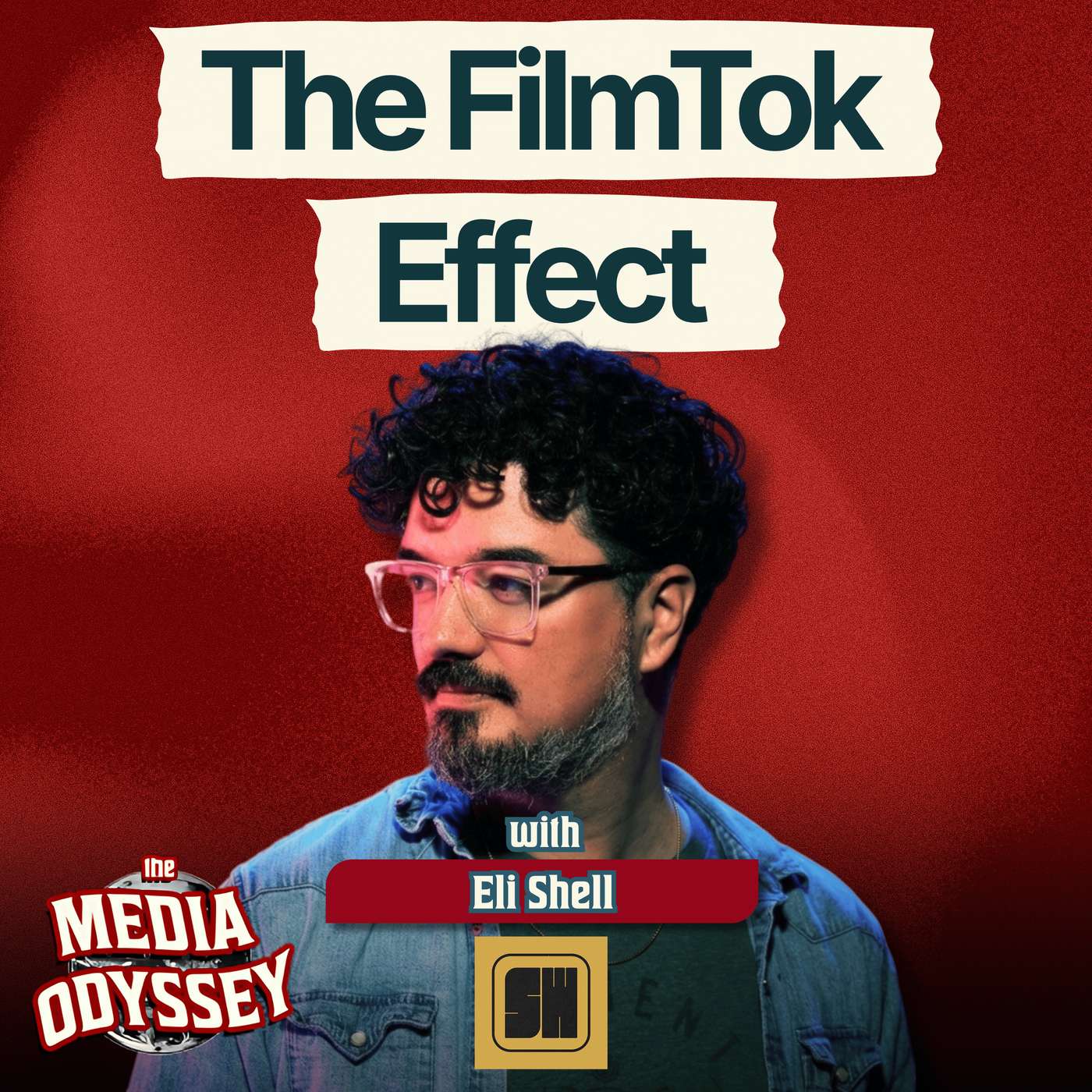
So what's interesting is Eli Shell, who runs Sidewise Productions, is joining us and he and I met, as many do these days. Actually. Marinette comes kind of as you and I met on social media in the DMs. Eli runs a really interesting vertical production studio that focuses not on the typical genre in vertical, but we became friendly because we were DMing about the state of vertical drama or micro dramas on TikTok. And we started a conversation and a friendship. And then he dropped this show a couple months later and I was fascinated. So, Eli, welcome to the podcast. It's good to see you. Well, not in person, but virtually to your face.
- [01:01]
B
Thank you so much for having me. I really appreciate this opportunity. You know, longtime listener, first time caller, that sort of thing. I'm a fan, fan of the show.
- [01:09]
C
Nice.
- [01:09]
B
So I'm glad to be here.
- [01:11]
C
Awesome. So, Eli, I don't know you. I don't spend that much time meeting strangers in DMs. So where did you get your start and you know, what led you to Sitewise?
- [01:23]
B
Yeah. Thank you. So I'm going to try to give you the quickest version of this possible because I can give you my whole life story. We'll be here for a couple hours. So, yeah. I went to school up in Portland, Oregon. That's where I got my film degree. And then from there I created my own production company. And I was freelancing up there doing stuff for educational institutions, nonprofits, startups, that sort of thing. Decided I need to get a real job was what led me to California. I ended up at Stanford as a producer there for five years. And from there I kind of went to an agency adjacent sort of position. I worked for a media company by the name of Ozzy Media. If you ever want like a fun rundown of a company that crashed and burned, I was.
- [02:10]
A
Yeah, that's quite a story unto itself.
- [02:12]
B
Yeah, it is, it is. I was actually at the center of it. I was the studio producer for the Carlos Watson Show. So I was. My office was right next to his and I heard all the fun conversations associated with all the made up characters,
- [02:26]
A
fake investors and things like that.
- [02:27]
B
Exactly, exactly. I was right there. I was at the heart of it. So when that company went under, as it were, I went back to freelance and then I ended up at a brand by the name of Zinni Optical, where I was the producer, the lead producer there. And we created. I moved down to LA to create a studio for them. I built a. I built a studio. Like we got a physical space And I hired photographers and videographers and editors and all that sort of thing to create their content. And what was, you know, really interesting about that was, you know, we were shooting commercials, we were shooting social media content, and everything we were shooting we had to frame for both horizontal and vertical. So I was already thinking in vertical at, by that time. And then when I left that position in July, I was kind of thinking about my next steps going back to freelancing. And I was seeing these vertical microdrama ads on Instagram. And so I kind of went down the rabbit hole. It's what is happening here? What even is this? And I started to really understand the world of verticals. And I thought to myself, there is a world now, post Quibi, that people are watching narrative shows on their phones, you know? You know, and so that's what got me really excited. And I was seeing the drama, the romantic drama, which is great that they were able to sort of lead with that. But I was just like, I don't really have any interest in making that. That's not something that I feel confident in or comfortable shooting that sort of thing. But if people are watching narratives on the phones, let's see if we can expand the genre, expand the audience. And so I created my show. It's called In House. It's, you know, very loosely based on my career, going between being in house at different companies and being freelance and some of the characters that I've met in my life. And so we shot that in December and then launched in January. And it's just been, it's been an exciting ride. Learning about this world and creating my company sort of focused on it and, and seeing the sort of the audience reaction to the show.
- [04:38]
A
And you. So you launched how many episodes did you shoot?
- [04:41]
B
It was eight episodes. I'm calling it my pilot season rather than, you know, in traditional media, we have a pilot episode that we shoot and then go out and try to get, you know, streamers and people like that behind it. With Vertical episodes, these episodes are a minute and a half to two minutes long. I wasn't gonna go shoot a one minute episode only. That's like not valuable at all. So I called it my pilot season. So eight episodes that take place between
- [05:08]
A
one and two minutes each. Yeah, and give the elevator pitch there because it is based on your own reality there. It's an in house agency at a brand.
- [05:16]
B
Right, right, right, yes, exactly. So In House follows a creative team at a failing aromatherapy brand. You know, it's very much loosely based on My life, some of the characters that I've met in my life. So this creative team, we've got our creative director, our art director, photographer, social media person and the owner of the company who is rich beyond all belief. So it's fun, it's funny, it's cute, it's sort of sweet in a way. And it's, you know, it's something that I feel like is missing from the traditional media landscape right now. We've got a couple shows on some of the major streamers, but, you know, comedy is largely nascent nowadays and especially comedy that's kind of not extreme in any sort of way. That is, it's fun, it's funny and it's not.
- [06:08]
A
There's a lot of traditional television comedy in here, but it's shot in the vertical format for short form content. So it is premium vertical television, I think, in its kind of very DNA. And I wanted to have you on because I think there are a lot of people who identify with you, who, they've been through different parts of their careers as creatives at companies on their own, doing their own freelance stuff, and they're kind of micro drama curious because they see all this activity happening out there in the marketplace. You went and you did this on your own. You launched it. How many. It's gotten millions of views in total since you've launched it, correct?
- [06:49]
B
2 million views total and continues to grow. And that's across all three platforms. So I have it on Instagram, TikTok and YouTube shorts. So the aggregate of all those is, is around 2 million views.
- [07:02]
A
And you funded this on your own?
- [07:04]
B
I did, I did. You know, I've done the crowdfunding, crowdfunding thing before. I just, I'm at a point in my life where I don't feel like I can go begging for money again, you know, so. And I believe in this. I believe like I'm seeing the numbers on the people who are watching micro dramas. And again, that's. I'm thinking of people who are watching narratives on their phones and you know, we all are walking around with TVs in our pockets. So 8 billion people on the planet, everybody has a TV in their pocket. Is there, is there a world where we start watching serialized shows on those TVs that we're carrying around? My bet is yes, I think there is that.
- [07:45]
A
And it's happening. I mean, you're watching this happen on these apps to your point. These are kind of Maren and I like to make fun of them a little bit, but they're kind of softcore porn, telenovelas gamified. They're not necessarily proper entertainment. And especially the, the, the, the variance in budget from marketing to production. They're spending way more acquiring customers than they are on the shows themselves. And the actors and performers have all kind of noted this, but everybody notes this and everybody's kind of seeing this happen. Not everybody goes out and makes their own show on their own dime and puts it out there. So what compelled you to do this? What got you off your ass and actually got you beyond talking about it and into making it? And if you wouldn't mind sharing, what did you spend on the show?
- [08:31]
B
Yeah, so part of this, what really made me get up my ass and make this show was again, I'm at a point in my life where I've made content for others my entire career, you know, and, and we all make content for others. If you're working at NBC or CBS or something, you're making something for the executives there. That being said, those, when you're working at those companies, you're making something that you are like passionate about, hopefully. And I've been making, you know, branded content and communications videos and educational videos for, for organizations that I think they're doing good work. But it wasn't exactly what I wanted to make and I was just like, you know what, life is short. Let's make something that you actually want to make. And, and that was, and that's what led to it. I feel like it's a combination of the fact that there is an opportunity here. And I would encourage anyone who's thinking about this about making their own show in a vertical format, even if it's, especially if it's not a romantic drama, to do it. We, the more we have, a rising tide is going to lift all boats. The more we have, the more, the more the audience is going to be there and, and they're going to be cross pollinating and there are a lot
- [09:41]
A
of people out there sitting with their pilot right now wondering what to do with it. This is a great way to not just make it, but actually get it seen because it's not in a half an hour format sitting in one clump on a YouTube channel somewhere that nobody goes to. But what did you, what did you spend in total on this, if you don't mind me?
- [09:58]
B
Yeah, so it was right around 25k for the whole show, all 8 episodes. So just about 3000 per episode, which is actually on par or even a little bit lower than some, than what some of the major Micro drama players are doing. And the reason why I was able to get that, that cost down was because people wanted to make this. The talent took a lower rate. Not just because they were newer or that's just what micro dramas do. They saw it and they were like, this is so much better than things that I'm auditioning for and playing right now. And they all, everyone came on board for my vision of let's expand the genre. Let's make this into more than just romantic dramas. Imagine you went into a bookstore and, and all it was was Harlequin romances. That would be, that would be insane. Right? That would be a. You just walk out like, this is a weird bookstore. I'm not, I'm leaving. You know, that's where we're at. You know, we need to, we need to make the Barnes and Noble, we need to make the large bookstore that has something for everyone.
- [11:13]
C
And business model wise, what are we, what are we talking about? How are you making money?
- [11:17]
B
Money? No. So the, the idea here is I'm using this as a loss leader to, to create the larger season. I'm in development on season two. The script is ready. I'm talking with brands, I'm talking with co production partners and I'm actively looking for investors in Sidewise as well to, to build out a slate where we do this exact same thing. My, my whole point with Sidewise is to create something that we can test against. I come from the Bay. You know, I spent most of my career in the Bay, so I, I come from this very like sort of tech approach. So we talk about minimum viable products in tech. So this is like a minimum viable season. Same thing, like test it with the audience, see if they're into it. And then what? Take your learnings and then scale from there. So that's, that's what I'm doing with the, with the company as a whole. And, and that's, you know, what I'm doing with the, with the show. Yeah.
- [12:16]
A
And that's why I thought this was interesting. A year ago you went to the Micro Drama or the Vertical Drama Conference as somebody kind of like looking to learn the business. Right. What's the conference that you went to? Was it called?
- [12:29]
B
Yeah, it's called the LA Vertical Drama Market.
- [12:32]
A
And so you went there last year and that's actually where you kind of popped onto my radar a little bit. And you were just kind of like looking around and you had this really great report on the vertical drama market, which I then stole and reposted as you do in the mixtape world of social media, both on LinkedIn and on TikTok. And that's actually where our personalities intertwined first. But now this year you went and you're a speaker because you made a show and this is somebody who made their own show. And so, you know, what was your different experience between those two markets and what do you think that journey and where you are in the market says about this sector at large?
- [13:10]
B
Right. You know, so when I went in September, I was, you know, I was still learning about the space. I was, I had this kind of idea of in house, but I wasn't sure how to sort of break the show. And I went to the drama market and I was very much. I was in the back of the room, I was listening, I was quiet. I didn't really make any connections. I wasn't sure what was going on in this world. But I did come away with some, with some learning some thoughts where I talked about in that video that Evan you're referencing that they couldn't do walk and talk so they couldn't do two shots. And I was just like, that's, that's completely insane. Like there's gotta be a way to do that. And, and you know, I, I put a few, two shots in to in house. I did some, if not walking directly at camera, at least characters crossing, you know, so there's some action there. It's not just single, single, single, you know, that sort of thing just to kind of prove those people wrong. I've kind of always done that. Like someone says something and I go, you know what, let me, let me test that, let me see if I can do that. So that was, you know, back in September and now this time, you know, I just came from it. It was in early May. It was a great conference, it was a lot of fun. I made a lot of great connections. Being on the panel with other indie vertical producers was great. With the panel that I was on is, is the future vertical indie now this, that independent vertical space, there's literally like a handful of us at this point. Like all of the verticals being made right now are either in house at the companies real short drama box flare flow, those, those sorts of companies or they are contracted out to production companies who are generally just given a script that was written in house. So these companies own this whole cloth, you know, like that is. That is all there is to it. So you know, we are, there are now new apps coming out to our licensing content but generally those are rev share with no minimum Guarantee. So the economics are still pretty tough, but we're in the very, very, very earliest stages of independent production for verticals. And I do think that we are going to build this market up as it matures. But being at that, at that drama market, being on the panel with the other independent producers was really great. And there's a lot of excitement around independent production for verticals. It was one of the larger audiences of the weekend because everyone is like, can I do this? Can I make this happen? And you know, I try to be very clear. It's difficult, it's, it's expensive and you're, and you're making a bet, but you're betting on yourself, which is, you know, the best kind of bet to make.
- [16:00]
C
And how do you view, you know, the big guys, the Netflix, the Disney's of the world going vertical? And by that right now, I have to say it's mostly used as a content discovery tool more than anything else. So let's see what it does. But it does, it does signal that they're, they want to test the formats. Right. And it seems that you're leaning more towards a premium ecosystem than you are towards maybe a typical micro drama. So are you hopeful, does that mean that you're hoping your show could get picked up, a new show could be commissioned, that your show could be picked up as a license, et cetera?
- [16:38]
B
Yes, yes, that's exactly what I'm hoping for. The big players, they are, they're using this mostly as discovery. Netflix, everyone in the microdrama world got so excited they heard that Netflix is coming with the vertical feedback and as like, did you even read the article? It's like, it's just their own shows as like vertical ads pretty much, you know, which is like, that's fine, that's cool. Disney's doing the same thing, but they did verticalize one of their teen or preteen shows and so people are excited about that. Peacock. I don't know if you guys saw this one, that they just came out in the last few days, that they're going to have five or six microdramas standard volume micro dramas on their app
- [17:25]
A
coming summer, but that's that to your, to your point, it's an expansion of the genre. It's micro reality shows, right?
- [17:32]
B
Well, there's, yeah, there's the two reality shows which I, I'm actually very bullish. I think that reality, or unscripted if you will, is, is going to be big in the vertical space, especially with the streamers. But they're also doing. They're also releasing like 6 or 7 like I married My Stepbrother's Best Friend sort of shows that are not the Bravo stars. I don't know if they license those or if they produced them as originals, but they are coming out with some very volume esque microdramas as well.
- [18:04]
A
And it does, I mean, if you look at. So Netflix announced today, earlier or yesterday, earlier this week, that they're taking the Breakfast Club, which is a radio show which has been a podcast on their platform and now they're airing it for three hours every morning live worldwide. And that's basically just again, it's like a morning zoo.
- [18:23]
B
It's a morning show. Yeah.
- [18:25]
A
Very, very inexpensive for them to stream that on. It does feel like the economics of vertical content, even if you get a little bit more expensive than the traditional micro drama, just feels like Disney, Netflix, Peacock, Paramount that they're going to start looking at least at testing out acquisitions in this space from the independent producers. It does feel like we're at the beginning of a market, at least that's my assessment.
- [18:51]
B
Right. And then you, you add, you add on to that what TikTok is doing. And I've said for a while that TikTok could absolutely decimate the big micro drama apps if they really wanted to. If they, if they wanted to jump in with both feet real short and, and drama box and, and all the others, like they're going to be in
- [19:08]
A
a pretty and situation now funding micro dramas or ongoing series.
- [19:14]
B
Yeah, right, right. So we got Issa Rays from Hooray Media is her company. The show is called Screen Time, which
- [19:23]
A
is doing really, really, really well too, apparently.
- [19:26]
B
Yeah, yeah, yeah, It's. She released the first half of 27 episodes and that is, yeah, last I heard it was like 80 million views, something like that. And it is like it's really, really well done. It was directed by Kristen Brancaccio who did an amazing job. And it's a thriller. That's what's so exciting. Like this is there is some romantic storylines to a certain degree, but it doesn't have the standard microdrama tropes. And so that's really exciting to see a big star like that jump in and create, you know, genre expansion as well, you know, and that's what we need. We need thriller, we need a horror, we need comedy, we need reality. You know, there's, there's a lot of different ways that we could go. It doesn't all have to be romantic drama that's sort of high melodrama awesome.
- [20:13]
C
Eli, thank you so much for coming on the pod. We'll put links to in house so people can watch it on Instagram, TikTok and YouTube. We'll see you next time.
- [20:22]
A
And if you're interested in buying in house, contact us.
- [20:27]
B
Let's get in touch. Thank you so much, guys. Really appreciate it. Thank you, Sam.