Loading summary
Transcript15 lines
- [00:00]
A
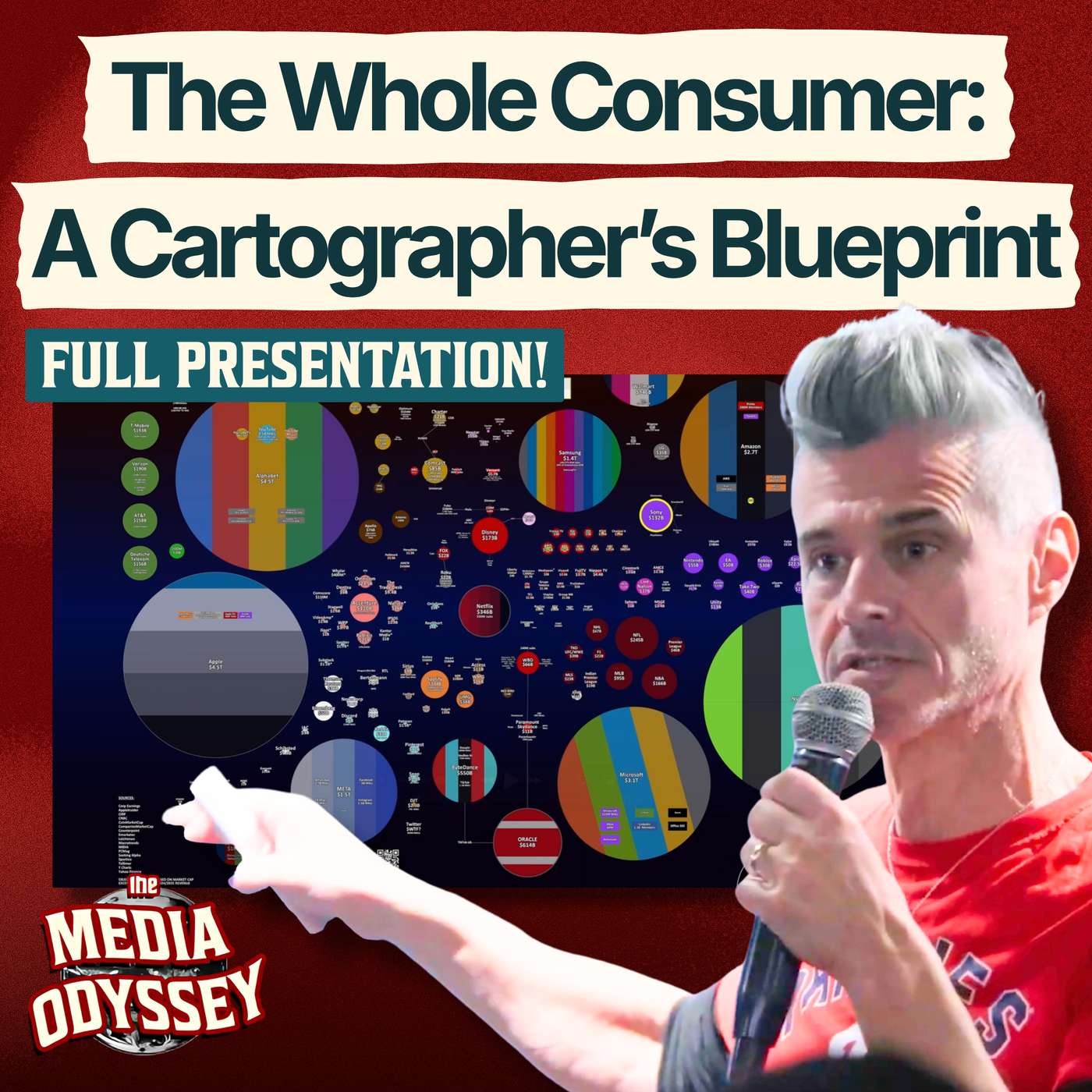
So a while ago I had a conversation with somebody really brilliant at 2am in a hotel lobby in Lisbon, as you do at Stream TV Europe. And they told me that the way this may. You may not know this about me, but I do always think about how to scale my business without scaling my business, how to grow my business without actually growing overhead, without growing the number of employees. Because I don't really want a massive enterprise. I really like the creator led business that we run, and it's small and mighty and flexible and nimble and it's not hundreds of employees. And I like it that way. But I also want to make more money. Who doesn't want to make more money? Raise your hand. Okay, good. You don't want to make more money. This is the wrong room for that. And so what? This very smart person who is going to be on stage later actually talking about the ESHAP brand and how to evolve it and show you how to attack your own brand and value your own IP out in the marketplace. What she said was you have to codify the framework of what you do. So you all know this map that I do, I assume, do you raise your hand if you've seen this map before. So I remake this map by hand in PowerPoint every month. It's a fucking pain in the ass. It's really painful. It drives me nuts. The other day we lost the original file. Had to recreate it from scratch. It was really, really painful. One of the ways that she talked about defining the framework of what we do is explaining how this comes to be how we do what we do. So this whole day is designed that way. We are not just a data company. We do a lot of research, quantitative research, constantly. We rewrite our thesis every six month from scratch. You're gonna see a brand new presentation today here, and you're gonna see a ton of case studies that you've not seen from us before. The quantitative stuff is one half of it, the quantitative stuff is the other. We dig into data that no one else takes the time to go through. It's available, it's out there, you can find it, but no one takes the time and the dedication to pour through it in the obsessive way we do. We also interview people constantly. Every day we are interviewing people. So there's a qualitative aspect to it. There's an ongoing focus group that happens to it and those two points meet in the middle. And that is the cartographers blueprint. That is the framework you're going to see on stage. Today, a ton of data. I'm going to rip through it right now. Punk rock, presenting three chords in the Truth. And then a whole bunch of case studies. Close to 30 case studies on stage today. Examples, tangible examples that I've heard previously that you're going to see today that you can take home on Monday and start enacting them. So qualitative, quantitative, meeting in the middle. That's the cartographer's framework. You ready for this? It's going to go fast and furious. No niceties, no bullshit, no pablum. Just facts and actionable insights.
- [02:53]
B
So here we go.
- [02:55]
A
One of the things that you need to know about the media universe right now is that it is entirely run by the consumer. The people in this room can definitely make change in the media universe. The C suites can push stuff out as much as they want, but the consumers are now in complete and utter control. They control their suite of services, not just media, but banking and education and healthcare and also media on their smartphones, in their system settings, with swipes of their thumb. What you need to know about the people who are in control of the media universe now is who the fuck they are. Here's the thing about population demographics. Do not age 18 to 49 will always be 18 49. People come in and out of it like a revolving door. However, get this, get ready. Generations age, and that's how millennials are turning 46 this year. Generation Z are turning 31 this year. Generation A is turning 16 this year. Generation A will be in the workforce in two years. Generation B, I hope that's not their name, but the next generation is starting being born this year. You need to know that 73% of the world's population are now millennials and and younger. Almost three quarters of the world are millennials and younger people who grew up with supercomputers in their pockets. They are now 65% of the global workforce. In the United States, it's 63% of the population that are millennials and younger 57% of the workforce. These are people who grew up with smartphones in their pocket, whose friends followed them home from school into their bedrooms on those computers and on those smartphones. They don't just see the world differently. They live in a different fucking world than when a lot of us grew up in. And if you think you can communicate with them, if you think you can distribute your content to them, if you think you can market to them the same way that you marketed to boomers and Xers, you're out of your mind. And you will lose as a result. You have to understand that the world is not changing because of technology. The technology is invented to serve the new population. That's how industrial revolutions happen. That's how the first one happened. That's how the Internet revolution happened. And that's now the force of change in our ecosystem. And so you have to understand that in their user centric era, things are different. You have to communicate differently with the consumers because they are consuming content very differently. You need to see, and I'm going to speak about today, the whole consumer, not just TV consumers or social consumers, not phone users and television users, not couch sitters and toilet sitters, but, but the whole continuum put together. And that's what I'm going to show you about today. We did a piece of research, great research company I just started working with called MX8 Labs. They use AI and then panels, real panels from around the world to field research. Very quickly we were able to design this survey, get it out in the field, get 3200 respondents, get it back and analyze it in 10. And what we found, we asked consumers, what's the number one? I'll ask you raise your hand if your phone is the number one device you use to watch video, raise it high. So a good percentage here, when we ask consumers, all consumers, 13 and up, what's the number one device you use to watch video? 59% said the phone, 2 to 1 over television. When we ask by generation, what you can see is the boomers. Baby boomers are the only ones who watch more video on television than on their phones. Every other generation, millennials and Gen Zers, 2/3 of them watch more video on their phone than on their television sets. For Gen Xers, it's still 60% of Xers watch more video on their phone than on their television. And that's because you're with your phone more every day than you are with your television sets. That's just math, right? But this is an inconvenient truth that a lot of people at this conference do not understand, that the majority of video consumption on the planet Earth is on a phone. And here's the other thing you need to know. There's tons of content out there, billions and billions of hours of content to consume on social video, in vertical on phones. There's also a lot of crap, right? It's also a lot of the same people talking to phones, you know, vlogging, that kind of stuff. It's kind of, you know, almost a monoculture. There's not niches of it. But it all looks and feels very similar. And that's because the people who will come to these conferences, the people who produce premium high end content, have been avoiding distributing their content on social video. They put clips up there, they treat it like marketing, but they do not treat it like a programming outlet. They do not treat it like a television experience because we were trained not to. What's also interesting is that advertising agencies buy television video and social video in silos. That's fucking bonkers. It's really bad for the business and it creates a tremendous amount of waste. We also asked these same consumers name your top three places to watch video.
- [08:18]
B
Couch.
- [08:18]
A
Living room wasn't number one. The bedroom was number one in bed. Who here do they watch video in bed on a regular basis? Right. It's pretty easy when you ask the questions, but you have to ask the questions. And a lot of that consumption will be on a television on a wall, but a lot of it is on tablets and phones. Number two was the living room and the couch. Number three was waiting in line or waiting for a doctor or waiting somewhere watching video. How many of us have stood online or been at a doctor's office or been somewhere waiting for someone and you're watching video on your phone? Right. Number four was at work. 25% of us are watching video at work, probably not in eye shot of our bosses. And then 26%, a quarter of us say the toilet. I feel like that's under reported, to be honest with you. And by the way, if you read my LinkedIn profile on a regular basis, know that about 50% of it is written on the toilet. We dug in. When you look at Gen Z's and this is what's happening. Remember, 70%, 73% of the world's population are millennials and younger. Right? So their use case is becoming, not becoming. It is the majority, it's the overwhelming majority use case. For Gen Zers, the toilet pops up to number three. 40% of 18 to 24 year olds list the toilet as a top three place to watch video. So you can make that 4K ultra HD video that looks great on a television screen, but if you can't form fit it for vertical in someone's hand while they're reaching for the toilet paper, there's a good chance it's not going to be seen. And if you're programming only for the television set, you're leaving about two thirds of your potential consumer on the table. Chances are even when someone is watching a television set, they found the Content that they're watching on a phone when you dig in. Who here has a phone in their hand when they're watching television? Raise your hand. Be honest. Yeah, you're the fucking problem. So even when you do manage to reach them on a television set, very often they're looking at their phone simultaneous. Sometimes social media, very often social media, often text and email and things like that. But then we did a piece of research with Common Sense Media, who'll be on stage later today, and we found out there was a tremendous amount of co viewing happening with kids. Way more co viewing than I think either common sense or myself thought when we went into that piece of research. But on the flip side of that, a lot of times parents said, I'm watching YouTube on my own phone while the kid's watching something on television. I'm just there to monitor what they're watching. Fascinating. So this is how we traditionally measure video viewing. Right now this is the most used way we measure video viewing. Nielsen and other forms of research like that. It's useless, it's pointless because this is. You're looking at 30% of the consumer here. So what we did was we tried to create a metric, create a new way of measuring the entire consumer the whole experience of their day on video. So this is brand new, just launched on Monday. This is called the ESHAP Cross Screen Attention Index. I believe this is the first time anyone's measured attention across all devices simultaneously and all platforms side by side. And by the way, the fucked up thing, this was made using all 100% publicly available data. Nielsen gauge, comscore handset data, GWI diaries. We did this in Python. We created a script and we found a way to measure attention across all these screens. And what you can see is YouTube is number one for total attention because they're really that platform. That single platform is the only platform on earth right now that serves the whole consumer. They have a vertical platform and they have a horizontal platform. When you see, by the way, when you add Instagram and Facebook together, Meta does pop to number one. And this is a warning sign for YouTube. They are surrounded on both sides by Meta on one side and TikTok on the other. But when you dig in to the data here, you can see that in the top four, there is not one traditional media company. Oh, actually Disney is in the top four. I apologize. Only one traditional media company surrounded by digital on all sides. By the way, for total consumers, TikTok, who only has a mobile experience. And this is how powerful mobile is as A force right now in video. TikTok, who only has a mobile experience, comes in at number four for all people, bar mitzvah and older in the United States. That's 13 and older for the non Jews in the room. When you dig into 55 plus, the entire continuum changes and it's all trad media at the top. Trad media has become an old age home. And yes, I know that consumers over 55 have value. I am one of them. I am value. I have income. I get it. But they're thorough. Less than 30% of the global population, 35% of the American population. So you're speaking to a minority. And when you look at consumption of 50 of of traditional media, by the way, including Facebook, you can see that the vast majority of consumers are the same older, shrinking, aging, dying audience watching the same stuff over and over again. Traditional media is driven by the same consumers consuming the same stuff. By the way, this is the slide that convinced Fox to buy Roku. I can pretty much guarantee you this is, you know, this is the path to the future. When you look at consumers under 55. So this is 70% of the population in the United States. Seventy percent of the population in the United States are under 55. You can see TikTok pops to number two, another warning sign for YouTube, by the way, number two, above Netflix, higher than all of Paramount, higher than all of nbcu, actually higher than all of Paramount, NBCU and Warner Brothers did combined. That's how much engagement TikTok is getting right now. So when you think about consumers, you have to think about the whole consumer. You have to think about their whole experience, and you have to think about all of their attention. If you have a piece of IP right now and you're not thinking about how to verticalize it and syndicate it to these consumers on their phones, you will lose. This is the slide. This explains why Paramount is starting a vertical feedback. This is why Netflix is starting a vertical feed. This is why Disney is starting a vertical feed. By the way, this right here explains the rise of micro dramas as a thing. There's all this content on vertical. None of it is really as good as consumers want it to be to a certain extent. So the professionally produced content that we spent so much time and money creating has a huge white space on vertical right now. And we'll talk about that a little bit later. So this new ecosystem of merged experiences where the couch and the toilet are part of the video experience, where the phone and the television merge, where mainstream media and social media become One ecosystem. Who here has a smartphone? Raise your hand. Who here? Is it the first thing you touch in the morning? Uh huh. Who's here? Is it the last thing they touch at night? Sorry for your significant other, but this is the remote control. This is how you speak. And this merged ecosystem isn't driven by CPMs or Reach or frequency. It's driven by loyalty, it's driven by community, it's driven by fandom, and it's driven by love. And I'm telling you, you can measure love. I will show you how in just a second. I call this the affinity economy. And in the affinity economy, you must. It is imperative, it is a requirement, it is table stakes to think of and speak and serve the whole consumer. How do you do that? I'm going to show you, I'm going to show you tons of examples today. You treat your brand, you treat your intellectual property, you treat your programming as a creator. You don't have to hire creators, you have to start thinking like a creator because they think fans first. They obsess over their fandom. It isn't about scale for scale's sake anymore. It's about passion, it's about engagement, it's about. About building a cult around what you do best.
- [16:32]
C
You can sell a book, you can sell a TV show. Mr. Beast kind of started all this, right? But when I'm looking to launch a new podcast, you know, propag, we have different voices, different podcasts. I hate to say it, I look at their social feed. So if I'm starting a podcast on the business of media, I immediately go to AI and say, what? What? Thoughtful media analysts and commentators have the largest social followings. Because if you don't have a social following, you're just starting a letter A versus if you have a large YouTube following, you show up in the theaters and you're starting a letter F. I want to shower every time I'm on social media. I'm at that age now where I just don't want to be taking pictures of my lunch or whatever. And I don't do that. I just do content. But there's just no getting around it. It is. Where everything is headed is your footprint.
- [17:17]
A
You don't have to like it, but you can be an old curmudgeon like Scott Galloway and still embrace it. He tracks his CPMs on his. On his podcast, they have risen as his social media footprint has risen. His advances on his books have risen as his social media footprint has been. It's a necessary evil if you have to see it that way. But it's also the tool to your success. This is Duolingo. Duolingo has a very famous and very beloved mascot. It is a creator led mindset. This, this mascot, it's called Duo and it does really crazy things including last year, Duolingo killed their mascot, their popular mascot on screen by the way. And they challenged their fans, fans of Duo to take lessons in order to resuscitate him. Five billion lessons taken. That's how you measure love. Best year ever in the history of the company. Their first billion dollar year. You want to measure love, measure it in return. On investment, it is very easy to see whether or not you're triggering love and engagement. This is Staples. A lot of companies in previous eras would punish their employees for making social videos at work. This is what happened when this employee decided to make videos at work.
- [18:30]
D
Staples employee is about to change retail marketing forever. This is Staples baddie. And she has racked up millions and millions of views posting mundane tasks like printing flyers and basically made Staples pool again. Now the brands who understand this are going to put their competition to shame in the next few years. Look at Garage for instance. They built out an entire program for their employees to create content and they treat them like influencers with PR and brand trips. Meanwhile, over at Whataburger, an employee is going viral because he got fired making TikToks at work. Smart brands know that employees are your best creators. They understand the products better, they live inside the brand and the content feels real. And any employee interested in creating, creating content should be rewarded. This is 100% the way of the future for marketing. Let me know what you guys think.
- [19:12]
A
And so this is antithetical to a lot of ways that big companies think your employees can be creators. Put them behind the curtain. Give people an opportunity to see how you make your sausage and they will embrace you that much more. This is Coach. They put the brand in the hands of their consumers. They created this great book called Explore youe Story. They put actual books, whole novels tagged onto their tabby bags. And they encourage consumers to take the brand and make their own stories. 15 million engagements. 400,000 user generated posts. Brand awareness up 60%. Sales up 31%. New clients 21.2.4 million. And the entire value of the company went up 142%. This is how you measure love. This is how you measure engagement. This is another good example of a company that took a crisis and turn it into an opportunity by putting the brand in the hands of the consumer.
- [20:06]
B
A driver left Italy heading to Poland. 400,000 chocolate bars on board. The truck never arrived. KitKat didn't hire a crisis team. They posted about it. Literally just the facts, no spin. That post went everywhere. Domino's jumped in. Ryanair Dippin dots. Every brand wanted in on the joke. But KitKat kept going. They built a serial number tracker. You enter the code on your bar, it tells you if yours was stolen. People started buying KitKats just to check. One police report turned into a product campaign. 128 million people watched a company lose something and laugh about it. No agency wrote that. No focus group approved it. They just told the truth. And the truth was strange enough to stop the scroll. And that's what most brands are too scared to make. They polish everything until it looks safe. And safe looks exactly like every other brand in the feed.
- [20:53]
A
In each one of these cases, these companies didn't hire creators. They became the creator themselves. General Motors, same thing. This was their YouTube feed before they became a creator. This is their YouTube feed after. If you don't recognize the difference, you should really look into it because these thumbnails are ten times more effective. And this is how we know this is General Motors. This is not some new startup automotive company. This is one of the most traditional companies out there. And they handed their brand over to creators in house. They hired them and gave them health insurance. This is Matcha Mob great creator named Ashley. Whaler Group will be up on stage talking about this earlier, later. Instead of creating social channels that other brands use to market their products, Whaler is creating new products and then building them around creators themselves. This Ashley was able to launch this new matcha product, do $15 million in sales. She only has 1.5 million followers on her YouTube page. Scale is not the most important thing. Passion is $46,000 generated in one TikTok Live. These are real businesses being born here. PBS has embraced the creator economy in an incredible way. Frontline is one of the most watched long form pieces of content on YouTube. Full Feature Academy Award winning documentaries being watched on an average of a half an hour. You can see tens of millions of views on an ongoing basis. And there is having a positive effect on people's brand awareness. You know the president attacking them was a good marketing campaign as well. And by the way, save public media, give them money today, we need them. You can see their total donations went up by 61%. But big gifts went up over 100% and most of these donations are online. FIFA just broke the world record in I'm sorry Kaze TV just broke the world record for a live stream in Brazil. Located just in Brazil. It was not broadcast worldwide. For the Brazil tie. Soccer sometimes has ties. 12. They broke their own record. They broke the record in 22 for Brazil World cup match. Then the Indian Space agency broke it after that. And then they just broke the world record the other day for a first round match. This is the most popular sports broadcaster in Brazil. He's a schlubby intern who doesn't have a lot of production costs. This is a great case study that we'll see later today from Toonstar. This is an animation studio that greenlit themselves. They did not wait for a green light from a platform or major streamer. They greenlit themselves. They made it using human artists and AI. 10 billion views. This show is already profitable and they're going to announce some big deals later today themselves. This is one of their founders talking about the mindset shift from thinking as a producer who sells shit to a creator who runs their own business.
- [23:57]
E
I think the tip is just, I think move from the mindset of like selling and labor, B2B and really sort of like shifting into I am really creating and taking the point of view of being the kind of like creative entrepreneur. Right? It's an entrepreneurial sort of like mindset. And that shift means everything because now you're making decisions around production with the point of view of like, okay, I'm going to figure out what is the right size and what is the right sort of like P and L and cost structure in order for me to put this out different from, hey, I want to sell you my idea.
- [24:41]
A
It's a completely different way of looking at it. You have to put your relationship with the consumer central to everything that you do. Everybody here knows RuPaul's Drag Race 19 seasons, which is more than about six times the average length of run of a television show in the entire media world. The retention rate of all of Premium SVOD is 11%. Last year they generated 175 million subscribers and lost 156 million subscribers. World of Wonder, who produces RuPaul's Drag Race, has their own direct to consumer called wow Presents. They have a 4% churn on a yearly basis. Right. Loyalty. Do they have the biggest service out there? No, but they generate enough revenue to greenlight their own stuff, including a feature film that they're putting out called Stop that train starring RuPaul this weekend. It's just opened this week on in movie theaters across the country. They greenlight themselves because they have their own recurring revenue, and they have their own recurring revenue because they center their business on their fans first and they think of themselves not as producers but as creators.
- [25:45]
F
Today people are saying, well, people don't watch full shows. They only watch clips. Well, the clips are the show and the show is the clips. The promotion is the show and the show is the promotion. It's all one thing, rather than separate silos of all. This is marketing and promotion. This is the show. It's all kind of of a piece. And I do think that that is. That is a piece of takeaway advice for anyone doing anything. It's like, you can't just be a director, you can't just be a writer. You have to be all of those things. You have to think perhaps more like a drag queen.
- [26:19]
A
And if that's the one takeaway I have for you today, it is think more like a drag queen. The original creators, by the way, the first to have to do it all themselves. There's a great lesson in it. This is how you act your brand as creator. And what's happening is the successful studios and the successful production companies are becoming more like creators. And by the way, as we're about to see, the creators are becoming studios themselves. This is how you act as your brand as creator. These are the rules of the affinity economy. This is how you look at the whole consumer. This is what we're going to be talking about all day today. Thank you.