Loading summary
Transcript24 lines
- [00:03]
Nate DiMeo
This episode of Memory palace is brought to you by Progressive Insurance. Insurance isn't one size fits all. That's why drivers have enjoyed Progressives Name youe Price Tool for years. Now, with the Name youe Price Tool, you tell them what you want to pay and then you'll show you options that fit your budget. So whether you're picking out your first policy or just looking for something that works better for you and your family, they make it easy to see your options. Visit progressive.com or find a rate that works for you with a name your Price Tool Progressive Casualty Insurance Company and Affiliates Price and Coverage match limited by state law. This episode of the Memory palace is
- [00:37]
Podcast Announcer
brought to you by Shopify.
- [00:39]
Nate DiMeo
The Memory palace is a business, but do you fire up your podcast app
- [00:42]
Podcast Announcer
and say to yourself, can't wait to
- [00:43]
Nate DiMeo
engage with this business? No, you come to hear a story. I'm good at telling stories. I am not all that great at running the business part that makes the stories go and I have the folks of Radiotopia here to help me out. There are so many people who are out there in my shoes. They are artists, they make little figurines, they make shoes. They are great at the art part. But the artist's sensibility is often not the business person's sensibility. And for so many of the people who are thriving out here in these Internet streets making a living, making things they love, they can do that because of Shopify. Shopify is the commerce platform behind millions of businesses around the world. From household names like Skims and Aviator Nation and Momofuku. Literally. I bought something at Momofuku not long ago, was delighted to see that Shopify button. Shopify is there for all non businessy business owners out there. Shopify is the commerce expert with world class expertise in all the things you might not have the time or the energy for learning. While you design those shoes, while you paint those pet portraits, while you make that line of de wrinkling overnight eye cream that smells like fresh cut grass in the fourth of July or whatever. Start your business today with the industry's best business partner, Shopify, and start hearing. Sign up for your $1 per month trial today at shopify.com memory go to shopify.com memory that's shopify.com mem. Last weekend I was standing on a bluff above the ocean and I felt one of my very favorite feelings. It's this feeling that I love so much that I have come to realize that I tell these stories here on the Memory palace largely because I'M chasing that feeling, maybe trying to conjure it in others, too. It's a thing that happens to me, and honestly, maybe only me. You may not relate to this at all, but sometimes I am flooded with the sense of the past and the present overlaying on top of each other in the same space. I'm suddenly aware of myself there in the present moment as just one person living one life in the flow of time. It is heady and kind of dorky, but I love it so much. It happens most often when I am returning to a place, as I did on this particular weekend, on this particular day Bluff in Rancho Palos Verdes, a town on the Southern California coast. And so there on this perfect California day, looking down and out and across the water from up there on this bluff had both a sense of that place's history, about how the resort where we were staying was once an amusement park called Marineland and was there for decades until SeaWorld, its main competitor a couple hours down the road in San Diego, was denied a permit from the United States government to capture any more live orcas. And so they went to Marine Land and bought not just both the orcas
- [03:40]
Podcast Announcer
that it had on display at the
- [03:42]
Nate DiMeo
park, but the whole park along with
- [03:44]
Podcast Announcer
it, and shut it down.
- [03:46]
Nate DiMeo
And they thought about how the hills and the fields around that spot were farmed by Japanese immigrants for nearly a hundred years, except for the ones in which those farmers were sent to concentration camps by that same United States government. But how before that it was all ranch land for horses and cows, all owned by an eastern land baron come west to extend his empire. Now before that it had been the land of the Tongva, who had fished and foraged and raised their kids there. And at the same time I thought of my own history in that space, how we used to go to the resort there kind of a lot. When it first opened up before, it just got crazy expensive. It was so easy to picture my daughter there as a toddler on the splash pad by the pool, and then as a big girl holding my hand as we stepped on the rocks of the tide pools at Abalone Cove, and then a bit older and farther out on her own, waving me over and beaming, wanting to show me something she'd
- [04:46]
Podcast Announcer
found in the water.
- [04:47]
Nate DiMeo
And every time I stand there now and look out across the water that somehow seems to shimmer more there than just about anywhere else I know, and see Catalina island on the edge of the horizon, I always think about two different memory palace stories. One about Florence Chadwick, a swimmer of channels and how since writing that particular story, I will always know that Catalina is 22 miles away and Florence Chadwick swam there from the California mainland three times. And another story that you're going to hear in just a minute. And now forever. When I look out to Catalina, I'm going to think about my friend Rishi. I have known Rishikesh Hirway for something like a decade. I think we are colleagues at Radiotopia, mutual admirers of each other's podcasts. A few years back, he moved quite close to me. And so now and then I will walk my dog up into Griffith park and she and I will stop and pick up Rishi and his dog on the way. We'll talk about work and life and dogs and music. Talk a lot about music, new bands. The others should check out music we make ourselves. And a while ago, Rishi sent me a rough recording of a song that he'd written, along with a text that told me that I was probably gonna recognize some of my influence in that song. And I did, and it made my day. I literally, and I have been thinking about this and haven't come up with anything better. So I literally am not sure that there is a nicer feeling as an artist than to have another artist say that your work has inspired them to make something of their own. And so here's what's gonna happen. I'm about to play a story I wrote a couple of years back after visiting for the first time, Catalina Island. Then after that, you are going to hear from my friend Rishi, who will tell you a story about hearing that story and how it played a small role in helping him finish a lovely song from his latest album, this Little Ripple of Inspiration. So, a memory palace story, then. Richkesh Herway, my friend and neighbor who does the brilliant and pioneering song Exploder podcast, among a million other things, is going to take over.
- [06:57]
Podcast Announcer
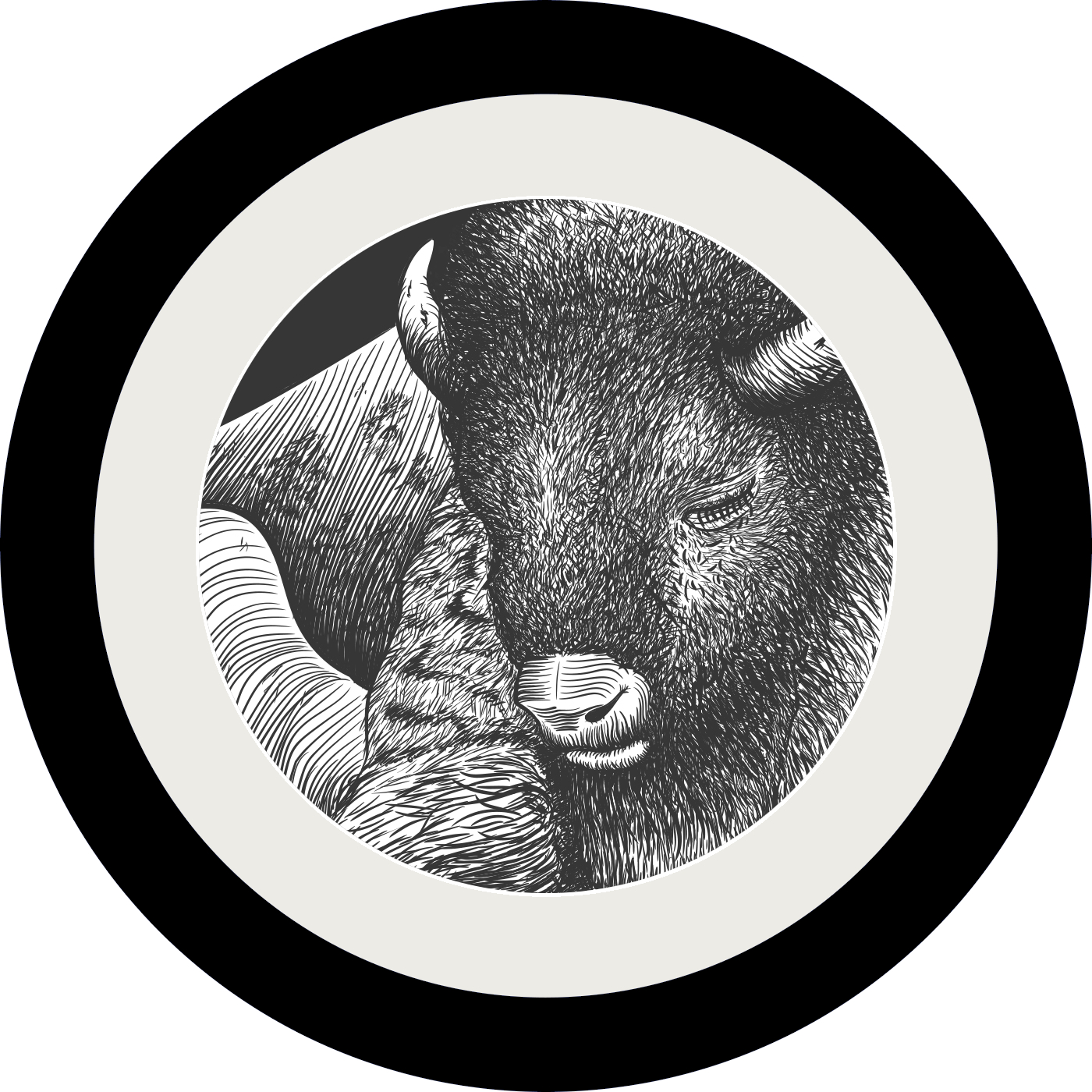
This is the Memory palace. I'm Nate DiMeo. A postcard from Catalina Island, 23 miles off the coast of Los Angeles. Summer 2023. The Buffalo aren't here anymore, the guy in the Hawaiian shirt and sandals tells us, down by the good bathrooms that are worth the walk down the hill from the campground. He is happy to tell us that he has been coming to Catalina for years, but he is sad to tell us he has never seen its famous buffalo herd in the area toward which we are planning to hike. Not at this hour. Just as the morning ferry from San Pedro unloads and Boy Scouts pull on their packs and frat Guys seal cases of third tier beer with duct tape to keep them safe in the back of the truck and the ride out to the cabins. And so before we even begin our hike, we abandon our hopes of seeing the buffalo or bison. I read on my phone on the boat ride over that they are the same thing. And so we make our way to another trail cutting through the tiny seaside resort town of Two Harbors, past its cabanas and rustic pavilions in mid century beige, as the ice cream shop prepares to open up and as a bachelorette party, freshly disembarked, discovers that their weekend in the island coincides with Wine Fest with its unlimited pours and a DJ spinning till midnight that will echo among the hillsides that cradle the harbor and the boats within it. Flying flags that signal their allegiance to America, California, the life of the pirate or the parrot head or no Shoes nation. And the bachelorette and her girls are super stoked. There will be ocean views in this hike along the cliff's edge, waves in white sails, a whale sighting if we're lucky. But the closest we will come on this day to spotting a bison are two signs we will encounter on the trail. One warning us to keep our distance in the unlikely event that we bump into one, and another telling the story of how they came to live on this island off which you can see Los Angeles when there isn't too much smog. The sign keeps the details vague and in line with recent scholarship that has called into question the old story that still makes its way into the tourist brochures. That story goes that a small group of bison were brought over in 1925 by Paramount Pictures to appear in a cowboy movie called the Vanishing American. But production costs ran over and one of the line items that was cut from the budget was the one that would have paid for the bison to be brought back to the mainland. And so they were set free to roam in their new home so far from the range. But there is a newer story that I enjoy about how someone at the Catalina Historical Society tracked down a crumbling print of the Vanishing American, threaded it carefully through the sprockets and soon on the screen were flickering cowboys and wagon trains and 10 gallon hats and everything you'd expect from Western except buffalo. Similar situation happened with another theory, this one about the buffalo being brought over to film a picture called the Thundering Herd and then leaving the titular herd on the island for future productions, making the conveniently located Catalina with its rolling hills and parched grass valleys a veritable one stop shop for people in the business of making westerns. But as with the vanishing American, someone tracked down the Thundering Herd, and the story fell apart. That movie does indeed have a herd, but it is doing its thundering silently in a place that is clearly not Catalina. That is most likely Montana. And so we do not know exactly how Catalina's famous bison got here. Though the truth is probably somewhere in there, some other movie or some enterprising producer importing them on spec, hoping the herd would entice filmmakers to cross the water. Or it's possible the island's owners, the Wrigley chewing gum family, who bought the island in 1919, just wanted some buffalo. Hoarding exotic animals is run of the mill rich guy behavior. But in 1925, there was nothing run of the mill about buffalo. You, like me, have probably heard about the incredible rain and tragic decline of the American buffalo. We know the story. And the story you have heard is probably pretty close to the truth. At the beginning of the 1800s, there were somewhere between 30 and 60 million buffalo in North America, the majority of which were in the Great Plains at the edge of the American west. And that 30 to 60, that vast range, speaks to the unknowability of the number, as no one was counting. And how would they if they were? It also speaks to the way that number would fluctuate dramatically decade to decade. Bison are the Western hemisphere's largest land mammal, and they had their predators, wolves and humans. But with some herds as large as 100,000 animals. The threats to their population were planetary droughts and disease, harsh winters, the earth and its cycles with which the population would rise and fall in some unheard harmony. But then, in the early decades of the 19th century, there were suddenly rifles and wagon trains and then trains of steel and smoke and men within them shooting buffalo for sport. You've heard this. And the trains and the towns that built up along the tracks change where and how the herds could move and migrate, limited their range, their access to food. Meanwhile, hunting buffalo was becoming an industry, and men were making fortunes selling meat to the growing population in the east and in all those new places along the new train tracks, selling bones for fertilizer, turning hides into clothing as they had been forever. But this was new, and this was too much, much too fast. And making money making the belts that ran the machines that made the industrial revolution go. Buffalo skin is more elastic than cattle skin and made for better belts, made strong straps on the saddles of U.S. cavalrymen who spent much of the 19th century waging war on the people who lived alongside the buffalo in their unknown millions for centuries before. While the military leaders in Washington didn't eliminate the buffalo to starve and subjugate, the native peoples who relied upon their herds not explicitly, not directly, but were surely complicit because it was happening anyway and they did nothing to stop it because it was making their goals of conquest in the west easier to achieve. And they just had to sit back. Will the numbers mean anything? What is 30 to 60 million? Can we picture 30 to 60 million Buffalo? Were the 2 million said to have been slaughtered in the single year of 1870? Were the 5.4 million killed in three years between 1872 and 1875? I can't wrap my arms around numbers that large or hold in my head that 5.4 million individual animals, 1,000, 2,000 pounds, each five or six feet tall at their woolly shoulders, that could run 30 miles per hour, that care for their young, that can smell and hear predators up to two miles away. 5.4 million killed in just three years time. But I can picture 300 buffalo in 500. I can wrap my arms around those numbers, if not quite get my head around the thought that in 1884, a single human lifetime from the start of the 19th century when some 30 to 60 million bison roamed North America, as they had an equally unimaginable number since they first crossed the land bridge from Asia an unimaginably long time ago. In 1884, there were between 300 and 500 buffalo left alive. Somewhere around 150 bison are somewhere around here on Catalina Island. And though we don't know precisely how the ancestors of this herd first arrived in the island in 1925, we can say that they would not be here now without 15 buffalo juttering down 5th Avenue in Manhattan and horse drawn wagons in 1907, they had been guided up wooden ramps by cattlemen with long sticks under the supervision of William Hornaday, the elegant director of the Bronx Zoo and a friend of President Teddy Roosevelt and a man named Madison Grant. The three men bonded at the tail end of the 19th century over their love of nature and animals and hunting them and being in wide open spaces and drawing big manly breaths of mountain air scented with pine and lavender and over the sadness they felt about what had been lost to progress. For all their pride in railroads and westward expansion and the triumph of American capitalism and cities growing at the foot of the Rockies like wildflowers and white Christian families tilling land once controlled by heathens and savages, those achievements didn't come without costs. Where was the romance? There was something grand about that time, not long ago at all, just a blink of an eye, when brave men set out to tame that land, vast and unknowable and wild. It was a shame to see it go. It was a shame about the buffalo. Remember the buffalo, how they thundered across the plains, a mighty animal, strong and noble, an American animal. And they set out to save it. They founded the American Bison Society, one of the first organizations dedicated to the preservation of what we now call endangered species. They did what those organizations still do. They raised money, they got writers to take up their cause in the press. They lobbied Congress. It helped a lot to have the President of the United States in their corner. And I need to say here, as this story that has grown so dark begins to climb up again toward the light, that if you are looking for inspiration in the American Bison Society, look at their model, look at their achievements, but don't go looking for heroes. It is so often a sucker's game when you are dealing with the giants of the early environmental movement in the United States, so often so wrapped up in bogus race science. And this is the case here. If you read about the American Bison Society, you will read about its prime mover, Madison Grant, who loved the bison and didn't want them to disappear. But his interest in their cause came primarily from his fear that the 500 odd buffalo still around were interbreeding with cattle just like the white race was interbreeding with non white people. He was a racist. He was a eugenicist. He came up with the concept of a Nordic or master race that needed to be preserved at all costs. And while he was saving the bison, he was writing a book that was so foundational to Nazi ideology and to the Holocaust that it was the first non German book to be reprinted by Hitler's government. That Hitler himself wrote to Grant to tell the founder of the American Bison Society that the book is my bible. And that book was entered into evidence to support the case of the Nazi defendants during the Nuremberg trials. 15 bison in horse drawn carts in Manhattan in 1907. Crowds cheering from the street. More hundreds at the train station to watch the animals moved onto boxcars outfitted with hay and water and blankets to keep them warm. As the train raced on through the night, these 15 bison were on their way to Oklahoma, where a preserve had been established by federal law and where dozens of their kind awaited them. And at every stop and along the tracks were people, native people. In one time, pioneers now resettled on reservations or in new cities, in old lands now lost to conquest in the new world created by railroads, in machines run by belts of buffalo skin. People waited for hours to watch the trains go by. They never thought they'd see a buffalo again. I will not see a buffalo today, but it's fine. I'll be back at some point. Try to time my hike better next time. Maybe sign up for this bison observation tour for $89.95 that I just found on a website listing the top things to do in Catalina. You just scroll down the page for a while. It's listed there between paddle boarding and mini golf. I saw some buffalo Last spring. My daughter and I took a quick southwestern road trip and wound up staying in cabins on a bison preserve. A herd of about 50 animals left to roam free on 600 acres of grassland and through stands of pinyons and junipers and sturdy oaks. They were beautiful and so strange and fast. It was incredible to see them spring up and run and chase. Then there was another larger herd a bit down the road at a ranch selling farm to table bison steaks. There are about 450,000 buffalo today. Some are there for admiring from afar, to restore balance to western ecosystems, to try to right a terrible wrong to repair to atone. Most are for eating. About 20,000 live in what they call conservation herds. The other 430,000 are raised as livestock. And about 150 are here on this island because someone wanted to make cowboy pictures or not. They're here somewhere, cared for by the good people of the Catalina Island Conservancy. Safe on this island without predators to smell. Just the sea air and California poppies. Diesel from the ferry and hear the rumble of its engine. Bachelorette singing along to Mr. Brightside and don't stop believing as the wine fest DJ goes on till midnight and the waves rolling and rolling in.
- [21:08]
Rishikesh Hirway
When I started working on this album a few years ago, I decided I was going to try writing in a new way. Instead of white knuckling my way through every idea for every song on my own, I wanted to collaborate. I decided I was going to be like a satellite dish trying to pick up signals from anywhere and anyone. In September of 2023, I went to New York to co write some songs with my friend Fen Lilly. I had had this image of riding a roller coaster alone. I was thinking about all the different times when I know I'm supposed to be having some kind of profound, beautiful or exciting adventure. But internally I'm having a completely different experience. Something that doesn't feel like it fits at all. And I brought that little idea in as a possible starting place for the song. And Fen and I ended up sketching out something that felt promising. It wasn't totally there yet, but there was a line that we came up with that stuck with me. What if this goes on and on
- [22:05]
Rishikesh Hirway (Singing)
and on what if this goes on and on and on?
- [22:14]
Rishikesh Hirway
But then when I got back home to la, I couldn't quite crack the song. Something about the verses and the way that I was trying to tell the story just wasn't totally landing for me. But I held onto just that one line. And then a couple months later, I brought that line into a different writing session with my friend Ua De and she and I wrote a whole new verse with new melody and new lyrics. And that line, what if this goes on and on and on kind of became the chorus.
- [22:44]
Rishikesh Hirway (Singing)
Children love us laughing like we used to in this town Came back to this place to make the feelings come back round but it just goes on and on and on
- [23:07]
Rishikesh Hirway
but the song still wasn't done. And then a couple weeks later, I went for a walk. I live exactly 1 1/2 miles away from the Griffith Observatory. It's pretty much exactly. Exactly one hour to hike up there and back from my house. So I do that a lot, especially when I want to clear my head. This was a Sunday afternoon, and I had a couple of Memory palace episodes saved up waiting for me. So I put in my earbuds and I started making my way up through Griffith park. And I put on episode 206, the Thundering Herd, the Vanishing American. And a funny thing happens when I listen to the Memory Palace. I've been listening to Nate demeo's voice since 2012, almost 15 years. I know the sound and the cadence and the delivery. It feels like music to me. It feels like the sound of a band that I know and love. And it's not just that it sounds like music. It has the feeling of the kind of music that I want to make. There's a combination of nostalgia and melancholy, but not in a detached way. There's. There's a curiosity that makes you want to lean in and listen more closely. And when I hear a new episode for the first time, it's both exciting and comforting. And I was hit with all of that as I made my way up the path to the observatory. And I started listening to Nate tell this story of the displaced buffalo who ended up on Catalina Island. And something clicked. I felt like this story that I was hearing was lining up with something that I was trying to reach with the song that I was writing. The buffalo who are on the island now are generations removed from the original herd that was brought there, so they don't know anything else. But I was wondering if they could feel that displacement, if they could feel that something was wrong as they looked out at the expanse of the ocean. And I made my way up to the observatory and on a clear day, like it was that day, the view goes all the way across Los Angeles and to the Pacific Ocean, and far in the distance you can see the silhouette of Catalina. I went home and I immediately wrote a whole new verse for the song about the buffalo on Catalina, and I felt like this idea that I'd been carrying around finally found its home.
- [25:28]
Rishikesh Hirway (Singing)
Out on Catalina There's a hundred buffalo pending by the the ocean the only home they'll know did they dream the great place as they breathe in the salt air? Can you miss the place you're meant to be if you were never there? Does it go on and on and on? What if this goes on and on and on On a roller coaster ride up against the open sky what if this goes on and on and on? What if this goes on and on and on? What if this goes on and on and so what if this goes on and on and on? What if this goes on and on and on?
- [27:18]
Nate DiMeo
Rishi's album in the Last Hour of Light comes out on April 24, but that song Rollercoaster is available as a single on any platform you like right now. Or you can head over to Rishikesh co Rollercoaster. I'll have a link in my show notes as well. My story the Thundering the Vanish American was originally released in August of 2023. It was written and produced by me, Nate DiMeo. The show gets research assistance from Eliza McGraw. It is a proud member of Radiotopia, a network of independent podcasts from prx, a not for profit public media company. You can learn more about the other Radiotopia shows including Rishi's own song Exploder and Home Cooking with his friend Samin Nasrat and the West Wing Weekly at Radiotopia fm. You can follow me on Instagram or threads at the Memory palace, podcasts on Bluesky at Nate Demeo and on Facebook he Memory Palace. You can always shoot me an email@natedemeothememorypalace us us and my book is now available in paperback, which is very exciting so you can find it wherever you buy your books. And if you go to a place where you buy your books and they don't have it on the shelf.
- [28:29]
Podcast Announcer
Tell them about the book, tell them to put it on the shelf.
- [28:32]
Nate DiMeo
Those kind of things really matter and their shelves will be all the more beautiful for it. If you yourself are an independent bookstore owner and you would like to have me come and do a reading and signing, hit me up and we'll see what we can work out. I really love, love doing bookstore events and everywhere, every time I've done one, it has really worked out well for the stores and the patrons. So hit me up. Let's see what we can do.
- [28:57]
Podcast Announcer
Back with a new story soon.
- [29:08]
Nate DiMeo
Radiotopia
- [29:11]
Rishikesh Hirway (Singing)
from prx.