Loading summary
Transcript1 lines
- [00:01]
Nate DiMeo
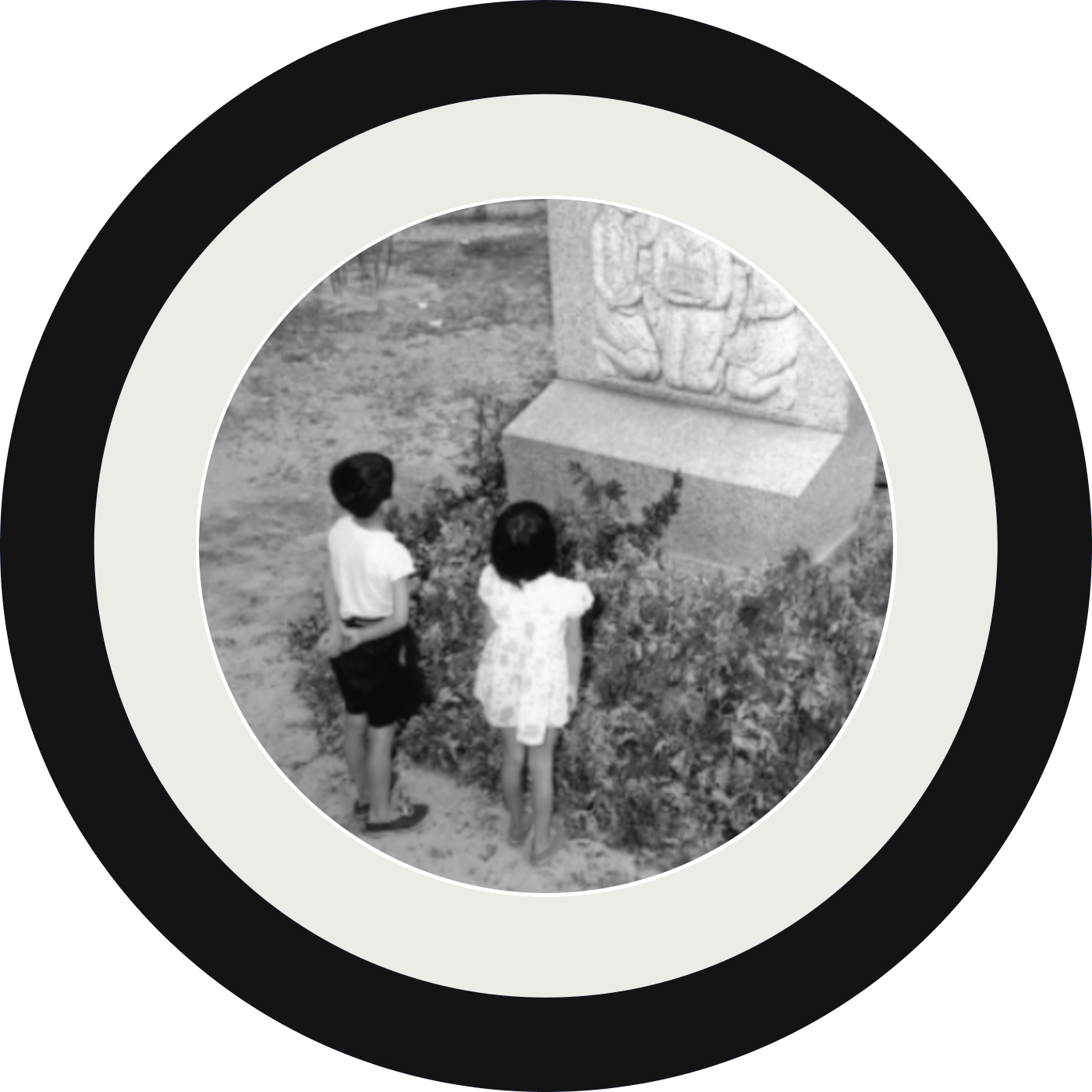
This episode of the Memory palace is brought to you by HelloFresh. Now, you may have heard of Hellofresh. They send these chef crafted recipes and fresh ingredients to your home. It is one of the classic meal delivery services. But this summer, I'm telling you, this isn't the hellofresh you remember. HelloFresh has doubled its menu. Now you can choose from over 100 options each week, including new seasonal dishes and recipes from around the world. And this is big in the meal delivery world. You can get steak and seafood recipes delivered every week for no extra cost. There's three times more seafood on the menu, which is a big deal for me at no extra cost. Discover seasonal produce each week, from snap peas to stone fruit to corn on the cob and more. We got the fish meals last week and they were terrific. The scallops with creamy chimichurri. If you could see me right now, I'm literally doing that chef's kiss motion. So good and so fun to make and so simple. With all the ingredients perfectly portioned out, easy to follow recipes. This is the best way to cook and it just got better. Go to hellofresh.com memory10fm now to get 10 free meals and a free item for life. One per box with active subscription free meals applied as discount on first box. New subscribers only. Varies by plan. That's hellofresh.com memory10fm to get 10 free meals and a free item for life. This episode of the Memory palace is brought to you by Life Kit from npr. Here's the thing about me. I am totally down for self improvement. I mean that literally. I am trying all the time to live my life better. You know, all the big things. Live with more kindness, more patience, more intentional, less sugar, more cardio, you know, self improvement. But I kind of reject almost all media related to self improvement. Maybe I need to work on that. But it is true. But here is the thing about Life Kit from npr. It isn't some dumb podcast that offers cute little tips that turn out to be secret ads for some sketchy product or some self help guru's brand extension. It's a show about understanding how to live a little bit better. Right now, this is npr. You shouldn't expect anything less. So you get a super smart host asking the right questions of smart guests. These are life hacks that help you move more or help you save more or help you. This is a good one. Live just a little bit more creatively. Sometimes they're also just perfectly practical. Like I am heading to the east coast and having lived in LA for so long, at this point, I kind of forget about ticks. But there's a whole episode about how to manage that whole situation done in that short, sharp NPR way that, you know, you can trust. Listen now to the Life Kit podcast from NPR. This is the Memory Palace. I'm Nate DiMeo. What are we supposed to do with the 541 girls, the seven teachers who weren't in class that morning? As was so often the case that summer, the war was being lost. Their writing was on the wall, if not in the official propaganda. The Americans were firebombing ports and factories and airfields. Lately, whole cities. Their city hadn't been attacked yet, but it was a matter of time. So the principal had decided that helping prepare Hiroshima for the inevitable arrival of American bombers was more important than geometry or poetry. The girls, 12 and 13 years old, were put to work trying to limit destruction and save lives. They were given shovels and helmets and hatchets and work gloves, gray jumpsuits. And they pitched in, demolishing and clearing wooden structures to make fire break. So when the bombs came and the buildings burned, the fire wouldn't spread in the ways that it had in Kobe and Nagoya and Osaka and Yokohama. That spring, Toyama, an industrial town on the west coast, home to 160,000 people. Its factories made steel and aluminum. But its houses, most of its buildings, like in Hiroshima, were made of wood. American bombers appeared over Toyama. The whole city burned to the ground. That was Aug. 1, less than a week before. The girls were out working one morning, breaking up lumber, clearing it, dragging floorboards, window frames as best as they could manage. When the nuclear bomb exploded, they died instantly. They probably didn't have time to be afraid. Everyone had been worried for months about a massive assault. That was the way the attacks went. Everyone was on edge, listening out for the rumble of hundreds of approaching planes. But there was just the one. No firebreak. No amount of dismantled homes or tailors shops could have saved them. They were just 500 yards from the hypocenter, the point on the ground directly beneath the bomb when it exploded in midair. So there's some mercy in that, in being within what is known scientifically. They say it plain. Scientists don't do euphemism as the zone of complete destruction. There were tens of thousands of people there with them. Within that zone, that first concentric circle that physicists and military planners drew, set their protractors, depending on the scale of the map, to trace out a ring a mile out from ground zero. There are circles drawn for radiation, for electromagnetic pulses, for heat damage. The girls were in the innermost ring for heat damage as well, and thus were incinerated instantly. Somewhere between 70 and 80,000 people also died in that same moment there in that city. But this is a story about those 541 girls, their seven teachers, and about the people they left behind, mostly their parents. Some of them gathered on October 30, 1945. So, a little more than two months since, a weapon they had never heard about had exploded a bit less than 2,000ft above their city and did things they'd never imagined. The heat, the fire, the light, the strange quiet. And then continued in the days that followed. The streams and rivers filled with the dead humans, horses. People who had seemed uninjured had seemed to have escaped, but then got sick suddenly and then died. People say the world changed forever on that day in August 1945, after what happened in Hiroshima and what was done to Hiroshima. And that is true, and arguably true, the whole world did. But this is a story about these people in Hiroshima, mostly the parents who that fall, who had spent the previous 10 weeks adjusting their understanding of the world as best as their brains would allow to unfold scenes and smells and sicknesses they had never experienced, a reality that had never existed before, and at the same time, grief, which, however human and eternal, had never been experienced in that way. In that context, about a hundred people gathered as a community to try and memorialize these 541 girls, their seven teachers, as best as they could. Their bodies were ash and unidentifiable, and they were intermingled by the force of the blast and by people trying to figure out what to do with them, the remains. And on that day, there were Buddhist rites performed, and the families were each given ashes of which some proportion may or may not have once been part of their child. Then the parents went off to wherever they had found shelter in those weeks after, in that destroyed place, and each figured out what to do with those ashes that may have held a part of their child, that may have held the parts of many and parts of buildings, cherry trees, tailor's shops, maybe the bomb that burned them. In the months to come, those parents would form an organization called the Bereaved Families of Hiroshima Municipal Girls High School. They would raise money in a city that was trying to rebuild, in a city where people were still dying of radiation poisoning, where children were still being killed, which was still killing children at the Municipal Girls High School and their teachers another 135 of them were killed elsewhere in the city. Some on that first day, some over the course of the months after, some years after. And in that city that was just beginning to rebuild, in a city that was under military occupation. The parents raised money and built a memorial, a monument that was unveiled in 1948. It's about five and a half feet tall, so small, though taller than almost all of the girls. It is simple gray granite. There is a frieze carved of three girls kneeling. The one in the center is in the jumpsuit uniform the kids wore when they went out to clear wood. She has bobbed hair, a cravat. She represents the girls who died. She is flanked by two figures in school uniforms meant to represent the girls who didn't, who were left to keep the memory of the dead and figure out what to do with it. The girl in the center holds a sign that says E MC squared. The censorship rules of the American led occupation were strict. Didn't allow for any official mentions of the bomb. So the parents asked a physicist for an idea, a way they could get around those rules. He suggested Einstein's formula. Spare a thought for that physicist and the things that he had learned since that day in Hiroshima. For about a decade, the memorial sat on the grounds of the school. But in 1957 it was moved to the main thoroughfare Nearby. The rules against war related memorials had been rescinded and more were rising around the city. There is a larger monument, the memorial tower to the mobilized students, which commemorates all of the 6,300 kids who'd been out of their various schools that day and put to work demolishing buildings, making fire breaks, and had been killed. It was built in the eastern bank of the Motoyasu river in 1967. The bereaved families of Hiroshima Municipal Girls High School helped make that one too. They had experience, and they let their grief intermingle with that of other parents. There are other monuments. Across the river in Peace Memorial Park. There is a museum, an extraordinary one. And there are several cenotaphs, tombs for people for whom there are no bodies, including the central one built to honor every victim of the bombing, regardless of nationality. Those who died instantly, those who died from radiation poisoning and cancer, many well beyond the city. There is a stone chest in the center that holds a register of the names of every one of them. As best as the people who built and maintain it have been able to determine. There are 297,684 names in there. The names of the 541 girls are there their seven teachers? Their other monument is nearby, a bit down Peace Boulevard, a main artery from downtown. It is a more prominent location. There is more foot traffic, more people who might stop and look, read the inscription, hold the memories, carry them with them a bit further past other concentric rings marking time. SA this episode of the Memory palace was written and produced by me, Nate DiMeo in August of 2025. This show gets research assistance from Eliza McGraw. It is a proud member of Radiotopia, a network of independent listener supported podcasts from prx, a not for profit public media company. During the last episode of the show I was talking about my personal history with radio and audio and how much it has meant to me as a professional and as a human being. And it's had me reflecting One of my favorite things about being part of Radiotopia is I get to be colleagues with the Kitchen Sisters. I've been listening to them and their extraordinary stories since I started listening to public radio. And that has not just meant listening to artfully produced radio stories. It has meant listening to artists at work who have been building a body of work over decades. Two women, Nikki and Davia, who have been following their own weirdo path through the world and telling the world about it. Their fascinations, their fixations. It is one of the most enviable, admirable careers I can think of in any medium. And if you haven't ever checked out their stories, their sound rich, layered, gorgeous histories, their deep, surprising interviews, their archival audio, their particular genius, then I've got the rest of your summer sorted. Dive into their archive, float around, see where it takes you. Subscribe and hear the new stuff as it drops. Listen to two women still at the top of their game who kind of set the rules of that game, trust me. Learn more about the Kitchen Sisters at Radiotopia fm. If you want to drop me a line, feel free to do so@natememorypalace.org you can follow me. I'm going to try to do this without looking at a script. You can find me on bluesky aiddemayo. You could find me on Instagram and Threads. He Memory palace podcast. You can also still find me sort of on X. But man, I haven't tweeted in forever. He Memory palace also he Memory palace on Facebook and I will talk to you again. Radiotopia from PRX.