Loading summary
Transcript1 lines
- [00:02]
A
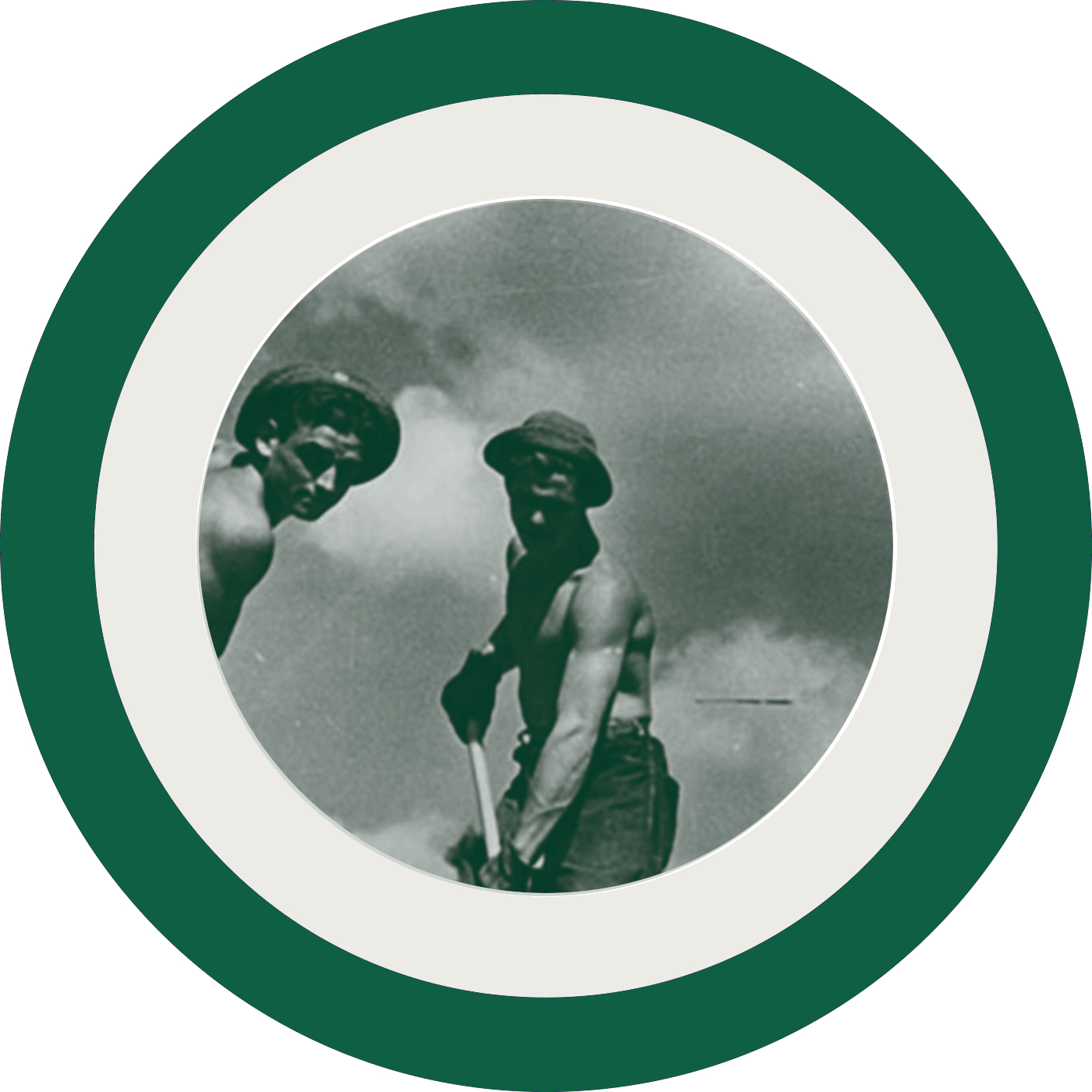
This episode is brought to you by Progressive Insurance. Do you ever think about switching insurance companies to see if you could save some cash? Progressive makes it easy to see if you could save when you bundle your home and auto policies. Try it@progressive.com Progressive Casualty Insurance Company and affiliates. Potential savings will vary. Not available in all states. This episode of the Memory palace is brought to you by Shopify. The Memory palace is a business, but do you fire up your podcast app and say to yourself can't wait to engage with this business business? No. You come to hear a story. I'm good at telling stories. I am not all that great at running the business part that makes the stories go and I have the folks of Radiotopia here to help me out. There are so many people who are out there in my shoes. They are artists, they make little figurines, they make shoes. They are great at the art part. But the artist sensibility is often not the business person's sensibility. And for so many of the people who are thriving out here in these Internet streets making a living, making things they love, they can do that because because of Shopify. Shopify is the commerce platform behind millions of businesses around the world. From household names like Skims and Aviator Nation and Momofuku. Literally. I bought something at Momofuku not long ago and was delighted to see that Shopify button. Shopify is there for all non businessy business owners out there. Shopify is the commerce expert with world class expertise in all the things you might not have the time or the energy for learning. While you design those shoes, while you paint those pet portraits, while you make that line of de wrinkling overnight eye cream that smells like fresh cut grass in the fourth of July or whatever. Start your business today with the industry's best business partner, Shopify and start hearing. Sign up for your $1 per month trial today at shopify.com memory. Go to shopify.com memory that's shopify.com mem. This is the Memory Palace. I'm Nate dimeo. If you walk out from the visitor center at Silver Falls State park in Oregon, set out on the Ten Falls Trail down the rain dark path following the sound through the trees to the first of those falls, silver as advertised, crashing perpetually as it has for unknown millennia, in front of a grotto hung with a beard of emerald ferns below the overhang over which the falls flow and you walk along the path and the white noise roar of the white silver falls till you are behind them and then beyond them and on your way down the trail toward other wonders. If you walk up from the dry canyon in the brassy bronze grass and the river that's hardly a river there in New Mexico in the summer heat, and you take the path along the cliffside, stepping carefully up the stairs of hewn stone, steadying yourself with the iron railing when the trail gets steep as you make your way up from Frijoles Canyon into the rooms hollowed out of the rock face a thousand years or so ago by people of the Cochiri Pueblo. Maybe help your child up the wooden ladder into one of those rooms, ask them to pose for a picture as they sit in the cool of the shade. If you climb up on the rocks on Perpendicular Trail in Acadia in Maine, use the wrought iron rungs hammered into the granite of the taller boulders to help you on your way to stand up in the very top of the hill to look out across the bay and the cranberry isles, each shaded by spruce and balsam. If you climb to look out over Zion Canyon from a cliffside, narrow and intimidating but made safe, made possible at all by a chain that's run like a railing through metal posts set into stone. Or you walk through the soft needle path on Orca's island, fog hung cool breeze through the tall trees off the Salish sea. Maybe you are walking there now as you listen to this. Maybe this is one of the great coincidences of your life. Those happen sometimes and are listening to it as dew glints on cobwebs on low ferns, as Mountain Lake comes into view ahead of you. Or you walk through the dunes and tall grass of hither hills on your way out to Montauk, where the land ends. Or walk up the path and away from the parking lot and the traffic along Highway 51 as it cuts through the north woods of Minnesota, and you find a better view and some solitude while you watch the Cascade river fold into Lake Superior. That path, those paths, those places, those woods themselves in this case, wouldn't be there without the men who walk there before you. They were all men. That was the rule, as laid out largely by a woman, Frances Perkins, secretary of labor for all 12 years of the FDR presidency when she set up the Civilian Conservation Corps. Between its inception In March of 1933 and its dissolution in 1942, when World War II had found other uses for them, 3 million American men served in its ranks. They were between 18 and 28 years old at the time of enlistment, had completed at least one year of high school, were unemployed, were unmarried could pass a physical fitness test. They were of all races, though black corpsmen were segregated and often given lesser lodgings and fewer educational opportunities than white corpsmen. Native American men were directed to a separate organization entirely. They served six month terms. They could re up but couldn't exceed two years of service. They were issued a pair of jeans, a denim jacket and cap, a surplus military uniform From World War I, a coat if the climate was going to be cold, a razor, a toothbrush. They were paid $30 a month, of which they kept five. The rest was sent home to support their immediate family members. They served in each state, in most U.S. territories, in 4,500 different encampments, in state and national parks, and on other public lands to which they came from everywhere, sometimes from just down the road, leaving the comfort of their bedrooms, their moms cooking, to live out in the woods or out in the prairie. Or they came on trains from across the continent, from a tenement in Brooklyn or Brockton, Mass. To the foot of Mount Rainier to the mouth of a cave in Kentucky to walk out into the gray and white of Cannon beach on the Oregon coast. They would return home with a new sense of the country in which they lived, of their countrymen, of themselves with skills with which they could build a career and a life, with stories they would tell forever, with memories they couldn't quite put words to, of dewdrops on cobwebs, on ferns, of birdsong of heat, of the exact way a friend they couldn't otherwise remember would say one word or another of hammering an iron rung into a boulder so it would be easier to get up there next time someone came up there. They would plant some 3 billion trees. The north woods of Minnesota, so much of the Upper peninsula of Michigan, so much of Connecticut, Vermont, the Ozarks, the Carolinas, which had been clear cut and over farmed are now forest. They would carve paths through those forests. They would make trails. They would lay down stones for steps for you. This episode of the Memory palace was written and produced by me, Nate DiMeo in May of 2026. This show gets research assistance from Eliza McGraw. It is a proud member of Radiotopia, a network of independent listener supported artist owned and operated podcasts from prx, a not for profit public media company and not some dumb conglomerate or private equity firm or Big five Hollywood talent agency thanks to the largesse of some Petro state's sovereign wealth fund. If you enjoy the show, there are three wonderful ways to support it. Two of them will cost you money but that is okay. It is okay to use your money to support the things you care about. So you could make a tax deductible donation over at Radiotopia fm. Donate. Or you could go to your local bookstore and buy a copy of my book, which recently came out in paperback, and the third one doesn't cost you a dime. And that is tell someone about the show. Share it with someone you love. With strangers online. If you ever want to drop me a line, you can reach me at nate thememorypalace.org you can find me on social media with varying degrees of frequency, on BlueSkyaTemeo, on Facebook and Twitter, he Memory palace, and on Instagram and threads at the Memory Palace Podcast. Talk to you again, Radiotopia from prx.