Loading summary
Transcript4 lines
- [00:02]
A
This episode of the Memory palace is brought to you by our friends at Quint's here in Los Angeles. We have this thing called June gloom. When the first part of the day, it is winter, it is foggy and cold and then it burns off and it is sunny and suddenly it is the dog days of summer. That kind of weather whiplash would hobble a lesser podcast host, but not me, because Quince is there every season of the year, even when those seasons happen all in one day. But if you live in a normal place, where the calendar turns at a normal pace, Quince is ready for you and your summer essentials, ready to help you look your best all summer long. With classic looks and the staples that you can build your wardrobe around and your day's outfit around. Like this summer breathable linen shirt I have on. I'm also wearing my favorite fall over shirt because I am ready to layer and de layer at the drop of a hat here in June. If you want to get set for summer at prices that are often half of what you're going to find at similar retailers, you know where to go. Elevate your summer wardrobe. Go to quints.com memory for free shipping on your order and 365 day returns. Now available in Canada too. That's Q U I-n c e.com memory for free shipping and 365 day returns. Quince.com memory
- [01:24]
B
this is Ira Glass of this American Life. Do you know our show? Okay, well, either way, I'm going to tell you about it. We make stories, old fashioned stories that hopefully pull you into the beginning with funny moments and feelings and people in surprising situations. And then you just want to find out what is going to happen and cannot stop listening. That's right. I'm talking about stories that make you miss appointments and ignore your loved ones. This is American Life. Every week, wherever you get your podcasts,
- [01:54]
A
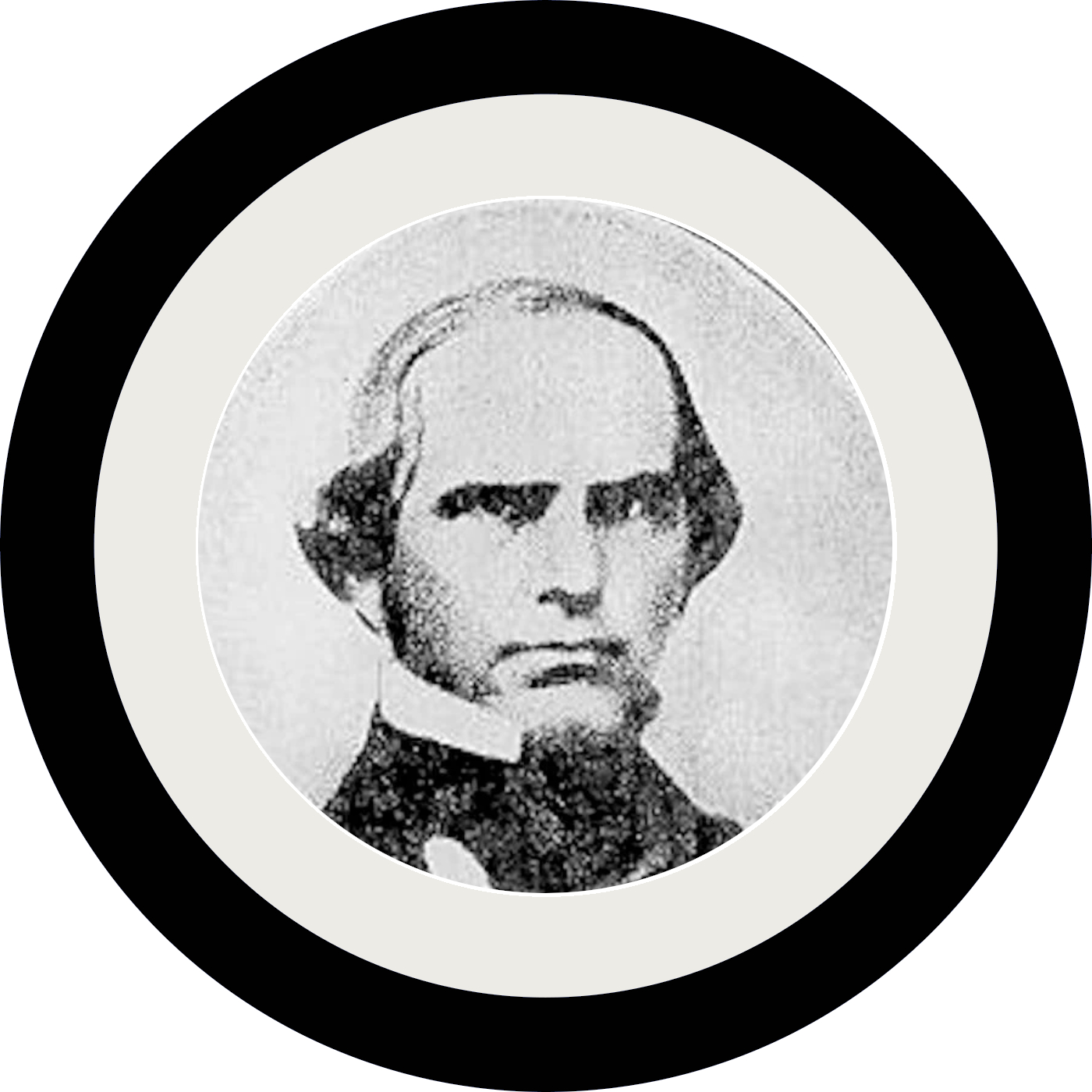
this is the Memory palace. I'm Nate DiMeo. Somewhere in the unknown west, at some unknown point in the summer of 1842, somewhere on the plains, Nebraska, Kansas, possibly eastern Wyoming, a wagon train was in revolt. Its members had had it with Elijah White, the man who had organized the westward party back in Missouri, a doctor and federal contractor tasked with bringing people safely to the Oregon coast. White wasn't the guide. There was a famous trapper that did that, man named Fitzpatrick, seasoned and sunburned. But the doctor was their captain, made decisions about what to bring, how and when to use those things. And it seems he kept screwing up in ways that have now been Lost to time. But there, in the unknown west, where water and weather and wolves and people, people who already lived in that land that these new people were attempting to cross, could kill you at any time, in any number of ways, screwing up was less than ideal. And so somewhere, at some point, at some unknown location, the people on that wagon train, only the second such party of civilians to ever set out across the continent to emigrate to the American west, voted their captain out and voted a man named Lansford Duncan Hastings Inn, a young lawyer from Ohio, just 23 years old. Some sources say that he left a wife and child behind when he joined the wagon train, though we can't be sure. But it does seem like something he would do, this young man of privilege, filled with the sort of self belief that made him certain that he would find greatness out West. The type of self belief that when embodied by a certain type of young man, can make other people believe in him, even when that self belief may account for the sum total of what he has to offer anyone. One of his first documented decisions as the captain of that second ever westward wagon train was to linger a while at Independence Rock, a granite outcropping on the southwestern edge of Wyoming, so he could carve his name in its face for posterity. And then was captured by a band of Sioux, only to be saved by the seasoned guide who had far more in his toolkit than self belief, and who then led the eastern all the way to Oregon, with Captain Hastings following dutifully behind. Oregon turned out to be pretty great. Lots of lumber, good soil, water, comparatively peaceful. The native population of the Willamette River Valley had been decimated by smallpox in the previous decade, and so there was plenty of room for the 100 Easterners, who, upon their arrival, brought the sum total of white Americans in the whole of Oregon to about 300. When Hastings got there, he made a beeline for the most powerful person in the territory, the man who ran things there for the company that had claimed it. Hastings charmed his way into some sort of surveying work, probably helping the company lay out lots for future immigrants. It's all a little unclear, but what is clear is that Hastings wasn't satisfied. For all of its wide open spaces, Oregon was, in a way, kind of a company town. What was he supposed to do? Work his way up the corporate ladder? Farm? Become some sort of working stiff? He didn't come all this way to become just another guy. So he headed south to California, which he had heard was golden and unclaimed and untamed. The kind of place a man of his obvious to him talents couldn't just find a place of his own, but could find a place to rule. When he got there, he found that someone already had the same idea. John Sutter had traveled from his native Switzerland to New York to Santa Fe to Vancouver to Hawaii. In one of the most peculiar origin stories in the history of early California, Hastings met Sutter when he came upon the enormous fort the man was then building, well on its way to being like something out of Italy in the middle ages, with 15 foot high walls surrounding a fully functioning town. Before settling there, Sutter had stopped in Mexico to convince it to give him 50,000 acres of land at the northern edge of its overstretched empire. In exchange, he would help protect colonial California from its native population. Sutter's solution included those high fortress walls and ostensibly enslaving local tribes to help him build them. Hastings loved all of this. And soon he was pitching, or was being pitched to this is the unknown west, after all. A scheme that would not just make both men rich, but would make them the founders of the independent nation of California. Sutter already had his 50,000 acres. He had his fort. He had tons of horses and cattle and, and sheep. What he didn't have was people. So Hastings would go back east and tell people about how great it was in the Golden West. He'd write a guidebook that they could follow to get out there. He'd organize wagon trains and then Easterners would flood in. And when they'd reach some sort of critical mass, they would declare independence from Mexico and they'd yada yada their way through a revolution of some sort. And when the dust cleared, Sutter and Hastings would emerge as the leaders of the Kingdom of California. They did not. Their scheme was upended by the Mexican American War, which ultimately decided who owned California. And it ended just as gold was being discovered right there on John Sutter's land, thus creating just the sort of flood of people that Sutter and Hastings had hoped for, except it was now owned by the United States, who had rules and stuff. Meanwhile, the people who had been raising that cattle and tilling that land were heading for the literal hills to find gold. And his whole empire collapsed. Sutter spent the rest of his life poor and unsuccessfully petitioning the American government with zero success to make him not poor. Hastings, life would end up taking its own odd turns. When the Civil War broke out, he convinced Jefferson Davis to let him lead an effort to peel California away from the Union. He mustered a militia in Arizona to do just that. But then the war ended and Hastings again was not named King of California. Once again he looked southward, this time to Brazil, where he would try his whole California plan again, convince people to flood in, declare independence. But his would be breakaway kingdom would never grow larger than a hundred people and change mostly disgruntled ex confederates. He tried to bring a second group of emigrants down from America, but didn't make it back to Brazil. He contracted yellow fever and died on St. Thomas in the Caribbean. And that would have been all she wrote for Lanceford Hastings had it not been for something he wrote for the one part of his California scheme that he saw through was the guidebook for would be travelers. The first edition was published in 1845. It was called the Emigrant's Guide to Oregon and California, containing all necessary information relative to equipment, supplies and the method of traveling. Though guidebook may have been overstating it, it was more like an advertising brochure selling easterners on the many glories of the West. And hats off I suppose, to Hastings for following through. He did put in the work to write it himself. You can tell because his signature self belief is on display throughout, starting with the title page which lays out his bona fides, positioning himself as the man who single handedly led the second wagon train to the Pacific coast, neglecting to mention that he did not really do any leading. And there are other sins he committed beyond those of admission. And we know this because one of the single most important artifacts related to that legitimately historic second wagon train comes from one of the very few remaining copies of the first edition of Hastings book, a copy that was purchased by one of his fellow travelers. You can imagine the feeling of having been on that trip and then suddenly there's a book about it and that copy is marked up and crossed out and annotated in the 19th century equivalent of WTF. And it has line by line refutations of Hastings version of events. And all of that might be fine. Some white lies, a little spin, a little puffery, some fudging for effect. The kind of self aggrandizement so common among a certain strain of self believer whom we have all met along the way on our own journeys. But because he wasn't actually the guide, his guidebook was not optimally useful, as various parties discovered when they tried to take routes that were not there, because he hadn't actually gone on them and tested them for himself, it seems he would hear a rumor of some shortcut, then he would take his own shortcut and just put it in the book. He neglected to mention the enormous boulders and scrub forests that made certain passes impassable because he had never passed through them. Nor did he put in the work to ask any of the many available mountain men and trappers who had. And so his book writes of a 40 mile detour through the Great Salt Lake in Utah. That was in fact an 80 mile detour, he wrote of Hastings, cut off as a great way to shorten a California journey, which in fact added 125 miles to the trip. Among those who took that surprisingly longer journey were the members of the Donner Party, but there were many thousands of others who made it in that first wave of Western immigration with his guidebook in the back of the wagon, likely cursing Hastings the whole time. But as they made their way across America, they helped make in their way America a nation of brave and resilient dreamers and simple schemers and half steppers and a whole lot of being led off course by gods who are guided only by their own self belief. This episode of the Memory palace was written and produced by me, Nate DeMaio in June of 2026. The show gets research assistance from Eliza McGraw. It is a proud member of Radiotopia, a network of independent listener supported podcasts from prx, a not for profit public media company which is guided by a clear miss to support creativity and expand knowledge and trusted information outside of government or corporate control. If you ever want to support this show you can donate directly by going to Radiotopia fm. Donate. You can also spread the word. That might be the best thing you can do. Share an episode on social media or send a friend an email or tell her over coffee. Give them a call. If you want to follow me on social media. You can find me variously and with varying levels of frequency and self loathing at the Memory palace, on Facebook, at the Memory palace podcast, on Instagram and Threads, and at Nate Deo on Blue Sky. And you can always drop me a line and Nate thememorypalace.org talk to you again. Radiotopia
- [14:15]
B
from prx.