Loading summary
Transcript1 lines
- [00:02]
A
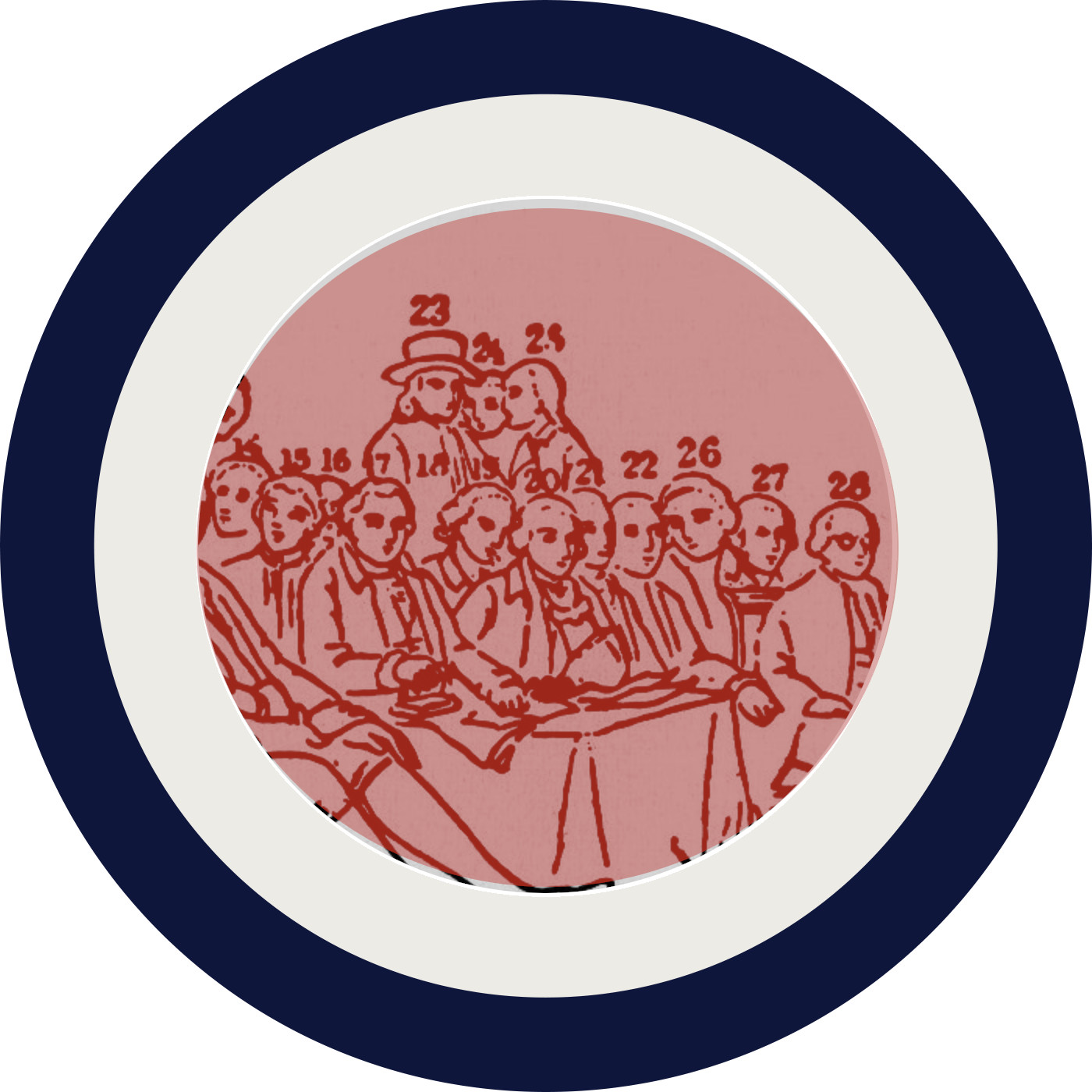
This episode of the Memory palace is brought to you by Function Health. It is hard to read the news today without learning about some new invisible threat. Real tangible things that sneak into our bodies often no matter what we do. Microplastics, heavy metals, forever, chemicals that are in the air and the products we buy. Mercury in the fish we eat. Exposure to these things can affect our health and scientists are working overtime to figure out just how. And the science is constantly progressing and changing and Function is a tool that can help you get information that will help make these invisible threats visible, will help give you numbers and markers that you can then bring to your own trusted medical professionals. You can work together and make informed choices about the choices you make about what you eat and buy, how you set up your living space, own your health and start by understanding what's happening beneath the surface. Function provides 160 plus lab tests for $1 a day and member pricing on advanced imaging. Join@functionhealth.com memory and use code MEMORY25 for a $25 credit. This episode of the Memory palace is brought to you by Quince Summertime and the Living is Easy. Actually, you know what? It is not at all. I've been running around like crazy. I've been dealing with car trouble. I've had like a couple of airplane trips, deadlines that don't take the summer off. The living isn't easy, but the dressing is. And that is thanks to Quince. They focus on well made essentials that become your everyday staples all season long. Quince's 100% linen pants and shirts are so breathable, so easy to just throw on and Starting at just 34 bucks they are the perfect place to turn the to upgrade your summer wardrobe. I had to pack for a quick trip last last week. One where I had to look sharp but also professional and also keep my cool in the high temperatures and quints made that so easy. Put on a linen short sleeve shirt, pack up my favorite lightweight sweater for the evening just in case and I was good to go. And I looked good when I got there. Make your summer wardrobe easier. Go to quints.commemory for free shipping on your order and and 365 day returns. Now available in Canada too. That's quincee.com memory for free shipping and 365 day returns. Quints.com memory hello there. A little 4th of July bonus episode for you. I was recently commissioned to do a special piece for the opening convocation or like opening ceremonies or welcome event. I am not entirely sure what they ended up calling it for Aspen Ideas Health, a three day conference that kicks off the Aspen Ideas Festival on the stunning campus of the Aspen Institute in Aspen, Colorado. And with the 250th anniversary of the signing of the Declaration of Independence. Nye they came to me asking if there was something I could do about the four signers of the Declaration of Independence who were also physicians. Sure, I said, enjoying a challenge, not quite realizing yet how much of a challenge it would turn out to be. But it was cool, both the experience of doing it and finding my way through this particular story. Here you are going to listen to a slightly edited studio version, slightly edited just because you won't be able to see some of the visuals that I used in my crowd. Pleasing presentation, but otherwise you can just sit here in your home and imagine you are sitting in a pavilion nestled in the Rocky Mountains while you yourself are nestled between a neurosurgeon and, I don't know, a former deputy director of the National Institutes of Health on the other side. This is the memory Palace. I'm Nate dimeo. If there had never been a Declaration of Independence, we might have remembered Benjamin Rush, because to be the most important anything at the time of a nation's founding gets one remembered. And doctors, I would say, even if I were not here trying to start off on a good foot with this particular audience, are simply more important than other professions, hatters say, owners of particularly successful cooperages. And so Dr. Benjamin Rush was the most prominent and pedigreed physician in Philadelphia when Philadelphia was at the center of it all, leading the American Philosophical Society, training a generation of doctors at Penn, writing the first chemistry textbook in the New World, and later founding more or less American psychiatry. He did important things of a sort that get a person remembered after their death. And you could say the same for Lyman hall, who founded the University of Georgia while simultaneously sounding like the name of a building one might find at the University of Georgia. But Josiah Bartlett. Would his name ring any sort of bell anywhere in 2026 were it not borrowed, as the name of the fictional president on the West Wing and the Name Matthew Thornton? Dr. Matthew Thornton? Nothing, right? The name would surely be lost to time, as the names of nearly each and every one of us will be one day, had he, like Rushed and Hall and Bartlett, not signed the Declaration of Independence and thus ensured their place, however modest, in the American story, as footnotes, as points of civic pride, local heroes remembered in plaques and a handful of statues as the name of a small State park in Pennsylvania, an elementary school in Londonderry, N.H. and bound together, these four men by a trivia question. Name the four physicians who signed the Declaration of Independence on a sweltering day 250 years ago on a date we remember each year variously with parades and fireworks, depending on city budgets and the weather, with a day off for bank tellers and postal workers, with sales on patio furniture, with limited runs on special Oreos with red, white and blue cream flavored like Bomb Pops. Picture the painting the signing of the Declaration of Independence. You've seen this before by John Trumbull, the most prominent painter in the early days of the Republic. Maybe you had it up in your classroom as a kid. Maybe you saw it in real life while touring the Capitol rotunda in Washington, D.C. the most famous version is from 1817. It is a remake of a smaller painting than maybe you have seen at Yale. He started his original painting not long after the 10th anniversary of that first Fourth of July at the urging of his friend Thomas Jefferson. If you look at this painting, I bet you can find him a face familiar from such places as the nickel. Trumbull took the project extremely seriously. He set out to paint each signer from life. And so in that painting we have Josiah Bartlett, whom Trumbull sketched in pencil in Exeter, New Hampshire in November of 1790, which he then used as a reference months later when he painted the famous image and secured Josiah Bartlett's place in history. In the bottom left corner of the most enduring depiction of that key, There too is Dr. Benjamin Rush, right there in the center. But small historians can't pin down whether Trumbull managed to get Rush to sit for him during his road trip. But if not, the two knew each other. Everyone knew Rush and Trumbull could paint a decent doctor Rush from memory if it indeed came to that. He did not paint Dr. Lyman hall, he of the University of Georgia, because he was among the dozen Declaration signers who had since died. Part of Jefferson's whole pitch on this commission was for him to catch all the signers while he could, like historical Pokemon. The fourth physician signer Matthew Thornton, is not in that painting, though he was alive. Trumbull did not paint him because he could not find him. Dr. Thornton had vanished. Now this is not a mystery story. This is not the case of the missing Son of Liberty. I make a podcast, but it is not a true crime podcast. Trumbull couldn't find Thornton because he was simply hard to find. He lived in rural New Hampshire in the late 18th century and when Trumbull asked around in what passed for urban New Hampshire at the time, no one was quite sure whatever happened with that guy. At least not with enough specificity to make it worth Trumbull to go off tromping through the woods. So this is not a mystery story. It is a history story. And in history, almost everyone goes missing all the time. Few who have ever lived or who live today will ever catch the light for even the briefest of moments and draw the attention of anyone looking back through time, never mind hold that attention for 250 years. So many of these men painted into or attempted to be painted into history's enduring light are nearly lost to us now. I think about America's past professionally and even on my best day, well rested, optimally caffeinated. I would be hard pressed to name a dozen of those guys. But however long your own list of signers goes, if it hardly gets past Franklin and Jefferson, John Hancock. Let me hold these four men. Thornton, Hall, Bartlett and Rush. These four physicians, and maybe they will linger a while in your own memory. Benjamin Rush I could have named. He was arguably the most renowned and credentialed doctor in the colonies during the revolutionary moment. We know a lot about his life and his thinking because he wrote so much of it down. That book on chemistry, another on alcoholism as a medical condition rather than a character. Flawless. He wrote a vital account of a deadly outbreak of yellow fever that killed 1 in 10 Philadelphians in the autumn of 1793. Wrote a guidebook on field medicine that was used by the US Military all the way through the early days of the Civil War. He wrote powerfully against slavery. He also wrote what seems to have been the first ever description in any book published in North America of the game of golf. He was a doctor through and through. He wrote two memoirs that are among the most valuable sources telling us today what it was like to be a person then, what it was like to be a revolutionary, why he chose that path when it threatened the good and comfortable life that he had built for himself through his medicine. A choice that he fully expected would wind up getting him killed. Through his many letters, we know that he did not like Thomas Paine at all, but they kind of had to hand it to him. We know that he met John Adams on August 29, 1774, and that they went to dinner at City Tavern and that the food was especially good that night. We have copies of the books he read. We can examine the dog ears and underlines and note the things that once caught the light of his own attention. This man in that painting. We know what he carried in his doctor's bag. We know that he was, unfortunately, a dogged proponent of bloodletting as a cure for many diseases. And he routinely removed as much as 80% of his patients blood, routinely killing them. He wrongly believed that most disease was caused by improper circulation, for which he prescribed mercury, which poisoned people. We also know the names of so many of the patients that he treated and saved through his training and wisdom and kind attention. We know so much about why and how he practiced medicine, but not nearly enough about how anyone else did, Even his fellow physician signers. When we search for them in history, we mostly find mystery. Lyman hall was born in Connecticut to a family of ministers. He became one too, was ordained at 23, and then two years later was kicked out of the ministry. And I cannot tell you why. There is a record of his ordination and then a record of him being banned from leading any congregation in Connecticut, but there is no record and no rumor even that tells us anything else. It is one of the many unsolvable mysteries about his life, like why he chose medicine as his second act, getting his degree from Yale, what he really did with that degree. He was married twice. His first wife died a year after their marriage. But we know nothing of her life and nothing of what took it or how it felt for Dr. Hall to be unable to save her. We know he remarried. We find her name along with his in a census record from South Carolina, where he seems to have established a medical practice of which everything we seem to know is contained in a single line from a biographical sketch written more than a century after his death, which tells us, quote, he sold the famous cosmetic water for the ladies. History next finds him in Georgia as a member of an intentional community of fellow Connecticut Congregationalists. He somehow obtained a rice plantation. We do not know how, though we are pretty sure he didn't have any qualms about owning the human beings who grew and picked and processed the rice on that plantation. Two historical sources suggested that he used the free time that their forced labor gave him to work with patients racked with mosquito borne illnesses there in the swamps of Georgia. But when one digs down into those sources, one finds that these claims seem to hinge solely upon assumptions based on two facts. One, that he had a Yale medical degree and two, that there were a lot of mosquitoes. And all that we can extrapolate safely about his practice is that it went well enough to make him a respected member of his community and that he likely brought to that practice the kind of personal skills that help make good doctors, because without communicating clearly and persuasively, without listening, questioning and comforting, he would not have been able to convince his Loyalist neighbors of the Patriot cause and convince them to send him up to Philadelphia to vote for independence on their behalf and be commemorated along with George's two other declaration signers, by an obelisk currently serving as a traffic divider on Green street in Augusta, by City hall, and by the Brunch House, whose 4.9 stars on TripAdvisor is no obelisk, but is in honor nonetheless. We know more about the medical career of Josiah Bartlett, who was good at writing things down. So we know that it started like so many physicians did back then, not at Yale, like Hall, or Edinburgh, like Rush, but as an apprentice, he left evidence of a thriving practice. We have the records of all the supplies he purchased, and we can read success in the way that his orders grew steadily year after year, year he left evidence that suggests he had the makings of a good doctor, letters that reveal him to be curious and constantly learning that find him experimenting, developing new treatments. He used Peruvian bark to help fight back a diphtheria epidemic. He thought it was a cure, but it wasn't. But his experiments, it seems, started a chain of inquiry that led two scientists decades later to extract quinine from the bark that led to the first effective treatment for malaria. His success launched him into politics, sent him to Philadelphia and onto the governorship of the state of New Hampshire, where one of his most enduring acts was setting licensing standards for doctors. And had those been in place prior to the Revolutionary War, it would have been helpful to the historians who have gone trumbull, like looking for Dr. Matthew Thornton, because those who searched would be biographers, young New Hampshireites, perhaps at Thornton elementary itself, who chose a hometown hero when asked to write a book report on famous Americans or a podcaster invited to entertain eminent professionals at a health conference in the Mountain west, would at least know how he was trained, would have at least had something to cling to. Because when the most comprehensive biographical essay written about a signer of the Declaration of Independence includes the phrase Matthew Thornton was born probably in 1714, you know you are on shaky ground. You might find yourself quoting at length, perhaps merely to beef up your word count. From a letter from John to Abigail Adams from Philadelphia in which he mentions meeting, Thornton says he was a sociable guy who had a story for every occasion, though I cannot tell you any of those stories. We have a Few of his own letters. One where he talks about getting inoculated for smallpox while in Philadelphia, so there's that. Others complaining about the weather. Mostly these letters just raise questions, or maybe just one question. Who was this person at all? We know almost nothing about his medical practice. There are a couple of records that have him brought to Portsmouth. One's to tend to an injured sailor, another to help an ailing soldier. One historian posits that he was among the white New Hampshire doctors who learned the uses of various medicinal plants from local tribes and incorporated that knowledge into European approaches. And that sounds appealing, but it also seems entirely speculative. Dr. Benjamin Rush mentions meeting him in Philadelphia, mentions Thornton as a fellow doctor of Irish descent who was, quote, not at all worldly and had a ton of stories, but Rush didn't recount any of them. Matthew Thornton's life was in those stories, whatever they were, not just in the material, not just in their substance, not just that one time he did that one thing or the one he always told about the one patient who came in one day complaining of, or how his father always used to, or how his wife, his son, his grandmother once said the most beautiful thing, he still remembered it. Not just all of that, the sorts of details about his life that could help the historian, the book report writer, me, tell his story. And those stories now lost, now mystery, was his character, what he valued, what he thought was funny or meaningful or moving, what he thought represented him best, which story he sometimes told just because it felt good to hear it out loud, maybe reminded him of something vital and true that was so easy to lose track of. His life was in those stories, his life. The lives of Rush and Hall and Bartlett lived in those mysteries. Their names are preserved forever. They are bound permanently to each other and to that moment in time, at once arbitrarily and not at all. Their lives, however they were lived, however much or however little we know about them, brought them to Philadelphia one summer 250 years ago, lives that had first led them to medicine, however they had, however that medicine was practiced, however unknowable now, however condemnable now, some of it, however brilliant and innovative and noble, some of it, however benighted it can seem when one looks into the past, at people in the sincere pursuit of science, until one remembers that today's truth might well be tomorrow's travesty in the light of history, however dim, however hard to aim, however fleeting its reflection, we can find these men there in Philadelphia. Four physicians, inquisitive, experimental, caring professionally, who knew how to communicate, who knew how to listen, who were brave enough to offer themselves up in emergency, who found themselves in a place and a moment that needed people like that and helped put in motion an experiment in a nation that always will. This episode of the Memory palace was written and produced by me as a commission to Aspen Ideas Health in June of 2026. The show is a proud member of Radiotopia, a network of independent artist owned listener supported podcasts from prx, a not for profit public media company out there keeping it real, doing the work in an economic system that is preposterous and I'm happy to be here. If you ever want to drop me a line you can do so@natethememorypalace.org if you want to follow me on social media you can find me. I'm doing this off the top of the dome. No script on threads and Instagram. He Memory palace podcast on Facebook and Twitter at the Memory palace and on Bluesky at Nate Demeo and I will talk to you again. Radiotopia from prx.