← The mindbodygreen Podcast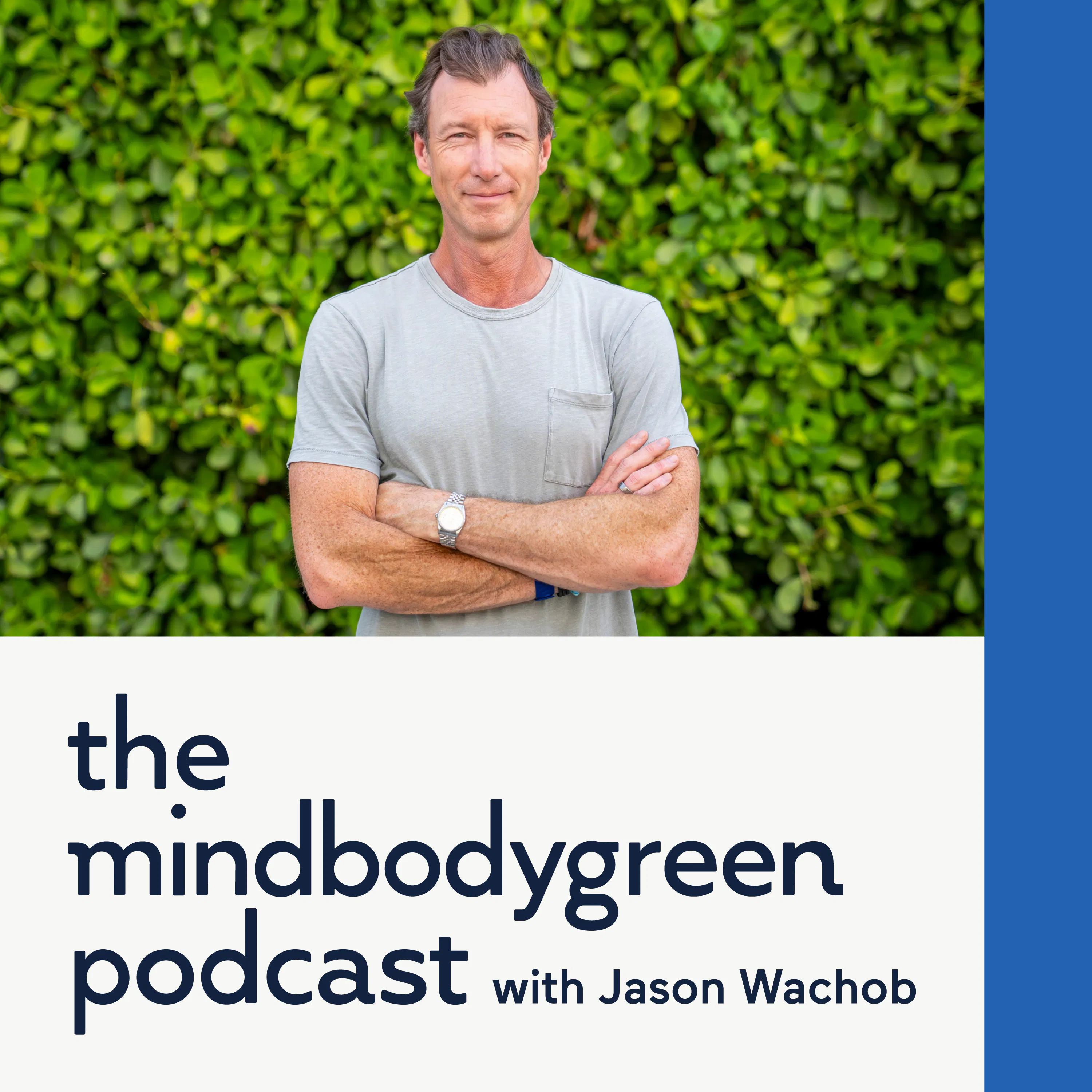
The mindbodygreen Podcast
646: The gut is the missing link to women’s longevity | Cynthia Thurlow, NP
00:45:20
Cynthia Thurlow, NP, is a perimenopause and menopause expert, nutrition educator, and nurse practitioner with nearly 20 years of experience in the ER and clinical cardiology. Now, she works to help women live vibrant and healthy lives.
Loading summary
Transcript44 lines
- [00:00]
A
Welcome to the MyBodyGreen podcast. I'm Jason Wakab, founder and co CEO of MindBodyGreen and your host. This episode of the MBG Podcast was created in partnership with Cocoavia. Cocovia's 500 milligram cocoa flavanols capsules and powder deliver clinically studied levels of cocoa Flavanols, a plant bioactive shown to support healthy blood flow and vascular function. How these flavanols help promote nitric oxide production which supports flexible blood vessels and efficient circulation throughout the body. What sets Cocovia apart part is highly concentrated and clinically proven Cocoa Flavanol extract which is standardized to provide consistent research backed potency in every serving. Listeners of this podcast get a special discount. Visit cocovia.com and use code MBG2026 for 20% off for all new customers. That's C-O-C-O-A-V-I-A.com and code MBG2026. See show notes for details. What if Hormones are only Half of the story when it comes to menopause and medicine is ignoring the major role the gut plays in this critical period of women's lives? Cynthia Thurlow is the author of the new book the Menopause Gut and a respected voice in the women's health space. In today's show, we dig into the gut inflammation connection, why declining estrogen thins the intestinal lining, what that has to do with autoimmune risk, and why women are four to five times more likely to develop autoimmune conditions in the menopausal transition. Cynthia also explains why women in midlife are chronically undereating protein and walks me through the five biomarkers she prioritizes herself for heart and metabolic health. This is a fascinating conversation. Let's dive in. In your view, what are we missing about the conversation between nutrition, which I don't think we talk about enough, and healthy aging, especially for women in midlife?
- [02:01]
B
I think it's such an important conversation and a topic that is near and dear to my heart. Number one, when I'm talking to patients and clients, it is evident to me that women still, despite all of the conversations around protein, are chronically undereating protein. And so protein becomes an incredibly important macronutrient to help women build awareness around the fact that as we are losing muscle, as we are losing insulin sensitivity, the protein consumption needs to actually increase, not decrease. And why is that? Because we need a greater quantity of protein to actual trigger something called muscle protein synthesis and that's anywhere from 30 to 50 grams per meal. And when I'm talking to patients, it's helping them understand, you know, how much are you eating throughout the day? Because we still have a lot of women that are undernourishing their bodies chronically and habitually, because we're still coming out of, you know, the skinny craze from the 80s and 90s that kind of transpired into different things. And now we're back with GLP1s, and I'm sure we can unpack that. But protein is number one, ensuring you're getting at least 100 grams of protein a day. And for anyone that does intermittent fasting, this is oftentimes why I will talk to women about opening up their feeding window. That if you can't get 100 grams of protein into 4 hours, 6 hours, or 8 hours, it generally means that you need to open up that feeding window. And I talk a lot about digestive rest in the book, and that's really just allowing women 10 or 12 hours in which to eat so that they're getting two to three boluses of protein.
- [03:37]
A
So 10 to 12 hours to eat during the day or 10 to 12 hours of rest overnight.
- [03:42]
B
10 to 12 hours where they are consuming two to three meals. Because one of the challenges that I think a lot of women face is that if they have two meals in eight hours, then they're not hungry for an additional bolus of protein. And I know the word bolus is. Doesn't really, like, sound enticing, but I will sometimes say, like, we really do genuinely need to eat. Either you're having 45 or 50 grams of protein in two meals, or you're having 30 to 35 grams over the course of three meals. Just important to know that most women are getting 50 grams total a day. I'm like, that's not how you build and maintain muscle. I think the more important thing that I think is newer, more novel is the conversation around fiber. And I jokingly refer to it as the new F word, depending on who my audience is, because we have completely bastardized carbohydrates. We've been telling people that carbs are bad and carbs are driving a lot of the poor metabol. Poor, poor metabolic health issues. But the bigger conversation is really about quality of carbohydrates. I'm going to, you know, we'll exclude things like processed carbs and bread and pasta and things like that. Fiber becomes critically important, especially as we see a decline in hormones, because with the decline in hormones that Women see in that perimenopause to menopause transition, there's are very important signaling molecule called short chain fatty acids. And the way that our body helps create these short chain fatty acids is when we eat fiber. The fiber goes to the colon, large intestine, which is where the gut microbiome is. It's fermented. And then these short chain fatty acids are created. And these are important for reducing inflammation, they're important for endogenous GLP1 regulation. So that satiety hormone that we talk about, some of these actually cross the blood brain barrier like butyrate. And so fiber becomes very important. And most people in the United States are under eating protein, they're under eating fiber. And that's because the bulk of us are consuming a highly processed, ultra processed diet. I think most of the statistics that I have seen are estimating that Americans are eating 5, maybe 10 grams of fiber a day, when in essence we should be pushing the envelope with that. And the experts will say 25 to 30 grams. But if someone's currently eating five, hears this podcast and then tries to bump it to 30, your microbiome can't acclimate overnight. It takes time. Those microbes need time to be able to work their way up. It's almost like if you're lifting weights, you don't go from £5 to 100. The same applies to the microbiome. Takes time to acclimate to an increase in fiber. And so fiber becomes a larger part of the conversation. It helps with satiety, it helps with blood sugar regulation. I think far too many people have excluded carbohydrates from their diet at the expense of fiber. And it doesn't have to be complicated. I'm not per se saying everyone needs to go buy a supplement, try to get it from food first. I find that most of my patients, when they're really diligent about their fiber intake, they're like, oh, it isn't just about eating salads. It's maybe you add some lentils to your kava that you purchased, you know, double protein and a side of lentils. Or maybe it's integrating some beans on a salad. Maybe it's adding flax and chia seeds to a smoothie. There's so many ways to do it that don't have to be onerous and overwhelming. I get patients that will say, well, I need to think about resistant, starch soluble, insoluble fiber. I'm like, no, yes, that's important. There are different types of fiber, but I want you to think bigger than that. I want you to just be conscientious about consuming more because women in middle age don't need to stress about more things. I had a patient tell me the other day that protein has now become this thing that she obsesses about. She's like, I've never thought so much about protein, and yet I think just building awareness around these macronutrients that are deficient in our diets is step number one. It's track. Then try to increase. And don't feel like you have to be obsessive about it. But I would say that fiber is the missing link for a lot of women for a variety of reasons. And in many instances, when women start increasing their fiber intake, they start seeing other net benefits. And I always use the example of myself because it's such a perfect example to use. I've been getting colonoscopies every five years because I have a terrible family history of colorectal cancer. And so I had a. I had a colonoscopy in 2020 and one in 2025. And my new gastroenterologist said, I have all your studies. You've been getting colonoscopies for 20 years. What did you do differently? What have you been doing differently? And I said it radically increased my fiber intake. He said, I wish every person's colon looked as pristine as yours. He said, every bit of minor inflammation, internal hemorrhoids, all those things, all of that is gone. So he said, continue doing exactly what you're doing. And so I feel like that gives me an objective, clean bill of health. But also I share that as an example of the fact that we may not totally be able to objective, Objectively demonstrate what's going on in the gut when we increase our fiber, unless we do it too quickly or consume too much. But I think for a lot of individuals, it's a really missing link. Part of the conversation in midlife.
- [09:07]
A
100% agreed. And I think in a world where many experts can disagree on seemingly everything, kind of everyone agrees on fiber.
- [09:16]
B
Yes. And I think that unless you're speaking to a devout carnivore, you know, when I. When I talk to the researchers, they talk about the fact in a. In a diet devoid of fiber, your body will try to ferment carbohydrate. Excuse me, will try to ferment protein. Now, as you can imagine, fermentable protein is putrefaction. That's not a good thing. So our bodies genuinely need a little bit of fiber for each One of us, you might need a little more than I do, or you might need a little less, and that's okay. That by individual approach is certainly important, but I think it is a really important part of the conversation that I feel like is maybe finally getting the respect that it deserves.
- [10:00]
A
And then how do you think about, as we fill out that plate, healthy fats and targeted nutrients like flavanols?
- [10:07]
B
Yeah. So number one, if you have a piece of salmon steak or you eat duck, or you have a ribeye, those healthy fats are already incorporated in the protein. Now if you're having a lean piece of protein, maybe you add salted macadamia nuts, maybe you add some high quality extra virgin olive oil. Talking about those polyphenols or we're also thinking strategically about brightly pigmented fruits and vegetables. So I think about bitter grains like radicchio and freeze and arugula, those kinds of, you know, brightly pigmented fruits and vegetables that you can be adding to ensure that your plate isn't a monochromatic. Like monochromatic dressing right now is, is a thing. But we don't want our plates to be monochromatic. We actually want them to have diversity of species. You know, we want to be having over the course of a week, 30 plant varieties. But oftentimes we shy away from things that are bitter. So people sometimes like the really kind of bland tasting olive oil. I'm like, it's actually the polyphenols and flavonols that are actually, you know, that bitter taste is actually identifying that you've got a high polyphenol count product. And so I always say don't shy away from things being bitter. That, that bitter. The bitter compounds of whether it's the radicchio, whether it's the freeze, whether it's the high quality extra virgin olive oil that's sending powerful information to our bodies. And I think for a lot of people, we've gotten accustomed to bland food, you know, that that is what our diets or if we're eating ultra processed foods, our palates are, you know, it's like an explosion of man made chemicals and flavors that nature would never create. So when we're thinking strategically, it's like, let's think about protein. If we have healthy fats and the protein, great. If we don't, we can add healthy fats to the plate in a way that makes sense. Whether it's olives, olive oil, you know, some of my favorite things to do are do a variety of nuts and seeds, adding herbs, there's so many ways to kind of brighten our plate and diversify our plate with having. Without having to feel like we're overthinking it. I think many people probably don't even know that adding just spices or herbs, those kind of things can count for those 30 plant varieties that we're aiming for throughout the week.
- [12:25]
A
And as it relates to flavanols specifically, I love cocoa flavanols because they taste amazing and from a benefits perspective, they're great for brain, blood flow, circulation, which I also think is an issue a lot of people face in midlife, specifically women. What's your, what's your view? There's.
- [12:42]
B
Yeah, I mean, I like raw cacao. I put that into smoothies. I sometimes will bake with it. I don't do a lot of baking, but I will occasionally use it. I think knowing that as estrogen declines, nitric oxide production also is impacted, which is why I think those flavanols are definitely a good way to kind of integrate things into our diet. And nitric oxide is something that impacts the digestive system but also impacts our endothelial layer of our blood vessels. And so we know that women are in many ways protected from this until they go into that menopausal transition. So I think it's a great way to capitalize on these plant based compounds that have a lot of health benefits and we don't have to overthink it. I mean, that's one of the beautiful things about nutrition in general is just finding, you know, four or five things that you like and just integrating them into your nutritional kind of paradigm that you're using throughout the week. I personally like smoothies. That's a way that I may bump up my protein intake throughout the day, but I can put a lot in there that kind of bumps up, you know, polyphenols or is postbiotics that I'm adding or other types of beneficial compounds that are rounding out what I consume in more nutrient dense whole foods that I chew and swallow.
- [13:58]
A
Yeah, I'm with you. I am a smoothie person. I love cocoa via. I will dump that in my smoothie. And in circulation, I just think is so underrated. You know, you mentioned nitric oxide and you know, brain, the endothelial system, brain flow, blood flow being so key. It's much bigger than taking someone's blood pressure. Circulation is vastly underrated, like healthy blood flow. I don't think we talk about it enough. Like how is your circulation specifically in midlife? Like, you don't get that question like, we, we go to like, you know, there's so many markers we can test. But like, do we talk about circulation?
- [14:36]
B
Well, I spent 16 years in clinical cardiology, so I spent a lot of time talking about it. And how many of my patients thought it was normal to have dependent swelling in their legs. And I would say, well, it's one thing if you take a long flight and you're forced to be in a dependent position for a period of time, but how many people take it for granted that that's normal? Or people that develop. It isn't just heart disease, they develop carotid artery disease, they develop peripheral vascular disease that doesn't have to be part of the aging process. And this is why I think lifestyle medicine has become so important. It's an important part of the conversation because we acknowledge that medications don't necessarily fix it all. And so as someone who managed peripheral vascular disease, cardiovascular disease, carotid artery disease, just dependent lower extremity edema for many, many years, I remind people that, you know, valves in our veins can become incompetent over time, but that's why movement's so important. Like things that we have take for granted, like lymphatic drainage and, you know, just movement in general. Like our bodies do so much better when we're not in a sedentary state. And yet a lot of people, you know, they go to the gym in the morning and then they sit for 10 hours a day. And I remind people all the time that even if something is simple, you know, in between podcasts for this book, I've been going up and I've. In my part of the state, there are not a lot of basements. We, we build up. So we have a three level home and I'll go up and down two flights of stairs just to kind of, you know, get, stimulate myself, move around. And even on days when I'm doing a lot of recording, it's, you know, walking my dogs, it's, you know, parking farther away at the grocery store, like just doing things that are important for lymphatic movement and movement in general that is helpful for blood sugar regulation, it's helpful for overall digestion, it helps with mental clarity. I think for a lot of people, they just kind of think that we have to overcomplicate things. And sometimes simplifying is what is maximal effort and yields the best gains.
- [16:46]
A
You know, it's so interesting hearing your routine because I think maybe it's just recently, I think there's consensus that you're probably better off doing, say 8,000 steps, but like doing exactly what you said. These micro movements, like getting up, walking around, taking a call, sitting versus I'm going to do a 4,000 step power walk in the morning and then another 4,000 step power walk at night. But I'm sitting for 10 hours like, or. And then another four. Like eight's better than. Doing less steps is better than more steps to a certain extent. As long. As long as you're moving all the time versus sitting for long periods.
- [17:24]
B
Absolutely. Well, we sound crazy, but we have three dogs. So there's a lot of walking in our. A lot of walking in our lives, and we live in a very hilly part of our state. But I remind people, like, for me, I crave that, like in the morning, my husband and I know we're going to get in so much walking because we have these three dogs, one of whom's only two and he's a gigantic spider. As. And the more steps he gets, the better his behavior is. But I can't imagine going from working out in the morning, going straight to an office job where I'm sitting on my bum all day long. Which is why I love that we're seeing so many standing desks. And actually, when I was still seeing patients in a traditional allopathic model, I had a standing desk in my office. So I would stand and dictate when I wasn't sitting all the time. And I would remind patients if I come in an exam room, I'm not sitting because I'm being disrespectful. I'm standing because I would otherwise be sitting all day long. And that is, I actually get tired doing a lot of sitting. I will find that, you know, sometimes doing a lot of sitting just makes you unmotivated to do more physical activity. And so it really becomes. It's important to kind of let our brains know that we're designed as human beings to be moving throughout the day and not being completely sedentary. I mean, let me be clear. There's days when all of us are traveling and sometimes you're at the mercy of however long it takes you to get to your destination. But trying to find micro movements throughout our day, to your point, I think is really an effective way to support our health.
- [18:50]
A
This episode of the MBG podcast was created in partnership with Cocoa. Cocoa Via's 500 milligram cocoa flavanols. Capsules and powder deliver clinically studied levels of Cocoa flavanols, a plant bioactive shown to support healthy blood flow and vascular function. How these flavanols help promote nitric oxide production which supports flexible blood vessels and efficient circulation throughout the body. What sets Cocovia apart is highly concentrated and clinically proven cocoa flavanol extract which is standardized to provide consistent research backed potency in every serving. Listeners of this podcast get a special discount, visit cocovia.com and use code MBG2026 for 20% off for all new customers. That's C-O-C-O-A-V I A.com and code MBG2026. See show notes for details. A hundred percent and for someone in midlife, what what should they be tracking? There are so many metabolic markers everyone's doing testing. In your view do you have like a a top five? If someone is largely concerned about say like heart and you know, metabolic sl, heart slash brain health are all interested interconnected. But what what should we what are
- [20:05]
B
like must have I would say number one is a fasting insulin which 10 years ago everyone told me I was crazy. Fasting insulin will oftentimes dysregulate way before a fasting glucose way before your A1C. Fasting insulin is dirt cheap and it's a really good snapshot into insulin sensitivity. I would say number two is an apob. So a lot of women probably may or may not know that our cardiovascular disease risk accelerates in the setting of decreased hormones. And so oftentimes when I'm looking at lipid markers and I see a high ldl, I'm assuming already someone has a high APO lipoprotein B. And as I mentioned, as estrogen is declining, we will see more inflammation, we will see more endothelial dysfunction. APOB is oftentimes correlated with a high ldl, but it can be a sign that of a great deal more inflammation and more prognostic indicator for just being mindful of not only your cardiovascular disease risk but metabolic health. And I would say tan tandem to that is LP. It is seven to eight times more atherogenic. It is genetically mediated. So 20% of us so 20% of the people listening to this podcast have an elevated LP. And if you're African American it's 50%. So it's really important to have these tested. Unfortunately there's not a lot we can do about lp. It's not per se lifestyle mediated, although obviously we want to, you know, be mindful of metabolic health markers. There are drugs that treat it. Estrogen interestingly is a weak PCSK9 inhibitor, which is the class of drugs that have been created to treat this. The unfortunate thing is they're incredibly expensive, I would say, other than that, I think looking at things like serum ferritin, which is a marker of iron storage, and I think ACOG just changed their guidelines that they want to see this greater than 60 milligrams per deciliter. I think that's quite significant because a lot of women are walking around with very low iron stores. They're very symptomatic, they're fatigued, they're tired. And I mean, that's another one of these markers that oftentimes get missed. I see it. I see women that have had fatigue and have been tired for years and they have a ferritin of 20. I'm like, okay, that's a problem. You know, you have a loss of iron storage and iron is important for hemoglobin and iron capacity, binding of carrying oxygen around our bodies. I would say, you know, in terms of other things, when we're thinking about metabolic health, I know the common things. People look at glucose, you know, I don't so much look at uric acid. I know for a period of time we were looking at those pretty closely. And yes, there is a component of elevated uric acid that can be problematic for metabolic health markers. But I would say, you know, looking at some of the inflammatory markers, like high sensitivity crp, it's sensitive but not specific. Meaning if it's elevated, it can be from a variety of things. But most of the labs that you look at, they'll say, you know, less than 1.0. And I'm like, that's not optimal. So we actually want it to be lower, you know, less than 0.7 milligrams per deciliter. But I think in many instances when we're working on metabolic health markers and we're looking at fasting insulin, fasting glucose, looking at apob, looking at triglycerides, looking at hdl, we can get a pretty good picture. The other thing that I would add to that, so if anyone has an elevated apob, an important test is Boston Heart's cholesterol balance test. And it's not an expensive test, but a really important kind of pearl that I will share with your community is that this test is really looking at, are you a hyper absorber of cholesterol or are you a hypersynthesizer? Modern allopathic medicine wants to throw statins at everybody. There is a time and a place, and that's a whole separate conversation. But if you are a hyper absorber, like you're you know, you're literally, your intestines are just soaking up all the cholesterol, like a little sponge that is addressed differently than people that just create too much cholesterol. And so this is part of that conversation. While I will say to patients, and I would say, arguably, lipidology is something that has always been a pet interest of mine. So I'm going to try not to go down a rabbit hole. But that is a test. If you have a high apob, high ldl, before there's a consideration of medical therapy, I would want to be having a conversation around, am I a hyper absorber? Am I a hypersynthesizer? Because they are treated very differently. I mean, exceedingly differently. And this is an important distinction because like I stated, statins are thrown at everybody. And I'm like, there's a time and a place, judiciously, cautiously, carefully. But every drug that's out there has the potential for side effects. So always that little, like, air of caution. Like, let's think through this thoughtfully before we proceed.
- [25:13]
A
So we'll go down that rabbit hole for a second. Because I love the Boston Heart test. I've done it.
- [25:19]
B
My favorite test.
- [25:20]
A
I am a hyper absorber.
- [25:23]
B
Me too.
- [25:24]
A
And so I am pretty thorough with my testing and have not to say I do not lack willpower. And heart disease runs in my family. And I'm 51. And no matter how there were times where my diet was so dialed in in terms of, like, cutting out sat fat almost completely to avoiding desserts, to, like, pretty hardcore. And the lowest I was ever able to get my APOB was 71, which is good, but, like, I want great because heart disease runs in my family and, like, and I have a little plaque. I've done the clearly exam, like, a little soft. It's not, like, concerning, but, like, you just don't want it and you don't want it to accumulate. And so when I would maybe not be as strict and I'm still, like, pretty good eater, I would drift into, like, the 90s. And then like, in a range in the 70s. And then finally, Frank Lippman, who I know you know, my doctor, he's like, why don't you take ezetimide? And it's not a statin, and there are minimal side effects. So I did 10 milligrams, and in 90 days, my APOB went from 91 to 59. And it was over the holidays and the holidays, you know, having a lot more desserts and like, yeah, I'll do the ribeye instead of the bison. And you know, I'll go with that meat that, that f and and I've experienced little or no side effects. And the reality, I think this is such an interesting development. I think where we are is you can. For me specifically, knowing, and I love this Boston hard test, knowing my risk profile and my, my limited tolerance for increasing my risk profile, I could be so good on lifestyle. But no matter what, I could probably never get my APOB below 60 or 70 where, where like you're, you're essentially taking risk not down to zero, but like you're really taking it down to a place where like 70s are good, 70s are good. But like, you don't want good. If heart disease runs in your family, you want like, great. And so I'm, I love that you mentioned this test and I love that I found an option that wasn't a statin and worked. And I feel like I have, like, I can, you know, I've got little kids, like, yeah, I'll go out to ice cream with you. I'm not going to be like, can't have it right?
- [27:55]
B
Want to enjoy your life. And I think that's an important distinction. I, I sometimes on social media someone will say, I'm not in any medicines. And I'm like, well, I tell my community I have high apob, high lp. It is not a lifestyle mediated piece. There's a genetic component. And I too started Zetia, which I used to prescribe all the time. Thankfully now it's dirt cheap. And because I've been around long enough that I was there when it, you know, was brought to market and it was very expensive and I used to give samples out to all my patients so that they could take it. But for me, it brought my APOB under 60. And so for me, as someone who has a bad family history of heart disease and knows what happens to women's endothelial function, plaque burden, et cetera, as they're getting older, it was a no brainer. And to me it was like, this is not a lifestyle mediated issue. Like, what's interesting, Jason, is that my entire lifetime I've always said I don't feel good when I eat ribeye or duck or even salmon. And I finally said, isn't it amazing? It's because my body just absorbs so much of the fat. I'm like a little sponge. So I've always done better with lean protein. Isn't it amazing how my body was telling me that information? And so I think for a lot of listeners there are that's always an option. You know, Zetia is so inexpensive. It acts directly at the site of the small intestine. It is not a systemic drug. And yet I think for, I think I've had in, you know, 25 years of taking care of patients, like maybe I had two that didn't tolerate it. Like it was so unusual to have side effects, although sometimes it happens. But it's inexpensive, well tolerated, will drop that number down. And for a lot of people, they feel much more comfortable knowing that it's not impacting your total cholesterol and certainly not your brain cholesterol.
- [29:49]
A
A hundred percent. Life changing for me. And Zetti is the Merck branded version of Ezetimi. But like, I've experienced no side effects. I feel like I have my life back and I'm still eat, very clean.
- [30:00]
B
Enjoying your life?
- [30:01]
A
Yeah. But I don't have, how should I say this? I'm not necessarily have like the ghost over my shoulder of all these dead men around me. You know, because you think about that as you get older, you know, no matter my family, my, my both grandfathers and my father never made it to 50. I'm 51. I got two little kids.
- [30:19]
B
Wow. Yes, that's significant. That is absolutely significant.
- [30:24]
A
So one of them cancer, one of them heart disease. Unclear. And then my father had a, a genetic disorder. Different situation. The heart still killed him, but like he had something genetic going on. But I think everyone admitted, it's like, we've come so far.
- [30:40]
B
We have come really far. And what's interesting is, you know, years ago we used to just do stress testing, right? And now you have, you know, you have CT angio, you have clearly, which is like AI and CT angio had a baby. And for anyone that's listening, it's really not the hard plaque that we're worried about. It's the soft stuff. And so I remind people all the time, people are like, my cac, which is a coronary artery scan. They're like, I, I was zero. And I was like, but that doesn't really mean anything because it's the soft plaque that is problematic. The soft plaque is the stuff that kills people. And we know that women, as an aside, we tend to have small vessel disease. You know, men have big vessel disease, we have small vessel disease. We tend not to present the same. Like, men have that, you know, kind of classic like chest pain and shortness of breath, left arm pain, and maybe they get sweaty. Women might just be tired. And it's like, symptoms are totally different. And So I always say by the time a woman presents with chest pain, we always took it super seriously. And the unfortunate thing is if you have small vessel disease that ends up being medically managed, that's not generally a surgical, there's not generally a surgical option. So even more reason to, you know, get the information, to not be afraid. Like, I've had women say, I don't, I don't want to do a clearly, I don't want to do a CT angio, I don't want to know. I was like, yes, you do want to know because you have loved ones that you want to be around for. And I was like, knowledge is power. Like that's always the place that I come from is, yeah, there's that smidgen of like, do I really want to know? And like, yes, you do. And you also want to do cimt, which is looking at carotid intimal thickness. That's also really important. And thankfully mine was below, you know, age related standards, which I was like, that's good. I'm, you know, my carotids look better than average for someone of my age. But by the same token it's like, don't be afraid to look at the information, don't be afraid to ask for it. I think that's really important and even
- [32:37]
A
more important for women than men, they present entirely different symptoms. And just to say, just to piggyback on the, the 0, like to your point, the soft plaque means nothing clearly is just a more robust test. And it's 15 minutes, it's expensive, it's like a thousand bucks, I think 15 minutes. And if you do that, you don't necessarily like, what's your view on the carotenoid test? I've heard you don't maybe need it if you do that clearly. And the thing that I think about and I've also heard, I'm curious your take that it varies greatly depending on who's doing it. And I'm like, oh, human. If like I don't really love human error, I'm going to do something.
- [33:15]
B
It's like that with any testing though. And that's why, you know, you're starting to see like I saw an article out today talking about how some of the hospitals are stating they're going to get rid of the radiologists and just do AI. I was like, wait a minute, we do still need humans to view things. But this is why the individual that's reviewing your test and they should be board certified specialists, the person that's reviewing your Testing should be someone that does a high affinity, is doing a high volume of these tests so that they're comfortable with the technology. Like, I know when I worked in cardiology, not all of the cardiologists were certified in nuclear medicine. Not all of the cardiologists were certified to interpret echocardiograms, which are ultrasound for the heart. So I think if you're choosing to do an elective test, I would also want to be asking who is reviewing the test and what's the volume of testing they're looking at? You want someone that's looking at thousands of them. And the cool thing is with technology, people could be, you know, somewhere in the middle of the United States and they could be reviewing a lot of tests for a lot of people. But I think that's an important kind of distinction to consider. You want someone with high volume, high yield, you know, someone that does this all the time, not, you know, Dr. Smith, who looks at one of these a month. You want someone that can look at the nuance, because that can be really important. Just like having a cardiac catheterization. That's a surgical procedure, an invasive diagnostic and sometimes curative procedure. You don't want the guy that does that once a month. You want the guy that's on call in the middle of the night who can do it with his eyes closed. Not literally, but someone that does high volume because they're going to have the clinical expertise. And that nuance, like nuance is something that I remind everyone about all the time. Like, nuance is that distinction of, I've been doing this for a long time and I kind of get a gestalt when I'm hearing a patient history or hearing something from a patient that may lead them to suspect there might be more going on than what they're seeing in a study. You know, things can be fallible, which is why we still need human beings interpreting testing and not AI.
- [35:25]
A
In my personal opinion, combination of both. I leverage AI all the time for my personal health data, and I will, but I have to push back. It misses things. It's not there.
- [35:35]
B
Yeah, and that's. And that's what, you know, even when I talk to my man children, and I'll say to them, you know, you guys are in college and yes, I know that everyone's using AI. Maybe you're using AI to search for research, or maybe you're using AI very specifically. It's sometimes wrong. There was something I plugged into AI last night and I was like, that's actually Wrong. Like, and I knew enough to know that it was wrong. And I actually said, oh, by the way, that's wrong. And here's a research article that proves I'm right. And it was like, oh, I'm sorry. Sometimes we make mistakes. I was like, no kidding?
- [36:09]
A
Yeah. You know, on one hand, I'm so excited about the power of that, of just with regards to our health and solving complex problems. But on the other hand, I see a lot of mistakes. I think it's going to be longer than we think.
- [36:24]
B
Yeah. Oh, absolutely. And that's why, you know, I remind people, I even say to my team, this is why we have to. That's why I still proofread things, you know, before my team puts things out. I'm like, is that actually accurate? Because, you know, you're a whiz at social media, but that doesn't mean that I expect you to be as knowledgeable as I am about specific topics. And so I think that, again, it goes back to. You can use AI to, you know, collate information, aggregate information. But I think ultimately we still need human beings to be looking at what it has done to decide, does this make sense? Is this accurate? And I think anyone that thinks AI is infallible is mistaken.
- [37:08]
A
So I want to bring it back to inflammation to the gut and midlife. Inflammation drives everything from belly fat, joint pain, brain fog. Can you spend a moment on how we should think about diet, the foods we ingest to help? You've touched on a little bit, but I just want to bring it full circle. Like, how do we help lower that inflammatory load, which can cause a lot of things to go haywire.
- [37:31]
B
Yeah. I think for a lot of women, they make it through their teens, 20s, and 30s eating whatever they want whenever they want. And somehow in the setting of declining hormones, changes in neurotransmitters, they start realizing that nutrition is truly is ammunition. I mean, I do think about it that way incredibly strategically. But foods that tend to be more inflammatory are the foods people tend to start developing sensitivities towards in middle age. So talking about sugar, I mean, sugar's the big one. Alcohol, gluten, in some instances, dairy. And for a lot of women, they really do have to change that relationship because they may not realize that the bloating and digestive issues that they're developing are a byproduct of this increase in inflammation that is happening in the setting of less circulating estrogen, less circulating progesterone, alterations in neurotransmitters, more propensity for Leaky gut. So we know as women are navigating that transitional time, four to five times more likely to develop autoimmune conditions. And what autoimmune disease is really speaking to is that that small intestinal lining, which is one cell layer thick, has been breached. And I want everyone to think about this kind of brick and mortar analogy because as estrogen's declining, the mortar declines too. So it's very, very common to see food particles from those foods that I was mentioning can leak into the bloodstream, provoking an immune response. So what drives aging is aging of the immune system. That's one of the contributors. And so inflammaging is not just a buzzword, it is an actual thing, immunosenescence. So I think for a lot of people, understanding that every single lifestyle choice we make can either drive inflammation up or drive it down. And this is where I think this powerful discussion around nutrient dense whole foods, you know, protein, anti inflammatory nutrition, you know, really leaning into those brightly pigmented fruits and vegetables, high polyphenol count, fiber dense foods is going to be one of many ways that you're going to help lower inflammation along with the other things. I know it sounds like it's no fun when I mention the sugar piece. Sugar is ubiquitous. It is everywhere. It's in your condiments, it's in everything. Just be conscientious about food labels. Like, I had my kids for an experiment. I said, look at all the condiments in our refrigerator and tell me which ones don't have sugar. And they were shocked.
- [39:58]
A
You know, it's interesting, I'm hearing everything you, you said and I think a lot of it's applicable to men as well. I, you know, it's all there. And I think starting with estrogen. Estrogen for men is also important. It's cardio protective. And that also drops in midlife. And I think about, you know, hearing you speak, the changes I've made. So, you know, I'm in the same boat where I need an eating window that's 10 to 12 hours because I can't also. And I'm big, I'm 6, 7, 210, 15 pounds. I can't have 50 grams, 60 grams of protein in a meal. It's just like too much. It doesn't sit well with me. So I need to break up meals. I can't fast for 16. I just can't do it. Healthy fats, love them. Can't get enough fiber. Loud and clear, like, you know, I liked your point. You got to build up to it. You can't go from 5 grams to 30 grams overnight. Like your, your gut's going to say,
- [40:55]
B
I'm very unhappy with me. You're going to be writing hate mail, Jason.
- [41:00]
A
Right. And then like the sphere of, you know, carbohydrates. I've become such a fan of sourdough. I have sourdough every single day and I just can't. I need it. I'm active. It's fuel. I don't fear carbs. I don't count carbs. You know, we mentioned flavanols. I'm such a huge fan of, of cocoa Flavanol, specifically cocoa via. I'll throw that at my smoothie. But like all these things with gut you mentioned and butyrate, like going back to, like inflammation, these changes, like a lot of this, it's just so central to gut health, all these. And like, that's what I love about the book. And I want to close, close there. I have two questions. One is, what have you changed? I love the book. What have you changed personally, in writing this?
- [41:46]
B
Number one was. So I started writing in 2024 and my dad passed in 2024. And I openly talk to my community and across social media. I stopped intermittent fasting because I have the same body habitus as my dad. He was kind of a little guy. He got more little as he got older. And I was like, I am not eating enough protein consistently. And the only way I can do that is I need to stop intermittent fasting. And So I do 12 to 13 hours of digestive rest because to your point, I need three boluses of protein. For me, personally, if I eat 50 or 60 grams of protein, I won't eat another meal. So I have to be really strategic with my protein intake. The other thing that I've been is really working diligently. I was always pretty good about fiber, but after being hospitalized in 2019, it took me a while to tolerate fiber. I'll be totally transparent, really working diligently on 30 plant varieties a week. Even for me, sometimes that's hard. I'll be totally honest. Depending if next week I'm going to be doing a lot of travel, I'm going to have to work really hard to make that happen. So plant varieties are really important. Being strategic about specific things, whether it's, you know, postbiotics or, you know, making sure I'm getting prebiotics. Just being very strategic and intentional and not obsessing over it. Like, I love salted macadamia nuts. I love salted pistachios. Those are a mainstay, one of the two every day of my life. But some things are easier than others, and I would say those are the two big things. And as I mentioned earlier, my gastroenterologist gave me a triple gold star for my colonoscopy. So definitely the increase in fiber has had a lot of internal benefits. And certainly the diagnostic testing that myself and my integrative physician have done have certainly supported that as well. So those are like two kind of big things. I think it's significant to say, you know, I'm known for intermittent fasting, but I do a lot less of it now. Doesn't mean that I still don't think of it as a good strategy. It's just, you know, if we're human beings, we're designed to evolve, shift, and change. I think that's part of being an intelligent person. And I encourage everyone to consider that you. You are allowed to change your mind. Right. I. I don't want to be rigidly dogma, because that's not healthy. Right. Intellectually or otherwise.
- [44:00]
A
See how that plays on social media. Let me know. Let me know how that goes. So, in closing, let's talk about the book, what you're up to, where people can find you.
- [44:10]
B
Thank you. It's always a pleasure to connect. Jason. So the menopause gut is for women north of 35. It is before perimenopause. Perimenopause and menopause, really diving into the science on the gut microbiome and why, if you think just slapping on an estrogen patch is going to fix all of your woes, I'm here to tell you the gut is oftentimes the missing link. You can catch me on social media. I'm active everywhere. Probably most active on Instagram and growing substack day by day. I do have a podcast called Everyday Wellness. Jason has been a guest on there. It's one of my favorite things I do in my business. And the book is now available everywhere books are sold. I always encourage people to consider a brick and mortar store because I feel like since the pandemic, the brick and mortar bookstores have suffered a bit. But it's everywhere. It's Amazon, Barnes and Noble, Target books, a million, et cetera. Really proud of the book. It's probably the thing I'm most proud of professionally that I've ever done.
- [45:05]
A
Well, congratulations, Cynthia. Always a pleasure.
- [45:08]
B
Thank you. Thanks for having me.