← The MSing Link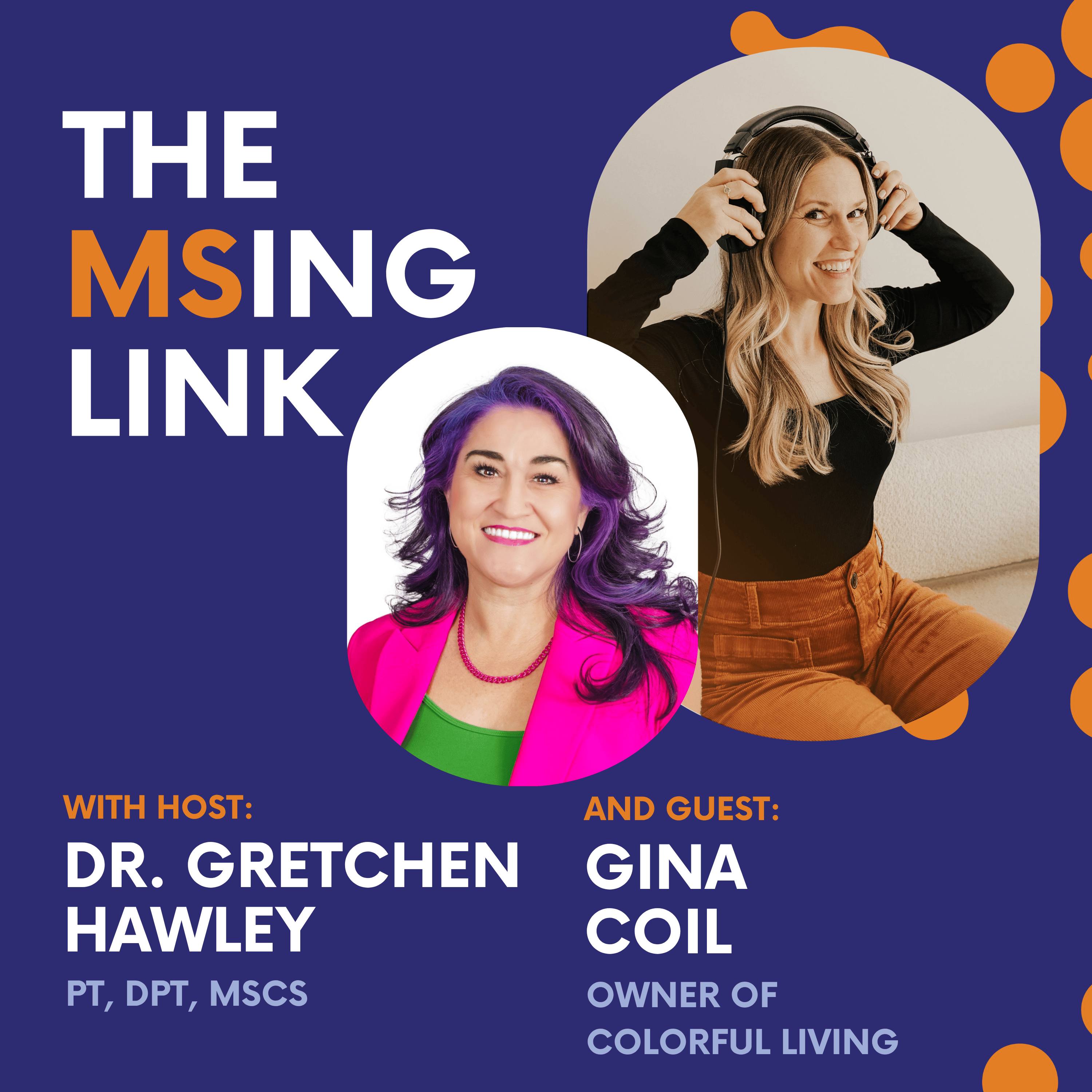
Loading summary
Transcript54 lines
- [00:00]
A
Welcome back. Thank you so much for tuning in today. I am very excited to welcome our guest, Gina Coyle to the podcast. Today, Gina creates something called Neuro Scenes, which are guided audio experiences designed to help your nervous system regulate without the pressure or performance that often comes with traditional meditation. And what I feel makes Gina's work so, so special is that it grew directly from her own lived experience with autoimmune disorders including fibromyalgia and systemic lupus. So she understands what it's like when your nervous system is stuck in fight or flight mode. And she's spent 15 years researching and developing tools that actually work for people specifically living with chronic illness. On today's episode, we talk about why traditional meditation often doesn't work when you're overwhelmed or fatigue or in a symptom flare. And how neuroscenes are different from anything else you've tried. And why nervous system regulation matters so, so much when you're living with Ms. Or any chronic condition.
- [01:21]
B
The big question is, how does with Ms. Actually improve their mobility, strength, energy independence? The list goes on. My name is Dr. Gretchen Holley, physical therapist and multiple sclerosis specialist. Welcome to the Missing Link podcast. Tune in as I share the top strategies and exercises to help you gain control over your life with ms, using research driven insights and and advice from top industry experts. Whether you're newly diagnosed or have had Ms. For over 30 years, whether you have relapsing Ms. Or progressive MS, this podcast is for you. You're sure to feel empowered and inspired after each episode.
- [02:11]
A
Ready?
- [02:11]
B
Let's dive.
- [02:20]
A
Gina, thank you so much for being here with us today.
- [02:22]
C
Thank you for having me. I'm so excited to be here.
- [02:25]
A
Yeah, I'm excited too. I was actually just listening to one of your neuro scenes last night. So to see you and your voice at the same time is a very nice experience versus just listening to you, but it was very calming.
- [02:39]
C
Well, I say I get into that voice when I'm filming, so my voice probably sounds a little different here, but it's. It's. I get into my performance voice, if you will, with the scenes.
- [02:49]
A
Absolutely. And for those who don't know Gina, we'll get into who she is and what we're talking about in a second here. But before we do, is it okay if I ask you a question from my interview Deck?
- [03:00]
C
Absolutely. Awesome.
- [03:03]
A
Okay, your question is, do you like to plan things out in detail or be spontaneous?
- [03:09]
C
I would have to say I am more spontaneous. However, I believe you have to have a plan in Order to keep moving forward in all the aspects of your life. But I do love a let's just jump in the car and drive in a direction and see what we can explore. Or pulling off a random exit saying, oh, that looked cool, let's go explore that. If we don't have time. I've been known to do that.
- [03:39]
A
I love that. Have you ever heard of the company? I actually don't know what the company name is, but there's multiple companies where you can give them your preferences for travel, if you want to go international or stay local, where you live, how far, what your budget is. And they essentially plan a trip for you but don't tell you anything about it. They put all the details in an envelope and they just tell you if it's a flight or rent a car, where to go, at what time and then you open the envelope once you're there and then like the first detail is revealed. Have you heard of this?
- [04:12]
C
I have not, but that basically sounds like an accessible version of what is it the Great Race or what's the race the like. It's like anybody can sign up to do that now with a service like that. It's creative. I love it. I would totally be up for it. Amazing Race. The Amazing Race.
- [04:27]
A
Amazing Race. Yeah. I don't think I'm very spontaneous, but I do think I would do that because someone planned it. Right, right. It's like I didn't have to do it, but someone did. I don't like the type of spontaneity where no one's planned anything that unless I have time, but most of the time that just makes me feel too chaotic. Awesome. Very fun. Well, so let's get into it. So first and foremost, if people don't know who you are, can you just explain who you are and what you do before we get into really talking about your area of expertise?
- [05:00]
C
Perfect. Well, my name is Gina Coyle and I developed a type of central nervous system state changing kind of experience called neuroscenes. And we create audios in my in home studio in Pittsburgh, Pennsylvania. And the we is my son AJ is a music producer and we work together to create the background tracks along with the stories in a way and you kind of star in them yourself. And that's how your brain and body are able to have that beautiful connection where your central nervous system can get into some really deep states of it's parasympathetic response and really getting into a relaxed mode without having to try so hard. So that's what we have created such
- [05:52]
A
a great way to explain it. And I just to share with our audience. So I actually found out about you from several of my Missing link members who heard about you and tried your type of meditation, if you will, and they just absolutely loved it. It was so different from anything else that they've experienced. One of them in particular wears one of the aura rings and shared that while she didn't fall asleep while listening and following along, it tracked it as sleep because she was just so deeply relaxed. And that has never happened to her before. So once I heard this from multiple people, I was like, we gotta have Gina on. This is not the same thing as, you know, if someone thinks of meditation or what they might have done before, this is very different from that. And one thing that I really like is that yours tends to focus a lot on what you just said of nervous system regulation. And I don't know if this is your niche or if you just happen to draw this group of people to you, but for people living with chronic illness, that takes on a whole different meaning. This nervous system regulation. Can you explain why nervous system regulation matters so much when someone is living with any type of ongoing or chronic illness?
- [07:16]
C
So I suffered from my own autoimmune disorders for a lot of years. Fibromyalgia, systemic lupus, Hashimoto's, thyroiditis. I mean, I had a bunch of them lined up. And when I was in active flares, there were days I couldn't make it down the stairs for a few hours in the morning because the joint pain and inflammation was so much. And so my journey has been a compilation of 15 years of research, of things that I have tried. And I know you, everybody refers to this as is it medit? You know, is it meditation? And while I did design it with having a strong background myself in many different styles of meditation, when I went to do meditation, it felt hard and difficult. Now, having the teacher that I did, I realized I knew I had to stick with it because I knew the benefits could be there. When the central nervous system is regulated, you keep hearing a regulated central nervous system. The issue with that is we can read all about it. We can hear all about a regulated central nervous system. But for most of us, especially the community of people that deal with chronic anything, chronic illnesses, diseases, inflammation, all of it, our nervous systems most of the time are walking around in that fight orf flight mode, even. Just think when we have to process the diagnosis. I mean, I don't know about any of your listeners, but I'm sure you Know, because you hear it too. When you hear that you have something that you are going to have for the rest of your life, it's an impact that just changes you. And so most of the time, our nervous system is out of whack before the diagnosis. And then when we get that diagnosis, it just makes it ten times harder because that's how our brain and body is working all the time to scan for that threat. And when we hear, okay, here's something you now have to worry about, then it can very easily knock it off track. So when I developed neuroscenes, I didn't really, I guess, go out of the gate wanting to necessarily focus on the Ms. Community. But it happened that I was featured in an Ms. Event summit, and I was overwhelmed by the response of people that reached out after one of the. At the time I was calling them meditations, and after developing my work over the last year, being blessed to have some from your community. And I would say probably 75% of the students that I got to work with, the listeners that I got to work with, did have Ms. When I started seeing what their results were, what they were feeling, I knew very quickly that this was not meditation, because meditation is something that we have to quiet our minds. We have to really kind. We're told you have to try to. To do something, and it feels like force. What I've developed is a way where you just listen and as a byproduct, your mind and body tend to respond. And so with that oura ring, it has gotten consistent results. Never once has it read so far that it wasn't light sleep or even a few minutes of deep sleep while still being consciously awake.
- [10:52]
A
Yeah, that's insane. I don't have one. I do have an apple watch, but I wasn't wearing it at the time. And I remember wishing that I had and looked at my heart rate before and then after because those results are just crazy. And I think with chronic illnesses and especially multiple sclerosis, inflammation, like internal inflammation in our bodies and brains and spinal cord is very much a part of that disease as well as other diseases. How do you feel that that affects our ability to rest and recover and get to that level of true relaxation versus this still underlying fight or flight mode.
- [11:39]
C
It's known through neuroscience, through what we know about the nervous system, that our bodies go into the deepest states of repair when we are still sleeping at night. Right. And if we can mimic that type of parasympathetic, deeper brainwave state response where the heart and brain have More of a connection where you're not having the variability in the heart rate. Then even a 20 to 30 minute experience that gets you into this type of state is restorative. And that's the difference of it's kind of like allowing your mind to go offline for a little bit so your body can reboot and do what it needs to do. Our bodies are so intelligent and so smart, but a lot of times our analytical mind, that prefrontal cortex is trying to drive the, you know, it's trying to drive every which way and control the vehicle. Right. Where if sometimes we can let that force get out of the way and let the body kind of reset, it really, really knows.
- [12:53]
A
Absolutely. And I do want to get into asking you more about the different techniques that you use and how this is different. But before we get into that, can you explain for someone who is listening that has tried meditation, maybe it did work for them, maybe it didn't. I, I feel like for most of us, I mean, unless you are able to get into a consistent routine, we probably all have similar stories where it was nice, but, you know, it didn't really have that same effect, or at least not lasting effect. So when someone is already overwhelmed or fatigued, why do traditional tools like meditation not always work?
- [13:35]
C
I feel like the brain has so many things that it tries to focus on, think about. When you go to sit down and meditate, you might hear a car drive by the window, your dog starts barking, you're not really feeling comfortable, you get an itch on your knee, like there's a million things that are happening outside of our internal environment. And yet we're asking of ourselves to shut our brain off that scanning just natural human tendency to be aware spatially and, you know, sensory. And when we try to force something, think about it. Anytime I say a lot of times where I feel meditation, the disconnect is when you try to tell your mind to stop or be quiet. It's like trying to tell your heart to stop beating. It really, truly is that almost unnatural of a thing to do. Now, yes. People can get into deep states of meditation with most of the time years of practice, months of practice. So with a neuroscene, the difference is I'm pulling you into an environment where through the storyline, through the tone of my voice, through the music, through the sound effects, it pulls you in. Plus, you're not just listening or seeing yourself do something or imagining a beautiful forest. You're in the forest, you're walking, you hear the birds, you are then Internally, inside the the state experience. And therefore your state shifts and listeners. I think the thing that's so different and that I was honestly surprised of when I as I've been compiling this feedback over the last year, it stays with you for hours, sometimes even days. After a neuroscene. It's not something like you have to do this five days a week and you have to listen for three hours a day. And this is something that people can reach for when they just aren't feeling like themselves and they need a reset. And the beautiful thing about the variety of scenes that there are, they all do different things. So therefore they're going to give you a different experience. And in addition to that, every time you listen, your experience might be completely different because your own internal nervous system is giving it the reboot that it needs at that time. So you might come out of a scene and be energized for the next three or four hours. You might come out of a scene and be relaxed. You might come out of a scene and just feel neutral. There's so many different experiences that people have with this work. I think it's fascinating.
- [16:28]
A
That's really cool that each time can be a different experience. So would you say that this type of neuroscene work would be great for people whose minds do have trouble shutting off, who, like, if you've tried meditation and your nose itches or now your foot itches and you're thinking about your grocery list, is this good for those types? For people who have had those experiences?
- [16:58]
C
Absolutely. And I've had multiple people literally say my brain kept wanting to go. And someone even used the example of grocery list. My brain kept wanting to go to a grocery list, but the scene kept pulling me back in. And a few other people comments have said the thoughts would come up, but eventually they would just quiet on their own. And I think the beauty of something like this is if you have to itch your knee, itch it like there's no way to do this wrong. And you can almost just listen. And it's not something you have to try to do right. Some people get benefits just like listening like they're listening to a story. I wouldn't listen to it while you're driving or anything, but they can get the same benefit even if you're not fully immersed. And then there's also been a group of listeners that say, I have trouble visualizing. And I try to make the experiences extremely descriptive so that you can visualize a little bit easier. But the craziest thing that we found through all of the work in the last few months is that imaginations were coming back online. And even people who had a difficult time seeing it by a month into the work, they were like, oh, my goodness, now I'm seeing this, and then I'm seeing this. And the beauty of it is your imagination will fill in some of the scenery. And that's when I think you really get a deep nervous system response, because your mind and body are responding to an environment that you are creating, signaling to your body that it is safe to relax because you're building it.
- [18:41]
A
It's really great. I love that. I'm very motivated now to do the same one that I did yesterday multiple times over the next several months. And just see what, like, now I just. Now I'm wondering, like, what will I see differently in a month from now versus yesterday? And how will I feel different in a month from now or even today when I do it compared to yesterday?
- [19:03]
C
Did you do Spa of Serenity or did you do the Walk Toward Calm?
- [19:07]
A
I did the Spa of Serenity.
- [19:09]
C
Okay. Yes. That one is so cool. I love it. That's like going to a day spa in your mind.
- [19:16]
A
Yes, that's exactly what it's like. And one thing that. That you just mentioned that I also experienced, which was very nice, was that when. Because I was doing it at a time where my husband was in the other room, the TV was on. So every now and then, I kind of got pulled out of it. Or we just recently got a puppy, and he would bark. But you are right in that, typically for me, when I was doing regular meditation, I always felt like it was my job to, like, okay, stop thinking about those things. Like, actively. Don't do that. Pull yourself back in. But yesterday, when that happened, you're very accurate in saying the story just brings you back. I didn't feel like I had to actively participate in getting myself back involved. It just happened.
- [20:02]
C
Another thing that will help that is listening with earbuds and an eye mask. And we design some of the audio to be spatially kind of psychoacoustics is the word to describe what we do. When I'm trying to put you in the environment, I want you to actually feel so in a walk toward calm. You haven't done that one yet. There's a. I'll say you hear a bird off to your left, and in your left earbud, the bird will come by. In the one that we're building right now, butterflies and dragonflies come around you, and we actually kind of have it going. So there's a slight flutter that sounds like it's circulating your head. So it's really, really incredible what you can do with audio sound effects. Sometimes we end up actually making some of the sound effects on our own. We were up there yesterday. We wanted water swirling and we have access to all these different sound effect libraries. But sometimes you can't find what you want. So we filled the bathtub up three quarters of the way. We have our field recorder microphone and I'm swirling my hand in the bathtub. It didn't work. But we go to that length to accurately get what I hear in my mind. And we have our studio that's right in my home. So it's been quite amazing creating these audio tracks.
- [21:27]
A
It's so cool hearing that behind the scenes because now that you say that even in the spa tour serenity that I was listening to, there were several things like that where I did feel like I was literally there because of a sound that I heard. And I also really loved that you incorporated lots of different types of. I don't. Sensations isn't the right word. But you know, you mentioned like something was hot or cold or it was a sound that we heard or something that we saw. So it did seem to pull on lots of different senses versus just listening to something calming.
- [22:04]
C
Creating the sensory portions of the scenes is an extremely critical part of why it works. So our brains one as we know with neuroscience, imagination, our brain brains don't know the difference of what is actually happening in reality. We experience it as if it's really happening in our minds. And that's exactly. I loved watching your video the other day where you were showing the micro movements are just as effective. There is a neuroscientist. I follow her. I wish I could remember her name. She did a study where she took a group of weight athletes, weight trainer, whatever, and she had them only do their workout in their minds for three weeks. And she measured their muscle mass prior to after. Do you know, there was still slight growth even though they never physically went into the gym. So it's amazing the new pathways that our brains can create even with like you teach with minimal movement. I will even back that up with doing your exercises in your mind in addition to doing your exercises in. In. In real life. I'll eventually I have my list to create almost like mini workouts for your mind. But the sensory portion is extremely deliberate. There's actually taste. In spa of serenity I have you drink a liquid that tastes like cucumber and lime and of salt. So some of my scenes there will be scent as well, which there is in that one sight sense, touch all of it when we can bring it will light up more areas of your brain and make the experience that much more effective. So when we combine that then with generating the feelings of love, calm, gratitude, peace, I mean, let's face it, do you know how hard it is in our day and age to walk around with love, peace and gratitude on our minds 24 7. Like it's a, that's a big ask. So this is what it does though. Maybe we can't experience that on demand, but when we put a scene on we can facilitate those feelings and then what happens is your brain starts to recognize, oh, I know how to feel peaceful and calm. And okay, you know what, I can close my eyes, maybe imagine myself back in that scene for a few minutes and eventually it will connect the experience just like all memory does and help you to produce that feeling on demand easier. And that's what listeners have probably reported the most is they'll wake up the next day and like their racing thoughts aren't there as much or they're not as triggered by their spouse and things like that. So it's amazing when you incorporate this type of work on a regular basis what results you see in your day to day life.
- [25:10]
A
Yeah, I could definitely see that. Even though I've just done the one yesterday, I can immediately on the spot right now picture what it looked like when I was in the spa and choose to feel calm. I can imagine if I was working right now and just responding to an email or something and feeling overwhelmed, I could picture that and choose even for like 30 seconds to just get back into that and then continue on. Which reminds me of a question I wanted to ask. So the one I listened to yesterday was I believe 20 minutes. I want to say how long does it typically take to get into this state that we are hoping to get in from these neuroscenes and therefore how long are these neuroscenes typically?
- [25:55]
C
Okay, so I have a variety of lengths, but through the listener experience and feedback that state can be achieved in under 10 minutes, which is actually pretty crazy. There aren't a ton of state changing audios that can claim this window. It's obviously everybody's experience is going to be different. But the longer audios obviously seem to take people into the state for longer durations. I have audios that range up to 45 minutes, 50 minutes and I kind of worked people up to that. So, so Once the site is expanded, you'll see three different levels of audios. We'll probably have it beginner, intermediate, advanced, and I'll name them probably something different. But it will give you that. If you only have 10 minutes, here's less than 10 minutes. If you only have 20 minutes, I'd say majority of the work that I've created so far is around the 20 to 30 minute range. We have busy lives and. But yet so many people have made the comment. I didn't want to come back. I had one woman reach out last week. She did spoffs or any of the three times in one day. I'm like, wow, okay. It just felt so good. And while that's amazing, I say just listen to your body. Sometimes you. You just, you know, okay, that was enough of a reset. Or yeah, maybe I'll do it again before bed. And I think that's the beauty of having a variety because you're going to be able to identify what scenes are more comfortable for you and what works better for. Everybody's brains are wired differently. So it's unique to see what individual people tend to gravitate to. Someone's favorite scene over here isn't. Is completely different than someone's favorite scene over here.
- [27:46]
A
True. Yeah. I'm excited to try more. So I'm going to ask the question that I'm assuming every listener is wondering right now, which is can they try it? Where can they find an example or sample of what this would feel like?
- [27:59]
C
Yes. So I'm going to give all of your listeners specifically access to two complete scenes. I'm going to give them access to Spa of Serenity because I knew if we talked about that one especially the women listeners are going to want to listen to that.
- [28:12]
A
Lovely.
- [28:13]
C
And then I'm going to give them access to the Pond of Peace, which is a scene that we're just finishing recording today. Today. And my VA should have it up on the site by the time this airs. So they'll be able to go to ginacoyle.com There'll be a button there. You can also just Google Gina Coyle. All of my stuff pops up. And there will be a button in the link on my Instagram profile that will have a separate button that says Dr. Gretchen's people and that's how they can access it.
- [28:44]
A
Very cool. Thank you so much for that. And can you share what your Instagram handle is?
- [28:50]
C
Instagram is just colorful. Living with Gina and. Or just Gina Coyle. It should pop up on there as well.
- [28:57]
A
Awesome. And we'll put all of that down in the show notes as well, so people can easily find you. But that's so exciting. I'm very excited that everyone will get the spotted serenity just because we've been talking about it and I know what that one is like. So the pond one, is that the one that you were trying to get in your bathtub for?
- [29:15]
C
Yes. So we decided to take out the water. It's not in there, but there are some. Some really cool nature sounds. And that one. The music. The music is designed to help you go into the brainwave states as well. And we create all of the music ourselves too. So it's really incredible. We've been doing this kind of work for about the last year. When we take you into the different states of relaxation, we're very aware of where we need the least amount of audio rights, some very smooth, elongated notes, and then where we build it back up. So it really is an experience where I want you to. You kind of go through a door. There's always a door, a gate or something into the world. And then we take you through. There's a. Always a dip in there where you'll be the most relaxed. And then coming back out the other side to kind of bring it all with you as you come back into the daily routine and daily life. I would. That's my biggest intent, was to have something that stayed with you, not that you just listened to it and like, okay, that felt good for five minutes, but now I'm back to crisis mode. So that's really why I designed it like that.
- [30:29]
A
It's so cool hearing everything that goes into it. Because if you don't have an audio background or tech background like you wouldn't have, I don't think people. I don't think I would have assumed that that many components went into each and every neuroscene. So that's really fascinating.
- [30:48]
C
Yes, every single. So I write a script. I typically write the entire script by hand. I don't even use. I go to coffee shops, I'll go to parks. I'm inspired by everything. Right now. I have close to 100 scenes written. I've performed them with an active audience over the last year, but they're not all available yet because the professional recordings of each one of these take a lot longer. We. Our first scene, we put over 50 hours into it, but that was because we had to build our library and kind of start from the beginning now that we have the hang of it. This one came together in four days, which is Great. So we'll be adding them to our library on a much quicker basis. But it's every single part of the script. As I speak it. I adjust the audio to go with the words. So as I'm taking down like yesterday, it was hilarious. I was like, we need that plucky sound out of there. Meanwhile, it was the strings. But I just thought, I make these words up. He's like, okay. I'm like, we need just the piano right there. And then bring in those strings. And then so we build it so intentionally. And my son is incredible at music production, and he has a background in meditation tracks and energy healing work. And so it was just a beautiful combination that just so happened to kind of come together. And that's how it was born.
- [32:18]
A
Wow, that's so special. Well, thank you so much for sharing your expertise with us and your techniques and what all goes into this, because it truly is a very different experience. And I'm so excited that our audience and our listeners get to try it again. We'll put the website as well as your Instagram and everywhere else that you exist in the show notes. So if you guys are interested in trying it, just click there and you'll find everything. But thank you so much, Gina. This has been so eye opening and such a fun conversation.
- [32:51]
C
Thank you so much for having me. I think if I tell anybody anything, you just have to experience it. There's really no way to describe it. And I think that's another part of, we can read all the things that we're supposed to do. We can study, we can listen to all the videos, we can take all the courses, but at the end of the day, it's our body and brain that needs to experience the change before it can kind of become a normal default mode network in our brains. So I really wanted to develop a way that you get to experience what it's like having a regulated nervous system without having to work so hard. And then hopefully this creates a window that's easier for people to open into practicing nervous system regulation. And then it becomes their default kind of way of moving around, which is so different than moving around in fight or flight mode all the time. I lived it for 42 years, 44 years even. I would say it wasn't until the last few years that I really got to feel what a regulated nervous system felt like. And it makes every area of your life easier. That's the only way to describe it. Yeah, every area.
- [34:19]
A
Well, and especially considering lots of conditions, including ms, when you have a dysregulated nervous system or you're in fight or flight or stressed, it can make your symptoms worse. And being able to have a resource like this to quickly, especially once you've done a few and you can just imagine yourself back to where you were in that scene, having that resource or tool to quickly calm your nervous system could also quickly reduce that symptom because typically, once your stress levels lower or that inflammation lowers, that symptom will also go away. So this goes so much beyond just listening to something and feeling calm and relaxed. Like it actually can make a big difference in our lives, especially if you have a chronic illness.
- [35:13]
C
Huge. Huge. We could probably, you and I discuss the science behind it for like a whole nother hour. Just trust that there is so much science and research behind this. And if you think about it, when you do have a symptom, what are you doing? You're usually focusing on it, right? And you're thinking about, oh, my goodness, okay, is this going to get worse? Is this right? Your mind starts to kind of run away with itself. And this is just a way to turn that chatter and noise off for a little bit to experience what it feels like to not have that motor running in the background so often. And so I'm hoping that people, through doing this work, over time, they'll start to understand that they have more control than they think they do in controlling the responses that we kind of just generate whenever stuff is coming at us or whenever we're experiencing something. So hopefully this will be a way to make all of that just easier. And I want to add one more thing for the male population watching this, because it's not like they're excited to go to Spa of Serenity right now. I will say that I do have scripts and I will be creating more masculine versions of neuro scenes. And I feel very well versed in that, having grown up with five brothers and having three sons. So I do believe they will be just as effective. But one thing, if I could say, even in those, you are always going to find color in all of my stuff. So you will. The rocks in Pond of Peace have. Are colorful. Under the trees are color there. You will always have that because color is just one more way for your brain to be engaged. So it's intentional, but those are coming to you. For all of the male listeners, that
- [37:12]
A
is great to know. And they'll be able to find those on the website as well.
- [37:16]
C
Yes, all of it will end up. We're building. I'm calling it the Vibrant Vault. So they'll all be in there.
- [37:22]
A
I love that. Awesome. Well thank you so much. This has been so great.
- [37:26]
C
Thank you again for having me. Dr. Gretchen. I'm so passionate about helping the Ms. Community. I love what you do and yeah, I hope the listeners get a chance to try Neurosine.
- [37:42]
A
Thank you for listening to today's show.
- [37:44]
B
I am so grateful to have you as a listener. If you'd like extra resources such as a video of one of my seated exercise classes, my favorite core exercises, and the opportunity to ask me your questions, head to missinglink.com insider. That link will be shared in the show notes along with links to my social media handles. If you loved this episode and thank a friend or family member within that would benefit from listening, please go ahead and text or email this podcast to them right now. Sharing this podcast will help me educate and empower as many Ms. Warriors as possible. Thanks again for joining and be sure to tune in next week for another episode of the Missing Link podcast.