Loading summary
Transcript75 lines
- [00:00]
A
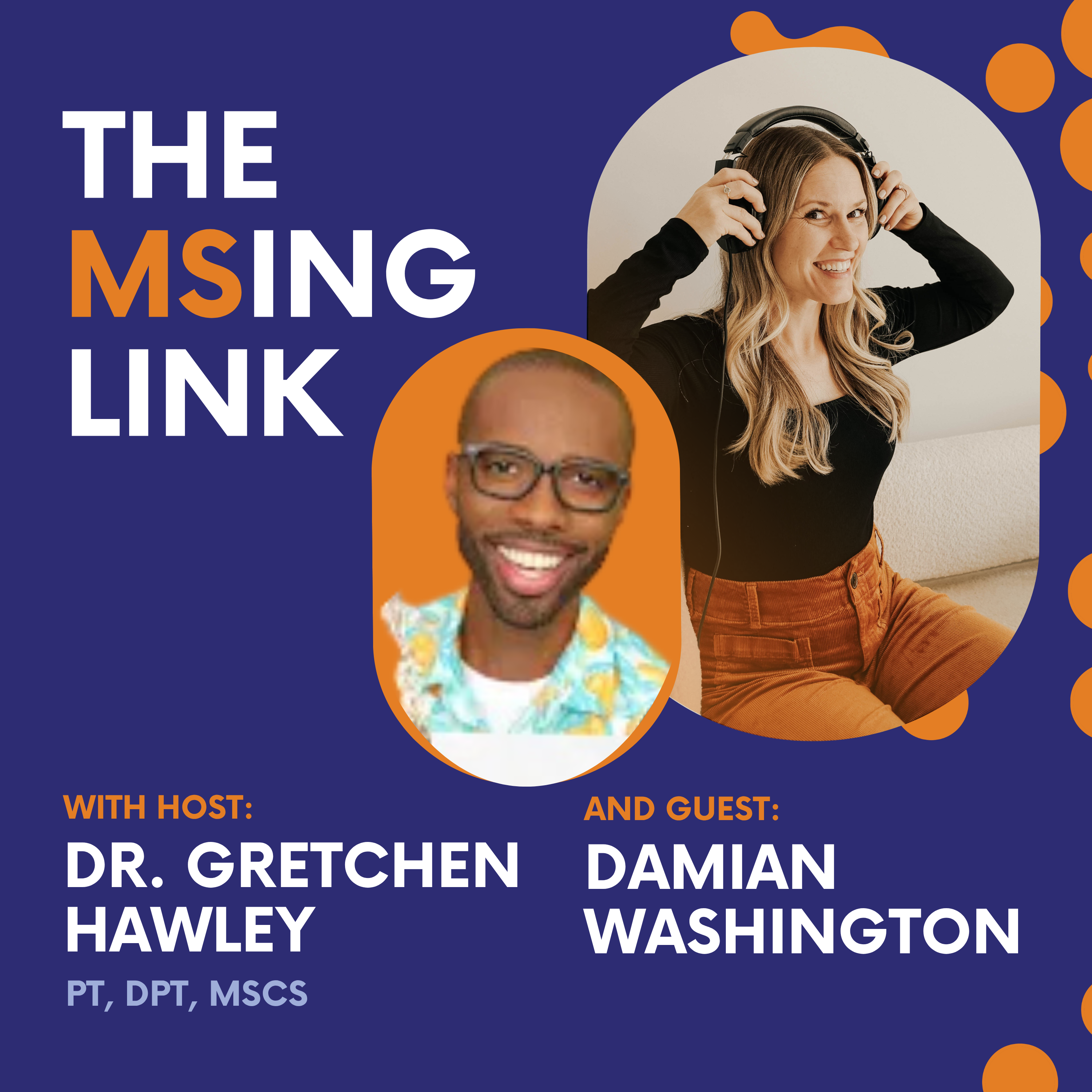
I recently had the opportunity to talk with Damian Washington and this conversation that we had blew any expectations that I had out of the water. If you have multiple sclerosis and you have ever felt discouraged or hopeless or defeated when working towards your goals, this is a must listen and I would actually encourage you to take out a piece of paper and pen so that you can take notes. Damian is one of the most consistent people that I know and he shares with us his strategies, his tools and his hacks for being empowered and motivated and consistent with staying on track towards reaching your goals. And your goals can be anything from staying on track with an exercise routine in hopes that you can improve your mobility, or maybe it's just staying hydrated or eating healthy or or getting into a better sleep routine. Regardless of your goals, you will leave this conversation feeling excited and eager to get back on track. Damian is an Ms. Warrior himself and in this chat we jump into so many different topics including things like the power of repetition, accountability, affirmations, self help, goal setting and so much more. And while he is an expert at these things currently, we also jump into how he got to that point and what he would have told himself had he he'd just been starting on this journey today. So go ahead and take a listen.
- [01:27]
B
Before we jump into today's episode, I want to quickly tell you about something that I am super excited about. If you have Ms. And you feel like you're doing all the right things but you're still not seeing the progress that you hoped for in your daily life, you are definitely not alone. And that is exactly why I created Ms. Summer Camp. It's a five day live experience happening July 27th through 31st where I'll be teaching live every day, answering questions every day and helping you better understand your walking balance, strength, fatigue and movement so you can stop guessing and feel more confident moving forward. And if you're thinking it's summer, it's hot. I already struggle with fatigue and heat intolerance. The the last thing that I want is another exercise program. I completely understand. That's actually one of the reasons that summer camp is designed to be primarily educational. The goal isn't to give you more to do, it's to help you get clearer on what matters most for your body, your symptoms and your goals. If you've ever wished you could ask me your questions and get my thoughts on your specific situation and learn alongside other people with ms, I'd love to have you join us. You can learn more and save your spot using the link in the description. I hope to see you inside. And actually, before we keep going, I want to tell you something I'm super excited about. And then it would go into if you have Ms. And feel like you're doing all the right things. Okay, now let's dive back in. And before you go, one quick reminder that registration for Ms. Summer Camp is officially open. If you're tired of piecing together advice, trying random exercises, and wondering if you're focusing on the right things, Emma Summer Camp was created for you. For five days, I'll be teaching live, answering questions and helping you better understand your walking, balance, strength, fatigue and movement so you can leave with more clarity, confidence and direction. It's the first time I've ever offered this level of live teaching, so support and access all in one place. And I'm so excited to spend the week with you. You can learn more, see everything I have planned for camp, and save your spot using the link in the description. I'd love to see you there.
- [04:10]
A
The big question is, how does someone with Ms. Actually improve their mobility, strength, energy independence? The list goes on. My name is Dr. Gretchen Holley, physical therapist and multiple sclerosis specialist. Welcome to the Missing Link podcast. Tune in as I share the top strategies and exercises to help you gain control over your life with ms, using research driven insights and advice from top industry experts. Whether you're newly diagnosed or have had Ms. For over 30 years, whether you have relapsing Ms. Or progressive MS, this podcast is for you. You're sure to feel empowered and inspired after each episode. Ready? Let's dive in.
- [05:09]
C
The repetition, it's because this, that's what you do. And you do the motion and you're like, okay, first you're kind of crappy at it and then you kind of get good at it. And if you get good at it, me, a person like me starts to look for things that he's not good at. So I'm doing. I love my qigong routine and it keeps me like here, but like this new jam. I got this new jam spinning because I can't do on a lot of it very well. But I really want to try, not even try. In the repetitions I get better. And it's not a steady incline by any means, but overall there's improvement. And that's what I'm saying. It's baked into me. I know that no matter how crappy I am at this, eventually I will be less crappy. And then eventually I might even be good at it. So that sort of mentality and knowledge of self and belief in self through trash is what's necessary to blossom.
- [06:19]
A
How do you. Because I agree wholeheartedly with everything you just said and that repetition in so many ways is what can help everyone reach goals. But so many people get lost when it becomes hard or when they don't see improvement. So how do you find that you let that motivate you and not get you down and keep pushing until you do reach that goal?
- [06:46]
C
You know what it is, Gretchen? I have failed so many times in so many ways. Ask my wife. But no, really, I'm just accustomed to.
- [06:58]
A
To.
- [06:58]
C
Of all the fantastically awesome things folk see me do. There is an entire planet of things that did not happen, of effort that was well spent, but did not materialize into the thing that I wanted, you know? So I think knowing that and trusting that you will have infant an infinitesimal amount of failures to accompany your successes and your triumphs. And you do this well, and I'm good at this. And the amount of the success and stuff, it's smaller just because that's how things go. But it's present. It's not that it's not there.
- [07:53]
A
Yeah. And I think that that's really important, too. For some reason, what you just said reminded me of my college graduation. What are they called? The people who speak at graduations?
- [08:04]
C
The commencement speakers? Yeah.
- [08:06]
A
Yes, the one that. At my college one, she. Her whole theme was the concept of failing forward, and her goal for us was to keep failing. And she said, you know, as you fail, that obviously that doesn't mean that you didn't succeed. You just try a different way, and then hopefully you fail at that as well. So you try a different way and you fail at that. And she said your failures change, and they also become this thing where it's maybe smaller failures, it's not as big, or maybe it is bigger because you're at a different level. But the whole point was you should be failing. If you're not failing, then you're not working towards the goal, whatever it might be.
- [08:49]
C
If you aren't failing, you aren't trying hard enough, honestly.
- [08:52]
A
Yet so many people get stopped at that point when they don't see, when they do fail, that's okay, you know, Guess I got to try something else.
- [09:04]
C
Yeah, no, it's. It's just not. That's not how things work, friend. Yeah, that's it. The failure. The not. It's not even failure. It's not accomplishing what you thought you had set out to get. And you don't get. You didn't get it, right? That's part of it, man. You're not going to catch the dragon every time you're chasing it. Hopefully you don't. But that's a bad metaphor to build. Nevermind. But that, that's. And, And I forget the original point too.
- [09:36]
A
Shoot. One thing that I'm curious about is what is. What's your thoughts on. On affirmations? Or maybe they're not even affirmations, but just things that you repeat to yourself daily.
- [09:51]
C
You mean right here? You mean like, oh, I have a. Like, that's what I'm saying. I'm a repetition guy. So I have, you know, sonnets, I have monologues burnt into my head. And because of that, I've taken that and applied it to other things, like affirmations. And then the thing, positive things, mindsets or views that I want to begin to stretch toward. I do that all day, every day. And like, I'm not, I don't have a system for it, but I call it chewing. It's like, let me give my brain something to chew on. And I'm just chew. I'm just learning how to get my brain around this thing and, you know, remembering certain parts and, you know, forgetting the other parts and putting in the wrong word in that part, whatever. Eventually I have this thing that I can sit here and be like, you know, God and me is my answer right now. Like, like that period. And it changes how you move through the world. So yeah, I'm big on affirmations because it's tied to repetition. I adore repetition.
- [11:06]
A
Repetition makes life easier. Like, and I don't know why, but I was recently reminded about just like setting your clothes out for the next day, the night before. Like when you go to bed. That way you don't have to think about it in the morning. Having similar things for dinner each week. One of my former co workers used to have the same thing for dinner every Monday. Like, Mondays were always the same, Tuesdays were always the same. And it's like when you do that, not that I'm great at it, but when you do that and when you have repetition, you don't have to waste enough space in your brain with decision making because it's repeated, you already know what it is. And then you can use that space for other things.
- [11:48]
C
Wear batteries. If you don't have to use that juice to think about, you know, what am I going to wear? What am I going to eat? You're like, bro, it's Tuesday, we having Tacos, baby, period. Then that energy is freed up to do other things. For sure. For sure. That. That's part of it. That's. I think that's. That's what makes us the humans. Like, the animals have their cycle of cycles of, like, you know, they hide the food or they take care of the baby or like, whatever. We're the only things walking around where we can be like, I want to learn how to speak French and then do that, no matter how hard it is or how long it takes you or, like, whatever. And it's all things macro and micro. It doesn't have to be as large as, you know, taking a new language, but it can be like, I'm going to drink that large carafe of water today. I'm going to drink two of those large carafes of water today. That's it.
- [12:53]
A
Yeah, yeah. It's so crazy. And I find that it's this. The things that are unseen are harder typically to stay repetitive with. Because, like, for me, I mean, water is a. I'm the worst at drinking water. I do. Look, I've had all of it. It's down to here. That's huge for me. But so. But you can see it, like, you can see how much water you've had because it lessens. Whereas if you're someone who's working more on just not being as so negative or telling yourself positive things that you like about yourself or feeling a certain way, those are often harder things to stay repetitive with because it's not seen.
- [13:42]
C
It's not seen. And not only is it not easy, you don't think to do it when you need to do it because it's not your instinct or you don't. It's not feel, it's not what you do when you feel this trigger, that's the thing. And you have to. I don't know, the Paul. It's Paul Abdul is. She's like two steps forward, I take two stairs back. Like, you just have to know that whenever you're going forward, it's in the song, bro. You want to go back sometimes. Don't be mad. She is like, I take two steps forward and I'm sad to go back. Like, that is not the song. So just know that that's part of it. And once you do that, like, enough times, like, I'm sitting here, like, preaching, like, oh, it's okay. It's like, no, I've done it. I've just. I've just done it enough times and it'll be years, years to Just be like, well, this doesn't feel good in this way. This feels kind of. But I know that what I want is on the other side of this feeling. I know what I want is through this. So I will trust that and I'll believe that. I know that I'm not going to pass on from this experience by feeling these things. So let's go through it. Let's keep going. Let's keep going.
- [15:06]
A
So if you were to put yourself back in time at a point where you weren't as successful with repetition and with affirmations or these positive things that you feed your mind and soul and energy and physical body with. So back in the day, how did you build up to this point that you're at now? And what would you tell that person from all those years ago when they were just starting out?
- [15:38]
C
I'm having a moment because, like I say, this has been my life. Like this. I. There's at some point when I was a child, like, 12, 13, like, I saw, like, no, I think it was why I was not doing well in a subject. And I failed the city test at first by, like, two points. Like, I barely failed it. And my mom was like, here's the book. Like, not even like, the super here, try to, you know, let's try to help you, kid. It was like, here's the problems. Figure it out. You ain't doing nothing this entire summer. You will figure out that book. You will pass that test. And I had carried around that region's books everywhere. We, like, went on vacation. And, like, no, I was not going on vacation. My mom was out, like, doing stuff. I was in the room being like, okay, so x squared plus 3y. You know what I'm saying? Like, some. Of course that wasn't fun. That wasn't, you know, easy or whatever. However, experiences like that really bake in have worked to bake into me. Just keep going, do it again, do it again, do it again. And I eventually passed, barely. So I barely failed. And then I barely passed. And so, like, you can say that that was a lot of energy for, like, 10 points, but the passing was the only thing that was important to me.
- [17:29]
A
So how important do you think? And again, you had mentioned this was when you were a kid, like, 11, 12.
- [17:36]
C
That's what I'm saying.
- [17:37]
A
So that might be different compared to someone who is maybe 45 years old right now starting a journey. However, how important do you feel including other people in your visions or your goals is? Do you think that's because you were a kid and you had that support from your mom, or do you think even at, you know, 45, 50, if you're someone who's starting this journey now, is including other people also helpful?
- [18:11]
C
Including other people. How? How?
- [18:12]
A
So whether it's telling someone what your work, what your goal is, what you're working towards,
- [18:20]
C
that's a double edged sword in a lot of ways. Because if you tell somebody something and then you do it, man, you look like the man and it feels good. But if you tell somebody something and then you don't do doesn't feel good and you don't look like the man. So this all boils down back to, to do it, just do it. Like that's what I'm saying. Like, regardless of what it feels like, like you're still here feeling these things. So that means that you can keep going. I think that what another thing that helps separate me from. Separate me, it's part of my grit is that like, I don't care what's in front of me. I know where I'm going.
- [19:18]
A
That is, I think, the goal for everyone, right?
- [19:23]
C
And it's hard. It is hard. It is not fun. Again. That's why I've made a wife joke before. Like Angela has seen me over the years. We've been together 20 years and she'll. So she knows how I'm built and she knows like how I execute. I think it's not fun. A lot of the times it is not fun and that it's like, what is it? The, the what? I don't, I don't know what it is. Like a turtle. Like, the turtle only sheds its shell because it's uncomfortable in the shell. You know what I mean? Like, what are the, the, the caterpillar only breaks out of the cocoon because the caterpillar doesn't know anything. It doesn't know it's a butterfly. It just knows that it's getting this, this. There's warmth and this comfort. And then it's like, you know what? This is the most uncomfortable thing ever. God, I got to do something else and something else or the next thing that's through this discomfort. Oh, look at that. I changed my life. How about that? You know what I'm saying? It's really. That's a long convoluted way to saying, yeah, get friend. Be as friendly as you can be with discomfort, my friend. And it's the only way you will grow.
- [20:44]
A
So what would you say? What would your tips be? Or not even tips. But what do you do when you are having a few hours or a day or a week or a month where you're just not your best self for whatever reason. Maybe it's Ms. Related, maybe it's what's happening in the world. Whatever it is, what do you do during that time? Does it make you put things on the back burner or do you just keep going?
- [21:12]
C
This is, this is where we introduce my friend Grace. Grace is wonderful because Grace will have you be like, oh, okay, no, you can keep going. It's cool. Grace can have you. Like, I'm done. Like yesterday I was. There's a lot going on. And it was, I don't know, it was like nine. It was not even nine o'. Clock. It was like 8:30. And my wife is, you know, with the dog and, you know, we're all watching the game and like, they're chilling out, but I'm at my computer working, working. And then it's just like, no. At one point I was just like, nope. And went down and laid on the floor and cuddled with my dog on my wife and then fell asleep at 8:45. But, you know, I say that to be like, as quick as I am to get on the. Oh, you got to do it. Oh, you got to be the thing. Oh, you got to do the thing. Try again, try again. I am just as quick to be like, nope, not today or not right now. Then that is something, Grace. That's it. Just learning how to push yourself, but also learning how to give yourself grace and be like, no, this ain't the time for that. I'm going to sit here and lay down with my wife and watch the rest of the basketball game.
- [22:38]
A
Do you have any. And I'm asking this personally as well as for anyone else who's watching this, but do you have any resources that help children? You get into this mindset and strategies, whether it's books, podcasts, music, or just meditation and listening to your inner self,
- [23:00]
C
the meditation sort of kind of grew. I. I have a minor in Eastern Asian religions from Middlebury College. So I've written a lot of papers and read a lot of books about the Buddha. That's where that comes from. Oh, my man, I lost my train of thought. Ask your question again, please.
- [23:18]
A
If you had any resources that helped you get to where you are, man, this is.
- [23:24]
C
I'm going to pause on this one because I'm not sure specifically, I think what the resource that kind of, like, my gut is, is whatever makes you feel good. And like, for me, that's like repetition so like, I listen to things ad nauseam. Like if I'm like, oh, I like that sermon that that reverend did, oh, I want to know about this book. So I'm going to get the book on tape instead of me reading the book and trying to fall asleep and all stuff. Not trying to fall asleep, actually fall asleep. Anyway, whatever your gut feels that might be good maybe because, you know, everybody's different and I'm a repetition nerd, you know, so people just might not be built that way. So that doesn't speak to them in that way. I know if you just sit down, close your eyes, sit there about 10 minutes, ask yourself what I need to do, you'll get an answer. Whether or not you do what the answer tells you to do, that's on you. But we all know if we ask and that sounds some weird metaphysical, like, what? What are you talking? But like, it's true and it's been my experience, so that's what I would tell someone else.
- [24:51]
A
Yeah, I wholeheartedly agree with that. I got into personal development or self help, self help books, whatever you want to call it, a couple of years ago. Before then I was like, I don't need that. Who does that? Like, I was totally against it. Who needs to help myself? My sister. Yeah, my sister gifted me a book once and I was like, oh, I actually feel good reading this. I like this book. It makes me feel a certain way. And that's when I realized that even when it comes to just specifically personal development books, I mean there's a whole bunch of different categories, but just even books, there's so many different topics. And that book that I loved, I like felt it in my heart. And I gave it to one of my friends, like, you have to read this. And she read it and she was like, it was okay. And I was like, this blew my mind. Like, but it changed my life. And then that's when I realized she wasn't. Not that I was like struggling with this specific thing, but what I cared about, why I read that book. She wasn't struggling with it. She didn't really care about that topic. But she then gave me one another time. And she was like, this is going to change your life. And I, again, I was like, sure, it's good. Yeah. So there's so many different. I think what you said, like, it's different for everyone. Like for you it's repetition. For other people it might be repetition, but for other people, maybe it's not, you know, maybe it is something else. So I think that's important that if you try something, you don't like it or it doesn't help you stay consistent, it doesn't help push you forward. Just try something else. Because there's so many different things out there.
- [26:34]
C
People usually do nothing after they quote, unquote, fail. They don't try something else. And if they do try something else and also don't do well at that, then they're not going to really try something else. You know what I'm saying? Like, people don't like to not do well often. And I do well often. I don't do well much more often.
- [27:06]
A
Yeah.
- [27:06]
C
And getting intimate with that and learning that and like knowing that and trusting that, it's like there's, there's some trust in there too. You know, I, I, we vibe like I feel you trust yourself. I feel you have your corners where you're like trying to grow up and that's growth and that's fine. But overall you're like, I'm questioning all it.
- [27:29]
A
I know.
- [27:30]
C
I trust myself.
- [27:31]
A
I try. I can do it.
- [27:31]
C
I can do the thing like I trust myself that even if I don't get my result, it just means I didn't get my result right now. I just didn't get it right now. And that stops a lot of folk. Because it's not fun to not get your result over and over, over again. It can start to play on other parts of your mind. But if you keep in mind that do it again, again, again, again. There's, there's nothing in the again. There's no judgment. There's no whatever the heck else your mind can come up with. Just again, again, again.
- [28:16]
A
I just recently. This is somewhat of a separate topic that brings it in. I just recently watched a TV show that I thought was so funny, it just, I literally laughed out loud during every single episode. And I was doing some research on it, like, where did this come from? And I think Jason Sudeikis is the actor who's in it. And he also wrote it. It was his idea. And I just recently learned that it just launched, I think in 2020, maybe it was even 2021. And he's been giving this idea to different companies and different people to help produce it since like 2012. And he just never gave up on it. And everyone kept saying, no, it's not going to make it. No, it's not good. And just kept doing it over and over and over again, believing that this is a good story and this is something that people would want to watch. And now it's like everyone's loving it.
- [29:09]
C
Oh my God, I love it. I love it. Oh yeah, totally. I was eating my lunch for eight years straight because people said it was trash. Do you know how many days eight years is? But he kept. You keep showing up. You keep showing up because again, just not now.
- [29:35]
A
So my last question for you, just because I feel like we could talk for hours and hours and hours. What is your mindset on short term goals versus long term goals and do you just have goals in general and you work towards those or what is your mindset on that?
- [29:55]
C
It's a great combo. Sometimes short term goals help you for long term goals. But if like it's like with the water, man, if I can drink two crafts of water today, man, I done did something. I'm going to bed tonight like a accomplished man. So it's like a micro stuff slash, like the big stuff, like I'm getting my accountant my taxes today, period. You know, like, so the things that it's all large and small and I would say the smaller you make your goals at first, again, like I'm a beast. So I'm accustomed to these things because I've done it so long. That's why I'm saying you want to have things continue to feel good. So yeah, you can set your long term goal, but let's just focus on the short term goal because the more you achieve those, say you like achieve 10 short term goals, short term goals, that's going to feel good. You're going to be like, oh yeah, no, I trust myself more. I believe in myself differently. So the more you get the wins under your belt, the more you can sustain times when you are not winning. So short term goals are not only just as important as long term goals, they are more important in the fact that they help you get accustomed to the feeling of having something in your head and then having it materialized. Like have it something outside of you. Have it something that you can, you know, click on your phone and see it doesn't live in here anymore. It, the notion that I need to drink two crafts of water a day doesn't live in here anymore because I've done it for 73 days in a row. And even if I didn't do it in a row, like, oh, I didn't do it today or yesterday or like I've been doing it today and tomorrow and then the next day. And that's what helps you be consistent. Just starting to know, savor the flavor of accomplishment, then you want to do it again.
- [32:15]
A
And that makes sense too, because then you want to do it again because it feels so good. But also your brain, you've already done it. Your brain sees that as proof that you can do it again, whether it's the same thing or a different goal. You now have that proof. Like, hey, I did this. I can do that if it's the next step.
- [32:35]
C
That's what I'm saying. And that's why, as much as you're like, I want to, not. Not with weight loss, but, like, I want to build it, not stop that too. I want to be more, exercise more.
- [32:51]
A
Yeah.
- [32:51]
C
And I'm gonna exercise all year. It's like, yo, bro, there's seven days in a week. Can we just make sure we exercise three days this week? Fam, I know you want the seven, but in looking for the seven, can we make sure we don't do two? That's another thing. Like, people set their goals so far out that through the static or the resistance or the distortion that it is taking to get to the goal. Then they give up completely and don't even do anything. And so it's like, yo, fam, we gonna get to seven days, dog. Give me two days, man. Give me two days back to back. And give me two days back to back six times. Because you are going to do two days back to back three times. You're going to do three, you know, days, a group of days back to back. Only a few times. Say you set a goal for. I'm doing 10 days of three. I guarantee you the majority of people are barely going to get to five and then be done. So it's like, no, just do it again. Try again. Try to get your five again.
- [34:05]
A
Yep. One thing, and I can't remember where I either heard this or read it, but I think it's a perfect example of everything that you're saying and what you are also living in an authentic way with. But it was the fact that, like, we set these goals, whether they're short term or long term, whatever, but we set these goals. And what I had heard was, most of the time, our goals don't come true because we are not. Because. But if you don't actually, deep down believe that you are the type of person that can achieve that. And I, at the time, one of my goals was silly goal, but not to press this news button. Like, I go through phases where I just press snooze a million times. Yeah. So. So my goal was that. And so I was reading this or listening to it, and I was like, huh? Do I actually think, Do I believe that I'm a morning person? And my answer immediately was no. I can't tell you how many times I've told other people that I'm not a morning person. I don't like waking up in the mornings. And I've even said before, and I remember saying when I was younger that if there was the best feeling in the world would probably be sleeping if we could feel that, but we can't because we're asleep. So I've repeated these things to myself year after year after year. And so when I heard that in this, I think it was in an audiobook, I was like, that's true. At least for this specific goal. One reason why I might not have reached it yet is because deep down I don't think I'm a morning person. Boom. And I think that goes along with what you're saying because for any of your goals, you have that confidence. You are the person that can reach that goal. And so I think that it's important to include that belief in yourself along with your goals versus me just aimlessly saying, I'm going to wake up and not press news at all.
- [35:58]
C
There's an idea of being in touch with yourself. And an ideal might be something that you like, but it might not be resonant with who you are. Like, you say you're not a morning person, so you go hit. You go for all these things and you're going to hit the snooze and like, whatever, whatever. But if you shift and be like, all right, well, I know, me personally, like, you know, I always sort of, you know, went to. Fell asleep and then sort of woke up at, you know, whenever, anytime after seven. But now I like, I like getting up early and it was. And that's early. And it was hard at first, but again, like, once you sort of get it going, you're like, that's not so bad. And then not so bad trans transforms into that's okay. And, you know, so on and so forth until it's like, okay, this is what it is. Like, my body just wakes up 5am no, no alarm necessary. And like, I'm happy to do it. So there's, there's that element of. There's a lot of murky water out there. It has a lot of murky water garbage feelings. And they're all yours. Whoever's listening, they're yours. But just because they're your murky garbage feelings does not mean just because it's real doesn't mean it's true, it's real because it's in your head. But it is not an absolute truth. Like gravity is a truth, you know, and people conflate the two all day, every day. And what's real is often not true. And what is true is that you can do anything that you set your mind to.
- [37:42]
A
Mic drop we out.
- [37:47]
C
No stress. YouTube.com NostressMS DamianWashington.com Holler at your boy.
- [37:54]
A
I mean, all of these things that we're just talking about, just these conversation topics are so, so important because I think that a lot of people working towards goals again, whether it's relationships, exercise, waking up in the morning, whatever it is, we start to put in the physical work. But that mindset and mental work isn't in that repetitive. The repetition often isn't congruent with the physical work. And I think that it requires both, not just the physical work, but it's easier to do the physical work. So a lot of people do that.
- [38:29]
C
It's all mental. And the more you learn to just stay on the treadmill, bro, and if you fall off, that's cool. Respect and peace and joy and love, get back on and keep going. And whatever your mind is like, oh, man, I wanted to stay on here longer. Oh, man, I'm supposed to be on here already in a couple days, get on the treadmill and run there. We get lost in the sauce that that is our lives. That is the hamster running on the wheel of our brain. But just because it's real don't make it true. And you want to embody a new truth. The truth ain't here yet, but you want it to be here so you can make it me here. And just whenever you're like, eh, maybe just be like, eh a couple times. So you know what that is and you know what that impulse is and you know what that feels like. And the next time you're like, eh, just be like, hey, I'm going to make another choice. I've already given in to the a couple times already. So I'm going to do the thing right now. And you do that a few times, you're gonna get accustomed to how you do things. A lot of times people see other people and they're like, I want that. And then they do what they think would take to do that. It's like, nah, fam, we dealing with you. So let me just find where the wall you at. Great. That's your wall. So your wall is doing this three times in a row. It doesn't matter if You. If you break the. It's like Seinfeld. Seinfeld used to say he signed when Seinfeld was coming up in the game. He said his goal was to write jokes every day. No matter what. No matter what. It doesn't matter if they were funny. It doesn't matter if. Whatever. Just write and then put a mark on a calendar, like a line. And his goal was to not break the line. That's it. So if your goal is the water thing or the exercise thing or like, whatever the thing is, be mindful of taking this, the teensiest step. The teensiest step and just doing that. And then once you do the teensiest step a bajillion times, you're going to want that step to be a little larger. And do you want you to do that a bajillion times, so on and so forth. And when it's so teensy, you can find the grace. When you don't do it kind of so teensy. And you do that a couple times and you're like, okay, no, it's cool. I've given. Here comes the grace. I'm going to do the teensy thing right now.
- [41:29]
A
Yeah. And I think adding on to that too, is that a lot of people, when they do a teens, teensy thing towards their goal, they feel like it's so small, it's not. It's insignificant. And so I think, again, adding in that the positive self talk afterwards, like, instead of feeling like, okay, I did it, but whatever, it's not. Not going to get me to my goal that was so small, I should have done more. Instead rephrasing it and being proud of what you did and accepting like, hey, I just did this, and then I'll do that again tomorrow. I think you're more likely to stay consistent.
- [42:04]
C
Yeah, exactly. No, that's not your job, fam. Your job is to get on the treadmill. That's it. Your job is to not break the line. So you're in all the things. It's like, yeah. And that comes with the consistency. You start to see the chatter and then you're like, huh? Then you start to think about that, and then that's where the growth is. And the chatter will change and will diminish or other chatter will come up. Trust me, believe me, the chatter don't ever go away. And you just sort of get in touch with how your body feels when it's doing something that you kind of don't really want to do, but you know that you should be dying. You get. You get Accustomed to that feeling. So you can either choose to just exit stage right or be like, no, this is this feeling. I'm going to do the thing I want to do. Let me, Let me get on the treadmill. God, just get on. Just get on. And you're on. You're like, oh, you know, you know what? I'm glad I got on this thing like two minutes later. You know, the, the. The resistance period. Like the. You don't have to really do that. It does not last very long. It doesn't. Especially if you just go like, nope. And do the thing. But the. It's not a long period of time because once, once it has already and gotten you to not do the thing, it's gone. It disappears. So just know that. Yeah, no, this is probably. This probably means that I'm doing the right thing because I'm feeling the resistance. And in a lot of ways, that old self is fighting for its life, man. It doesn't want to die, but it lives in your head. And you try to get some new habits. Oh, no, no, no, no, no. You don't need to do that. Don't even worry about that. And is going to start speaking louder and all that stuff. But it's like, no, bro, you want death row, homie. As I don't know when you. When you're going to not be here no more, but I've already sentenced you. So whether or not you keep coming back, that does not matter. I know you. This will all be over eventually. And then something new is going to pop up. Trust me.
- [44:30]
A
Yeah. And I think for anyone watching or listening, if this is your first time hearing this type of conversation, listen to this again and again. Because I remember the first time that people talked to me about things like this. I was like, yeah, right. I don't understand. I don't get it. Like, no, this is true. You know, this is the truth. Even though it wasn't. And now I'm able to see that. But at first, at least for me, I just. I didn't understand. It was a totally new concept from what I grew up with. And so if you're watching or listening to this and you're thinking, like, what is he talking about? He's just positive and optimistic. I don't understand. Or those tips don't make sense to me. Listen again, listen again, you know, several times until it starts. Until you have that at least one aha moment.
- [45:21]
C
That's that resistance. Yeah, it sounds different. It comes in all shapes and sizes. It. That's what it Is. And sometimes it can be, oh, there's a story. I might bungle this story because I've only heard it a few times, but a guy and the devil are like somehow just with each other. Just. He's the guy is there with the devil. And the devil sort of has like this marketplace of like various things the guy could use to take back into the, you know, to the upper worlds to help prevent something in his life. Like, to prevent someone else from doing something, prevent something else from happening in his. In his world. He just, he just needed this thing to happen. So guys, guys with the guy, the big guy, and he's looking out at the storefront and just all there's like, you know, you know, sadness and you know, doubt and, you know, envy and all these things are just here for sale. One thing is a part and it is a priced higher than everything else combined. And so the dude is like, what's this? I don't want this. And the devil's like, ah, nah. Yeah, see, that's discouragement. It's. And it was just a little wedge. All you gotta do is just wedge it in. Like it wasn't as big and fancy as all the other things. It was just kind of tiny and kind of unordinary and kind of junky looking. He's like, no, that's the wedge of discouragement. All you need to do is just put that in a man. They ain't gonna do the thing that you want. So discouragement is one of the most powerful things to take you away from what you want. And it's natural. That means you're alive. So what do you want to do? And that's why this is. That's another reason, Gretchen, why, like, I leave. I leave silences because this is now time for you to fill the silence. That is discouragement. Job. What will you do about it?
- [47:49]
A
I think too somewhat change of subject. But that silence is something that a lot of us always feel like we have to fill. Fill the silence, fill any gaps, including in our own minds. Which is why calming our minds and meditation can feel so uncomfortable. Because we're not used to letting there be silence to even think about. What would my answer be? So leaving that space and leaving that silence, whether it's in your own mind or during conversations, can be so helpful, but hard.
- [48:22]
C
Yeah. Again, this is why it's a meditation practice. You practice the meditation and you don't most of the time in practice, you're not that good. Sometimes in practice you're pretty dang good. And you're like, man, I wish this was the game. I'm hitting every shot. But like the most part, like you're kind practice is just run of the mill. I did the thing today. Cool. Nothing special, but you know, my skills are fluid and I'm going to, you know, work on something else in the next practice. That's it. It's a meditation practice and I've been doing it for years and that's why these things sort of slide out of me. But yeah, I didn't start with that. Like I come on. And some days you're doing it and some days you're not. And some days you do it in the morning and some days you don't do it in the morning when you
- [49:07]
B
do it at night.
- [49:08]
C
Like it's a mixed bag, bro. But this is my ride. So who's going to give myself flack? Me. Not about this right now. I'm going to try again.
- [49:24]
A
Yeah, yeah. And I think too obviously I follow you on social media and you're living proof of your repetition. Like you put post when you're doing your qigong, when you're doing your meditation, what time you're waking up. And at least for someone like me, I see that I'm like, wow, that's, that's a dedication but B consistency. And over and over and over again. And seeing you do that almost is proof that I can do it and that anyone else can do it.
- [49:55]
C
Look at me. Okay, Come on now. Do you see my face? Do you see my eyes? Like, if this goofy looking dude can develop this habit, it's a habit, you know, it's like a swearing habit or like chewing your nails habit or just standing there like, no, I have a meditation habit.
- [50:15]
A
What a great habit. I want that habit. Well, thank you.
- [50:19]
C
Oh, go ahead.
- [50:20]
A
I was just going to say thank you so much. I feel I'm going to personally listen to this and just take notes next time because I was just so listening intently to everything you were saying. But I know I've learned a lot, so these were all really helpful tips. So thank you for, for sharing just all of your thoughts and hacks in this conversation.
- [50:38]
C
Look, I appreciate you having me in this space. Dr. Gretchen Holley. You do fantastic work. Thank you for what you do and your vision and your presence in this space. It is a joy and sincerely, sincerely welcome. Thank you.
- [50:54]
A
I hope you got as much out of that as I did. I took so many nuggets of information away and wrote them down in my notes so that I can go back to them and and remind myself day in and day out of these hacks and strategies. If you are working towards any type of physical goal, whether that's improving your walking or improving general mobility so that your day to day things are easier, then you might want to consider checking out my online Ms. Wellness program, the Missing Link. This is a program designated for people with Ms. Where I teach Ms. Specific exercises for for strengthening stretching, balance and walking. We also have monthly live guest speakers from other Ms. Experts that you can join and ask your questions. We have monthly yoga classes, activity specific exercises like how to climb stairs, how to walk better, how to get into and out of a car easier, but most importantly you will feel a sense of community and accountability towards reaching your goals. If that sounds like something you might be interested in, check out the comment section below where I'll post a link where you can set up a one on one call with me to learn about the program. Thank you for listening to today's show.
- [52:12]
B
I am so grateful to have you as a listener.
- [52:15]
A
If you'd like extra resources such as a video of one of my seated exercise classes, my favorite core exercises, and the opportunity to ask me your question, head to missinglink.com insider. That link will be shared in the show notes along with links to my social media handles. If you loved this episode and think a friend or family member with Ms. Would benefit from listening, please go ahead and text or email this podcast to them right now. Sharing this podcast will help me educate and empower as many Ms. Warriors as possible. Thanks again for joining and be sure to tune in next week for another episode of the Missing Link podcast.