← The Naval Aviation Ready Room Podcast with Ryan Keys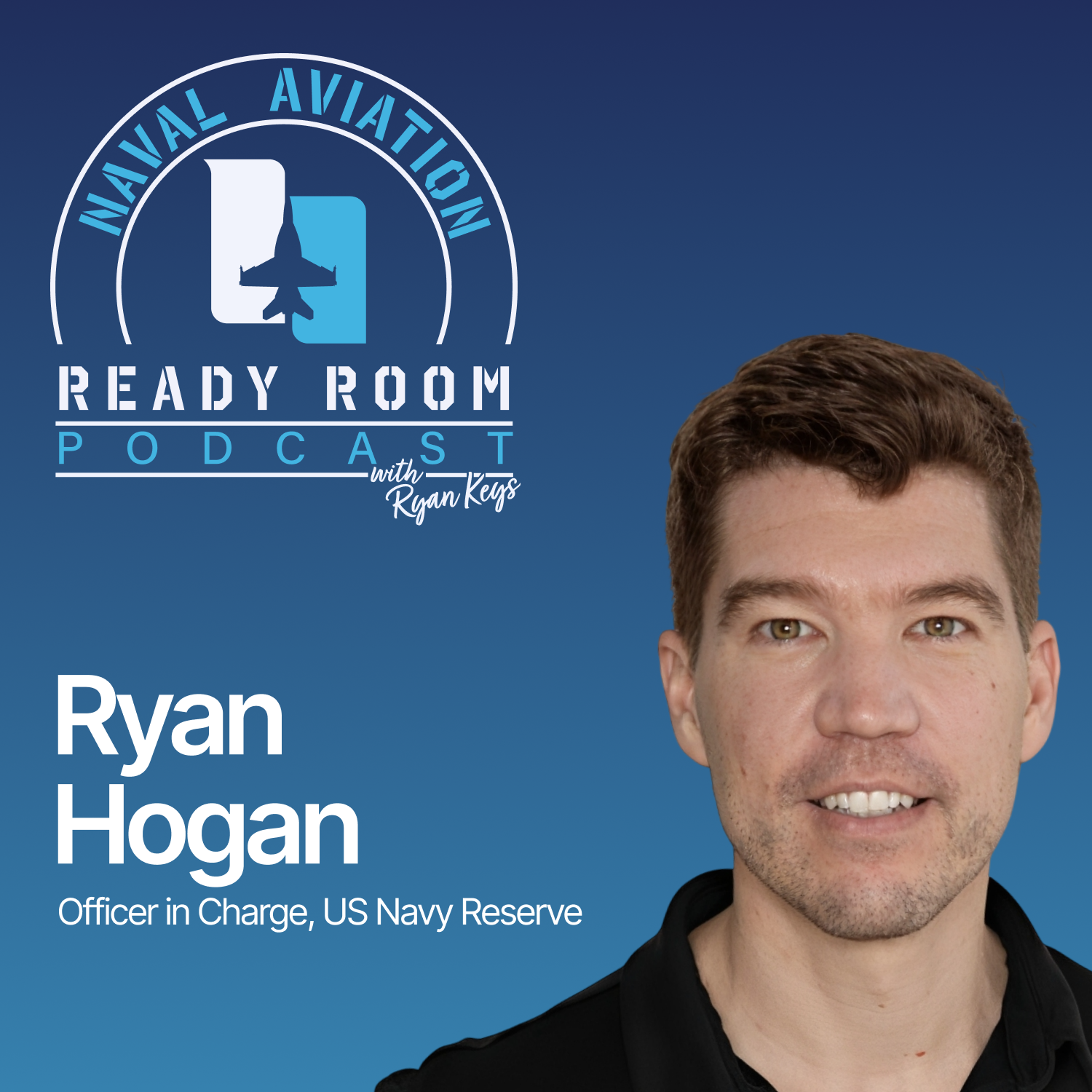
The Naval Aviation Ready Room Podcast with Ryan Keys
90 Days Absent: How I Saved My Career After Captain's Mast
00:51:11
Loading summary
Transcript124 lines
- [00:00]
A
It was that one conversation that for the first time in 12 years, I failed my flight physical. And so it was the pre commissioning flight physical failed it. And they were like, you can either stay enlisted or you can go become a SWO. And no offense to all my SWO brothers out there, but I just trashed the SWOs. Like when people are like, oh, I want to go drive shifts. And I was like, no you don't. And my high ground x ray 1
- [00:22]
B
ready to check 1, 2. Welcome to the Naval Aviation Ready Room podcast, where the stories, leadership and leading edge technology of Naval aviation alive. Hosted by retired Navy Captain Ryan Keys, this podcast takes you beyond mere museum artifacts as he delves into the personal stories, pivotal decisions, and state of the art hardware that define the world's most prolific aviation force. Today's episode takes us into the intersection of military leadership, operational readiness, and entrepreneurial innovation. Joining us in the Ready Room is Ryan Hogan. US Navy Reserve officer and serial entrepreneur has built multiple successful companies while continuing to serve and lead sailors in the United States Navy. Ryan began his career as a MH53 Echo Sea Dragon air crewman, later commissioning as a surface warfare officer aboard Navy ships, gaining firsthand experience in maritime operations and leadership at sea. Today he continues that service in the Navy Reserves where he commands sailors responsible for maritime security and operational readiness. Alongside his military career, Ryan has founded several successful ventures, including Hunt A Killer, one of the fastest growing consumer products companies in the country, and now Talent Harbor, a company focused on helping organizations build stronger leadership teams. Ryan's journey reflects the Navy's enduring leadership principles, adaptability, accountability, and the ability to lead teams through uncertainty. Ryan, welcome to the radio room.
- [01:47]
A
Awesome, thanks for having me. Ryan. Excited to be here.
- [01:50]
B
This is my first guest. That is Ryan. So hopefully people don't get confused.
- [01:55]
A
I'm already confused, so we'll see how this goes.
- [01:57]
B
Yeah, I know. Ryan H. And Ryan K. Maybe we'll just go with that. So we'll see. Before we start with some background questions, we were linked up between from the podcast company that we both utilize and it was interesting when we did our kind of introductory call. We soon found out that we have some mutual friends in the naval aviation community who I reached out to later afterwards and told him I was talking to you and I was very happy that we were getting together and Dawkins. So it just makes again it's that impression of the small world of naval aviation. You may not think it when you're in it, but then you just go ask somebody or talk to someone. And, you know, it's kind of one of those things someone comes up to you, oh, hey, I was in, you know, my son's in the Navy, or my cousin, he's so and so. Do you know him? And it's like, there's 300,000 of us. Of course not. But then on the other hand, I talk to you, and you're like, oh, do you know Josh Kinnear? Yeah, I know Josh Kinnear. Napoleon. Of course I do. And then it just happens.
- [02:56]
A
And this is 20 years ago. Like, that's what's fascinating about. This isn't like, yesterday or, you know, 20 years ago. I was never thinking to myself, you know, one day I'll be on a podcast. I don't think podcasts existed back then, but it is incredible how small kind of that universe is. And, yeah, really cool.
- [03:12]
B
Yeah. But it is awesome to have you on here because when we first started talking, I'll be honest with you, I was kind of like, oh, you know, Naval Reserve guy. We haven't talked about reserves. But then once we found out about the 53 side of it and the fact that I have a touch point with the 53 too, as well, then it just kind of snowballed from there. But we'll get into what you're doing today, of course. But I do want to go back in time a little bit. Maybe you can reminisce. You can say back in the day a couple times if you want. That's fine. I mean, I'm getting up there in age, so I say it probably once a day, maybe twice too much, to the chagrin of my sons. But just looking here. So I want to get, like I said, go back in time. So tell me about, like, so where you grew up, why the Navy? Why naval air Crewmen? Why the H53? And we'll start from there because I really want to then eventually get that into why you did off ramp into become an officer. And definitely talk about state 21, because that is a unique, very unique, highly competitive commissioning source. And then we'll go into, like I said, your success today as an entrepreneur. So over to you, Ryan.
- [04:12]
A
Yeah, I think what's really interesting is that probably some of the stuff that we're going to talk about, there was very little, if any intentionality behind kind of where I landed, what I was doing, things like that. It was like a series of poor choices that led me to the Navy. And it didn't stop there. I mean, obviously you probably have a bunch of people from the Navy in the military, like, I was knee one twice, but the story begins with was barely making it through high school. And not because I'm an idiot, but really because, like, I just have a different style of learning. Like my whole way of learning is actually doing it. And so to like sit in a class and try and read a book or do things like that, that's not how I take information. So I wasn't doing well in school. And so I started cutting class. And what's interesting, like, if you looked at. And one of the reasons I know this on my transcript is because to apply to the SEMAT Admiral program, you have to have your high school transcript. And so when that transcript came in, my personal statement had a lot to do with trying to explain why I was absent for 90 days my senior year.
- [05:15]
B
90 days, that's correct. Wow, that's gotta be like a school record and still graduate.
- [05:20]
A
So they brought my mom in and they were like, hey, if he misses one more day, he's not going to graduate. And what did I do? It took about three days. I was like, all right, new me, new Ryan, here we go. And then the third day I started cutting again. And my whole thing was like, I would cut into school because I needed one math credit for my senior year. And so I would cut into school for the 10:10 period. And then once 11:00 clock hit, I would cut back out of school and just go back home. But for me, there was street racing, there was barely got through high school, and I wound up blowing up my car. And so I was an electrical union worker with the IBEW out of Baltimore. And my mom was like, well, you've got no job, no car, like, you're not going to stay here. You need to go do something. How about the military? And I just had a buddy join the military. He joined the Navy. And I was like, well, what are you doing? And he was like, well, I'm this thing called an air crewman. I was like, what's an air crewman? He was like, I don't know, but I think you get the fly or something like that. And that was really the start of the journey because I didn't know. I didn't have all the background. Like, when I went to Maps, they were basically like, can you swim good? I was like, I can swim. And they were like dry. And I didn't know what that meant at all either. So, yeah, I mean, that was really kind of the origin story. My mom signed my permission slip at 17 years old and kind of off we went to Chicago and then Pensacola.
- [06:34]
B
Yeah. Okay, so hold on. Did you say that you were an electrical? You're an electrician, like apprentice electrician?
- [06:41]
A
Yeah, with the local union out of Baltimore. Like as soon as I got out of high school, that's what I applied for, got into the program and I did it for about six months before I blew up my car.
- [06:49]
B
Wow, that's great. I mean, you said you learned by doing, right? I mean, if you want to talk about hands on learning, dude, being an electrician is definitely that. I would say so. Oh my God. Where in Baltimore?
- [07:00]
A
So I was born and raised in Bel Air, Maryland. And then my junior year we moved to Owings Mills, Maryland.
- [07:06]
B
Oh, okay, got it. Yeah, very familiar. Yeah, I spent a lot of time in Baltimore since I went to, you know, school down the road. So great place. Love Baltimore. Great. Sweet. Okay, so you're like, hey, I'm just going to go be an air crewman. Don't know what it is. You go to Great Lakes, do your boot camp time there, and then they ship you down to Pensacola right after that. Is that where a school was then? Then during that time too?
- [07:27]
A
Yeah, because it's all changed today. So all air crewmen are aws. When I joined we actually had a rating that was specific to a day to day job. And so I was an aviation machinist mate. So I went through ad school down there after I got through air crew school, then went to the rag out in Norfolk. But it was interesting. And I remember being down there, number one, for some reason I've been across the street from OCS like three times in my career. So when it was down in Pensacola 2002, I was across the street and I was watching everybody salute squirrels and things like that. And then went through nsi. They had moved it up to Newport already. But I just remember being down to aircrew school. Called my mom and I was like, I think I'm going to be flying like on actual aircraft. And that's when I know.
- [08:08]
B
I mean, you said it's 2002, I mean before the age of the true Internet, you know, definitely of what it is today. And trying to figure out information. That's what I feel like. Back then a lot of people just didn't know paths on how to get places. Right. It just wasn't apparent. And you had to dig and dig and dig. And right now, I mean that is just at your fingertips with a supercomputer in your pocket. And so a little more readily available information, I would say for sure. But, man, good on you for just taking a blind leap of faith.
- [08:36]
A
Well, that's like the lack of intentionality. I think I got very lucky. I mean, even with the 53s. So I believe all the crewman on 53s now are wet or swimmers, and I was not. And 53 was the only platform that dry crewman could get in. But after I went through aviation Machinist Mate school, they didn't give us options. They just said, hey, here's your orders. You're going to Norfolk to go to this place called awist. But just got very lucky to get into the community for sure.
- [09:00]
B
Yeah, no, they're all still dry in the HM world. They're not AWRs. AW. They're technically AWSS. Yes. To go along with the Sierra side of it, but they're all still dry. But we'll get eventually kind of the 53 community here in a little bit, possibly. So at the time. So I'll just give a quick overview. So HM12 is the FRS Fleet Replacement Squadron. When you went through it didn't exist. It existed back in the day. They did away with it because the HM community was going to be disestablished. So awist, which was the weapons school there, for lack of a better term, I guess they were kind of the FRS as well. And then they would leverage the two fleet squadrons, HM14 and HM15, to essentially train all the prospective pilots and the air crewmen for the missions that were on it. And then after you finished AWIS, right, you went to HM14 after that. Now, was HM14 at that time? Because at one time, 153 Squadron was in Alameda, California. That's way back in the day. Then they all. Well, then they moved to Corpus Christi and then they moved to Norfolk at that point and consolidate everybody. And then we talk about detachments after that. So when you came in, where were the physical locations of the squadrons and what choices did you have?
- [10:11]
A
I think HC4 had just decom. So those birds were coming back from SIG. And then HM15 had the Bahrain that they were out of Corpus Christi. And then HM14, obviously, Norfolk.
- [10:21]
B
Okay. And they had the Korea debt at the time.
- [10:24]
A
Here's the crazy part. We actually had no debts at the time. So I was a part of. I didn't go on the first wave. I think I went on the third wave. And this is when we were in Iwakuni. We were operating out of Iwakuni, and it was before we went to Korea, but we had nothing. And that was the big thing as people were coming out of a list is everybody wanted to go to 15 because you could go to Bahrain, get Bahrain money, and nobody wanted to go to 14 because there was no mission.
- [10:47]
B
Interesting. Yeah, I know that there had been some flip flopping between, you know, deaths when. When the community. I mean, there were more than just two operational squadrons at one time. And then as they started to neck them down, as they talked about, like I said, decomming the squadrons and getting rid of the 53 because it's just an old airframe. Interesting note, when I was the commodore at the wing there in Norfolk, I believe if I heard it correctly, I heard it many times at one time. The H53 was the most expensive aircraft to operate in naval aviation inventory. Because it was old parts were very hard to come by. I mean, sometimes we would wait a year for a main transmission if one went down, or you'd have to rob it from somebody else. It was rough. And now they are actually have decom two squadrons, there's one left. But anyway, I want to stick with you. So tell me about once you got to the squadron. So it seems like you already have very good internal motivation to go and do things. You're just willing, like I said, even though you don't have intentionality, you have motivation and discipline, though, to go set your sights on something and to do it, which I think is definitely was evident today in your entrepreneurial life. So let's touch a little bit on then your time in the squadron and then a couple highlights, I think, right. Is you did Katrina Relief in 05, you did Panamax and then Cobra Gold, which is probably pretty cool too. So kind of walk me through some operational tidbits that you had that maybe kind of set you up for where you are today.
- [12:09]
A
Yeah, and I would say I've gotten probably much better with intentionality. Like, this is one of the reasons that I still serve in the Navy today is because, like, the Navy gave me discipline, focus, and really intentionality. Like, certainly resilience and all of those things that come natural. But what I think I really needed was like a way to focus and channel this and the discipline that has come. The leaders that I've had the pleasure of being under, like, you know, that's really changed my life. And so the reason that I stay in today is because I'm trying to do that for some younger sailors, A big part of that was I got into trouble. So when I was going through awist, I checked in at a time and as you know, the Navy ebbs and flows as far as personnel. So sometimes we've got way too many people and they're just pushing them through bootcamp and we're pushing them into pipelines, and then sometimes there's nobody. I came through during a pretty big. I guess it would be a flow, but I came in through when a period of we were bringing a lot of people in. So there was a hundred people at awist in a hold status when I checked in. And even my orders didn't have a class update because they didn't even know at that point. But what we did, though, is that I was supposed to be there for anywhere between nine and 12 months, just in a hold status. And so I would wake up each morning, I would go into the office and then we would swap the deck from 8 to 8:30. And then there was nothing for us to do, so they cut us out and we go back. And I did that for probably a few months. And for me, I was like, well, why am I here? Like, I joined the Navy to do things and to go places and to learn and all of the things that kind of was expected. And I wasn't. I was going in for 30 minutes a day swabbing A deck, going back to the barracks and doing what sailors doing in the barracks.
- [13:39]
B
We'll keep it pg.
- [13:40]
A
Yeah. And so eventually I just left and a huge mistake, but I just walked away and I just went home to Baltimore and I just stayed there. And then phones started to ring. My cousin at the time was a commander, a Navy submarine commander, and he caught wind of it. So he started to kind of get involved. And eventually I went back. So because of the unauthorized absence or UA, went to captain's mast. I had just made E2, came back down to E1. And then there was a chief who basically told me I wasn't going to get through the program. And like, I know this is going to sound weird, but like, that was really kind of the changing moment for me at that point where I was like, yes, I am. Like, I'll make it through this program. And I was very fortunate because we called it the A team. It was the Alcohol team. So basically anybody that was getting busted for alcohol in the barracks, they would go to captain's mass and they would get kicked out of A west. And it was a great thing because when there's a hundred people on hold, the more people getting in trouble you can kick out, the faster you can get students through at that point.
- [14:36]
B
Got it. That's funny. That kind of caught Me off guard.
- [14:39]
A
It's also funny, you're the former Commodore. But there's two things that happened. Number one, somebody told me that I wasn't going to make it through the program. And number two, the CEO gave me a second chance. Everybody that was getting in trouble at awis, he would just roll them out and he gave me a second chance. And between both of those things, like, I always looked at the CEO of like, he saw something in me and I'm not going to let him down. And then the chief, I was like, you don't know me and I'll run circles around you. And so, like, those were kind of the two defining moments. Got through the program, went and checked into HM14 and I had some people that kind of took me under their wing, which was really good because I didn't have a great reputation. Like, I just went UA while I was at awist, and as you know, like, everybody just bounces back and forth. And so the same people that were training me at awist eventually came over to HM14.
- [15:26]
B
Very small community. The HM community is super small. You know, your reputation, man, is everything along that seawall, for sure, 100%.
- [15:35]
A
And I did not have a great reputation because of what went down in a list, but I had some. His name's Eep Estep, kind of took me under his wing.
- [15:42]
B
I know Estep. Chief Eep.
- [15:43]
A
Do you really?
- [15:44]
B
Oh, yeah, I know he is.
- [15:45]
A
That's so I know Petty Officer third Class Eep hitting the bars down in Norfolk. That's awesome. I haven't talked to him in forever. I need to text him today. But anyhow, he took me under his wing, so he was probably maybe like six months ahead of me, so not too far ahead of me. But he had a great reputation and so he was able to kind of put his arm around me, made it all the way up to first crewman, did that within probably 18 months, and then did some incredible stuff, man.
- [16:10]
B
I'll tell you, this story, I think just resonates, can resonate with so many people because it's just that, right, you're down, you went and did something maybe you shouldn't have done. But, man, it's all about coming back to play again and a second chance. I just talked to a buddy of mine who, he had had some troubles as well, and he didn't give up and he stuck around and was able to advance after a pun matter in his career. And I'll tell you, man, I look at people like that, like you, and I go, dude, thank God, for not just throwing it in. You could have thrown it in. And it's like, I don't want to do this. You know, I've had it. But you didn't. And that's the most important part, which is fantastic. So that to me is so two things you brought up. One is your ability to have some humility from that and say, hey, people are going to invest time and I'm going to not let them down. And then the other part though, the leadership part, right? I mean, there's two things we learn from leadership. We see bad leaders, we don't want to do what they do. And I see good leaders and I want to do what they do. And sometimes we actually learn more from the bad leadership than we do from the good leadership, I think, because we see good leadership more often, I would say, than the bad. And so when you see the bad, it can have a significant impact on you, hopefully positive. And then you're able to take that on and say, I am not going to be like that guy over there and do that and I'm going to be positive and move forward. But redemption is. Dude, is a great thing and, man, I love it. That's awesome. So what was the coolest thing that you did while you were a crew Chief in the 53?
- [17:42]
A
Hurricane Katrina? Like, hands down. And actually it wouldn't even be Katrina, it would have been Hurricane Rita. So I went down late. I think we had two birds down there and then one broke, or at least they were having issues with one, so we needed to fly one down. They were down there for about a week already. And I was on the crew that was flying the spare bird from Norfolk and then going down to meet them down in New Orleans. So we flew in first. We flew into Panama. Actually, we met in Panama. So they flew in to Panama, we flew into Panama City, and then we did a crew swap on the berg. And then I basically brought my stuff. Nobody said I could come, but I just brought my sea bag. And when the crew came out, I was like, hey, will you guys take me? And the other thing here. I didn't realize this because, you know, we're all friends, but there were some pissed off people because me coming meant they were going to get less hours doing really cool shit. So, yeah, but just being able to do good, you know, I think when a lot of people think about the military, especially today, like we think about killing people, dropping bombs, blowing up ships, like all those different things, there's so much more. And for HM14 or the HM. Community at large. The whole mission there is to go search, destroy, neutralize sea mines. And we train day in and day out. Five days a week, we train to go do that. A lot of training. What do we actually do? We do heavy lifts. We do humanitarian relief.
- [18:58]
B
Okay. You're not supposed to say that. That's the secret. That's no one in the elevation ever wanted to hear. But it's not a secret anymore. But yes, I totally agree. So to piggyback off of that. So the wing there. So helicopter C Combat Wing Atlantic, that's in Norfolk. So I don't know if it was back when you were there, but essentially for the last probably 10 years, every summer they have a standing. What's called PTDO. Right. Prepare to deploy order. That is for six H60s Sierras and four 53s. And then they will be essentially taken from the wing and then put under the control of Nav North. So Naval forces North, which is under Northcom. I'm getting a little into the weeds here, but it's important. And then that unit will go wherever hurricane relief needs to happen. So that has happened every summer for many, many years. I was fortunate in 2009 to head up our debt of 10 helicopters and however many people we had to go down to the Bahamas and do Hurricane Dorian relief in September of 2019. So we based out of Homestead Air Reserve Base In Miami, the 53s aren't going down to the Bahamas to do airborne mine countermeasures, you know, throughout the beautiful waters of the Bahamas. They're there to do heavy lift. Right. To take cargo out to islands that have been devastated by a Category 5 hurricane and no one can get to them. And then the 60s come in to do medevac, medium lift. But the 53s. Yeah. Are there to do exactly that. So back to your story about. Yeah, heavy lift. And you're at Hurricane Rita.
- [20:37]
A
Yeah. And it was awesome. So we ran missions like we heavy lift or we single pointed generators to facilities that needed. It was like a really, really cool experience. But I was probably two weeks after. So I think the 53s got down there about a week after the Hurricane Katrina had hit. And then I was a week later with spare bird. And then the mission wrapped. So we were like maybe two or three weeks into it. This is an interesting story. Mission wraps and we're not going to stay on the ship. I think we were on the Iwo Jima, which was pier side pierside Mississippi in New Orleans. We had a cruise ship behind us. Crazy.
- [21:11]
B
Yeah. I do remember that, too.
- [21:13]
A
Yeah. So mission's over and we're ready to go home. We've been doing it maybe three or four weeks, and there's an Air Force base down there. We all take our stuff, we get off the ship, get on the birds, fly over. We take the maintainers, take our equipment, we take everything, get dropped off at the Air Force base, and we're waiting for the C130 to come get us. And so there's probably maybe 75 of us, like between crewmen, maintainers, leaders, things like that. And so people are changing in their civilian clothes because we've been like pseudo deployed for three or four weeks, and everybody's excited to go home. About an hour goes by and the 53s come back and we see them coming down and we're like, they're supposed to be, you know, 200 miles on their way home right now to Norfolk. Like, why are they flying back, coming down the Runway? Well, what happened is Hurricane Rita was coming back and there was an emergency decision that was made where it was like, we're going to pull the ship Iwo Jima out of the Mississippi, and then we're going to go chase Rita in. And this was really like a. The US Needs to be more prepared for these things. We're not going to make the same mistake twice. Rita was looking like a really, really terrible situation. So they came on board or they came back. We all got back on the aircraft, got back on Iwo Jima. A couple things funny about this one. Like, any good sailors, like, when we're leaving the ship, we're not very polite when we're saying goodbye. We're more like, hey, we'll be in Norfolk if you need us.
- [22:28]
B
Yeah, see you, suckers.
- [22:29]
A
Yes. So everything we just did there, now we're walking back with all of our heads down. They're the ones that are.
- [22:35]
B
No hard feelings, right, guys? We're good, right? Yeah. We're just kidding. We were kidding.
- [22:41]
A
That was it. And then we pulled out of Mississippi and then we started going towards Florida because Hurricane Rita was coming below us in the Gulf. Then we made a U turn and we chased Rita into Galveston, Texas. Number one, we were on a big deck, but, like, it doesn't matter what type of deck you're on if you're chasing a hurricane. Like, the seas were crazy. And then we were running missions. It was. I think we were off the deck at 5:30 the next morning. So, like, literally, Rita hit kind of in the middle of the night. And like, the Skies were just clearing. The sun wasn't even coming up yet. And we're off deck, flying in. And that was some of the most gratifying at that point because, like, the things that we saw, the people that we helped, there's just. There's no other feeling.
- [23:20]
B
Yeah, man, it is great. You're right. You think everything's warheads on foreheads. With the Navy, but especially with the helicopter community, we're such, you know, the M people didn't know this. And it's MH53 and MH60 is for multi mission. And that's the key, you know, to us is we can do so much. We are the jack of all trades, which is great. So, man, that's really awesome that you got to experience that, because a lot of people didn't. You know, it's one of those things. It could be one. A lifetime experience, you know, like the people who are dropping bombs right now in Iran, it's like we go drop bombs every week or shoot somebody down. It could happen one time in your career and never happen again or not at all. So you're fortunate you got to experience that because people would not have for 20 years. So, yeah, that's awesome. So now I want to kind of roll into your decision to apply for the SEMA to Admiral program, otherwise known as Stay 21. And so as you move through your time in the HM community, was it like you felt like you were done? You didn't want to advance anymore, you wanted to branch off, try something else? So let's talk about that. Where you went to school, what you studied, and then you're coming back and then affiliation with the reserves after that.
- [24:27]
A
So I always wanted to be a pilot growing up. Like I was the era, the generation of Top Gun. And so that was always a goal. The problem is I had no intentionality. And so I don't know what I was thinking if, like this goal was just going to magically appear. But essentially, like, there's. I think there was maybe three different types of commissioning. There was direct commissioning, so you already had to have your bachelor's. There was state 21, and then they had the Academy program. I would not qualify for the Academy program for a variety of reasons at that point. And so state 21 sounded like the one that made sense. Well, because I had an NJP on my record, I had to wait three years to even be able to apply. And then I didn't get picked up the first, second, barely the third time.
- [25:05]
B
Dude, that's normal. To be honest, with you, I mean, it really is. So yeah, I wouldn't take a thing from that. But okay, but see, that's just it though. You showed the desire to do it and kept applying. That was the key. I'm sure the board saw that.
- [25:18]
A
Yeah. And that was basically like my last personal statement that I wrote was basically like, see you next year was kind of the tone of that one. But yeah, just like just always wanted to be a pilot my entire life and just the opportunity appeared. And so at that point I was like getting good evals, doing good things. I had turned around. My grades were so poor in high school that I was doing full time school at Tidewater Community College while I was at HM14. And so like basically what I went to the board with was like, this says I'm an idiot, this says I'm not, and this is more recent. So that was the grades, the absences, made some mistakes in my life. And then I joined the Civil Air Patrol as well. So just trying to do everything I could to show the board that I was serious.
- [25:59]
B
Oh my gosh. So you made it on your third try. Congrats. Awesome. And then you decided to go to
- [26:04]
A
college where I went to University of Maryland. So we were talking about this earlier, originally from Maryland, but I was actually stationed at Pax river at that point. So I had rolled the shore duty. I was at HX21 trying to take the Mind Countermeasure systems, put them on the 6D Sierras. And so when I got picked up and you could go to any school you want to that's got an ROTC program. George Washington University has five crosstown affiliates. And so University of Maryland is one of those. I think I applied for English because it was the first thing on the dropdown. I just need something to show the Siemens Admiral program that I at least had admission.
- [26:35]
B
Yeah, I was an English major. Man, it's a great major.
- [26:37]
A
Yeah, well, eventually I went to business school, but that was a whole nother ordeal.
- [26:42]
B
Yeah, I got it. And then. Yeah, so you studied business there and then did you do all four years? Did they pay for all four years or did you use some of your credits from Tidewater? And then you did like three. How did that work?
- [26:53]
A
So it maxes at three. So you can't do or at least when I went through Seaman Tameral was maximum three years. And so what it forced you to do is go to school during the summer. Here's where things kind of get interesting because this is going to be the intersection of entrepreneurship and not in a great way, but the intersection of entrepreneurship and life and Navy. So when I was down at pax, I launched a T shirt company. And the T shirt company was called Warware. What a mistake. Mistake in a name, mistake in a T shirt company. But the lesson learned with Warware is if you build it, they don't necessarily come as an example of that. When I was going through this, McKay Estep was like, hey, can you get some yellow ones? I was like, yeah, I'll get yellow ones. And then McKay never even bought one. So I had a whole two car garage full of T shirts and we just couldn't move them. And so I opened up a Men's Health. We were on Solomon's island and there was this ad for something called Warrior Dash. And what I knew when I opened that magazine is that that advertisement cost that company 160,000 because I had called Men's Health to ask about their advertising rates for my T shirt company. And when I heard the rates, I was like, nope. But what that showed me is that there was a real market for these obstacles course races. And so I called my best friend, childhood friend, and I said, hey, I've got $120,000 worth of t shirts in my garage. They've been sitting there for a year and like, I've got to move them somehow. And there's this event that seems to be scaling very fast. Let's go do something similar. I'll sell these T shirts to the event company. The event company will be yours and eyes. So anyhow, we came up with the name run for your lives. And run for your lives wound up becoming the first ever zombie infested 5 kilometer obstacle course race. So if you think back, like tough mudder, Warrior Dash Barton race, it was that. Except you wore a flag football belt and you ran around a course and we put 250 zombies on that course to chase you around. What we weren't expecting was we had about 12,000 people that showed up to our first event right outside of Baltimore. And then at that point we were like, we can scale this. So we scaled it nationwide. We went from one event to 13 events. The year we did 13 events, that was the year that I was at the University of Maryland. And then the next year we tried to do 25 events, but we scaled from 0 to that was probably 70 to 7 million in about two years. And made every mistake in the book.
- [29:05]
B
All while you were a full time student at the University of Maryland getting your business degree.
- [29:09]
A
Yeah, full time student. And Then running down the G dub once a week because you got to do drill and.
- [29:14]
B
Yeah. For navy requirements.
- [29:16]
A
And dance around. Yeah.
- [29:17]
B
Oh, my gosh.
- [29:18]
A
Yeah.
- [29:19]
B
So did that. Did you get rid of the shirts?
- [29:21]
A
Got rid of the shirts. Maybe that was the one good thing that came out of that.
- [29:24]
B
Yeah, that's the highlight. So you were competing then against those other ones? Like I said, tough mudder, Spartan race, all of those. It was definitely different, though. I mean, in those other ones, people aren't chasing you, which is definitely, I think, definitely throws. It makes it a little bit more interesting for people to try that rather than just going over an obstacle course.
- [29:45]
A
Yeah, and we had great luck. Like, we never got any of, like the big press. I mean, we got press, but we never got press associated with the. They called it the ocr, the obstacle course racing industry. We were never in that bucket. We beat out Spartan race in year three. So we did 112,000 participants, and I think their count was like 98. This was 2012. That was the biggest year. It was great. It was great. Till it wasn't. And I don't know if we even talked about this on the pre call or how much about this, you know, but when I got selected for Siemen to admiral, I was in the pilot program and I lost all of that and I lost it in 2013. And the reason was because run for your lives. Ultimately bankrupted. And so I had hired all my best friends. Growing up, I didn't know how to manage a business. All the businesses that I had before that, they didn't scale, they didn't go anywhere. So I didn't know what I was doing. And we made just about every, like, crap decision in the book. We eventually ran out of cash. And so in the event industry, what happens is you sell tickets to an event ahead of time, and so you can't manage, operate, run the business based upon the bank account like we did. So if there was money in there, we were investing money in the events or investing money in marketing. Then eventually we turned around. There's no money in the bank account, but we've got six more events to put on. And so for probably nine to 12 months, tried to save the company. There was a lot of internal turmoil. We brought in some investors. There was a lot of different things that were happening, but it ultimately bankrupted. And as we were going through this, like, I was having anxiety, I was having panic attacks, probably a little bit of depression at that point. So I went and talked. Somebody went to Walter Reed and just Had a single conversation and I was like, hey, do you think, you know, could be causing this? And she was like, well, let's see. Yes, I think I know exactly. I was like, well, how do we solve this? And she was like, it's like a needs to clear through the snake, like this has to go away, and then once it goes away, like, then we can start working on how to bring down your stress levels. But it was that one conversation that for the first time in 12 years, I failed my flight physical. And so it was the pre commissioning flight physical. Failed it. And then G Dub gave me an option. They were like, you can either stay enlisted or you can go become a SWO. And two things. One, no offense to all my SWO brothers out there, but I just trashed the SWOs throughout, like all of GDub. Like when people are like, oh, I want to go drive shifts. And I was like, no, you don't. Like, you want to go fly planes. You do not want the life of a swo. And so those were the two options they gave me. The problem with going back enlisted at that point was I wouldn't have been able to maintain. I had force converted to aws, and I wouldn't have been able to maintain that. So I was like, I'll go drive
- [32:18]
B
ships because of the flight physical.
- [32:20]
A
Yep.
- [32:20]
B
So it's kind of funny, it reminds me of just what you're talking about. After leaving the ship on the 53 and then going in and then going back on the ship again, you had to tell all the swells that you're becoming a swo.
- [32:29]
A
Now, I've never even put these pieces together. There's a lot of that.
- [32:33]
B
Oh, man. Well, I'm sorry to hear about the business, but we'll get to that here and shortly. So then you decide. So you, like said, another dose of humility, maybe from earlier.
- [32:44]
A
Yes.
- [32:44]
B
And you're like, okay, I'm going to be a source warehouse. Or now you're probably thinking, okay, hey, I got to pay back the years I just did for state 21, but it's not necessarily something I'm going to do for the rest of my 20 years as a SWO. You know, you're probably not. And which is fine, but you're going to go be a great surface warfare officer, lead sailors, and then from there you join the route. So if there's anything of significance, like leadership wise, when you were a swo, I assume you had good leaders and bad leaders too, or they're all just kind of like you Were just ready to kind of punch after your time.
- [33:17]
A
No good leaders. Bad leaders too, but just a really special time as a swo. So I was on board the USS Comstock. I was communications officer again. Going back to, like, people saw stuff in me. Like, I checked on board day one, there was a couple different open roles. And so they gave me, I think, R Div, which is repair division. And then I had to go to school. So I went to school for a month and I got a phone call and they were like, hey, they just fired the commo. The CAP wants you to be como. I was like, yeah, sure, that makes sense. Number one, camo is like the hardest job. And I'm not saying that because, like, I'm special. Like, the communications officer is one of the hardest jobs on a ship. And the other guy had just gotten fired, and so he kind of handpicked me for that. Which, number one was great. And two, his name was. Do you know Jervy Aloda?
- [34:00]
B
Yes.
- [34:00]
A
No way. Do you really?
- [34:03]
B
So you want to know why I know him. So my final tour before I retired, I was an instructor at Joint Forces Staff College in Norfolk at NSA Hampton Roads. One of the schools inside the college is called jcws, joining Combined War Fighting School. And so what happens is anywhere from 04 to 06, Joint Wise will come there for 10 weeks and get what's called Joint Professional Military Education Phase two out of it. Normally you get that through a war college, a senior level war college, but if you don't have the time in your career path to do that, they'll essentially send you there for 10 weeks. You learn how to essentially study Joint Pub 5o, which is the planning pub, and we run exercises. I also, I was an instructor there, and there's a team of three instructors. He was actually one of my students. So he's on Instagram. What's his handle on Instagram? He's huge on that. He's actually a pretty big social media presence. But again, another surface Warfare officer. Proud swo. I mean, super proud SWO for sure. Naval Academy graduate. Played football at the academy as well. So, okay, yes, so I know him. So what did he do for you?
- [35:11]
A
He was my xo. Well, he eventually became the co, but he was the XO when I checked on board. And then the co, I was Scott Tayson. We call him Scotty T. Not to his face, obviously. Like, you can't do that as an ensign. But that was the COXO duo. And I've never still in my time, like, have experienced that. Level, like the rapport that they had and the balance that they had and like how it all came together. And Captain Jerby, because he's still active duty, so that one I could be very careful on. But he's an incredible human because people can look at some of the things that he does because yes, he's. He is very much an influencer. He's probably got a million followers and everything he posts goes crazy. He jumps off the back of ships as a part of like leaving the ship and then he. It's crazy, but he's real. Like the things that he does, like, that's actually him and that's him being like deeply authentic. So anyhow, long winded, like it was a great experience.
- [36:06]
B
He cares about his people. That's one thing. I didn't know him very long. Right. I mean, I knew him for 10 weeks and man, he truly cares about his sailors. We actually did a ship tour on an LPD or an lhd, I can't remember which one it was. And he was at home there. Right. Because he's an amphib guy, I think by trade. I don't think he's a cruiser destroyer guy. And he knew so many people. He is just a great human. I mean, he truly is. And so you saw his leadership style then when you were a jo, they put trust in you and then, man, you took it from there, right?
- [36:40]
A
Yeah. And it was great there. I learned a bunch had to make tough decisions on the ship about who I was going to put where and some people that I had to remove and it was just a really gratifying time where I got to like apply everything that I had learned from both like terrible leadership and good leadership. And they kind of just gave me like carte blanche to go do it. And I don't know if that's because at that point I had 13 years in the Navy. But I don't know why it was. But I got it and it was incredible and learned a lot.
- [37:07]
B
Yeah, Trust, right?
- [37:08]
A
Yeah.
- [37:09]
B
Trust is what that's man. You can't be a leader without the trust of your people. So. Wow. No. And that's. That's exactly what it is, man. Looked at you and all your fleet experience that you had already and they saw it in you, which is great. Okay, so you do your slow time and then you. I said was a five year commitment afterwards.
- [37:26]
A
I think it was only four years. There was some weird stuff that happens.
- [37:29]
B
It could be four. Some of them do. The different session programs are different. So you decide to then separate at that point. And that was intentional, I assume, right?
- [37:39]
A
That was intentional.
- [37:40]
B
You had some intentionality there because you really wanted to go into the business world. What was it that you saw? Was it the previous experience of the failure of the previous business and you knew that you could do better than that, but you stayed affiliated with the Reserves because you love the Navy still?
- [38:00]
A
Yes, very much. And that's like. I'd love to say, I just kind of walked off the plank and like, everything was like, we figured out. The reality is, is we had launched the other company. So while I was on the Comstock and then eventually I got into the LCS program. Really? Like, I know the LCS gets a bad rap, and I understand why it gets a bad rap, but the whole mission module set up and, like, some of the things that we did was just, like, really incredible.
- [38:23]
B
Dude, it can do some cool. So we had debts. HSC 22 and 28 at the wing. Both had debts on board LCS Littoral Combat SH. Honestly, if it was mechanically improved, dude is a very capable ship to do some really neat missions. So I'll just say that I want to take too much more time. But, yeah, dude, that is cool. I'm glad you got into that. Okay, so you went lcs, and then now what business was it you said, though, the other one?
- [38:48]
A
So we had launched Hunt a Killer. So basically, like, I had launched a whole bunch of. We were still kind of launching companies between when I was on the com stock and then when I was in the LCS program. But nothing was really taken off. And so I had a business mentor coach come to me, and he was like, hey, your background's events. Like, what do you do? I had this company called Polaris. As in the centerline Polaris. And basically it was an automated gifting software. And I took a billboard out right in front of the 32nd street gate, and it was a person in a doghouse and said, don't be in the doghouse. Join Polaris and we'll automate gifting on your behalf. Went nowhere. Not even one sign up from that $7,000 billboard. What a dumb decision.
- [39:28]
B
Hey, you gotta try. You never know.
- [39:29]
A
It's true. But I had a mentor come in. He was just basically like, you have no business in developing technology or doing all this stuff right now. Like, leverage what you've already learned. Leverage the network that you've built. Leverage the experience and go do that again. And so I called Derek and we ran the same exact playbook. So back then, we Looked at emerging themes and genres. And so the Walking Dead was like a 2009, 2010 phenomena. And so we launched on the coattails of that. Fast forward to 2016. What you have is all of these podcasts popping up, like my favorite Murder, Sword and Scale, all these true crime podcasts, and they're just blowing up. And so we were like, there's a huge opportunity here. There's a wave that's cresting in the true crime space. Let's launch a murder mystery. And so we went back to the same original campground in Darlington, Maryland, and basically we transformed the 200 acres into a living crime scene. So we had fake dead bodies, we had suspects to interview, we had police roaming around, and it was great. But the problem is we couldn't get more than 600 people at a time through the experience. So with Run for your Lives, we could put 15, 20,000 people through the event on any given weekend. But with Hunt a Killer, like, you can't have thousands of people standing around a crime scene and trying to interrogate suspects. And so we said, well, great. We found product market fit. Like, we've done it again, which is the absolute hardest thing to do in business. Why don't we look at a different business model that we can actually scale? So we backed it into the subscription box business model. So if you think about Loot Crate and Birchbox and all these subscription box consumer product companies that were popping up 20, 15, 16, we did the same thing. So basically, we took all the evidence, all the police reports, all the case files, all the things that we were doing in real life, and we put those things in a box and we started shipping them out each month to our detectives. And so launched that in 2016. And I'd probably been in the LCS program. I'd just gotten through training, so I was probably in the program for about a year at that point. And it scaled very, very quickly. We went from like 0 to 300,000 mrr. So like a $3 million run rate in three months. And that was January to March of 2017. So that year we probably did 3,4 million. And I put in my resignation letter, and everybody denied it, by the way. Like, the Commodore of over at LCS1 was like, hey, like, you just got through training. Like, I realize you're eligible for it, but I can't lose you. Everybody denied it and then got a phone call while I was on leave from personnel or pers, and they were like, hey, it's been granted. You've got two weeks. That was it, oh, two weeks. It was a very accelerated process at
- [42:08]
B
that point, I would say, did you get TAP class in during those two weeks or what? Oh, my gosh. They're probably just like, see ya.
- [42:16]
A
Yeah, well, I think everybody was sitting on the chat. So the issue was, is it got the resignation package, had the original date on it, but it took so long to actually get to purs because everybody kept denying it or thinking about it or wanted to talk to me. So by the time it got to them and then to the right desk and they went and approved it, even with all the not recommended, it was quick, dude.
- [42:37]
B
So just like that. So at that point, did you say, I'm going to go reserves? I mean, so I was not a reservist. I know a lot of people who were. We had reservists. And actually the HM community has reserves, pilots and air crewmen and everything. And so was your drive to stay affiliated with the reserves? I mean, you know, was it out of, hey, I just want to continue to have a paycheck in case the business stuff goes bad, or was it a little more altruistic? And I'll assume that it was to say, hey, I still want to serve. I want to lead sailors. But it's usually a combination of both of those things. I mean, airline pilots affiliate with the reserve all the time because of airlines, dude. They cut people and furlough pilots all the time. And if they need to, they'll just go on active duty orders for a year and go fly and get a paycheck, which is great. I mean, they're serving the country. So how was it for you? How did you make that decision?
- [43:24]
A
Yeah, I definitely think that's evolved over time. Meaning that, like, you know, where I'm at today, it's probably like 100% one thing and 0% the other. But it was definitely split when I left. And I would say it was split between three different things. Number one, like, spent a lot of time in the Navy. I won't say that I try not to let things become a part of my identity because I think that that can really complicate decision making and a lot of other things. But it was a part of me. And so just walking away from that after 15 years was. Would have been very challenging or very difficult. Number two, like, yes, I wanted to lead sailors and give back. What I had realized is all the Navy had done for me, like, if I could have that impact in just one sailor's life, like, that's significant. And then number three was Fallback plan. So it was like everything goes south. Like, I have this plus I had 15 years, so all I needed was five more to retire. So I, I would say, like, it was split evenly between those three. Today it's 100% altruistic, like, to come up here to Spokane. Like, I've got to pay my way. It's like today is to give back.
- [44:24]
B
Yeah, man, that's incredible. I mean, that's the sign of a true leader, I would say, right? Self sacrifice. So, yeah, man, that is fantastic. All right, so give me a quick rundown of where you are now, business wise, and what the future looks like for you.
- [44:39]
A
Yeah, so business wise. Fortunately, didn't need the fallback plan I did deploy. I mobilized with the Navy Reserves. Right after, like coming out of the pandemic, I got a phone call. We just raised 12 million bucks for hunt a killer. It's about 10 million in equity and 2 million in debt. And I get a call literally two weeks later from my NRC. I was living in Seattle at the time.
- [45:00]
B
That's Naval Reserve center, right?
- [45:01]
A
Yes. Yeah. But get a call from the Naval Reserve center, they're like, hey, you're. You're mobilizing. So that was interesting. But scaled Hunt a Killer. Hunt a Killer. Scaled to the sixth fastest growing company in the US According to Inc. And then I sold it two years ago. So grew, scaled, sold. Great. Awesome.
- [45:19]
B
Congrats. That's awesome, dude.
- [45:21]
A
Thanks.
- [45:22]
B
Oh, my gosh. Okay.
- [45:23]
A
Yeah, there's from bankruptcy to Hunt a Killer, which was great.
- [45:26]
B
Timing is everything, as we say in the Navy. Well, sometimes it is in the business world too, right?
- [45:30]
A
Yeah. And I actually sold it while I was at Naval War College, by the way. Nobody at Naval War College knows that, but we ran a nine month program because I sold it January 26th of 2024. And the Naval War College has like three, maybe it's a little bit more than that, maybe five, like billets or slots that they hold for Navy reservists that want to go through. So I was going through a 10 month program at War College and selling the company simultaneous. So when people are like, oh, did you take any time off? I'm like, yeah, I took six months off, but I was at the War College, so I was still reading 600 pages a week and doing papers. So that was a whole thing.
- [46:03]
B
Yeah, that's right. Dude. You know, they say it's only a lot of reading if you do it, but when I went to War College, I did do the reading because I'm not the smartest guy. And so, dude, I put a lot of time and effort into when I went to work college. But that's good. You got to go there, man. That's awesome. You got to go to Newport. I was in Montgomery, Alabama, so Newport, I mean, definitely you get. I mean, oh my gosh, lobster rolls, like you wouldn't believe it up there. So it's fantastic.
- [46:26]
A
Yeah, Newport's really amazing.
- [46:27]
B
Yeah. Okay, so talk to me about Talent Harbor. Give me your pitch.
- [46:30]
A
Yeah, I mean, it's a super simple pitch, which is like we play salespeople. And the biggest question I get nowadays is like, how do you go from like zombie events to murder mysteries to recruiting? And the reality is, is like, I have never found a passion in, like the actual service or product that we're developing. Like, my passion and my purpose come from helping people achieve, like, what they want to achieve out of life. And I can do that whether I'm leading a recruiting agency or a murder mystery company or I could lead any company or a unit out here in Spokane. And so anyhow, yeah, got into recruiting. The reason for that is Hunt A Killer spent a million bucks on recruiting. And I was like, what a stupid industry this is that like, has not evolved or change over the last, like 50, 60 years. People do contingent based recruiting. It just makes no sense. So called the best recruiter we ever used at Hunt Killer. And I was like, I'm gonna launch a shop. Took six months off and do you want to join? She was like, yeah. So she had sold her shop. That shop had sold. She was post earned out. So we joined forces and we haven't looked back. So it's been a lot of fun, for sure.
- [47:32]
B
Oh, my gosh, man. And that is a quick turn success, right? I mean, you guys are on the up and up, right?
- [47:38]
A
Yeah, it's growing very fast, which is great. I mean, like any company, it has its problems, but it's such a different thing to a certain extent. I'm like, I wish I would have learned this earlier. I wish I would have gotten into this earlier. Just based upon, you know, Hunt A Killer, it's great to say, oh, we went from 0 to 55 million in four and a half years. On the other side, when you were scaling that quick, everything on the inside is falling apart. So as sexy as it looks and the press that you're getting and everything on the inside, like your inventory stuck in customs, you didn't manage inventory, right. So you're missing pieces. You've got people, there's Always a fire happening. This is completely different. I podcast all day, build relationships and business magically appear. So it's been a lot of fun.
- [48:19]
B
Wow. That something pretty cool, dude.
- [48:22]
A
That's it.
- [48:23]
B
Okay. And I'm sure you have other, maybe other things brewing in the background or whatever it is, or side gigs. I mean, it doesn't sound like you ever sit still. I mean, you went up to Spokane for the weekend to drill, so how many years do you have in total now in the Navy?
- [48:40]
A
20, 24.
- [48:42]
B
Oh, wow. So, yeah, man. So you're on the path really to keep going. I mean, you're a commander now, correct?
- [48:48]
A
Lieutenant Commander. We're still working on that. I think I'm eligible, like, literally. The board's convening in four days, so I believe I'm eligible for that one.
- [48:56]
B
Yeah. Awesome, man. Well, good luck.
- [48:57]
A
Yeah, thanks.
- [48:58]
B
I hope selection comes through for you. I mean, that would be awesome. Just to continue that ability to, like I said, keep leading sailors so. Well, you know what? I thought when I first saw your name on the list that we weren't maybe going to have all that much to talk about or. I was skeptical at first when we first started talking and it has turned into, I think, something that we could keep on talking about for another hour, I'll be honest with you, and maybe be a follow up to see how, you know, it's going in a year or something like that. So. Which I would love to do, man, which is fantastic. But I just want to say thank you very much for joining us here on the Ready Room, sharing your experiences as a Sea Dragon crewman. So, you know, long live the 53. At least in the Marine Corps, it'll still live there, which is awesome. But yeah, I just want to say thanks. I'll leave the last words for you.
- [49:47]
A
Yeah, I appreciate you having me on. Like, this was a blast. And the reason this is like, because this is like a mishmash of like two different sides and we have all the common backgrounds and stuff like that. So I just want to thank you for having me on. And yeah, it's been a blast. Kind of sharing journey and trading war stories.
- [50:01]
B
Yeah, for sure. Always fun. Back in the day.
- [50:04]
A
Back in the day. There it is.
- [50:05]
B
That's right. All right, thank you for joining us on this flight through history and innovation here at the Ready Room. We hope today's episode inspired you with new insights and incredible stories that make naval aviation so extraordinary. Don't forget to visit the National Naval Aviation Museum in Pensacola. Explore our online resources@navalaviationmuseum.org and dive deeper into stories we've shared. Follow us on social media for updates. Until next time, See you in the Ready Room. Thank you for joining us on this flight through history and innovation here at the Ready Room. We hope today's episode inspired you with new insights and the incredible stories that make naval aviation so extraordinary. If you enjoyed the journey, be sure to subscribe, leave a review, and share the podcast with your network. It helps us reach more listeners like you. Don't forget to visit the National Naval Aviation museum in Pensacola, Florida, or explore our online resources at navalaviationmuseum.org to dive deeper into the stories we've shared. Follow us on social media for updates, behind the scenes content, and a sneak peek at upcoming episodes. Until next time, thanks for listening to Ready Room. See you on the next flight.