← The Neuro Experience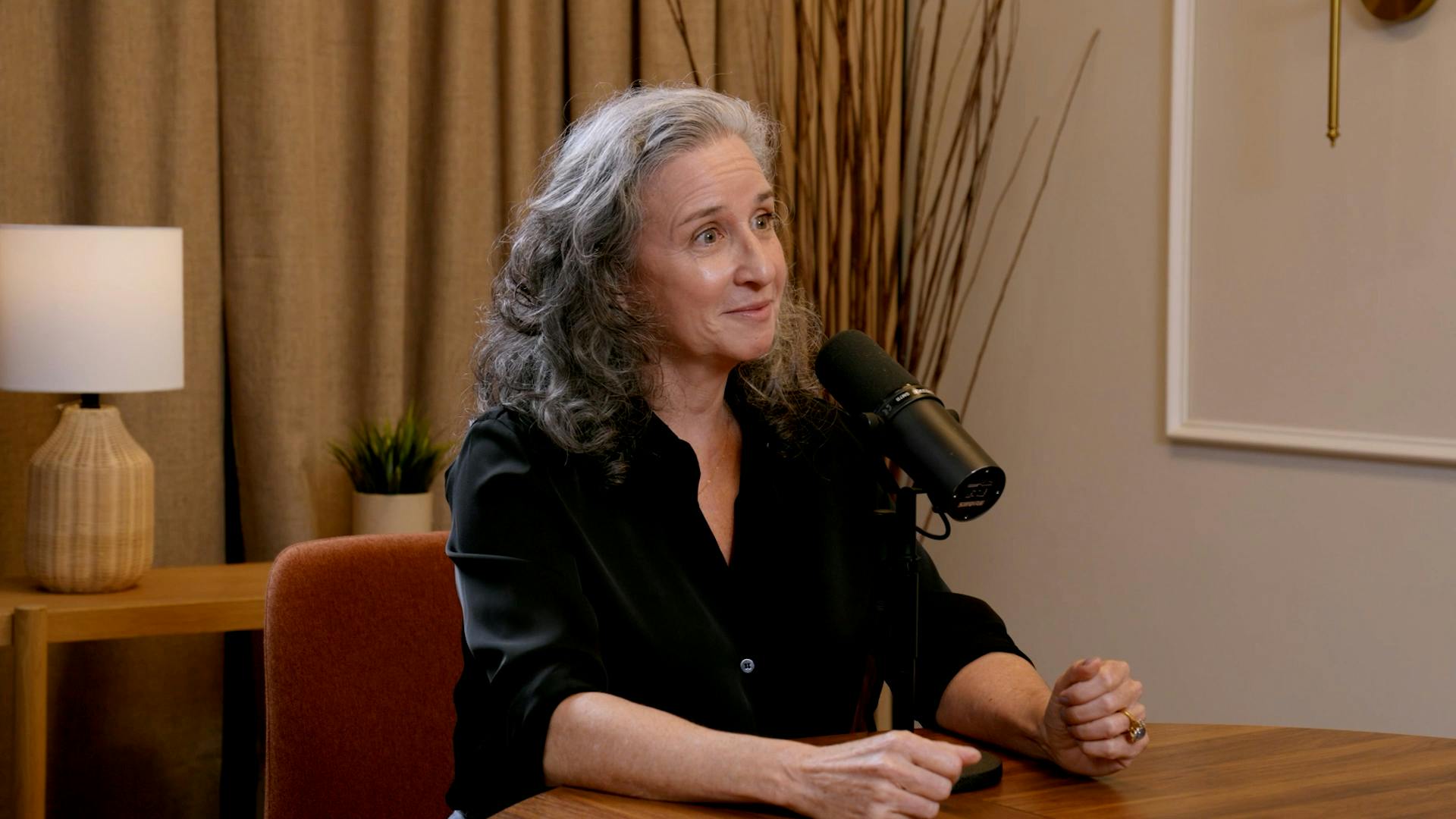
The Neuro Experience
You’re Not Depressed—You’re Hormonal: The Hidden Women’s Health Crisis | Dr. Suzanne Gilberg-Lenz
01:08:18
Loading summary
Transcript254 lines
- [00:00]
Louise Nicola
Nearly one in four women in their 40s and 50s in the US are prescribed SSRIs or antidepressants. Yet research shows perimenopause is a period of greatest hormonal volatility in a woman's life. Today, we're confronting one of the most overlooked realities in women's health. Millions of women in their 40s and 50s are being prescribed antidepressants.
- [00:21]
Dr. Suzanne Gilbert
You see this rapid decline of hormone use. And what do you see? Essentially doubling of antidepressant use, of sleep meds, of anti anxiety meds doubling. You know, when you take away a tool that works really, really well for people, they're still going to have some of the issues and the problems that they're having, and they're going to reach for other tools.
- [00:42]
Louise Nicola
What's often labeled as depression may actually be the brain's response to profound physiological change.
- [00:48]
Dr. Suzanne Gilbert
Rage is a big one, or exacerbation of anxiety and panic. Like a lot. I had a patient once call them rage flashes.
- [00:55]
Louise Nicola
Oh, my gosh. Joining me today is Dr. Suzanne Gilbert, board certified OBGYN integrative health practitioner, author and founder of Menopause Bootcamp.
- [01:05]
Dr. Suzanne Gilbert
As these hormone levels are changing, declining, going way higher than they normally would and are unpredictable, the brain is impacted in many ways. So mood is going to be impacted.
- [01:15]
Louise Nicola
What is progesterone, exactly? What is that doing in the brain?
- [01:19]
Dr. Suzanne Gilbert
There's more of a sedative effect and, like a calming effect when we replace progesterone, like, their moods are less intense.
- [01:27]
Louise Nicola
In this episode, we'll explore what's really happening inside the female brain during midlife, why our healthcare system keeps missing it, and how we can start redefining women's mental and neurological health for the next generation.
- [01:40]
Dr. Suzanne Gilbert
Women deserve to know about their bodies. And how can we live on this planet and not understand our bodily experience? I mean, that's just like basic human rights.
- [01:47]
Louise Nicola
I'm Louise Nicola, and this is the neuro experience. Dr. Suzanne Gilbert. Welcome to the podcast.
- [01:53]
Dr. Suzanne Gilbert
Oh, thank you so much for having me.
- [01:55]
Louise Nicola
I mean, we've been going back and forth. It's Menopause Awareness Month, so what better time to get you in here?
- [02:00]
Dr. Suzanne Gilbert
Perfect, perfect. Love it.
- [02:01]
Louise Nicola
So you're a board certified OB gyn. I thought, who better to talk about this? Yeah, and today we're going to tackle depression, anxiety, basically mental health during midlife. And I think it's something that's often misdiagnosed but not spoken about. I think there's this fear that women feel in this moment where they don't know. You know, I've heard reports of women not feeling like themselves.
- [02:26]
Dr. Suzanne Gilbert
Oh, yeah, that's a term that is used in the medical literature, just so you know.
- [02:30]
Louise Nicola
Oh, that's unbelievable. And I've also heard, correct me if I'm wrong, actually, Dr. Kelly Kasperson told me about this, that rage is something that is observed in women in midlife and that can be actually counteracted or you can feel better from rage by taking testosterone.
- [02:49]
Dr. Suzanne Gilbert
I mean, Kelly is the testosterone person, and I don't know the data the way she does. In midlife, there are a number of hormonal changes that are occurring and in what we would now start referring to as the perimenopause. Right. So the seven to 10 years or more, depending on who you quote, leading up to that final menstrual period, it's not a predictable course, it's predictably unpredictable. So I really wanna lay the foundation so people understand. So testosterone is declining. Estrogen and progesterone are fluctuating in ways that are not so smooth and predictable, like when you're menstruating. And all of these hormones. What people fail to understand, I think the public fails to understand. And maybe our colleagues aren't thinking about it this way. They all affect everything. It's a whole body experience. So that means the brain is involved. So the reason I'm kind of not answering that question is I really need people to understand that estrogen, progesterone and testosterone, if we just talk about the impact on the brain itself, act at a number of levels and they act globally in very complex ways, and then they interact with each other. So you can imagine as these hormone levels are changing, declining, going way higher than they normally would, and are unpredictable, the brain is impacted in many ways. So mood is going to be impacted. So I think to say that testosterone is the fix for something, I mean, I think we have to be careful of that. And I don't. Kelly is a really respected colleague and also personally a dear friend of mine, and I. So I don't think she's saying like, hey, oh, absolutely, the solution for rage is testosterone. But she's right that there is a lot of data on hormones mediating mood. Yes. Rage is a big one. I actually, what I see is a lot of new onset or exacerbation of anxiety and panic. A lot. Like, a lot. Way more than I would have thought. You know, like, this is just observationally, I've been in practice 26 years. I've seen a lot of patients. I had a Patient once call them rage flashes.
- [05:01]
Louise Nicola
Oh my gosh.
- [05:02]
Dr. Suzanne Gilbert
Yeah. So rage. And I think, you know, look, feelings are complicated.
- [05:07]
Louise Nicola
Exactly. That's what I mean. Like, how do you know if you're not feeling rage by something that has occurred externally? Cause I felt rage in my 20s.
- [05:14]
Dr. Suzanne Gilbert
Of course. Of course, of course. And I don't think anybody's saying like rage is new onset rage, you know? You know, it's like. But I do think I'll tell you, and I have this conversation all the time. I think what happens is a combination of things. Sort of the feelings are unroofed, a little bit like they're not so suppressed. There is this loss of resilience. But there's also this, you know, I think we're kind of joking around and talking about the no Fs to give 50s and that kind of thing. It's not just that. It's like people, lady people are done. They're frickin done. And now you add in their hormones are shifting and they're no longer capable of or wanting to suppress how they feel. I don't think it's one thing. I don't think it's like, oh, your progesterone is lower than it used to be and your estrogen's higher and so now you're having rage as if it's like some hormonal issue. It's like, no, y' all suck and treat us like shit and like we don't wanna deal with it anymore. And also, and FYI, we don't have as much estrogen in the same way, so we're not softening it anymore.
- [06:20]
Louise Nicola
Yes, actually, so funny you said that because that just reminded me of this new stat that I read about a few months ago that a lot of divorces are occurring in the midlife transition. I thought, well, that's really coincidental.
- [06:35]
Dr. Suzanne Gilbert
Is it though, right?
- [06:37]
Louise Nicola
We're going to go through everything. But just to close that loop. What I did learn in the last week was that testosterone specifically.
- [06:44]
Dr. Suzanne Gilbert
Oh yeah.
- [06:44]
Louise Nicola
Makes you more of who you are. So if you, when you are on hormones and you are enraged, it's bringing out maybe something else that you need to be speaking about or maybe you need to consult with somebody. So I think I want to go into that. Before we do, I just want to share something with you. Nearly one in four women in their 40s and 50s in the US are prescribed SSRIs or antidepressants. Yet research shows perimenopause is a period of greatest hormonal volatility. In a woman's life. Okay. So some of the first symptoms, as we said, is the fluctuation in moods.
- [07:22]
Dr. Suzanne Gilbert
Right.
- [07:22]
Louise Nicola
They go to their general practitioner maybe, and they say, I just. I'm not feel. And you can tell me as a physician, people go and say, I'm not feeling well. And then maybe they're prescribed an SSI. This is really happening in 2025.
- [07:36]
Dr. Suzanne Gilbert
Crazy. So let me just say these are all tools in the toolkit. Tools are not inherently good or bad. They are valuable for specific jobs. You know, you can't really hammer. You could hammer in a nail with a shoe, but it's going to better with a hammer. That's why we call it hammering. It's not that the hammer is good or bad. The hammer is good at a certain thing. I have an amazing graphic that I'll share with you that my dear friend Heidi Flagg, who's an ob GYN in New York City created. And it shows that in the years just preceding Women's Health Initiative being published and pulled. Actually, it wasn't really published. It was pulled and, you know, drama. So leading up to 2002, about 90 million women were on hormone replacement therapy. Okay. And you can. It's just such a. It's like an X. It's this dramatic. You see this rapid decline of hormone use. And what do you see? Essentially, doubling of antidepressant use, doubling of sleep meds, doubling of anti anxiety meds, doubling of pretty much all of those meds in the intervening years. And so, and that rises. So, you know, when you take away a tool that works really, really well for people, they're still gonna have some of the issues and the problems that they're having, and they're gonna reach for other tools there. I think there's a story to be told there that hasn't been told completely yet. I, you know, not interested in promoting any kind of theories, but I think it's. Yes, you're right. And I think it's astonishing. And concerning that, 25% of us are being offered meds that probably a large number of us could benefit from. But a lot of those people really probably just need hormones.
- [09:27]
Louise Nicola
But why is that? Like, what is the. What's happening in the brain itself? So what we know is that depression is what, a deficiency in serotonin? It's a neurotransmitter.
- [09:38]
Dr. Suzanne Gilbert
Look, we know that providing a serotonin reuptake inhibitor increases serotonin in the synapse.
- [09:47]
Louise Nicola
Yeah, the presynaptic terminal.
- [09:49]
Dr. Suzanne Gilbert
Yes, it does decrease symptoms. I Am pretty sure, and I'm not a neuroscientist, that we've never actually proven that that's the only reason that depression happens. I mean, this is a sort of a much larger conversation, but we definitely know that that helps estrogen. If you just look at estrogen per se, if you're looking at estrogen rapid, unpredictable fluctuations in perimenopause, estrogen has way more global impacts on neurotransmission. Neurotransmission, neurotrans production and not just serotonin. Serotonin, gaba, acetylcholine. I mean, a number of them, many of them has an impact on different levels of not only the production of the neurotransmitter, the transmission of the neurotransmitter, how the nerves are working together. So it has a really big impact on the brain. So, sure, if you replace one of those neurotransmitters, that is probably gonna help quite a bit. But for a lot of women, really, the issue is the estrogen. It's not the serotonin, it's the estrogen, which is impacting many other more complex relationships. And I think the other thing that we see is that, for instance, women who are already on antidepressants who enter into perimenopause, often they're gonna have episodic exacerbations. They're already on the medication now. It's not working as well. What is that? Well, it's not just estrogen either. It's progesterone as well, which has, you know, llpragnenolone. There's a lot of other impacts on the brain when women have a history of a hormonally mediated mood disorder at any other time in their life. So if they had very severe premenstrual syndrome or pmdd, if they had a peripartum mood disorder, if they had anxiety or depression related to their pregnancy or postpartum, they are at such high risk for having a mood disorder resurface or get worse again at perimenopause. People who've had eating disorders like all these things start to unroofed again because the instability, and I think the instability in the brain due to these changes in the hormones is having a really negative effect. So, yes, an SSRI could be helpful, but it may not be the only thing.
- [12:08]
Louise Nicola
You're just masking it.
- [12:09]
Dr. Suzanne Gilbert
Yeah, maybe.
- [12:10]
Louise Nicola
Yeah. It's so interesting you said that. So I'm in the middle of doing a meta analysis right now, and what we're looking at is the, you know hormone replacement therapy versus vasomotor symptoms without going into it, and cognitive decline. But what I found out is that whatever you are before moving into perimenopause is exasperated. Meaning if you are a diabetic, type 2 diabetic, or you're insulin resistant, or you are obese and you are 25 to 35 years old, and then you go into perimenopause, you. It is just exasperated. It's like putting steroids on your already existing condition. So what you're saying is now if somebody is in that stage, 25 to 35, and they haven't maybe seen a therapist, let's just say, oh, they're struggling with mental health issues, and then they go in to that perimenopause stage and they lose estrogen. That's just putting fuel on the fire.
- [13:06]
Dr. Suzanne Gilbert
Yeah, yeah. And again, it's not just estrogen. It's progesterone as well.
- [13:10]
Louise Nicola
Cause that's the sedative gamma, you know.
- [13:12]
Dr. Suzanne Gilbert
Right, exactly. It goes more to. And that's why we see a lot of women will come in with, you know, in perimenopause and describe that their pms, which had been like a day or two, or maybe it was like it was annoying, but they knew that's what it is. I'm gonna get my period in three days, so just stay away from me. Now. It gets much more intense. It becomes much harder to control. It gets much darker. Like I mentioned earlier, now there's panic or anxiety as a part of it. So that sounds to me more like progesterone, because especially right before your cycle or right before you bleed, you have a more precipitous Dr. In progesterone. So it's complicated. And guess what? We don't know enough about it because we haven't been studying it, because women.
- [13:56]
Louise Nicola
Have not been studied well.
- [13:57]
Dr. Suzanne Gilbert
Women haven't been studied to begin with. And then the Women's Health Initiative had, like, a really massive chilling effect on the capacity and the appetite to study this stuff. I'm hopeful it will change. We'll see what happens.
- [14:12]
Louise Nicola
You know how passionately I feel about blood work.
- [14:14]
Louise Nicola (Sponsor/Ad Reads)
And if you care about your brain, your mood, your energy, your longevity, you cannot rely on guesswork. And there was a point a couple years ago where I realized I knew everything about my laptop data, my training data, even my sleep data, but I had no idea what's happening inside my body. And this disconnect was affecting my brain and everything else. That's when I started using function, health and blood work as a whole. And it's the first time I've truly had a complete picture of over 160 different biomarkers, ranging from hormones to inflammation to thyroid panels. Everything in between. Guys, you need to be getting blood blood work. I will not keep harping on about this. It is so clear to me that people don't get regular blood work and it's holding you back in every area of your life. And Function is probably the best platform I've come across because they get all of your data. Once you do your blood work, they upload it into the health platform and they track it over time so you can be tracking your blood work and your progress. If you haven't tried Function Health yet and you want to, you can get a lot of money off by signing up using code NEURO25 at checkout or go to functionhealth.com Louisanicola let's talk about grocery shopping because I hit a point recently where the biggest friction in healthy eating isn't knowledge, it's logistics and time. I'm busy, you're busy. But if your fridge only has coffee and sparkling water in it, then you know you're not getting the best thing that your brain needs. I fell in love with online grocery shopping, specifically Thrive Market, because it takes all of the overwhelm out of groc shopping. They vet every product for you so you don't have to do it. The ingredient filters are incredibly helpful, and my pantry staples arrive at my door without me thinking about it. So if you're getting your grocery shopping in person, you probably have a lot of time on your hands. But if you need to manage your time, if you're a mother, if you're an entrepreneur, whatever it is, go to thrive market.com neuro you'll get 30% off your first order. You'll also get a $60 gift. Guys, save time and get healthy with.
- [16:29]
Louise Nicola
Thrive market.com neuro so I always share a bit about myself on these podcasts and I I'm regular every 28 days and I do experience and I have. So by the way, from my early 20s, I have experienced, okay, two or three days prior to menstruating. I am very angry. It's like I need to have people around me, closest to me, have the calendar, don't interfere. And it's really bad. And it's like I forget every month.
- [16:59]
Dr. Suzanne Gilbert
Yeah, yeah, yeah.
- [16:59]
Louise Nicola
Because I think it's like the end of the world and what has. And it's like every month and I'm mid-30s, I'm like, I still haven't learned my lesson, and now I'm scared.
- [17:08]
Dr. Suzanne Gilbert
Oh, don't be scared, because guess what? You're gonna go into the next 20 years way more educated, and honestly, the context for you culturally is gonna be really, really, really different. So I published a book. It'll be, I mean, like, next week, three years ago, which is crazy to me, really. Nobody was really talking about this when I sold the book. And then all of a sudden the book came out, and it was like the zeitgeist had shifted and everybody was talking about it.
- [17:34]
Louise Nicola (Sponsor/Ad Reads)
Yes.
- [17:35]
Dr. Suzanne Gilbert
So, you know, that first pause event was then. And that's where I met Kelly and all these other people. And it just has exploded. So even in the last couple years, the conversation is happening. And what's happening is it's not just women in their 50s who are talking about now. It's women in their 40s, women in their 30s, women in their 20s understand what it is. So you're gonna. That time of life with so much more support, understanding. I'm hopeful there'll be more data by then.
- [18:00]
Louise Nicola
The brain is. And you know what happens in the brain when we start to get a decline in estrogen, progesterone, and testosterone. I'm starting to include this in the mix now as my trifecta. We don't hear about it a lot. It's all about estrogen. I'm trying to bring in testosterone. And, you know, don't even get me started on the data of genetics.
- [18:19]
Dr. Suzanne Gilbert
Right.
- [18:20]
Louise Nicola
Because the apoe, Alzheimer's disease researcher, we won't go in there today, but let's just. Let's just paint a broad overview of estrogen in the brain. What I know is that a. It's neuroprotective.
- [18:33]
Dr. Suzanne Gilbert
Yes.
- [18:33]
Louise Nicola
It does help immensely with the transport of glucose in and out of the cells.
- [18:38]
Dr. Suzanne Gilbert
So it.
- [18:38]
Louise Nicola
It. We see a reduction of brain glucose metabolism.
- [18:42]
Dr. Suzanne Gilbert
I mean, you've seen the Dr. Lisa mascara's work. You can see the color change.
- [18:47]
Louise Nicola
We see that in the amygdala especially, which is probably why. Fight or flight, what is progesterone exactly? What is that doing in the brain?
- [18:56]
Dr. Suzanne Gilbert
We don't know enough about it. We know that progesterone induces GABA receptors, so there's more of a sedative effect and like a calming effect. So one of the things that we know clinically is we see that when we replace progesterone, people start to sleep better. But there's also a lot of people have a little, like, their moods are less intense so it works. I've seen it work really well. I mean, anecdotally, I use it a lot in the luteal phase for, you know, in perimenopause, when people are coming in with just all of that, the rage, the mood stuff, just the mood instability leading up to their bleed. I find it helps a lot, and that makes sense to me. Right. Because we know that in the period of time where people are still ovulating, the egg quality is not as good. And so you're not gonna make as much progesterone after that. You may ovulate, and you may ovulate really regularly, but you're not gonna make as much progesterone because that's made in the ovary. Right. The corpus luteum is there, like waiting for a conception just in case. And then when it doesn't happen, that's when you shed the lining and everything goes away. Right. But the corpus luteum is totally 100% responsible for. And that's the area around where the follicle where the egg was ovulated from. That's where the progesterone's coming from. So the ovary is making progesterone, but not as much. And so the brain is missing it, you know, And I mean, we're barely scratching the surface on what's going on with estrogen receptors and estrogen, let alone progesterone. So we know what it does. But more than that, I think it's hard to say.
- [20:35]
Louise Nicola
You know, something that I don't understand. It is just. It's so interesting to me because you just spoke about, you know, we introduced fertility a little just there.
- [20:44]
Dr. Suzanne Gilbert
Yeah.
- [20:46]
Louise Nicola
What happens to women who have just born genetically with a low amh?
- [20:51]
Dr. Suzanne Gilbert
Yeah.
- [20:52]
Louise Nicola
Does this mean that they go into perimenopause earlier?
- [20:56]
Dr. Suzanne Gilbert
Well, AMH is definitely correlated with. I mean, you can't. Here's the thing, you can't. When we draw an amh, first of all, AMH really comes from the fertility literature.
- [21:06]
Louise Nicola
But I just hear so many times that it's got nothing to do. Like, it's scared people.
- [21:10]
Dr. Suzanne Gilbert
So what do you mean, that it has nothing to do with life?
- [21:12]
Louise Nicola
No, I mean, like, it scared a lot of women who are trying to fall pregnant. Because I've had people on here saying I had a next to nothing amh. My doctors told me I couldn't fall pregnant. And then at 42, they're falling pregnant.
- [21:23]
Dr. Suzanne Gilbert
Naturally because it's not. Because it's actually not a fertility predictor. AMH was developed initially As a predictor of who's going to respond better to in vitro fertilization. That is not the same thing as a fertility predictor. It's bled into common usage in this way. And. And actually there is data on AMH and prediction of time of menopause, but, like, within three to six years, you know what I mean? This can get down a rabbit hole. It's interesting, and it's not like my full area of expertise, but I just read on everything. This is where we're starting to look at cellular functioning, mitochondrial aging. I know a lot of people are really interested, like, well, is there a way that we can slow this down and extend fertility? I mean, I really don't know. I can't answer that question. I have no idea. Interested in it. I think there are conversations going on now. I think nutritional status, which is something that we haven't really looked at enough. Gut health. These are obviously playing a role. What role exactly? I don't think anything. Anybody who says with you, to you that they. With certainty. This really.
- [22:31]
Louise Nicola
Yeah.
- [22:32]
Dr. Suzanne Gilbert
Please bring the receipts.
- [22:33]
Louise Nicola
Yeah. I was just trying to think about mechanistically. Well, okay, low amount of eggs.
- [22:38]
Dr. Suzanne Gilbert
But. But it's not just low amount of eggs. AMH is reflective of the quality of the eggs. You may have lots and lots and lots of eggs, but they're not. The quality isn't so good. And you might become pregnant and it might not go to term. Pregnancy rates after 40, first of all. Pregnancy rates after 40 are on the rise. Yes. Not because fertility is better, but because women are trying to get pregnant. Right. You know, I think. But I think for the first time ever, in fact, women in their 40s are having more babies than teenagers are. Now. That says a lot about public health and cultural norms and birth control and all sorts of other things. Right. The thing is, these women are largely perimenopausal. We're gonna go off on another route, but I'm really fascinated by this because this whole convergence of fertility, postpartum and perimenopause is fascinating to me. And people are starting to talk about it. I've been talking about it. Other people are starting to talk about it. Because now you come in. So. Right. Their amh, whatever their AMH is. But there are people who are getting pregnant and having babies, some of them with assisted reproduction, but they're getting pregnant and having babies. Now they have a baby. Is it postpartum or is it perimenopause?
- [23:49]
Louise Nicola (Sponsor/Ad Reads)
Well, it's both.
- [23:50]
Dr. Suzanne Gilbert
The postpartum at 42 is not the postpartum at 32, it's not. It's a totally different postpartum. You're 10 years older, your body is older, you're having all sorts of side effects and, you know, hormonal shifts that are, again, predictable for postpartum, but they're ramped up. Talk about pouring steroids on them. So your hot flashes, your sleep disturbance, your mood disorders, your metabolic changes, just your strength, it's totally different. Not here to say don't have a baby at 42, but just don't have a baby at 42 and not understand that's what's coming, what you're getting into. Yeah, yeah. And we need to do better, too, because again, we need to be like, oh, no, no, you're just. You have a baby, it's normal. You're tired now, you need a little bit more help.
- [24:38]
Louise Nicola
Oh, yeah. You need a village, even if you're in your 20s, right?
- [24:41]
Dr. Suzanne Gilbert
Yes, you do. Yes, yes.
- [24:43]
Louise Nicola
The only reason I went down this is we're going to get off fertility. I just wanted to go down. I know, because I was just so interested to understand if you go into. Because we're at the pause of animal talking. They. They brought up early menopause due to a number of things. It could be a hysterectomy, oophorectomy, anything. And I was like, that's interesting. And then I thought about AMH and it wasn't clear to me, but it's actually the ovaries itself that's producing. So even if you've got no follicles.
- [25:10]
Louise Nicola (Sponsor/Ad Reads)
Okay.
- [25:10]
Louise Nicola
I mean, I don't know, I'm going down a tangent just trying to understand.
- [25:13]
Dr. Suzanne Gilbert
No, but I mean, listen, I feel like I would like to read more on this too, because it's not well enough understood. It just really, really isn't.
- [25:22]
Louise Nicola (Sponsor/Ad Reads)
And you know, I believe you follow.
- [25:24]
Louise Nicola
Your mother so irritatingly, if that's a word. I asked my mother, I've asked her several times, what age did you go into menopause? She tells me she doesn't know. She thinks it was 52.
- [25:34]
Dr. Suzanne Gilbert
Yeah.
- [25:35]
Louise Nicola
So I'm like, does that mean I will do that?
- [25:37]
Dr. Suzanne Gilbert
You know, I. I mean, there's some genetics. I think it depends on how much.
- [25:41]
Louise Nicola
You never had a hot flash, by the way. My mother never had that. Her sister, I love that. Suffered like her sister, on the other hand, who's two years younger than her, suffered immensely. And she's really gone through menopause in terms of the hot flashes and the moods.
- [25:57]
Dr. Suzanne Gilbert
With my mother, nothing.
- [25:58]
Louise Nicola
She's like, no, don't know what.
- [26:00]
Louise Nicola (Sponsor/Ad Reads)
And she never did.
- [26:01]
Louise Nicola
She never had a hot flush. She sleeps perfectly, never has disturbances. So I'm like, please go.
- [26:05]
Dr. Suzanne Gilbert
We're hoping for you. I also think, though, I mean, it depends on how old your mom is too, because there was a whole period of time where menopause wasn't talked about. And I hear this a lot from my patients who often. Yeah, she's 70.
- [26:16]
Louise Nicola
She never went through. She was depressed. But also people.
- [26:19]
Dr. Suzanne Gilbert
Exactly. So then people didn't talk about it. Like, now everybody's talking about it. So everybody's, like, really digging in and understanding how they feel. And, like, they're all in their feelings anyways. It's a different generation, but that generation was also, like, stiff upper lip. You don't talk about it. Nobody. Like, there was nothing to do. Just keep going. Hopefully your mom did have an easy transition. And I hope that for you and for everybody. But I think some of this, like, lack of memory is, like, it just was buried.
- [26:46]
Louise Nicola
Can you still. Cause I got a message on Instagram. I get a lot of messages, and one woman reached out to me. She goes, hey, I just want you to know I just listened to your episode, whatever one it was. She's like, I've been on hormone replacement therapy, estrogen patch. She's 47.
- [27:01]
Dr. Suzanne Gilbert
Yeah.
- [27:02]
Louise Nicola
She goes, and I fell pregnant naturally. I don't know what happened next. And she goes. She goes, I didn't know that you could fall pregnant and be on hormones at the same time. So my question to you is, what if a woman you suspect has come to you and she's 39, 40, and you believe she's going into. She's in perimenopause, but she says, I want to still. I want to conceive. Can she still do that with an estrogen patch on?
- [27:27]
Dr. Suzanne Gilbert
I mean, yeah. Do I recommend she do it? I think this is a really good convers because 39, 47. Look, if you're still menstruating, you could still get pregnant. So it doesn't matter what age you are. Like, if you're menstruating, you're ovulating. You may not be ovulating, the best egg in the world, but you could. So I feel for this person, because I'm guessing she didn't think that could happen.
- [27:53]
Louise Nicola
She didn't.
- [27:54]
Dr. Suzanne Gilbert
I mean, it's always the person who thinks it can't happen, that it happens too. Unfortunately, I think it's just a matter of what we call shared decision making. So if a 39 year old comes into me, and we've excluded other reasons for her symptoms. And she's perimenopausal and she really wants to try hormone therapy. We also have to have a conversation about her sex life and her fertility desires, because that's a different conversation. If somebody is on hormone therapy, specifically on estrogen and progesterone, and gets pregnant, it's really not going to be a big deal. Like, if people are doing fertility treatments, they're gonna be way higher doses of that, too. Testosterone's a different story.
- [28:32]
Louise Nicola
Yes, yes.
- [28:33]
Dr. Suzanne Gilbert
So this is why it's really important for people to understand the decisions that they are making and advocate for themselves. Right. Because you would hope that a clinician will have a conversation about these things, but unfortunately we can't rely on that.
- [28:46]
Louise Nicola
It's an interesting era. And I still don't think that. What are the statistics right now? 5% of the population are on hormones.
- [28:56]
Dr. Suzanne Gilbert
North America. I mean, like, that's being. They have to. They've cobbled that together from, like, you know, pharmacy benefit usage. So if you add in compounding, you know, pharmacies, which are not going to be part of those databases. Yeah, it's probably 5, 6%, which is. It went from over 40% in the late 90s to less than 5. Like, let's say 5%. Not a lot of people using it.
- [29:18]
Louise Nicola (Sponsor/Ad Reads)
I cleaned up my diet, my sleep, my training. But the last frontier was actually my home. So let's talk about cleaning products. Because most traditional cleaners, they release chemicals that impact your hormones, your lungs, even your cognition. And then we bring them into our homes without thinking. This is why I now use Branch Basics. It's one of the simplest upgrades I've made. One concentrate replaces everything under your sink. Kitchen, bathroom, laundry. There's no fragrance in these. There's no endocrine disruptors. There's no headaches. After cleaning, you feel better because you know that when you're breathing in the fume from the cleaning product, you know that it's cleaner for you because there's nothing harmful in it. So Branch Basics. I moved onto this and it's been amazing for me. And you can too. You can get 15% off the premium starter kit@branchbasics.com use code neuro for 15% off. One thing I learned is the way you start your day sets the tone for your entire brain and body. Now, my mornings begin with coffee. Yes. And coffee's so good for cognition.
- [30:26]
Louise Nicola
Guys, guys.
- [30:27]
Louise Nicola (Sponsor/Ad Reads)
I have now been using Bubs Naturals, MCT oil creamer, in my coffee because it gives me smooth, steady energy without the crash and it actually curbs my appetite. It blends perfectly. It's made with clean ingredients. You guys know I love that. And it supports brain function by helping your body produce ketones. That's one of the most efficient fuels for cognitive performance. I love the Bubs Naturals mission. It's named after a Navy SEAL and built around integrity and service. And 10% of all profits go to the veteran and first responder foundations, which makes every single purchase even more meaningful. If you aren't on collagen peptides, let me tell you, you have to get on them. Try it for yourself@bubsnaturals.com use code Louisa for 20% off. Guys, it tastes amazing.
- [31:18]
Louise Nicola
By the way, why are you so passionate about pushing this movement forward and educating the world?
- [31:25]
Dr. Suzanne Gilbert
Women deserve to know about their bodies. And how can we live on this planet and not in our bodily experience? I mean that's just like basic human rights. So I, and I appreciate the way you worded that because I want to push the narrative forward that we have a right to exist on the planet, which seems really basic and may seem like dramatic on my part, but like the narrative has been you disappear, you are invisible, you go away. It's all bad. Frailty, disease, badness, right? You know, just like, please be over there and be quiet. So I obviously don't buy that at all. And I think when we have the resources and the support to get through the experience in the way that we want to get through, a lot of us will be on hormone therapy. I think a lot more of us should be on hormone therapy. Do I think every single woman needs to be on hormone therapy? I think it's up to them to make a decision as long as they are getting good information. Because I always say this, it's not informed consent if you don't have the information. But more importantly, if we are resourced appropriately and supported, we can move through this transition into the best phase of our lives. Like you kind of said it a little bit in a different way, but this to me, it's the return to your authentic self. That has been my personal experience and I've seen it happen with many, many, many patients and many women that I interface with online, in events, whatever it is, educating people. There's this incredible sense of restoration, of confidence, of calm, of purpose, of joy, really a liber liberation from not only your cycle, which, you know, for many of us it's annoying, you know, or it's disruptive. And I think this idea that, like, it is a beautiful part of being a woman, but is it the only embodiment of femininity? Not in my experience or in my opinion. So we kind of have to go through the loss of it and kind of bend our minds around it, and then you're really liberated is the way I say.
- [33:28]
Louise Nicola
That's interesting.
- [33:29]
Dr. Suzanne Gilbert
Yeah. Very empowering.
- [33:30]
Louise Nicola
Yes. Sometimes you feel you can identify as a woman due to your menstrual cycle each month, and that's what makes you.
- [33:38]
Dr. Suzanne Gilbert
Right.
- [33:38]
Louise Nicola
That's what happening.
- [33:39]
Dr. Suzanne Gilbert
Since that makes you a woman. It's like, really? Is that what makes you a woman?
- [33:42]
Louise Nicola
Yeah.
- [33:42]
Dr. Suzanne Gilbert
I mean, I think there are many, many, many things that have challenged that notion of what makes a person a woman. Oh, yeah.
- [33:48]
Louise Nicola
Well, of course, what we know now, I just learned that even transgender men can fall pregnant.
- [33:53]
Dr. Suzanne Gilbert
Yeah. If they have all their parts. Parts. It's so.
- [33:55]
Louise Nicola
It's very interesting. And I was like, oh, but. So that means that the amount of testosterone circulating in them still doesn't mean that it out competes estrogen. And so there's just so much that I'm learning as well that you think, how is this. It's 20, 25. What's going to be happening in, like, in a hundred years? You know, I won't be here to experience that. Back to the, you know, serotonin and gut health and women who experience this and they go on SSRIs. It's interesting because you see that people who fix their gut. I don't know if you've experienced this because I know you're into. You've done a lot of Ayurvedic medicine.
- [34:30]
Dr. Suzanne Gilbert
Yeah, I know. I'm trained in Ayurveda.
- [34:31]
Louise Nicola
Yeah, yeah, yeah, very, you know, Western medicine board certified. And Eastern medicine, I believe, is Ayurvedic. It's interesting to see somebody who's trained in both. What do you learn about healing the gut when it comes to depressive, like, symptoms?
- [34:48]
Dr. Suzanne Gilbert
Well, I mean. I mean, again, this is a complicated story, but we now know that the gut is the seat of the majority of our neurotransmitter production and our immune system production. It's very, very much a modulator and regulator of our metabolism. It has a huge impact on hormone production. In fact, there is a part of the microbiome called the estroblome. So. So we know that estrogen is recycled and reabsorbed and transmitted largely via the. I mean, obviously it's the gut itself. So gut health has a huge impact on our overall Health. Ayurveda, which is the ancient Indian medical system of the subcontinent of India. There's many principles, but the primary principle in terms of health is gut health. This idea of something called the agni or the digestive fire.
- [35:46]
Louise Nicola (Sponsor/Ad Reads)
So.
- [35:47]
Louise Nicola
So.
- [35:47]
Dr. Suzanne Gilbert
And the earliest texts that are medical texts that exist on the planet are ayurvedic texts, conservatively 2,000 years old. It's probably older than that. Chinese medicine and Indian medicine grew up around the same time. There are a lot of similarities, some differences. But the earliest texts that exist, I believe, are Ayurvedic texts. It's so interesting to me that these ancient healers understood the gut and the impact of the gut on the mind and on every other aspect of the body. Well, before we could slice and dice and use an electron microscope and name all the different microbiome components and understand that the villi did this and the immune system is that and blah, blah, blah, blah. And now we're catching up with that. I always find that amusing. Well, how does amusing. Now we're proving it. Now we're proving it. Now it's real.
- [36:34]
Louise Nicola
How are we proving it?
- [36:35]
Dr. Suzanne Gilbert
Well, I'm saying we're looking. We have huge labs devoted to these things. And now it's real.
- [36:41]
Louise Nicola
What's the crossover between menopause and a. Of Ayurvedic medicine? Because I was gonna say you can't supplement your way out of menopause.
- [36:50]
Dr. Suzanne Gilbert
Oh, no, no, no, no, no, no.
- [36:51]
Louise Nicola
You can't think your way out of it.
- [36:53]
Dr. Suzanne Gilbert
No.
- [36:54]
Louise Nicola
So it is. It's definitely a certainty for all women.
- [36:57]
Dr. Suzanne Gilbert
Yeah. If you're alive, if you guys live.
- [37:00]
Louise Nicola
That long, it is death, taxes. And menopause.
- [37:03]
Dr. Suzanne Gilbert
And menopause.
- [37:03]
Louise Nicola
Right, right.
- [37:04]
Dr. Suzanne Gilbert
And maybe not even in that order.
- [37:05]
Louise Nicola (Sponsor/Ad Reads)
Exactly.
- [37:06]
Louise Nicola
Oh, my gosh. Don't scare me. Why the interest in Eastern medicine?
- [37:10]
Dr. Suzanne Gilbert
Well, I had done yoga, you know, on and off, as a young person. I came out of my medical training. I had two small children. I was starting my practice. It was a very exciting but stressful time in my life. I actually met a person. I mean, the story is this. I met in my senior year of my residency a patient in the clinic. You had your patients. Okay. This person needs. She needed a hysterectomy. She had enormous, huge fibroids. Fibroids that were like. I've never seen such big fibroids in my life.
- [37:39]
Louise Nicola (Sponsor/Ad Reads)
What?
- [37:39]
Dr. Suzanne Gilbert
Pacific what?
- [37:40]
Louise Nicola
Centimeter?
- [37:41]
Dr. Suzanne Gilbert
Oh, my God. They were like, I'm telling you, it looked like 47 week pregnancy. Okay. Which is amazing.
- [37:45]
Louise Nicola (Sponsor/Ad Reads)
Oh, my God.
- [37:46]
Dr. Suzanne Gilbert
Like humongous. And she was a teeny, tiny lady, right? She'd tried everything. She was not my patient in the clinic. The way the structure worked was you had your clinic patients, and I was the chief resident on the gynecology, on the surgery service. And so my junior resident said, hey, okay, I got this patient. This is what we gotta do. We gotta do, okay. We're doing a hysterectomy. Fine. I meet her the day of surgery. I don't even know this lady. I go into the pre op area to introduce myself, say, hi, how are you doing? What's. You know, we're gonna do this thing. You're gonna be fine. Like, be a nice person. I meet her and she says to me, listen, I've got these essential oils and I'd like to put them on you to help you have clarity in the operating room. I was like, go ahead, bring it. Absolutely. I mean, I'm thinking, like, what the fuck? But I was like, listen, this lady literally met me two minutes ago, and I'm gonna cut her open stem to stern. She wants to put some oil behind my ears. I could do what you need. Yes. Like, let her feel safe. My Lord, she didn't even know. That's that we do the surgery. I'm telling you, it's. I don't even. It's almost 30 years ago. I remember the surgery. It was one of the most challenging surgeries I have ever done. The next day, I go see her post op to check in. You know, I'm rounding, I'm seeing her. Her room has Tibetan prayer flags. It does not smell like a hospital. All her friends have brought food. She's got beautiful soup. And she's recovering and she does great. She has a huge incision. She recovers so rapidly, everybody kind of wants to be in the room. The nurses want to go. Everybody's like, this is so what's happen. The vibe. There's a vibe, right? So I must have seen her post op in clinic or something. And she pulled me aside and said, look, I want to thank you because you did me a kindness and I really needed it. And what you didn't know is that right before you walked in, your attending physician, who was this amazing but very conservative southern gentleman, had come in and she offered the same thing to him. And he kind of balked. Like he was surprised, you know, he was like, oh, my God, I'm in la. What is happening? Right? This is. We're not in South Carolina anymore. And I didn't know that. And she said, I just. I really. I Appreciate that. And I'm giving you my card. I teach Pilates and yoga and meditation, and I would love to give you a gift. And I was like, that is so nice of you. Boundaries. Thanks, but no thanks. But thank you for letting me know. I'm so glad you had a good experience. I was graduated, had my second baby cleaning. About to have my second baby cleaning out the room that was my office was going to become my new baby's room. And I found her card. And I had now finished residency. I was like, oh, you know, I'm not a resident anymore and I'm really stressed out. I'm a stressed out mom of now I'm have two kids. What am I doing? I need to calm down. So I called her and I did Pilates with her. And then she ended up teaching me meditation. And then she one day said to me, ayurveda, I think it's for you, literally. And I was like, what are you even talking about? She's like, I think you should study Ayurveda. And I was like, what is even. What is Ayurveda? And she's like, go check it out. I started looking into it and I started reading it. And I was like, this is so interesting and fascinating and anything I could find out, I would like go to a talk. Ultimately, I went to the Chopra Center. Deepak Chopra was still teaching physicians at that time. They had a program for healthcare practitioners. Cause they knew smart doctors aren't listening to anybody else. They need to hear it from a doctor. And I went down for a week and my mind was blown. And I was like, this is what I'm missing. I loved medicine. I loved conventional medicine. It's a miracle. But something was missing. The spirituality was missing for me. The healing energy that I knew was being transmitted back and forth. By the way, because we receive quite a bit from our patients if we are paying attention. It wasn't enough for me and I was super curious. So I decided to pursue it really for my own benefit. Like, I wasn't like, oh, I'm going to now be an Ayurvedic practitioner. Ended up doing like a really serious course of study and an accredited institution and an internship and making herbs for my patients. And I mean a whole lot. Like, while I was doing my conventional practice, this person, this encounter changed my life, changed my career, opened up so many doors. Microbiome, all this stuff. I've been into all this stuff for a really long time. Because Ayurveda helped me think more critically. And on a bigger picture level about stuff and also gave me different tools. Right. Like looking at the history of how humans interact with healing tools, how we interact with the environment, how the local seasonal rituals impact our health, how we impact each other's health. I just, even though I continued to practice conventional medicine, and I still do, I just thought differently about all of it. Much more interesting for me, that is.
- [42:28]
Louise Nicola
Because as I'm getting older and experiencing all new things, I keep. And obviously reading Instagram quotes, I think to myself, do you, you know, are your thoughts really making you feel a certain way? I'm going to post a reel tomorrow. I found amazing data, an amazing study on negative thought pattern thinking and Alzheimer's disease.
- [42:58]
Dr. Suzanne Gilbert
Oh, wow.
- [42:59]
Louise Nicola
Yes. And it wasn't a correlation study. So I'm.
- [43:01]
Dr. Suzanne Gilbert
And I.
- [43:02]
Louise Nicola
And that was very interesting to me. And I thought to my. Is this because of maybe the elevation in cortisol? Maybe you can trick your brain. What we know in neuroscience is when neurons fire together, they wire together. So can your negative thought patterns really convince your brain that you are perceiving whatever it is that you've concocted in your head, which is raising cortisol, which is inducing neural inflammation and leading to neuronal death? Is that the pathway? Have I gotten it right?
- [43:30]
Dr. Suzanne Gilbert
I think you, I mean, you have gotten it right. And I think we don't completely understand all of it yet. And, you know, kind of getting back to estrogen, estrogen in its sort of sweet spot is anti inflammatory. And that's one of the reasons that, you know, I don't think we, I mean, I know we don't fully understand what is going on in perimenopause that is setting us up, some of us up for dementia and Alzheimer's specifically. Because it looks, honestly, it's not just the loss of estrogen, it's something that's going on in perimenopause and that up, down, up, down, unpredictability, you're getting very, very high highs and very, very low lows, both of which are inflammatory. So it's kind of like a stay in. Right. It's a soup of inflammation. And that would really, to me, I mean, that is intellectually appealing. I don't know what the data is. It is. But what you're telling me absolutely makes sense because it's yet another. It's just like another.
- [44:31]
Louise Nicola
Yeah, well, it's. It kind of reminds me of hypertension.
- [44:34]
Dr. Suzanne Gilbert
Yeah.
- [44:35]
Louise Nicola
You know what we don't want to see, which is quite interesting because the data from the Sprint study literally is like you must be 120 over 80 as gold standard. And it's like, yeah, well, I'm 130 over 85. Yeah, no, that's bad because then that's when you start actually killing off the capillaries in your brain. So. And we know that even fluctuations in glucose, you don't want to be like this. You don't want to be like this. So it's kind of similar with perimenopause.
- [44:58]
Dr. Suzanne Gilbert
Well, so you're getting all of those things though, right? Because you're getting estrogen impacting the vascular endothelium and you're getting more stiffness. Right. So you're getting less oxygen flow. You're getting electric oxide. Yeah, 100%. So you have the glucose metabolism piece, you have the loss of sleep, the increase in stress, and all of those neurotransmitters. So, I mean, look like, hello, you're lining all these things up that are like pushing you toward now you add in, you sprinkle in some genetic predefined predisposition.
- [45:30]
Louise Nicola
Yeah.
- [45:30]
Dr. Suzanne Gilbert
So again, I don't.
- [45:31]
Louise Nicola
And lifestyle events like what I go through now, it's like I remember my 20s. I'm like, oh, my God, I was skating through, you know, like, I was so dumb. I don't know, maybe just didn't. So naive compared to, like, what you.
- [45:46]
Dr. Suzanne Gilbert
Know now as you're the person that you were at that time.
- [45:49]
Louise Nicola
I love that yourself.
- [45:51]
Louise Nicola (Sponsor/Ad Reads)
Okay, so there's something about what you wear that really shines, shapes, how you feel. I didn't know this until I started looking deeper into my fashion and my clothing and I started to mix things up. But I stopped, you know, wearing fancy clothes at the gym because I didn't think that it really mattered until I turned to Viori. I'm such a huge fan because their dream knit fabric is unbelievably soft, like a version of comfort that your brain instantly recognized. I wear their joggers for travel, guys. I travel like every three weeks and I hate it. But it's so much better. Better being able to travel in vori. So if you guys want clean products, you want to look good, and you want comfortable clothing where your body feels supported. Well, turn to vuori. You'll get 20% off your first purchase if you go to vuori.com neuro that is V-U-O-R-I.com neuro all right, so let's.
- [46:51]
Sponsor Representative
Talk about liposomal glutathione. I know you guys know what glutathione is. Row nutrition has probably the form of liposomal glutathione. Their liposomal delivery system helps your body actually absorb antioxidants like glutathione. They also have an NAD one and curcumin. And what happens is when it goes in liposomally, it actually absorbs better because it doesn't get destroyed by the digestive tract. So their liposomal glutathione is something that I've personally been doing taking. I love glutathione. If I do it with an iv, I do that too.
- [47:31]
Louise Nicola
I really, really love it.
- [47:32]
Sponsor Representative
I do it every single week. But then I found out that ROW nutrition actually has them in liposomal form. Now let me tell you something about glutathione. It's the master antioxidant. It's the thing that your cells rely on to neutralize free radicals, support detox pathways and protect your mitochondria. So when glutathione levels are strong, everything from energy to mood to skin clarity even improves natural. And this is the first form where I've genuinely felt a shift. If you want to look at it, you can go to rownutrition.com use code NEURO to get 20% off. Just go to rownutrition.Com code NEURO to get 20 percent off.
- [48:14]
Louise Nicola
So a woman comes to you at 37 years old and she's on an antidepressant because she was seeing a fluctuation of the is you do a blood test. Her blood test comes back as normal for estrogen progesterone. She's menstruating every 28 days. Fantastic. She's irritable. Maybe she's getting rage. She's very stressed at her job. What do you do?
- [48:38]
Dr. Suzanne Gilbert
I mean, it's a conversation. So first of all, thank you for bringing up the labs because the fact that labs are, quote, normal is not meaningful. I mean, first of all, what day are you checking the labs on what did her labs look like when she felt her best? I mean, we don't know any of these things yet. We don't have real reference ranges for anything other than for fertility, to be honest with you. So, I mean, I'm not mad at checking labs. I'm mad at checking labs for no reason and for people either using them as a tool of dismissal. Your labs are normal. Fine, bye. Or, oh, we need to replace every single thing. Look at your labs like that's not a thing. Like you made that up. Okay, please again, show me the receipts. There are none. So. But yes, we've checked there's nothing else going on with her. I mean, it depends. Did she just get thrown on the antidepressants? Which again, not mad at antidepressants. Just like if you don't need antidepressants and you also need hormones, you know, maybe we should be talking about that. The way I assess somebody is I ask them to, if they haven't tracked cycles, to track their cycles and their symptoms. And when there's an obvious pattern that, where they're peaking in, whatever the symptomatology is, mood, whatever it is around ovulation and again, premenstrually or often what will happen is from ovulation on, they just, they feel bad, bad, they feel different, they feel off, they're not sleeping well. All those things that to me that's perimenopause and that's where I can dig in and look at stuff. And some people I just put on progesterone the second half of their cycle. Some people I do estrogen and progesterone. It depends on the person. It is never one size fits all. I just had a person today who I did a follow up with, who came to me really feeling like that, just feeling really, really bad. And, and I started her on luteal progesterone and she was having hot flashes and stuff too. So I put her on a low dose estrogen patch and for 10 months she's done well. Today she's starting to skip her periods. More things are different, it's hard to track. So now we made a change. So my point being that things are gonna continue to evolve. This is an ongoing conversation. There isn't like this is plan A and this is plan B and it's followed by plan C And now here's the protocol and everybody. Nobody does it. No.
- [50:48]
Louise Nicola
That's why you've got to have a good relationship with your practitioner. Someone who knows it should be a board certification.
- [50:54]
Dr. Suzanne Gilbert
Oh yeah. I mean that's.
- [50:56]
Louise Nicola
Is that what everyone's lobbying against?
- [50:57]
Dr. Suzanne Gilbert
Well, no, I don't think anybody's lobbying against it. I think we have, I mean the politics around the OB gyn like training and how we're going to deal with this are a little bit intense. You know, the fact that we have a four year residency that is devoted to, to all things pregnancy, all things birth, gynecology office gynecology, physiologic changes, reproductive endocrinology, the specialties have fellowships, they have three more years. OBGYNs are not training, they are training hard. Anybody who's doing cancer care, they're doing an additional three to four years. Anybody who's doing minimally invasive gynecologic surgery or fertility or maternal fetal medicine or urogynecology, they're doing additional years after that, four years. But for those of us who are generalists, like, we're supposed to be doing everything. I mean, I really think there's gonna have to be a come to Jesus about how we're doing this. I think you're right. And I think the comprehensive nature of midlife women's health, because it's not just about the hormones, it's about the brain health, it's about the bone health, it's about the heart health, it's about the mental health, it's about the sexual health. And honestly, all of our lives should be that way. I mean, at 25, we are all human. We're whole human beings. And I think we have to fig how we're gonna. What our path forward is.
- [52:19]
Louise Nicola
No one has actually taken women in their 40s and 50s into consideration when it comes to this.
- [52:25]
Louise Nicola (Sponsor/Ad Reads)
Then that's a.
- [52:26]
Dr. Suzanne Gilbert
We fall by the wayside because the high ticket items and like the really dramatic changes are the things that we're getting focused, you know, we're focusing on. And then there's a horrible problem with reimbursement in this country too. The way we pay for medical care. The way medical care gets paid. It's not paid for.
- [52:45]
Louise Nicola
Oh, don't I know it. I'm a Australian.
- [52:47]
Dr. Suzanne Gilbert
Oh, my God.
- [52:48]
Louise Nicola
Right?
- [52:48]
Dr. Suzanne Gilbert
This is like, this is time consuming.
- [52:51]
Louise Nicola
Oh, yeah.
- [52:52]
Dr. Suzanne Gilbert
So. And we're. The way it's reimbursed now is volume based. You can't do this in five minutes. You can't do it well in five minutes.
- [53:00]
Louise Nicola
Oh, absolutely not.
- [53:01]
Dr. Suzanne Gilbert
No, of course not.
- [53:02]
Louise Nicola
I think that's why a lot of people are opting out of medicine as a career.
- [53:06]
Dr. Suzanne Gilbert
Oh, yeah, yeah. Which is terrible.
- [53:08]
Louise Nicola
Oh, my God.
- [53:09]
Dr. Suzanne Gilbert
And sad.
- [53:09]
Louise Nicola (Sponsor/Ad Reads)
Yeah.
- [53:10]
Louise Nicola
You know, I. I've had my. Would you call it a come to Jesus moment. So I have shifted a lot of, like, what I do for a living. I've now gone straight into to Alzheimer's disease and women. And prior to that, which was in my 20s, I was very much human performance and peak brain health and this. And I'm getting a lot of messages lately. Why have you given up on men? I'm like, I'm sorry, but you go through our version of menopause in your 70s, you've got enough testosterone and estrogen, because testosterone is aromatizing into estrogen during your 40s to protect you from these debilitating diseases. What? I know in Australia. So my dad is 72, and I say, have you done your PSA score? And a lot of times even men are getting pushed off, you know, at the age of 70. Oh, yeah, we don't need to check PSA scores. And I'm like, right?
- [54:00]
Dr. Suzanne Gilbert
Like, who cares?
- [54:01]
Louise Nicola
Yeah, who cares?
- [54:01]
Dr. Suzanne Gilbert
And I'm like, because the message is, who cares? You're gonna die.
- [54:04]
Louise Nicola
Yeah, who cares if you get it in your 70s? Yeah, but the.
- [54:07]
Dr. Suzanne Gilbert
I. But I distinctly remember being taught that way in medical school and in my training about, like, testing of all sorts for men and women as they get older. Older. We do not value aging. We do not value the wisdom that is inherent in people who have been on the planet longer. It's just, like, so messed up.
- [54:29]
Louise Nicola
Well, that's because historically, we, you know, evolutionarily, we died after reproduction. 35, 40.
- [54:35]
Dr. Suzanne Gilbert
And that's why the, like, people who did live were, like, the elders and the, like, sages, right? Because there's, like, four of them. But, you know. Yeah, but, like, that's not how it works now. And I think we can. I just think we can do better. And I don't know, my attitude about this is like, I'm not really so interested in fighting about it. My feeling is I. And I really do think that. I mean, some things make me mad. I mean, I think some of this is post menopause. I'm like, you know what? I'm, like, fairly chill. I mean, people who know me are like, I mean, I'm pretty intense. You can imagine how I was before.
- [55:06]
Louise Nicola
I love it.
- [55:07]
Dr. Suzanne Gilbert
But I don't get as riled. And my attitude is like, I will be over here with my wisdom if you would to partake. I am happy to share it. And I will show up at your thing, and I will write a book, and all those things. I will show up. But, like, if you don't want to hear what I have to say, that is literally your loss, really. So, I mean, I've pulled out. Like, I am in my own practice now where I do what I do. I have membership. I have lots of time with my patients. I do a lot of free education online.
- [55:35]
Louise Nicola (Sponsor/Ad Reads)
Oh, yeah.
- [55:36]
Dr. Suzanne Gilbert
I gave at the office for 26 years. You know, but if you. And a lot of what I do is preventative care, because I'm very interested in longevity for myself and for my patients. And what's so interesting is that people are coming in much earlier. I mean, I'm talking in their 30s saying, okay, the writing's on the wall. I know what I do now really is gonna matter. So when you talk about, like, performance and longevity, if you don't address perimenopause and menopause, I mean, you know, this there is. What is the longevity for women? It isn't there. And it's again, not just the brain health. It is our bone health, it is our metabol, is our heart health. So it's very exciting to me that people are starting to get that message and they are asking for better care and they are asking for prevention. I had a really interesting experience the end of last year. I had a patient because I always advocated for my patients and I always taught them to advocate for themselves. So I had a patient who was in her early 50s, perimenopausal, and she kept going to her primary care doc asking for this. Asking for. Because I was like, hey, man, did they do this, this, this and this? Like, just ask them to do it. You know, they don't even have to think. You can just ask them. And she told me that her doctor was clearly getting annoyed by this. And she, to this doctor's credit, sat her down and said, look, I think you're looking for health care. We provide medical care. Wow. Which I really respected because she said the quiet part out loud. Yeah, we're not gonna prevent your diabetes. We'll treat it when you get it. And I mean, this woman had already decided, like, this is not the place for me. And this is a doctor who I think is really well trained and works for a very large academic institution and needs to see 30 patients a day, I guess, and just. That's not their algorithm, that's not their protocol. I'm not here for that. That is not what I wanna do as a physician. That's certainly not how I wanna be treated as a patient. And when she said that to me, I'd already made the decision to make the move that I was making. And I was like, holy crap. This is exactly the system that I don't. I don't want to be in there fighting it. It's not going to work, in my opinion.
- [57:49]
Louise Nicola
It's going to take years.
- [57:50]
Dr. Suzanne Gilbert
They don't have the will to do it.
- [57:52]
Louise Nicola
We have gone absolutely everywhere, so I may as well bring it up. Peptides.
- [57:57]
Dr. Suzanne Gilbert
Yeah.
- [57:57]
Louise Nicola
So, I mean, let's just talk about the biggest elephant in the room, GLP1s. I am very for them because I think that they're doing great things in all different ways. And I'm very like, I put that out there on social media.
- [58:11]
Sponsor Representative
Media.
- [58:11]
Louise Nicola
I don't think you should abuse them. I don't think you should get them on the black market, wherever. I don't know. But I think it, you know, when taken, I think they're doing phenomenal things for the brain. Breast cancer reduction.
- [58:23]
Sponsor Representative
Yeah.
- [58:23]
Louise Nicola
Obesity, type 2 diabetes.
- [58:25]
Dr. Suzanne Gilbert
And when you use them with hormone therapy, they're even more. The synergy. I mean, there's data on that now. The synergy. Oh, yeah. In terms of reduction of heart disease, you know, markers, diabetes, improvement, improvements. Oh, yeah. I think the brain stuff is gonna be amazing.
- [58:41]
Louise Nicola
Oh, yeah, I'm excited about that.
- [58:43]
Dr. Suzanne Gilbert
Me too.
- [58:43]
Louise Nicola
But let's talk about other ones. Some of the most popular ones, I.
- [58:47]
Louise Nicola (Sponsor/Ad Reads)
Don'T know if you're.
- [58:47]
Louise Nicola
Are you prescribing peptide?
- [58:49]
Dr. Suzanne Gilbert
I do not. I do not. Like, I'm super peptide interested, but I feel like I'm like, I prove it. Like, what is going on?
- [58:58]
Louise Nicola
Yeah. The most popular ones right now are combining TB500 with BPC157 to create this, I guess, angiogenic effect. So you're getting, you're getting. Which is the TB, but TB500 is. Is putting people to sleep better, into deep sleep. But then you're getting BPC 100, using.
- [59:17]
Dr. Suzanne Gilbert
That for, like recovery and eliminating DOMS. Yeah, yeah.
- [59:20]
Louise Nicola
And I think that would be great. But then there's like Ipumarol. I don't know.
- [59:25]
Dr. Suzanne Gilbert
There's always. Well, there's a bunch. Samarelin is the one that I'm hearing.
- [59:28]
Louise Nicola
A lot about and I'm like, okay. And I've got a lot of friends who have gone to these clinics and I'm really interested in what it can do.
- [59:37]
Dr. Suzanne Gilbert
I am too, but I have a lot of questions. Right. So the problem is anything that will have any kind of growth hormone implications we have to be really careful about. And I think the problem here also is the level of education with the public and from the clinicians, because it is really under the radar, even though everybody knows everybody's doing it, especially in la. Oh, my Lord. But it's. You know what I think patients may not realize is that this stuff is not approved for human use. Like, literally, if I wanted, let's say I want to start doing prescribing peptides in my practice. Right. Not the FDA approved ones. I have to actually order it in powdered form from the lab, mix it myself. Yeah. So it's like a whole mad scientist situation. And I'm not saying that cutting edge technology and science doesn't deserve to be offered to the public. But I think we need to be a lot more upfront about like what we know and what we don't know. We don't have large safety studies in humans that I know about and I haven't. I'm trying to just keep up on the literature that I'm trying to keep up on, and I can barely do that. So I haven't really done a deep dive yet. I have a colleague who I really, really trust who's sort of moved into that world. And literally she and I were texting about this yesterday and I said, look, I want to learn more, I want to hear more, but no way, no how is this gonna go into the hands of any of my patients until I am convinced. Like, I need to see the data, I need to see that it's safe. Period, end of sentence. I mean, this is a doctor who actually said, I'm a breast cancer survivor. And I had come to her and I was like, hey, these are the things that's going on with me. These are, this is the hormones I'm taking. You know, what, if you were gonna do peptides with me, what would you do? And the first thing she said was like, okay, Suzanne, you're a cancer survivor. So all of these, like the two that you, the angiogenic ones, they're all off the table. That's a big deal.
- [61:34]
Louise Nicola
So you see one that is too. Oh, I didn't know that.
- [61:38]
Dr. Suzanne Gilbert
Yeah, yeah, that's what she said to me. You know, I'm an early adopter about a lot of stuff, but not everything, of course. I'm way more comfortable with herbs.
- [61:47]
Sponsor Representative
Way.
- [61:47]
Dr. Suzanne Gilbert
I mean, that's my background. Yeah, way more comfortable. And there's as much as the data is missing, like we don't have these large clinical trials. Usually there's way more data in humans on a lot of this stuff. So we'll see, we'll see, we'll see. It's definitely. It is the wave of the future. For sure, for sure.
- [62:05]
Louise Nicola
What would you say to a. Just to close off 37 year old. She's heard that the perimenopause transition. She doesn't know anything about medicine. It might happen in three years. What are you going to tell her to prepare for it?
- [62:21]
Dr. Suzanne Gilbert
Let's reframe the narrative around this as not a fearful, terrible situation. It's going to be another change. You know, like you had mentioned, and I use this term all the time, it's. You know, some people are calling it puberty in reverse. I call it the puberty of midlife. It's yet another physiologic phase. So first of all, let's not be so scared about it. It's really not going to be terrible. Second of all, I think a lot of it is, where are you now in terms of your personal, professional and health goals and where do you want to be? Because to me, it's such a beautiful opportunity in your 30s, as you're facing inevitable changes, to look at the foundation. There's no amount of hormone therapy that I can give anybody that's going to fix everything. Because if you don't have the foundation of, you know, nutrition, movement, including strength training, sleep, stress, social connection, spirituality, I can't do anything for you. You know what I mean? Of course I can. I'll write you the script. But you really. The foundation is everything. I can't put a house of cards on top of a crumbling foundation. That's not happening. So they need to go hand in hand. And that also includes giving yourself some grace, because there isn't a perfect way to do it. You know, I know protein is our second career now, and everybody feels like they're doing everything wrong and that it's going to change in five years. I mean, I've seen trends come and go in my course of my career, but I think just understanding this as an opportunity and seeing it as an opportunity to get to know yourself, get to know what are your vulnerabilities. So I'll tell you what I do when you come into my office as a patient, and that will help you understand what, like, my process. Obviously, I get all your history, including, like, who are you? The great thing about having an hour is, like, I kind of can really get to know who you are in some ways. Body composition testing. I start with body composition testing.
- [64:04]
Louise Nicola
Bone mass, bone mineral density.
- [64:06]
Louise Nicola (Sponsor/Ad Reads)
Yeah, yeah.
- [64:06]
Dr. Suzanne Gilbert
It's because people often are very surprised. They think it's better than it's going to be. They think it's worse than it's going to be. And then I do lab work, I do biomarkers. I don't go too crazy crazy, but I do look a little deeper in some lipid stuff and some cardiac markers, because I feel like that gets in, ignored. I'm now offering micronutrient testing, and that's really a reflection of gut health. So I'm really trying to get data on you. Where are you right now? Okay. You think it's this, that and the other, but in fact, you're. You're vulnerable in this area and that area, and you're much stronger in the other area than you realize. So let's capitalize on your strengths. Let's optimize on strength.
- [64:42]
Louise Nicola
Green, yellow, red flags, triage them. Yeah.
- [64:45]
Dr. Suzanne Gilbert
And we have a path forward.
- [64:46]
Louise Nicola
I think biomarkers and lipid panel is really interesting because. Because I didn't know this because I'm so deep into this world. I didn't know that regular physicians aren't testing APOB lp.
- [65:00]
Dr. Suzanne Gilbert
Those two alone. Alone. Can I tell you how much I've picked up? What?
- [65:05]
Louise Nicola (Sponsor/Ad Reads)
Yeah.
- [65:05]
Louise Nicola
What's your cutoff for APOB?
- [65:07]
Dr. Suzanne Gilbert
Well, APOB. First of all, APOB is gonna vary with the LDL, but 90. About 90. That's your cutoff. Great. Lipo A is. I'm telling you, I've had people come in with lipo A that is like twice the normal. My reference range in my Lab is under 75. And I have seen people who. Their body comp looks good and they know, well, my dad has high cholesterol. My mom had a stent. That's already a red flag for me. Your mom had a stent? But I've had more than one person who I have sent to the cardiologist and we've discovered stuff early. This is going to change the course of her life. She's not going to have a heart attack at 52. And I mean this whole. I'm sure you've seen this data that like around 50% of women who die of sudden cardiac death had no risk factors. Oh, my lord.
- [65:57]
Louise Nicola
Yeah.
- [65:57]
Dr. Suzanne Gilbert
Stop it.
- [65:58]
Louise Nicola
Well, doesn't.
- [65:58]
Dr. Suzanne Gilbert
You weren't looking.
- [65:59]
Louise Nicola
Doesn't it?
- [66:00]
Dr. Suzanne Gilbert
You were looking.
- [66:01]
Louise Nicola (Sponsor/Ad Reads)
Exactly.
- [66:02]
Louise Nicola
You weren't looking. A heart related event in females triples at the onset of menopause. And that's because. Because of loss of estrogen, LDL goes up. That's what we see. And that's actually another biomarker during perimenopause. Right. You.
- [66:15]
Dr. Suzanne Gilbert
Yeah, you start seeing these subtle rise. And a lot of women also, I mean, insulin resistance starts to happen. So you may not see changes in the insulin level itself, but you will. You'll, you know, rising fasting blood sugar, they'll have a totally normal A1C, but the fasting blood sugar is going up. So there's like subtle things. And these are things that we can act on.
- [66:34]
Louise Nicola
Exactly.
- [66:35]
Dr. Suzanne Gilbert
So that's the thing. Like if you have information, you can change the course of your life and you can increase your health span. You can decrease frailty. Like, it doesn't have to be bad.
- [66:45]
Louise Nicola
No, I know I say this every day. Like data is king. If you don't have this, how do you know what you're optimizing for?
- [66:52]
Dr. Suzanne Gilbert
I'm with you, obviously. I mean, the data is so interesting, it's so illuminating and it's your friend. It's not like, okay, bad test, bye. No, no, no. Then we're gonna look at like, well, how are you eating? When are you eating? What is your sleep like? What is your stress like? What are the things that you're doing? Oh, that was the thing that really worked for 37 year old you. But for 47 year old you, it doesn't really work anymore. So how do we tweak that? How can I support you?
- [67:17]
Louise Nicola
Well, we're going to link your practice and how people can come and see you. I'm sure you're, you're phenomenal. I want to come and see you. I want you work on me on every aspect. That's my dream one day to have a board of directors for every area of my life. I mean, talking physiology, Board of director for Louise's brain, board of director for her body bone Health Abbott. Dr. Suzanne Gilbert. Thank you so much for being part of the Neuro Experience podcast.
- [67:39]
Dr. Suzanne Gilbert
Oh, it was my pleasure.