← The New Yorker Radio Hour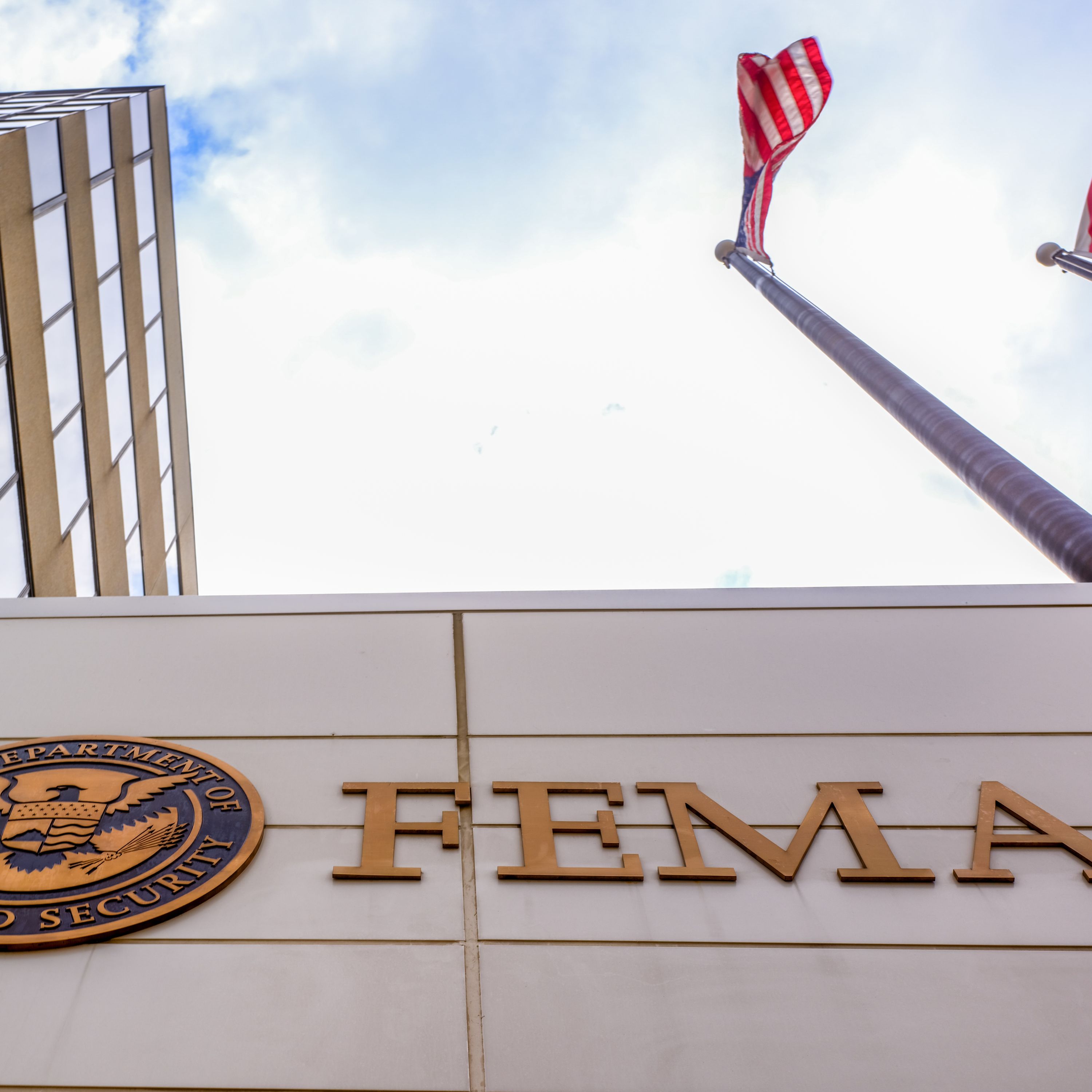
The New Yorker Radio Hour
A FEMA Insider Says Morale Has Never Been Lower at the Embattled Agency
00:25:37
An employee at the Federal Emergency Management Agency on the use of rescue aid as a political weapon, and how it might affect FEMA’s ability to respond to the next emergency.
Loading summary
Transcript68 lines
- [00:02]
New Yorker Radio Hour Announcer
The New Yorker Radio Hour is a co production of WNYC and the New Yorker.
- [00:09]
Adam Howard
Welcome to the New Yorker Radio Hour. I'm Adam Howard. We're confronted with so many scandals when it comes to the federal government under the second Trump administration that many controversies which would normally dominate the headlines have largely flown under the radar. Take for instance, the situation at fema. Yes, there is a situation at fema. The oft criticized but crucial agency tasked with helping states respond to all manner of natural disasters has endured tremendous internal strife over leadership, and reports have suggested that its mission has been compromised by partisan decision making. President Trump, who is the sole arbiter of who ultimately gets FEMA relief, has rejected aid for Democratic led states at the highest rate in the nearly 50 year history of the agency. He's approved only 23% of Democratic requests, while approving 89% of those coming from Republicans. This has led to accusations of emergency aid being used as a political cudgel. And it's had a chilling effect on some of the rank and file that work at the agency. I spoke to a longtime employee of FEMA about what's going on behind the scenes and, and whether it could have a negative impact on the agency's ability to respond to the next inevitable crisis. Since they are currently still actively working in the federal government, they have asked us to shield their identity. So we have digitally regenerated their voice for this interview. Now, you've worked at FEMA for over a decade, spanning four different administrations, including the current one, is that right?
- [01:46]
Anonymous FEMA Employee
That's correct.
- [01:48]
Adam Howard
What would you say morale is like there right now?
- [01:51]
Anonymous FEMA Employee
Morale right now is the lowest that I have ever seen it in terms of both people having seen a lot of leadership and a lot of institutional knowledge walk out the door due to the DRP program. Other people just quitting.
- [02:04]
Adam Howard
When you say DRP program, can you explain what that is?
- [02:07]
Anonymous FEMA Employee
Yeah, that was the deferred resignation program that was offered throughout the federal government writ large at the very beginning of the Trump administration, where you had the option of essentially being put on administrative leave or taking buyouts or whatever you want to call it, to essentially not work. And a significant number of people across the federal government took that option for various reasons. And you know, speaking for FEMA at large, we had a lot, a lot of, particularly senior leadership, but also very senior managers and, and folks who had been around for a very, very long time walk out of the agency because they were either afraid of what the consequences were going to be down the line because the, the context that we were working in was this whole sort of kick that the administration immediately started off with, which was abolish fema. Right. So we had that separate sword of Damocles hanging over us where folks were like, I want to stay, but I don't know if I can stay and am I even going to have a job six months from now? Is this agency going to exist? So it was a double whammy for us.
- [03:09]
Adam Howard
Did you think about accepting the buyout yourself?
- [03:12]
Anonymous FEMA Employee
I never thought about accepting the buyout.
- [03:14]
Adam Howard
How come?
- [03:15]
Anonymous FEMA Employee
For whatever reason, I was fairly confident that the abolish FEMA talk was not quite as, I wouldn't say serious, but as imminent as it was made out to be. With all the stories and all the language that was flying around, it was very clear to me that at least on the Hill, FEMA enjoys very broad bipartisan support. And I had a feeling that there was gonna be a fight on the administration's hands if they actually were to take steps to overtly, totally dismantle the agency the way that they did with us. ID is probably the most notorious example of this.
- [03:47]
Adam Howard
Sure. You mentioned sort of the brain drain. And I'm curious, in what other ways did firings and cutbacks under Doge the Elon Musk led effort to allegedly make government more efficient and less costly impact FEMA's ability to do its work?
- [04:04]
Anonymous FEMA Employee
Yeah, that's a great question. And unfortunately we don't really know yet what the peak of that is going to look like because last year, as you recall, we were very lucky as a nation in that we didn't have a single hurricane make landfall on the contiguous United States. I don't know that you're going to be able to make the same case about 2026, because all it takes is one large disaster like that to require the marshaling of all the services and coordination that FEMA provides for us to really see the true acute impacts of the extent of those cuts and that brain drain. Because even before that happened, there was a signaling from the administration that states and, and locals should be prepared to expect a cut back in what FEMA was doing. So there was already this smattering of talk about what is FEMA not going to do anymore, that state and local governments have to start handling on their own. And then on top of that, now you have a situation where we've lost, you know, upwards of 2,000 people. I, you know, it's a, it's a significant number of people. FEMA is not a very large agency, which is another thing that I'll say,
- [05:07]
Adam Howard
so how many people would you say are there now?
- [05:09]
Anonymous FEMA Employee
So, so the number that that is bandied about for FEMA is roughly around 20,000.
- [05:14]
Adam Howard
Okay.
- [05:15]
Anonymous FEMA Employee
But that 20,000 includes a significant portion, the majority of what we call our reservist workforce, which are those folks who are first in line to deploy when there is a disaster somewhere and we set up a downrange presence. And those folks are not permanent. They are only called up when there is a disaster and they are not utilized in any other sense outside of that. And then you have the core employees. So if you look at permanent full time staff, it's only about 5,000 people. So FEMA has a very, very small presence. And even if you add all that up and put us at 20,000 people total, you know, that is dwarfed in comparison to some of these other especially cabinet level agencies like Interior hhs.
- [05:58]
Adam Howard
So let's talk about the elephant in the room, so to speak. President Trump. Can you just speak to what the difference has been from the first Trump administration to the second Trump administration as far as FEMA is concerned?
- [06:10]
Anonymous FEMA Employee
Yeah, I would say during the first Trump administration it was more of a lack of understanding of what FEMA did to the extent that they didn't actually care. And it didn't really pop up until Hurricanes Harvey, Irma and Maria of course, you know, in 2017. And so they, they took a lot of flack for some of the stuff that happened, particularly with Puerto Rico post Hurricane Maria. But for the most part, I would say again, they, they took the tack of all of the previous administrations which was, you know, dhs, the administration left us alone and didn't actively interfere with fema and in a lot of ways was very supportive of FEMA still, despite some of the criticism that was happening, right or wrong about the, the responses in 2017 that completely changed during the second Trump administration where immediately off the bat it was this hyper antagonistic relationship that the President espoused. And then former Secretary Noem absolutely took to heart and ran with and tried to do as much damage as possible to injure and weaken the agency. You know, we are now in the same position that a lot of these other agencies even in DHS are experiencing now, where, you know, all of the things that happen during the Noem tenure are sort of trying to be undone. We're starting to be able to hire. There's a word on the street that we're looking to fill upwards of 400 positions up, you know, in the coming months. And so it's, it's Almost comical, right?
- [07:33]
Adam Howard
Yeah.
- [07:33]
Anonymous FEMA Employee
That you go through this whole dog and pony show of we're cutting, we're cutting, we're cutting, and then you sort of reach this oh, shit moment of maybe this was too far. I'm not going to sit here and say that reductions in force, which is a term that is used in the federal government, are always a bad thing.
- [07:53]
Adam Howard
Sure.
- [07:54]
Anonymous FEMA Employee
Again, this happened during the Clinton administration, but when they did this, this significant rif during the Clinton administration, there were panels that were set up, there were, there were studies that were done. It was a very meticulous process that led to the reduction in size of the federal workforce at the time. Whereas this was just slash, slash, slash, slash, slash.
- [08:14]
Adam Howard
I'm sure working at a place like fema, I mean, it's one of these agencies where it feels like on really both sides of the political aisle, people are always unhappy with fema. Criticizing fema, obviously, putting aside whether it needs to exist, what other ways could it be more efficient? In what ways do you think FEMA needs to be reformed that are fair?
- [08:35]
Anonymous FEMA Employee
It stretches the gamut from, you know, making sure that FEMA is able to reach all of the people that are necessary who should be entitled to assistance after disasters for a very long time. You know, there, there were a lot of sort of hidden barriers for survivors who were impacted by storms to be able to even get to the door of FEMA to start asking, like, hey, what are the kind of assistance programs that I qualify for as someone who is impacted or as survivors? And then the biggest criticism which still exists of fema, and it's true, is that it just takes us too long on the public assistance side to reimburse states for their costs. Right. It's a, it's a very long and arduous process. It takes a lot of paperwork and it takes a lot of manpower at the level of the state, at the level of the local community, and also at FEMA to, to get these projects approved and then get the money in the pipeline. And so that's why you see a lot of frustration sometimes with communities that have waited around for years for FEMA reimbursements. In some cases, just because disasters are complicated, and especially if you're in areas of the, the Southeast, the Gulf of Mexico, some of these places that receive repetitive storms year after year after year, that just compounds the complexity in terms of trying to assess these damages and getting that money out to them in a timely manner.
- [09:49]
Adam Howard
I've noticed a lot of Trump rhetoric around fema seems to be that we're paying too much and it should go back to the states. What's wrong with that as a policy
- [09:58]
Anonymous FEMA Employee
position you can have honest conversations about should states play a larger role in managing smaller disasters, more of the stuff that happens with large disasters. But there, there is no way and no state will tell you that they are able to take on particularly the financial obligation of dealing with a very large disaster in their own state. And nobody wants to do that because states are already strapped for money in a variety of different ways. They have very limited means of how they can increase that revenue on their end to then deal with what are these major expenses. And even states that have set up rainy day funds or things like that, they can tap into those get exhausted fairly quickly with just how expensive particularly response. But then also long term recovery can be. There's no realistic way in which you could just flip the switch and say, okay, all 56 states and territories are now responsible for managing their own disaster response and recovery. And if we get to a position where all you did was eliminate fema, but you're still handing states money for that recovery, you lose a lot of the coordination that FEMA provides. You lose a lot of the oversight that FEMA provides and a lot of the knowledge because FEMA deals with disasters all over the country. And you know, at the end of the day, FEMA is there to help. We're not there to get in the way of recovery efforts. We don't dictate what happens and how communities rebuild, but we're there to offer advice and we're there to help clear roadblocks that communities might face as they are trying to rebuild so they can do it quicker.
- [11:27]
Adam Howard
I'm speaking with a current employee of FEMA who wants to maintain their anonymity. We'll continue our conversation in a moment. This is the New Yorker Radio Hour.
- [11:47]
Advertisement Voice / Ira Glass
The New Yorker Radio Hour is supported by AT&T. Summer is great for many reasons. The best reason our plans we made finally making it out of the group chat because there's more time to fit everyone in. Whatever you've got in store this summer, capturing those memories is a must. And AT&T has your summer essential in the iPhone 17 Pro. Its center stage front camera auto adjusts the frame to fit everyone into group selfies. You don't even have to turn your phone. No awkward cropping or asking strangers to take it. Just the perfect group selfie every time. And AT&T makes sharing those moments with everyone easy because you gotta share the pic or it didn't happen. Right? Right. Now at AT&T ask how you can get iPhone 17 Pro on them with eligible iPhone trade in any condition required trade in of iPhone 15 or higher excluding iPhone 16e and 17e required eligible plan terms and restrictions apply subject to change. Visit att.comiphone or visit an ATT store for details.
- [12:50]
Anonymous FEMA Employee
This is Ira Glass of this American Life. Do you know our show? Okay, well either way I'm going to tell you about it. We make stories, old fashioned stories that hopefully pull you in at the beginning with funny moments and feelings and people in surprising situations and then you just want to find out what is going to happen and cannot stop listening. That's right. I'm talking about stories that make you miss appointments and ignore your loved ones. This is American Life. Every week, wherever you get your podcasts,
- [13:24]
Adam Howard
Can you speak to the tenure of the first FEMA administrator in the second Trump administration, Cam Hamilton? He had something of a tumultuous run, is that fair to say?
- [13:35]
Anonymous FEMA Employee
I would say it was tumultuous for sure. I think Mr. Hamilton had come in with a certain viewpoint of female and I think over time as he was there, he began to, just like anybody else who sits in that seat, understand the ins and outs of what FEMA actually does and the difference between how that's portrayed politically to gain points and the, the reality of what FEMA is doing day in and day out. And so I think his tone on that softened pretty early on and I don't believe that he ever came into that role with a fixed idea like Nome did, that FEMA needs to be abolished. I do believe that Mr. Hamilton came in with there are significant changes that need to be made and that he was going to follow the President's direction. He said that multiple times in the communications that he had with the workforce, which is fair. And so that's where I think he was coming from. But again, with the just intense level of DHS oversight and you know, just thumb on the scale of everything that FEMA was doing. He, I believe personally from just observing it at, from a macro level that he was put in a very impossible position and what ultimately cost him his job was not toeing the line of the administration at the time when he testified in front of Congress and was asked directly should FEMA be abolished or something to that effect. And his response was he didn't believe that it was in the best interest of the of the nation for FEMA to be abolished.
- [14:58]
Adam Howard
And yet in a surprise plot twist, he, he's after getting pushed out, Trump is Now bringing him back to run FEMA again. What do you make of that?
- [15:09]
Anonymous FEMA Employee
I think that Mr. Hamilton would be sort of the first person to say that on paper he might not be the most qualified nominee. But I have always heard that he was willing to listen to the people around him who have been at the agency for a very long time and take their advice into consideration. He cares about the workforce, which you cannot say at all about Kristi Noem and DHS at large.
- [15:29]
Adam Howard
At one point, the acting head of FEMA was alleged to have not known there was such a thing as a hurricane season. He's since claimed that that's not true, but it's been pretty widely reported. The man who was put in charge of response and recovery, Greg Phillips, has been in the news for claiming he once teleported to a Waffle House. What do you make of the people who've been put in charge of this department since Cam Hamilton's departure, and how worried should we be about the competency of. Of the people who've been put in charge?
- [15:57]
Anonymous FEMA Employee
Dave Richardson, who you alluded to with the first part of that, who said famously that he didn't know that there was a hurricane season, was totally disinterested in the job when it first came on, and there was a first all hands meeting where he essentially just said directly to everybody in the room and everybody that was dialed in online, which was the entire agency, that if you. I believe his term was, if you stood in his way, he would run you over something to that effect, and that he was there to fulfill the President's intent. He loved using that term, even though I don't think anybody from DHS on down could really, at that point, define what the President's intent for FEMA is. And yeah, Dave Richardson had a famously short stint, thanks to the debacle in Texas with the flooding, where he was unreachable for a certain number of hours and clearly had no understanding or ability to get that situation under control. Obviously, Noem herself came under a lot of heat for the Texas response due to the contract mess that she had placed over DHS in terms of approval approving contracts.
- [17:00]
Adam Howard
So last summer, around the 20th anniversary of Hurricane Katrina, which I think we would agree was one of the darker episodes in the history of fema. A group of FEMA employees, they put out a petition which they called the Katrina Declaration, and it raised some of these concerns that you've mentioned, everything from staffing to reductions in response time. What was the impact of that? It got some press coverage, but did it actually change anything in terms of how things were operating?
- [17:26]
Anonymous FEMA Employee
No, I like, I very much applaud and approve of where their hearts were in that. I think if this were a different time, something like that might have caused more of an introspection in terms of what was going on. But it was very clear from the beginning that their message and the way that they articulated it was not going to have the effect that was intended with that. At no point in time was that going to resonate with them, with the people who were in the position to actually hear out those concerns and do something about it. No interest whatsoever.
- [17:56]
Adam Howard
Is that why you didn't sign on? Ultimately, yeah.
- [17:58]
Anonymous FEMA Employee
I mean, you know, there's, there's, there's that and there's, there's this culture of fear that's been installed across the federal government in terms of whistleblowing and, you know, it Coincidentally, just the other day, I think CNN reported that a bunch of the whistleblowers at FEMA have been reinstated.
- [18:14]
Adam Howard
Right.
- [18:15]
Anonymous FEMA Employee
Are, you know, post those investigations. But, you know, it, it, it just seemed like a very dangerous time to be speaking out about it in that sense. Right.
- [18:24]
Adam Howard
We're having this conversation right now. I mean, this is a form in a way of speaking out. It's not signing a petition. Why do you feel compelled to have this conversation with me right now?
- [18:34]
Anonymous FEMA Employee
I am very worried about what impact the next big disaster is going to have on this nation. And it's very clear to me that all of the decisions that have been made to date, particularly about fema, but also the federal government at large, are going to mean that a lot more people are going to suffer in some form because of a disaster that affects them. And I, it, it upsets me, it angers me, it makes me feel sad because it didn't have to be this way again. There, there were opportunities and avenues to have very honest conversations about what FEMA needs to do better and how to go about doing those things. And the answer was not cutting people, making people feel like they needed to walk away from the agency, cutting FEMA programs, holding up grants, doing all of those things that have weakened the nation in terms of our ability to prepare for that next Helene or our next MILTON and unfortunately, I think if we face that level of storm or even even lesser of a storm this coming season, a lot more people are going to suffer because of those and face consequences because of those decisions. I think we have a backlog of 20 some odd disasters that are sitting up somewhere at the White House right now waiting to get approved there. There's been a lot of data mining done to show that declarations are taking much longer to get approved and compared to any of the previous administrations, including the first Trump administration. And then also what seems like a very political take on who should get this kind of federal assistance and who shouldn't. And more often than not, s states that have Democratic leadership, Democratic governors, or didn't vote for the president, um, getting the short end of the stick and getting denied, even though on paper they should have or did qualify for that assistance.
- [20:12]
Adam Howard
Yeah, there's been a lot of reporting to this effect about red states and blue states being prioritized differently. Did you witness this happening in real time and internally, was there ever any justification given for this obvious discrepancy?
- [20:27]
Anonymous FEMA Employee
So FEMA's get out jail card for denying disasters is the president can deny any disaster declaration he wants without having to give a reason. So you're never going to get a. An admission that I, the president denied this disaster declaration request because this state didn't vote for me or this state's governor pissed me off or whatever it is. Right.
- [20:47]
Adam Howard
But do you have a sense of why so much of the power here has been invested in the president and the President alone?
- [20:54]
Anonymous FEMA Employee
It's almost sort of like anything else with this administration. Right. You take something that was created for good and find a way to turn it into the bad. Right. I think the, the thought process that I could see behind it is it. It makes sense that the president is the one who has that ultimate authority, because ostensibly the president is someone who's a president for everybody. And it doesn't matter to the president if you are red state or blue state asking for this money and they're going to make that decision to take it out of Congress in particular, where those things could get messy and take a long time. You know, you've seen after every single major disaster over the past couple of years, there's been a contingent of folks in the House or people on the Senate voting against aid for other states for whatever reasons they have. And on top of that, Congress can't do its job in general. And so I think leaving that to Congress would make it even more of a farce in terms of getting that money out the door, you know, even quicker. And so I think that was the original intent behind it, that the President has the say the president's the president of everybody, and we need to trust them to make the most impartial decision available to them. And, you know, here we are with Trump and I don't know that any of those things necessarily apply to him historically.
- [22:07]
Adam Howard
Has there ever been an example that you're aware of of a president using disaster aid as a political weapon?
- [22:13]
Anonymous FEMA Employee
Not that I'm aware of. I mean, I, I think administrations across the board, Republican and Democrat administrations, have been very, very careful to avoid exactly that because I think at the end of the day, you know, again, no, no one might admit to loving FEMA by any stretch of the imagination when it comes to, to the agency. But sure, FEMA can and does help swing elections. Right. And depending, especially if there's a large disaster that's going on at a particular point in time. One of the examples that I've heard people say that makes sense to me is if you think back to the, the race between Romney and Barack Obama. Right.
- [22:50]
Adam Howard
Mitt Romney. Yeah, yeah.
- [22:51]
Anonymous FEMA Employee
They were running neck and neck for the most part early on in that race and it looked like it was be going to be pretty contested election. And then Hurricane Sandy happened.
- [23:00]
Adam Howard
Right.
- [23:00]
Anonymous FEMA Employee
And a lot of people in the emergency management community will tell you President Obama won that election when he walked off the plane in New Jersey and shook Chris Christie's hand.
- [23:08]
Adam Howard
Chris Christie hugged him, right?
- [23:11]
Anonymous FEMA Employee
Yeah, exactly. And after that it was a wrap. And so in those contexts, FEMA serves as a very visible sense of a particular president, a particular set of, of ideals that is aligned with an administration and has the ability to push things.
- [23:26]
Adam Howard
Right.
- [23:26]
Anonymous FEMA Employee
And in certain ways, what you still
- [23:29]
Adam Howard
hear whenever a president is sort of having a bit of a crisis, the headline is this going to be their Katrina moment?
- [23:35]
Advertisement Voice / Ira Glass
Right.
- [23:35]
Adam Howard
That's a new nomenclature. So I'm going to close with this. You mentioned at the beginning of our conversation, morale never having been lower at fema. Do you think that the damage that's been done in the first couple years of the second Trump administration can be reversed? And how worried are you about any agency's ability to recruit and retain quality people given the sort of fickle nature of government? Right. In another four years we could have another president who thinks FEMA shouldn't exist. So how do you keep people committed to the mission of fema?
- [24:07]
Anonymous FEMA Employee
Yeah, I, I think that's the million dollar question. There's no way that FEMA's going to be able to hire out of the brain drain that's happened over the last year and a half. It is going to suffer for a very long time. And even the folks like myself that are there, that have been around for a long time, it's going to be a very difficult path to keep moving forward over the next two years, the next four years, the next six years. Just given how far we've been set back, I think that pipeline has ruptured completely and whether or not it's fixable, I have no idea.
- [24:39]
Adam Howard
So I don't want to leave listeners on such a terrifying note. I guess in the face of all of that, I am curious what gives you hope about the future of this agency and its ability to help people?
- [24:50]
Anonymous FEMA Employee
I think my biggest sort of hope and inspiration every day is the people who, who show up to work every day and are doing their best to continue doing their jobs in spite of everything that's been thrown at them and knowing that FEMA's never going to fail to answer the bell when it's rung. The the question is going to be how successful are we at responding to that bell? And so I think the American people at large, the nation, should take some comfort in that fact that there are a lot of people left at FEMA and other federal agencies who care deeply about what they do on a daily basis and they're going to do everything that they can to make sure that the worst case scenario like I just described, I wouldn't say doesn't happen, but doesn't have the extent of the impacts that we imagine that it could.
- [25:34]
Adam Howard
Thank you so much for coming on and sharing your insights and experience with me. I really appreciate it.
- [25:40]
Anonymous FEMA Employee
Yeah, absolutely. Happy to be here.
- [25:44]
Adam Howard
That was a longtime employee of FEMA who wishes to remain anonymous. For more on the crisis at fema, check out on the Media's four part series series American the Movement to Kill FEMA on wnyc. In the first episode, OTM co host Michael Loewinger shares the origin story of fema, which initially focused less on disaster relief and more on plans to save the government from nuclear attack. The agency's secrecy has inspired wild conspiracy theories and paranoia among far right groups, including the fear that FEMA is building camps to detain citizens and stifle political dissent. You can listen to on the Media's investigation into FEMA wherever you get your podcasts. I'm Adam Howard and this is the New Yorker Radio Hour. We'll be back with more next week. Thanks for listening.
- [26:36]
New Yorker Radio Hour Announcer
The New Yorker Radio Hour is a co production of WNYC and the New Yorker. Our theme music was composed and performed by Meryl Garbus of Tune Yards, with additional music by Louis Mitchell. This episode was produced by Max Balton, Adam Howard, David Krasnow, Jeffrey Masters, Louis Mitchell, Jared Paul and Ursula Sommer. With guidance from Emily Botine. The New Yorker Radio Hour is supported in part by the Churina Endowment Fund. I'm Jesse Sepck. And I'm Shilpa Oskokovic and we're Senior Test Kitchen Editors at Bon Appetit and the host of the Bon Appetit Bake Club podcast. Bake Club is Bon Appetit's community of confident, curious bakers. We love to bake. Some might even call the two of us obsessive. And we love to talk about all the hows and whys and what didn't works that come with it. Every month we publish a recipe on bon appetit.com that introduces a baking concept we think you should know. Then you'll go bake. Send us any questions you have and we'll get together here on the podcast to talk about the recipe. And this month we're making Strawberry Roll Cake. It is the unofficial birthday cake of the Bon Appetit Test Kitchen and it is the perfect way to welcome spring. Head to ba.com and come and bake along with us. Send us your questions, pictures and any thoughts to bakeclubon appetit.com or find us on the substack. Join us the first Tuesday of every month at as we debrief about our latest bake find Ba Bake Club wherever you get your podcasts. Happy baking.