← The New Yorker Radio Hour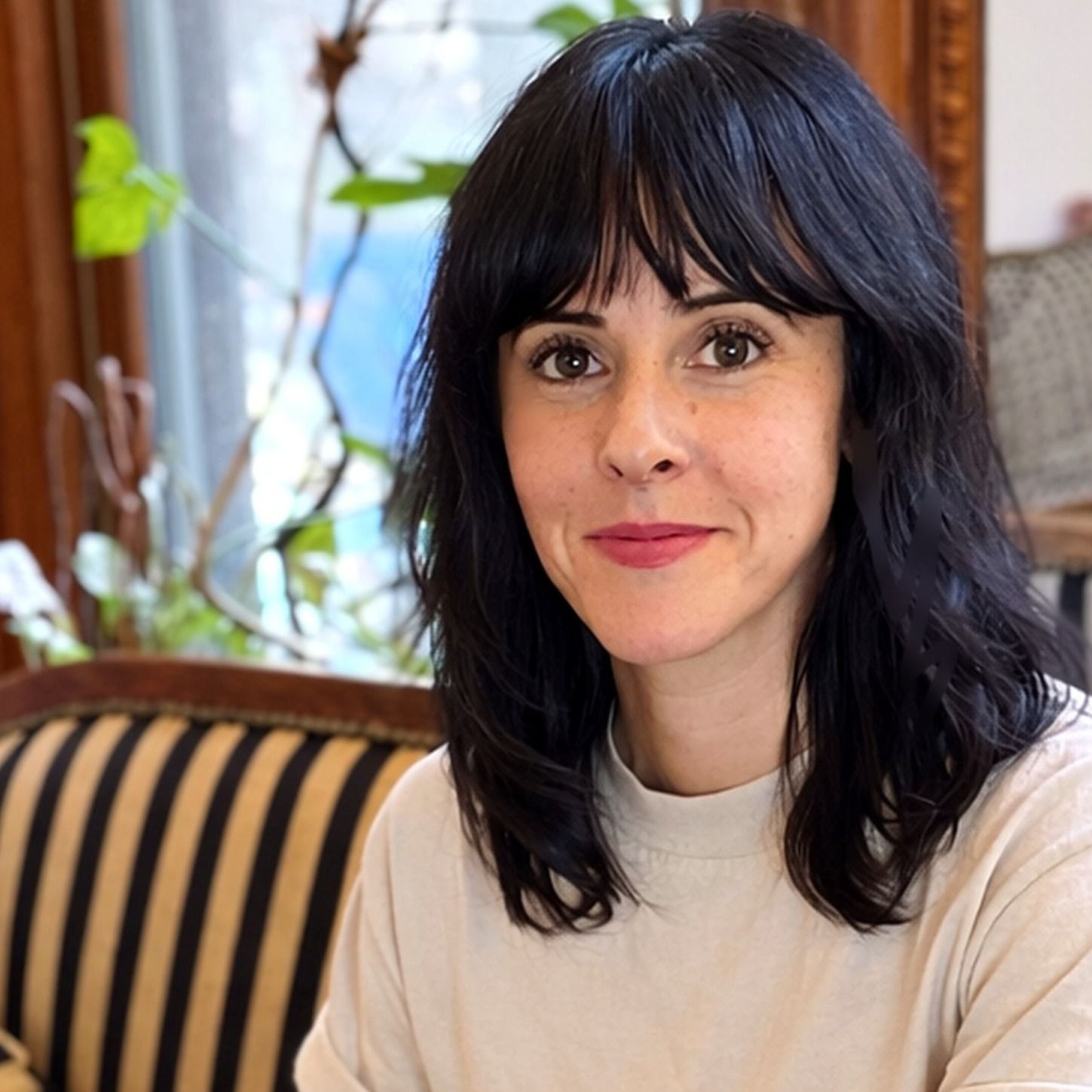
The New Yorker Radio Hour
Growing Up with a Mother in Prison
00:24:29
Harriet Clark’s new novel “The Hill” parallels her own childhood years spent visiting the prison where her mother was incarcerated. She talks with Rachel Aviv.
Loading summary
Transcript58 lines
- [00:00]
WNYC Studios Announcer
WNYC Studios is supported by Quince.
- [00:04]
Quince Advertisement Narrator
Spring is the perfect time to celebrate new beginnings and set intentions right down to getting dressed in the morning. And that's why I rely on my pieces from Quince. With their effortless fits and elevated fabrics, Quince makes looking put together a breeze. Quince has all the wardrobe staples you need, like 100% European linen shorts and shirts from $34 and 100% Pima cotton tees with a softness that's perfect for the spring weather. And their pants are so relaxed and comfortable, but still hit that polished look that'll work wherever the season takes you. Plus, you can look like a million bucks without sacrificing your wallet. Everything is priced 50 to 80% less than what you'd find at similar brands. Quince works directly with ethical factories and cuts out the middlemen, so you're getting premium materials without the markup. You've got to try the European linen maxi skirt. Such a breezy, classy look and it's got this cheeky side slit that gives a perfect pop of intrigue. We love that. Refresh your everyday with luxury you'll actually use. Head to quince.com radiohour for free shipping on your order and 365 day returns. Now available in Canada too. That's Q-U-I-N-C-E.com radiohour for free shipping and 365 day returns. Quince.com radiohour the essential pina colada made
- [01:22]
Vitamix Advertisement Narrator
with frozen pineapple chunks, fresh lime juice, white rum, coconut milk and a drizzle of honey chilled in a sleek tulip glass as you enjoy a taste of the tropics from your favorite lounge chair. The Essential staycation made possible by Vitamix only. The Essential
- [01:43]
New Yorker Radio Hour Announcer
the New Yorker Radio Hour is a co production of WNYC and the New Yorker.
- [01:54]
David Remnick
This is the New Yorker Radio Hour. I'm David Remnick. Harriet Clarke's novel called the Hill is one of the most anticipated works of fiction of this year and has won some extraordinary reviews, including by James Wood in the New Yorker. It's a story of a girl growing up visiting her mother in prison, where the mother is serving a life sentence. And although the Hill is a work of fiction, it follows the contours of Harriet Clark's own life quite closely. One of the book's enthusiastic readers is Rachel Aviv, a staff writer at the New Yorker.
- [02:30]
Rachel Aviv
When I was reading Harriet Clarke's the Hill, I felt almost this kind of sickness that I remember feeling as a kid when I Read a book where, like, being apart from the book, it was like a vacuum. Like, I just. There was something about it that felt like I was doing the wrong thing if I was not reading the book. And one of the things that I found so compelling was the way that she captured the internal life and clock of a child. There's that sense of being a creature who can sense things but not comprehend. And the book really focuses on the relationship between a mother and daughter. One is inside of prison, one is outside of prison, and they're kind of trying to figure out who the other one is as they both age.
- [03:19]
David Remnick
Here's Rachel Leviev with the novelist Harriet Clark.
- [03:22]
Rachel Aviv
Before we start talking, I thought it would be helpful if you could just explain why your mom was serving a life sentence and who was caring for you in the early years of your life.
- [03:32]
Harriet Clark
When I was 11 months old, my mother drove a getaway car for the robbery of a Brinks truck that was supposed to raise funds for the Black Liberation army, an underground black nationalist group. And three men were killed in the robbery. Nine children lost their fathers. My mother was not a shooter. She was not present when anyone was shot. But for various political reasons, she did not put on a defense and wasn't present for her trial. And she received three consecutive life sentences and was incarcerated in a facility about an hour out of New York City, where I grew up, visiting her every week.
- [04:18]
Rachel Aviv
I think a less skilled writer might have written a memoir about this. Can you talk about how you made the choice to write a novel or what a novel allowed you to do that a memoir wouldn't have?
- [04:32]
Harriet Clark
I think there are really two answers to that. One would be that if I've learned anything from my life, it's that the things we do affect other people. And there's really no way for me to write about my life that doesn't risk exposing or upsetting or misrepresenting other people. Most significantly, the survivors of my mom's crime, but also the women at her facility and certainly my own family. So partially, the decision to write fiction was an attempt to be respectful and protective of other people. But the second reason, and maybe the realer reason, is that I love novels. You know, the there where I learned I was like other people. My grandmother raised me to not tell people that my parents were in prison. I think she was afraid people would treat me differently or see me as different. And novels are really where I learned I wasn't different.
- [05:30]
Rachel Aviv
Was there a particular novel where that felt evident to you? Why did you think you were so fundamentally different.
- [05:38]
Harriet Clark
I mean, I think most kids feel different. And actually, part of one of the kind of strange aspects of my life is that from the outside, I think people have often thought that my parents, incarceration and my family's political history are the kind of defining aspects of my life. But from inside it, the biggest experience was that I was raised by the elderly. And so I think part of why I felt different from other kids is that I do think if you're raised by old people, you're living in slightly different atmospheres and rhythms and just a different culture than people who have parents who are younger. So I actually think it was far more, you know, probably that that made me feel a little bit different. But again, I think, luckily, fiction is perpetually populated by people who feel misfit. And so in that sense, I think I related to almost every I read when I was young.
- [06:38]
Rachel Aviv
Did you grow up feeling like your mom's sentence fit within your view of what was fair or how did you sort of bring to bear your own ideas about justice to your mother's situation?
- [06:56]
Harriet Clark
My mother always raised me to believe that she was in prison because she deserved to be. She always raised me to understand that she had contributed to causing great harm and that these were the consequences of that. And I think that actually this was very grounding for me as a child. I think if I had felt otherwise, if I had sensed that in any way we were inside an experience of injustice, that would have obviously been an additional aggravation. But I understood that my mother had contributed to great harm, and I understood that this was the consequence of that. And I think I was much older before I began to understand that no one deserves to be in prison forever. But also that she was in, at that point, less for the harm she had caused and more for her decision not to put on a defense.
- [07:49]
Rachel Aviv
You've said that there was an officer at the prison who would greet you as you came into the visiting room. And he told you that worry the people in there grow gills. Can you explain what he meant by that?
- [08:05]
Harriet Clark
When I was. There was an officer at the prison when I was young who was sometimes kind to me. He wasn't one of the kindest, but sometimes he would be personable. And sometimes, while we were waiting for the gate to open and for me to go through, he would say, don't worry. They must grow gills to live underwater. And I do believe he meant it as a comfort, and I think that it's a comfort. People often offer themselves this sense that people who are in situations of great difficulty, have somehow adapted to it, and therefore their experience is not the torture it would be for you. And on the one hand, I think it is true that people adapt to some extent to horrific conditions. And on the other hand, I don't think you can ever adapt to horrific conditions. You know, nobody should be living their life under these conditions. And so there was also some way in which I think that kind of myth of adaptation was a way to not reckon with the active torture that was fundamentally happening on the top of that hill.
- [09:19]
Rachel Aviv
There have been a lot of books about the families of people who are incarcerated and how their communities were affected. And were there other ideas that you were kind of pushing back against in terms of creating your own contribution to this body of work?
- [09:37]
Harriet Clark
I mean, the first thing I'll say is that actually considering that, you know, over 5 million children in America will have a parent in prison at some point in their upbringing, which is 1 in 14 children, or 1 in 4 black children, and the number goes up a lot if you include now parents in immigration detention or parents under parole supervision. So, actually, I was primarily struck by our glaring absence in the literature, but it was definitely important to me to try to airlift the prison in my book out of all of our cultural scripts about prison and, you know, free the reader from any ways they're used to feeling about prisons so that they could encounter for themselves how they ended up feeling in the book. You know, I think one of the ways that prisons legitimate themselves in our society is by seeming very normal. You know, they seem ordinary to us, and so they appear reasonable. And the thing I wanted to try to get back into the tone of the book was how extraordinary this is, right? A child looks up a hill and knows that her mother is going to be trapped on the top of this hill forever. That's extraordinary. She's young and she's looking out at a room, and she knows the entire life she'll have with her mother will take place in that room. That's extraordinary. I didn't really want to do any spectacle or kind of like images of horror or coercive images. I just wanted us to re encounter how extraordinary it is that, you know, that family separation continues to be the primary way, not only that we punish people, but that we attempt to control and disempower communities in this country, you know, from the beginning and now on through the escalating deportations. And so I think that idea that we've tried to make this degree of family separation ordinary is something I wanted to push back against and how did
- [11:43]
Rachel Aviv
you work through the dynamic of both presenting prison in the novel as like a fundamentally unbearable place, but also as a place where real relationships happen and people grow up?
- [11:55]
Harriet Clark
I mean, I think for me, getting that balance of lightness and weight was very important in the book because I actually wanted it to be a very enjoyable book to read. You know, I was going to be walking the reader. Thank you. Thank you. I was going to be walking the reader through these dark realms. And so I wanted there to be humor and buoyancy. And I also wanted to make the reader somewhat complicit in perhaps not fully registering how unbearable the environment is for a lot of the book, because I think my narrator, Susanna, isn't totally aware of what's really going on around her. Of course, I wanted to conjure the atmosphere of that bewilderment because I think most children live inside a certain kind of atmosphere of incomprehension. You know, all kids are proximate to and at the mercy of the adult world, which is a world they can't really understand. And so I think most kids have that sense that they're surrounded by secrets and the secret is everybody else's life, you know, the secret is everything going on around you. And that was the sense I wanted the book to have.
- [13:10]
David Remnick
Harriet Clark speaking with the New Yorker's Rachel Leviev. More in a moment.
- [13:25]
AT&T Advertisement Narrator
The New Yorker Radio Hour is supported by AT&T. Summer is great for many reasons. The best reason our plans we made finally making it out of the group chat because there's more time to fit everyone in. Whatever you've got in store this summer, capturing those memories is a must. An AT&T has your summer essential in the iPhone 17 Pro. Its center stage front camera auto adjusts the frame to fit everyone into group selfies. You don't even have to turn your phone. No awkward cropping or asking strangers to take it. Just the perfect group selfie every time. And AT and T makes sharing those moments with everyone easy because you gotta share the pic or it didn't happen right right now at, at and t ask how you can get iPhone 17 Pro on them with eligible iPhone. Trade in any condition required. Trade in of iPhone 15 or higher excluding iPhone 16e and 17e required eligible plan terms and restrictions apply. Subject to change. Visit att.comiphone or visit an AT and T store for details.
- [14:28]
Paramount Advertisement Narrator
On May 15, Beth and Rip are back in a new series, Dutton Ranch, streaming on Paramount. Plus, Kelly Reilly and Cole Hauser return and this time, they're taking on Texas as Beth and Rip begin to build a life together. Peace will have to wait as they face corruption, danger and a ruthless rival ranch willing to protect its secrets at all costs. Legacy is a beautiful thing, but only if it survives. Dutton Ranch, Starring Cole Hauser, Kelly Reilly, Annette Benning and ed Harris. Streaming May 15th on Paramount. Plus,
- [14:59]
Kai Ryssdal
everybody has a hot take on the economy. And whether you're curious about inflation, trade wars or the markets, what you need is reporting you can trust. Hi, I'm Kai Rysdal, the host of Marketplace. Our award winning reporters talk to everybody from CEOs to farmers to help you understand how the economy takes shape in the real world. You'll be smarter every time you listen, and these days, that's priceless. Listen to Marketplace on your favorite podcast app.
- [15:33]
Rachel Aviv
So the book took 20 years to write, and for the majority of those years your mom was in prison. Then she was given clemency and released. How did your work on the book change if it did? By just sort of the fact of her now being a free person.
- [15:54]
Harriet Clark
I think that there's a very good chance that if my mother hadn't gotten out, I would never have really been able to look the tragedy in the face. You know, my mother having life in prison was something I was very well adapted to. But the truth is eventually life in prison becomes death in prison. And so I think if I had really had to engage with her aging and illness and eventual death inside, the nature of the tragedy would have changed, you know, and so I do think that something about her getting out probably allowed me to finally look more fully at what we had been through. And after she got out, sometimes people would say, oh, does your book now have a happy ending? But actually, you know, her getting out is what allowed it fundamentally to be a tragedy.
- [16:52]
Rachel Aviv
How much, as you were writing, were you thinking of her as your reader?
- [16:58]
Harriet Clark
I mean, very luckily, the majority of time, I did not imagine anyone as my reader. You know, I wrote for many, many, many years with no expectation or desire to publish or certainly to share with anyone in my family. But fundamentally, I think it was a real act of generosity that my mother never attempted to kind of impose on my writing life at all or to ask questions about the family or the mother.
- [17:32]
Rachel Aviv
Did she want to read a draft while you were working on it, or
- [17:36]
Harriet Clark
did she want to? I don't know. She didn't. I don't think she ever asked me to, you know, And I think, you know, my mother is the person who knows better than Anyone that the mother in the book is not her. You know, I had this internal rule that nothing said or done in the book could have come from my own life, you know, and that was largely an attempt to protect the women at my mom's prison and to make sure that I didn't take any material that really wasn't mine to take. There are a few exceptions to this, I will say, in terms of things the grandmother in the book says, that
- [18:12]
Rachel Aviv
rule, you know, nothing said or done in this book could have happened in your life. Were there moments where you've been surprised that maybe your grasp of what had happened in this life was murkier than you'd realized? And it sort of emerged through the book?
- [18:33]
Harriet Clark
Most certainly. You know, there were these small instances. There's a comment that the grandmother makes about Stalkard chanting that this strange comment my grandmother did used to make. And this apocryphal story my grandmother used to tell about. About my mother throwing her shoes off the boat on the way to the Soviet Union. And there was a nun at my mom's prison who used to say, you can't let yourself get discouraged. You can't take out your own heart. Those were three instances when I knew that I was taking something from my life. And I allowed it in those three moments. But then I had this very strange thing happen where the week my grandmother died, when I was 16 years old, we put all of the belongings of that home into a storage unit. And for the next 30 years, I paid $88 a month for that storage unit. And starting a few years ago, my wife kept insisting we had to empty the storage unit and stop paying that $88 a month. And initially, I'd always said, oh, I can't empty it. You know, what if my mom ever wants any of those things? And so once my mom got out, almost immediately after my mom got out, my beloved wife's focus was this storage unit and getting out of these monthly fees. And so she had us drive up to it, her, me and my mom. And there's a scene in my book when the grandmother is dying. And I very consciously remember deciding to put in this detail about the grandmother having trouble seeing out of one eye. And so the narrator puts, like, a piece of magazine over one side of her glasses to block that eye and to make her less dizzy. And I had very consciously come up with this as a way to make that scene kind of more absurd and a little comic and just give some visual life to the scene. I knew I had made it up and when we went to empty the storage unit, you know, I opened the drawer of my grandmother's dresser and there was this pair of glasses with a piece of magazine over one of the lenses. And it was absolutely harrowing because it really did make me realize I was no expert on myself, that I cannot distinguish necessarily what has come from memory and what is my imagination. And so. So at this point, it's true that I shouldn't say with too much confidence that everything is made up. I would say, you know, related to that. The way I feel about the book is fundamentally that for me, it was a fictional setup for a real reckoning with my own life. You know, of course, this is the place in which the questions of my life were kind of addressed. And one of the places where I have an experience of that is that in life I have never cried about my mother's incarceration. I have no memory of ever crying leaving the prison. I have no memory of ever crying talking about the prison. But when I wrote the very final paragraphs of the book, which are a scene that never happened in real life, it's a kind of hallucination the mother has of the daughter. And often when I read them, I do cry. You know, that there's something about it where clearly I had to write this whole fictional take on everything, to finally feel what I am not capable of feeling in my lived life.
- [22:02]
Rachel Aviv
I wondered. I was sort of imagining you as this extremely observant, precise, writerly child and wondering at what point in your childhood or adolescence you. You began to see what you were experiencing as material.
- [22:21]
Harriet Clark
Well, first of all, thank you. And not at all. I think in many ways I was an incredibly, you know, non observant, unobservant child. I think I definitely had what one could consider a kind of narrative distance from my own life. But I think it would be somewhat inaccurate to say that was because I was planning to write about it. I think I just did have certain forms of detachment. But I think the more accurate thing is to say that what I always knew growing up was that I would not write about my mother's prison. And that was partially because, you know, I would have these experiences inside. Like, for instance, in the summer at the prison, they have this remarkable program called the Summer Program, where kids come to the area and stay with often wealthy families in the neighborhood. And then you visit your mom every day, five days in a row. And in the evening, you hang out with other kids who also have moms inside. And it's a really. It's A really important program. And when I was quite young, about eight, a documentary film crew came to cover it. And it was for very good reasons. It was to bring the program. To try to bring the program to the uk. So this documentary, you know, was a righteous cause. But I remember feeling very uncomfortable. You know, even as a young kid, I could understand how they were positioning us. You know, they were having us hold the bars at the fences and standing in front of barbed wire fences. And, you know, there's this one scene where they lined all the kids up and they asked us, when do you most miss your mother?
- [23:59]
Rachel Aviv
Do you remember what you said?
- [24:00]
Harriet Clark
Yes. You know, I will say another kid gave an answer that was so upsetting, it will make me cry just to think of it, which I won't deliver here. But when they asked me, I said, I don't miss my mother. Sometimes I even forget I have a mother. Which was maybe true and maybe not true, but either way, I felt a pretty willful refusal to play the heartbreaking role they wanted me to play. Again, it was for good reason.
- [24:28]
Rachel Aviv
Did you ever have a conversation about your response or did she watch?
- [24:31]
Harriet Clark
Oh, yeah, my mom saw it. We've laughed about it because all the kids give very beautiful, heartbreaking responses. And then they're. And so I think that because I always felt like there was something. I couldn't quite define what it was, but it felt problematic in how people would come to the prison and then represent us. I would feel, when I would notice something in the environment that I almost had this kind of, like, observational. Like, that would be a great detail. I would have a pretty strong, like, don't take this. Don't use this sense towards it. I think in part, honestly, because very often when you're struck by those sorts of details, it's because they're somewhat coercive, you know, And I actually. I hate to be coerced, and I really didn't want to coerce readers.
- [25:22]
Rachel Aviv
What would be a coercive detail?
- [25:24]
Harriet Clark
Like, so I used to do these overnight visits with my mom, and they had a basketball hoop and a barbecue outside. But at some point soon after the basketball hoop went in, the basketball got caught on the barbed wire fences and deflated. And then it happened again, and then it happened again. So when you would do these, there was no way to actually play. There would just be these three deflated basketballs, you know, in the barbed wire of the fence. And the fence was actually multiple fences you were looking through. And it was such an intense image, you know, in a certain way. And I thought, you know, I'm exactly never writing about that. And again, I think, like, in part it's because, you know, I wanted the book to feel more like a dream, like you're in the presence of meaning but you can't quite say what that meaning is. You know, the arrows are pointing in multiple directions. And I really wanted to, you know, I think that the environments of most kids upbringing have a kind of mythic quality to them, you know, and so I wanted the prison to have this kind of mythic sense and not this three basketballs deflated on barbed wire sense. That was important to me.
- [26:44]
Rachel Aviv
Yeah. Harriet, thank you so much.
- [26:47]
Harriet Clark
Thank you so much.
- [26:52]
David Remnick
Harriet Clark's novel is called the Hill, and she spoke with Rachel Aviv, a staff writer for the New Yorker. And you can find all of Rachel's work@newyorker.com I'm David Remnick and that's the New Yorker Radio Hour for today. Next week, Pulitzer Prize winning historian Jill Lepore will join us to weigh in on the 250th anniversary of the Declaration of Independence. I hope you'll join us.
- [27:28]
New Yorker Radio Hour Announcer
The new yorker radio hour is a co production of wnyc and the new yorker. Our theme music was composed and performed by meryl garbus of tune yards, with additional music by louis mitchell and jared paul. This episode was produced by max balton, adam howard, david krasnow, jeffrey masters, louis mitchell, jared paul and ursula sommer. With guidance from emily bottin and assistance from michael may, david gable, alex barsch, victor guan and alejandra deckett. The new yorker radio hour is supported in part by the tsarina endowment fund.
- [28:15]
WNYC Studios Announcer
Allergy season doesn't wait until you're home. It shows up in the car, at work, even at the gym. That's why Kleenex Ultra Soft Tissues. Have you covered? They're allergist appro and silky soft to help prevent skin irritation. And now, new Cleanx Snap and Go lets you take your favorite skin loving tissues anywhere. A durable compact case with a snapshot lid, Kleenex Snap and Go keeps tissues clean and protected so wherever allergies strike, comfort is within reach. For whatever happens next, grab Kleenex Snap and Go.
- [28:46]
Jessie Sevcyk
I'm Jessie Sevcyk.
- [28:47]
Shilpa Oskokovic
And I'm Shilpa Oskokovic.
- [28:49]
Jessie Sevcyk
And we're senior Test Kitchen editors at Bon Appetit and the hosts of the Bon Appetit Bake Club podcast.
- [28:54]
Shilpa Oskokovic
Bake Club is Bon Appetit's community of confident, curious bakers.
- [28:58]
Jessie Sevcyk
We love to bake some might even call the two of us obsessive. And we love to talk about all the hows and whys and what didn't works that come with it.
- [29:06]
Shilpa Oskokovic
Every month, we publish a recipe on bon appetit.com that introduces a baking concept we think you should know.
- [29:12]
Jessie Sevcyk
Then you'll go bake. Send us any questions you have, and
- [29:15]
Shilpa Oskokovic
we'll get together here on the podcast to talk about the recipe. And this month, we're making Strawberry Roll Cake. It is the the unofficial birthday cake of the Bon Appetit Test Kitchen, and it is the perfect way to welcome spring. Head to ba.com and come and bake along with us.
- [29:30]
Jessie Sevcyk
Send us your questions, pictures, and any thoughts to bake clubon appetit.com or find us on the substack.
- [29:37]
Shilpa Oskokovic
Join us the first Tuesday of every month as we debrief about our latest bake find.
- [29:42]
Jessie Sevcyk
Ba Bake Club wherever you get your podcasts.
- [29:44]
Shilpa Oskokovic
Happy Baking.