← The New Yorker Radio Hour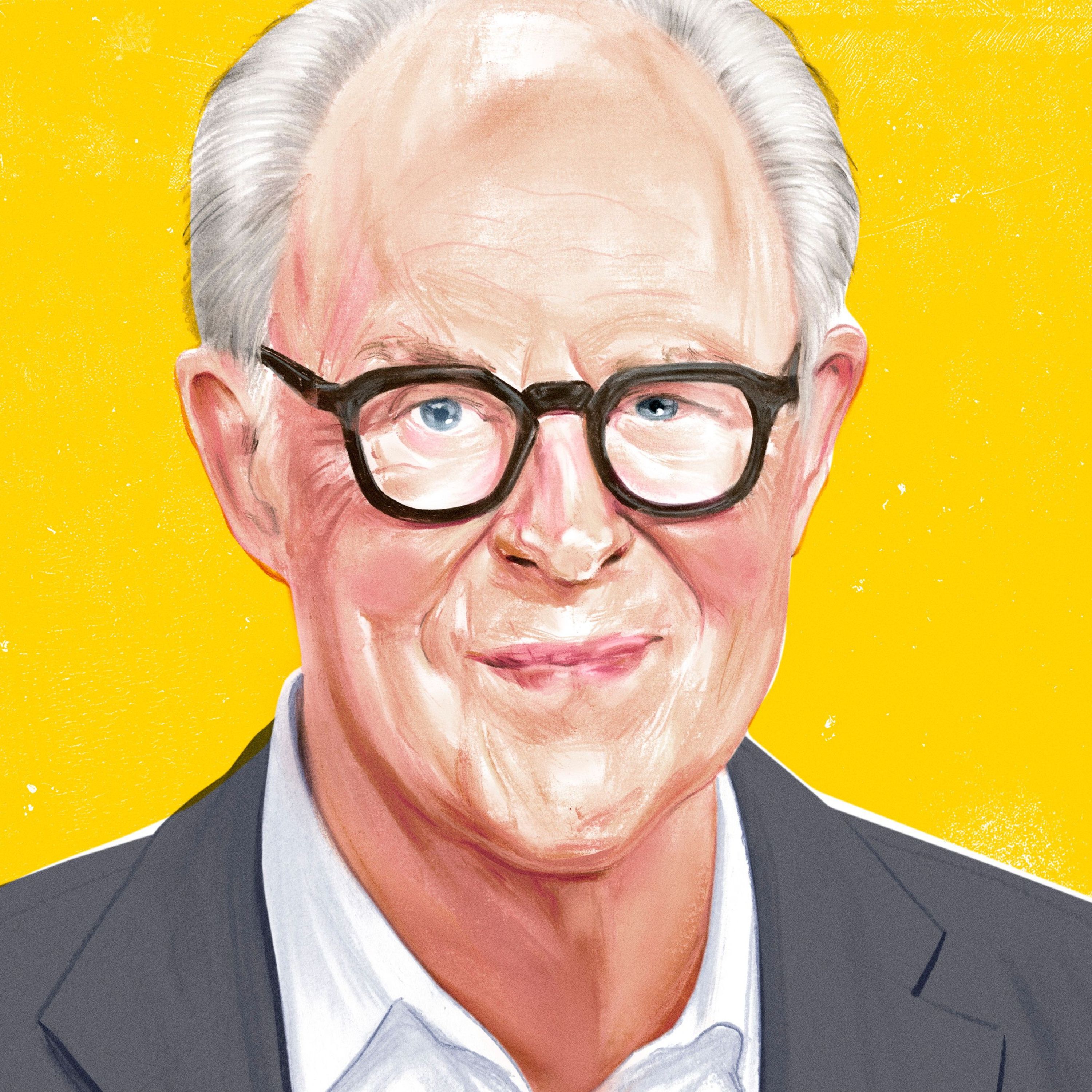
The New Yorker Radio Hour
John Lithgow on the Controversial Authors Roald Dahl and J. K. Rowling
00:28:21
The actor, who stars in the new Broadway production “Giant,” about Dahl’s fraught legacy, discusses whether we can separate the art from the artist.
Loading summary
Transcript132 lines
- [00:01]
Progressive Insurance Announcer
This episode is brought to you by Progressive Insurance. Fiscally responsible financial geniuses, monetary magicians. These are things people say about drivers who switch their car insurance to Progressive and save hundreds. Visit progressive.com to see if you could save Progressive Casualty Insurance Company and affiliates. Potential savings will vary. Not available in all states or situations.
- [00:26]
New Yorker Radio Hour Announcer
This is the New Yorker Radio Hour, a co production of WNYC Studios and the New Yorker.
- [00:34]
David Remnick
Welcome to the New Yorker Radio Hour. I'm David Remnick. These past couple of weeks, I've encountered
- [00:40]
Interviewer (likely David Remnick)
an age old dilemma when it comes to the arts.
- [00:44]
David Remnick
Just recently I went to a stunning a stunning performance at the Metropolitan Opera of Richard Wagner's Tristan und Isolde. For five hours I was transported by the music and the singing. And yet all the while I realized that the composer Wagner was a terrible anti Semite, a favorite of Adolf Hitler's. And the production, ironically enough, was by Yuval Sharon, an innovator in modern opera and a Jew. Around the same time, I attended a performance of Giant, Mark Rosenblatt's new play about the life, loves and repugnant politics of Roald Dahl. You leave the theater thinking yet again, how is it possible for such a complicated and often hateful man to produce works of literature that are invariably described as beloved? How is it possible that the same imagination, the same person that conceived James and the Giant Peach and Charlie and the Chocolate Factory could also give an interview in which he said, quote, even a stinker like Hitler didn't just pick on them for no reason? The play Giant dramatizes the scandal that erupted after Roald Dahl had written a profoundly anti Semitic article in 1983. The play premiered in London in 2024 and it opens now on Broadway with the great actor John Lithgow playing Roald Dahl. Dahl faces off against his American publisher, who would like him to retract those anti Semitic remarks. And the events took place some 40 years ago, but they couldn't be more relevant today. I spoke with John Lithgow this past week.
- [02:29]
Interviewer (likely David Remnick)
You know, you've played so many roles over time. The role Dahl that's on stage, that's in this play, a really beautifully crafted play, is not the portrait of a good man. And I wanted to ask, what's been your experience of playing people who are not just complicated but but arguably in
- [02:50]
David Remnick
their sum,
- [02:53]
Interviewer (likely David Remnick)
are nasty pieces of work?
- [02:56]
John Lithgow
Well, I've done a lot of that. I mean, I'm a character actor, so people seek me out to play kind of unusual characters. And half the time unusual means wretched in different Ways.
- [03:13]
Interviewer (likely David Remnick)
Do you relish that?
- [03:13]
John Lithgow
Yes, just because I relish complication.
- [03:17]
David Remnick
Who are the wretches you've played?
- [03:19]
John Lithgow
Oh, gosh, I've done three Brian De Palma villains. I played the Trinity Killer on Dexter. I've played an awful lot of hypocrites and kind of devious scoundrels. They just come to me for these roles. Cause I'm ready to play them.
- [03:38]
Interviewer (likely David Remnick)
Well, tell me when you first read this play and you're maybe doing some background reading as well on Roald Dahl.
- [03:45]
John Lithgow
Yes.
- [03:46]
Interviewer (likely David Remnick)
What did you make of his life? How do you prepare yourself to play a person with the center of the play is his really wretched antisemitism?
- [03:58]
John Lithgow
Well, I just. Biographical information was very valuable. Finding out all about him when he was little. To me that's a terrific way in. He grew up a sort of outsider Englishman and who wanted in. At prep school he was badly beaten as kids were. And he. He suffered some appalling setbacks in his life. Among them his plane crash. His solo plane crash when he was an RAF pilot in Libya, when by all rights, he should have been killed by it. He was smashed, smashed to bits, alone on a Libyan desert and somehow survived. But his whole life he lived in pain. Six laminectomies.
- [04:49]
Interviewer (likely David Remnick)
Wow.
- [04:50]
John Lithgow
His four month old child, boy, son Theo, was in his pram and hit by a taxicab in New York and grew up with severe brain damages. And his daughter, whom he completely adored, caught this variant of measles and died like that. I compiled his losses.
- [05:17]
Interviewer (likely David Remnick)
That's an interesting word. You compiled his losses?
- [05:19]
John Lithgow
Yeah.
- [05:20]
Interviewer (likely David Remnick)
What does that mean?
- [05:22]
John Lithgow
In just putting together this person. Everything about doing this play was figuring out what motivated him.
- [05:30]
David Remnick
Now the play centers on a moment in time in 1983.
- [05:33]
Interviewer (likely David Remnick)
Dahl is at home. He is in a kind of what seems to be a country house that's going through a construction.
- [05:41]
John Lithgow
Yes.
- [05:41]
Interviewer (likely David Remnick)
He's with his girlfriend. Fiance, soon to be wife. Yes. With whom he's had a long affair.
- [05:48]
John Lithgow
Yes.
- [05:49]
Interviewer (likely David Remnick)
And he's taken time out to write a book review about the Israeli Lebanon War, which was brutal. And obviously the issue was the PLO and the Israelis trying to chase the PLO out of Lebanon. And it's a long and horrific story. And he's written a book review that anyone's ears would read as not just critical of Israeli policy, but anti Semitic. Am I getting it right?
- [06:22]
John Lithgow
Yes. Well, explicitly critical of Israel. But his anti Semitism is obvious, like a leaky car battery. It's just in between the lines and in some cases just explicit and as
- [06:40]
Interviewer (likely David Remnick)
I understand from Jeremy Triglound's biography of Roald Dahl that his version that he sent to the magazine, the British magazine, used the word Jew more than Israeli. And in order to kind of COVID for Dahl a little bit, the editors changed it to Israeli to make it less, as it were, centered on the ethnicity and on Jews than on Israeli policy. But even that didn't do the job.
- [07:08]
John Lithgow
Yeah, no, he betrayed his anti Semitism.
- [07:12]
David Remnick
And where did that come from?
- [07:15]
John Lithgow
Who knows where anti Semitism or any bigotry comes from. But in playing the role of. I just looked for the damage. To me, a person who suffered injury or carries demons, it just sort of manifests itself in hatred of the other.
- [07:37]
Interviewer (likely David Remnick)
So in a sense, what you're looking for is to be at once accurate and sympathetic in the deepest human sense.
- [07:44]
John Lithgow
I guess empathetic is a better word. Just simply trying to understand. I mean, I think the play would be unwatchable if there weren't those moments where you saw Paine in Dahl, because
- [07:59]
Interviewer (likely David Remnick)
it'd be too simplistic.
- [08:01]
John Lithgow
It would be just hard to watch. I mean, and surely it's there. He did feel terrible grief about the loss of Olivia. He cared for his son Theo, in fact, even invented a little shent that could drain the fluid from his brain at this child. He was just obsessively caring. Now, to me, that extraordinary duality is just very compelling. When you're creating drama, that's what you look for, these contradictions.
- [08:39]
Interviewer (likely David Remnick)
One of the aspects of this that maybe you couldn't have anticipated is that the run in London took place against the background of October 7th. And it's not as if the political atmosphere has gotten any less fraught where the Middle east or anti Semitism is concerned. Now that you're in New York, can you feel that in the room?
- [09:01]
John Lithgow
Oh, gosh, yes. I mean, history has caught up with us in waves when we were rehearsing a play set in 1983, but all about the events of 1982 in Beirut. That was a major incursion into Beirut once again by Israel. Here we are in the spring of 2026, doing the play for Broadway, and the same thing happened. Yet another major incursion into Lebanon. So there are lines in the play where you can almost hear the audience gasp. They are so applicable to the present moment, even though they're about the year 1982. I mean, there are some lines I could but will not quote. But you'll know them. You've seen the play where I say them out loud and I can just hear.
- [09:59]
Interviewer (likely David Remnick)
Tell me one.
- [10:00]
John Lithgow
Well, there's the very famous line that Dahl specifically told to Mike Coren of the New Statesman. Even a stinker like Hitler didn't just pick on them for no reason.
- [10:14]
Interviewer (likely David Remnick)
I think it's at that point that people in the audience who didn't really know this about Dahl couldn't escape it.
- [10:22]
John Lithgow
Yes, and antisemitism. The charge of antisemitism hangs in the air like bad weather all through the play. But that's the moment when there's a gigantic clap of thunder and everybody knows. Oh, my God, He. And it's verbatim what he did say to Mike Corin. Mike Corin was at our opening night last night. So
- [10:48]
Interviewer (likely David Remnick)
it's an ancillary subject that comes along with this play is wonderful art created by people who are not so nice. You know, we read Celine. Still, he was a Nazi or a fascist sympathizer, but we can. The list is unfortunately, very, very long. And in recent years, Dahl's books themselves have been edited to remove offensive things about characters, race, their weight, their gender. Do you agree with that?
- [11:22]
John Lithgow
No. No, I don't. And neither do a lot of very important voices in the literary world and other worlds. And, in fact, they now publish two parallel versions of Roald Dahl. You can buy either the Baudelairized or the original.
- [11:40]
Interviewer (likely David Remnick)
I think it's kind of crazy.
- [11:42]
John Lithgow
It's completely nuts. You know, the other choice is don't read what Roald Dahl wrote. Don't.
- [11:50]
Interviewer (likely David Remnick)
I mean, I suppose you'd have the same problem with Huckleberry Fin.
- [11:53]
John Lithgow
Yeah, exactly. When you think about how compulsive and almost anal Nol was about the placement of commas on things.
- [12:05]
Interviewer (likely David Remnick)
Do you know there's a famous letter that I came across in our archives, in the New Yorker archives, where he is so angry at the copy editors for excessive commas. Cause we use what's called the Oxford comma on the serial comma.
- [12:22]
BILT Sponsor Announcer
And.
- [12:23]
David Remnick
And he says, quote, you have sprinkled
- [12:25]
Interviewer (likely David Remnick)
commas about all over the pages as though you were putting raisins in a plum pudding. Yes, well, God damn it, not for me. He was furious. It was a very funny letter, but filled with rage.
- [12:39]
John Lithgow
You know, Dahl can appall you, but you have to respect the fact that he took all of that fiercely, seriously. And just the fact that he has died doesn't mean you can mess around with his writing. All you can do is not buy it and not read it to your children.
- [12:58]
Interviewer (likely David Remnick)
I sometimes watch you play these scoundrels or outsized Figures. And I can just. You can feel the relish going on. So you've played Roger Ailes, the great sexual harasser, and Fox chief Bill Clinton. Winston Churchill. And let's listen to a clip of you as Churchill in the Crown.
- [13:20]
Clip of John Lithgow as Churchill
I look at you now and I realize that the time is fast approaching for me to step down. Not because I'm unwell or unfit for office, but because you are ready. And therefore, I have discharged my duty to your father.
- [13:47]
Interviewer (likely David Remnick)
That's an actor having a great time.
- [13:49]
John Lithgow
Oh, I don't remember any of that.
- [13:51]
New Yorker Radio Hour Announcer
Really?
- [13:52]
John Lithgow
Why would that be? Well, it comes back to me, and it's wonderful to listen to you. Although I think my dialect is a little better now than it was then.
- [14:00]
Interviewer (likely David Remnick)
Really?
- [14:01]
John Lithgow
Yes. I can be critical of yourself.
- [14:04]
Interviewer (likely David Remnick)
Do you not like watching your old stuff?
- [14:06]
John Lithgow
No, actually, I. Well, I'm selective. Curiously, the more acted it is, the more comfortable I am watching it.
- [14:15]
Interviewer (likely David Remnick)
For example, what would that be?
- [14:17]
John Lithgow
Well, I certainly love watching the Churchill episodes. I just think they're so beautifully done in every way. And the fact that I fit in with a bunch of English actors is a matter of great pride on my part. I love watching myself in Third Rock from the sun, which is the most over the top kind of disgracefully overdone comedy. But I just think it's hilarious. Somehow, the further afield I go, the more comfortable I am watching myself.
- [14:49]
Interviewer (likely David Remnick)
Well, let's play a clip from 3rd Rock from the Sun. You won three Emmys and a Golden Globe for that. So let's just hear you in Third Rock from the Sun.
- [14:59]
John Lithgow
Dick, what are you doing? I'm just working on my computer. It's not even on. Yes, it is.
- [15:07]
David Remnick
No, it's not.
- [15:08]
John Lithgow
Yeah, it's just warming up.
- [15:12]
Interviewer (likely David Remnick)
You don't know how to use a computer.
- [15:15]
John Lithgow
Shut up.
- [15:16]
Interviewer (likely David Remnick)
He has no idea.
- [15:20]
John Lithgow
I am a superior being. I came to Earth on a spaceship that could fit in my pants. What am I supposed to do with technology so backwards it can't even read your thought waves? Now that I don't remember a single phrase of that. I don't even remember the scene. And you. That's partly why I so love watching.
- [15:40]
David Remnick
Does this stuff all go out of your head?
- [15:41]
Interviewer (likely David Remnick)
Can you remember being in World According to Garp or Things in a First Age?
- [15:45]
John Lithgow
I remember, but not the specifics of it. I mean, I did 138 episodes of Third Rock from the sun and I remember about 20 of them very vividly. And I think I remember them all, but then they show up and it's like, I don't remember doing any of this.
- [16:01]
Interviewer (likely David Remnick)
Is it easier to be on a sitcom than it is to be, you know, in a two and a half hour play where the mood is anything but jovial at all moments?
- [16:14]
John Lithgow
Well, on a very basic level, it's exactly the same process, just all the logistics are very different. It was a glorious, fun. Six years doing that show, I led a very normal life. I worked from 10 until 4, except on Tuesdays when we performed the show at night. I was working hand in glove with this incredible team of a dozen plus comedy writers and with this effortless ensemble of comic actors, most of them from the stage. And we had a live audience. It's like preparing a summer stock show in the course of five days and then bam. Putting it in front of the audience and listening them laugh their heads off.
- [17:00]
Interviewer (likely David Remnick)
Sounds like a gas.
- [17:01]
John Lithgow
It was great. And it was also very untaxing. Every two weeks we would have a week off for the writers catch up. And I was home to literally cook supper for the kids at night.
- [17:14]
Interviewer (likely David Remnick)
And I would imagine making a living making a. As opposed to a play that may or may not launch.
- [17:20]
John Lithgow
Yeah, I mean, you have to sort of ignore the whole fact of money if you want to really pursue what you want to do as an actor. When I did the Giant at the Royal Court Theater, it basically cost me about ten grand, but I wanted to do that more than anything else.
- [17:39]
Interviewer (likely David Remnick)
Well, how did it cost you ten grand?
- [17:40]
John Lithgow
What do you mean? Just they pay you like equity minimum, which is a lot less in London than it is in New York. But London is expensive place for you,
- [17:52]
Interviewer (likely David Remnick)
even though you're eventually filling sizable theaters.
- [17:55]
John Lithgow
Well, it's like buying futures, you know, I mean, I. Whatever. Whatever happened with Giant, I wanted to do that play and I didn't want anybody else to do it.
- [18:09]
David Remnick
I'm speaking with the actor John Lithgow, who plays Roald Dahl in a new play called Giant. This is the New Yorker Radio Hour, and we'll continue in just a moment.
- [18:32]
BILT Sponsor Announcer
The New Yorker Radio Hour is supported by BILT. It's 2026, and if you're still paying rent without BILT, it could be time for a change. BILT is a loyalty program that works to reward renters for one of their biggest monthly rent. With bilt, every rent payment earns you points that can be used toward flights, hotels, Lyft rides, Amazon.com purchases, and so much more. Now BILT members can earn points on mortgage payments for the first time. That means you can get rewarded wherever you live and unlock exclusive benefits from more than 45,000 restaurants, fitness studios, pharmacies and other neighborhood partners. Earn rewards and get something back wherever you live. Join the loyalty program for renters at joinbuilt.com radiohour that's J-O-I-N-B-I-L-T.com radiohour make sure to use our URL so they know we sent you.
- [19:23]
Ira Glass
This is Ira Glass of this American Life. Do you know our show? Okay, well, either way, I'm going to tell you about it. We make stories, old fashioned stories that hopefully pull you into the beginning with funny moments and feelings and people in surprising situations. And then you just want to find out what is going to happen and cannot stop listening. That's right. I'm talking about stories that make you miss appointments and ignore your loved ones. This is American Life. Every week, wherever you get your podcasts.
- [19:59]
David Remnick
This is the New Yorker Radio Hour. I'm David Remnick and I'm speaking today with the actor John Lithgow. Lythgoe's been one of the most respected and most successful actors working for a very long time. He won a Tony Award for his Broadway debut more than 50 years ago, and at the age of 80, he seems busier than ever and better than ever. I just saw him on Broadway playing the role of the writer Roald Dahl in Mark Rosenblatt's play Giant. It deals with the scandal around Roald Dahl's antisemitism. Lithgow will also have a major role in HBO's Harry Potter series as the wizard Dumbledore, although Lithgow has said that he has some reservations about working on a series by J.K. rowling, whose views on trans identity have caused a great deal of criticism among many readers.
- [20:51]
John Lithgow
It's I tend to think of this as the last Broadway show I will do just because I am 80. I signed on to play Dumbledore in the HBO Harry Potter, which could go on for years. That will go on for years. And it's very hard to think about doing a play in between seasons. Cause a play is a good four or five months minimum if you want to do it right. And I simply.
- [21:21]
Interviewer (likely David Remnick)
And the stars are in line.
- [21:24]
John Lithgow
You have to. You have to have the energy to do that and you have to have the time to do that. And my energy is dwindling. You know, it's not as easy to learn lines as it used to be. No, of course.
- [21:37]
Interviewer (likely David Remnick)
So the last thing I want to do ever is to disappoint you. And you just had an interview with the New York Times, in which you said, with some, I don't know, kind of silent sigh in the background, that you're going to be asked in every interview for the rest of your career about J.K. rowling, who obviously is the author of all the Harry Potter books, and her views on trans people, which I think to many ears can be as ugly as any prejudice around. And at the same time, you both disagree with her and you've chosen to take this on. Tell me a little bit about that.
- [22:20]
John Lithgow
Well, it's. I mean, the great big, large project of doing another version of Harry Potter is basically retelling wonderful stories that Rowling created. And they are. They're very stirring stories. I think there's reasons why they've resonated with young people and young people have grown up and are still obsessed with Harry Potter. Dumbledore is a wonderful role. Doing it in England with, like, half the crew worked on the Crown. There was everything attractive about the job and job security into my late years. You know, you don't ignore those issues. The whole subject of Rowling's imputed prejudice, it came up sort of after everything was already underway. I'd already said yes, and it really would have been.
- [23:18]
Interviewer (likely David Remnick)
So this is quite a while ago.
- [23:19]
John Lithgow
It was quite a while ago. I was urged to walk away and I was not about to do that. And I also.
- [23:29]
Interviewer (likely David Remnick)
I'm not judging at all. But tell me why you decided not to walk away.
- [23:33]
John Lithgow
I just felt the reasons to do it were much, much stronger than the reasons to protest against what Rowling has done and said. I do disagree with much of it. Much of it, I think, has been twisted and misrepresented and she has sort of doubled down on it to her own at her own cause.
- [23:57]
Interviewer (likely David Remnick)
But what's the problem with her sometimes is the ferocity and even, I have to say, cruelty in the tone with which she. Sometimes it's usually transmitted by Twitter or some form of social media.
- [24:11]
John Lithgow
Yeah, I'm surprised by it, too, and disappointed by it.
- [24:16]
Interviewer (likely David Remnick)
You meet her? Did you meet her?
- [24:17]
John Lithgow
Mm. I have not met her. The other positive on the Harry Potter project is the people who have taken it on themselves. Francesca Gardner and Mark Mylott are this extraordinary partnership who first worked together on succession. Francesca grew up adoring the Harry Potter canon and she persuaded me. I mean, she was the big reason why I took it on in many ways. It's a crazy thing to do.
- [24:50]
Interviewer (likely David Remnick)
Why is that?
- [24:50]
John Lithgow
Because I will still be playing Dumbledore when I'm 88 years old. If I last that long. And it does rule out an awful lot else in my life. And it's a huge dislocation. My wife and I have to spend. Well, have to. We will now spend about two thirds of every year in London, which you regret or it's difficult. I love London. I've worked there and studied there many, many times over the years. So I know it well.
- [25:21]
David Remnick
Your kids are grown.
- [25:22]
John Lithgow
My kids are grown. But we have grandkids, little grandkids and teenage grandkids. And it's hard to be away from them. It's just a date.
- [25:32]
Interviewer (likely David Remnick)
Do kids like watching you in movies or on the stage? Or don't they run away from it?
- [25:36]
John Lithgow
I'm just curious. They don't talk about it much. They would much rather just. My major role should be my. Their father.
- [25:46]
Interviewer (likely David Remnick)
You get the sense that they would have preferred that you were a certified public accountant?
- [25:49]
John Lithgow
No, no, no. I think. Look, I had these. I'm second generation myself. You have a parent who's involved in the business of storytelling and fantasy and parts of their brain are always somewhere else. And that's.
- [26:09]
Interviewer (likely David Remnick)
And you can feel it when they were growing up, that tension between your brain being on them or your focus being on them.
- [26:17]
John Lithgow
Well, you would have to ask them, but I think it was hard for them on many occasions. And I was away a lot.
- [26:25]
Interviewer (likely David Remnick)
I remember somebody interviewing John Updike. I guess he was in his 70s at this point, and they asked him a very straightforward question. They said, John, you've written 50, 60 books, whatever it was, at that point, what of it do you think will last? What is your assessment of what's the best of it? And I wonder if you. If I asked you that question, could you answer it?
- [26:50]
John Lithgow
I don't think any actor is much remembered after 20, 40 years. I mean, you can. It broke my heart one day on the set of Third Rock from the sun when we referred to Cary Grant and nobody knew and Joe Gordon Levitt said, who's that? It's like, wow. I mean, we write on water, which is all right. I mean, what I do, it's what I love theater. Why I love theater primarily is because I'm telling the story at the very moment they're experiencing it. And that electrical connection is what's so exciting. That's what you're after. You know, they say, well, movies go on forever. They don't. There's a sell by date.
- [27:42]
Interviewer (likely David Remnick)
Even the movie. God.
- [27:43]
John Lithgow
Well, you know, there are the roles that I feel were mine and mine alone, like nobody else could touch me. Roberta Muldoon in darpa, Dick Solomon in Third Rock from the Sun. You can't imagine anybody else playing that role. I feel that way about Roald Dahl. I mean, it is a wonderful feeling to know I own this one. This is my role. It was almost invented for me. That's a great feeling. But you're also kidding yourself when you brag about that to people because you
- [28:23]
Interviewer (likely David Remnick)
think 50 years from now, 25 years from now, somebody's gonna play the very same role.
- [28:26]
John Lithgow
Yeah, somebody will do a revival. And it doesn't, it's fine. I completely accept that. I will have long, long since passed my sell by date.
- [28:38]
Interviewer (likely David Remnick)
John Lithgow, thank you so much.
- [28:42]
Clip of John Lithgow as Churchill
Of course.
- [28:42]
John Lithgow
It's great to talk to you, David.
- [28:50]
David Remnick
The play Giant, starring John Lithgow is on Broadway and you could read more about the play@newyorker.com including a terrific piece by the drama critic John Lahr, who profiles the playwright. And you can subscribe to the New Yorker there as well. New yorker.com I'm David Remnick and that's our program for today. Thanks for listening. See you next time.
- [29:22]
New Yorker Radio Hour Announcer
The new yorker radio hour is a co production of wnyc studios and the new yorker. Our theme music was composed and performed by meryl garbus of tune yards, with additional music by louis mitchell. This episode was produced by max balton, adam howard, david krasnow, jeffrey masters, louis mitchell, jared paul and ursula sommer. With guidance from emily bottin and assistance from michael may, david gable, alex barish, victor guan and alejandra deckett. The new yorker radio hour is supported in part by the cherina endowment fund. I'm Amy Nicholson, the film critic for the LA Times.
- [30:11]
Paul Scheer
And I'm Paul Scheer, an actor, writer and director. You might know me from the League, Veep or my non eligible for Academy Award role in Twist.
- [30:20]
New Yorker Radio Hour Announcer
We come together to host Unspooled, a podcast where we talk about good movies,
- [30:23]
Paul Scheer
critical hits, fan favorites, must sees, and in case you missed ems, we're talking Parasite, the Home Alone, from Grease to the Dark Knight.
- [30:29]
New Yorker Radio Hour Announcer
So if you love movies like we do, come along on our cinematic adventure.
- [30:33]
Paul Scheer
Listen to Unspooled wherever you get your
- [30:34]
David Remnick
podcasts and don't forget to hit the follow button.