← The New Yorker Radio Hour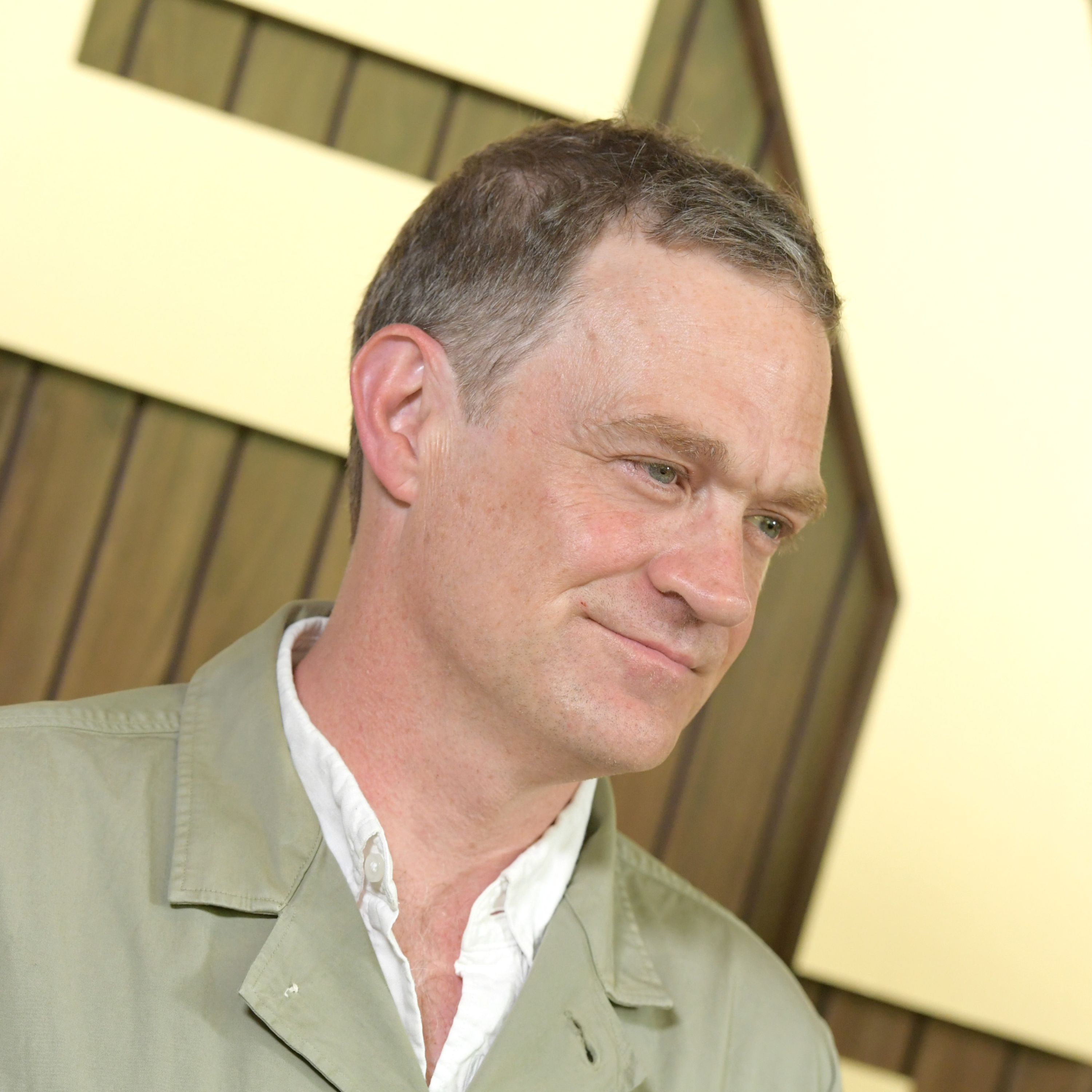
The New Yorker Radio Hour
Patrick Radden Keefe on “London Falling,” His Book About a Teen-Ager’s Mysterious Life and Death
00:19:39
The New Yorker staff writer, who has chronicled political violence under the Irish Republican Army and the opioid epidemic, traces how a teen came to impersonate an oligarch’s son.
Loading summary
Transcript70 lines
- [00:00]
Nigel Poor
WNYC Studios is supported by Quince.
- [00:03]
Jason Adam Katzenstein
I'm New Yorker cartoonist Jason Adam Katzenstein. Spring has sprung and I'm rethinking what's in my closet. I'm trying to keep fewer things, but have the ones I keep be the better things. Pieces that are well made and easy to wear all the time. Which is why I keep coming back to Quince. Quince's fabrics feel elevated, the fits feel thoughtful, and I'm actually looking forward to getting dressed in the morning. Can we talk about Fitz Flit activewear? It's anti odor and it's soft enough that I actually want to wear it all day long. And listener some days I do wear it all day long because I draw from home. They say April showers bring May flowers. In my experience, April showers bring May more showers, and then June even more showers. And July likes scattered showers, but it's a little bit warmer. But it's still raining. And it's always raining in New York, which is why this spring I'm wearing my weatherproof long rain jacket from Quints. I'm protecting myself from these downpours in style and in comfort. Refresh your wardrobe with quints. Go to quint.comradiohour for free shipping and 365 day returns. Now available in Canada too. Go to quints.com radiohour for free shipping and 365 Day returns.
- [01:13]
Nigel Poor
Quince.com radiohour WNYC Studios is supported by Odoo. When you buy business software from lots of vendors, the costs add up and it gets complicated and confusing. Odoo solves this. It's a single company that sells a suite of enterprise apps that handles everything from accounting to inventory to sales. Odoo is all connected on a single platform in a simple and affordable way. You can save money without missing out on the features you need. Check out Odoo at o d o o.com that's o d o o.com
- [01:49]
Matthew or Relle Brettler
this
- [01:49]
Nigel Poor
is the New Yorker Radio Hour, a co production of WNYC Studios and the New Yorker.
- [02:00]
David Remnick
This is the New Yorker Radio Hour. I'm David Remnick. Patrick Radden Keefe is a staff writer at the New Yorker, and his last book bore this subtitle. True Stories of Grifters, Killers, Rebels and Crooks and and without a doubt, Patrick writes some of the great page turners in nonfiction today. But these stories are not simple entertainments. They connect crime and shady dealings to the biggest issues out there. Say Nothing is about political violence under the ira, Empire of Pain was about the Sackler family and their role in the opioid epidemic. Two years ago, Patrick wrote in the New Yorker about the death of a teenage boy in London in very mysterious circumstances. And when he began to explore the story, he found the boy's life as mysterious as his death. That story has now been published in Patrick Raden Keefe's best selling book, London Falling Now, Patrick. The book tells a pretty terrifying story about this kid Zach Brett in a particular environment that's developed in London in the last, I don't know, 20 years or so. The influx of huge amounts of foreign capital into London.
- [03:10]
Patrick Radden Keefe
Yeah.
- [03:11]
David Remnick
How did you find this story? How did you find London falling?
- [03:16]
Patrick Radden Keefe
Well, so this one came to me in exactly this way, in conversation. I was in the summer of 2023, I was living in London. I moved my family over there because we were producing a TV drama based on my book say Nothing, which actually started as a piece in the New Yorker in 2015. There was a guy who was a guest of the director that day. This guy said, there's a family here in London who I'm very close with and they've had this tragedy. They lost a child, a 19 year old boy named Zach. He died in 2019 in very mysterious circumstances. He went off the balcony of a luxury building overlooking the Thames river and he died in the river. And after he died, his parents, whose names are Matthew and Relle, started trying to figure out what happened to him. And they made this astonishing discovery, which is that he had had a secret life they hadn't known about. Their teenage son had a secret alter ego and he had been moving around London pretending that he was the son of a Russian oligarch. I went back to our apartment and I googled Zach Brettler. You know, boy dies in the Thames, kid posing as a Russian oligarch. Nothing came up.
- [04:29]
David Remnick
Nothing in the British papers had been.
- [04:30]
Patrick Radden Keefe
It hadn't been written about at all. There was no, actually no kind of findable record of Zach being dead. So I said to this guy Andrew, I'd love to talk with them, the parents. Yeah, I'd love to tell this story. But I also understand they haven't spoken publicly about it and it would be a big decision to do so. So why don't we meet and I won't even bring a notebook. Totally off the record, no commitment in either direction. We'll just talk. Really it was, they did most of the talking. I just kind of sat there and listened. And they talked for two hours straight
- [05:03]
David Remnick
as if they were waiting for you to walk through the door.
- [05:06]
Patrick Radden Keefe
Part of the reason they hadn't gone public about their son's death is that they had, like a lot of us probably would in a big contemporary city, placed their faith in the authorities. And so there had been a long period of time when they thought, well, Scotland Yard is looking into this, we're going to get answers from the police. And the whole official process had just kind of run its course without providing any answers, just before they met me.
- [05:29]
David Remnick
You do a brilliant thing in the beginning of the book. One of the favorite openings of any book I've ever read is Bleak House. The way it sets the tone of London and the mud and the coal smoke and you do a kind of mirroring thing. I don't know if you had Bleak House in mind, but there we are. We have modern, gleaming London, a London that's been absolutely transformed in the last 20 years. And, and this book is about many things. One of them is about the transformation of London itself.
- [06:03]
Patrick Radden Keefe
Part of the story I was interested in telling was about how the London of Dickens, the London of the British Empire, was a port city. First of all, it was one of the most important ports in the world and it was also a manufacturing city. And then what happened is in about a 20 year period, 20, 25 year period really, between the 50s and the late 70s, the factories all close and the docks all close. And so Margaret Thatcher comes in and the city has an identity crisis. What are we going to be? And there's a decision to deregulate the banking industry and become basically a destination for capital and people who have it.
- [06:45]
David Remnick
Well, capital of a very particular kind in geography that transforms the city. How would you describe that? Because this is the milieu into which our tragic hero enters.
- [06:56]
Patrick Radden Keefe
Yeah, you get a lot of foreign money that comes in. I mean, I'm sort of at pains to say, really first the Americans actually are a big part of the vanguard of this. And then you get the dissolution of the Soviet Union. And what happens in the early 1990s is that you have these massive wealth transfers in which you have formerly state owned assets that basically fall into private hands in a pretty messy, pretty untransparent, I think we could say, pretty corrupt manner. And so you get these billionaires who are minted overnight, but if you want to hold onto that money, you probably don't want to keep it in Russia at that time. So you have all these fortunes made and then immediately this first generation of oligarchs is looking for safe harbor and they find it in London, you know, the property market just goes through the roof. The complexion of the private schools, the elite private schools, is totally transformed by the introduction of all these children of oligarchs. And so my story about Zach Brettler is about this teenage kid who ends up at one of these private schools at 13.
- [07:58]
David Remnick
This book gets into the heads of, and provides dialogue and so on. Technically speaking, how are you able to tell the story with such deep insight when your main character arguably is not there to help you?
- [08:16]
Patrick Radden Keefe
There are these people I don't have access to, but then on the other side, there are the rattlers who were incredibly open and I spent hundreds of hours talking with them. And in fact they had done this. I've never had an experience like this. They did this unusual thing, which is that before they even knew Zach was dead, when he was just missing, they were trying to figure out what had happened to him. And they, they would talk to people and Matthew would record the conversations on his iPhone.
- [08:44]
Matthew or Relle Brettler
You know, he was looking for these sort of strong figures to be part of a life different from ours. You know, we're, we're very happy in the kind of middle class, very cultured life, but it's not the glamorous ultra wealthy.
- [09:02]
Tommy Vitor
And I think he wants. That was, that's the thing I was saying to Akbar earlier, that he got turned on to this when he went to, he went to Mill Hill Boarding. He was a border of Mill Hill and he got exposed to these, you know, former Soviet Union guys, like. Yeah, yes, exactly. That's where it comes from.
- [09:26]
Patrick Radden Keefe
And so it wasn't just their memories of these days that I had access to. It was actually the original real time recordings of the conversations they were having. Rachelle and Matthew, the parents in this book, who really are the main characters in the story, who we follow as they try and sort of figure out what happened to their son. Part of what they realized is that there's a fantasy, right, for any of us, which is that we can kind of mold our kids like clay.
- [09:54]
David Remnick
Yeah, good luck.
- [09:55]
Patrick Radden Keefe
And in fact, they, it doesn't work like that. It doesn't work that way in adolescence. They become something else and sometimes something unrecognizable.
- [10:01]
Matthew or Relle Brettler
He's entertaining, he's charming. He also knows straight away how to play people. From a young kid, you know, talk about if you like cars, he'd straightaway know the banter, even as a, you know, 12 year old. Well, you should try getting this Toyota, if you looked at that one, or this Mercedes. And he's got currency. He knows what People want.
- [10:21]
Tommy Vitor
Yeah, for sure.
- [10:23]
Matthew or Relle Brettler
And that's.
- [10:25]
Tommy Vitor
Yeah, he knew. He knew quite a lot about a lot of subjects. He's got an insight.
- [10:30]
Matthew or Relle Brettler
Speaking as he talks Russian.
- [10:32]
Tommy Vitor
Russian's not bad.
- [10:33]
Matthew or Relle Brettler
He was holding conversations.
- [10:35]
Patrick Radden Keefe
Are you sure?
- [10:37]
David Remnick
But this is such an extreme example. He has an entirely second life and he carries it off with, I have to say, amazing skill.
- [10:49]
Patrick Radden Keefe
That's the thing about Zach, in some respects, he's such a creature of our time in that he's a fake it till you make it kind of kid. And we live in a fake it till you make it kind of culture. You know, Zach's favorite movie was the Wolf of Wall Street. You can be somebody who lies compulsively and is constantly hustling and looking for an advantage and kind of transforming yourself in an ultimately really ruthlessly situationalist manner and get twice elected President of the United States. I've heard that the sky's the limit, right? That can happen, yeah.
- [11:22]
David Remnick
I'm speaking with Patrick Raden Keefe about London Falling. His new book about the death of a teenager in London will continue in a moment.
- [11:33]
Tommy Vitor
Foreign. The headlines never stop and it's harder than ever to tell what's real, what matters, and what's just noise. That's where Pod Save America comes in. I'm Tommy Vitor and every week I'm joined by fellow former Obama aides Jon Favreau, Jon Lovett and Dan Pfeiffer to break down the biggest stories, unpack what they mean for the future of our democracy, and add just enough humor to stay sane. Along the way, you'll also hear honest, in depth conversations with big voices in politics, media and culture like Rachel Maddow, Gavin Newsom and Mark Cuban that you won't find anywhere else. New episodes drop every Tuesday and Friday with deep dives every other weekend. Listen wherever you get your podcasts, watch on YouTube or subscribe on Apple podcasts for ad free episodes.
- [12:19]
David Remnick
He gets embroiled with two guys named Akbar Shamji and Dave Sharma. Who are they and what was Zach's ties to them?
- [12:30]
Patrick Radden Keefe
So Zach, his parents did not know until after his death at a certain point in his teens, starts pretending in certain environments that he is not Zach Brettler, upper middle class Jewish kid from Maida Vale, but Zach Ismailov, billionaire son of a Russian oligarch. He had this kind of magpie quality with his lies. And it turns out there was a woman that he had gotten to know whose name was Zamira Ismailova. And this was classic Zack.
- [13:00]
Tommy Vitor
He.
- [13:00]
Patrick Radden Keefe
He kind of plucks her last name and repurposes it as his own.
- [13:04]
David Remnick
He's got skills.
- [13:05]
Patrick Radden Keefe
He's got skills. He started to present himself this way to people, including to people who you really would want to be careful about carrying off this, like, you know, a guy who works for Roman Abramovich, the biggest oligarch in London, is one of the first people that Zach pulls this ruse on. And he meets these two guys, Akbar Shamji and then Dave Sharma. And Akbar Shamji is this very glamorous, kind of elegant, handsome businessman who lives in Mayfair, a particularly posh district of London. When I was working on the New Yorker piece, he and I exchanged many emails. He wouldn't meet with me. He wouldn't talk with me on the phone. He wouldn't tell me where in the world he is. This is quite a slippery guy. But he would email, and we emailed a lot, and then the New Yorker piece came out, and he hasn't connected with me since.
- [13:56]
David Remnick
What does he want with a teenager?
- [13:58]
Patrick Radden Keefe
Well, what does he want with a teenager who he thinks is poised to inherit billions and to invest his family's fortune? What Akbar wants is a young protege with money to spend. He meets Akbar. Akbar has a real estate development that he's trying to get off the ground in Lisbon. They're introduced, and Akbar thinks that Zach is going to invest some of his oligarch billions in this development. But Zach keeps not coming through with the money. And before Akbar can start to suspect that something's going on, Zach says, I have terrible news. My dear father, the oligarch, has died. And he says that he's gotten into a fight with his mother. His mother lives in Dubai, and she shut him out of the family home. He claimed that he lived in one Hyde park, which is the most expensive real estate development in London. And so the story kind of pivots. And now he's clashing with his mother, and he doesn't have a place to stay. And at this point, Akbar says, well, I have this friend named Dave Sharma, and he's got this luxury apartment overlooking the Thames. You could go stay with him. And Zach ends up becoming fast friends with this guy, Dave Sharma, who, it emerges, is better known around London as a gangster, and his nickname is Indian Dave.
- [15:17]
David Remnick
So at first, it seemed like Zach had jumped off his balcony and committed suicide. He was in over his head in his real life, fictionalized life. At what point did it appear like there was much more going on here in terms of how he died?
- [15:37]
Patrick Radden Keefe
I think that the parents started to figure it out. Pretty quickly, in part because they had an intuition that their son probably hadn't committed suicide. I mean, a kid goes off a balcony and it turns out that there's CCTV footage showing that he jumps off the balcony, he's not pushed. And across my career, I've often written about denial of one sort or another. I'm very attuned to denial, especially familial denial. I don't think this is a situation in which Zach killed himself and was in denial. I think that his parents really said, this doesn't add up. It doesn't look like a suicide. Then they meet with Akbar Shamji and they talk to Dave Sharma. And those guys say, oh, we didn't know your son as Zach brother at all. We knew him as Zakismailov. And so that's a second big revelation for them. All of this is coming quite quickly. And if it's not a kind of classic murder where you see somebody pushing him off the balcony and it's not a suicide, then maybe it's some third party, more exotic thing.
- [16:40]
Tommy Vitor
Sam's going around telling this story a lot of all the money, and he's kind of this orphan guy with all this money. He's delivering that in dangerous circles. Anywhere in London can be a bit dangerous if you're a kid with lots of money.
- [16:54]
Patrick Radden Keefe
There's this interesting process where initially the Brettlers really placed a lot of faith in the authorities. This was one of those cases where the cops just weren't up to it, and I don't think they had the imagination for it. And there was also a kind of interesting thing where there was the whiff of Russia about all of this. And there is a history which our New Yorker colleague Heidi Blake has written brilliantly about.
- [17:20]
David Remnick
People tend to go off balconies in which people.
- [17:23]
Patrick Radden Keefe
Yeah, people go off balconies. They go in front of tube trains again and again and again. I mean, it's happened many times in London and there has been a tendency, historically for the British police to say, looks like a suicide to us.
- [17:38]
David Remnick
So why would the, as it were, organized crime want to get rid of Zach?
- [17:44]
Patrick Radden Keefe
He had gotten involved with some pretty dangerous people. And Dave Sharma, this pretty ruthless, murderous gangster. This guy who, you know, at first glance, the parents thought he was harmless. They actually thought he was a rubber executive, that he worked for Pirelli Rubber. They learned by degrees that actually he wasn't at all, that he was an extortionist and a gangster, and that their son had stayed with this guy, had lived in his apartment and that the day that Zach died was right around the time when this gangster was beginning to realize that maybe Zach wasn't who he had pretended that he was, that these are, were the wrong people to be pulling this kind of high stakes imposter routine with.
- [18:34]
David Remnick
Let me ask you this. After 20 years of doing these stories, do you start to see in your own mind what the shape of your writing career and its obsessions are? What's at the root of it in retrospect?
- [18:48]
Patrick Radden Keefe
Yeah, I can tell you I'm drawn to stories about family. I'm drawn to stories about moral compromise of one sort or another. It's not crime per se that interests me, but the intermingling of the licit and illicit worlds and the ways in which people deviate from a kind of conventional morality by degrees. And then the stories that they tell themselves about doing that. With this one, I was really intrigued by the fact that you have this boy who dies in 2019 and you have three people in the apartment that night. And as I delved into their lives, even as I was working on the piece, I learned that their family histories were really rich and interesting. And I was interested in these questions of reinvention. How did London reinvent itself? How did Zach reinvent himself? And then it emerges that even each of those three guys in the apartment that night comes from a family where somebody came from a foreign land and they arrive in London and what is a big global city if not a stage for reinvention? And they each have to kind of reinvent themselves. And so Zach had these two grandfathers who had both survived the Holocaust as teenagers, lost their whole families, virtually their whole families, and arrive in London as teenagers and have to decide what who am I going to be? And I thought that there might be a way by strangely, by delving into the backstories of these people and kind of seeing what brought them to the balcony that night to say something about a city that I really love and about these ideas of identity and invention and the kind of masks we put on and how we sometimes make a quite conscious decision for to go from, you know, being the person we were born to something else altogether.
- [20:48]
David Remnick
Patrick Raden Keefe. It's an extraordinary, extraordinary book. Wonderful book. Thanks so much.
- [20:53]
Patrick Radden Keefe
Thank you, David.
- [20:58]
David Remnick
London Falling is the title of Patrick Radden Keefe's new book and it will be adapted into a TV series by A24 UK. It all began with a story by Patrick in the New Yorker. And you can read that piece@newyorker.com you can also subscribe to the magazine there as well. Newyorker.com I'm David Remnick. That's our program for today. Thank you for listening. See you next time.
- [21:24]
Nigel Poor
The New Yorker Radio Hour is a co production of WNYC Studios and the New Yorker. Our theme music was composed and performed by Meryl Garbus of Toon Yards, with additional music by Louis Mitchell. This episode was produced by Max Balton, Adam Howard, David Krasnow, Jeffrey Masters, Louis Mitchell, Jared Paul and Ursula Sommer. With guidance from Emily Botin and assistance from Michael May, David Gable, Alex Barish, Victor Guan, and Alejandra Deckett. The New Yorker Radio Hour is supported in part by the Cherina Endowment.
- [22:04]
Tommy Vitor
From Sauce to Dust to Nuggets It's Taco Bell's new Diablo Dusted Crispy Chicken Nuggets. Are they mild? If they were mild, we'd have to change the name to Little Rascal Nuggets or Minor Nuisance Nuggets. Definitely Diablo New Diablo Dusted Crispy Chicken Nuggets. A brand new classic. Only a Taco Bell
- [22:28]
Patrick Radden Keefe
picture being down
- [22:30]
Tommy Vitor
at participating U.S. taco Bell locations for a limited time and while supplies last.
- [22:34]
Patrick Radden Keefe
I'm Earlonne Woods.
- [22:36]
Nigel Poor
I'm Nigel Poor. We're the hosts and creators of ear hustle from PRX's Radiotopia.
- [22:41]
Patrick Radden Keefe
When we met, I was doing time
- [22:42]
David Remnick
at San Quentin State Prison in California
- [22:44]
Nigel Poor
and I was coming in as a volunteer. The stories we tell are probably not what people expect from a prison podcast,
- [22:52]
David Remnick
like cooking meals in a prison cell,
- [22:54]
Nigel Poor
keeping little pets prison nicknames, and trying to be a parent from inside.
- [22:58]
David Remnick
Stories about life on the inside shared by those who live it.
- [23:01]
Nigel Poor
Find Ear Hustle wherever you get your podcasts.