← The New Yorker Radio Hour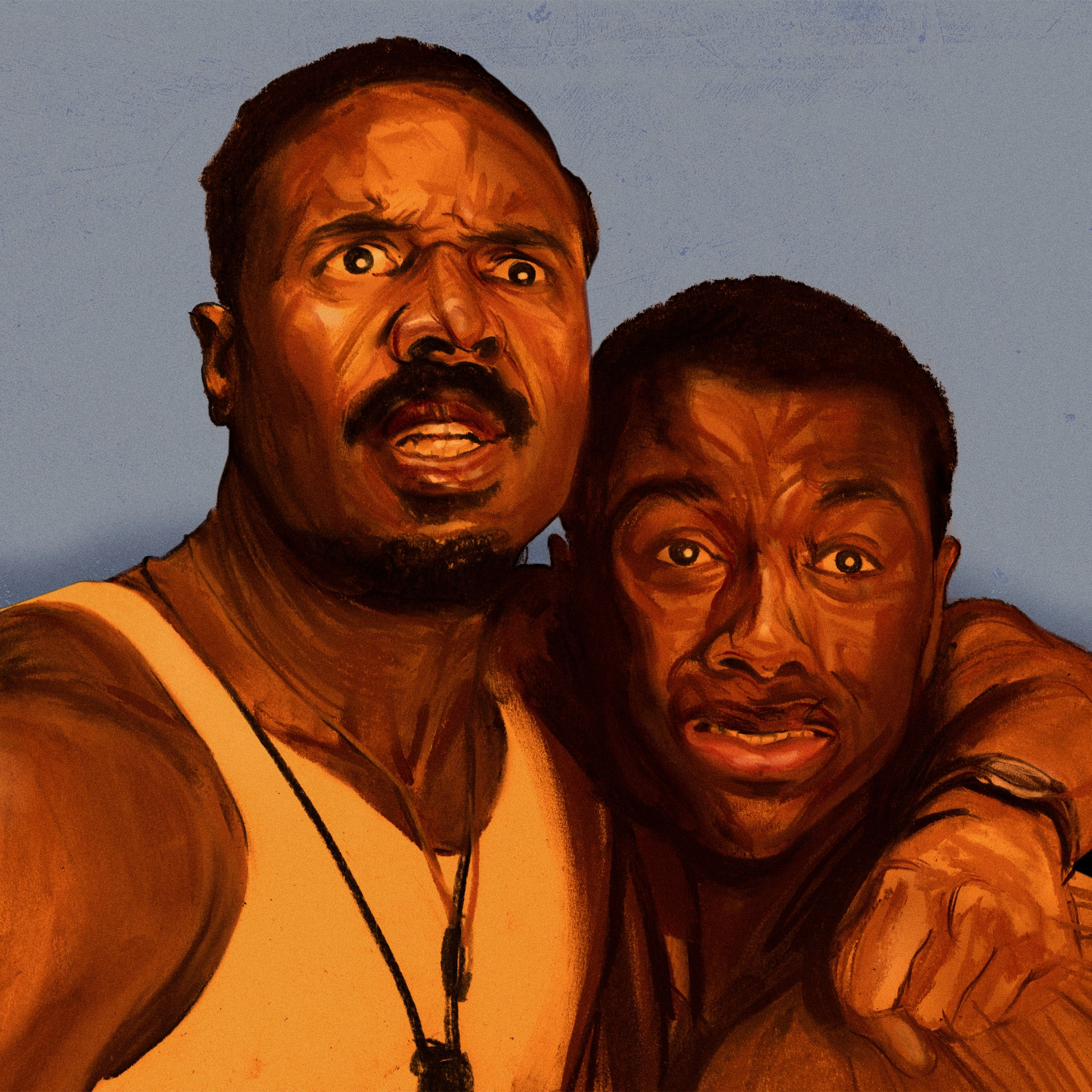
The New Yorker Radio Hour
Ryan Coogler on “Sinners,” His Epic Film about Race, Music, and the Undead
00:19:28
The director talks with staff writer Jelani Cobb about his movie, which has been nominated for a record-setting sixteen Academy Awards.
Loading summary
Transcript81 lines
- [00:01]
Narrator/Announcer
This episode is brought to you by Progressive Insurance. Do you ever think about switching insurance companies to see if you could save some cash? Progressive makes it easy to see if you could save when you bundle your home and auto policies. Try it@progressive.com Progressive Casualty Insurance Company and affiliates. Potential savings will vary. Not available in all states.
- [00:20]
WNYC Studios Sponsor Voice
WNYC Studios is supported by Quince it's
- [00:24]
Quince Sponsor Voice
time to switch out my winter wardrobe for spring with which means it's time to really consider what's important in my closet. For me that means choosing quality over quantity and that's why I'm choosing Quince. Quince has the everyday essentials I love with quality that lasts. I love their lightweight cashmere sweaters so I am excited for their short sleeve Mongolian cashmere polos, the linen bottoms and shorts tees in 100% Pima cotton and European jersey linen. These are the versatile pieces that make a wardrobe actually work season after season. Their clothing is rated between 4.5 and 5 stars by thousands of people wearing it every day and they only partner with factories that meet rigorous standards for craftsmanship and ethical production. And it's not just clothes. Quince makes excellent home goods. Their bath sheets are the best I've ever had, generously sized and so soft, they've really elevated my bath experience. Right now go to quince.com radiohour for free shipping and 365 day returns. That's a full year to build your wardrobe and love it and you will now available in Canada too. Don't keep settling for clothes that don't last. Go to q u I-n c e.com radiohour for free shipping and 365 day returns. Quince.com radiohour the day begins at the
- [01:44]
Chase Sapphire Sponsor Voice
Chase Sapphire Lounge by the club at Boston Logan Airport. You get the clam chowder in San Diego. It's Tostadas New York Espresso Martini. It's 10am why not? It's the quiet before your next flight, the shower that resets your day, the menu that lets you know where you are. This is access to over 1300 airport lounges and every Sapphire lounge by the club. And one card that gets you in Chase Sapphire Reserve now even more rewarding.
- [02:08]
WNYC Studios Sponsor Voice
Learn more@chase.com Sapphire Reserve cards issued by JP Morgan Chase bank and a member FDIC subject to credit approval.
- [02:16]
New Yorker Radio Hour Announcer
This is the New Yorker Radio Hour, a co production of WNYC Studios and the New Yorker Foreign.
- [02:28]
David Remnick
This is the New Yorker Radio Hour. I'm David Remnick. When the Oscar nominations were announced this year, a record was set. Ryan Coogler's Sinners received the most nominations of any film ever, 16 in all. The fact that Sinners is a vampire movie sort of makes that only more remarkable.
- [02:49]
Ryan Coogler
What y' all doing? Just step aside and let me own in. Now.
- [02:53]
Narrator/Announcer
Why you need him to do that?
- [02:55]
Ryan Coogler
You bigin strong enough to push past us? Well, that wouldn't be too polite, now, would it, Ms. Andy? I don't know why I'm talking to you anyway.
- [03:05]
Narrator/Announcer
Don't talk to him. You talking to me right now.
- [03:07]
Ryan Coogler
Why you can't just walk your big
- [03:09]
Narrator/Announcer
ass up in here without an invite, huh? Go ahead, admit to it.
- [03:14]
Ryan Coogler
Commit to what? That you die.
- [03:20]
David Remnick
Sinners was nominated for Best Picture and Ryan Coogler for Best Director and Original Screenplay. Coogler was also the director of the first Black Panther movie, as well as a favorite of mine, Creed, a sequel to the Rocky films. Staff writer Jelani Cobb profiled Coogler in the New Yorker, and they also sat down to talk last year when Sinners had just come out.
- [03:43]
Ryan Coogler
It's always good to see you, bro.
- [03:45]
Jelani Cobb
Good to see you as well. So, you know, I want to talk a little bit about how you approach a film that is simultaneously about religion, it's about music, it's about the relationship between fathers and sons. It's set in the Jim Crow south in the 1930s in Mississippi. So there's an element of race and vampires.
- [04:15]
Ryan Coogler
Yep, yep, yep.
- [04:19]
Jelani Cobb
So, you know, of those themes, you know, how did the vampire element, you know, become part of that story?
- [04:27]
Narrator/Announcer
Yeah.
- [04:28]
Ryan Coogler
Yes. So I had the desire to make something that was uniquely personal, you know? And what that means is, like, I wanted to make the thing that only I could make. All my films have been personal, right. I've been fortunate enough to build them as uniquely as a filmmaker could, but they all did start with something that existed outside of myself. So the film is really just based on my interests, you know what I'm saying? I love horror movies, and I love, absolutely love music, you know, and music I use, it's the art form I use in so many different ways, you know, I use it if I want to communicate something to somebody that I love. I use it if I want to calm my mind, if I want to influence a room of strangers. As a kid, I used to use it to travel, you know what I'm saying? I hadn't been anywhere, but I would listen to Mobb deep in Nas and say, oh, man, this is what New York must feel like. Listen to dmx just like oh, man. This is what the east coast must feel like, right?
- [05:25]
Jelani Cobb
Can I say I'm interested in this idea of this kind of film representing a culmination, you know, that you've been working.
- [05:33]
Ryan Coogler
Yes, sir.
- [05:34]
Jelani Cobb
Kind of really well received independent film, Fruitvale and then three franchise films that have been well received artistically and commercially. And then being able to spread your wings and do this project, which also made me think about another theme that's so prominent, which is the theme of, I would say Christianity, but it's actually more kind of broadly spirituality, since there are lots of different kinds of spiritual practices and beliefs that people foreground in the film. Yes, and I hadn't seen that in your previous work, and I wondered how that came to you, how it connects to your own beliefs, your own kind of thinking about spirituality and religion and how it made its way into this film.
- [06:25]
Ryan Coogler
I mean. Well, I'll tell you this. Like, I actually thought about this in all four of my movies before this, right? There's a moment in the movie where a character experiences the afterlife, you know, and for me, there's a very strong, like, those are the strongest moments that I. That I remember either finding them in post production or them always being like an intentional design when I. When I. When I was writing. No more. But it happens in this movie too, you know, in a lot of different ways. But it is something like retroactively, I realized recently, you know, and it's something that I'm always dealing with. I was raised, you know, Christian, Baptist and, you know, in the black tradition, you know what I mean? And product of the second wave of the great migration. And I remember, bro, I remember being young and I was in Catholic school and it was a black Catholic school, you know, we had a lot of those coming up. So I had religion in school, which was like a different type of vibe, right? We would go to mass and sit down, stand up, sit down, stand up, you know what I'm saying? You know, like singing these slow songs, you know what I'm saying? Like, you know, and I felt very disassociated with, you know, you know, it felt like being in class but worse, you know what I'm saying? To be honest. And then I would go to church on Sundays where, you know, my mom singing in the choir, belting out notion and my pastor like, you know, grabbing people, slamming them down, you know what I mean?
- [07:48]
Jelani Cobb
So it's like the Baptist thread and the Catholic thread. These two things are not the same.
- [07:52]
Ryan Coogler
Not the same. But, you know, I recognize some of the Songs that were sung differently, you know what I mean? And I remember gaining essentially consciousness enough to understand that, oh, man, my parents. Parents are dead. Some of them. You know, I remember having conversations with my dad about his parents who had both died before I was born. My mom's dad had died before I was born. And I remember, you know, coming up at that age, 3, 4, 5, and asking them about their parents and hearing about, oh, man, they parents, you know, so are y' all gonna die? You know, and being up late at night, you know, when they telling me about heaven and how, you know, it goes on forever. And trying to, like, understand this concept of an eternity, you know what I'm saying? Or to understand this concept of my mom's saying, yeah, but my father is still with me, and I know he's proud of me. I know he's proud of you. You know, like, in this concept of my relationship with the afterlife, with my own mortality and how that looks through a Catholic lens or a Christian lens or a Baptist lens, you know, it was something that I've been reckoning with forever. And I'm looking back on my work and I'm like, oh, yeah, I'm still. I'm still reckoning with that. Um, you know, and for me,
- [09:07]
Jelani Cobb
you
- [09:07]
Ryan Coogler
know, this film is about a lot of things, man, but it's also about the act of coping.
- [09:14]
Jelani Cobb
You know, the coping part of the film, I think, comes in, even on some level, to the kind of vampire element of it, too. Absolutely. Which is one of the things I thought was really interesting because, you know, I've seen my share of vampire films. I don't think I'd ever seen the kind of vampire question presented in a spiritual frame in the way that these characters do in some ways.
- [09:37]
Ryan Coogler
Yeah, yeah. I mean, that was very important to me, man. Like, if there was anything that was akin to the techniques that I learned from franchise filmmaking, it was how do I deal with the vampire? Because the vampire is not an idea that I own. You know what I mean? None of these ideas in the film are ideas that I own. You know, like the tortured blues musician, you know, the gangster identical twins, the conjuring woman, the racially ambiguous person, you know, these archetypes. These are archetypes, you know what I mean? I was very, very serious about going there, dealing with the archetype with this movie and the international shared experience and knowledge of what a vampire is and what that means and the expectations, right? So for me, it was like, all right, how do I make this concept my own? How Is this a vampire? The way that I like to tell stories. And one that's unique to me, you know, and the movie deals with, you know, the Faustian deal, you know, Like, I was very, like, obsessed with the ancient, you know what I mean? The most notorious Delta blues story is the story of the musician who goes to the crossroads. Oftentimes it's thought of being in Clarksdale, Mississippi.
- [10:49]
Jelani Cobb
That's right.
- [10:50]
Ryan Coogler
And making a deal with a nefarious metaphysical character.
- [10:55]
Jelani Cobb
Right. You know, the Robert Johnson narrative.
- [10:58]
Ryan Coogler
The Robert Johnson narrative. Now, I did some research, most extensively with Amiri Baraka's work.
- [11:05]
Jelani Cobb
And also blues people.
- [11:06]
Ryan Coogler
Exactly.
- [11:07]
Jelani Cobb
The critic and playwright.
- [11:08]
Ryan Coogler
Yeah, yeah, exactly. And Deep Blues by Robert Palmer. And they talk about how sometimes it's the devil, sometimes it's Papa Legba. You know what I mean? It's these ancient.
- [11:19]
Jelani Cobb
Yeah, A reference to the deity Papa Legba, who's common in kinds of African forms of spirituality that came with enslaved black people into the South.
- [11:31]
Ryan Coogler
Yes, sure.
- [11:32]
Jelani Cobb
But, yeah, sometimes people have that idea that Johnson is at the crossroads, not talking to the devil, he's talking to this deity figure, Papa Legba.
- [11:39]
Ryan Coogler
This African spirituality. Exactly.
- [11:41]
Jelani Cobb
Yes.
- [11:41]
Ryan Coogler
But that idea of the Faustian bargain, Right. You know, and not just to be a good guitar player, but to have a better life, you know? You know what I mean? Like, what kind of. How much of yourself do you have to give up to do X, Y? And we all make them, you know? You know what I mean? Like, whether it's on a movie deal or a publishing job or a teaching gig, you know, it's always like, man, what of myself am I gonna give up to have whatever this thing offers, you know, for me, maybe in the distance, momentarily, for my family, you know, it was the bargain that my parents had to make to send me to parochial school. Right. You know, So I was. When I realized that that was the most notorious story at this music from this place. I said, oh, the movie has to be about that, you know? And what if vampirism is, you know, a deal that they selling? You know what I mean? And what is the upside to it? And what's the cost?
- [12:37]
Jelani Cobb
Yeah, that's amazing.
- [12:41]
David Remnick
Director Ryan Coogler speaking with the New Yorker's Jelani Cobb. More in a moment.
- [12:55]
Quince Sponsor Voice
The New Yorker Radio Hour is supported by Smalls. January is when we all try to reset. Why not extend that to your cat? It's 2026, so don't be feeding your cat like it's 1926. That's where Smalls comes in. Smalls cat food is protein packed recipes made with preservative free ingredients you'd find in your fridge and it's delivered right to your door. Starting with Smalls is easy. Just share info about your cat's diet, health and food preferences. Then Smalls puts together a personalized sampler for your cat. No more picking between random brands at the store. Smalls has the right food to satisfy any cat's craving. That's why cats.com named Smalls their best overall cat food. Make 2026 your cat's healthiest year yet for a limited time because you are a listener of the New Yorker radio hour get 60% off your first order plus free shipping when you head to smalls.com radiohour one last time that's 60% off your first order plus Free shipping when you head to smalls dot com
- [13:54]
WNYC Studios Sponsor Voice
radiohour WNYC Studios is supported by Odoo. When you buy business software from lots of vendors, the costs add up and it gets complicated and confusing. Odoo solves this. It's a single company that sells a suite of enterprise apps that handles everything from accounting to inventory to sales. Odoo is all connected on a single platform in a simple and affordable way. You can save money without missing out on the features you need. Check out Odoo at o d o o.com that's o d o o.com this
- [14:27]
Chase Sapphire Sponsor Voice
is a vacation with Chase Sapphire Reserve. The butler the spa. This is the Edit a collection of handpicked luxury hotels and a $500 edit credit chase Sapphire Reserve. Now even more.
- [14:37]
WNYC Studios Sponsor Voice
Learn more@chase.com SapphireReserve cards issued by JPMorgan Chase bank and a member FDIC subject to credit approval.
- [14:42]
Narrator/Announcer
The US military is using AI tools in its strikes on Iran even as the government feuds with the maker of that same technology.
- [14:50]
Ryan Coogler
This decision to abandon Anthropic as a company just before an attack on a
- [14:55]
Jelani Cobb
major country and the beginning of a major war.
- [14:58]
Ryan Coogler
It's just wacky.
- [15:00]
Narrator/Announcer
Seems the age of killer robots is upon us on this week's on the Media from wnyc. Find on the Media wherever you get your podcasts.
- [15:17]
Jelani Cobb
One of the things, you know when I was talking with Zinzi, your wife and you know, your frequent collaborator and co producer on this film and she compared this with, you know, Black Panther with the two Black Panther films and you know, you talked openly about before you made Black Panther going to Africa to actually get a kind of understanding of black Americans relationship with the African continent.
- [15:43]
Ryan Coogler
Yes.
- [15:44]
Jelani Cobb
And Zinzi pointed out that it was like you were grappling with the questions of distant African ancestry in that film and here grappling with more immediate questions of, you know, ancestry in this country, in Mississippi, where the film is set, you know, even though it's shot in Louisiana, but it's set in Mississippi. And that this is same. The same sort of kind of ancestral exploration happening here.
- [16:08]
Ryan Coogler
Absolutely, man. And what's funny is, I went to Mississippi, and that is the most African place I've ever been outside of being.
- [16:16]
Jelani Cobb
What do you mean by that?
- [16:17]
Ryan Coogler
On the continent? I remember I got out of the car in the Mississippi Delta and I was like, oh, wow. I feel like I'm. I feel like I'm back, you know? And that was, for me, was like, deeply profound, man. Like, it was like, oh, through the process of making Black Panther, I realized, all right, African Americans are extremely African, you know? You know what I mean? Like, you know, we may be more African than we know, you know, and realizing that, you know, the 400 year distance from the continent, you know, it did not. It was no way it was ever gonna change thousands of years of. You know what I mean?
- [16:54]
Jelani Cobb
Of.
- [16:55]
Ryan Coogler
Of culture, right? But with this, it was like, oh, we affected this place, you know what I mean? Like, we brought Africa here, you know? Like, that was what I realized was, you know, we had the power of transformation, man, over landscape, over feeling, you know? You know what I mean? And it's known that the music came from that place, you know, like the most influential form of blues music, the Delta blues, right? That's where it came from, that spot. And that realizing that, oh, we didn't just bring Africa to this patch of land here, which is the American south, right? We didn't just do that. And we also. These people who lived in these awful conditions, produced an art form that changed the world. It continues to change. It redefined everything. It was before and it was after, you know what I mean? That, to me was like, oh, this movie's big. Like, this movie's bigger than I thought. I thought I was making something small, right? You know what I'm saying? But now I'm making something massive. And I realized in that moment, if I do this right, there's an argument that there shouldn't be a bigger movie. From there, it was like, okay, imax.
- [18:07]
Jelani Cobb
That's actually what I wanted to talk about, because literally, the size of the film. The last time I saw you, we were in the IMAX offices and they were showing the reels of the film. First off, I had no Idea the reels were that big, like 5, 600 pounds to show this film. But you were talking about how significant it was for this film in particular to be shown in those dimensions. And can you talk a little bit about why you felt like that was important?
- [18:38]
Ryan Coogler
Yeah, man. I mean, I'm getting into relationships then. The first two films I remember watching were Boys in the Hood and Malcolm X. And I'm fortunate enough to have gotten to know John Singleton before he passed away. Rest in peace, John. And he became a mentor of mine. We went to the same alma mater, and I've become fortunate.
- [19:05]
Jelani Cobb
USC Film School.
- [19:06]
Ryan Coogler
USC Film School of Cinematic Arts. And I'm fortunate enough to have gotten to know Spike Lee, and he's become a mentor for me. And I know from Jon's mouth that he told me Boyz n the Hood is because he made Boyz n the Hood, because he went to go do the right thing and got so inspired and also so jealous, you know what I mean? Spike Lee of the movie, he said, man, I want something like this for Los Angeles. Goes home and writes boys, Right? I watched that as a child. Spike, who's obviously both. These guys are cinephiles, you know what I'm saying? They both have encyclopedic. It's hard talking about John in past tense. They both have an encyclopedic knowledge of the craft, right? And hearing Spike talk about Malcolm X and going door to door with black celebrities to raise money.
- [20:04]
Jelani Cobb
What does that mean to you to have to do that?
- [20:11]
Ryan Coogler
I've never had to. I'm getting emotional because it's hitting me now, because I'm talking about the ease of which I can make a vampire movie this expensive. And Malcolm X is one of the most important Americans to ever live, you know what I'm saying? You know, not even for our culture, but for pop culture, you know, you get no X Men without Malcolm, you know what I'm saying? Like, just you getting all. X Clan. You getting all. And the fact that he had to go door to door to the black community to get enough money to go make Malcolm X, the story of Malcolm X in a way that it deserved, you know what I'm saying? That just hit me like a ton of bricks, coupled with the fact that Jon ain't here no more, you know what I'm saying? So for me, I saw both those movies, bro, you know, and the epic scope of that. And when I talked to Spike, he knew what an epic film should look like, what it should feel like. He knew that Malcolm's story was deserving of that. And I realized, oh, man, you can make the argument that Delta blues music is the most important American contribution to global popular culture. You know, you can make that argument. And these people were important, bro. Like, they weren't scientists, they weren't physicists, you know what I'm saying? These were just human beings trying to make it under a back breaking form of American apartheid, breaking everybody's backs, you know what I'm saying? And they were just trying. And that act, you know, that act of affirmation of humanity, you know, that deserves epic treatment too. It deserves the most epic treatment. And I'm sitting there, you know what I'm saying? Like with Spike's my mentor now, you know what I mean? And I'm making a movie about blues vampires. I ain't had to knock him. I ain't have to knock on Oprah's door, you know what I'm saying? And I had to ask Michael Jordan for money. You know, I have to do that, right? I said, man, I gotta go for it.
- [22:03]
Jelani Cobb
Yeah.
- [22:03]
Ryan Coogler
You know what I'm saying? Cause this music, you know, it changed the world. And these people had nothing, you know what I mean?
- [22:12]
Jelani Cobb
Listen, this has been an incredibly insightful kind of tour of how you think about film and what filmmaking represents to you.
- [22:23]
Ryan Coogler
Yeah.
- [22:23]
Jelani Cobb
So I want to say thank you for taking the time to talk with us today and, you know, good luck with the film.
- [22:29]
Ryan Coogler
Right on, bro. I appreciate you.
- [22:36]
David Remnick
Ryan Coogler, the director and writer of Sinners, speaking with Jelani Cobb, a New Yorker staff writer and dean of the journalism school at Columbia University. Sinners is up for 16 Academy Awards and heads up some of the New Yorkers critics will be live blogging the Oscar ceremony on March 15. You couldn't want better companions for keeping things interesting. If the night starts to feel a little, you know, long, join us for the oscars@new yorker.com and you can also subscribe to the New Yorker there as well. New yorker.com I'm David Remnick. That's our show for this week. Thanks so much for listening and see you next time.
- [23:15]
New Yorker Radio Hour Announcer
The New Yorker Radio Hour is a co production of WNYC Studios and the New Yorker. Our theme music was composed and performed by Meryl Garbus of Tune Yards with additional music by Jared Paul. This episode was produced by Max Bolton, Adam Howard, David Krasnow, Jeffrey Masters, Louis Mitchell, Jared Paul and Ursula Sommer with guidance from Emily Botin and assistance from Michael May. David Gable, Alex Barish, Victor Guan and Alejandra Deckett. The New Yorker Radio Hour is supported in part by the Chorina Endowment Fund.
- [23:58]
Chase Sapphire Sponsor Voice
This is the exclusive table with the view. This is your name on the list. This is three times points on dining with Chase Sapphire reserve and a $300 dining credit chase Sapphire Reserve now even more rewarding.
- [24:09]
WNYC Studios Sponsor Voice
Learn more@chase.com SapphireServe cards issued by JPMorgan Chase bank and a member FDIC subject to credit approval.
- [24:13]
Ira Flato
This is Ira Flato, host of Science Friday. For over 30 years, the science Friday team has been reporting high quality science and technology news, making science fun for curious people by covering everything from the outer reaches of space to the rapidly changing world of AI to the tiniest microbes in our bodies. Audiences trust our show because they know we're driven by a mission to inform and serve listeners first and foremost with important news they won't get anywhere else. And our sponsors benefit from that halo effect. For more information on becoming a sponsor, visit sponsorship.wnyc.org.