← The New Yorker Radio Hour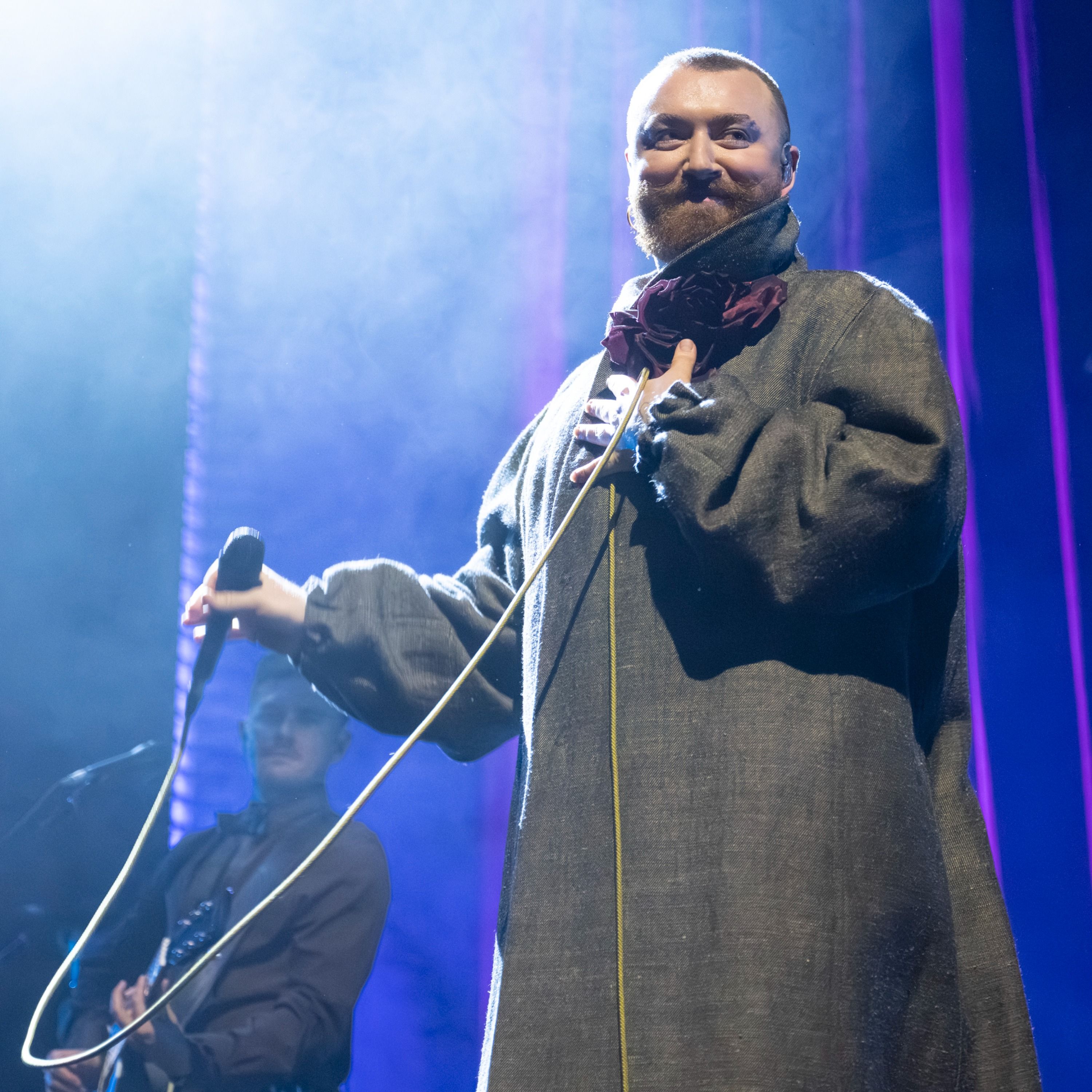
The New Yorker Radio Hour
Sam Smith on Their New Album, “Hazel Eyes”
00:28:15
The Grammy-winning singer talks about their new album, which marks a departure for them: these love songs are very much requited.
Loading summary
Transcript113 lines
- [00:00]
Sponsor/Announcer
The New Yorker Radio Hour is supported by Amazon Music. With Amazon Music Unlimited you can listen to music, podcasts and now audiobooks all in one app. This includes popular titles like Project Hail Mary, one of the most beloved adventure stories by Andy Weir. I have been listening to this audiobook and constantly looking for any pockets of time during the day to turn it on and find out what will happen next in the story. So whether you're catching up on a podcast, listening to your favorite playlist, or like me getting lost in a great audiobook, if watching you're it's all right there within the Amazon Music app. Amazon Music, Music, Podcasts, Audiobooks all in one app the New Yorker Radio Hour is supported by Dell Back to School starts now. Get long lasting battery life on the Dell XPS laptop powered by Series 3 Intel Core so you can work from anywhere now starting at $699 with exclusive student pricing starting at $599. Complete your setup with savings on select monitors and must have electronics and accessories. Limited time deals and free shipping on PCs and more await you@dell.com that's Dell.com deals.
- [01:09]
Sam Smith
The New Yorker Radio Hour is supported by Viking, committed to exploring the world in comfort, offering destination focused small ship experiences on all seven continents with a shore excursion included in every port and programs designed for cultural enrichment. And every Viking voyage is all inclusive but with no children and no casinos. Learn more@viking.com the New Yorker Radio Hour is a co production of WNYC and the New Yorker.
- [01:41]
Narrator/Host
This is the New Yorker Radio Hour. I'm David Remnick. Sam Smith burst very big onto the music scene in 2014 with a debut album called in the Lonely Hour. It was one of the best selling albums of the decade and it won Grammys for Record of the Year and Song of the Year for Stay With Me,
- [02:00]
Sam Smith
Won't you stay with me Cause
- [02:06]
Narrator/Host
you're Sam Smith's early hits were ballads of heartbreak and unrequited love and so their new album marks something of a change. It's an album of love songs, in this case very much requited and like
- [02:20]
Sam Smith
all good things, it caught me by surprise.
- [02:28]
Narrator/Host
The album is called Hazel Eyes and Sam Smith sat down with our producer Jeffrey Masters.
- [02:34]
Interviewer/David Remnick
So take me back. I know that you grew up singing around the house and with your parents, but what was like the moment when you realized that it wasn't just your parents like being nice, that you actually had a good voice?
- [02:46]
Sam Smith
I think that I went to the there's this holiday camp called Haven Holidays in the uk and it's like affordable holidays where you go and stay in caravans in like a caravan park. And I went with my friend Beth, my best friend Beth. I came out to her when I was 10. But she was also the person who kind of forced me to sing. Cause she was a singer herself. She loved singing. And there was a talent show for children at this holiday camp.
- [03:18]
Interviewer/David Remnick
And how old were you?
- [03:19]
Sam Smith
Me and her must have been like 9 or 10.
- [03:21]
Interviewer/David Remnick
Okay.
- [03:21]
Sam Smith
And she was singing. And if you won the talent competition, you won loads of tokens. So you can go get loads of sweets from the store, like free sweets and toys. And me and her stood up together and we sang Heroes by Mariah Carey. And I just remember being with her and just seeing the whole room kind of erupt afterwards with me and her singing. And then I went. And in another holiday camp a year later, I went and sang the same song alone. And I won an award for it in this holiday camp. And just started to basically just sing to different rooms, different people. And just the response I was getting was crazy.
- [04:05]
Interviewer/David Remnick
Wow.
- [04:05]
Sam Smith
Yeah, it was a good time. But also always stressful for me.
- [04:10]
Interviewer/David Remnick
Why stressful?
- [04:11]
Sam Smith
I, I just, I've always been freaked out by my voice. It's like, it's a freaky thing. It's like I, I, I don't, I don't feel the same way that people feel when they hear it. And I don't hear, When I hear myself back, I'm very critical. So it's always, you know, I always, I'm very hard on myself as a singer, so think I've done a bad job. And people are like, that was the best you've ever sounded. And I'm like, I'm so confused.
- [04:38]
Interviewer/David Remnick
But in recordings, though, you recognize how you sound, right?
- [04:42]
Sam Smith
I have now, but it took me. I first recorded myself when I was 13. And my first recording I ever did was me singing when youn Believe by Whitney Houston, Mariah Carey. And I sang every single part by myself. And I went in the booth after recording it, and they like comped the vocal and I sat down and I heard myself sing. And I burst into tears. Cause I thought it was the worst thing ever. And I was like, in my head, I sound so much better than that. And then what came after that was many, many years of me having this dysphoria with my voice and trying to hear the goodness.
- [05:21]
Interviewer/David Remnick
I also was wondering. You've said that when you were growing up, and particularly in high school, you would wear makeup and dresses and traditionally feminine clothing and yet on your first album, when you were first introduced to the public, you were not dressing feminine. Was that something you intentionally toned down?
- [05:39]
Sam Smith
No, it wasn't for me. An intentional thing. I think now I look back on it. I moved to London when I was 18 years old, and I've spoken on this before, but I had a homophobic attack happen to me when I was 18, and it kind of triggered me to start wearing less makeup when I was walking around the streets and stuff. Cause I used to wear so much. And as I started to wear less makeup, I started. Suddenly, people started to notice my singing more when I was trying to sing. And then my manager during that first album kind of came on board, and he was encouraging of me. He went shopping with me once and encouraged me to wear this type of coat or that thing. And I put it on and I would walk, and doors just started to open to me. You know, the suits I was wearing, it was like. It was drag for me. So I was, like, really enjoying the wearing something different and not. And not being. Not having to deal with everyone looking at you. You know, the negativity that would come with presenting as femme as a child. I think I was enjoying that. Not happening. But I think after my first album is when I kind of. I was like, oh, okay, this is like an identity now that people think this is me. And if I start dressing femme, like, used to, that's gonna be something that has. People have to be educated on, you know? And my album. First album, was so massive, that world stage in which I had to make that announcement just got bigger and bigger and bigger.
- [07:18]
Interviewer/David Remnick
That's so interesting, because I know you grew up in a village. I believe it was, like, less than a thousand people.
- [07:22]
Sam Smith
Yes.
- [07:23]
Interviewer/David Remnick
The stereotype would be that it would be less safe to, like, present feminine in this small village, but more safe in London. But it was not the case for you?
- [07:35]
Sam Smith
No, I mean, I was very. Looking back on it. I'm. I was very brave. And I had a. I had an amazing. I have a very strong mother, and I have a very emotional, strong, sensitive father. And they really just let me express myself and. But there was definitely, you know, people would say things in the village, for sure. And I worked in, like, the village store once, and there was, like, there was crazy experiences in there where I had. That were. For me, when I was younger, it wasn't. But it was. When I came to London, it became dangerous. And that's when I started to kind of, I guess, tone things down a little bit for my safety was my reasoning.
- [08:20]
Interviewer/David Remnick
And you were getting subtle signals from the industry about when you were dressing more masculine. I guess what I'm wondering is, do you hear anything explicitly said to you by people?
- [08:31]
Sam Smith
Yeah, I mean, as I started to transition forward and I guess backwards into wearing the things I wore when I was younger and publicly wearing makeup, moving in a more femme way, that's when I started to hear things within the industry. And people would say things that was hard.
- [08:52]
Interviewer/David Remnick
Like what?
- [08:54]
Sam Smith
It was basically alluding to things not maybe being attractive because they're feminine. And luckily for me, I ignored that and I pushed forward. And then when I got the opportun, I told them that that was wrong and encouraged them to educate themselves a little bit.
- [09:11]
Interviewer/David Remnick
You know, in hindsight, do you think that that early success that you had would have been possible had you been presenting femme?
- [09:24]
Sam Smith
I think it would have been possible. I believe in myself and my music and my voice enough to say that I think I would have built a. I would have eventually probably been signed and had moments. I don't think it would have been on that scale. I don't know. It wouldn't have been on that scale maybe eventually. I think we're in different times now, and that's something I've had to, you know, come to a piece with because it's not like I was hiding. That's the thing that's. That's hard for me, is that I find it hard when I see, you know, people very falsely say that I came out when I was 21. I did not. I. I came out when I was 10, and. And I was a femme gay from a very, very young age and very out and brave from a very young age. Not to say it's not brave to not come out, but I. I just. I don't like that it's become part of my story that I came out when I was 21. And then also, I think with the way that things have gone, I don't like this idea that, you know, maybe I was hiding who I truly was. It wasn't that I was just experimenting in a different outfit during that period. And that outfit suddenly triggered doors to open for me, and I ran through those doors, and I have no regrets,
- [10:53]
Interviewer/David Remnick
you know, going off that. Listening to the new album Hazel Eyes. There are so many references to queerness and to dating men. And it made me think back to your song him from 2017. In 2017. Yeah, that song came out. The chorus is. It is him I love.
- [11:10]
Sam Smith
Don't you try and tell me that God doesn't care for us. It is him I love. It is him I love.
- [11:24]
Interviewer/David Remnick
And it was shocking to hear.
- [11:27]
Narrator/Host
Yeah. What?
- [11:27]
Interviewer/David Remnick
Right. And it was a real risk to put that out at that time. Does it still feel like now, you know, almost 10 years later, a risk to put out, like, such explicitly queer music?
- [11:38]
Sam Smith
Yeah. I wrote him as a response to the kind of feedback from in the Lonely Hour about the kind of neutrality maybe, of some of the pronouns and things like that. I really wanted to write him because I was like, this wasn't like, an intentional thing of hiding for me within the lonely hour. And I wrote him to be like, I'm cool saying him. It's all good. And I did. And I love that song, and I love that moment. But you're right, I felt like I couldn't. I feel like on this album, I'm singing about a man and saying that more proudly than ever, because it's a love that's reciprocated. And on in the Lonely Hour, I was in love with a straight guy who was not gay, and we didn't hook up. It was pure, unrequired love.
- [12:26]
Interviewer/David Remnick
Yeah, that always goes well, you know, and so.
- [12:28]
Sam Smith
Yeah, but. So it wasn't. It was a queer record. As for me, the singer in the Lonely Hour, but the actual content was about me being in love with a straight man, you know, it wasn't reciprocated. So I feel like now with Hazel Eyes, I'm singing about a man that loves me. And so there's almost more pride, I guess, in this record than ever before for me, in expressing those words. And.
- [12:53]
Interviewer/David Remnick
And you've always been very explicit that your songs come from a very personal place. Is it okay to assume that my guy is about your partner, Christian?
- [13:03]
Sam Smith
Yes. Yes. Yes.
- [13:04]
Interviewer/David Remnick
So tell me, what was it like when he heard the song for the first time?
- [13:07]
Sam Smith
Well, Christian loves hyper pop and, like, really heavy metal, like pop.
- [13:14]
Interviewer/David Remnick
But that's not this song.
- [13:15]
Sam Smith
It's not this song. But he loves this song, and he finds the beauty in it, and he. He adores it. He's. He's been so beautiful and encouraging through the whole process of this record. And it's been this balancing act of, you know, how much do you share? Not wanting to share too much, but also, like, it is. It's about him, and it's a love letter to him as a record and of this time that we're in, you know.
- [13:39]
Interviewer/David Remnick
At what point in the songwriting process did you play it for him?
- [13:42]
Sam Smith
I played. Probably played him that one a few days After I wrote it. Yeah. I show him things all the time.
- [13:48]
Interviewer/David Remnick
Wow.
- [13:48]
Sam Smith
Yeah.
- [13:49]
Interviewer/David Remnick
And you mentioned that, you know, a lot of your earlier music was about unrequited love. You know, the. Sam Smith was searching for love from other people and from themself as well. I imagine that's a very, like, fruitful place to write from.
- [14:00]
Sam Smith
Yeah.
- [14:01]
Interviewer/David Remnick
So for this new album, was it a challenge to write from a place of, like, I'm happy.
- [14:06]
Sam Smith
I thought it would be. I really did. I was scared. I was always very scared of falling in love when I was younger, especially after in the Lonely Hour, you know, doing so well and changing my life in so many ways, I was like, I better stay miserable, like. But I knew that when it was time and I was truly in love and I could really pull from that place that I didn't want to be scared of, that I found it a very deepening and enriching thing to pull from as an artist.
- [14:38]
Interviewer/David Remnick
In this new album, there was new sounds I haven't heard from you. There's a little bit of country in there. You know, obviously, there's a big ballads, There's. I mean, there's R and B, there's dance. I don't have enough fingers to list all of the genre Sam Smith has sang in, so if anything is possible. How do you describe what a Sam Smith song is or isn't?
- [15:02]
Sam Smith
I think that to describe a Sam Smith song, I think my music is dramatic, and I think it is. There's always. I feel like some sort of tether to romance in a lot of my music, but I feel like my music is.
- [15:20]
Narrator/Host
Is.
- [15:21]
Sam Smith
Is free from those boundaries of. Of genre a little bit. Just like I feel like I'm free from boundaries too, as a queer person in the way that I express and dress. My music kind of is no different to my expression of myself. Like, some days I wear, you know, trousers and a jacket, and then some days I'm wearing a beautiful gown. Like, it's the same with the music for me. With Hazel Eyes, Like, I find it, you know, when people say there's so many genres in it, I'm like, oh, God, yeah, there is. Because I felt like with Hazel Eyes, for the first time ever, I'm actually containing myself a little bit more. But there is so many genres on the album and so many things. I just. I let myself be free when it comes to those things, and I love that about myself and my music.
- [16:10]
Interviewer/David Remnick
The new album, Hazel Eyes, it's a big departure from the other last four albums, like this album, both Musically, and the content of the songs is a new chapter. Did you go into it with that goal?
- [16:22]
Sam Smith
Yeah. I mean, for me, this album was the biggest challenge as an artist because the way that I'd been making albums up to this point was in a very pop and fabulously commercial way. I don't see a negative to that word. For me, I love commercial pop music, but I produced a lot of the record and was hands on with the making of the record more than ever before. And I wanted to stick to, for me, a cohesive feel that you could put the record on and stay in that world, whatever that world would be. And so I set myself that task, and it was a huge task. It actually took a lot of courage, especially within the industry and the way that people are used to me making music.
- [17:07]
Interviewer/David Remnick
Wait, wait, sorry. I'm a layperson who doesn't understand it. Why did that take courage to do that?
- [17:12]
Sam Smith
Because I'm a pop artist and the way that I would make music, you could hear the promise in the sound of the music that it could be a possible success. I don't write music for that reason, by the way. Even if it sounds like I do when you listen to my music, that's not my intention. I love pop music, but when I'm aiming to write like a pop song, you know, you want to lean into the catchiness of it. So people get used to there being hooks within the song. And this album, I, when I was writing it, I stayed away from those, I think, choices sometimes to challenge myself and say, let's find a different type of hook. Maybe a hook that comes two minutes into the song instead of 20 seconds into the song, you know, and something that builds to the greatest hook of all time. I think my guy builds to the most beautiful hook I've ever written all the time.
- [18:07]
Narrator/Host
Time.
- [18:13]
Sam Smith
He's my God. So it. It was just about structuring things differently in a way that pop heads and commercial people within the industry, you know, maybe aren't used to hearing as much.
- [18:37]
Interviewer/David Remnick
Yeah.
- [18:37]
Sam Smith
And so that I had to do that.
- [18:43]
Narrator/Host
Singer and songwriter Sam Smith. More in a moment.
- [18:55]
Interviewer/David Remnick
In terms of the writing process, I have a question, but I want to play a clip or two clips from. From no, God, from your last album. So I want to hear two things, which is that there's the background nose. And then there's also this, like, vocal distortion.
- [19:18]
Sam Smith
So nice.
- [19:19]
Interviewer/David Remnick
Yeah, this distortion. So, like, in the writing process, are you hearing that in your head and putting that down, or does that all come later?
- [19:38]
Sam Smith
That came in that all comes for me in the studio afterwards. Building the world around the lead vocal. So I, I, I put down the vocal when we've written the song and then I, if the song requires it, I become my own choir. I become my own own hype man. I become my own. Like, I become my own sound effect. Like I, I create sounds and instruments with my voice.
- [20:07]
Interviewer/David Remnick
Give me an example of something.
- [20:08]
Sam Smith
I don't know. You can make, you can make drum beats through your voice and you can, you can create like almost synth pads with your voice if you take it and then the computer changes it. And so, you know the Hazelizer record I just made, I did that a little bit with backing choirs and also singing parts. I mean, all over Hazel Eyes. All of most of the production that on it, on it that I do is me singing parts to players and then them recreating it, playing another instrument. So that's what I do in the studios. I just vocally sing parts, sing things I hear. And then musicians would take that and interpret that or copy it. And so that was Hazel Eyes, which was more like live people on instruments. But like the record I'm currently making right now after Hazel Eyes. Wait, wait, wait, wait.
- [20:56]
Interviewer/David Remnick
You're Hazel Eyes has not come out yet, but you still have another record you're working on?
- [21:00]
Sam Smith
I'm working on another record.
- [21:01]
Narrator/Host
Oh, really?
- [21:02]
Sam Smith
Yeah, yeah, I'm just, I'm inspired to do it and I'm. And it's more electro and more intense and that's, you know, you know, I just make all different weird sounds and scream into the microphone and free myself. And sometimes those things get turned into wild things. You would never imagine.
- [21:21]
Interviewer/David Remnick
Is the new new record, the electro pop one. Is that drawing from this current phase of being in love as well?
- [21:27]
Sam Smith
It is, but it's maybe more in a more naughty, playful way. Hazel Eyes is like this deep confession. A traditional, a new traditional queer love romance album. That's how I see it. And then I've just, whilst I've been making that, I'm also really hungry to shake my titties. And you encapsulate some of the really the way that I feel in my relationship where I feel I'm still 34 and I'm. I love to dance and I'm free and I'm still inspired by like intense hyper pop electro sounds. And so I'm, I'm also doing that too.
- [22:09]
Interviewer/David Remnick
Wow. I mean, that reminds me of Unholy, which is arguably the biggest song of your career.
- [22:16]
Sam Smith
Lucky, lucky girl she got married to a boy like you, she kick you out if she ever, ever knew about all the. You tell me that you do.
- [22:28]
Interviewer/David Remnick
It went to number one, it won you a Grammy. And you've said that you got a lot of pushback from your team about releasing that. What was their reasoning for not releasing
- [22:39]
Sam Smith
wasn't that they didn't want to release it. It was that they wanted it. They didn't want it as the first single. And the battle that I started to get into a battle because I was like, you're not hearing what I'm hearing. I then started to realize this is just like there's something about the sex in the song and the sexuality in the music and also the fun and light heartedness of it that I think just challenged some people's tastes. When it came to me. I think that Unholy broke down what people think of me when they think of Sam Smith. And up until that point a lot of people thought that my greatest strength was to sing heartbreak ballads. And so I think the Unholy challenged that and was just a huge moment that kind of popped that bubble in my life, which I was. And I was just so desperate to pop that bubble for so long. Unholy really encaptured my playful side and my humor in the music and, and I just, I, you know, I championed that song from the beginning.
- [23:49]
Interviewer/David Remnick
I mean, I wrongly would have just assumed that you could release anything you, you wanted.
- [23:55]
Sam Smith
I can. Oh, I can release whatever I want. But I also, I listen to people around me and what they think sometimes, you know, like I do, it's like, I think in the pop world I've actually enjoyed that back and forth sometimes with people around me and sometimes it's actually, actually done really well for me. And you know, I, I think labels get a very bad rep a lot of the time and I understand why they do. There's a lot of issues. But I've worked with some unbelievably talented people. I'm incredibly creative people who really love music and they love pop music. And so I, you know, I, I honor those relationships sometimes and I like to hear what they think and you know, with Hazel Eyes, I've taken a step back from that a bit more. But it's a time and a place for those things and. Yeah.
- [24:46]
Interviewer/David Remnick
Did the success of Unholy give you permission to make Hazel Eyes? I don't wanna say weirder, but to go bigger and further on it.
- [24:59]
Sam Smith
Unholy's given me permission just to do what I want now in my life. And it's not that it gave me permission with everyone else. Cause I could have always done what I wanted to do as an artist. I was never trapped in a label situation where I was being fool forced to do anything I wasn't allowed to do. But it gave me seeing people's reaction to that song and them feeling me and my energy through that music. I was like that. You get me. I feel like I can express all shades and colors of myself now with no kind of fear.
- [25:35]
Interviewer/David Remnick
You mentioned you're 34. How has your voice changed as you've gotten older?
- [25:39]
Sam Smith
Oh, my God, loads. I mean, it's lower than I can sing. Lower than ever before. My higher register is. I still sing in the heights, but it's a different tone. It's kind of a fuller sound. In my 20s, I had fun. You know, I on and off smoked a little bit in my 20s. Never like full time smoker by, on and off smoked. I don't know if that had too much of an impact. I think the biggest impact on my voice and the changes have been the workload of singing. I think that I have sacrificed notes in my register from the amount of work and travel and touring and singing that I've done in my life.
- [26:19]
Interviewer/David Remnick
Really?
- [26:19]
Sam Smith
Yeah. I mean, I've done. I can't countless that probably near to a thousand shows. And I sing full out the whole time for two hours. You know, projecting to an audience, it's. It takes a toll on your instrument after a while.
- [26:35]
Interviewer/David Remnick
I was curious because in the final track, to be free, you know, you open that track singing pray your heart
- [26:42]
Sam Smith
be lighter, brave and free like mine. Pray your heart be lighter, brave and free like I.
- [27:03]
Interviewer/David Remnick
And the quality of your voice, it isn't something I'd heard before.
- [27:08]
Sam Smith
Yeah, it's different. That was a different shape. I was kind of like the sound e like that I put my mouth into like a shape like that when I was singing. And then I realized that if I just stay there and sing the verse, this completely different timbre came out.
- [27:23]
Interviewer/David Remnick
So you're still learning like all the things your voice can do.
- [27:26]
Sam Smith
Yeah, my voice is gonna change forever. I like now that I sound completely different in some songs to other songs. I wish and hope for people to see that as part of the Sam Smith music is that you don't never know necessarily what you're gonna get.
- [27:44]
Interviewer/David Remnick
And technically the beginning of To Be free is that you mixing your head and chest voice. Is that falsetto?
- [27:50]
Sam Smith
What is that? I think it's like a bit of falsetto with chest kind of mixed together.
- [27:57]
Interviewer/David Remnick
Okay.
- [27:57]
Sam Smith
Cause it's also just the position of the day. Like when I sing that song. Now, that recording, by the way, was I sang that before I wrote Unholy Whoa, which is wild.
- [28:08]
Interviewer/David Remnick
Whoa.
- [28:09]
Sam Smith
Yeah.
- [28:10]
Interviewer/David Remnick
Oh, so that's been sitting, like, on your hard drive.
- [28:12]
Sam Smith
I wrote that the week I changed my pronouns. I wrote to be free and I. And so it stayed. That song kind of stuck with me. And I was like, I'm gonna return to this feeling and I'm gonna make a whole album in this world. And I did.
- [28:26]
Interviewer/David Remnick
We mentioned earlier in the conversation that my guy is written about your partner, Christian Cowan. He's a fashion designer. It was reported recently that you're engaged. Congratulations.
- [28:36]
Sam Smith
Thank you. Thank you very much.
- [28:37]
Interviewer/David Remnick
Can I ask who proposed to who?
- [28:39]
Sam Smith
Oh, they are secrets I will never tell. Not even in the music. I would never say. It's just too special.
- [28:49]
Interviewer/David Remnick
Thank you for the great conversation.
- [28:50]
Sam Smith
Thank you. Thank you.
- [28:54]
Narrator/Host
Sam Smith. Their album Hazel Eyes comes out later this month and Jeffrey Masters is a producer at the New Yorker Radio Hour. That's our program for this week. Thanks for joining us. See you next time.
- [29:09]
Sam Smith
The New Yorker Radio Hour is a co production of WNYC and the New Yorker. Our theme music was composed and performed by Meryl Garbus of Tune Yard, with additional music by Louis Mitchell. This episode was produced by Max Balton, Adam Howard, David Krasnow, Jeffrey Masters, Louis Mitchell, Jared Paul and Ursula Sommer. With guidance from Emily Botin and assistance from Michael May, David Gable, Alex Barish, Victor Guan, and Alejandra Deckett, the New Yorker Radio Hour is supported in part by the Tsarina Endowment Fund.
- [29:48]
Wired Podcast Announcer
Wired has always put a microscope on the people, power and forces shaping our world. Uncanny Valley brings that same fearless reporting straight to your feed. Is Doge finally over? Will AI actually democratize American healthcare? Each week, Wired journalists from across the newsroom are going to unpack where politics, technology and Silicon Valley collide. From conversations with with tech leaders across Silicon Valley, Internet fandom investigations and government crackdowns on rigged gambling, we're taking you all over the news cycle, going straight inside the priorities, pressures and power plays driving today's biggest decisions. Uncanny Valley tackles the questions keeping you up at night and helps make sense of the future taking shape right now. Listen to new episodes every Thursday. Wherever you get your podcasts.