← The New Yorker Radio Hour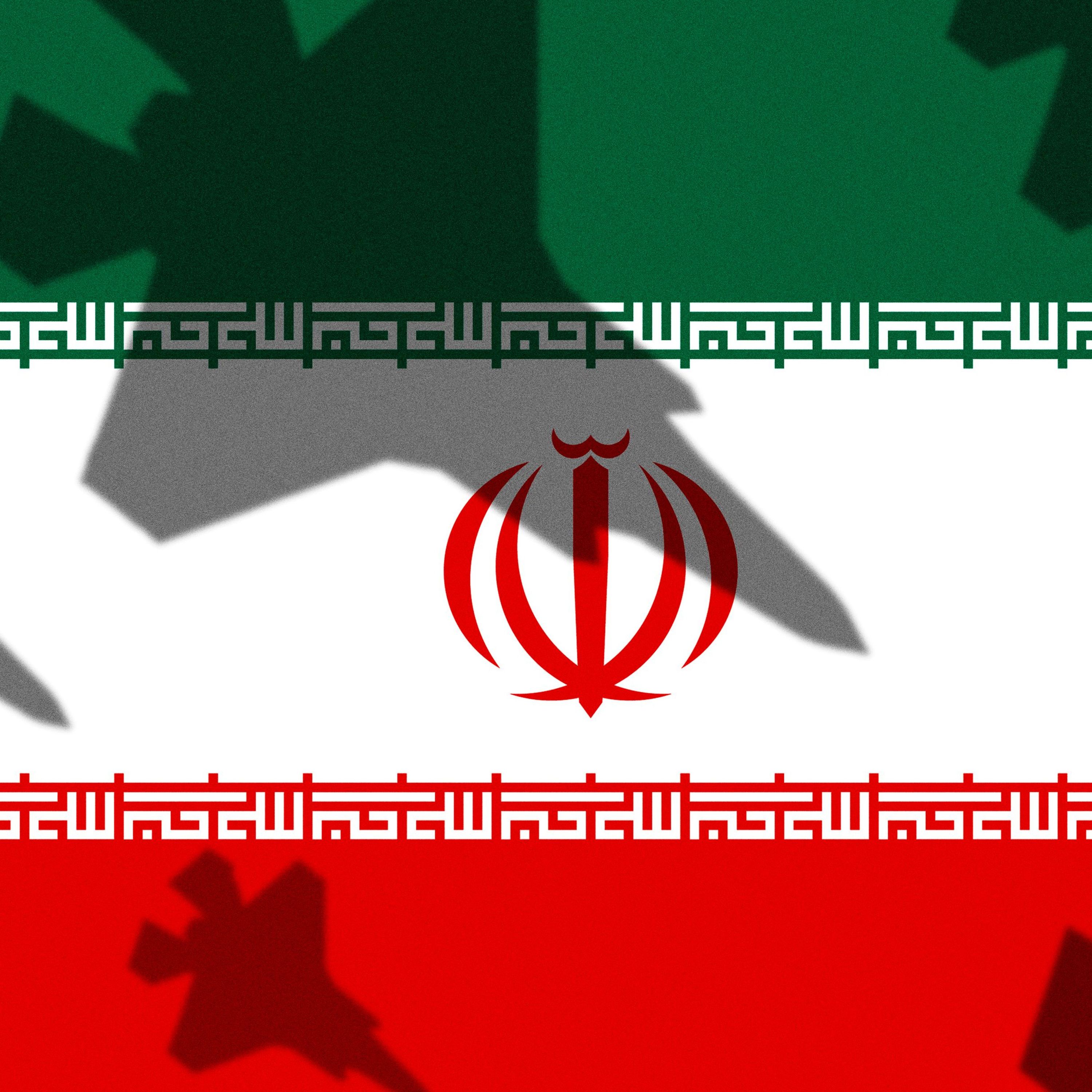
The New Yorker Radio Hour
What Could Go Wrong, or Right, in a War with Iran
00:34:29
The foreign-policy analyst Karim Sadjadpour on what it would mean for the U.S. to pursue regime change in Iran again. And we hear from Iranians who are waiting, even hoping, for war.
Loading summary
Transcript69 lines
- [00:03]
Narrator/Producer
This is the New Yorker Radio Hour, a co production of WNYC Studios and the New Yorker.
- [00:12]
David Remnick
Welcome to the New Yorker Radio Hour. I'm David Remnick. When protests ignited across Iran in December and reports emerged that the regime was killing thousands of protesters, Donald Trump threatened to intervene then and there. He did not. But the Pentagon began building up a huge military presence around the Gulf region. And meanwhile, the regime, it turns out, may have killed as many as 30,000 of its own people. According to some estimates, Iran has seen huge protests in the country before, and the regime has responded with violence before. But this time seems something of a different order of magnitude. Some Iranians who opposed the regime have been in the crazy position of hoping for the US to strike to bomb their own country, even if it leads to full scale war. Reporter Cora Engelbrecht has been recording her conversations with people in Iran about what that could all mean. Now, we've altered or overdubbed their voices to protect these people from reprisal.
- [01:17]
Cora Engelbrecht
It is the topic of the past 40 days. Like, it is the topic that every true Iranian would speak about when they would ever meet.
- [01:29]
Interviewer/Reporter
One of the people who spoke with me is a young man who works in a hospital about four hours north of Tehran.
- [01:35]
Cora Engelbrecht
I mean, I'm having a very difficult time processing all these different thoughts because on theory, like, on paper, I would be against a foreign invention. I would believe that democracy would only come from within. But looking back at what happens, where are these criminals going to go? Like, we're not going to vote them away, not in a million years.
- [02:01]
Interviewer/Reporter
This hospital worker was stationed in two different emergency wards during the peak of the regime's lethal crackdown on nationwide demonstrations in January. In the weeks since, he has sent me evidence. He collected of hundreds of casualties, many of them trauma injuries from these emergency wards where he was stationed.
- [02:22]
Cora Engelbrecht
These people, these plain clothes agents. For example, remember the grandmother that I told you about, the grandmother that was brought in dead to the hospital, the granddaughter who was shot in the ear was crying all the time, and the daughter of that grandmother was undergoing a mental collapse. During that entire time that we were attempting CPR on the old woman, the clinical agents just stood there laughing and showing no empathy whatsoever. They were laughing, so essentially mortal enemies. And they were treating the patients like animals. And seeing that realizing that we are already these people's mortal enemies helped us realize that we are at war to a degree, to a good degree. And fearing a foreign invasion in this circumstances is just kind of laughable, if you ask me.
- [03:27]
Interviewer/Reporter
Can you hear Me?
- [03:30]
Activist 1
Yeah.
- [03:31]
Interviewer/Reporter
How are you feeling?
- [03:34]
Activist 1
It's too hot.
- [03:38]
Interviewer/Reporter
This is an activist who lives in Tehran. She's in her 20s. She was actually imprisoned during the Women Life freedom protests in 2022. Over the past few weeks, she's been attending a lot of funerals commemorating people who were killed in January. For years, she told me she would have never dreamed of supporting foreign intervention. But now, faced over and over again with the undeniable brutality of the violence from the past months, she's shifted her view. She can't help but want some kind of action from the United States which would eliminate the regime.
- [04:16]
Activist 1
Like, I know. I don't know. You read the book Waiting for Godot?
- [04:24]
Interviewer/Reporter
Yes.
- [04:26]
Activist 1
Yes. It's like, we are waiting for your Godot and we want to attack us because we can't. We can fight back with the government. And I don't know. I think that's a miserable situation. My people, you know, war is not good. And we saw that the war and foreign engagements in Afghanistan and Iraq and. And Palestine is too bad, and it's continuing over these years. But it's like we have two ways. One, the regime kills us. Two, the foreign country kills us. You know, how upsetting that.
- [05:27]
Cora Engelbrecht
These.
- [05:28]
Activist 1
It's really upsetting.
- [05:32]
Interviewer/Reporter
This woman is an activist in her mid-30s, and she told me she's participated in every political uprising starting with the Green Movement in 2009. She was in her teens then, so her whole adult life she's been protesting the current regime. She said that the 12 day war in June with the United States and Israel was still fresh in her mind and had actually made her more cautious about joining the demonstrations in late December.
- [06:00]
Activist 1
This time I kind of.
- [06:05]
Activist 2
This time I kind of. I did not participate. Right. I just. I observed, like, I mostly went to the streets by car. It was both the fact that I was scared by the violence and also by the prospect because it was. It started. It did not start, but. But it picked up with a monarch's cult. It was a monarchist movement. And I had the feeling that it's kind of like a counter revolution.
- [06:34]
Interviewer/Reporter
Like many I spoke with, she expressed some distrust and skepticism for the royalist movement that has surged around the former Crown Prince Reza Pahlavi. He's the exiled son of the former Shah of Iran, and he hasn't been in the country since 1978.
- [06:50]
Activist 1
The thing is that the foreign.
- [06:51]
Activist 2
The thing is that the foreign pressure is. It's not humanitarian completely. We are all very well aware of. Well aware of that. It seems like a tool for them A negotiation tool, an excuse. It's not even what they're negotiating for. And it's naive to think so, but I'd say this whole situation, this whole dualism, that either the Islamic Republic stays or there is a war, and there is no third way.
- [07:17]
Interviewer/Reporter
The.
- [07:17]
Activist 2
This is a dangerous mindset. I don't want to choose one of them. I choose neither of them, to be honest. I wake up, I feel like I wish there was a war. I don't share that with anyone, but that's just inside my head. I wish there was a war and we were over with it, but I am quite sure about myself that I do not want that. Right. It's just personal mood swings. I have come across people waiting for war in that sense. I mean, like, waiting for a celestial catastrophe, like a miracle that can, you know, save them from the situation. And that's kind of suicidal, you know, people who are very senselessly waiting for that beautiful moment of the skies being bombarded and the earth catching fire and everything exploding and destroying. I mean, it's a suicidal wish. To me. It sounds people who are living, especially people in Tehran, because Tehran was affected more than other cities.
- [08:21]
Interviewer/Reporter
When you say that Tehran was more affected than other cities, what are you referring to? Are you referring to the 12 Day War?
- [08:30]
David Remnick
Yeah.
- [08:30]
Activist 1
Yeah, the 12 Day War.
- [08:31]
Activist 2
I mean, we're talking about two traumas and wishing for that to happen again. It just comes out of frustration and feeling that in either way, if there is a war or not, you have no control over your life and being
- [08:47]
Interviewer/Reporter
what in that, Are there any kernels of hope and all that? Like what? When you think about the future right
- [08:54]
David Remnick
now,
- [08:58]
Interviewer/Reporter
what is giving you hope, if anything?
- [09:03]
Cora Engelbrecht
That is a very hard question, but it's a very difficult thing to find hope. Maybe we will transition to a democracy, or maybe we won't. Maybe things will get even worse. But we're not in a situation to worry about this because we are way beyond the no turning back points, you know,
- [09:30]
David Remnick
Voices from Iran. All of these people asked to remain anonymous. You can find some extraordinary reporting from Cora Engelbrecht, all@newyorker.com We'll continue on Iran and its relationship with the United States in just a moment. This is the New Yorker Radio Hour.
- [10:04]
Karim Sajadpour
If you're serious about change, real change, not hacks, not hype, not quick fixes.
- [10:09]
David Remnick
This is for you.
- [10:10]
Karim Sajadpour
I'm Rich Roll, and every week on the Rich Roll Podcast, I sit down with some of the world's brightest minds, scientists, elite athletes, artists, visionaries, and avatars of personal evolution. These aren't soundbites. They are long form conversations about health, performance, meaning, and becoming fully alive in a complicated world.
- [10:29]
David Remnick
Find the Rich Roll podcast wherever you get your podcasts. This is the New Yorker Radio Hour. I'm David Remnick. When the United States instigated a regime change in Iran in 1953, it didn't do so with aircraft carriers. There was no shock and awe. It was a piece of COVID business involving the CIA and British intelligence. Together, they engineered the overthrow of the elected Prime Minister, Mohammad Mosaddegh, because his government was pursuing a plan to nationalize Iran's oil industry. There were also concerns about the influence of communists in Iran. But contemporary Iran is not Venezuela. Does Donald Trump want to force Iran to make a nuclear deal to replace the one that he scrapped in his first term? Or is he really seeking regime change? To understand how this complex situation might play out, I called on one of the best sources I know on Iran, Karim Sajadpour. Sajadpour is a policy analyst at the Carnegie Endowment for International Peace and he writes about the Middle east for Foreign affairs and other publications. Let's begin our conversation about now with, with the most obvious resonance. In 2002, 2003, the American government looked on the leadership Iraq, quite rightly, as horrific. And we went to war with Iraq and it was a catastrophe. Right now, the United States under Donald Trump is amassing a gigantic military force around Iran. What do you make of American intentions here and what is the wisdom of them?
- [12:24]
Karim Sajadpour
Well, I think part of the challenge we have, David, is that it's not clear in President Trump's head what his intentions are and what his end game is. If we rewind. The reason we've gotten ourselves into this situation is that when these protests began in Iran in late December of last year, 2025, President Trump initially said to the Iranian regime, if you kill protesters, there's going to be consequences. The United States is locked and loaded and ready to protect them. He later went on to issue, by my count, at least nine more of those red lines warning Iran that if it kills protester, the United States was going to have their back. And he incited protesters to the streets. He said, go and seize your institutions. And Iran drove a giant truck through Trump's red lines. By some accounts, the regime killed as many as 30,000 people over a 48 hour period. We don't know for a fact. And it was very clear that they, the regime in Iran totally flaunted President Trump's red lines. And there's recent history on this, when President Obama issued a red line against the Assad regime and Damascus, against using chemical weapons. You know, I said use chemical weapons. And that was one of the critiques, foreign policy critiques of Obama's presidency, that that red line wasn't enforced. And what are the implications and messages for other adversaries if we don't enforce red lines? So I think that's the context of how we got to where we are now.
- [14:17]
David Remnick
But isn't the context also that the United States. I think it was Phil Gordon, a national security figure for Democrats, for Obama as well as for Kamala Harris. I think Phil Gordon once said, we invaded Iraq fully and it was a disaster. We invaded Libya partly and it was a disaster. And we kept out of Syria and it was a monumental disaster. And now with Iran, the humanitarian question of the killing of thousands of demonstrators is without question. The question is what to do about it.
- [14:59]
Karim Sajadpour
The big question is, does the United States have the power to transform Iran's government? Do we have the benefits or the right? Or the right or the right? Listen, I think that if the last two and a half decades of Middle east history had turned out differently, I think we'd be having a very different conversation right now. Now, I do believe that Iran is a very different place than Iraq and Afghanistan. But I do think we have to be very honest in saying that the last two decades has proven that we don't have the ability to dictate our preferred outcome in Iran. We don't have the ability to dictate who comes to power the day after a military attack.
- [15:53]
David Remnick
We're told all the time that Iran, unlike other countries in the region, is quite pro American. What does that mean and what does that imply for what's going on now?
- [16:04]
Karim Sajadpour
Well, I think this Simply stated, after 47 years of living under a theocracy whose identity has been premised on death to America, it's the most secular society, I would argue, in the Middle east and the least anti American, the most pro American. And I think most Iranians have also reached this conclusion that so long as the ethos of their government is death to America and death to Israel rather than long live Iran, this country will never fulfill its enormous potential as a nation. There's a lot of nostalgia. It's an interesting phenomenon, having nostalgia for a period which you never lived, but because 3/4 of Iranians were born after the revolution. But they do have this nostalgia for the stories they heard about life before the revolution when people had social freedoms, when Iran had a dignified place in the world when the Iranian passport could get you places, when the country wasn't an isolated pariah state. And so it's not to say that people want to be a lackey of the United States, but I think there's a basic recognition that this nation, which in my view should be a G20 nation, it has the human capital for it, it has the natural resources for it. Number two, reserves of natural gas, number three is the reserves of oil, has this, you know, one of the longest continuously inhabited civilizations in the world. And it, it's punching way below its weight. Could be South Korea, it behaves like North Korea. And so I think there's a recognition among Iranians that this radicalism, this anti imperialism, anti Americanism has just led the country into a ditch. And if the country is ever to fulfill its potential, it needs more tolerant government. It needs a government that prioritizes national interests before ideology. So I believe, believe that it's a society which is capable of representative democracy. But authoritarian transitions are not usually popularity contests. They're not usually dictated by, you know, the vote of people. It's oftentimes, you know, when that power vacuum comes to be who can mobilize violence.
- [18:29]
David Remnick
Well, I remember on the brink of the Iraq war, I forget who said it in the Bush circle, maybe it was Kenneth Edelman, that we would be greeted, American soldiers would be greeted by flowers and candy. And to be sure, in the first couple of days there were scenes of ecstasy when statues of Saddam Hussein were toppled in Baghdad. What is predictable in Iran, let's say the combined military and intelligence forces that are arrayed around Iran succeed in that way, in that immediate way, if that's what the operation is, what's in place to fill that vacuum.
- [19:11]
Karim Sajadpour
So it depends on what kind of operation we conduct if we choose to assassinate Iran's supreme leader. And the people I talk to both in Washington and in Israel, believe that if we do take military action, there's a better than 50% chance that we will try to target Iran's supreme leader. That has very different implications than if we simply go after their missile program and nuclear program and maybe Revolutionary Guard outposts. It's my view that even within the regime there is a recognition that this status quo is not tenable. A friend of mine is a political science professor in Tehran told me that at the beginning of the revolution, the regime was composed of 80% ideologues and 20% charlatans. And now it's the reverse. Only 20% are true believers in this system and 80% are just, you know, going along for financial, political expediency. And so most people in that system recognize that it's not sustainable and, and they're waiting for the Supreme Leader to die. Now what happens if instead of dying a natural death or some kind of internal coup, he's taken out by American missiles? That in my view is an enormous risk and enormous gamble that instead of this evolutionary process happening, it could further radicalize and mobilize the true believers in that system to actually try to preserve power among themselves. That is something that I would be concerned about. If ayatollah Khamenei were 50 years old, perhaps I would think differently. But martyring an 86 year old I think is fraught with some risk.
- [21:11]
David Remnick
It seems to me one of the dynamics in Iran that maybe people aren't thinking about enough is that the real establishment in Iran is the Revolutionary Guard Corps, which is not only a military and intelligence establishment, but it comprises much of the economic elite, factories, ports, all kinds of enterprises. And there's an upper crust of the Revolutionary Guard Corps that's quite rich and entrenched and they have the weapons. So if in fact the Supreme Leader were killed and even more in the intelligence and military elite were killed, you'd still have the Revolutionary Guard Corps there. They're not going to be wiped out. Isn't that what would come to power and what would that portend?
- [22:07]
Karim Sajadpour
So that is a very valid concern that what are you going to do do with 150,000 plus Revolutionary Guardsmen and their affiliated militia members, the Basij Militia, who are usually much more ideological in their worldview. And that is a concern that I have if the goal turns out to be decapitation operation to try to topple the regime. Because these folks, as we saw in post Saddam Iraq, they're armed and they're organized. Now, I don't want to claim that they're monolithic. They are not 150,000 true believers. But what I learned from observing the Iraq war is that 1% of society can make life hell for 99% of society if they're willing to go out and conduct suicide bombings and, and things like that, if they feel like they're not going to have any role in the country's tomorrow. And so that I think is so critical for Iran's future, for any opposition movement or democratic movement to try to figure out a way to co opt these folks under a very big tent. So if you think about power in Iran as like a pyramid shaped like a pyramid at the top of that pyramid is Ayatollah Khamenei. His turban is at the top of that pyramid. All the powerful people below him are not wearing turbans. They're the military commanders. And in some ways, I think the future of Iran will be shaped in part by the battles between these men, because some of them are ideologues who want to continue with the culture of the revolution and death to America and what I call Vision 1979. But there are others among them who are not democrats. I'm not arguing that they're democrats, but they recognize, they appreciate power, and they believe that in order to entrench their power and even enrich themselves, it behooves them to throw out Shiite nationalism and anti imperialism and replace it with Iranian nationalism. And again, they're not democrats, but they're nationalists. And so I think that is going to be one of the determining fights for Iran's future.
- [24:39]
David Remnick
It was very interesting to see the mixed nature of the protests this time. Tell me a little bit about the nature of the demonstrations this time and their extent and who they include.
- [24:50]
Karim Sajadpour
Yeah. So I think one thing that is important for people to understand about why the Islamic Republic is so despised by such a large percentage of its population is that it's not only politically authoritarian, but it's also economically and socially authoritarian. It tries to micromanage every aspect of people's lives. What you're wearing, what you drink, what you eat, what movies you watch, what music you listen to. And for that reason, the grievances against this regime are so widespread. And so in this particular instance, the trigger was economic. It was rapidly depreciating currency. It's remarkable when you compare Iran's currency now to 1979. It's depreciated more than 99% since the 1979 revolution. And so what we saw with these protests was the trigger was economic depreciating currency. And then very quickly, within a couple days, they quickly went to death to the Islamic Republic, and they spread throughout the country. For me, the things that were very eye opening were these slogans of Long live the Shah and Death to the Islamic Republic. In these cities, which were conservative strongholds of the regime, in cities like Mashad and Qom, in the town of Khomein, the birthplace of Ayatollah Khomeini, people were saying, javid Shah, long live the Shah.
- [26:24]
David Remnick
Well, speaking of the Shah, his son, who's now a man of a certain age, has lived abroad obviously nearly all his life, but his Name keeps coming up, not only in foreign affairs articles and things like this or in the newspapers, but in the chants of the demonstrators. What role does he play or not play in this entire drama?
- [26:45]
Karim Sajadpour
So Reza Pahlavi has spent the last 47 years in exile, mostly in suburban Washington, D.C. and Potomac, Maryland. And he has been very consistent in opposing the Islamic Republic and advocating democracy. But it's only been in the last several years that people have begun looking to him for leadership and chanting his name. I do believe that he could win if there were to be a free and fair election in Iran. I think he could actually win an election inside Iran.
- [27:23]
David Remnick
Really? Do you think he has intentions of coming back to Iran and playing that role?
- [27:28]
Karim Sajadpour
So what he said is that he aspires to serve as a bridge between Iranians and democracy. He's always been consistent in saying, you know, my goal is not to be king. If people want to vote for a constitutional monarchy, I'm willing to play that role, but that is not my aspiration.
- [27:50]
David Remnick
Isn't there some romanticization going on here about the Shah and the Shah's reign? I mean, the savak, the secret police of the Shah, was not exactly a benevolent association. There was a lot of repression, and under the Shah, there was a lot of corruption as well. Do Iranians, young ones or old ones, they look back on this regime as Valhalla.
- [28:16]
Karim Sajadpour
So that's the thing about nostalgia, David, is that you remember things with rose tinted lenses. And especially for people who. The vast majority of this society of 92 million people were born after the 1979 revolution. So they don't have direct recollections of the bad things that were associated with the Shah's government. But they see the images of how life was. They hear the stories which their parents tell them, which, you know. Now, in hindsight, I think the vast majority of people who participated in the 1979 revolution think it was an own goal, it was a mistake, and their lives were much better. And so for that reason, I think a lot of people have looked to Reza Pahlavi as someone who represents where they want to go as a nation. The pessimistic view about him is that he's is trying to be either an Ahmed Chalabi type figure or Ahmed Chalabi
- [29:26]
David Remnick
being the figure in Iraq who the Bush administration put its chips on to. Kind of. It sounds almost absurd to even say it. Rebuild democracy in Iraq and be installed by America.
- [29:42]
Karim Sajadpour
Indeed. And so there's that perception of him, and there's also the perception that he is Trying to hijack a democratic movement for his own autocratic ends. Now, as someone who's known him for a couple decades, I actually think that exactly the opposite is probably not true, which is that I actually think that he himself does have democratic ends. But what's happened inside Iran is that the regime is so brutal that the movement, the opposition against the regime has become very radicalized. And I worry that the tendencies of this opposition movement are not entirely democratic. It's for. It's authoritarian and it's out for retribution. And that is something which is difficult for him to control.
- [30:42]
David Remnick
I have to ask you, I know you're an analyst more than you are an advocate to say the least. What do you hope the American government does and why?
- [30:52]
Karim Sajadpour
You know, I always quote Kissinger in which he said that a lot of the major decisions you have to make in government are 51, 49. And for me this isn't a no brainer either way. We haven't really talked about the potential risks. I mean, there are risks that Iran unleashes missiles against US Bases in the Persian Gulf, that they go after our allies in the Gulf, and that this requires the United States to then intervene more forcefully. And even though we didn't intend to, we've triggered a regional war which very few Americans support. Those are risks that we need to take very seriously. At the same time, I go back to these red lines that the President drew that on nine occasions he said if you kill protesters there's going to be consequences. And I do think that impacted people's risk calculations. I guess what I would advise the President is I think an operation which can degrade the Islamic Republic's malign capabilities, whether it's missile capacity, its repressive capacity, and it serves to not further unite the regime's security forces, but divide the regime's security forces. If that operation is tenable, I think that's an operation which I would be prepared to. And you know, who am I? I'm an analyst sitting in my home in Washington D.C. but I think that that is a defensible operation.
- [32:43]
David Remnick
So in other words, it's an operation that's an extension of what happened last June rather than a full blown invasion or for decapitation of the regime.
- [32:54]
Karim Sajadpour
Exactly. And David Petraeus said this earlier, earlier today, I was listening to him and it's a very important point and that is that the Venezuela model seemed to go much more smoothly than anyone expected. And Nicola Maduro is sitting in a jail cell now in New York and seeming success and facility of that Venezuela model has maybe distorted our understanding of how challenging this operation in Iran might be. And this is why you're starting to see leaks internally from the Pentagon, wanting to pump the brakes before we get ourselves into something which could be totally different than what we anticipate.
- [33:46]
David Remnick
Kareem, thanks so much. I'm very grateful to you.
- [33:50]
Karim Sajadpour
Thank you, David. It's a pleasure.
- [33:54]
David Remnick
Kareem Sajidpur is a senior fellow at the Carnegie Endowment for International Peace. This is the New Yorker Radio Hour. I'm David Remnick. See you next time.
- [34:06]
Narrator/Producer
The New Yorker Radio Hour is a co production of W NYC Studios and the New Yorker. Our theme music was composed and performed by Meryl Garbus of Tune Yards, with additional music by Louis Mitchell and Jared Paul. This episode was produced by Max Balton, Adam Howard, David Krasnow, Jeffrey Masters, Louis Mitchell, Jared Paul and Ursula Sommer with guidance from Emily Botin and assistance from Michael May, David Gable, Alex Barish, Victor Gwan and Alejandra Deckett.
- [34:36]
Karim Sajadpour
And we had assistance this week from Richie O2 in London.
- [34:40]
Narrator/Producer
The New Yorker Radio Hour is supported in part by the Cherina Endowment. If you eat too many ultra processed foods, you could be starving your gut microbes and they'll get hangry. That's one of many things I learned after working on a new audio course about the gut microbiome. You can learn how to keep your gut happy by listening to Try this from the Washington Post. I'm Christina Quinn. I host Try this. Dig in with me on practical advice for life's common challenges.
- [35:24]
Interviewer/Reporter
Follow.
- [35:24]
Narrator/Producer
Try this right now, wherever you're listening. Seriously, try it.