Loading summary
Transcript35 lines
- [00:01]
A
On NPR's wildcard podcast, Heavyweight host Jonathan Goldstein talks about his early years as a writer.
- [00:07]
B
I was writing, and no one was buying what I was selling. I just couldn't get anywhere. And I just kept doing it because I felt compelled to do it, like a spider spinning a web.
- [00:18]
A
Listen to that wild card conversation on the NPR app or wherever you get your podcasts.
- [00:28]
C
Hey there. It's the NPR Politics podcast for Thursday, January 15, 2026. I'm Miles Parks. I cover voting.
- [00:35]
A
I'm Frank Odonez. I cover the White House.
- [00:37]
B
I'm Greg Myrey. I cover national security.
- [00:39]
C
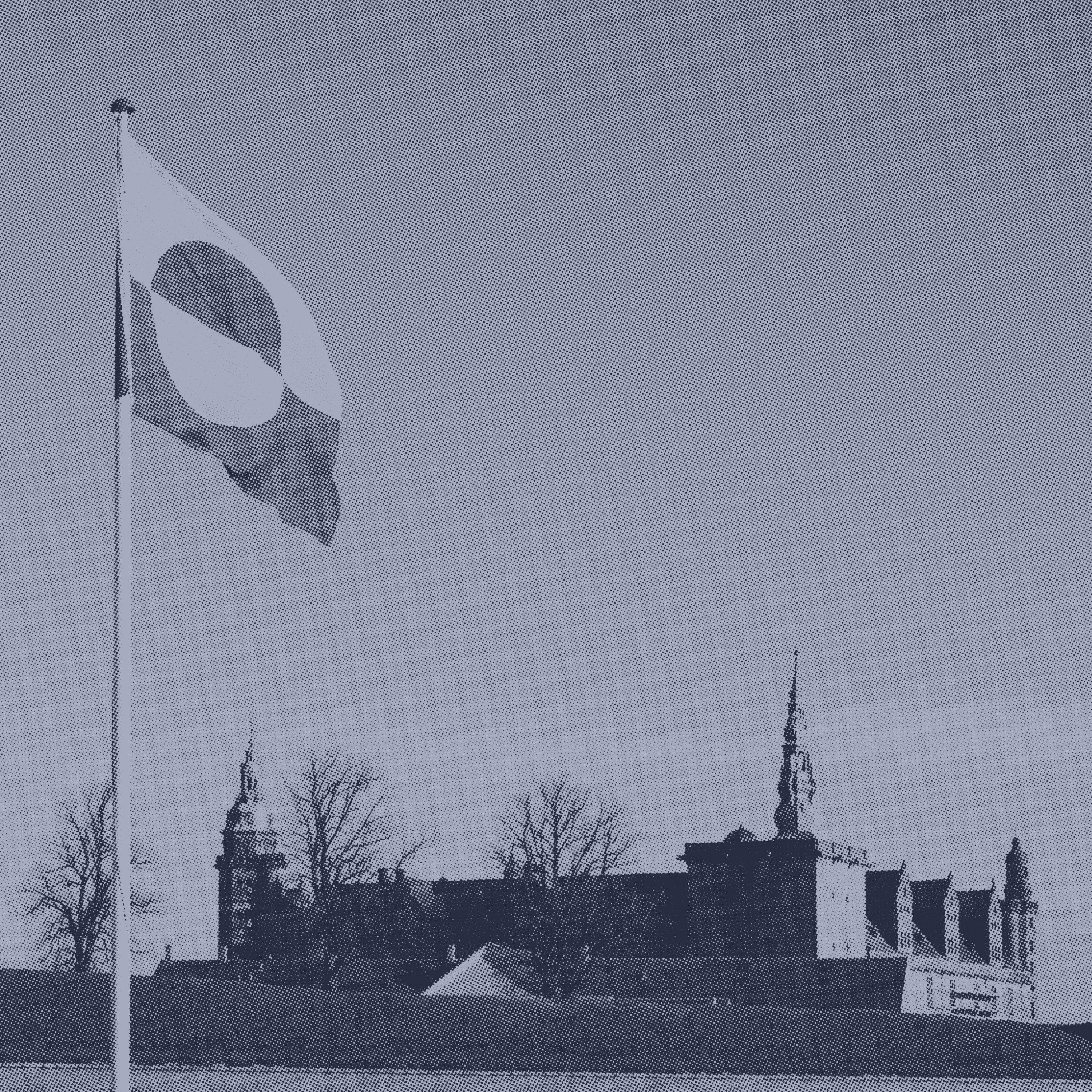
And we are recording this podcast at 1:17pm today. And it has been a very busy week in the world of foreign policy. President Trump has threatened Iran with military action as protests against the regime there continue. U.S. officials met with Danish leaders over the fate of Greenland, which the president has made it very clear he wants to be a part of the United States. And Maria Corina Machado, the Venezuelan opposition leader and Nobel Peace Prize laureate, is at the White House today. So with all of that, let's start with Iran. Greg, get us up to speed on the protests there. What is happening and why?
- [01:15]
B
Yeah, the protests seem to be simmering down, at least for the moment. And I really want to stress for the moment. They started in late December. They've been swelling. And it seems in recent days the Iranian security forces have really cracked down. It's been a very brutal crackdown. The information we've been getting from Iran has been very fragmented. The Internet has been cut. Phone service has been limited. Iranians have managed to get some videos out. Some of these have shown large numbers of bodies in body bags. So we know it's been huge protests. We know it's been quite brutal. It does seem to be less active in the past night or two. These are nightly protests. It may be because the crackdown was so harsh. This discouraged some people from going out in the streets. I'm sure there are many people there who have grievances who want to protest but don't want to get killed. And the huge numbers of deaths, injuries and arrests has perhaps pushed some people off the street.
- [02:17]
C
And what specifically are the protesters looking for? Like, what is this all about?
- [02:21]
B
It was certainly sparked by grievances over just general living conditions. Everything has increasingly expensive in Iran. People's salaries just don't go very far. It takes more than a million Iranian rials for $1. The currency has just been in free fall. So it's economic grievances. But we have heard people talking about a new regime that the Islamic government, this clerical establishment that has run the country since the 1979 Islamic Revolution needs to go, that they simply have not delivered on the kinds of things that ordinary Iranians want and need. And we have seen these protests in the past. They're much bigger. They're in dozens of cities around the country. I mean, it is drawing a real cross section from educated elites in the capital to poor people in more rural areas. So these are very widespread, and it seems to be the biggest challenge to the government since they took power 47 years ago.
- [03:27]
C
So then, thinking about how this relates to the United States, President Trump posted on social media that help is on the way for the protesters. Franco, what do we know about what that meant? Or has the White House clarified at all about what he means by that?
- [03:42]
A
I mean, not specifically on help is on the way per se, but over the last several days, he has repeatedly raised the possibility of military action and promised very strong actions if Iran continued the killing against protesters. I mean, he said that the U.S. was, quote, locked and loaded if Iran kills protesters. And on Tuesday, the State Department also called on US Citizens to leave Iran. Now, meanwhile, he's urging demonstrators to keep protesting and take over the institutions. But, you know, as Greg was alluding to, things have kind of quieted down. And Trump's kind of quieted down at least over the last 24 hours when he said he was told at least that the Iranians will stop the planned execution.
- [04:31]
B
And just to add to that, you know, it's hard to tell how much of that message is getting through. These Iranians clearly took to the streets, had their own grievances with the government, and the government in Iran has cut the Internet since around last Thursday, Friday. So it's been very hard for people to communicate there. Phone service has been restricted. Now, again, as I mentioned, some stuff is getting out, so it's not a complete cutoff, but it's just hard to tell how much of the message they're getting from President Trump or just from the wider world, or even if you're in one of in an Iranian city, if you know what's going on in the next city.
- [05:08]
C
What I don't understand here, that I'm hoping one of you can clarify for me, is why President Trump is so interested in this situation. I mean, the world is very big, and there are lots of situations with unrest. Why is he so interested in this one?
- [05:23]
A
You know, look, Trump has never been one who is fighting for human rights. He's not looking to Fight for democracy. I mean, it's not completely unprecedented, but I see this as more part of his efforts or bigger picture efforts on the nuclear deal. I mean, the strongest position that Trump has had on Iran since he took office and really since before, during the campaign, is that Iran cannot be allowed to have a nuclear weapon. And he himself suggested that his pressure campaign was working in that area. When he said that Tehran called him earlier this week wanting to negotiate a nuclear deal that said, you know, his team was working on a deal and they said he was going to have a meeting. But he quickly, quickly kind of scrapped that meeting when the crackdown on the protest continued.
- [06:12]
B
And I would just add to that that this president has very much changed his approach in his first term. He did not want the US to get involved in conflicts abroad. That was his message during three presidential campaigns, and he stuck to that. As for somebody who moves around and changes his position a lot, this was one of his more consist positions until he took office this time around. He's been in office one year. In this second term, he's bombed seven countries, four of them in the Middle east, including Iran, back in June when he went after Iran's nuclear program. So the president is just much more willing and active when it comes to using military force this time around.
- [06:53]
C
I mean, is there a broader risk for this entanglement to get bigger? I know that I saw news that there were some evacuations happening at some bases in the region, for instance.
- [07:03]
B
There certainly are. Anytime you use military force and strike another country, that can spread. And Iran has had this proxy network in the Middle East. Now. It's been dramatically weakened over the past couple years. Hamas, Hezbollah, Bashar, Assad, the Syrian leader are all gone or dramatically weakened. So the threat perhaps to the United States is less than it has been in the past, but it's not zero by any stretch. Iran could still use missiles that it has against US Bases in Kat, Qatar, as we mentioned, or in other places in the region. It's done that in the past. So, yeah, there still is a risk. One thing I would note is that Trump, while using the military, he's very much gone for these kind of one and done kind of strikes, something that can last 24 hours or less. It's done from the air. He's not putting troops on the ground. He doesn't want to see extended conflicts. So he feels he's getting some benefit from these short, sharp strikes. That would be a much more difficult thing to do in this scenario, just because you have protesters all around. Who do you hit? What is your goal? It's not something that can be done. Again, I would just draw a comparison to the June strikes where you were hitting a nuclear facility, you did it at night, and it was over by daybreak.
- [08:30]
A
Kind of on that note of like, whether things have kind of de escalated. Trump was asked yesterday by a reporter if, you know, the stoppage of the executions, if that meant that the US Military response was now off the table. And he said that they were gonna watch and they were gonna see. And just speaking about the June strikes, I think we should also remember that just before the June strikes, Trump made a statement saying that he's going to make a decision within the next two weeks. And then pretty much right after he ended up striking three nuclear sites.
- [09:08]
C
I mean, is it fair to say that Trump is a little emboldened from a military perspective after capturing Venezuela's leader, Nicolas Maduro?
- [09:15]
B
Oh, absolutely. I'd say even before that, I would say since the beginning of this second term that these things so far have gone pretty well. From Trump's perspective, the US has not lost forces. There haven't been casualties or equipment losses or a military setback. It doesn't seem to be having a major impact with his MAGA base. Certainly there are people are questioning it. A few people, high profile people, marginalized, Taylor Greene, to cite one example, have come out very much against some of this. So Trump, I think, sees it as a way to look strong, get a lot of positive reinforcement from his perspective. But these things are not necessarily over just because the US Stops bombing. Well, that doesn't mean the recipient of those bombs thinks it's over. And it may come back in other ways down the road.
- [10:08]
A
I mean, he certainly turned it up a notch after the capture of Maduro. I mean, almost immediately after the capture of Maduro, the White House was out there saying Denmark needs to give up control of Greenland. The press secretary, Caroline Levitt, was saying, look at what happened in Venezuela. Look what happened to Maduro, look what happened to Iran back in June. Denmark needs to negotiate, Trump wants to negotiate. But the US Needs and must have control of Greenland.
- [10:40]
C
All right, let's leave it there for a second. We're going to get to Greenland right after the break. And we're back. And I will also just note Monday we did a deep dive into Donald Trump's foreign policy strategy and how it fits into the last 25 years of Republican strategy and Republican thinking on foreign policy. So if you want even more on this, go listen to that. But I want to turn now to Greenland and President Trump's desire to own it. I mean, he said as much in an interview with the New York Times last week that he wants ownership of this place. Why Franco?
- [11:13]
A
Yeah, he has said it over and over and over again, but he's really, you know, increased that rhetoric in recent days. Now, he says that Greenland is a national security issue. He talks repeatedly about the activity of Russia and China in the Arctic, and he claims that if the US does not take control of Greenland, then China and Russia will take over the island. Now, we've heard from the Danes who are pushing back on that, but Trump is saying that Greenland is unable to defend itself and that it needs the United States. And he also argues that NATO would be stronger if the US Controls Greenland. But all this talk about taking control by any means necessary, not counting out military force, has really just. Just amped and amped up since, as we were talking about before the break, since the capture of Maduro.
- [12:11]
C
What do Danish officials think of all of this talk, Greg? And then also, what does the rest of the world think of it?
- [12:17]
B
Well, they've taken it very seriously, you know, at first, maybe a year ago or whenever Trump first broached this idea, I think a lot of people, you know, scoffed at it. But they've taken it seriously, made preparations, tried to figure out how they can negotiate a solution here. And their position is, we're all members of NATO. Greenland is a semi autonomous part of Denmark. It is covered by NATO's Article 5, that an attack on one is an attack on all. So if Greenland were to be attacked, that would be as if anybody else in NATO was being attacked. And they point to the fact that since 1951, two years after NATO was formed, the U.S. and Denmark signed an agreement that allowed the U.S. to put military bases in Greenland. And basically, since that time, 75 years ago, the US has had military bases there. They had a string of them up and down the west coast of Greenland for many years during the Cold War. When the Cold War ended, the Soviet Union collapsed. The US on its own doing, decided that this country needed less of a presence in Greenland. And now the US Is down to one base in the far northwest of Greenland with about 150 troops. And. And Denmark says that's fine. If you want more forces there, that's also fine. This can all be negotiated. We've had this arrangement for 75 years. So they're baffled at seemingly why Trump can't take yes for an answer and why he seems so determined to own Greenland Outright. And just yesterday we saw the foreign minister of Denmark and Greenland, for that matter, here in Washington, meeting with top U.S. officials. And they came out and spoke on their own, not with the U.S. officials. And they acknowledged there are still differences that were not resolved, but said they're going to try to work through this and continue with communications and don't want this to become just a straight out confrontation, but something that can be negotiated to a resolution that works for everybody.
- [14:26]
C
It does feel like this is moving us toward a conversation about NATO. I mean, President Trump has been really frustrated with NATO going back to his first term. What does it mean for the future of NATO that Trump is talking this way about Greenland?
- [14:41]
B
Yeah, I mean, Trump has been all over the place, you know, his first term, very much words of hostility towards NATO. Then NATO countries agreed to increase their spending. So it seemed like, okay, that had been more or less resolved then, at least there was going to be not this regular confrontation. Well, now that's opened up again over Greenland. And, and the real irony here is Trump says the US Needs Greenland to guard against Russia. And indeed, if there were a missile or nuclear exchange between the US And Russia, those missiles, some, many, all of them would come over the Arctic. It wouldn't necessarily come east or west because that's the quickest, fastest way. So that's why the US has had these forces and primarily radar stations to detect any incoming missiles up in Greenland. But to guard against Russia, Trump is threatening real fissures or real fracture of NATO. So the whole irony would be if Trump were to get his way and somehow get Greenland, he might cause all these fractures within NATO. From Vladimir Putin's perspective in Russia, he wants to see NATO fall apart. He feels that as an anti Russia organization, he wants to see it fracture. So he would be very happy to see the US Seize Greenland and break up NATO. That would be Putin's dream.
- [16:09]
A
I mean, I think that's part of the equation that Trump may be playing. When I talk to analysts about that, they recognize, or at least they tell me that, look, Europe knows that NATO needs to stick together. And they also feel that, you know, and Trump is probably making the argument, according to them, that NATO or that the European countries need the United States for NATO more than the US Needs Europe for NATO. And Trump has said this many, many times before. So the equation that Trump may be making is that the Europeans are not going to allow the breakup of NATO over Greenland. And if he can push hard enough, he may get it. That's the compelling argument that the analysts I speak to are making.
- [16:55]
C
Finally, I want to turn to Venezuela. The president is meeting with Venezuela's opposition leader, Maria Corina Machado, at the White House today. Franco, can you get us up to speed on what the latest in the United States involvement in that country is?
- [17:08]
A
Yeah, I mean, it's just such an interesting moment in Venezuela, Latin America, really, the Western Hemisphere. I mean, Trump is meeting with this wildly popular opposition leader, a Nobel Peace Prize winner, as you said earlier, whose party is widely considered to have won the 2024 election, which was then allegedly stolen by Maduro and his party. But Trump has really actually been kind of cool to Machado, calling her a nice woman, but saying that she just does not have the support or respect within the country to be the leader. Meanwhile, just yesterday, he was talking about having this great conversation, a long call with Delsey Rodriguez, who's now the acting president, but was the number two to Maduro. She's absolutely part of a Maduro regime. So it's really turned into just this kind of fascinating battle between two leaders, two female leaders over control of the nation's future. And really both are trying to kind of curry favor with the U.S. president.
- [18:10]
C
Okay. Well, we can leave it there for today. I'm Miles Parks. I cover voting.
- [18:14]
A
I'm Frank Ordonez. I cover the White House.
- [18:16]
B
And I'm Greg Myhre. I cover national security.
- [18:18]
C
And thank you for listening to the NPR Politics podcast.