← The NPR Politics Podcast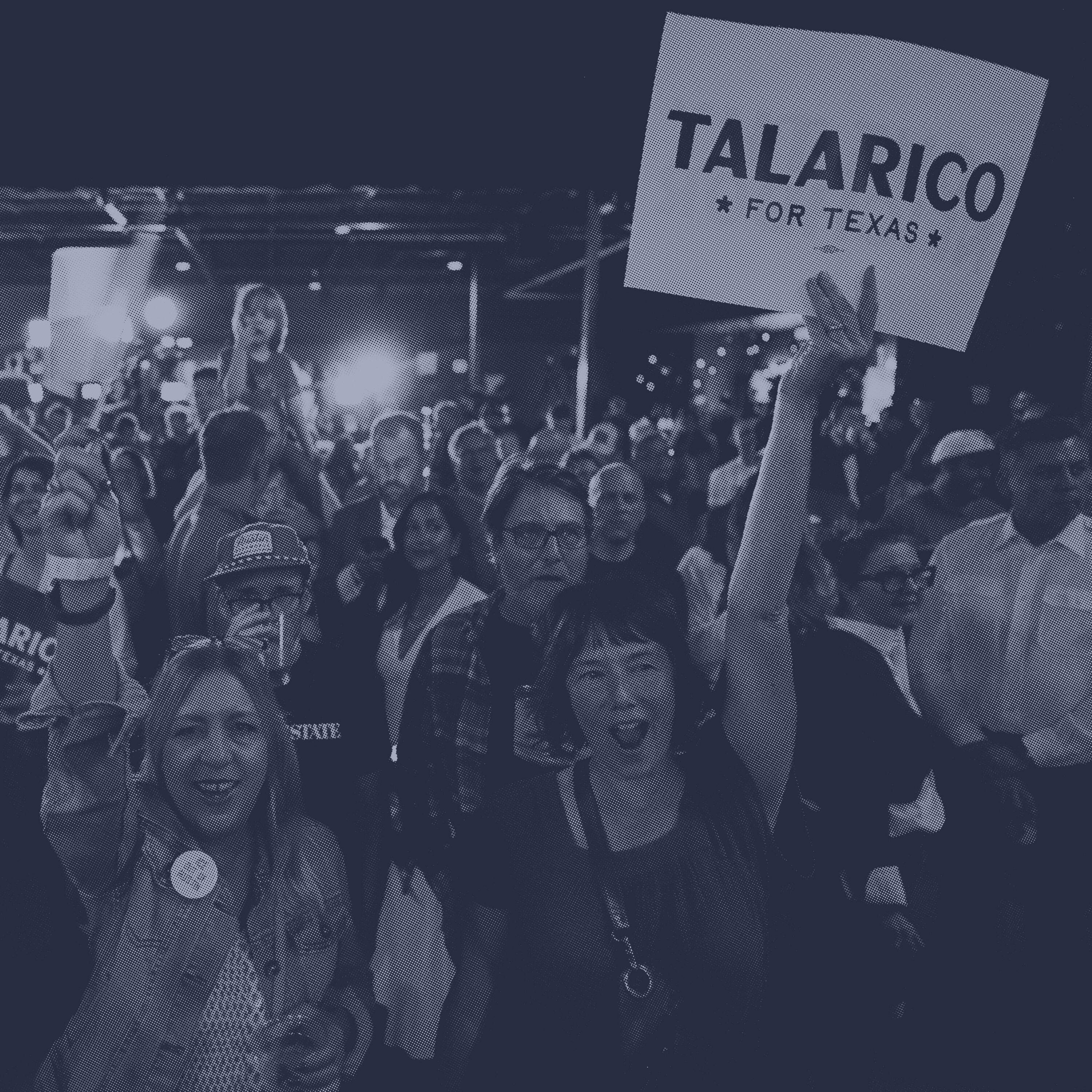
The NPR Politics Podcast
Democrats had record turnout in Texas’ Senate primary. Can they flip the seat?
00:28:14
Loading summary
Transcript87 lines
- [00:00]
A
It's Oscar season and we watched the nominated movies so you don't have to. We are making some bold predictions for Hollywood's biggest night, and we may help you win your Oscars pool. Listen to Pop Culture Happy Hour in the NPR app or wherever you get your podcasts.
- [00:21]
B
Hey there. It's the NPR Politics podcast. I'm Myles Parks. I cover voting.
- [00:25]
C
I'm Tamara Keith. I cover the White House.
- [00:27]
D
And I'm Domenico Montanaro, senior political editor and correspondent.
- [00:30]
B
And it's Friday, so we wanted to wrap up another week in Washington and beyond. And we're gonna start with the beyond in Texas specifically, which is coming into focus after voting last week in primary elections. And Domenico, you have been crunching some really interesting numbers from the Texas primary on turnout. What can you tell us?
- [00:47]
D
Yeah, Democrats set a turnout record in their primary, not just for Democratic statewide primaries, but for any statewide primary, including Republicans. And we know Republicans have dominated in the state for a long time. More than 2.3 million votes were cast in the primary that pitted state Representative Representative James Tallarico against Congresswoman Jasmine Crockett. Obviously two viral candidates. There was a big following for each of them. You know, competitive primaries certainly lead to higher turnout. The only two primaries that have taken place in the state that had more turnout were the 2008 presidential primaries featuring Barack Obama against Hillary Clinton in that prolonged race and the 2016 Republican presidential race, which, of course, Ted Cruz won against Donald Trump and Marco Rubio and a whole slew of other Republicans who are pretty well known.
- [01:38]
B
What was interesting here, too, is it's not just the total number of Democrats who participated in the Democratic primary and the total number of Republicans, which is a notable number. But you also got into some of the geography here. Can you tell us about that?
- [01:49]
D
Well, I think this is so key because Latinos have really turned into a swing group in Texas in particular. And there's a whole bunch of things that are going along with the strength of the Latino vote in in South Texas, what it's meant to presidential elections, what it could mean for redistricting. And Democrats clearly look like they have some momentum with Latinos. Again, as you know, Trump did very well in the 2024 presidential election. He had a record for a Republican with the percentage of Latinos that he won over, almost half according to exit polls. In this one, what I decided to do was take the top 10 most populous districts that also had at least 50% Latino representation to the 2020 census. And what I found there, those top 10 counties, on average there was 126% increase in the number of people who turned out in those counties in the Democratic primary this time as compared to the 2024 presidential year. And you would think that there would be a little bit higher turnout. There was a nominally competitive campaign, if you remember, between Donald Trump and Nikki Haley, the former UN Ambassador, and Republicans saw a net decline. So I think yet again, another warning sign here for Republicans.
- [03:09]
B
As you mentioned, these were two viral candidates. This was a race that made national news because of, you know, even just the James Talrico, Stephen Colbert thing that we talked about on the pod as well. But I will note we saw this in North Carolina, too, that we saw Democrats participating in that primary at a much higher rate than Republicans. And I guess, Tam, I'm wondering from your perspective, do you get a sense that the White House or that Republicans that you talk to are seeing warning signs already this midterm year?
- [03:34]
C
There certainly are warning signs, as evidenced by the number of Republicans in the House who are retiring instead of running for reelection. Another thing that I'm watching for is some of those very same areas where Domenico saw a big boost in turnout for Democrats are areas where President Trump saw Latino voters move in his direction and then Republicans redrew district lines and in Texas to try to get more Republican seats in Congress. And they were counting on those 2024 numbers, which may not apply.
- [04:14]
B
Now, Domenico, how isolated is this to just that one Tuesday a week and a half ago in terms of, you know, Democrats seeming to be winning the enthusiasm battle over Republicans?
- [04:24]
D
No, I think this is another kind of brick in the wall here overall, because Democratic enthusiasm polling has shown us is up their interest in the election, according to an NBC poll that over the weekend is higher than Republicans. That's usually a good sign for the party that's out of power. We've seen Democrats over perform in special elections. They overperformed in the 2025 general elections. You know, all of these things start to add up in isolation. You look at one of them and say, oh, you can't really draw a trend. But over and over and over, you see these things piling up. And it clearly shows that Democrats here, I think we have to say, are favored to win the House now.
- [05:03]
C
Well, and the remarkable thing is there's all of this Democratic voter enthusiasm at the same time that Democratic voters are not necessarily thrilled with the Democratic Party.
- [05:14]
B
Yeah. I mean, and I think it's also worth noting in Texas specifically, it's still very unclear. You know, I think it's easy For Democrats to look at those numbers and say that they're really excited, but we don't know who's gonna be on the Republican ticket opposite that Democrat. Right. And Democrats have made it clear they would much prefer to face Ken Paxton compared to John Cornyn, the incumbent senator there. But that we've still got a couple weeks to go before voting in the runoff is finished. Tam, President Trump has not weighed into that race yet, but he seems to have teased it. Right. Do we have any more sense on what's coming there? That would obviously make a big difference, I think for Republican voters.
- [05:50]
C
Yeah. I mean this was Domenico's can't let it go last week and we still can't let it go because President Trump has still not endorsed in this race between Ken Paxton and John Cornyn. Cornyn is, you know, the establishment Republican. He's the one who has the backing of Senate Republicans. You know, a lot of money will be spent to try to save him. Trump had said he's going to endorse and whoever he endorses, the other person should drop out. Well, now he hasn't endorsed. It has been a while now. It has been about a week and a half. And that endorsement we thought was coming soon is not coming soon. And now according to Medium Buying, which is a firm that tracks ad purchases by campaigns and others, a pro Ken Paxton group is placing a TV ad spend for this weekend not in Texas, but in West Palm Beach, Florida in the media market where President Trump will be spending his weekend.
- [06:55]
D
And you saw John Cornyn write an op ed saying that he's now in favor of getting rid of the filibuster. And when he was asked about whether or not he did that because of Donald Trump, he said, well, my thinking has evolved but I sure hope that the president likes that's what he saw.
- [07:08]
C
So they're both campaigning for the one vote.
- [07:13]
B
Domenica, one other point on these turnout numbers that you have been looking into this Democratic over performance in elections, in off year elections last year and then in these primaries. It does make me wonder about this claim that President Trump has been pushing and he said it again in the State of the Union that Democrats can only win elections if they cheat. Do you feel like there are enough election results over the last year pointing to these headwinds, pointing in Democratic directions that make those claims a little less believable for people?
- [07:45]
D
Well, I think there's been some evidence that Republican based voters are seeing less salience in that 2020 cheating message from Trump. They're sort of Almost dismissing it as well. Trump just says some things. It sort of reminds me of the like, well, I didn't read the tweet or I don't like what he tweets. Sometimes it's sort of turning into that. It feels like a little bit, as opposed to something where you could see some real problems come of it, like January 6th, obviously. But you never know. I mean, as you get closer to an election and it appears more and more likely that Democrats take over the House and Trump's rhetoric increases more and more, it's still something to be very much aware of.
- [08:27]
C
I mean, I think the risk is that if Democrats do win and if the president's supporters are getting their information from the president, there are a lot of people who could be surprised by the results.
- [08:39]
B
Yeah, right. These are not people who maybe even are aware necessarily of every off election year, results from 2025 and things like that, too. If that's where they're getting the majority of their information, that makes sense. So, big picture, Texas has not voted to send a Democrat to the Senate in my lifetime. Looking at these numbers, I'm still a skeptic that that is something that's going to happen this year. What do you guys think?
- [09:03]
D
Well, I mean, I made the headline on my story on this. Democrats said turnout record in Texas. So is this the year it turns blue? Maybe I'm trolling a little bit because
- [09:11]
C
I think maybe you're just going for clicks.
- [09:13]
D
Because I think the answer in my story, the subhead should be, I'm not going to tell you because I think, like, if you read this story, you would probably have some ammo to say maybe and some ammo to say probably not. Right. Because I think the thing that's important here is that increased primary enthusiasm is important, but it doesn't necessarily mean that that's how a general election is gonna play out. I mean, after all, 2.3 million is clearly, you know, pretty high for a primary, the highest ever for any statewide office. The winning vote total in the general elections in 2018 and 2022 was 4.3 million. That's 2 million more than the Talarico Crockett primary. So you. But this state that has still trended Republican, until I see otherwise, I'm still gonna say Democrats are calling me Ishmael a little bit and looking for their white whale. North Carolina is a similar situation where it also sort of leans Republican. You have a high name ID Democrat who's running for the Senate in Roy Cooper. But again, even though Democrats increased their total number of voters by 200,000 or so. In this primary, it was only about 800,000 voters total. And four years ago in the state, it was 1.9 million. That was the winning amount of votes that were cast for Ted Budd, who's the senator from North Carolina.
- [10:35]
B
So everyone just take a breath. It's going to be a long election season. This is my takeaway there. All right. Let's take a quick break and more on the news in Washington when we get back.
- [10:46]
A
It's Oscar season and we watched the nominated movies so you don't have to. We are making some bold predictions for Hollywood's biggest night, and we may help you win your Oscars. Listen to Pop Culture Happy hour in the NPR app or wherever you get your podcasts.
- [11:04]
B
And we're back. And let's head now to Capitol Hill, where lawmakers still have not figured out a funding package for the Department of Homeland Security. Funding has been cut off for the agency as Democrats demand reform to how ICE agents operate after federal agents shot and killed Renee Macklin. Good. And Alex Preddy in Minneapolis. So, Tam, can you remind us what the sticking points here are? What are Democrats asking for that Republicans are not willing to give them?
- [11:31]
C
Right. And at this point, the Department of Homeland Security has basically been shut down for a month. That does not mean that people aren't working. In fact, almost everyone who works at the Department of Homeland Security is an essential worker. They're working at this point without pay. And here's what Democrats want. Among other things, they want to prohibit federal immigration agents from wearing masks, from covering their face, them to display identification. They want to bar agents from detaining people in certain places, like churches and schools. Democrats also want to make it so that immigration enforcement agents have to get a warrant, like a judicial warrant approved by a judge, rather than just being able to make arrests with an administrative warrant that they can sign themselves. Also, some conversations around the use of force after after killings of two American citizens who were exercising their First Amendment rights.
- [12:32]
D
And it feels like the people who are in the middle of this are not even the people who are conducting immigration enforcement. I mean, not only feels like it isn't right. I mean, TSA agents, for example, are one group of people who we're hearing a lot about because they're not getting a paycheck and they're still having to go to work. We're seeing lines at airports in some cases be fairly long, especially as the spring break holidays start to add up here. And, you know, I think most People would think that's not fair to the TSA agents. And there isn't much movement on what the exit strategy. Here is what the, the off ramp is for for getting this funding to be restored.
- [13:14]
C
Yeah, let me just add some numbers to this that I got from a White House official. As of today, 100,000 Homeland Security employees are not getting paid, missing their first full paycheck. That includes people at and the TSA and others. TSA employees, they point out, have had to work without pay three times in the past six months because of government shutdowns. And they say that more than 300 TSA officers have quit since the shutdown began. Quit their jobs. There's a lot of uncertainty. They also say that people are calling out sick at more than double the rate at this point and they're expecting it to get worse as the shutdown drags on. And like people literally have to go do other gig work just to keep food on the table.
- [14:08]
B
Where is this headed? What is the off ramp? Are we going to be having the same conversation in the next, you know, in six months from now?
- [14:14]
C
Probably not, because the TSA situation, the lines at airports are going to become untenable very soon. But just to give you an update on where things stand, essentially this is a conversation between Senate Democrats and the White House. And it is a conversation that is moving in slow motion and mostly out of view. But about two weeks ago, the White House sent a proposal to Democrats. Democrats have received this proposal. They say it isn't good enough. One interesting note is that, but they aren't talking about specifically what is in the proposal. But Senator James Lankford, a Republican from Oklahoma who is on the Homeland Security Committee. He in a floor speech yesterday described some of what the White House is offering. He says that they would support badges, body worn cameras and de escalation training. That if you remember the list I gave of what Democrats want is pretty short of what Democrats want. But, but I think because so much else has been going on in the world because the attention just really went away from this for, for weeks now, there just hasn't been much movement on these negotiations. The only tiny glimmer of good news is that they aren't negotiating in public, which means they may actually be serious about negotiating a solution.
- [15:42]
B
I mean, the other thing here is the United States is at war with Iran. That was not the case when this partial shut began. We also saw just yesterday there was a shooting at Old Dominion University in Virginia. There was an attack on a synagogue in Michigan. I'm wondering, Domenico, how all of that, that landscape, could that potentially move the needle on making Democrats feel more pressure on kind of holding up this funding.
- [16:10]
D
I wonder, you know, if that's going to be something that they wind up, you know, thinking about here. And obviously they're getting already asked about it. And eventually, you know, not just with these attacks, but also, again, the lines that they see at airports, if those become a big problem and continue to dominate the news headlines, you're going to see more pressure, I think, on both sides here to try to figure out how to restore the funding. Because you're having a lot of TSA agents starting to call out sick because they're going to miss another paycheck and not able to afford, in many cases, their rent or childcare.
- [16:47]
C
Yeah. Democratic Senator Alyssa Slotkin was at a press conference about the anti Semitic attack on the synagogue in Michigan. And she was asked about the Department of Homeland Security not having funding at this time when there are heightened fears and actual legitimate things happening that people are worried about. And she said basically what the Democratic position is right now, which is that they are perfectly happy to fund the rest of the Department of Homeland Security. The one thing that they want to continue talking about is ICE funding because they want these policy changes. And just yesterday, Senate Democrats put up a bunch of different bills to fund all the other parts of the Department of Homeland Security, and Republicans wouldn't support them. And Republicans put up up a bill to fund the entire Department of Homeland Security, and Democrats wouldn't support that. So that's where we are.
- [17:47]
D
So let's be clear, though. I mean, ICE is funded. I mean, you know, they got a huge slew of money that came through the quote, unquote, one big beautiful bill, as Trump calls it, this massive package that the Republicans got through. I mean, it was like seven times more than the regular annual budget that ICE gets to be able to staff up and conduct these enforcement activities. So there's a little bit of red herrings in a lot of different ways. And again, with people who aren't even part of that conversation stuck in the middle.
- [18:22]
C
Yeah, there's a whole school of red herrings, but that's politics.
- [18:26]
B
I mean, it does feel just connected to these attacks we saw yesterday. I think another storyline that I'm starting to sense in our politics is this sort of rise both in, in Islamophobia and in anti Semitism. Are you guys getting a sense of that as well?
- [18:41]
C
Yeah, it's undeniable. You've seen Republican members of Congress post things on social media that are explicitly Islamophobic. And then obviously, you've seen this attack on the synagogue. You also recently had young men throwing explosives at people who are protesting against Mayor Mamdani in New York. It is a stew of discontent in the country right now.
- [19:11]
D
Yeah. And the two things are really feeding off each other in the midst of a war with Iran. That's really making things feel like just post 911 here, 25 years later. And we have, I think, the difference very different leadership. Right. I mean, you had George W. Bush Just after 911 going to a mosque and saying that Islam is peace. This is not reflective of Islam. And we're seeing instead House Speaker Mike Johnson, when he's asked about these inflammatory statements and Islamophobic statements from members of his own conference, he gives enabling statements and saying that he, too, is concerned about Sharia law coming to the United States. And we're seeing people running for office using Sharia law in quotes. I put it as a thing in their commercials and TV ads.
- [19:59]
B
One more news item that I want to bring up, Tam, and get your thoughts on is Representative James Clyburn of South Carolina announced this week that he is going to run for reelection. This is notable because, frankly, because of his age. He's 85 years old. And many of his contemporaries have made different decisions this year. Nancy Pelosi, Steny Hoyer, they both decided that they are not going to run for reelection. But we have Clyburn kind of bucking this trend and also bucking a broader trend of, as we talked about earlier, a lot of people calling it quits in the House right now. What do you make of this?
- [20:37]
C
Clyburn argued that he is in good health still, that he can conduct a vigorous campaign and he plans to. And also that he is hopeful that Democrats are going to win the House and that he would be able to be there for the first black speaker of the House to be elected, Hakeem Jeffries. But you're right, he is a super senior at this point. He is 85 going on 86. And I think there is a difference, though, between him and some of the others, which is he is a Democrat from South Carolina. He was the first black congressman to represent the state in nearly 100 years. He has become a kingmaker in South Carolina and for the Democratic Party nationally. He is an institution, and he's not in a state where there are a bunch of young progressives biting at his heels.
- [21:34]
D
Well, and that's a big piece of what we've seen across the country in Democratic politics, where age has become a factor in many young voters feeling like they want to be able to see a refreshed Democratic Party leadership with a lot of leaders who they feel like have not stood up to Trump in the way that they think that they should or that they want to see them do. Clyburn's a little bit different than that for the reasons Tam sort of outlined. A couple numbers I wanna give you, though, is that there are 24 members of Congress who are older than 80. Thirteen of them are running for reelection. Three of them, it's unclear what they're gonna do. Two of those people, by the way, are Chuck grassley, who's already 92 years old.
- [22:18]
C
Wow.
- [22:19]
D
And Senator Bernie Sanders, who is 84, and he's not up for election until 2030. He just filed a statement of candidacy for 2030. He'll be 90 years old.
- [22:32]
B
Right.
- [22:33]
D
And when he was asked about it, he basically said, hey, you know, let's not talk about it now. I got work to do in this term. So, look, I don't know when I'm 85. I hope I'm able to do these jobs still, but I hope I'm not.
- [22:45]
B
All right, well, let's take a quick break, and when we get back, Can't Let It Go.
- [22:49]
A
It's Oscar season, and we watched the nominated movies, so you don't have to. We are making some bold predictions for Hollywood's biggest night, and we may help you win your Oscars pool. Listen to pop culture happy hour in the NPR app or wherever you get your podcasts.
- [23:07]
B
And we're back. And it's time for Can't Let It Go, the part of the show where we talk about things from the week. We just cannot let go of politics or otherwise. Tam, why don't you start us off?
- [23:17]
C
So this thing made my week, which is I sent a text to Jared Bernstein, who is a former White House economist. He was part of the Biden administration. He actually worked for Vice President Biden way back when. And I wanted to talk to him for a story I'm working on about oil prices. And so I sent a text to Jared, hey, I hope this is a good number for you. And the text I got back was, good afternoon, Tamara. Jared changed his number about six years ago. Good luck and have a good day. And I was like, my God, I'm so sorry. La, la, la. Anyway, I had a really lovely exchange with this man who has Jared Bernstein's old phone number. And I was like, I bet you get some random Texts and calls. He's like, oh, yes, I have spoken to Joe Biden on several occasions.
- [24:11]
B
No way. No.
- [24:15]
D
Why does that surprise me?
- [24:17]
C
So at which point I was like, hey, could you give me Joe Biden's phone number?
- [24:23]
D
And he said, no, unknown caller. But who is this guy?
- [24:29]
C
So I actually talked to Jared Bernstein about it, and he has also spoken to him at some length, and he just somehow, through the luck of the draw, randomly got this phone number when Jared changed his number. And he likes the number, and so he is unwilling to change it, but it does mean that he has interactions with all kinds of people.
- [24:56]
D
I think we're gonna save this for our new podcast, New Phone who Dis.
- [25:00]
C
Yes. He could have just said, new Phone who Dis.
- [25:03]
D
He doesn't know what that is.
- [25:04]
B
I do feel like there might be, like, a broader. I want to hear from all the other people. I don't know. This has to be a trend also. And, like, anytime someone who knows a lot of important people changes their phone number, there's probably a lot of people out there in the world.
- [25:16]
D
You're saying there's a podcast that.
- [25:18]
B
I'm assigning a 12 minute all things Considered piece to Tamara Keith for next week.
- [25:23]
C
You know, I would love it, Miles. What can't you let go of?
- [25:26]
B
The thing I cannot let go OF is an NBA record set this week. 83 points scored by Miami Heats Bam Adebayou.
- [25:34]
D
Which, if I can say, if you were to think about who would score 83 points in a game, Bam Adebayou would not be the first person to come up just to be number two all time now for highest number of points scored in a single game.
- [25:47]
B
Well, and you know what? It wouldn't have happened if he weren't playing your Washington Wizards. That is like, the part of this that the 16 and 49 Washington Wizards gave up the second most points ever in a game is not that surprising. But it did. You know, what it reminded me of was something my grandpa said all the time growing up. He would get really annoyed at his neighbor for not mowing the grass. And I still have it stuck in my head. He would say, that guy's got no pride. And he would just say it over and over again when he would get mad at his neighbor for not mowing his grass. And that's my problem with the Washington Wizards. If you give up 83 points to one guy, to one guy, I'm like, the Washington Wizards got no pride right now.
- [26:26]
D
Which, by the way, more than a third of his points came from foul shots. So I don't, you know, I don't know if it's the refs, you know, calling too many fouls, but I've never seen somebody make 36 foul shots in a game.
- [26:36]
C
Yeah.
- [26:36]
D
Wow.
- [26:37]
B
Domenico, what can't you let go of?
- [26:38]
D
I guess we're staying with a little bit of sports, but I can't let go of Team Natalia in the World Baseball Classic here because, you know, not only all the shenanigans with. With espresso fueled home runs and the Kevoy hand gesture that they make leaning into all the stereotypes clearly so that they own them in the photos, but what they meant to Team USA because they beat Team usa. It was a huge upset. And the manager of Team USA mistakenly thought that they had already clinched basically a playoff. Bernie into the quarterfinals to go out of pool play. And it turned out that that wasn't the case. If Italy didn't win or Mexico didn't win by a whole lot, by more than four runs, they would have had to win by Italy wound up pulling it off against Mexico, helping the Team USA get through. And I want to play a little bit of sound from Vinnie Pasquintino, who I'm sure our producer, Casey Morell is very, very happy that I'm mentioning because he is a Kansas City royal.
- [27:45]
B
You're welcome, usa.
- [27:47]
D
We were thinking of you guys over at your hotel. We were thinking of you guys, so I'm glad you guys could join us in the party. Vinny Pascantino hit three home runs in that game, and he said it was really cute moment. Like this guy who's been playing baseball his whole life, he's an adult, and he's like, I've never hit three home runs in the game. He's like, that was really cool.
- [28:05]
B
I also don't want to gloss over something you kind of glossed over there. Which to me is the coolest part of Team Italy is the they do an espresso shot in the dugout after every time a guy hits a home run.
- [28:14]
D
And maybe that's why. Maybe that's why he hit three. Maybe that's why he hit three.
- [28:17]
B
Awesome celebration.
- [28:18]
D
Yeah, it's cool they were able to bring all that in, you know? You know, they have a little fun with it, for sure.
- [28:25]
C
And the Dodgers just throw sunflower seeds.
- [28:29]
B
Exactly. Exactly. Come on, guys. We need to be upping our home run celebrations. All right, that's all for today. Our executive producer is Muthoni Muturi. Our producers are Casey Morrell and Bria Seller. Our editor is Rachel Bay. Special thanks to Krishna of Kalamer. I'm Miles Parks. I cover voting.
- [28:45]
C
I'm Tamara Keith. I cover the White House.
- [28:47]
D
And about to go take an espresso shot. I'm Domenico Montanaro, senior political editor and correspondent.
- [28:51]
B
And thank you for listening to the NPR Politics podcast.
- [28:58]
C
Imagine if we had taken a shot before the podcast.
- [29:01]
D
That's a good idea.
- [29:03]
B
It would have gotten done in five minutes faster.
- [29:04]
D
What a homer.
- [29:06]
A
It's Oscar season and we watched the nominated movies, so you don't have to. We are making some bold predictions for Hollywood's biggest night, and we may help you win your Oscars pool. Listen to Pop Culture Happy Hour in the NPR app or wherever you get your podcasts.