← The NPR Politics Podcast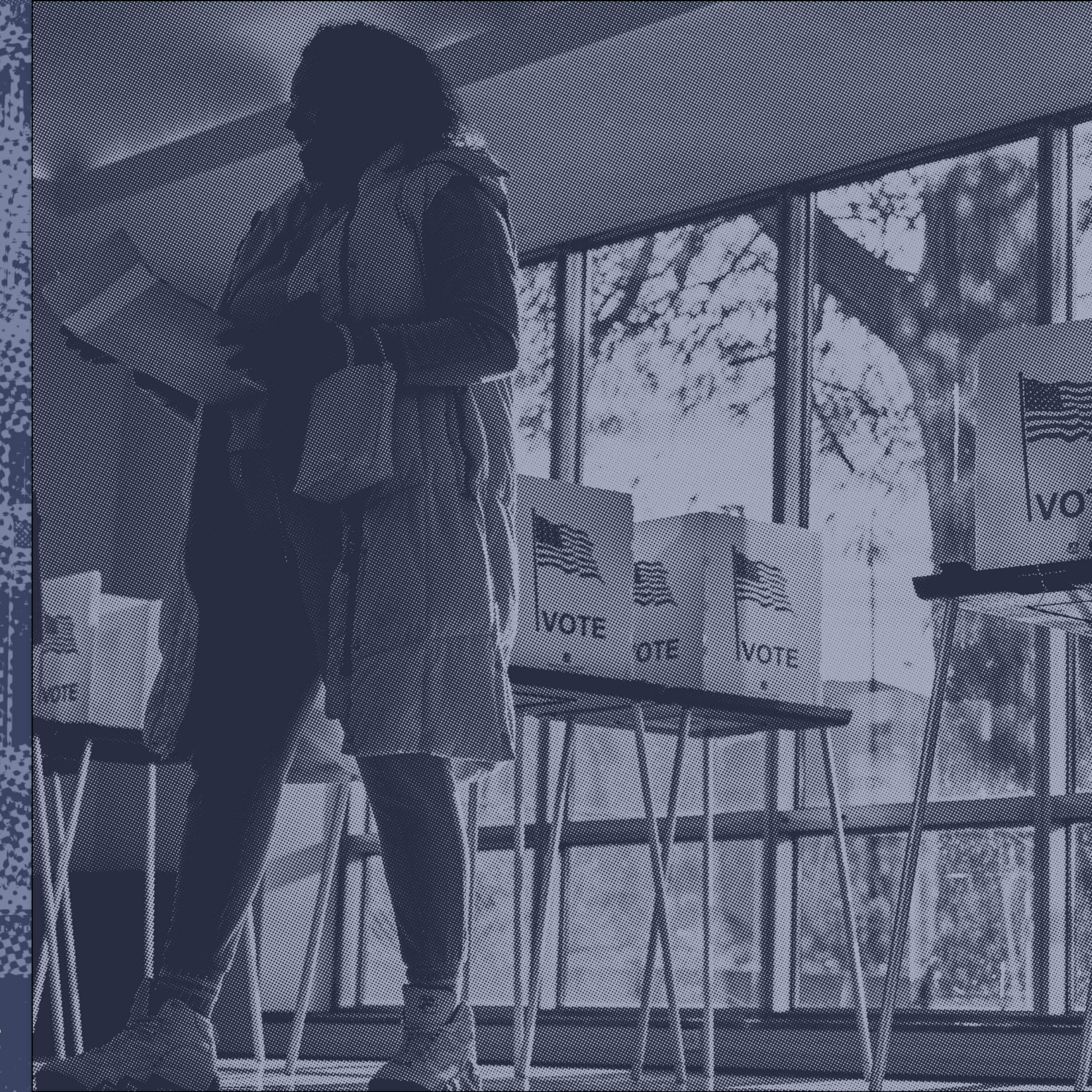
The NPR Politics Podcast
Elections Officials Prep For Possible Federal Interference In The Midterms
00:17:12
Loading summary
Transcript61 lines
- [00:01]
A
This week on up first, NPR's Morning News podcast as we learn more about the Trump administration's deadly strikes against alleged drug boats. Senators from both parties have questions. Will they get answers? We'll keep you updated. And we're following the latest efforts by the president to broker a peace deal between Russia and Ukraine. Listen to Up FIRST for what you need to know to start your day.
- [00:24]
B
Hi there, it's Tamara Keith. Before we get to the show, a quick message. So we've already shouted out an NPR donor earlier this week for giving Tuesday, but it's never too late for one more. Thank you, Politics Pod listener Kristen from Connecticut. Kristin calls the pod informative and trustworthy and writes, I have learned so much from your amazing reporters over the years. Your work is critically important now. Kristin, thank you for the self esteem boost and the support this year. It means a lot because as of October 1st, NPR is now operating without federal funding for the first time in our history. We know you value the NPR Politics pod. Maybe like Kristen, it's because of our reporters in Washington and around the country, or it's our election coverage that keeps you informed or how we help you make sense of the big political stories. Whatever the reason, you can help us keep going. Please make a gift now by signing up for npr. It's a simple recurring donation that gets you perks to over 25 of NPR's podcasts and bonus episodes to some shows, including this one. If you've already joined, thank you so much. If not, head to plus.NPR.org now onto the show.
- [01:48]
A
Hi, this is Eric from Houston, Texas, where I just received a lovely video message from Miles Parks, my Spotify Rap summary, thanking me for being an avid listener.
- [01:58]
B
This message was recorded at 12:07pm on Thursday, December 4.
- [02:03]
A
Things may have changed by the time you hear it, but I'll still be thinking, huh, so that's what Miles looks like. Okay, here's the show.
- [02:14]
As I was taping it, I had that thought. I was like, a lot of people are gonna be surprised, maybe even disappointed.
- [02:20]
C
I don't know what that I don't know what was behind the huh.
- [02:23]
A
I mean, I guess I'm a unique looking guy.
- [02:27]
B
You know, in the Spotify wrapped, nobody can tell how tall we are, but Miles is quite tall.
- [02:33]
A
I am. I am.
- [02:34]
B
Hey there. It's the NPR Politics Podcast. I'm Tamara Keith. I cover the White House.
- [02:38]
A
I am Miles Parks and I cover voting.
- [02:40]
C
And I'm Domenico Montanaro, senior political editor and correspondent.
- [02:43]
B
And today on the pod, state and local elections Officials used to whisper about their concerns. Now they are openly preparing for the possibility that the federal government could try to interfere with the midterm elections next November. Miles, you've been talking to officials from across the country. What kind of scenarios are they preparing for?
- [03:05]
A
Honestly, anything and everything, which I think is so interesting. Tam, I've been talking to election officials all year, obviously, and it went from this whisper early in the year to now, active preparation. And one secretary of state, a Democrat, told me that he compared it to preparing for a natural disaster like a hurricane or a big snowstorm that basically you have to hope for the best, but prepare, prepare for the worst. And so there are a bunch of different scenarios that we can kind of talk through. But I do think that they all come back to one bigger notion, which is that President Trump wants more control over the American elections process. And just to be clear, states and localities run their own elections. The Constitution gives the president essentially no power over elections. But we've seen time and time again that President Trump likes to push those boundaries. And so, you know, this year we've seen him put out an executive order that's mostly been blocked by the courts trying to exert that control. I think that's one of the biggest things election officials are watching for next year, is different ways that the president can try to push his authority out. One other scenario I'll just note that people are talking about is the potential for elections related emergency. We know President Trump has used his emergency powers more than any other modern president. And so there is this possibility that he could try to, you know, extend that into elections. Legal experts don't see a path there to him actually being able to take over elections for any state or locality, but it's clear he's gonna try a bunch of different things.
- [04:30]
B
So, Miles, you mentioned potential emergency declarations or emergency powers. President Trump has been using emergency powers to deploy the National Guard to various American cities, or at least to try to. And I definitely have heard concerns raised from the Democratic side, at least about whether the president could try to use the National Guard to impact elections.
- [04:57]
A
Yeah, and this is definitely something election officials are actively preparing for next year, especially officials in those big Democratic cities or in swing states. This is something that election officials say was kind of impossible to think about a year ago, but after seeing all the deployments this summer, it is definitely on the checklist of things that they are actively preparing for. President Trump, I should also note, even in previous election cycles, has voiced an openness to the idea of troops at the Polling places. And his former advisor, Steve Bannon, on a podcast earlier this year, spitballed about the idea of immigration enforcement also potentially going to polling places or being involved in the elections process. All of that, I really want to emphasize, would break federal election law, just to be clear. But, you know, it's possible that the president or people in his administration could try to push the bounds. I think I'm imagining a scenario where the National Guard isn't at a polling place but is like a block or two away, you know, or something like that. Or immigration enforcement aren't at the school where the voting is happening, but are at a corner store down the street or something like that. And so I think there are different ways that election officials are thinking about.
- [06:05]
C
This that could really cause chaos. I mean, thinking about National Guard or ICE in particular in the way that they've used Customs and Border Protection officers to go and try and arrest people or detain people in what have been really sort of provocative and at times violent ways. I can't imagine being in line at a polling place and seeing someone tackled, for example.
- [06:29]
A
Well, I think also it's important to note non citizens are not allowed to vote in federal elections. And so when you talk about involving immigration enforcement, it doesn't really make sense. But you also could imagine a lot of people who are citizens who decide not to vote because of the fear of, of, you know, interacting with law enforcement in that way, either whether these are people from the Latino community who we know avoid situations even if they are citizens because they're nervous about either endangering a friend or a family member or. I mean, I think it's pretty reasonable to think, is it really worth casting one ballot if you don't want to run into law enforcement at all?
- [07:06]
C
You know, and it may not make sense rationally because we know that the numbers of people who are in the country illegally or without permanent legal status trying to vote, who aren't citizens are minuscules, minuscule the numbers and that they would never change the outcome of any election based on all of the studies that have taken place in investigations. But what it does make sense is because of the conspiracy theories on the right, that there are these noncitizens who do vote. And you could see that taking place because you have a lot of those same people in the White House who are saying that this takes place in a broad way, even though it doesn't.
- [07:42]
B
I mean, President Trump has argued that non citizen voting is why he has lost elections or not performed as well as he thought he should have. This is not just an abstract idea. This is something that he talks about all the time. Miles, has the White House had any response to any of these various scenarios or said whether they're actually planning to do any of these things?
- [08:06]
A
So I reached out to them, and I asked them exactly that. Election officials from both parties are really alarmed about the potential for these things. I gave them the opportunity basically to say, like, no, we are not planning to do this. And they didn't do that. Instead, they, you know, categorized the idea of troops at polling places and a number of the other scenarios I brought up and that election officials are talking about right now as conspiracy theories that are being pushed by Democrats.
- [08:33]
B
Is this just a Democratic thing? Are Democrats the only one who are voicing these concerns, or is this more bipartisan?
- [08:42]
A
No, this is a bipartisan thing. I mean, I was just talking to a county clerk from Weld County, Colorado. Her name's Carly Coppice. She is a Republican, and she was telling me that she is game planning out all of these different scenarios that election officials from both parties are talking about strengthening their relationship with local law enforcement. They're talking about strengthening their relationships with their county and state attorney general's offices so that they can have a really clear sense of what the law says and what the law means. And here's how she described all the different scenarios that she's thinking about next year. At this point, I think we're all.
- [09:15]
C
Just kind of used to, all right.
- [09:16]
B
What'S the next crazy hairball thing that's going to pop up? I think we're all kind of conditioned at this point to expect anything and everything, and our bingo cards keep getting bigger and bigger.
- [09:27]
A
I think it's just important to note that a lot of the states that we talk about being at the center of a lot of these conspiracy theories, Georgia, Pennsylvania, sometimes New Hampshire. These are states that have Republicans at the top of the election totem pole at the Secretary of State's office. And those election officials are actively preparing as though the Trump administration will try to impact their elections.
- [09:48]
C
And I think we've said before many times that the reason why the 2020 election wasn't thrown into more chaos than it already was in the aftermath is because there were Republican secretaries of state and Republican elections officials in these states who stood up to the pressure from President Trump and said, no, our state did the job the right way, and we stand by our results.
- [10:10]
B
All right, well, we're going to take a quick break, and we'll have more in a moment.
- [10:14]
Hey, hey, it's Brittany Luce from It's Been a minute. Your voicemail box is full. Okay, I'll admit it.
- [10:20]
A
So is mine.
- [10:21]
B
So I'm leaving this for you here. I wanted to say thank you for supporting NPR this year. And if you haven't given yet, it's not too late. Give me a call back when you can visit donate.npr.org it's been a great year for TV, movies and music, and we are highlighting the best of the best, including K Pop, D, Sinners, and Severance. We're talking about our favorite moments of the year, including some of the best pop culture you might have missed. Listen to Pop Culture Happy Hour in the NPR app or wherever you get your podcasts.
- [10:54]
A
This message is sponsored by dsw, the birthplace of the humble brag, full of all kinds of shoes that get you at prices that get your budget. And when there are never ending options for every style, mood, occasion and budget, there is unlimited freedom to play. And that's something to brag about. So go ahead, stock up on fresh sneakers from your favorite brands or try those boots you always secretly knew you could pull off. Find the shoes that get you at prices that get your budget, dsw. Let them surprise you.
- [11:28]
B
And we're back, and we've been talking about concerns from election officials that the federal government could interfere with the 2026 midterm elections. Miles Last night in a post on social media, President Trump called for the state of Colorado to release a woman named Tina Peters. She's a former county clerk who was convicted last year of election interference. The Trump post says a lot of things, including that she was unfairly convicted of what the Democrats do, cheating on elections. He goes on to say she was convicted of trying to stop Democrats from stealing Colorado votes in the election. He ends it with free Tina, exclamation point. I think we need an explainer here.
- [12:11]
A
Basically, Tina Peters was convicted of giving unauthorized access to her election equipment to a third party, full stop. You can't just bring in somebody who doesn't work for the county to inspect your voting equipment. And she's become kind of a hero in the election denial space as one of the few election officials who didn't stand up to President Trump and kind of got swept up in all of this. But I do think looking forward to she's a really important test case because President Trump, it's clear that he seeks to keep the 2020 election front of mind. And when you talk to experts about why that is, it is because the idea that elections are stolen. You need that to be true or people to think that's true to be able to justify changes to future elections. So when we think about all the different changes that he wants to make to the election system in the United States, you kind of need the premise to be there is some deep problem here. And so I think Tina Peters kind of represents that as a person who he views as a whistleblower.
- [13:08]
B
These were state charges, not federal charges. And what we've seen at the federal level is President Trump has uniformly pardoned anyone who was involved in his efforts to overturn the 2020 election. That includes a lot of people who weren't charged on the federal level. And also then more than a thousand January Six defendants, including those who violently attacked police on January 6th at the US Capitol.
- [13:40]
A
Oh, I think that's why the president seems to be so fixated on Tina Peters, is there are just so few people who have faced consequences for what happened in 2020. And so Tina Peters still kind of represents this glaring exception. And I think it makes sense, then, that President Trump is fixated on it.
- [13:57]
B
As you say, so few people have faced any sort of official accountability for attempting to overturn the 2020 election. We just saw at the end of November, a judge in Georgia dismissed an election interference case against President Trump and his allies related to 2020. And that was one of the last things outstanding. So what kind of impact does that have?
- [14:19]
A
I mean, I think after 2020, there was a lot of talk about incentive structure, and I think if there was this huge wave of accountability for a lot of these people, we might see different actions in the future. I think there's a lot of fear right now that because there hasn't been that level of mass accountability, that what is dissuading people from doing the exact same playbook, really, you know, especially with.
- [14:43]
C
Trump still in charge as president. Because if he's in office and somebody, let's say, tries to interfere, tries to change votes or whatever. Not to go too far down some conspiratorial rabbit hole, but if there's some kind of funny business, why not just ask Trump for a pardon? He'd probably grant it, right?
- [15:01]
A
I mean, to be clear, the president can only issue pardons for federal crimes. Some of the things we're talking about here are people breaking state laws.
- [15:07]
B
Miles, I do want to ask about some actual elections that have happened in Trump's second term. So there. There is some data here that especially includes the special election in California last month on its redistricting ballot measure. The Trump administration had expressed a lot of interest in it. In the end, it kind of went with a whimper. It passed overwhelmingly. What happened there?
- [15:35]
A
I mean, I think a couple things. One, it passed overwhelmingly and there wasn't any funny business. But that didn't mean the President wasn't accusing California of rigging the vote, just to be clear. I mean, he made a lot of accusations about it being fraudulent and about it being related to the vote by mail system there. And so it's not like he's just kind of letting this thing go. But I do think, I think one thing I want to focus on when it comes to this election and a couple of the other elections we've seen in this off year cycle is that the margins haven't been super close. In that case, I think that ballot referendum passed with like 64% or more of the vote. And when you talk to election experts and people who specialize in this stuff, they really talk about the margins being the most important thing, not necessarily who won or who lost or even like how people voted in terms of vote by mail, vote in person, all that stuff. It really comes down to if an election comes down to a few dozen votes or a few hundred votes, the accusations about malfeasance and about fraud are going to be just a lot more effective because they're more believable. This idea that, okay, if just a few votes here or there were changed, then it could actually change the impact. I think that is why people are so freaked out about the midterms. When you think about these congressional races, where often every year almost, there are some of these tight congressional races that are decided by these few hundred vote margins. I think the potential for messing with the process to interfere with the outcome is just a lot more in play.
- [16:59]
C
Yeah. I mean, you think about the fact that the closest races are gonna be as tight as possible, most likely. And we know that Trump is interested in maintaining control of the House and to do almost anything possible, including asking states to redistrict in a rare mid decade redistricting to try to get more Republican votes out there.
- [17:23]
A
I think your point about the redistricting is a really good one too, because that is also an indicator. Right. Of his willingness to mess with the system to benefit Republicans. This is not hypothetical that that is part of this.
- [17:33]
B
He sees the midterms as essentially existential for his presidency because after he lost the house in 2018, his life got pretty difficult as president.
- [17:46]
C
Yeah. And you know, look, he's facing down lame duck status. He can't run in 2028, he's constitutionally barred from doing so. And he needs to have control of all levers of power in Washington to be able to try to get done anything he wants to get done and certainly also to not have a ton of oversight over his administration. You know, a new Democratic House would certainly be calling a whole lot of Trump administration members up to Capitol Hill for hearings.
- [18:13]
A
That's one of the things I wonder about when you think about President Trump making the phone calls, if you forecast it down the line, trying to make similar phone calls as he made in 2020, trying to get Republican election officials to do his bidding. I do wonder about whether that lame duck status, does that give him less sway to try to pressure those people? I think that's an open question.
- [18:32]
B
Well, we're going to leave it there for today. I'm Tamara Keith. I cover the White House.
- [18:36]
A
I'm Myles Parks. I cover voting.
- [18:37]
C
And I'm Domenico Montanaro, senior political editor and correspondent.
- [18:40]
B
And thank you for listening to the NPR Politics podcast.
- [18:52]
On the next through line from npr, the mother of Thanksgiving. If every state should join in Union.
- [18:59]
A
Thanksgiving on the 24th of this month, would it not be a renewed pledge.
- [19:03]
B
Of love and loyalty to the Constitution.
- [19:06]
A
Of the United States?
- [19:09]
B
Listen to Throughline in the NPR app or wherever you get your podcasts.
- [19:15]
A
On. Wait, Wait, don't tell me famous actors.
- [19:18]
C
Remember their days of obscurity, like when Pedro Pascal remembered the stress of being.
- [19:22]
A
A waiter, the logistical labor of meeting everyone's needs in the right manner. Act one, the water. Act two, the drink. Listen to Wait, Wait.
- [19:35]
C
In the NPR app or wherever you get your podcasts.