← The NPR Politics Podcast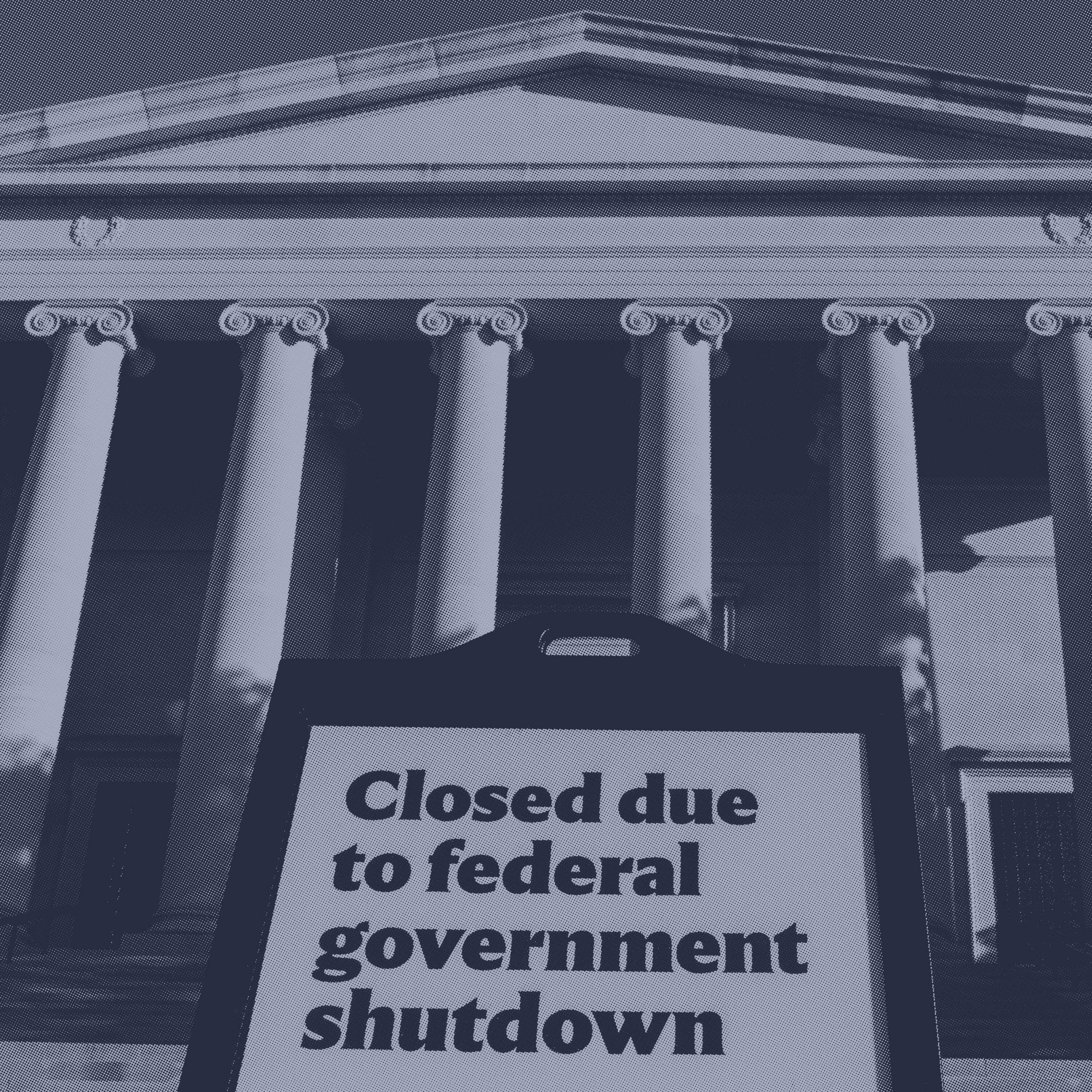
The NPR Politics Podcast
How One Consequence Of The Government Shutdown May Mess Up More Than You Think
00:15:16
Loading summary
Transcript48 lines
- [00:00]
Scott Carter
We all wonder about life's big questions. Why are we here? What are we to do? And how to make sense of it all. On Ye Gods with Scott Carter, I talk with politicos, priests, actors and atheists on how they wrestle with life's mysteries. Their stories will spark reflection, challenge assumptions, and maybe even bring you some clarity on your own journey. Listen to Ye Gods, part of the NPR Network, wherever you get your podcasts.
- [00:24]
Tamara Keith
Ever wanted to come to a live show of the NPR Politics Podcast? I'm Tamara Keith here, and this fall we're turning 10 years. Join us Thursday, October 30th for the NPR Politics Podcast Live Show. Celebrate with us in D.C. at NPR headquarters. You can find information on tickets and more@npr.org politicsliveshow.
- [00:48]
Maya Kel Abrams
Hi, this is Maya Kel Abrams in Los Angeles, California. I'm about to head out to the Sunset Strip to see the premiere of my dance installation piece on a billboard screen.
- [01:00]
Ashley Lopez
This episode was recorded at 1:06pm Eastern Time on Wednesday, October 15, 2025.
- [01:07]
Maya Kel Abrams
Things may have changed by the time you hear it, but I'll still be in complete disbelief that I get to watch my dancing on a 58 foot screen on Sunset Boulevard while I sit in traffic. Enjoy the show.
- [01:22]
Ashley Lopez
Oh, congratulations.
- [01:24]
Danielle Kurtzleben
Congratulations. That's so cool. I'm so jealous of anybody that can dance. Such a it is a talent that my body just can't do and that.
- [01:33]
Ashley Lopez
You can whip out in, like, seemingly any occasion. Hey there. It's the NPR Politics Podcast. I'm Ashley Lopez. I cover politics.
- [01:40]
Danielle Kurtzleben
I'm Danielle Kurtzleben. I cover the White House.
- [01:42]
Ashley Lopez
And NPR's chief economics correspondent Scott Horsley is with us today. Hi, Scott.
- [01:47]
Scott Horsley
Hi. Great to be with you all.
- [01:49]
Ashley Lopez
And Scott is joining us because we want to talk about the economy, specifically what what we know and what we don't about the country's economic health given the government shutdown. Scott, the federal government has to come up with a lot of economic data over the course of a year. Of course, because of their shutdown, a lot of the folks who do that work, crunch those numbers, release those reports, aren't doing that right now. So some of that data is missing. What so far hasn't been released?
- [02:16]
Scott Horsley
Yeah, pretty much all the data is missing these days. The first big report that we missed was was a week and a half ago when we were supposed to get the jobs report for the month of September. Usually that would have come out on the first Friday in October, but of course, the two days before that, the bls, the Bureau of Labor Statistics, which compiles that report, was sent packing. And so we did not get the September jobs report. Today is actually the day when we would have expected to get the September inflation report. That's also been postponed. However, we are going to get the inflation report a little late, but it is now scheduled to come out a week from this Friday. And that is sort of being carved out from all the other reports which are still on hold. The inflation report is a key ingredient in calculating the cost of living increase that Social Security recipients get next year. So rather than tick off all those millions of seniors who rely on Social Security and keep them waiting, the BLS has recalled a handful of people to put that report out. It's going to come out next Friday.
- [03:24]
Ashley Lopez
Yeah, I mean, that's one good example of how a data set is important to everyday lives. But are there other real world implications to this information that the government compiles?
- [03:35]
Scott Horsley
Oh, sure. I mean, lots of business people use these government reports to build their own strategic plans to figure out how they're going to invest money or how much money they're going to invest. A key group of policymakers that rely heavily on this information, of course, is the Federal Reserve. And this is a particularly dicey moment for the Federal Reserve because they're trying to decide which is in greater jeopardy, the job market or price stability. If they think, like the job market's really weak, then they'll want to cut interest rates and prop that up. If they think inflation is still a big threat, they might want to keep interest rates higher in order to tamp down inflation. And so they're kind of navigating without current information because they didn't get the jobs report for September. They are going to get the inflation report a little bit late. But, you know, they're kind of driving on a curvy highway with no headlights or GPS right now because they don't have that indication.
- [04:37]
Danielle Kurtzleben
It's really important to emphasize that curvy highway that Scott referenced, because we were already in a period of high uncertainty. I know that we've talked on this podcast before about the amount of uncertainty that tariffs cause. And Trump's chaotic tariff policy in and of itself, you know, made business owners think, I don't know how much I should buy. I don't know how many inputs I should buy. I don't know what my prices should be. That uncertainty was already hurting the economy. Now we have a government shutdown, which also dings the economy to some degree. And on top of that, we have the lack of data caused by the shutdown, which increases the uncertainty even more. And yes, to maybe torture. The analogy kind of dusts over your windshield while you're driving down that curvy highway and it makes things that much scarier.
- [05:29]
Ashley Lopez
Yeah.
- [05:30]
Scott Horsley
If the economy were just coasting along on a steady state and we missed a couple of reports, you could probably sort of say, well, this month is probably pretty similar to last month and would not worry too much about it. But because the economy is in this sort of period of flux and we're kind of at an inflection point, that's when you really want to have up to date data and the most complete and accurate numbers you can, so you can steer by it.
- [05:53]
Ashley Lopez
All of that has led to a situation where Trump hasn't exactly been clicking his heels when economic reports come out. But I do wonder, Danielle, if they are worried about this gap in data that has like, sort of broader effects on the economy.
- [06:03]
Danielle Kurtzleben
If they are, they're not saying it. I did ask the White House this week, are you worried about the lack of data, what happens as things grow more uncertain? And the White House's response was pretty predictable because it mirrors their responses to a lot of questions right now, which is to blame the Democrats. I got a statement from White House spokesman Kush Desai, and he said that businesses, families, policymakers, markets, even the Federal Reserve are flying blind right now because of the Democrats government shutdown. And yes, that is also mirrored by other people in the administration. Labor Secretary Lori Chavez Darimer, of course, she heads the department that houses the Bureau of Labor Statistics. She has also blamed Democrats. So that is what they're sticking with and they're not saying much more. But then again, of course, they aren't right, because we saw this earlier this year when the White House fired the head of labor statistics. This is not a White House that is very concerned with accurate data because they were so willing to hurt trust in the Bureau of Labor Statistics because they didn't like what was coming out of there.
- [07:14]
Scott Horsley
Yeah, I mean, this is a White House that, even before the government shutdown, was hostile to accurate statistics. They not only fired the commissioner of the Bureau of Labor Statistics, but they chipped away at the workforce there. So they were already shorthand even before they were all sent home. As one result of that has been that in compiling the inflation report, for example, the BLS has had to make do with fewer monthly price checks just because they don't have the people power to do as many price checks as they used to do. So, yeah, this is an administration that's been pretty hostile to the number crunchers even before the shutdown. And that goes with the Congressional Budget Office and the people that compile the GDP report. All the sort of truth tellers out there in the government.
- [08:00]
Scott Carter
Yeah.
- [08:01]
Ashley Lopez
I mean, Danielle, do you see a political consequence to this?
- [08:03]
Danielle Kurtzleben
Honestly, it's hard to see an immediate one if we're talking about your average Jane or Joe on the street buying their groceries and living their day to day life. I mean, the monthly jobs report isn't directly affecting the things you or I do as we're out living our daily lives. But to the degree that this causes more uncertainty in markets, you can see this eventually creating bigger and bigger problems and really mushrooming out to to problems that we can't even really foresee right now because we just haven't had this happen before. The this amount of lack of trust or potential lack of trust in the data and lack of clarity in the data.
- [08:48]
Ashley Lopez
Okay. Let's take a quick break. More in a moment.
- [08:51]
Short Wave Host
Rhinoplasty, the humble nose job. It's one of the most common facial plastic surgeries performed today, but it's been around for over 2,000 years. If you're wondering why on earth would doctors thousands of years ago need to reconstruct noses, that's a great question. And on NPR shortwave podcast, we dive into that answer. Listen in the NPR app or wherever you get your podcasts.
- [09:15]
Mike Danforth
Hey, it's Mike Danforth, executive producer of Wait, Wait, don't tell me. Here's a great way to get the perks of being an NPR producer without doing any of the work. Join NPR with npr. Plus, you get extended interviews, inside looks at your favorite shows and more, all while supporting NPR and never having to pull an all nighter. Or if you work on one of the new shows, an all morninger, sign up@plus.NPR.org when someone you love is diagnosed.
- [09:41]
Danielle Kurtzleben
With cancer or another serious illness, all you want to do is help. But where do you start? On the Life Kit podcast, we have tips for you. Your agenda should be I'm going to be with you and be totally present to whatever comes up. Listen in the NPR app or wherever you get your podcasts for different ways to offer support.
- [10:01]
Terry Gross
Hi, it's Terry Gross, host of FRESH AIR. Hey, take a break from the 24 hour news cycle with us and listen to long form interviews or with your favorite authors, actors, filmmakers, comedians and musicians, the people making the art that nourishes us and speaks to our times. So listen to the FRESH AIR podcast from NPR and why.
- [10:23]
Ashley Lopez
And we're back. And Daniel, I want to talk about the stock market. The president is sort of famous for looking at the markets as a sign of success, but markets don't like uncertainty. And obviously a lack of data causes uncertainty. How do those things mix here?
- [10:39]
Danielle Kurtzleben
It's exactly what you said, a lack of data causes uncertainty. Right. And in preparing for this conversation, I was actually looking back to a great episode that our colleagues at Planet Money did back in August where they were looking at two countries whose economic data was cooked, where the the government leaned on agencies to change the data. Now, to be clear, that is not the case here. We do not have evidence that the government has changed numbers right now. But the point is there was a lack of reliable data. And right now we are going to have a lack of data. And that is the point. And what happened in Greece, for example, in 2009 was Greece revealed, hey, our deficit is way higher than we said it was, sorry. And as a result, lending costs for Greece went way, way, way up. And other countries just did not want to lend to Greece. Now, the US Is an economy that borrows a lot. Should a lack of data persist or should data become untrustworthy in the future, should either of those things happen? You can see that potentially happening. Now, that's an extreme case and I'm looking several steps down the road. But the point is that a lack of data can really change massive decisions, whether it's business decisions or lending decisions.
- [12:05]
Scott Horsley
We saw a huge stock market reaction last week, just for example, when President Trump threatened to slap 100% tariffs on everything we import from China. And as he's done in the past, I think the president was a little bit chastened by the sharp sell off in the stock market. And so over the weekend, he kind of partially walked that back and tried to reassure investors, saying, we're going to work things out with China, not to worry. And in fact, the market did rebound part way on Monday, gave up some of those games on Tuesday. So investors are still a fickle group. But the other thing is the longer this shutdown drags on, the tougher it's going to be to catch up with some of the missing data. Just for example, this is the week when ordinarily the crew from the Bureau of Labor Statistics would be out there quizzing businesses to say, hey, how many people are on your payroll? And quizzing households to say how many people are working or out of work this week. This is the week when the October jobs numbers would be compiled and then released during the first week of November, that's not happening. Those numbers are not being compiled. And it may be that when the shutdown ends, whenever that might happen, you might have the BLS go back and try to sort of reconstruct that data. But it's also possible, I've seen some economic forecasters say the BLS will just skip over October and say, okay, we don't have a jobs tally for October, we're going to start fresh in November. And that would be remarkable. I mean, if you look back at the historical numbers, there aren't any blank spots. There aren't gaps like that in the historical record. But it's possible we could have a gap like that. The last time we had a shutdown that affected the BLS, back in 2013, it lasted a couple of weeks, just about as long as this one has gone on so far. And, and it delayed a lot of economic reports, but it didn't completely sidetrack any of them. All the data was eventually made up. But we're kind of in uncharted territory now where as this drags on longer, we don't know how the BLS is going to make it up. In 2018 and 19, when we had the longest shutdown ever, that didn't actually affect the BLS because the Labor Department had already been funded for that year. It wasn't a complete government shutdown the way this is. And so we don't really have a lot of experience with a shutdown that's this broad and this long lasting. And if it lasts a whole lot longer, it could really do some damage to the record keeping and the scorecard for the economy.
- [14:42]
Ashley Lopez
Yeah, Danielle, I want to talk about what this means for the Fed. I mean, we've talked a lot on this podcast about how President Trump doesn't have the highest opinion of Fed Chair Jerome Powell. If there's a world where Powell and the Fed can't make informed policy decisions, I wonder what that, I guess, sort of means for Trump too, and that relationship.
- [14:59]
Danielle Kurtzleben
I honestly don't know how much of a difference this makes in terms of the Fed further upsetting President Trump, because as we've been alluding to, Trump has already been upset at the Fed and Trump is going to Trump and he's going to come out. And if he is upset at Jerome Powell or if he wants to be upset at Jerome Powell, he will find a reason. And he has certainly found plenty of reasons thus far.
- [15:24]
Scott Horsley
Trump is going to Trump, but the Fed is also going to Fed. And even if we don't get, say, the jobs number before the next Fed meeting or if we do have to get by with some incomplete information, the Fed is not going to just say, oh, well, we're not going to vote on interest rates this month. We're going to just skip this meeting. They're going to meet as scheduled. They're going to take their vote and they're going to make the best decision they can on the basis of whatever information they have, keeping in mind that the Fed is always working with east incomplete information. They're always making the best analysis they can based on sort of a moving target that is the US Economy. So they are going to meet later this month. Right now, the markets expect that they will cut interest rates by another quarter percentage point, as they did in September. So in a way, Trump is actually getting what he wants from the Fed, which is lower interest rates, although he would like them to move much more aggressively and to cut much more deeply. But they are at least sort of moving directionally in the direction that the president wants. And frankly, if it weren't for Trump's tariffs, which are exacerbating inflation, the Fed would probably be in a position where they could be cutting interest rates more aggressively. So in a way, Trump is defeating his own desires by pushing these tariffs, which make it that much more difficult for the Fed to lower interest rates.
- [16:51]
Danielle Kurtzleben
Very interesting. All right.
- [16:52]
Ashley Lopez
Well, thank you so much, Scott, for joining us today.
- [16:55]
Scott Horsley
Always good to be with y'. All.
- [16:56]
Ashley Lopez
I'm Ashley Lopez. I cover politics.
- [16:59]
Danielle Kurtzleben
And I'm Danielle Kurtzleben. I cover the White House.
- [17:01]
Ashley Lopez
And thank you for listening to the NPR Politics podcast.
- [17:11]
Up First Host
A lot of short daily news podcasts focus on just one story. But right now you probably need more on. Up first from NPR, we bring you three of the world's top headlines every day in under 15 minutes. Because no one story can capture all that's happening in this big crazy world of ours on any given morning. Listen now to the upverse podcast from npr.
- [17:36]
Scott Carter
On the Throughline podcast from npr, what it takes to report on war.
- [17:41]
Scott Horsley
Great. Sleep deprivation. There's no privacy.
- [17:45]
Danielle Kurtzleben
You know, how far can I go with this?
- [17:47]
Scott Horsley
When journalists are silenced, the truth is going to be buried with them.
- [17:53]
Scott Carter
Listen to Throughline in the NPR app or wherever you get your podcasts.
- [18:01]
Short Wave Host
Short Wave thinks of science as an invisible force showing up in your everyday life, powering the food you eat, the medicine you use, the tech in your pocket. Science is approachable because it's already part of your life. Come explore these connections on the shortwave podcast from npr.