Loading summary
Transcript61 lines
- [00:01]
A
This message comes from Carvana Finance. And buy your next vehicle with Carvana. Shop a huge selection, customize terms to fit your budget, and buy completely online. No hassle, no pressure. Get the car. You love the easy way with Carvana.
- [00:19]
B
Hey there. It's the NPR Politics podcast. I'm Tamara Keith. I cover the White House.
- [00:23]
C
I'm Carrie Johnson. I cover the Justice Department.
- [00:26]
B
And NPR investigative correspondent Tom Dreisbach is with us. Hi, Tom.
- [00:30]
D
Hey, guys.
- [00:31]
B
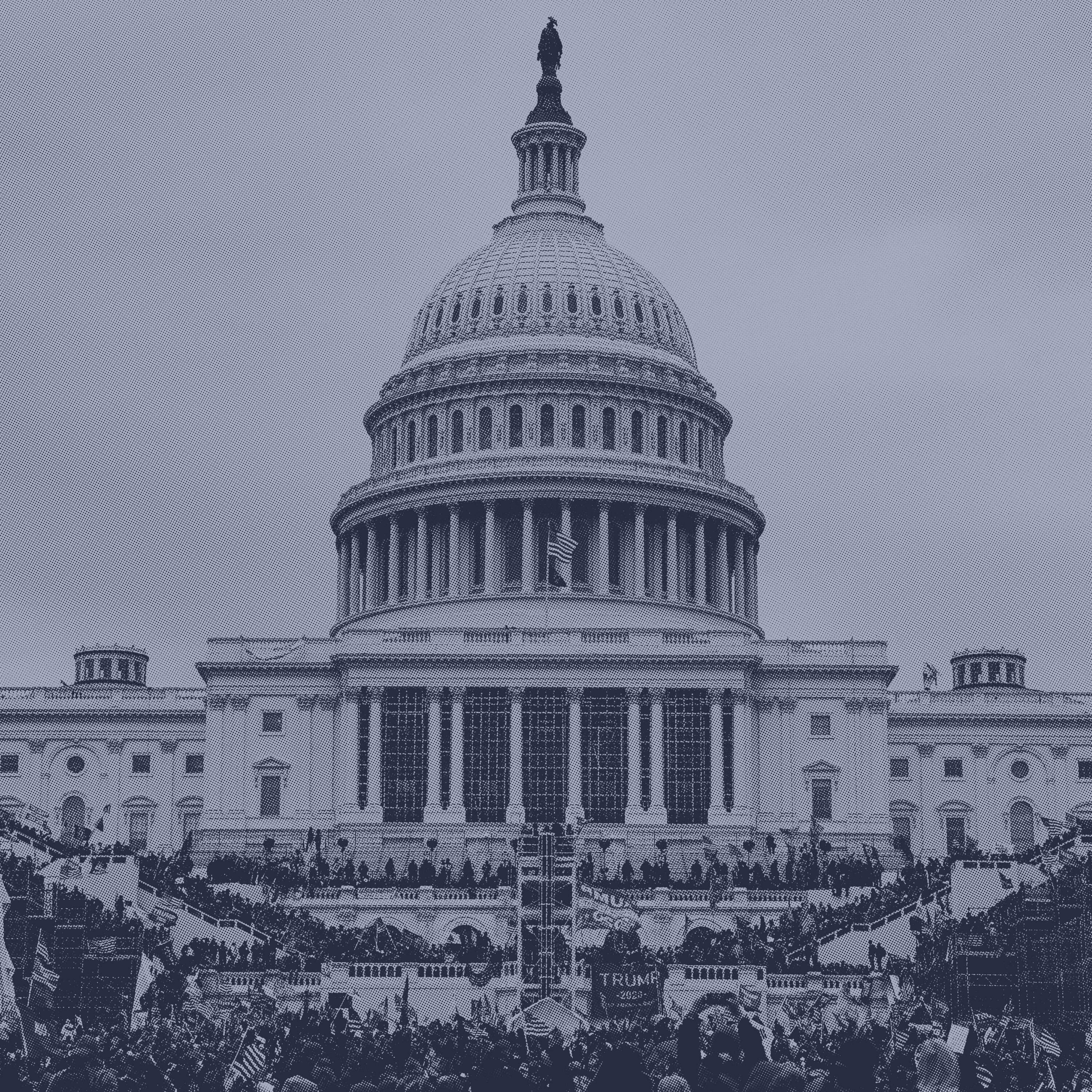
We're we are recording this at 10:20am on January 6, 2026. Today on the show, we're looking back at the January 6th insurrection at the U.S. capitol. It was five years ago today that a mob of supporters of President Donald Trump stormed the Capitol in an effort to delay or flat out overturn the certification of the 2020 presidential election, which Trump lost and Joe Biden won. Tom, you and your colleagues have been researching and docum what happened that day and in the aftermath and talking to those who took part. Briefly, if you can, remind us of how that day played out.
- [01:14]
D
Yeah, it was a big day. So as brief as I can, there's the political track of what was happening that day, this pressure campaign by President Trump to pressure Mike Pence, then the vice president, to overturn the election. Pence ultimately said that would be unconstitutional. He could not take action during the certification. And then there was the rally that took place. And even before Trump finished his speech, violence began. Rioters overwhelmed police lines at the Capitol. They ultimately broke into the building, stormed it, and violence ensued for several hours that ultimately injured around 140 police officers. Some of them have injuries that have lasted a lifetime. And after that, we've been kind of reckoning with that day ever since.
- [01:53]
B
Yeah. I want to talk about two main groups of people who are part of the story here. There are the alleged rioters and there are the law enforcement officers who responded to the riot, who were there to defend the Capitol that day. So let's start with the people who marched on the Capitol. Carrie. The Justice Department, primarily under the Biden administration, pursued legal action against those who stormed the Capitol and in response undertook what was described as one of the largest criminal investigations in U.S. history. Tell us about what the DOJ did in the aftermath of January 6th.
- [02:30]
C
I think it's important to point out that this investigation actually began under the Trump administration with the Trump U.S. attorney in Washington, D.C. in the hours following the riot at the Capitol. And they talked about at the time pursuing charges against anyone up the chain. Ultimately, when the inauguration occurred and President Joe Biden took Office, the Justice Department made bringing some of these people to justice a top priority. Within the U.S. attorney's office here in Washington, D.C. they created an entire section of lawyers to deal with the Capitol siege. And in fact, there were so many cases, more than 1,000 cases, that they had to enlist prosecutors, federal prosecutors from all over the country. There was just an enormous volume of investigation and prosecution to do. And the courts here in D.C. were also somewhat overwhelmed with all these cases. They had to ask senior judges to handle a lot of them because there was so much work to be done.
- [03:30]
B
And, Tom, you have followed all of these cases very closely. There are sort of different charges that people face. There were people who plotted and had conspiracy charges against them. And then there were people who maybe got caught up in the moment. And there were people who committed violence, people who didn't commit violence. Can you describe the range of people?
- [03:53]
D
Sure, yeah. It's so 1500 cases. So we're talking about so many people, more than a thousand of those pleaded guilty. Just to give people a sense of how these worked out, about 200 plus trials. Virtually all of those ended in convictions at trial. And there's really three buckets of charges that I kind of like to think of. The most serious are these seditious conspiracy cases. These were cases brought against leaders and members of the Proud Boys and the Oath Keepers, these right wing extremist groups that really planned, according to the evidence and later proven at trial, to overturn the election using force, oppose the government. They planned the storming of the Capitol. Somewhat related to those on the sort of severity spectrum were the people who committed violence against police officers. Some of them committed violence using weapons like tasers, stun guns, pepper spray, bear spray, stolen police batons. There are a variety of weapons. This is one of the most persistent myths about January 6th. They were unarmed. Some rioters did have guns. We know that for a fact. President Trump has claimed they did not. That is false, luckily, I should say, for the violence that day. None of the rioters used any firearms, but they did possess them. And then there's that category that you're referring to of people who are nonviolent. And there's kind of a spectrum even within that. But people who entered the Capitol were part of the breach, but did not personally assault police officers. And prosecutors brought those cases largely because they believed the entire force of the mob, it's believed to be more than 2,000 people, actually entered the Capitol. That that force of the mob was what gave the mob so much power to disrupt the certification of the election, that but for all of those people who were joining, all the people who planned and committed violence, that it would not have unfolded in such a chaotic way. So those are really the three kind of buckets.
- [05:38]
B
So, Kerry, let's fast forward to right after President Trump took office a second time in January of 2025. One of his first acts was to pardon nearly everyone associated with the insurrection. There are a few people who didn't get a pardon. Tell us about that.
- [05:57]
D
Yeah.
- [05:58]
C
More than a dozen people who faced seditious conspiracy charges were not pardoned. Instead, they were given what's called a commutation, which meant that President Trump shortened their sentence and they able to be released within really hours of that clemency action. These happen to be kind of senior leaders in the Proud Boys and the Oath Keepers. People like Enrique Tarrio, who was the founder of the Proud Boys, had been set to serve 22 years in federal prison until President Trump's clemency. Tarrio was actually not at the Capitol on January 6, 2021. He had gotten in trouble before then and had been banned from the city. So he watched the action from Baltimore. Even so, prosecutors, in course of his trial, introduced some evidence that he was in communication with other Proud Boys on the ground in and near the Capitol that day.
- [06:48]
D
Yeah, including a text message where he said, do not leave while they were storming the building.
- [06:52]
C
Also people like Stewart Rhodes, who was leading the Oath Keepers group. A federal judge here in D.C. called Stewart Rhodes in ongoing peril to the country. When he was sentenced, those guys were freed and many of them are still angling for a full pardon today. They want the president to do more for them than he's already done.
- [07:13]
D
Just to clarify, Enrique Tarrio did get a full pardon. Among those people, he's the one of the few seditious conspiracy related cases that he got a full pardon, unlike the other folks who got the commutation.
- [07:22]
B
Kerry, how unusual was it for Trump to issue all of these pardons?
- [07:26]
C
There have been mass pardons in American history. I'm thinking here of former President Jimmy Carter pardoning people who, for instance, fled the country rather than participate in the Vietnam War. But after such a record as has been built up by the Justice Department in these cases, people really view the January 6th pardons as something different, in part because it was a surprise even to members of the Republican Party and Trump's own administration. Incoming Vice President and then Vice President J. D. Vance had indicated he didn't expect the president to go this far. And I can Tell you, I was in touch with people inside the Justice Department who were leaving around the time of the transition who were also taken aback by how sweeping these actions by Trump were at the time.
- [08:18]
D
Yeah, I talked with Greg Rosen for our investigative project. He helped lead the Capitol siege section at the Department of Justice. He was since demoted by the Trump administration and essentially forced out. He left and resigned. But he said he Knew that the January 6th investigations were going to change when Trump took office. That was very clear. But he did think that the red line was people who assaulted police officers. They actually had ongoing cases on that. There were wanted posters out for additional people they were looking for. They were asking the public for help. And so even he was shocked when the announcement came that this was all over. No more January 6th investigations. Everyone gets off.
- [08:56]
B
I am thinking back to the beginning days of the second Trump administration and remember it being kind of shocking that he. He pardoned everyone that he, you know, he didn't just pardon those who happened to be in the Capitol that day. He also pardoned people who were convicted or pled guilty to assaulting police officers. It was just sort of a blanket pardon. I guess. This was keeping a campaign promise.
- [09:25]
D
Yeah. I mean, throughout the campaign, I really think of it as President Trump. And then at the time, you know, former and incoming President Trump was the January 6th candidate. I mean, he opened the very first rally of his campaign with a song he helped produce, produced by Cash Patel, now the FBI director of January 6th defendants in the D.C. jail singing the national anthem over the jailhouse phone, mixed with President Trump giving the Pledge of Allegiance. He is the January 6th candidate. He continually talked about how the January 6th defendants were hostages, in his view, or political prisoners, that he promised pardons. Now, he was always slightly. A little bit vague about how far he would go, which led to all these questions in that period after the election and before inauguration, where JD Vance, who was the incoming vice president, was asked on Fox News about this and said, well, of course we're not going to pardon the people who assaulted police officers. And maybe there's some gray area there that is not what happened. Of course, President Trump just gave mass pardons, and all of the most violent rioters got full pardons.
- [10:28]
B
And, Tom, you've interviewed a lot of these people, and you talked to at least one man who got a pardon who didn't want it.
- [10:37]
D
Yeah. This is a man named Jason Riddle. He's from New Hampshire. He's an interesting case. He is an outlier, we should say, by wanting to reject this Pardon? Let me just walk you through what happened, what he did on January 6. He was one of those nonviolent people. He stormed the Capitol building. He witnessed violence, but did not do it himself. But he was kind of, he says he kind of laughed. He was kind of sarcastic about it, like, didn't really care that he was seeing cops being assaulted. He went in the building, found a bottle of wine in a Capitol Hill office, poured himself a glass, and just watched people ransack the building. This is one of those things that maybe people don't understand. There was like a lot of, for lack of a better term, like partying. Like, he describes it as like frat bros ransacking the Capitol. People were smoking weed, they were getting drunk, they were getting high inside the Capitol and opening desk drawers and like gleefully destroying the building. So Jason Riddle does that. He steals a book from the building. He leaves, he sells the book for 40 bucks. He gets back home, he's arrested. It's pretty easy to find him. He actually talks about his story on the news and he, you know, as suggested by, you know, drinking in the Capitol, he had a drinking problem. And going through the legal process, he says the law forced sobriety on him and it kind of changed his whole life. He started just rethinking everything about his life. He started rethinking his support for Trump. He really a die hard Trump supporter. It was his identity. And he really had this turn when Trump was indicted in Manhattan on that hush money case involving former adult film star Stormy Daniels. And Trump called for protests in the city. And Jason Riddle said, we can't have another, like, mass protest for Trump. Like, Ashley Babbitt was killed on January 6 and police officers subsequently died. And he just kind of got off the Trump train at that point. And since then he said, you know, I did wrong on January 6th. And after the pardons, he said, I don't want the pardon. And here is what he told me about why that is.
- [12:35]
E
I can't accept. You know, this is cops have died. Trump is promoting criminal behavior. That was a criminal act. January 6th was a crime. And I think it's going to result in more death than eventually there's going to be another riot. Something's going to happen if you keep promoting these lies. That's what January 6th was. It was a result of his lies. So I don't want to go down that path. I'm just going to avoid that at all costs.
- [13:01]
D
Just to clarify what he's saying about the cops who died, this has been a Point of contention, there's one officer, Brian Sicknick, who was pepper sprayed on January 6th during the riot. He subsequently suffered multiple strokes, and he died on the following day, January 7, officially of natural causes, though his family blames the riot. And then there are two officers who took their own lives in the immediate aftermath of January 6th. And both of those deaths are considered in the line of duty. So that is the reference that he's making there to cops who have died.
- [13:28]
B
Tom, I'm curious what you've seen and heard from other rioters. Are they in the same boat as Jason Riddle, or, you know, what has their life been like for the past five years?
- [13:39]
D
Yeah, Jason Riddle is really the outlier. I would say there are maybe very few people who have decided to reject the pardon. I'd say a lot of people have just tried to move on. You don't hear from them very much. They're just trying to move on, make a new life for themselves, not talk about January 6th. And then there's kind of a class of people who remain very vocal January 6th activists, as we're talking. Like, I'm gonna go out to the National Mall a little bit later in like, an hour and a half here and see a rally of former January 6th defendants. They're going to march in honor of Ashley Babbitt, the woman who was shot and killed at the Capitol by police, and ask for restitution, or essentially reparations, which they believe they deserve for going through the prosecution effort for being prosecuted for their alleged and sometimes convicted actions and proven actions in court. And so there's this wide spectrum, and then we should say there's this group of people who have gone on to get into additional legal trouble. There's a pretty disturbing allegation against the former January 6th defendant from Florida. He allegedly molested young children, and according to prosecutors, he told one of them that he was going to get restitution from Trump for his January 6th case and that he would share it with them. Prosecutors believe this is essentially using that money as hush money to keep his victim quiet. There's other people who are facing charges of breaking and entering additional possession of child sexual abuse materials. There's a handful of these people who are just getting into more trouble with the law. This is something that actually former special counsel Jack Smith mentioned in his recent deposition to Congress, where he was asked about those cases, and he said he was not surprised that people who committed violence on January 6th or committed crimes that day would get off, would see themselves validated, and then go on to commit more crimes. And we should say, I asked the White House about those people who received pardons and have gone on to get into additional legal trouble. White House spokeswoman Abigail Jackson told me that we were spreading far left talking points and that President Trump was exercising his lawful authority to issue pardons for people they believe were over prosecuted by the Biden administration.
- [15:46]
B
Kerry. Tom mentioned the investigation by special Counsel Jack Smith. He was named during the Biden administration to this role. And he investigated whether Donald Trump himself should be charged in relation to January 6th. He testified before a House committee a few weeks ago. That deposition testimony was then released basically in the heart of the holidays. He said that he stood by the decision to pursue legal action against Trump.
- [16:17]
C
Yes, the deposition was released by House Republicans on New Year's Eve. I happened to be working and was reading it very closely. And Jack Smith basically said that he had the evidence to secure a conviction against Donald Trump in court. Of course, that case was dropped after Trump won the election because of a long standing Justice Department policy saying a sitting president cannot be prosecuted. Here's a little bit more about what Jack Smith had to say.
- [16:44]
E
Our investigation developed proof beyond a reasonable doubt that President Trump engaged in a criminal scheme to overturn the results of the 2020 election and to prevent the lawful transfer of power.
- [16:57]
C
And Smith also said the evidence in this case was going to be from prominent Republicans supporters of Donald Trump. He felt that that was a point worth making to House Republicans as well. He also said Trump was the most culpable and most responsible person in this alleged conspiracy. The crimes were committed for his benefit, that is Trump. And if not for Trump, what happened on January 6, 2021 would not have happened.
- [17:26]
B
And maybe we should just talk a little bit about some of the things that President Trump did very clearly in the lead up, including calling for the rally on January 6, then at the rally telling people to go to the Capitol. And he said he would go too. He did at one point say peacefully, and then once it was clear that something terrible was happening at the United States Capitol, he did nothing for a very, very, very long time. Hours.
- [17:58]
C
The basis of the criminal case against Trump that was later dropped was not just from January 6th itself, but in the weeks and months leading up to that action. Remember, in the course of the campaign, he told the proud boys to stand back and stand by during a presidential debate. And then, prosecutors say, he fostered this environment of deception, carrying out lies about election fraud and lost votes and basically stirring up an environment where his supporters would be persuaded to come to D.C. in connection with the certification of the election and basically take action, take violent action. And prosecutors in that case would have put together some evidence with respect to fake slates of electors in several swing states and some false paperwork around that so called plot. There were a number of elements of this criminal case, of course, that never made it to trial that Jack Smith emphasized in this deposition.
- [19:05]
D
It's really helpful to look at the timeline of how things unfolded exactly. On January 6, Trump took the stage to give his speech where he, you know, again promoted these conspiracy theories about the election and these fraud claims which were false, and continued to put the pressure on Mike Pence at noon. That was at noon, before he finished his speech, at 12:53. That's when the first violence occurred. So it was before he had wrapped up his speech. And he ended with a call for people to march to the Capitol. And then violence has begun. For another hour, police are battling rioters on the west front of the Capitol. Trump says nothing for that entire period. 2 o' clock rolls around, the chief of staff is talking about, hey, can we get President Trump to write a tweet? He does not write a tweet. The first breach of the Capitol building happens at 2:13pm When a proud boy named Dominic Pizzola uses a stolen police shield, bashes in a window into the Capitol. People start storming the building. 2:24pm, Trump tweets an attack on Vice President Pence, saying he didn't have the courage to do what should have been done. Only after that, at 2:38pm, Trump posted, Please support our Capitol Police and law enforcement. They are truly on the side of our country. Stay peaceful. Of course, at that point, things were far from peaceful and hadn't been peaceful for more than an hour and a half. And it's not until after 4 o' clock hours after the breach, that he actually tells his supporters to go home in a video message.
- [20:30]
B
And that did, in essence, work.
- [20:32]
D
It had an effect on a lot of the rioters. Now, some of them, you know, we're not paying attention to Twitter, but it was actually played at the riot. There's audio and video of this, of people playing it over a bullhorn and people say, hey, folks, listen to Trump. We gotta go home. You know, the conspiracy theories were so rife at that point. There's one woman on that tape who says, I don't believe that's Trump. I don't believe he would tell us to do that. We need to stay and keep fighting.
- [20:55]
B
Okay, we're gonna Take a quick break. And when we come back, the role of law enforcement in responding to the insurrection and where things stand five years later.
- [21:05]
F
Hello and happy New Year. It's Michelle Martin from MORNING Edition. Thank you to everyone who donated during our end of year fundraising campaign. 2025 dealt a big blow to NPR and local stations with the loss of federal funding for public media. But we are so heartened by the outpouring of support, and we will get through this together. Thank you for keeping NPR strong, moving into 2026 and beyond.
- [21:29]
G
What's in store for the music, TV and film industries for 2026? We don't know, but we're making some fun, bold predictions for the new year, plus setting some personal pop culture resolutions. Listen to Pop Culture Happy Hour in the NPR app or wherever you get your pod.
- [21:49]
H
NPR's podcast, Trump's Terms is your source for same day updates on big news about the Trump administration, short, focused episodes, one topic at a time, about five minutes or so. We carry out reporting from across all of NPR's coverage. So you are always getting the biggest, most urgent stories. Listen to Trump's Terms on the NPR app or wherever you get your podcasts.
- [22:12]
B
And we're back. Tom, let's talk about the law enforcement officers who responded to the insurrection. The Capitol has its own police force, but they weren't expecting the level of violence that took place.
- [22:23]
D
No, they were really, frankly, unprepared in a lot of ways for the violence they faced. And they weren't prepared in particular for the concerted attack that was subsequently proven in court, led by the proud boys. They were really leading the charge in many cases, first at Peace Circle, which was the site of the very first breach of January 6th. And then that proud boy, Dominic Puzzola, who broke into the building and really led to the worst of the Capitol breach. As people streamed into the building, they were just not prepared. And there's also another factor that wasn't exactly clear in the moment on January 6, which was the discovery of these pipe bombs which were placed the night before, we now know, at the headquarters of the Democratic National Committee, the Republican National Committee, as well as the discovery of a red truck driven by a Trump supporter filled with Molotov cocktails. Those were all discovered right around the same time of that first initial out. It totally stretched the Capitol Police way beyond their means. And so they were wondering, are we dealing with some sort of coordinated terrorist attack on Capitol Hill? We have this violence, these rioters, this demonstration that's completely out of hand. They were just not ready for what they faced. And as a result, around 140 police officers from the Capitol Police and other agencies suffered injuries.
- [23:35]
B
I imagine that there is still a lot of trauma associated with that day for the police officers who were just overpowered.
- [23:44]
D
Absolutely. Some of the most powerful testimony that I've read comes from officers who testified in court or provided victim impact statements in these trials where the people that assaulted them either pleaded guilty or they were convicted at trial. And these officers got to tell their side of the story to the judge to explain what they had gone through before the judge decided to impose a sentence. And one officer, he said that. That the injuries he suffered were so severe that it's gonna last him a lifetime. And he can no longer play with his kids, like bend down and play with them the way he used to be able to. He can't garden. Right. Do the things that you would de. Stress after a hard day on the job. I also talked with Michael Fanone. He was metropolitan police department, so D.C. police officer at the time. He was subjected to some of the most brutal violence on January 6. He was tased in the back of his neck twice and nearly beaten to death. And he said, yes, that day was traumatic. But even more traumatic for him has been this effort to whitewash what he went through, to tell him that what he saw, what he experienced did not really happen, was not really bad, that the people who did it were in fact, great patriots and not people who assaulted him. And he said that has been the lingering trauma from January 6th. The physical wounds have healed, but the mental wounds from that are still with him.
- [25:05]
B
And there is a memorial plaque that is supposed to be hung in the Capitol. It has been made. It is a plaque to honor the law enforcement and Capitol Police who defended the Capitol that day. And it hasn't been hung in the Capitol. It was supposed to have been put up, and it just hasn't. And I guess this is me trying to talk about that erasure, the effort to just forget that this ever happened.
- [25:37]
D
I think it's the symbolism of that decision by House Republicans not to place that plaque. I believe it's ultimately House Speaker Mike Johnson's decision whether to put it up, and he has opposed it. In a statement that House Speaker Mike Johnson put out yesterday, his office said the statute authorizing the plaque is not implementable and that there's some alternatives out there. They say those also do not complain, comply with the law. This is also going through litigation in federal court in D.C. from some officers who are saying they need to put this plaque up as required by law. And the Department of Justice echoes Johnson's view. They are trying to push back against that lawsuit as well and get it dismissed. Yeah. But regardless, it's the symbolism of not wanting to portray the police officers who defended the Capitol that day as heroes, at least by some in the Republican Party, no longer view them as heroes, which is a sea change from where we were five years ago. I mean, I would encourage people to actually watch President Trump's speech on January 7, 2021, the day after, where he said they had defiled the seat of democracy and must pay. Obviously, that message is different. Senator Ted Cruz called the rioters domestic terrorists. He called January 6 a terrorist attack and then had to walk that back under tough questioning from Tucker Carlson back then at Fox News. And so there's been this attempt to rewrite the narrative, rewrite the history of January 6th to not. Not be an act of mass political violence and an attack on democracy, but, as Trump puts it, a day of love. And whether other Republicans genuinely believe that or they just want to not get crosswise with the president, it's not always clear. But that is where we are today, that the president is in control of this party, and his message is January 6th was a day of love.
- [27:26]
B
Kerry, we've alluded to this, but some of the people who. Who prominently have worked to erase this history are now at home in the Trump administration. They are in the Department of Justice, the attorney in charge of pardons, for instance.
- [27:44]
C
Yeah. First off, in this new Trump administration, the Justice Department actually fired some of the people who prosecuted January 6th rioters or demoted them. And then Ed Martin, who had been a Republican Party activist with no experience as a Prosecutor, became the U.S. attorney here in Washington, D.C. for a while, Ed Martin did not have the votes, even within the Republican Party, to be confirmed in the Senate for that job permanently. So instead of getting out of the government, President Trump made him the pardon attorney. And he's also the weaponization czar. This new role inside the Justice Department, where he seems to be roaming around the country advocating for people who believe they were persecuted by the Biden Justice Department. That argument is going over very well with President Trump, who believes he was persecuted by the Biden Justice Department. And as a result, any number of people who had been prosecuted in the previous administration, not just January 6th, rioters, are getting clemency now.
- [28:48]
D
And we should say one of the people now working with Ed Martin at this weaponization working group is a man named Jared Wise. He was a former FBI agent. And he was actually in the crowd on January 6th. He is on tape calling the police Nazis and Gestapo. And as rioters were assaulting police, he yelled, kill him. Kill him. And he actually went on trial and was on trial for his January 6 case when Inauguration 2025 happened. The case was dismissed. He had pleaded not guilty. And subsequent to that, he was hired at the Trump Justice Department. They say he is a valued colleague for them.
- [29:20]
C
And Tam, you've been listening to Republicans and noticing how they've changed the way they talk about the insurrection. What are you hearing there?
- [29:28]
B
You know, I think that a lot of Republicans just don't want to talk about, about it. And it's almost like, oh, gosh, you're bringing that up again. Oh, that was so long ago. And I think that for President Trump, it has become a litmus test. The 2020 election, as far as he is concerned, his public statements was stolen and he cannot and has never been able to admit that he lost. His inability to admit that he lost led to what happened on January 6th. And he loves anyone who loves him. And the people who stormed The Capitol on January 6 showed their love of him. And he talked about it in that video on the day, telling them to go home. And that is what has persisted. He has forgotten all of the things he said about it being a bad day. And, and the pardons are something that he was very proud to do. He pardoned everyone. Happily. He doesn't want to entertain questions about people going on to commit other crimes. And he has put forward the view that these people were over prosecuted, that they were not treated fairly by the justice system. And this gets back a bit to what Tom was talking about, that Trump sees all of his legal problems when he was out of office and not yet having won again. He sees that all is a great injustice to him and has created a sympathy in him for anyone who he perceives or who someone can convince him has faced similar injustice. But Tom, what do you make of the efforts to rewrite history here?
- [31:13]
D
Well, it began almost on day one with the conspiracy theories that we saw that night. There's this clip of tape that is a C SPAN caller that night who was talking, talking about, oh, I think I saw pictures and they must be antifa. And then those conspiracy theories were really stoked by the president's allies over the four years when he was not in office. And that helped lead to this counter narrative that he has really seized. Now, a lot of these conspiracy theories, counternarratives, none of them quite make Sense together. Like it was really antifa or it was the quote, unquote, deep state, false flag, false flag, Fed direction. None of that evidence has come forward since the Trump administration is, you know, back in power. They're not producing any fed direction evidence. And so they've really pushed that counter narrative. And so there's kind of this miasma of misinformation out there. And then at the same time, there is the record established across 1500 plus cases. That is evidence in court. And when I talk to the federal prosecutors and the cops, they say, regardless of what's said in the political realm, just go back to those court records. It's there, but people just have to wanna look for.
- [32:19]
B
And you have been looking for it, and you have compiled just a massive amount of information all in one place. You and your colleagues at the NPR investigations team have created an archive of documents, videos, court testimony. All of this related to the insurrection. Some of this information has gotten harder to access since you started working on this project. Like it was easier. It was more readily available during the Biden administration and has since been disappearing.
- [32:50]
C
Why?
- [32:51]
D
Well, after Trump came into office in 2025, his Department of Justice purged their government database of all of the January 6 cases, which was a big catalog of all of the charges, the outcomes, what had happened in those cases. They also took down all these wanted posters for wanted January 6th defendants. They pulled down press releases that had sort of case outcomes and various statistics that were helpful for us in the press. But luckily, we at NPR had our own database that we'd been developing really since the very begin. And at that point, we realized it's time to double down on this work because the government is not going to preserve this evidence. We need to. So we did a couple things. One was we made sure we kept our database up to date with all of the pardons, all the commutations. We then, along with a media coalition, went to court to make sure to get access to video evidence presented in those court cases. My colleagues and I shout out especially Barbara Van Werkel at the NPR investigations team, our star researcher. We watched literally thousands of January 6th videos that were presented. Court cataloged them. We've made hundreds of them available on our website, npr.org j6archive so people can look at this database of charges. They can see the video evidence for themselves. They can see a timeline of what happened, because the government under this administration, and probably, you know, we should never really trust the government to get the facts and the history exactly right. So it's up to us in the press, in the public to make sure that we preserve this history and make sure people can see the facts for themselves.
- [34:20]
B
Yes. And Tom Dreisbach, thank you so much for your reporting.
- [34:23]
D
Oh, thank you, Tam.
- [34:24]
B
And that'll do it for today. We have a link to NPR's archive of content of the January 6th insurrection in our show notes, as well as links to listen to Tom's investigation. It is two parts, 40 minutes each and worth every second of your time. I'm Tamara Keith. I cover the White House.
- [34:42]
C
I'm Carrie Johnson. I cover the Justice Department.
- [34:44]
B
And thank you for listening to the NPR Politics podcast.