Loading summary
Transcript57 lines
- [00:00]
A
This message comes from NPR sponsor CFP certified financial planner professionals committed to acting in their clients best interests. Learn more@letsmakeaplan.org.
- [00:15]
B
Hey there. It's the NPR Politics Podcast. I'm Tamara Keith. I cover politics.
- [00:20]
C
I'm Danielle Kurtzleben. I cover the White House.
- [00:22]
B
And NPR's Rob Schmitz is with us. Hey, Rob.
- [00:25]
D
Hey, guys.
- [00:26]
B
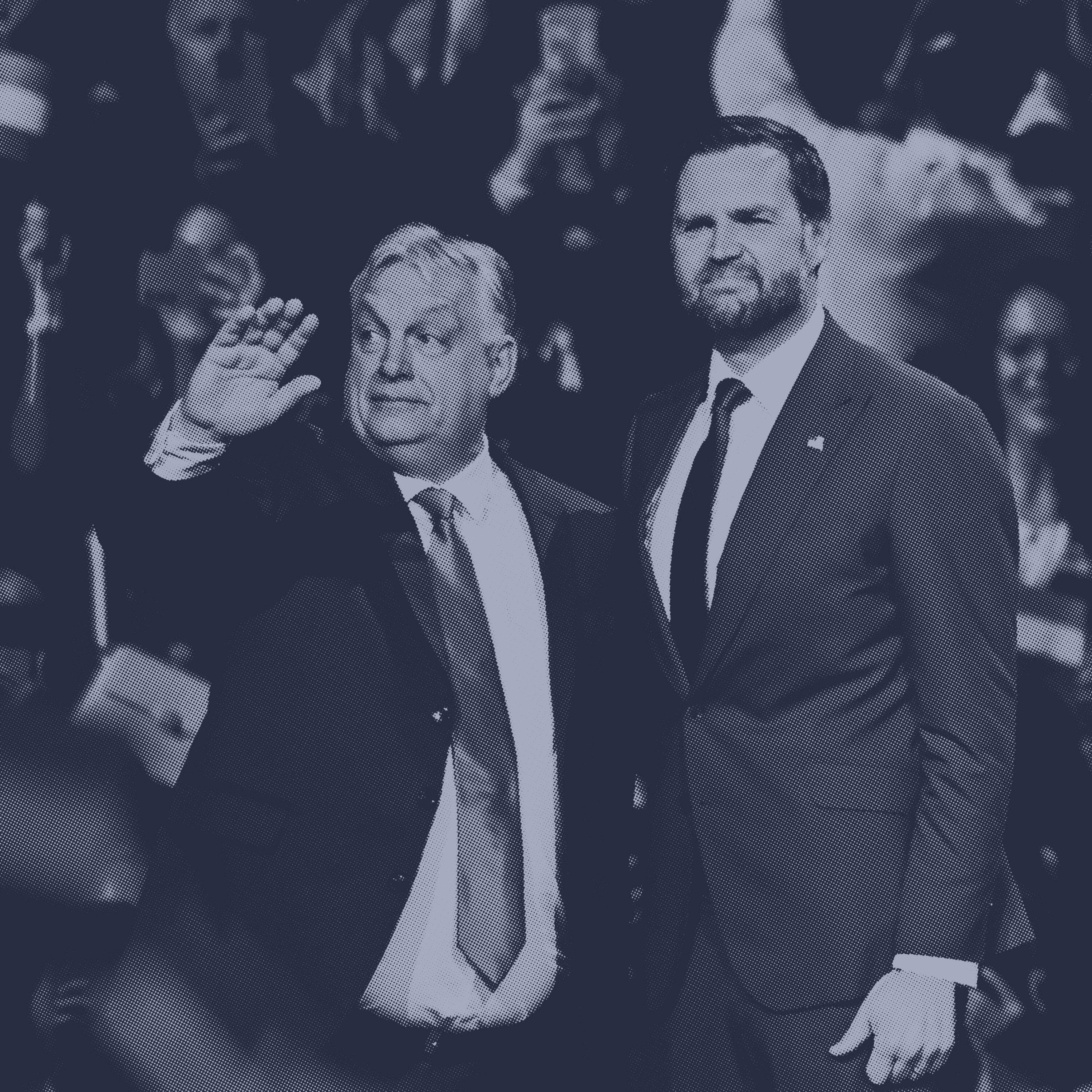
So today on the show, Vice President J.D. vance is just back from a campaign rally to drum up support ahead of upcoming elections. Except the elections are not in the United States. He was in Hungary attending events to support the country's prime minister, Viktor Orban, as he seeks re election this month. Rob, I want to start with you because you're in Budapest right now. Tell us about Orban.
- [00:53]
D
Viktor Orban is Europe's longest running prime minister. He's been in power for more than 15 years straight after serving for other years as prime minister in the late 90s. He is famous for his populist, nationalist, far right politics. He's friends with Vladimir Putin. He is a staunch enemy of the EU and he rails against the European Union on an almost daily basis. And he is also known for another thing, and that's his corruption. He has well documented cases of corruption of giving money to his friends and family, doling out government contracts to them. He's also famous for chipping away at Hungary's democratic institutions, including the judiciary. He has consolidated the media and he's attacked civil society and also universities inside of Hungary.
- [01:46]
B
Let's talk a little bit more about that corruption you mentioned, Rob. What does that look like?
- [01:52]
D
Well, despite the fact that the media in Hungary has been mostly consolidated, there amazingly remains some independent journalists in this country that are continuing to do some extremely good work. And we're seeing more and more stories about Orban's connections to not only his corruption side of Hungary, and that is almost like a familial network of oligarchs that he's helped over his many years as prime minister, but also his government's relationship with Russia. We've seen in recent weeks leading up to this election leaked audio of conversations between Orban's foreign minister and his counterpart in Russia, Sergey Lavrov, where Orban's foreign minister was promising to help Lavrov. He was basically promising to give him internal documents from the EU so that they could be prepared when they go into negotiations both with the US and the EU over the war in Ukraine.
- [02:55]
B
And yet he's been in office for a very long time.
- [02:57]
D
I mean, his base is very supportive of him. And I think it's, you know, it's his stance on both his anti Europe stance, I would say anti liberal politics stance, as well as his stance on immigration. He's a staunch anti immigration platform, and he's always had that. And in many ways, he's become a leader of the far right throughout Europe in his years as Prime Minister of Hungary.
- [03:25]
B
So he, as we said, faces reelection, and it isn't a slam dunk this time.
- [03:30]
D
It's not.
- [03:31]
B
There seems to be a real threat that he could lose.
- [03:34]
D
Yeah, the economy in Hungary has slipped over the past four or five years. In his last term in office. A lot of that actually has to do with the fact that the European Union has cut billions of dollars worth of funding that happened in 2022. And that is because of all of the. The assault he's basically had on the country's democratic institutions. So the economy's not doing well. And also there has risen a political figure named Peter Magyar, and he is a younger, also a conservative politician from Orban's very Fides party. He was originally a Fidesz politician and now runs his own party called tisa. And he is ahead in the polls. And this is a big threat to Orban's longtime rule.
- [04:21]
B
Wow.
- [04:22]
C
One of the sort of fascinating things about all of this that I can see from my very US stance is a phrase you often see political scientists say about Hungary, is that its style of rule right now under Orban is competitive authoritarianism. The idea being that you have an authoritarian leader and yet you still have these elections. An authoritarian leader who still has some chance of being voted out. The idea, and I'm gonna say this very loosely, is that, you know, the. The leader, once he's in power, co opts things like the media, the courts, tries to make elections less fair. And so that's the idea of what Orban has done. The question is, of course, whether he can be voted out.
- [05:06]
D
Yeah, it's a big question. Right. I mean, he's behind in the polls, but this is a man who has always defied the odds. He's always managed to survive. It looks like he won't this time, but there's always a chance that he will. And I think if that happens, or should this happen, I think there's a high probability of unrest, at least in the capital city of Budapest where I sit.
- [05:31]
B
And given all of this, it is both amazing and not amazing at all that Vice President J.D. vance attended a rally for Viktor Orban. What did he say? In support of the Prime Minister.
- [05:46]
D
Yeah. So I went to both the press conference that was held in a castle on a hillside that overlooks the Danube with both Orban and Vance, and then I followed them to a Pro Fides, which is Orban's party, a Pro Fides rally. Vance's message was similar at both venues. He blamed the European Union for what he called interfering in Hungary's elections. And his rationale was that because the EU is freezing funding to Hungary because of Hungary's backsliding on democratic principles, the EU was actually interfering in these elections. So he was making that reasoning. It was really interesting. And then he got President Trump on the phone, he spoke to this massive rally. People were very excited about that. And he also had this message of national sovereignty, that Hungary, because it fights against the eu, it can't let outsiders influence what happens inside of its own borders, even though, ironically, Vance was there to do just that. Right. So it was a very interesting message, and it sort of went all over the place. There was one moment when a Hungarian journalist, she asked a question in Hungarian, and then she switched to English and asked Vice President Vance something to the fact of that Ukraine was interfering in the 2024 US election. And as Orban answered the first part of the question, Vice President Vance looked a little uncomfortable. And then he started taking notes. And his answer was confirming that, yes, Ukrainian intelligence services actually did have their thumb on the scale of the electoral process in the United States, which was something that he did not explain or give any evidence of afterwards.
- [07:36]
C
There was one moment in that van speech that really stood out to me, where earlier on in the speech, he said, we want you to make a decision about your future with no outside forces pressuring you or telling you what to do. I'm not telling you exactly who to vote for. And then later in the speech, he ended it with, stand with Viktor Orban, everyone.
- [07:54]
B
I think we should explain why there might be a wink about this, which is that traditionally, American presidents have avoided anything that would even remotely appear like they were trying to interfere in another country's electoral process.
- [08:11]
C
Right.
- [08:12]
B
And that is just not the case in the Trump administration, where President Trump, you know, proudly posts his endorsements on social media of foreign leaders, and then when they come to visit after winning, he boasts about how much he helped them and how they should be so grateful and maybe, maybe he should even, even sell his endorsement. He joked about at a recent meeting of Latin American leaders.
- [08:38]
C
But, Daniel, you're right. And also, the Trump administration really seems to be trying to have it both ways here. Again, to very loudly, very forcefully, like you're saying, advocate for Viktor Orban here. And yet the, the sort of official line remains, no, we're not meddling. There was an interview that Andrew Puzder, who is the ambassador to the eu, he did this interview with af, that's an international wire service, where he said, no, the vice president and Trump, they're not meddling in this Hungarian election. Like they're really trying to say, no, no, no, no, no. Vance was just there to voice some support like that. But it's not election meddling, however you want to define that.
- [09:20]
B
So Danielle, why is the White House so vocally backing Viktor Orban to the point of sending the vice president there and then putting Donald Trump on the phone at a rally?
- [09:32]
C
I think there are a few reasons you is that Trump likes Orban. They are very like minded guys. They have very similar worldviews. I mean, Viktor Orban embraced Trump from the start. Viktor Orban supported Trump way back in 2016. And we all know Trump likes someone who likes him. And this is a guy who has liked him for a very long time. Trump also just really likes strong men, authoritarians. He has expressed, if not always love or embracing of. He has always expressed respect for strong men, including, you know, Vladimir Putin, Kim Jong Un, any number of these strong men from around the world.
- [10:12]
B
He admires their ability to have a press corps that is compliant. He admires their ability to get the people to do what they want. He says this openly?
- [10:21]
C
Absolutely, yes. Like at this point, after Trump has alienated or at least upset a lot of leaders in Europe, including some on the right with his threats to take over or invade Greenland with tariffs, with all sorts of things. Viktor Orban, very well, you could make the argument that he is Trump's strongest ally in Europe at this point and that Trump doesn't want to lose that. The one other thing I would add is that at the end of last year, 2025, the White House put out this document of its national security strategy. And the White House said that it wants what it called patriotic parties to remain in power in Europe and also for European countries to disincentivize or just keep out a lot of migration. Because, and I'm going to read this to you, it is far from obvious whether certain European countries will have economies and military strong enough to remain reliable allies. And that is because should present trends continue, they wrote, the continent will be unrecognizable in 20 years or less. Though the fear apparently is that too much immigration, too much economic Integration will make Europe unrecognizable and may change Europe too much. And therefore we think that's a national security risk.
- [11:40]
B
But Rob, from where you sit, what is your sense of why the Trump administration, which is, you know, America first foreign policy, why they would get involved?
- [11:50]
D
Well, I think for the Trump administration, you know, Orban is not only the closest to Trump in Europe, but he's also a leader that, you know, because he's been such a long serving prime minister, he's become probably the biggest symbol of the far right inside of Europe. In many ways he's a leader of the populist far right in Europe. And as we've seen, you know, I'm usually in Germany, that's where I live. I'm in Berlin. You know, we've seen at least in Germany as well as in the Netherlands and many other countries throughout Europe, we've seen the, in recent years the rise of the far right in Germany. We have the alternative for Deutschland, which is the AFD that is also a very nationalist far right party that is now polling in second place to the party of Chancellor Friedrich Meowz. So we're seeing this all over the continent. If Orban loses this election, you suddenly lose a very influential leader with international connections of that movement. And so I think for the Trump administration it's really important to do whatever they can to try and keep Orban in power.
- [13:02]
B
All right. We are going to take a quick break and we will have more in a moment.
- [13:07]
A
This message comes from Betterment. You know, when you sell a stock or any investing asset and start to feel the dread of getting a surprise tax bill, Betterment's tax impact preview tool shows you the estimated tax impact of the sale so you can make informed tax smart investing decisions. Get started today@betterment.com investing involves risk performance, not guaranteed. Betterment is not a tax advisor nor should any information herein be considered tax advice. Please consult a qualified tax professional. This message comes from NPR sponsor CFP certified financial planner professionals committed to acting in their clients best interests.
- [13:45]
E
Learn more@letsmakeaplan.org this message comes from NPR sponsor Carvana. Your time is worth more than a waiting game. Carvana gives you a transparent offer for your car in minutes and picks it up from your door. Sell your car today@carvana.com Pickup fees may apply.
- [14:05]
B
And we're back. And Rob Schmitz, I wanna ask you how are Hungarians reacting to Vice President J.D. vance coming and campaigning for Viktor Orban?
- [14:16]
D
Yeah, I was outside the rally where Vance spoke And obviously, many people there were very excited about this, even more excited that. That President Trump joined along over the phone. But the next day, I went about 60 miles or so east of Budapest in a much poorer area, which is mostly Orban country. This is Fidesz country, the party that Orban represents. And I was in a small town. I spoke to a lot of Fidesz voters. And overall, I mean, people were watching it. They were watching it on television. It was running all on the state networks here in Hungary, and they were very excited about it. I mean, I think to a certain extent, I think folks would have been much more excited had President Trump himself come to Hungary to support Orban. But I didn't get the sense that it was that watered down a lot of their enthusiasm. One man told me that he was just so excited about Vice President Vance. He said, oh, this will definitely be the next president, and he's so amazing, and. And he said so many great things, and he's supporting our Viktor Orban, and thank God. So there was a lot of enthusiasm about it. But it's hard to tell whether or not these are folks that these were definitely not swing voters. They were going to vote Fidesz, and for Viktor Orban anyway. So it's hard to know whether, I guess, this very large category of swing voters, if this type of visit was enough to swing them back to Fidesz, away from this more, I guess, not really more liberal, but a different candidate. Peter Magyar.
- [15:56]
B
You know, one thing we've heard is that Hungary is something of a model for the American conservative movement. I mean, Viktor Orban has spoken to cpac, the Conservative Political Action Conference. CPAC had a conference in Budapest. What do you make of that characterization?
- [16:14]
D
I think that's a tricky one, because I think that for MEGA Republicans and for all of the infrastructure that makes up that network of people, including think tanks and such, I think that Hungary is a place to look at for them if they're interested in consolidating the media, if they're interested in tweaking the judiciary, if they're interested in tweaking electoral policies inside the United States, because these are all things that Viktor Orban has had success in doing. But there's also this caricature, I think, of Hungary among this group, among the MAGA group, that here we have a land where there isn't any immigration, where it's mostly racially homogenous, where everyone is Christian, et cetera, et cetera, and where you don't have to deal with LGBTQ politics or ideology, none of that is close to the truth, because here in Budapest, this is. You know, this city has one of the biggest pride parades in Europe every year. It has a very large and open gay community and LGBTQ community. There are immigrants here. There are different ethnicities that come from Hungary, like the Roma. You know, it's a more diverse country, I think, than what maybe a lot of MAGA Republicans think it is.
- [17:38]
C
Yeah. I mean, what I would add is our colleague Mara Liasson did some really great reporting on this way back in 2022 when it was first announced that CPAC was going to have a conference in Hungary. And the question was, like, why on earth that of all places? And you heard from conservative elites and people who consider themselves thought leaders at the time that, yeah, there are things that the US Might want to consider here. There's something that this conservative writer who's really popular on his name is Rod Dreher, told Mara, which is, we are living right now through an ongoing societal catastrophe with gender confusion and transgenderism. Viktor Orban wants to save his nation from this ideological toxin and does not hesitate to use the power of the state to do so, even if it might violate the spirit of liberalism. That is a heck of a thing to say, but it really shows that among a certain subset of maga, that it may not be a big one, but a certain subset is willing to say openly, look over at Hungary. They are doing authoritarian, illiberal things, but there is a greater good there. To me, then, the question is, and I think the question has been for years, for a lot of us, how, how many people in the MAGA movement are committed to that idea?
- [18:55]
B
Well, certainly President Trump, through executive actions, has tried to enact a lot of it, seeking to constrain universities, seeking to limit activities for transgender athletes. You know, there's a long, long list of things Trump has done or tried to do in the United States that certainly mirror what Orban has Has tried to do in Hungary.
- [19:21]
C
Right.
- [19:23]
B
Danielle, this is a really tough time domestically in the US There is a war. Gas prices are up. The cost of everything is up. Is there a chance that focusing on things elsewhere hurts Vice President Vance or President Trump standing here?
- [19:41]
C
The short version is, I think, no, not really. I mean, you and I both know that Trump has a hard floor of support. I don't think, you know, sending especially the vice president, not even the president, to Hungary to stump for the leader there is going to send anybody's approval ratings shattering that floor. I do think, you know, you're right, this could add to the perception, though, that this administration does not have its eye on the ball, that this administration is thinking about too many other things, whether it's Hungary or a ballroom, that. That are not the price of gas, that are not the Strait of Hormuz. But again, like I say, that that very well may be on the margin.
- [20:27]
B
Yeah. I mean, there is sort of this principle that foreign policy almost never helps a president, but it can hurt them. This is at the level where I'm not sure that people are necessarily paying attention.
- [20:39]
C
I think that's very fair. This is not a conflict where there's no boots on the ground and hungry. This is sending the vice president to do some speeches. I don't think this is going to affect anything in that sense.
- [20:49]
B
So, Danielle, the vice president has another new job also, and he was talking about it on the tarmac in Hungary. He is now going to be leading the negotiations to try to bring an end to the war in Iran. What do we know about that?
- [21:06]
C
Well, we know that Vice President Vance will be going to Pakistan. The talks that are supposed to happen will take place on Saturday morning in Pakistan. And Vance will be going with the Trump administration's special envoy, Steve Witkoff, also Jared Kushner, to do those in person meetings and try to move things forward. I mean, as Press Secretary Caroline Levitt said yesterday, the idea is that with this ceasefire, there's now an opening for some sort of a diplomatic solution. But there could be some distance to go because it certainly seems as if the two countries have had differing ideas about what the ceasefire even was, what the terms of it were. So I think we'll all be very curious what comes of that.
- [21:53]
B
Yeah, the ceasefire is on very shaky ground. President Trump recently joked that if J.D. vance does a good job, then he will take all the credit. And if he does a bad job, then Trump will just blame him, which. Welcome to the vice presidency, Mr. Vice President.
- [22:11]
C
Right. Yeah. I mean, to bring this to the cold electoral politics of things, should Vance want to run for the presidency in 2028, then, yeah, being able to say, look, I helped broker peace here in this, albeit in a war that the US really started, then, yeah, he could have that as a feather in his. But we'll see what happens.
- [22:34]
B
All right, Rob Schmitz, we know you have a lot going on, so thank you so much for joining us and we'll let you get back to it.
- [22:40]
D
Thanks for having me. Appreciate it.
- [22:42]
B
And tomorrow on the pod, our weekly roundup, so be sure to hit the follow button wherever you get your podcasts so you don't miss a beat. I'm Tamara Keith. I cover politics.
- [22:50]
C
And I'm Danielle Kurtzleben. I cover the White House.
- [22:52]
B
And thank you for listening to the NPR Politics podcast.
- [23:04]
A
This message comes from NPR sponsor Certified Financial Planners. Asking the right questions can greatly impact your future, especially when it comes to your finances. So if you're looking for a financial advisor you can trust, certified financial planner professionals are committed to acting in your best interest. That's why it's gotta be a CFP. Find your CFP professional@letsmakeplan.org support for NPR
- [23:28]
E
and the following message come from Washington Wise decisions made in Washington can affect your portfolio every day. Washington Wise from Charles Schwab is an original podcast that unpacks the stories, making news and how they may affect your finances and portfolio. Host Mike Townsend and his guests explore policy initiatives for retirement, savings, taxes, trade and more. Download the latest episode and follow@schwab.com WashingtonWise or wherever you listen.
- [23:56]
F
This is Ira Glass on this American Life. We tell stories about when things change. Like for this guy David, whose entire life took a sharp, unexpected and very unpleasant turn. And it did take me a while to realize it's basically because the monkey pressed the button. That's right, because the monkey pressed the button. Surprising stories every week. Wherever you get your podcasts.