Loading summary
Transcript58 lines
- [00:00]
Sponsor/Advertisement Voice
This message comes from Mint mobile. Starting at $15 a month, make the switch@mintmobile.com Switch $45 upfront payment for 3 months. 5 gigabyte plan equivalent to $15 a month taxes and fees. Extra first 3 months only. See Terms.
- [00:17]
Miles Parks
Hi, this is Brian in Madison, Wisconsin. I'm sitting in the hospital room with.
- [00:21]
Scott Horsley
My 44 hour old son while his.
- [00:23]
Miles Parks
Mom gets some well earned rest in between overnight feedings. This podcast was recorded at 1:08pm on January 13, 2026. Things may have changed by the time you hear this, but my wife and.
- [00:37]
Scott Horsley
I will be tired. Okay, here's the show.
- [00:46]
Deepa Shivaram
Oh, my God. A real backseat baby.
- [00:48]
Scott Horsley
I know.
- [00:48]
Miles Parks
That is awesome. I feel like I was gonna say I remember it like it was yesterday, but actually I don't. Like, I have totally blocked that period out completely.
- [00:55]
Deepa Shivaram
Oh, well, I love we have a timestamp for that. Like that, that little coup in the background.
- [01:00]
Miles Parks
I know. That was awesome.
- [01:01]
Deepa Shivaram
How perfect was that?
- [01:02]
Miles Parks
Hey there. It's the NPR Politics podcast. I'm Miles Parks. I cover voting.
- [01:06]
Deepa Shivaram
I'm Deepa Shivaram. I cover the White House.
- [01:08]
Miles Parks
And NPR's chief economics correspondent, Scott Horsley is also with us. Hi, Scott.
- [01:12]
Scott Horsley
Good to be with y'. All.
- [01:13]
Miles Parks
Great to have you.
- [01:13]
Scott Horsley
And the little one.
- [01:14]
Miles Parks
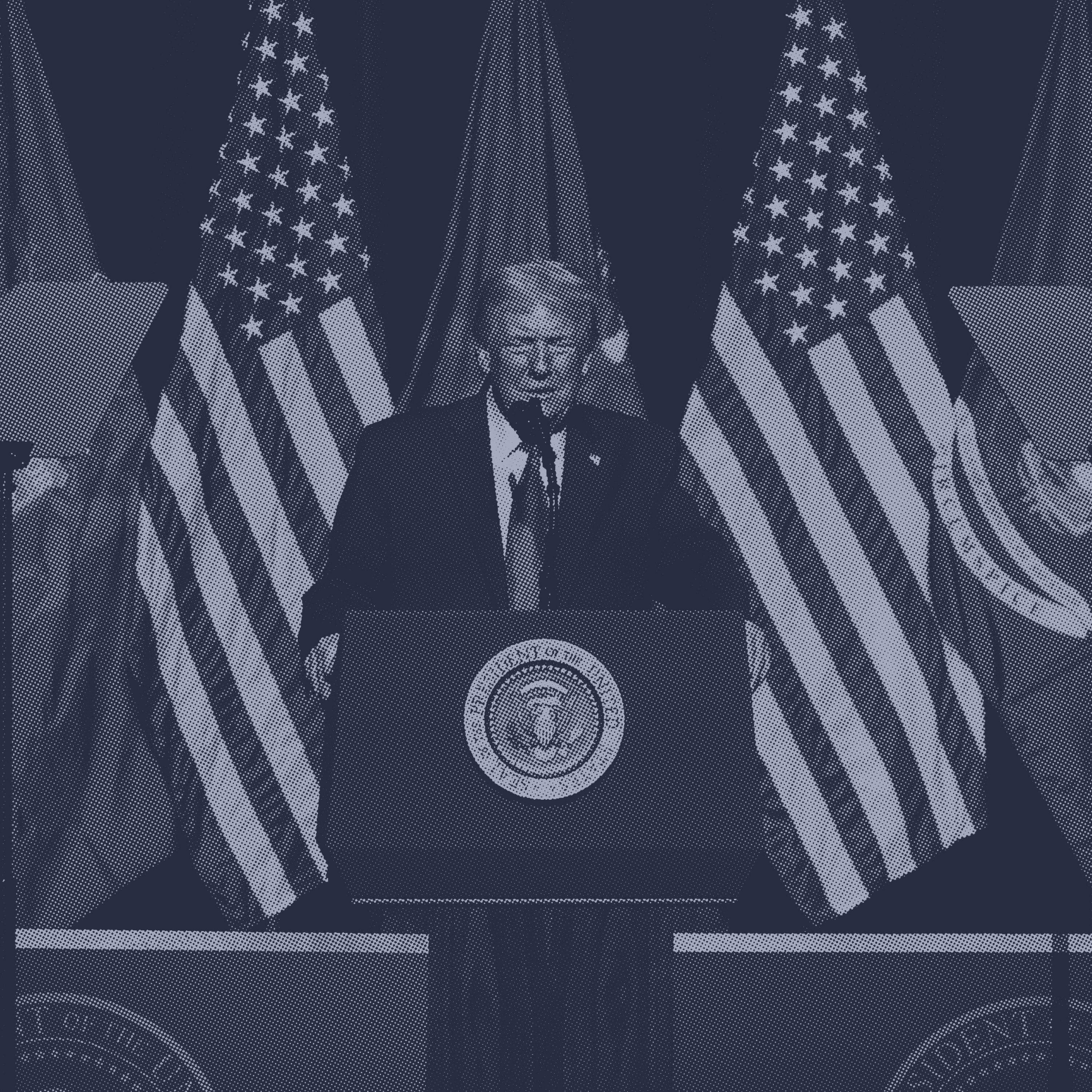
Yes, exactly. So today we are digging into affordability, which is something, something that we know is something that voters care a lot about. And we're also gonna be talking about Trump's ongoing feud with Fed Chair Jerome Powell. But I do wanna start with today's news. President Trump is slated to give a speech in Detroit that's focused on his economic message. What more can you tell us, Deepa?
- [01:37]
Deepa Shivaram
Yeah, I mean, look, this is the first time the president has kind of done an event or traveled to a place and made his remarks specifically about the economy in a minute. And just to like, scale back to like a month ago about, you know, it was mid. A lot of polling had just come out saying that Trump's approval on the economy was like the lowest it had ever been. The NPR PBS News Marist poll said it was about 36% of approval on the economy, which is, I think, the lowest that that poll has ever showed.
- [02:03]
Miles Parks
Which is also notable because I feel like the economy is one of those things that even at times when people were mad about Trump about everything else, the economy has always been something that voters generally trusted in him. Oh, 100% of his business acumen.
- [02:15]
Deepa Shivaram
Yeah. It's always been one of his strongest issues. So when a number dips like that it is definitely really significant, especially because, you know, the economy and affordability and high prices, combating inflation, those were all things that he strongly campaigned on in 2024. So that was, like, mid December, those polling numbers come out, and the president gave an Oval Office address right before Christmas talking about this issue, saying that this was something his administration was working on. But he promised, like an economic boom, that the US Economy was thriving, that it was doing so well. And there were all these projects and things that he had that were in the works. Things like no taxes on tips is something he's really been touting. He said that this spring, when people get their tax refunds, they would be even bigger and better. People will start feeling it in their pockets. But that doesn't necessarily resonate with voters all the time when they're still really concerned about high costs. So while the administration has been sort of bragging essentially, that their economy is doing so great and so much better than the Biden administration, clearly polling shows that voters don't feel that way. So, yeah, I'm kind of curious to see how consistent his messaging on the economy will be. Will he maybe acknowledge that. Yeah, people might not be feeling this in their pocketbooks. Although, based on how Trump has been talking about the economy and the way he believes his economy is in this great boom, probably not expecting that to happen. And I would expect that he probably digs his heels in a little bit more in talking about how great he thinks the economy is doing.
- [03:40]
Miles Parks
Yeah. What does the data say, Scott, about how the economy actually is right now?
- [03:44]
Scott Horsley
Well, the data paints a rather mixed picture. I mean, GDP as late as the third quarter was growing pretty rapidly, and the administration certainly expects that we're going to see another year of strong growth as those tax cuts begin to kick in in 2026. But we've seen a real pretty sharp slowdown in the job market. We only added 50,000 jobs in December, and for all of last year, we added about 70% fewer jobs than we did in 2024. And inflation is still relatively high. We just got new inflation data this morning that showed prices in December were up 2.7% from a year ago. That's the same annual increase we saw in no. So I guess if you want to say the glass is half full, inflation's not getting any worse, but it's also not getting any better. And as you mentioned, Donald Trump campaigned promising to make things cheaper. And a lot of stuff, some things have gotten cheaper. Gasoline prices, for example, are down. And that's important for a Lot of people. But grocery prices continue to climb. Electricity prices are up and natural gas prices, which a lot of people are relying on for winter heating, those prices are way up right now. So people aren't necessarily feeling like life is getting a whole lot more affordable.
- [05:05]
Miles Parks
I definitely, I had that moment yesterday. I opened up my gas bill and I was like, whoa, okay, that's where we're at right now.
- [05:13]
Scott Horsley
Yeah. It's interesting. I was talking with Mark Wolf who heads the National Energy Assistance Directors Association. That's a lot of state offices that help low income people with their energy bills. He told me that people didn't used to necessarily pay a lot of attention to what their monthly electric bill or heating bill was. They knew what the price of gasoline was, they knew what the price of eggs was. But these other prices, they just weren't all that salient. But now they know they've seen these big spikes and they can tell you how much they paid for electricity last month or how much they paid for natural gas to heat their homes.
- [05:43]
Miles Parks
What's so interesting now? This speech, Deepa in Detroit from President Trump. I'm curious about how he's thinking about this because after the off year elections that Democrats performed very well in November, I feel like that was kind of this blinking sign that said voters still really care about this affordability idea. But as you mentioned, he just hasn't talked about it very much in the weeks and months following that. Why hasn't this been more of a focus for him?
- [06:08]
Deepa Shivaram
Yeah, I will say I think if he has talked about it, it's been in an inconsistent way. Right. Like, even if you scroll through his social media, like that's where he puts out a lot of announcements and news. Oftentimes the White House will be like, oh, the president, you know, it's not coming from the White House, it's coming from the President's social media feed. And even if you scroll through that, I mean it's like every now and then there's like a sporadic like affordability, like post in between a lot of other news. And I think it comes down to the fact that there are just a lot of other things the President would rather be talking about. And if he is going to talk the economy, he wants to talk about how great the economy is. And if he is going to talk about the negative parts of the economy, he's going to talk about how it's Democrats fault, how it was a poor economy left to him by the Biden administration and how immigrants are the big problem behind the poor economy that people are supposedly feeling. And otherwise, the economy is great and nothing is wrong with it, and we're thriving. And so that messaging from him has just been deeply inconsistent. And when you mix that in with his policies, right, things like tariffs, things like when you talk about high energy bills, which is what we've been talking about, a lot of that has to do with, like, you know, things like booming AI data centers that are popping up that the administration has really backed. There's so many little things that go into it, and what isn't going into it is a consistent message. And while he's not talking about the economy, you know, he's talking about, again, immigrants. He's been really focused on Minnesota lately for recent news events, Venezuela being the new leader of Venezuela and everything that's going on on the global stage. But in terms of what voters are feeling, that message of like, hey, even though gas prices are lower, even though mortgage rates might have gone down, you're not feeling that in your pocketbook. And I just find it a really interesting thread because it's something that certainly the Biden administration really struggled to message on as well.
- [07:49]
Sponsor/Advertisement Voice
Right.
- [07:50]
Miles Parks
That's what I was thinking about is, like, I thought for sure, coming out of the 2024 election that one of the takeaways, broadly, in the US political system was that you can't tell voters the economy's good if they're not feeling it. And it does feel like, I don't know, it does feel like it's still happening to some extent.
- [08:05]
Deepa Shivaram
It does. And like, to your point about the 2025 elections, you look at the gubernatorial races, right, in New Jersey and Virginia, where there was that acknowledgement from Democratic candidates, where it was, hey, this president isn't following up on lowering costs like he promised. And we're acknowledging that, like, prices are high, your energy bills are high. Like, there are things that are going on that are very valid problems. And the rhetoric that you hear from president and even from the White House writ large because, you know, he's got his social media. But then if you just look at the way the White House is messaging this and White House officials are messaging this, it's only talking about, like, the economy is great. And even yesterday, Press Secretary Caroline Levitt was just like, it's only good things.
- [08:41]
Miles Parks
Well, do you think, Scott, that there's going to be some moment where the tax refunds start coming in in a couple months and people's opinions about all of this stuff just change?
- [08:49]
Scott Horsley
You know, it's going to be very interesting to see how much that those tax cuts really move the needle. Because we know from all the official forecasts that the lion's share of these tax cuts are going to upper income families and corporations. If people at the bottom rungs of the income ladder, and I say really the bottom rungs, really, up until about the midpoint of the income ladder, the tax cuts really aren't all that much. And they're also, for many people, being offset by higher costs for health insurance, maybe a loss of Medicaid with some of the requirements there. So it's not going to be an unalloyed win for a lot of families, including the ones who are most acutely affected by some of the affordability challenges we've talked about. Remember, a lot of what the tax bill passed last summer did was simply extend the tax cuts that were initially passed back in 2017. So I suppose it'll be a positive for people that their taxes won't be going up. But in most cases, they're not going to be going down a whole lot either. Now, for tipped workers, they might see a more meaningful decrease from the no tax on tips measure. For example, some Social Security recipients may get a little bit of a break, but I think most middle and lower income families are probably not going to see a huge windfall in their take home pay. And so the political benefit and the economic benefit of those tax cuts may be kind of watered down.
- [10:15]
Deepa Shivaram
I do think it's interesting too, because as that argument's happening, the White House is saying, just wait till the spring. Just hold on a little bit longer. You're going to see it soon. There's a lot of littler announcements that the White House is making. They want to capture credit card interest rates. And the President says he's gonna tackle that, although has not clarified how exactly that's gonna happen. He doesn't really have the authority to do it. Credit card companies might not agree. You know, things like he's saying he's gonna announce an affordable housing plan. There's a lot of, like, rhetoric going out and a lot of different ideas and a lot of different thoughts, but not necessarily something like to Scott's point that people are going to see affecting their lives.
- [10:53]
Miles Parks
Well, maybe the biggest thing potentially is interest rates. And we're gonna talk about, after a break about Trump's ongoing feud with the Fed and Fed Chair Jerome Powell. More in just a second.
- [11:04]
Sponsor/Advertisement Voice
This message comes from Mint Mobile. This holiday season, stop overpaying for wireless and switch to Mint Shop. 50% off unlimited plans@mintmobile.com Switch Limited Time offer upfront payment of $45 for three months, $90 for six months or $180 for 12 months. Taxes and fees Extra initial planned term only above 35gb network may slow Capable device required. Availability, speed and coverage varies. See mintmobile.com this message comes from Intuit.
- [11:37]
TurboTax with TurboTax Expert Full Service Match with a dedicated expert who will do your taxes for you from start to finish, getting you every dollar you deserve. It's that easy. Visit turbotax.com to match with an expert today.
- [11:52]
This message comes from Mint Mobile this holiday season, stop overpaying for wireless and switch To Mint Shop 50% off unlimited plans@mintmobile.com Switch Limited Time Offer upfront payment of $45 for three months, $90 for six months or $180 for 12 months. Taxes and fees Extra initial plan term only above 35gb network may slow when busy Capable device required. Availability, speed and coverage varies. See mintmobile.com this message comes from Kachava it feels good to connect to your simpler side, simplifying your wellness with Caciava's all in One Nutrition Shake feels good too, with 25 grams of protein, 6 grams of fiber, greens and more. No fillers, just the highest quality ingredients. Simplify your nutrition@cachava.com and use code NPR. New customers get $20 off an order of two bags or more now through January 31st. That's K A C-H-A V A.com code NPR.
- [12:58]
Miles Parks
And we're back. So for much of his second term, President Trump has been pressuring the Federal Reserve and its chairman, Jerome Powell, to lower interest rates, which he thinks would help juice the economy. But the administration really ramped up that pressure this past weekend. Scott, can you tell us about that?
- [13:14]
Scott Horsley
This is an old fight. This goes back even to President Trump's first term in office, when he used to jog a lot of it. Yeah, yeah. I mean, they ultimately wound up cutting interest rates to about zero when the pandemic hit and unemployment took off. But before that, there was lots of criticism from President Trump that the Fed wasn't keeping interest rates as low as he wanted. Politicians generally want very low interest rates to goose the economy, even though if that might mean higher inflation in the long term. That's precisely the reason that when they set up the Federal Reserve, they put some insulation around it to keep the Fed from being swayed by that kind of political pressure. Of course, President Trump has sort of ignored those guardrails as he has so many others. And he has threatened to fire the chairman of the Federal Reserve. He has tried to fire another member of the Fed's governing board. He has really tried to put his imprint on interest rate policy. And this weekend we learned that that extends to the Justice Department launching an investigation of the Fed over cost overruns at its headquarters renovation and, and testimony that Fed Chairman Jerome Powell gave about that project before a Senate committee last year. That really seemed to be the straw that broke the camel's back for Jerome Powell. He has really tried to avoid getting dragged into a fight with the president all of last year, and, in fact, going back to the first Trump administration. But when the Justice Department came after the Federal Reserve with these criminal subpoenas, Powell had had enough. And he came out on Sunday in an unusually strongly worded video statement and said, the administration is trying to influence and intimidate us into cutting interest rates, and we're not going to do it. The threat of criminal charges is a consequence of the Federal Reserve setting interest rates based on our best assessment of what will serve the public, rather than following the preferences of the President. This is about whether the Fed will be able to continue to set interest rates based on evidence and economic conditions, or whether instead monetary policy will be directed to by political pressure or intimidation.
- [15:20]
Deepa Shivaram
I will say, just as an anecdote, I was on Air Force One with the president back from Florida to Washington on Sunday night, and when we got on the plane, the biggest news story was about Iran. And in the two hours that we were on the flight, we landed and this, you know, it just, this happened literally mid flight. And it just speaks to, I think, like, how volatile the political climate is right now. And, you know, major economic, like, policy indications and foreign policy, everything is just so mixed together.
- [15:48]
Miles Parks
I do feel like with a situation like this, though, it is like it becomes very quickly like a he said, she said situation. And I feel like, Scott, I do want to just take a second and zero on the actual accusation, like, do independent observers think there could be anything to this investigation?
- [16:04]
Scott Horsley
Well, we should say first off, I guess, that Trump told NBC he was not involved and didn't even know that the Justice Department was conducting this probe. But there's not much question that, that Trump has used every weapon at his disposal to try to sway the Federal Reserve's decision making, even though, as I said, it's supposed to operate independently of that kind of political pressure. There certainly have been cost overruns on the headquarters project, but I've not heard any credible suggestion of any kind of wrongdoing associated with that. That's because building costs have gone up in recent years and because they found a lot more asbestos and lead in this 1930s era building than they anticipated. The kind of cost overruns that typically go along with renovating a historic building.
- [16:47]
Miles Parks
Sounds like my house. Honestly, I'm like, we found asbestos. We tried to put in air conditioning, major renovations. It happens. What's been the reaction more broadly to this news over the last couple days?
- [16:58]
Scott Horsley
It's probably not working the way that the administration would like. I'll say that we've had a number of senators, both Democrats and some Republican senators, who have risen up in defense of Jerome Powell and the Fed's independence. Most notably North Carolina Senator Thom Tillis, who sits on the Senate Banking Committee, which oversees the Fed, has said he will not vote for any of Trump's Fed nominees until this matter is resolved. And that could really jeopardize Trump's ability to nominate someone he wants to replace Jerome Powell when the Fed chairman's term expires in May. Whoever that nominee is is probably going to need the support of Senator Tillis on the Banking Committee if he's going to, you know, clear that hurdle and wind up being Fed chairman. So at least in the short term, there's been some backlash in the political world. The financial world world didn't really react to this very much. And that was a little bit of a surprise, unless you think that the financial world is betting that Trump is not going to win this battle. If the financial world thought that Trump really was going to be able to exercise control over the Fed, I think you would have seen a much bigger sell off in the stock market and a bigger reaction in the bond market. The financial world believes that the Fed will conduct itself and set interest rate policy on its own lights and not be subject to political pressure. And if that sort of rock solid understanding is seriously monkeyed with, then you're gonna see a very negative reaction in the financial market.
- [18:29]
Deepa Shivaram
I think it kind of sort of ties into the way the president approaches explaining people's negative feelings about the economy, too, because whenever he gets asked about that, he'll talk about how he inherited a terrible economy from Joe Biden, which.
- [18:42]
Scott Horsley
By the way, I just have to interject, that's just not true.
- [18:45]
Deepa Shivaram
Right, right, right.
- [18:47]
Scott Horsley
The US economy was the envy of the world in 2024. As the economist magazine said, Trump loves to say, everything was terrible until I came in. And then an enormous, wonderful renaissance happened. There's just very little objective evidence to back that up.
- [19:01]
Deepa Shivaram
Right. His claims that he inherited a terrible economy, I should say. And then immediately we'll kind of pivot to blaming Jerome Powell. He calls Jerome Powell too late, that's his nickname for him, and interjects that thought as a way of saying, if you're unhappy with, with the economy right now, like blame this person, blame this previous administration, et cetera, et cetera. But yeah, to you guys point, I mean, this is something that's not new. Even though Trump told NBC he has nothing to do with this investigation, I mean, he certainly has not been shying away from criticizing Jerome Powell, posting about him on social media, and even floating lawsuits against him.
- [19:36]
Miles Parks
And to the point of who's gonna kind of win in this push and pull, I will say also that arguments are coming up in the next week or so at the Supreme Court over whether Trump has the authority to fire a member of Federal Reserve. Right. Lisa Cook. So that is gonna be something we're obviously gonna be watching as we get a sense of who's gonna win this battle. But Scott, I also wanna back up because this is one of those times where I have you here and this is a question, a very basic economic question that I've had a lot the last couple months. Honestly, as this has been going back and forth. President Trump wants lower interest rates, but he campaigned on the kind of runaway inflation of the post Covid time. And I think one of the things I'm confused about is wouldn't lowering interest rates at a time when the country is not ready for it, couldn't that potentially send us back into the inflationary problem that President Trump spent so much time talking about? I just don't ever hear him engaging with that possibility. I don't really. Am I misunderstanding something or is that a real risk?
- [20:35]
Scott Horsley
I think you're understanding it correctly, but we should say, you know, the Federal Reserve has been cutting interest rates. They cut interest rates at each of their last three meetings. They held rates steady for the first nine months of 2025, partly out of fear that President Trump's tariffs were going to rekindle inflation. Now, the tariff impact on inflation has been, I think, more muted than a lot of people expected, although it has raised prices of some imported items. But the reason that the Fed is not ready to cut interest rates more is because there's still inflation that's well above their target. They're kind of caught between this tug of war where on the one hand they want lower interest rates because the job market has slowed down so much, but they also kind of want to keep rates elevated because prices are still going up faster than they'd like, and that's the tension there.
- [21:23]
Miles Parks
All right. Well, we can leave it there for today. I do always appreciate you having you here, Scott, to be able to bounce all of this stuff off you. Thanks for doing it.
- [21:30]
Scott Horsley
Great to be with y'. All.
- [21:31]
Miles Parks
And if you want to make sure to not miss any episodes of the NPR Politics Podcast, I also want to push people to hit the Follow button on your favorite podcast app. I'm Miles Parks. I cover voting.
- [21:40]
Deepa Shivaram
I'm Deepa Shivraum. I cover the White House.
- [21:42]
Miles Parks
Thank you for listening to the NPR Politics Podcast.
- [21:52]
Sponsor/Advertisement Voice
This message comes from Prolon. Feeling heavy and depleted after the holidays, Prolon's five day Fasting Mimicking Diet aims to make it easy to reset your body habits and energy heading into the new year. Developed at USC's Longevity Institute, the goal of Prolon's nutrition program is to rejuvenate you from within by working at the cellular level to fat loss, glowing skin and Sharper Focus. Get 15% off, plus a bonus gift when you subscribe@ProlonLife.com NPR this message comes.
- [22:25]
From NPR sponsor 1Password. Anyone else? Feel like 99% of your emails and texts are password reset codes trusted by millions of users and over 175,000 businesses? 1Password lets you skip the resets and sign in securely. With strong, unique passwords that auto fill across all your devices, you can safely share logins, store cards and files. And finally, stop using your pet's name as a password. Try it free for two weeks at 1Password.com NPR.